Afghanistan has no coastline. That single geographic fact shapes everything about shipping cost from China to Afghanistan — every container, every pallet, and every parcel must pass through at least one transit country before reaching its final destination. This means double customs clearance, overland trucking through mountain passes, and a layer of logistical complexity that simply doesn't exist when shipping to coastal nations like Pakistan or the UAE. If you're importing from China and trying to figure out what you'll actually pay, you've probably already discovered that most freight forwarders don't publish Afghanistan rates online — and the few numbers you can find are often outdated or incomplete.
This guide changes that. Below, you'll find 2026 cost ranges for every shipping mode — sea freight via Karachi, air freight through Middle Eastern hubs, the new Chongqing–Hairatan direct rail line, and express courier options — all in one place, with real-world scenarios, a complete DDP cost breakdown, and eight actionable strategies to reduce your total landed cost by 15–30%. Whether you're a B2B importer moving construction materials, an NGO shipping medical supplies, or a trader sourcing electronics from Guangzhou, this is the guide we wish existed when we started handling China–Afghanistan freight over a decade ago. For a complete overview of our service coverage on this corridor — including sea, air, and door-to-door options — visit our dedicated Shipping From China to Afghanistan route page.
China to Afghanistan Shipping Routes: Why Your Freight Takes Longer and Costs More
Before we get to the numbers, you need to understand the routes — because the route determines the cost more than anything else.
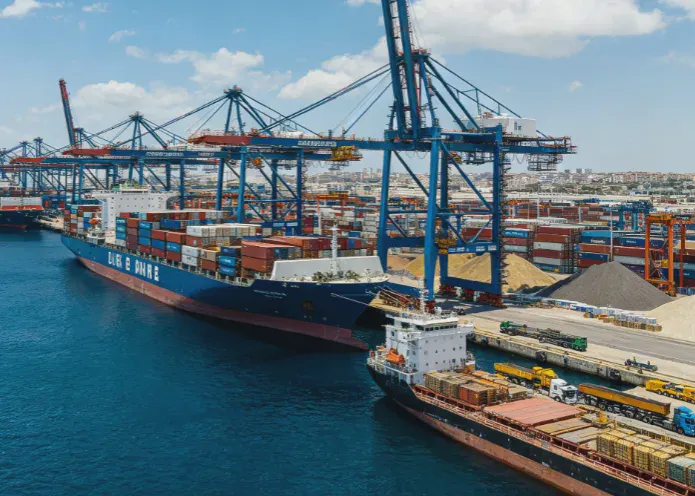
Every shipment from China to Afghanistan follows the same three-leg structure: a China origin leg (factory to port or airport), an international transit leg (ocean, air, or rail to a transit country), and an overland destination leg (trucking from the transit country into Afghanistan). Compared to shipping to a coastal country, this adds 15–30 days of transit time and anywhere from $1,000 to $3,000 in additional freight, customs, and handling costs.
There are three corridors that carry virtually all China–Afghanistan cargo:
| Corridor | Transit Country | Entry Point into Afghanistan | Best For |
|---|---|---|---|
| Pakistan Corridor | Pakistan | Karachi Port → Torkham (Kabul) or Chaman (Kandahar) border | Sea freight — handles 80%+ of all cargo, lowest cost per unit |
| Iran Corridor | Iran | Bandar Abbas Port → Islam Qala (Herat) or Zaranj border | Western Afghanistan — alternative when Pakistan routes are disrupted |
| Central Asia Corridor | Kyrgyzstan / Uzbekistan | Kashgar → Osh → Hairatan (rail) or road crossings | Rail freight and overland trucking — northern Afghanistan, avoids Karachi entirely |
What each corridor means for your shipment. The Pakistan corridor is the workhorse: cheap, frequent sailings to Karachi, and two well-established trucking routes to Afghanistan's two largest cities. But it comes with baggage — 18 categories of goods are restricted from Pakistan transit (including tires, electronics, and certain chemicals), and the AFGHAN TRANSIT MANIFEST must be filled perfectly because Pakistan Customs does not allow corrections after submission. The Iran corridor works well for Herat-bound cargo — we have a dedicated Shipping Cost from China to Iran breakdown — but is constrained by international sanctions that limit which shipping lines and banks can participate. The Central Asia corridor has historically been the most expensive option — but that changed dramatically in February 2025 with the launch of a direct rail service (more on this in section 6).
How Much Does It Cost to Ship from China to Afghanistan? (2026 Mode Comparison)
If you only read one section of this guide, make it this one. The table below gives you 2026 price ranges for every viable shipping mode from China to Afghanistan — door-to-door. These are the numbers you should benchmark against when requesting quotes from freight forwarders.
| Shipping Mode | Total Cost (2026 Estimate) | Door-to-Door Transit | Ideal For |
|---|---|---|---|
| Sea FCL 20ft (via Karachi) | $2,800 – $4,500 | 40–60 days | Bulk cargo, machinery, construction materials |
| Sea FCL 40ft (via Karachi) | $4,500 – $6,500 | 40–60 days | Large-volume commercial goods |
| Sea LCL (via Karachi, per CBM) | $200 – $380 / CBM | 40–60 days | Smaller shipments (1–15 CBM) |
| Rail Freight 40HQ (Chongqing–Hairatan) | $2,500 – $4,000 | 18–22 days | Time-sensitive bulk cargo, electronics |
| Air Freight 100kg+ | $5 – $8 / kg | 5–8 days | Urgent shipments, high-value goods, medical supplies |
| Air Freight 500kg+ | $4.50 – $6.50 / kg | 5–8 days | Bulk urgent shipments |
| Express Courier (<45kg) | $8 – $25 / kg | 3–7 days | Samples, documents, small parcels |
A note on these numbers: Freight rates fluctuate weekly based on fuel prices, seasonal demand, and carrier capacity. These ranges reflect mid-2026 market conditions observed across multiple forwarders on the China–Afghanistan lane. Always request a written, all-inclusive DDP quote for your specific cargo before budgeting.
Real-World Cost Example: Construction Materials to Kabul
A 20ft container of construction materials (tiles, fittings, hardware) shipped from a supplier in Shenzhen to a construction site in Kabul via the Pakistan corridor. If you regularly import building supplies, our Shipping Building Materials from China guide covers packaging, customs, and cost optimization in greater depth.
| Cost Component | Amount |
|---|---|
| Ocean freight (Shenzhen → Karachi, 20ft) | $800 |
| Karachi → Kabul trucking (all-inclusive, commercial cargo) | $2,100 |
| Container detention (estimated 5 extra days) | $150 |
| Documentation & handling | $100 |
| Total Door-to-Door | ~$3,150 |
| Transit time | ~45 days |
Real-World Cost Example: Consumer Electronics LCL to Kandahar
A 5 CBM LCL shipment of consumer electronics from Guangzhou to a distributor in Kandahar:
| Cost Component | Amount |
|---|---|
| Ocean LCL (Guangzhou → Karachi, 5 CBM × $240) | $1,200 |
| Karachi → Chaman → Kandahar trucking | $800 |
| Customs clearance & brokerage | $250 |
| Last-mile delivery in Kandahar | $200 |
| Total Door-to-Door | ~$2,450 |
| Transit time | ~50 days |
Real-World Cost Example: Medical Supplies by Air to Kabul
A 300kg pallet of medical diagnostic equipment shipped from Shanghai to a clinic in Kabul via air freight through Dubai:
| Cost Component | Amount |
|---|---|
| Air freight (300kg × $7/kg) | $2,100 |
| Fuel surcharge (15%) | $90 |
| Afghan customs clearance | $150 |
| Last-mile delivery (Kabul city center) | $120 |
| Total Door-to-Door | ~$2,460 |
| Transit time | ~6 days |
Sea Freight Cost from China to Afghanistan via Karachi: FCL, LCL & Container Rates
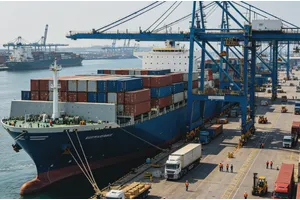
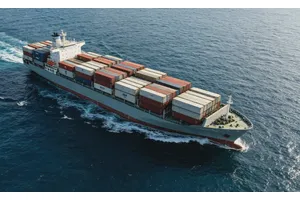
More than 80% of all commercial cargo moving from China to Afghanistan goes through Karachi Port in Pakistan, and for good reason: it offers the lowest cost per unit for any shipment over a few cubic meters, with frequent sailings from every major Chinese port and two mature overland corridors connecting to Kabul (via the Torkham border) and Kandahar (via Chaman). For a deeper dive into FCL and LCL rate breakdowns by port, see our dedicated Sea Shipping cost from China to Afghanistan analysis.
Ocean Freight Rates: Chinese Ports to Karachi (2026)
| Port of Loading (China) | 20ft Container | 40ft Container | Sea Transit |
|---|---|---|---|
| Shanghai | $750 – $950 | $1,350 – $1,650 | 22–26 days |
| Shenzhen | $800 – $1,000 | $1,400 – $1,700 | 18–22 days |
| Ningbo | $780 – $980 | $1,380 – $1,680 | 22–26 days |
| Guangzhou | $820 – $1,050 | $1,420 – $1,750 | 18–22 days |
| Qingdao | $850 – $1,100 | $1,500 – $1,800 | 15–20 days |
These are ocean freight only — port-to-port rates from China to Karachi. The overland leg from Karachi into Afghanistan is a separate cost, detailed below.
Karachi to Afghanistan Trucking: All-Inclusive Rates
Once your container arrives at Karachi Port, it must be trucked overland to Afghanistan. The following rates are all-inclusive, covering Karachi port handling, Pakistani transit customs clearance, Afghan border customs procedures, documentation, and — critically — the empty container return fee. (Afghanistan has not signed international container transport agreements, so shipping lines charge forwarders to repatriate empty containers from Afghanistan — a cost already baked into these figures.)
| Cargo Type | 20ft Container | 40ft Container |
|---|---|---|
| Commercial cargo | ~$2,100 | ~$3,100 |
| Non-commercial cargo | ~$1,900 | ~$2,900 |
Non-commercial cargo (personal effects, diplomatic shipments, humanitarian goods without commercial invoices) requires an additional step: goods must be transferred from the container to local trucks at the Pakistan–Afghanistan border area (typically Peshawar), which adds roughly 15 days to the transit but saves approximately $200 in container-related fees.
LCL vs. FCL: The Breakeven Point
If you're shipping less than a full container, LCL (Less than Container Load) is your best option. All-in LCL rates to Kabul typically range from $200 to $380 per CBM, depending on cargo type, season, and consolidation efficiency.
The breakeven point — where FCL becomes cheaper per unit than LCL — sits at roughly 12–15 CBM. If your shipment is above this threshold and you can fill a 20ft container (approximately 28–33 CBM of usable space), FCL will almost certainly cost less on a per-unit basis. Regular shippers can further reduce LCL costs by working with a forwarder that offers cargo consolidation from a China-based warehouse — combining partial loads from multiple suppliers into a single consolidated shipment.
Four Hidden Costs That Catch First-Time Importers
Even experienced importers get surprised by these. Budget for them upfront.
1. Container Detention Fees. Shipping lines typically allow 10 free days for container use. But the round-trip cycle from Karachi to Kabul and back takes 23–25 days. Every day beyond the free period incurs a detention charge: $8–$15 per day. On a 20ft container, that's an extra $100–$200 you should expect to pay.
2. Border Demurrage. The Torkham and Chaman border crossings between Pakistan and Afghanistan are notoriously congested. It is not unusual for trucks to wait 3–21 days at the border. Demurrage charges for containers held at border staging areas run $80–$150 per day — a multi-week delay can wipe out any savings from choosing sea freight over air.
3. Winter Surcharges (November–February). The Salang Pass, the primary mountain route connecting northern Afghanistan to Kabul, frequently closes due to heavy snow during winter months. When it does, trucks must reroute through longer, more expensive paths — and forwarders add winter surcharges to cover the difference. If your shipment is time-sensitive, avoid the November–February window.
4. War-Risk Surcharges. Some ocean carriers classify Afghanistan-bound cargo as higher-risk and apply a war-risk surcharge to the base freight rate. This varies by carrier and is not always disclosed upfront — ask your forwarder specifically whether any war-risk or security surcharges apply to your quote.
Air Freight Cost from China to Afghanistan: Rates by Weight & Transit Hubs
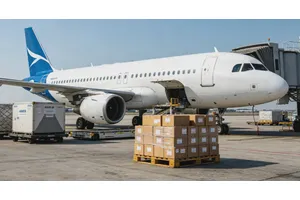
There are no direct commercial cargo flights between China and Afghanistan. Every air freight shipment transits through a Middle Eastern hub — most commonly Dubai (DXB), Doha (DOH), or Istanbul (IST) — before continuing onward to Kabul (KBL), Kandahar (KDH), Herat (HEA), or Mazar-i-Sharif (MZR). For airline-specific guidance and weight-tier pricing examples, read our full Air Shipping from China to Afghanistan guide.
Standard Air Freight Routes
| Route | Transit Hub | Primary Carrier | Frequency | Total Transit |
|---|---|---|---|---|
| CAN → DXB → KBL | Dubai (DXB) | Emirates SkyCargo | Daily | 3–5 business days |
| CAN → DOH → KBL | Doha (DOH) | Qatar Airways Cargo | Daily | 3–5 business days |
| PVG → IST → KBL | Istanbul (IST) | Turkish Cargo | 4–6×/week | 5–7 business days |
Air Freight Rates by Weight Tier
Air freight pricing is based on chargeable weight — the greater of actual weight and volumetric weight (length × width × height in cm ÷ 6,000). Rates drop significantly as your shipment gets heavier:
| Chargeable Weight | Rate (USD/kg) | Notes |
|---|---|---|
| 45–100 kg | $8 – $12 | Highest per-kg rate; suitable for samples and small urgent shipments |
| 100–300 kg | $7 – $9 | Sweet spot for most commercial air freight — good value per kg |
| 300–500 kg | $6.50 – $8 | Consolidated shipments start seeing meaningful discounts |
| 500–1,000 kg | $5.50 – $7 | Bulk discount territory |
| 1,000+ kg | $5 – $6.50 | Best available per-kg rates |
For shipments under 45 kg, international express couriers (DHL, FedEx, UPS) offer door-to-door service at $8–$25 per kg with transit times of 3–7 business days. These are ideal for samples, documents, and small e-commerce parcels — but become uneconomical quickly as weight increases.
When Air Freight Is Worth the Premium
Air freight costs roughly 5–10× more than sea freight per kilogram. But for certain cargo, it's not just the faster option — it's the smarter one. Consider this: $50,000 worth of inventory sitting on a ship for 50 days ties up working capital that could be reinvested, and seasonal goods that miss their market window lose far more value than the freight premium. For medical supplies, time-sensitive electronics, humanitarian aid, and fashion or seasonal consumer goods, air freight is often the only viable route.
Rail Freight from China to Afghanistan: The Chongqing–Hairatan Direct Train
In February 2025, the first-ever direct freight train from China to Afghanistan departed Chongqing and arrived at Hairatan (also spelled Hairaton) on Afghanistan's northern border — roughly 20 days later. This is the single most important development in China–Afghanistan logistics in the last decade, and it fundamentally changes the cost-speed equation for bulk cargo.
The route runs Chongqing → Kashgar → Osh (Kyrgyzstan) → Hairatan (Afghanistan), using Chinese rail infrastructure to Xinjiang, then connecting through Central Asian rail networks into northern Afghanistan. From Hairatan, cargo is trucked south to Mazar-i-Sharif and onward to Kabul.
Here's how the new rail option stacks up against the alternatives:
| Factor | Rail (Chongqing–Hairatan) | Sea + Land (via Karachi) | Road Only (via Central Asia) |
|---|---|---|---|
| Cost per 40HQ | $2,500 – $4,000 | $4,500 – $6,500 | $5,000 – $8,000 |
| Door-to-door transit | 18–22 days | 40–60 days | 15–20 days |
| Schedule reliability | ★★★★ (fixed schedule) | ★★★ (port/border variables) | ★★ (road conditions, weather) |
| Winter reliability | ★★★★ (rail less weather-affected) | ★★ (Salang Pass closures) | ★ (mountain passes close) |
| Customs complexity | ★★★★ (single transit) | ★★ (Pakistan + Afghan dual clearance) | ★★★ |
| Best for | Time-sensitive bulk, electronics, FMCG | Lowest-cost bulk, heavy machinery | Urgent road freight to northern Afghanistan |
Current limitations. The rail service is still in its expansion phase — capacity is limited, and not all cargo types have been approved for this route yet. It primarily serves northern and central Afghanistan (Hairatan → Mazar-i-Sharif → Kabul), meaning cargo destined for Kandahar or Herat would still need significant overland transport. But for importers who have been stuck choosing between "cheap but painfully slow" sea freight and "fast but painfully expensive" air freight, this rail corridor is the middle ground that didn't exist before 2025. For a broader comparison of these two modes beyond the Afghanistan lane, see our analysis of Sea vs Rail Freight: Which Is Faster and More Reliable from China.
Door to Door Shipping from China to Afghanistan: DDP Costs & Incoterms Explained
Under FOB or CIF terms, the seller's responsibility ends at the port of loading or the port of discharge — meaning you, the buyer, are left to navigate Pakistani transit customs, Afghan import clearance, and last-mile delivery through potentially insecure areas, all from outside the country. Afghan customs procedures can be unpredictable for foreign consignees, and the security environment makes it impractical for most importers to manage clearance remotely.
DDP puts everything — China export, international transport, transit country handling, Afghan import clearance, duty payment, and last-mile delivery — on the freight forwarder, who should have local teams or trusted partners at both the transit country and inside Afghanistan.
What Each Incoterm Covers (and Doesn't)
| Cost Component | EXW | FOB | CIF | DDP |
|---|---|---|---|---|
| Factory pickup & China export customs | ❌ Buyer | ✅ Seller | ✅ Seller | ✅ Seller |
| International freight | ❌ Buyer | ❌ Buyer | ✅ Seller | ✅ Seller |
| Cargo insurance | ❌ Buyer | ❌ Buyer | ✅ Seller | ✅ Seller |
| Transit country port fees & clearance | ❌ Buyer | ❌ Buyer | ❌ Buyer | ✅ Seller |
| Afghan import customs & duties | ❌ Buyer | ❌ Buyer | ❌ Buyer | ✅ Seller |
| Last-mile delivery inside Afghanistan | ❌ Buyer | ❌ Buyer | ❌ Buyer | ✅ Seller |
Complete DDP Cost Breakdown: Factory to Kabul Door
Here's every line item that makes up a DDP shipment from China to Afghanistan, with estimated ranges:
| # | Cost Component | Typical Range |
|---|---|---|
| 1 | Inland trucking (factory → Chinese port/airport) | $150 – $500 |
| 2 | China export customs clearance | $80 – $150 |
| 3 | Export documentation fees | $50 – $100 |
| 4 | Ocean / Air / Rail freight | See sections 4–6 |
| 5 | Transit country port/terminal charges | $200 – $500 |
| 6 | Transit customs clearance (Pakistan/Iran) | $150 – $400 |
| 7 | Transit border fees | $100 – $300 |
| 8 | Afghan import customs brokerage | $120 – $250 |
| 9 | Afghan import duties & taxes | See section 8 |
| 10 | Last-mile delivery (border → Afghan city) | $300 – $800 |
| 11 | Cargo insurance (0.3%–0.5% of declared value) | Varies by cargo value |
Estimated All-In DDP Ranges
| Shipment Type | DDP All-In Estimate |
|---|---|
| 20ft container (commercial goods) | $3,500 – $6,000 |
| 40ft container (commercial goods) | $5,500 – $9,000 |
| LCL per CBM | $250 – $450 |
| Air freight 100kg | $900 – $1,400 total |
Afghanistan Customs Duties & Import Taxes: Calculate Your Total Landed Cost
Understanding Afghanistan's tariff structure is essential to calculating your true total landed cost. Too many importers budget for freight and forget about duties — only to face an unpleasant bill when their cargo reaches Afghan customs.
Afghanistan's Tariff Framework
Afghanistan applies a two-tier tax structure on imports:
- Customs Duty: 2.5% to 25% of the CIF value (Cost + Insurance + Freight), determined by your product's HS Code classification. Most general commercial goods fall within the 5%–16% range.
- Business Receipt Tax (BRT): 2% to 10% applied to the sum of (CIF Value + Customs Duty). This is functionally similar to a VAT or sales tax.
The Total Landed Cost Formula
Total Landed Cost = FOB Product Cost
                  + Freight (ocean/air/rail)
                  + Insurance
                  + Customs Duty (HS Code rate × CIF Value)
                  + BRT (BRT rate × [CIF Value + Customs Duty])
                  + Customs Brokerage Fee
                  + Last-Mile Delivery
Worked Example: $20,000 Electronics Shipment from Shenzhen to Kabul
Let's apply the formula to a real shipment:
| Calculation Step | Amount |
|---|---|
| FOB product value | $20,000 |
| Sea freight (FCL via Karachi) | $3,200 |
| Insurance (0.4% of $23,200) | $93 |
| CIF Value | $23,293 |
| Customs Duty (8% HS Code rate × $23,293) | $1,863 |
| Subtotal (CIF + Duty) | $25,156 |
| BRT (4% × $25,156) | $1,006 |
| Customs brokerage + last-mile delivery | $500 |
| Total Landed Cost | ~$26,662 |
That's approximately 33% above the FOB product value. If you had only budgeted for the $3,200 freight cost, you'd be short by over $3,300 at the point of import.
Duty Management Tips
- Get your HS Code right. An incorrect classification can trigger a duty rate 5–15 percentage points higher than necessary. Consult with your freight forwarder or a customs broker before shipping.
- Humanitarian aid and infrastructure materials may qualify for duty exemptions under Afghan government programs — your forwarder should be able to advise on eligibility.
- Every commercial shipment into Afghanistan requires an Afghanistan Import License, issued by the Afghan Chamber of Commerce. This is not optional.
Essential Documentation for Pakistan Transit
If your cargo transits through Pakistan (the most common route), the following documents are mandatory:
- Ocean Bill of Lading — original plus copy
- Commercial Invoice — 5 original copies
- Packing List — 5 original copies
- Certificate of Origin — original plus copy
- Afghanistan Import License — original
- Afghanistan Commercial Invoice — original
- Route Permit from Pakistan's Central Board of Revenue (for humanitarian materials)
- Tax Exemption Certificate from the Afghan Ministry of Commerce (if applicable)
Critical: Every document must bear the annotation: "GOODS IN TRANSIT TO AFGHANISTAN VIA KARACHI/PAKISTAN" — without this marking, Pakistani customs may treat your cargo as a domestic import and apply Pakistani duties.
Even more critical: The AFGHAN TRANSIT MANIFEST — the document that tells Pakistan Customs your cargo is in transit to Afghanistan — cannot be changed after submission. Any error, no matter how small, can result in weeks of delays and hundreds of dollars in penalties. This is precisely why working with a freight forwarder who has direct experience on this route matters.
Pakistan also maintains a list of 18 restricted items that cannot transit to Afghanistan without special permits — including tires, electronics, certain chemicals, car parts, refrigerators, air conditioners, and televisions. If your product falls into any of these categories, confirm eligibility with your forwarder before shipping.
Cheapest Way to Ship from China to Afghanistan
Everyone wants to know the cheapest way — and the answer depends on your cargo size, urgency, and where your supplier is located. Here are the strategies we use to shave 15–30% off China–Afghanistan shipping costs.
Pick the Right Departure Port
Your supplier's location should determine your port, not the other way around. The table below shows the all-in cost from each major Chinese port to Kabul:
| Departure Port | 20ft Sea → Karachi | Karachi → Kabul Trucking | Total Transit | Best For |
|---|---|---|---|---|
| Guangzhou | $820 – $1,050 | $2,100 | 40–50 days | Pearl River Delta suppliers — most competitive overall |
| Shenzhen | $800 – $1,000 | $2,100 | 38–48 days | PRD suppliers — shortest sea route to Karachi |
| Shanghai | $750 – $950 | $2,100 | 42–52 days | Yangtze River Delta suppliers |
| Ningbo | $780 – $980 | $2,100 | 42–52 days | Zhejiang-based suppliers |
| Qingdao | $850 – $1,100 | $2,100 | 35–45 days | Shandong / northern China suppliers |
The iron rule of port selection: ship from the port closest to your supplier. Saving $50 on ocean freight by routing through Shenzhen is meaningless if you spend $300 extra on domestic trucking from a Zhejiang factory.
The Iran Alternative (Bandar Abbas)
For cargo destined to western Afghanistan — particularly Herat — shipping via Bandar Abbas, Iran can be faster and cheaper than going through Karachi and then driving across the entire width of Afghanistan. Containers arrive at Bandar Abbas and enter Afghanistan through the Islam Qala border crossing. However, international sanctions on Iran limit which shipping lines serve this route and complicate banking and insurance. This option works best if your freight forwarder has established Iranian transit partnerships. If Iran itself is your final destination rather than a transit route, see our Shipping from China to Iran service page for direct routing options.
Time Your Shipments Around Seasonal Disruptions
- ❌ Winter (November–February): The Salang Pass — the primary mountain highway connecting Kabul to northern Afghanistan — frequently closes due to heavy snow. Rerouting adds cost and delays.
- ❌ Chinese New Year (January–February): Factory shutdowns and carrier capacity crunches drive rates up 20–50% across all China export lanes. Book at least 3–4 weeks ahead if you must ship during this window.
- ❌ Ramadan (variable dates): Reduced staffing at border crossings between Pakistan and Afghanistan leads to longer clearance times and unpredictable delays.
- ✅ Best shipping windows: March–May and September–October — moderate weather, stable rates, and normal border operations.
FCL vs. LCL: Know Your Breakeven
As a rule of thumb: if your shipment exceeds 12–15 CBM, a 20ft FCL container is usually cheaper on a per-unit basis than LCL. Below that threshold, LCL is the smarter choice. If your cargo volume fluctuates, find a forwarder that offers consolidation services — combining goods from multiple suppliers at their China warehouse into a single container — which can push you above the FCL breakeven without overbuying inventory.
The Right Freight Forwarder Can Save You $1,000–$2,000
This is not an exaggeration. As Viputrans — one of the few forwarders that publishes Afghanistan route data — has noted, different agents on the same China–Afghanistan route can quote prices $1,000–$2,000 apart for the exact same shipment. An experienced Afghanistan-handling forwarder knows how to complete the transit manifest correctly, navigate Pakistani restrictions, and manage Afghan customs efficiently — and that operational competence directly translates to lower costs and fewer delays.
Always request an all-inclusive DDP quote, not just the ocean or air freight portion. The land transit, customs clearance, and documentation segments often have more room for negotiation than the base freight rate.
Insure Your Cargo — It's Cheaper Than a Loss
Cargo insurance for Afghanistan shipments typically costs 0.3%–0.5% of the declared cargo value — for a full breakdown of coverage types and premium calculations, see our guide on Shipping container insurance cost for shipments from China. Given Afghanistan's classification as a higher-risk destination by most insurers, this small premium covers theft, damage, transit disruptions, and — depending on the policy — war-risk events. A single uninsured container loss can erase months of profit. Factor insurance into your budget from day one, not as an afterthought.
FAQs
Q: How much does it cost to ship a container from China to Afghanistan?
A 20ft container shipped via Karachi to Kabul costs approximately $2,800–$4,500 door-to-door (2026 estimate). A 40ft container costs $4,500–$6,500. These figures include ocean freight, Karachi-to-Afghanistan trucking, and standard documentation. Afghan import duties and taxes are additional — see the detailed breakdown in section 4.
Q: What is the cheapest way to ship from China to Afghanistan?
For shipments under 12 CBM, sea freight LCL via Karachi is the cheapest option at $200–$380 per CBM. For 15 CBM and above, sea freight FCL via Karachi delivers the lowest per-unit cost. If you need faster transit than 40–60 days but can't justify air freight rates, the new Chongqing–Hairatan rail service ($2,500–$4,000 per 40HQ, 18–22 days) is an increasingly attractive middle ground.
Q: How long does shipping from China to Afghanistan take?
Sea freight: 40–60 days door-to-door. Rail freight: 18–22 days. Air freight: 5–8 days. Express courier (DHL/FedEx/UPS): 3–7 days. The wide range for sea freight accounts for variables like border congestion at Torkham/Chaman and seasonal weather disruptions.
Q: What documents are required for shipping via Pakistan to Afghanistan?
The mandatory document package includes: Ocean Bill of Lading, Commercial Invoice (5 originals), Packing List (5 originals), Certificate of Origin, Afghanistan Import License, and Afghanistan Commercial Invoice. Most critically, the AFGHAN TRANSIT MANIFEST must be completed without errors (Pakistan Customs does not permit corrections), and every document must be marked "GOODS IN TRANSIT TO AFGHANISTAN VIA KARACHI/PAKISTAN." A full checklist is available in section 8.