Customer: Confidential (Indian Furniture Importer, Chennai)
Route: Nansha / Shenzhen, China → Chennai, India
Mode: Sea Freight — 1×40HQ FCL (Full Container Load)
Customer Background
Our customer is a mid-sized furniture importer based in Chennai, Tamil Nadu. They run a retail and wholesale business specializing in home and office furniture, supplying to local dealers, interior designers, and corporate clients across South India.
The customer had previously sourced furniture from domestic Indian manufacturers but wanted to expand their product range with designs and price points available only from Chinese suppliers. They had limited experience with international shipping and were concerned about customs clearance in India, especially given India's strict regulations on used vs. new furniture.
They approached DTFU Logistics through a referral and asked us to manage the entire shipping process from factory pickup to door delivery in Chennai.
Cargo Information
| Item | Details |
|---|---|
| Cargo | Mixed home and office furniture (sofas, tables, chairs, cabinets, shelving units) |
| Container | 1 × 40HQ (High Cube) |
| Total Volume | ~65 CBM |
| Total Weight | ~8,200 kg |
| Origin 1 | Nansha, Guangzhou — Supplier A (wooden furniture) |
| Origin 2 | Shenzhen — Supplier B (metal & upholstered furniture) |
| Destination | Chennai, India |
| Incoterm | FOB Shenzhen / Nansha |
The shipment consisted of two separate lots from different suppliers. Supplier A in Nansha produced solid wood furniture (dining tables, bookshelves, cabinets), while Supplier B in Shenzhen manufactured metal-frame chairs, office desks, and upholstered sofas. Both lots needed to be consolidated into one container before departure.
Why This Shipping Method
Several factors led us to recommend a 1×40HQ FCL solution:
- Volume: The combined cargo volume (~65 CBM) exceeded the practical capacity of LCL consolidation for a single shipment. Splitting into two LCL shipments would have doubled handling and clearance costs.
- Cost efficiency: A full container from Shenzhen/Nansha to Chennai offered the best cost-per-CBM ratio at this volume.
- Reduced handling risk: FCL means the container is sealed at origin and only opened at destination, minimizing damage and pilferage risk — especially important for finished furniture.
- Faster transit: FCL vessels typically have more direct sailings on the China-India route compared to LCL consolidation services.
We chose Chennai port because of its proximity to the customer's warehouse (within 30 km), which minimized inland haulage costs and delivery time.
Shipping Process
Step 1: Supplier Coordination & Cargo Consolidation
Since the two suppliers were in different cities (Nansha and Shenzhen), we arranged separate trucking to bring both lots to our nominated warehouse in Shenzhen. The cargo was inspected, inventory-checked, and repacked where necessary to ensure optimal container loading.
Step 2: Container Loading & Stuffing
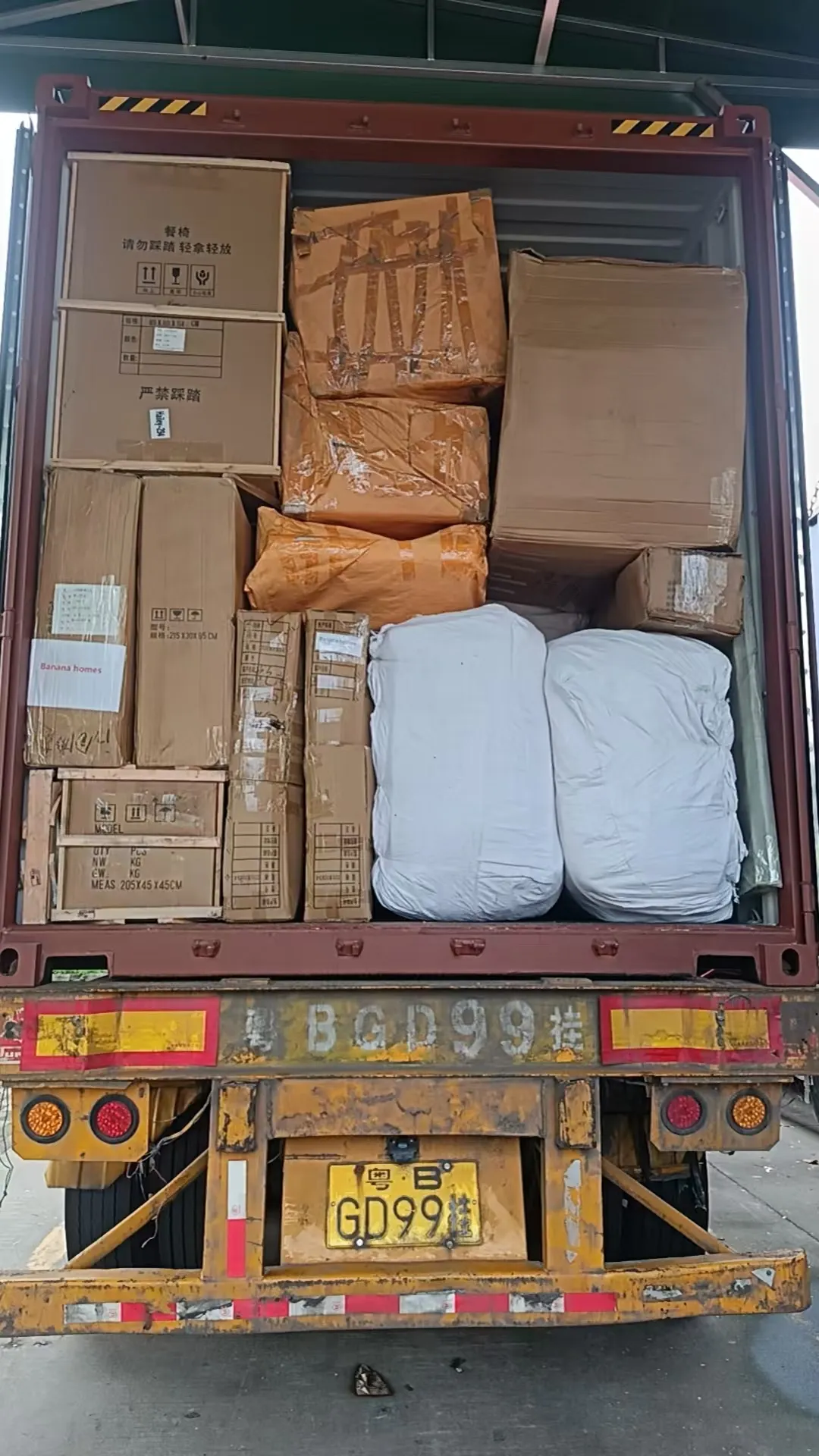
We supervised the container stuffing at the warehouse to maximize space utilization. The 40HQ container was loaded with careful weight distribution — heavier solid wood items at the bottom, lighter metal and upholstered items on top and in gaps. Total utilization was approximately 95% of available cubic capacity.
Step 3: Export Customs Clearance (China)
All export documentation was prepared by our team: commercial invoice, packing list, bill of lading, and certificate of origin. China export customs clearance was straightforward — the cargo was classified as "new furniture" with no restricted materials involved.
Step 4: Main Carriage (Sea Freight)
The container was trucked to Nansha Port and loaded onto a direct vessel bound for Chennai. The sailing time was approximately 10 days.
Step 5: Import Customs Clearance (India)
Upon arrival at Chennai port, our India-based customs broker handled the import clearance. Documentation was submitted electronically through the Indian Customs ICEGATE system.
Step 6: Final Delivery
After clearance, the container was de-stuffed at Chennai port and the cargo was loaded onto trucks for delivery to the customer's warehouse in Chennai, approximately 25 km from the port.
Challenges Encountered
1. India Customs Scrutiny on Used vs. New Furniture
India customs regulations distinguish clearly between new and used furniture for import purposes. Used furniture (especially wooden) may require additional permits, quarantine inspection, or face higher duties. The customs officer initially flagged the shipment for inspection, questioning whether some wooden items with slight surface marks were "used" rather than "new."
2. Consolidation from Two Suppliers
Managing two separate pickup points across different cities added complexity to the timeline. A delay from one supplier would have impacted the entire container loading schedule.
3. Container Loading Optimization
Mixed furniture types (solid wood vs. upholstered vs. metal) require careful loading to prevent damage during transit. Irregularly shaped items like sofa sets and dining chairs posed space utilization challenges.
How We Solved Them
Customs Solution
We provided the customs officer with factory-issued certificates of newness, original purchase invoices from the Chinese suppliers, and detailed photos taken during the container loading process showing the furniture in brand-new condition with factory packaging. Our customs broker in Chennai communicated directly with the assessing officer to clarify that the surface marks were normal finishing characteristics of solid wood furniture, not signs of prior use. The inspection was completed within one working day, and the cargo was cleared without additional penalties or delays.
Consolidation Solution
We built a 3-day buffer into the trucking schedule — Supplier A's cargo was picked up from Nansha two days earlier, and Supplier B's cargo from Shenzhen on the following day. Both arrived at our warehouse with one day to spare before the container loading date. This buffer eliminated the risk of one supplier's delay affecting the other.
Loading Solution
Our warehouse team created a stowage plan before loading: solid wood cabinets and tables went in first as the base layer, followed by stacked chairs and shelving units, with upholstered sofas placed on top and in remaining voids. Corner protectors, airbags, and padded wrapping were used for all upholstered items. The final stowage used ~95% of the container's capacity while keeping all items secure.
Final Timeline
| Phase | Date | Duration |
|---|---|---|
| Cargo pickup from Supplier A (Nansha) | Day 1 | 1 day |
| Cargo pickup from Supplier B (Shenzhen) | Day 2 | 1 day |
| Consolidation & container loading at warehouse | Day 3 | 1 day |
| Export customs clearance (China) | Day 4 | 1 day |
| Trucking to Nansha Port & vessel departure | Day 5 | — |
| Sea freight (Nansha → Chennai) | Day 5–15 | ~10 days |
| Arrival at Chennai port | Day 15 | — |
| Import customs clearance (India) | Day 15–17 | 2 days |
| De-stuffing & final delivery to Chennai warehouse | Day 17 | 1 day |
| Total | Day 1 → Day 17 | 17 days |
Final Cost
| Cost Item | Amount (USD) |
|---|---|
| Trucking (Nansha → Shenzhen warehouse) | $180 |
| Trucking (Shenzhen supplier → warehouse) | $80 |
| Warehouse consolidation & container loading | $200 |
| Export customs clearance (China) | $120 |
| Ocean freight (1×40HQ, Nansha → Chennai) | $1,450 |
| B/L documentation & handling fee | $85 |
| Import customs clearance (India) | $350 |
| Port handling & CFS charges (Chennai) | $420 |
| Customs inspection fee | $150 |
| Inland delivery (Chennai port → warehouse, 25 km) | $280 |
| Total | ~$3,315 |
Note: Costs are approximate and based on the prevailing market rates at the time of shipment. Import duties and GST (India) are excluded as they vary by product category and HS code classification.
Customer Review
"This was our first time importing furniture from China, and honestly, we were quite nervous about the entire process — especially customs clearance in India. The DTFU team handled everything professionally from start to finish. They coordinated with both suppliers, managed the consolidation, and kept us updated at every step. When customs raised questions about the furniture condition, their broker in Chennai resolved it quickly without any extra cost to us. The furniture arrived in excellent condition, and the total timeline of 17 days was faster than we expected. We've already started planning our second shipment."
— Owner, Chennai Furniture Importing Company
Lessons Learned
-
India customs documentation requires extra diligence. Even when shipping new furniture, having factory photos, original invoices, and a clear description of goods ready before arrival can prevent unnecessary inspection delays.
-
Consolidating from multiple suppliers needs buffer time. When working with two factories in different cities, always build in extra days between pickups to avoid a domino effect of delays.
-
FCL is clearly the right choice at 65 CBM. For this volume, FCL not only saved cost compared to LCL but also reduced handling risk and simplified customs clearance.
-
A well-planned stowage makes a difference. Taking the time to plan container loading based on item weight, fragility, and shape prevented any transit damage — all furniture arrived in saleable condition.
-
Having a local customs broker in India is essential. India's customs procedures can be nuanced and change frequently. Partnering with an experienced broker in Chennai saved time and eliminated guesswork.
Ready to ship furniture or other goods from China to India? Contact DTFU Logistics for a tailored shipping solution.