Customer Background
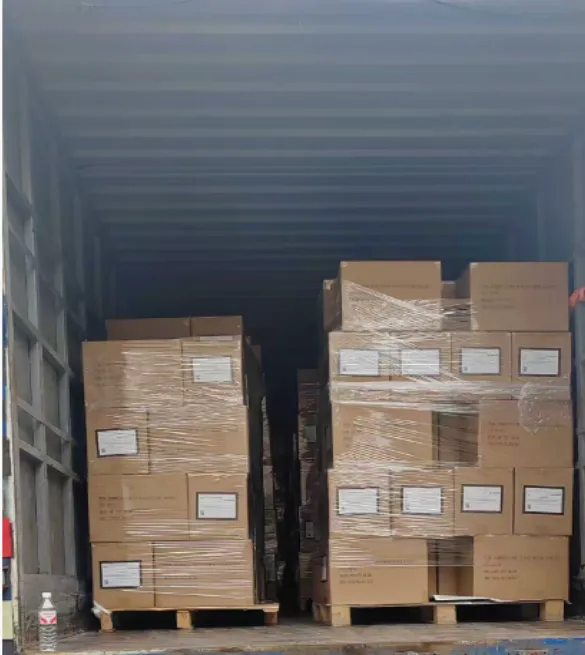
The client is a small flooring importer based in Mississauga, Ontario, sourcing residential vinyl flooring products from manufacturers in Guangdong Province. They had previously relied on LCL consolidation for smaller volumes, but this was their first attempt at a full container load (FCL) — a single 20GP container of PVC flooring destined for their distribution warehouse in Toronto.
The customer had limited experience with Chinese export procedures and had never worked with a freight forwarder based in Shenzhen. They approached DTFU Logistics through a referral, looking for a cost-effective FCL solution that would not sacrifice operational reliability.
Cargo Information
| Detail | Specification |
|---|---|
| Commodity | PVC Vinyl Flooring (Planks & Sheets) |
| Container Type | 1 × 20GP Dry Van |
| Total Pallets | 10 pallets |
| Gross Weight | 14,800 kg |
| Total CBM | ~24 CBM |
| Packaging | Factory shrink-wrapped pallets with corner protectors |
| Loading Port | Shekou, Shenzhen, China |
| Destination Port | Toronto, Canada (via Port of Montreal + rail) |
| Incoterm | FOB Shekou |
Why This Shipping Method
For a single 20GP container of PVC flooring weighing under 15 tons, FCL was the logical choice over LCL. Several factors drove this decision:
- Cost per unit advantage. At ~24 CBM, the cargo would have occupied roughly 4–5 LCL cubic meters, which — once factoring in consolidation fees, higher per-CBM ocean rates, and the risk of space shortages during peak season — made FCL more economical for this volume.
- Warehouse lead time. The client needed predictable arrival timing to coordinate local trucking and warehouse labor. FCL avoids the unpredictable consolidation and deconsolidation delays common in LCL.
- Reduced handling risk. PVC flooring is dense and heavy. Each pallet transfer in an LCL warehouse adds potential for edge damage or crushing. Direct factory loading into a dedicated container minimized physical handling.
Routing: Shekou → Yantian (empty repositioning) → Port of Montreal (all-water via Panama Canal) → CN Rail to Toronto rail yard → final delivery by truck.
This all-water route via the Panama Canal was chosen over a rail-bridge or express ocean service primarily for budget reasons. The customer was willing to accept a longer transit in exchange for a substantially lower freight quote.
Shipping Process
Step 1: Booking & Container Pickup
The booking was placed 12 days before the estimated cargo-ready date (CRD). DTFU coordinated with COSCO for a 20GP dry van to be dropped at the supplier's warehouse in Foshan — roughly a 2-hour drive from Shekou port.
Step 2: Factory Loading
The factory loaded 10 pallets into the container, all shrink-wrapped and secured with horizontal strapping. We requested an additional layer of corrugated board lining on the inner container walls — this was a precautionary measure specifically recommended by our operations team (more on why in the Challenges section). The container was sealed at the factory.
Step 3: Export Customs Clearance
The container was transported to Shekou Terminal. Export declaration was filed electronically through China's single window system. HS Code 3918.10 (vinyl flooring) requires no special export licenses for standard PVC products. Clearance was granted within 4 hours with no inspections.
Step 4: Ocean Freight (Shekou → Montreal)
The vessel called at Yantian for mainloading before transiting the Panama Canal. Total ocean transit: 28 days. The container was discharged at the Port of Montreal.
Step 5: Rail Ramp to Toronto
The container was transferred to CN Rail at Montreal's intermodal terminal. Rail transit from Montreal to Toronto's Brampton intermodal ramp took approximately 3 days.
Step 6: Customs Clearance & Final Delivery
Upon arrival at the Brampton rail yard, customs clearance was initiated. After release, a local cartage company picked up the container and delivered it to the customer's warehouse in Mississauga — a 30-minute truck move.
Challenges Encountered
Challenge 1: Cold-Weather Cargo Risk
This was the operational team's primary concern. The container was scheduled to arrive at the Toronto rail yard in early February, when ambient temperatures in southern Ontario regularly drop to −15°C to −25°C. PVC flooring, while durable, becomes increasingly brittle in sub-zero conditions. A container sitting on an open rail ramp for 48–72 hours before pickup could expose the cargo to temperatures well below its recommended handling range.
Most first-time Canada importers from China are unaware of this — they assume a steel container provides thermal protection. It does not.
Challenge 2: CBSA Phthalate Compliance Scrutiny
Canada enforces strict limits on phthalate content in vinyl flooring under the Canada Consumer Product Safety Act (CCPSA). PVC flooring shipments from China have faced increased inspection rates at CBSA in recent years, particularly when the importing company is new or the product documentation is incomplete. Our customer was a first-time importer under their own bond, which raised the risk profile.
Challenge 3: Factory Packaging Was Insufficient for FCL Transit
The factory's standard export packaging consisted of shrink wrap and corner boards only. While acceptable for LCL shipments where goods are handled individually, this packaging provided no internal moisture barrier and limited edge protection against the shifting forces inside a fully loaded container during ocean transit.
How We Solved Them
Solution to Challenge 1: Thermal Layering
Our operations team instructed the factory to: 1. Place a layer of corrugated cardboard against all six interior surfaces of the container — walls, floor, and ceiling. 2. Wrap each pallet with an additional layer of 120-micron polyethylene sheeting (VCI-grade) under the shrink wrap to trap a still-air insulation layer. 3. Request that the container be staged for immediate vessel loading at Shekou to minimize time sitting on the terminal in cold exposure during the China-side winter.
This cost approximately $180 USD in materials but provided meaningful thermal buffering.
Solution to Challenge 2: Proactive Documentation Package
DTFU prepared a full compliance dossier before the vessel even departed: - Manufacturer's phthalate content test report (issued by SGS Guangzhou) - Material Safety Data Sheet (MSDS) for the PVC compound - Certificate of origin (China-issued, for potential tariff preference) - A cover letter in English/French describing the product's intended residential use
This package was sent to the customer's customs broker in advance, so the CBSA submission included all supporting documents from the start, reducing the likelihood of a hold-for-inspection order.
Solution to Challenge 3: No-Cost Container Lining
Rather than upgrading the factory's packaging (which would have added cost and lead time), the team opted for a simple corrugated board liner inside the container — arranged directly with the trucking company that delivered the empty container. The liner boards were sourced locally in Foshan for approximately ¥200 RMB ($28 USD).
Final Timeline
| Stage | Date | Notes |
|---|---|---|
| Booking confirmed | Jan 3 | |
| Container dropped at factory | Jan 6 | |
| Loading completed | Jan 7 | Sealed at factory |
| Shekou terminal gate-in | Jan 8 | |
| Vessel departure (Yantian) | Jan 10 | |
| Panama Canal transit | Jan 22–24 | |
| Arrival at Montreal | Feb 7 | 28 days ocean transit |
| Rail departure Montreal | Feb 8 | |
| Arrival Brampton rail ramp | Feb 11 | |
| Customs clearance | Feb 12 | Released same day |
| Delivered to Mississauga | Feb 12 |
Total door-to-door transit: 37 days (from container drop to warehouse delivery)
Final Cost
| Item | Amount (USD) |
|---|---|
| Ocean freight (1×20GP, Shekou → Montreal, COSCO) | $1,150 |
| Terminal handling charges (Shekou) | $285 |
| Export customs clearance | $85 |
| Container liner material + installation | $28 |
| Polyethylene sheeting & labor | $180 |
| Ocean freight insurance (0.3% of cargo value) | $95 |
| CN Rail Montreal → Toronto ramp | $420 |
| Customs brokerage (Toronto) | $200 |
| CBSA bond fee | $55 |
| Truck delivery (Brampton ramp → Mississauga) | $180 |
| Total | $2,678 |
Note: Excludes China-side trucking (Foshan → Shekou) arranged directly by the supplier, and destination warehouse unloading.
At roughly $2,678 all-in for a 20GP container moving door-to-warehouse from Foshan to Mississauga, this falls on the low end of Canada-bound FCL pricing — achieved through the all-water routing choice and lean operational decisions.
Customer Review
"We had budgeted around $3,200 for freight, so coming in under $2,700 was a relief. The container arrived with no damaged planks. I was most worried about the cold — the rail yard in Brampton was −18°C the day we picked it up — but the cardboard lining and plastic sheeting did the job. The