Container: 1×20GP (FCL)
Shipping Mode: Ocean freight via FCL + IPI rail to inland point
Customer Background
Our customer is a mid-sized food packaging distributor based in Chicago, Illinois. They supply disposable tableware and food containers to restaurants, catering businesses, and grocery chains across the Midwest region. Having previously sourced from domestic suppliers and a few Southeast Asian vendors, they were looking to expand their product line with more cost-effective options from China. They reached out to DTFU Logistics after a referral from a business partner who had used our services for shipping furniture from Shenzhen.
The customer had limited experience with importing from China directly. Their biggest concern was navigating the logistics reliably — they needed a partner who could handle the entire process from factory pickup to final delivery at their warehouse in Chicago.
Cargo Information
| Item | Packaging | Estimated Volume |
|---|---|---|
| Aluminum foil containers | Carton boxes, 24 packs per box | ~8 cbm |
| Plastic lids (assorted sizes) | Carton boxes | ~6 cbm |
| Paper pulp tableware (plates & bowls) | Carton boxes | ~7 cbm |
| Paper bags (brown kraft, various sizes) | Bale-packed, compressed | ~5 cbm |
| Total | 26 cbm (fits easily in a 20GP) |
The cargo was light but bulky — a classic characteristic of tableware and packaging products. The total gross weight was approximately 4,800 kg, which is well under the 20GP's payload capacity of ~28,000 kg. This meant the container would "cube out" before it "weighed out."
Why This Shipping Method
For this shipment, we recommended a full container load (FCL) in a 20GP container rather than LCL (less than container load) consolidation. Here is why:
- Volume efficiency: At 26 cbm, the cargo was well above the LCL threshold (~15 cbm) where FCL becomes more cost-effective.
- Reduced handling risk: With LCL, the goods would have been unloaded and reloaded at the consolidation warehouse and again at the destination, increasing the risk of box damage or mixed-up shipments. FCL meant the container was sealed at the factory and only opened at the customer's warehouse.
- Faster transit: FCL vessels typically have more direct sailing schedules, and there is no waiting time for consolidation.
- IPI (Interior Point Intermodal) routing: Since the destination was Chicago — an inland city — we moved the container via ocean to a West Coast port (Los Angeles/Long Beach) and then by rail to Chicago. This is the standard and most economical routing for inland-point FCL shipments from Asia.
Shipping Process
Step 1 — Factory pickup and container loading (Ningbo)
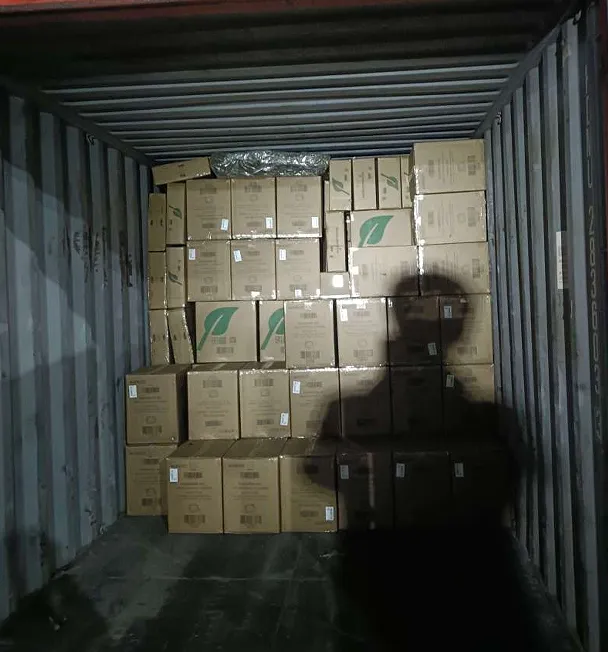
The supplier's factory was located inYongkang, about a 2-hour drive from Ningbo Port. We arranged for an empty 20GP container to be dropped at the factory. The loading took about 4 hours, supervised by the factory's export team. All cartons were palletized and stacked neatly to maximize space utilization and prevent shifting during transit. Once loaded, the container was sealed with a high-security bolt seal, and the container number and seal number were recorded.
Step 2 — Export customs clearance (Ningbo)
The factory provided the commercial invoice, packing list, and customs clearance documents. Our China-based customs broker filed the export declaration through the China Customs single window system. The declaration was processed smoothly, and the container was released for loading onto the vessel the same day.
Step 3 — Ocean freight (Ningbo → Long Beach)
The container was loaded onto a vessel at Ningbo's Beilun terminal. The ocean crossing took approximately 14 days to the Port of Long Beach, California — one of the busiest container ports on the U.S. West Coast.
Step 4 — Rail inland haulage (Long Beach → Chicago)
After the container was discharged in Long Beach and cleared U.S. customs, it was transferred to a rail ramp for the inland journey. The rail leg from Southern California to Chicago took about 5 days, covering roughly 3,200 km. This is the standard IPI routing for Midwest-bound containers.
Step 5 — Final delivery (Chicago rail ramp → customer warehouse)
The container was drayed from the Chicago rail ramp to the customer's warehouse in the western suburbs. The truck arrived in the morning, and the warehouse team unloaded the cargo in approximately 2 hours.
Challenges Encountered
1. Rail container damage risk
The most significant concern for this shipment was the rail leg. Rail transport across the U.S. can be rough — containers are stacked on double-stack rail cars and subject to vibration, jolts, and sudden braking. For lightweight but crushable cargo like paper pulp tableware and paper bags, there was a real risk of carton collapse or water damage if the container was not loaded and braced properly.
2. Coordinating the inland drayage window
The rail ramp does not guarantee an exact arrival time — the container could arrive within a 24–48 hour window. Coordinating the drayage truck to pick up the container and the customer's warehouse to receive it required careful scheduling. The customer's warehouse operated on a tight schedule and could not hold unloading docks open indefinitely.
3. U.S. Customs bond and ISF filing
As a first-time importer, the customer was not familiar with U.S. Customs requirements, including the Importer Security Filing (ISF) which must be filed 24 hours before the vessel loads in China. Missing the ISF deadline can result in financial penalties.
How We Solved Them
1. Cargo securement for rail transport
We worked with the factory to ensure all cartons were loaded on pallets and stretch-wrapped for stability. Air gaps were filled with dunnage bags to prevent load shifting. We also applied corner protection boards and edge guards to vulnerable cartons. For the paper bags (bale-packed), we placed them at the bottom layer to provide a stable base, with lighter items on top.
2. Proactive drayage scheduling
Our U.S. operations team monitored the rail ETA in real time via the rail carrier's tracking system. Two days before the container's estimated arrival at the Chicago ramp, we pre-booked a drayage truck and confirmed the delivery appointment with the customer's warehouse. This ensured the transition from rail to truck was seamless.
3. End-to-end customs compliance support
Our team handled the ISF filing and U.S. Customs clearance on behalf of the customer. We guided them through the documentation required — commercial invoice, packing list, and bill of lading — and ensured everything was compliant with U.S. Customs and Border Protection (CBP) regulations. The shipment was cleared without any customs inspection or delay.
Final Timeline
| Stage | Duration |
|---|---|
| Factory container loading | Day 1 |
| Export customs clearance (Ningbo) | Day 2 |
| Vessel sailing (Ningbo → Long Beach) | Days 3–16 |
| Port discharge & customs clearance (Long Beach) | Days 17–19 |
| Rail transport (Long Beach → Chicago) | Days 20–24 |
| Drayage to warehouse & unloading | Day 25 |
| Total door-to-door | 25 days |
Final Cost
| Item | Cost (USD) |
|---|---|
| Ocean freight (1×20GP, Ningbo → Long Beach) | $1,850 |
| Origin THC, documentation, and port fees | $350 |
| Container sealing and loading supervision | $100 |
| Export customs clearance (China) | $120 |
| ISF filing | $45 |
| U.S. Customs clearance (bond not included) | $150 |
| Rail IPI (Long Beach → Chicago) | $650 |
| Drayage (Chicago rail ramp → warehouse) | $350 |
| Total door-to-door | $3,615 |
Note: Actual costs vary by season, fuel surcharges, and carrier rates. The above figures reflect the approximate cost for this specific shipment.
Customer Review
"This was our first time importing from China, and we were a bit nervous about the whole process. From a packaging product standpoint, we are picky about the condition of our paper bags and pulp tableware — any crushing or moisture damage and they become unsellable. DTFU guided us through every step, from factory loading to U.S. customs clearance. The cargo arrived in excellent condition, the timeline was exactly what they quoted, and the total cost was significantly lower than what we were paying domestic suppliers. We have already booked our second container."
— Mike R., Operations Manager, Chicago Food Packaging Co.
Lessons Learned
This shipment reinforced a few important principles for shipping light-but-bulky consumer goods from China to the U.S. inland:
- FCL over LCL for mixed cartons: When dealing with lightweight products spread across multiple SKUs, FCL eliminates the risk of lost or mis-sorted cartons at consolidation warehouses. The peace of mind alone justifies the cost difference.
- Cargo securement is non-negotiable for rail: The U.S. rail network is efficient, but containers experience significant vibration and lateral forces. Proper palletizing, stretch wrapping, and dunnage are essential for crushable goods like paper products.
- Early ISF filing prevents headaches: For first-time U.S. importers, the ISF rule (commonly called "10+2") can be confusing. Working with an experienced freight forwarder who files this correctly and on time avoids unnecessary penalties.
- Inland point routing works well for Midwest destinations: The IPI model — ocean to West Coast, then rail to Chicago — is a mature and reliable logistics pathway. For a 20GP container of tableware, it delivered competitive cost and acceptable transit time.
At DTFU Logistics, we handle shipments like this every day — from factory floor in China to warehouse door in the U.S. If you are sourcing tableware, food packaging, or any consumer goods from China and need a reliable partner, we would be glad to help.