Route: Nansha, China → Haifa, Israel
Mode: Sea Freight – 1×40HQ (FCL)
Commodity: Comprehensive engine parts kit
Customer: Auto parts wholesaler, Israel
Customer Background
The customer is an Israeli auto parts wholesaler based in Tel Aviv, sourcing diesel and gasoline engine components from Chinese manufacturers for distribution across Israel and the West Bank. They had previously worked with several freight forwarders but experienced recurring issues—delayed documentation, inconsistent container availability, and poor communication during customs clearance at Haifa Port. They approached DTFU Logistics through a referral from a mutual contact in the Guangzhou trade network.
Their procurement manager, responsible for consolidating orders from multiple suppliers in Guangdong Province, needed a single forwarder who could manage the entire export process from factory pickup in China to door delivery in Israel. This was their first trial shipment with DTFU.
Cargo Information
The shipment comprised a mixed consolidation of engine parts sourced from five different suppliers in the Guangdong region:
| Item | Quantity | Packaging |
|---|---|---|
| Timing kit (complete set) | 120 sets | Individually boxed, palletized |
| Thermostat housing | 200 pcs | Carton boxes, palletized |
| Water tank cap | 500 pcs | Bulk cartons |
| Intercooler inlet pipe | 150 pcs | Foam-wrapped, carton boxes |
| Turbocharged intake pipe | 100 pcs | Foam-wrapped, carton boxes |
| EGR valve | 80 pcs | Individually boxed, palletized |
| Valve cover | 90 pcs | Foam-wrapped, carton boxes |
| Oil filter | 600 pcs | Bulk cartons |
| Air filter | 400 pcs | Bulk cartons |
| Miscellaneous seals, gaskets, hardware kits | Various | Small parts bagged, boxed |
Total: 22 pallets / 14,600 KGS gross weight / 28.5 CBM
Container: 1×40HQ high-cube container (76.3 CBM internal capacity, ample space for mixed stowage)
Why This Shipping Method
Several factors drove the decision to use a full container load (FCL) via 40HQ rather than LCL consolidation:
-
SKU diversity and quantity. With over 20 distinct part types and a total volume approaching 29 CBM, LCL would have required splitting the cargo across multiple consolidation units, increasing handling risk and documentation complexity.
-
Customs sensitivity. Engine parts and auto components are subject to stricter scrutiny by Israel Customs. LCL shipments sharing a container with other commodities increase the likelihood of inspection delays. A dedicated FCL container allows for cleaner documentation and reduces cross-contamination risk.
-
Cost efficiency. At this volume, the per-unit shipping cost of FCL was approximately 18% lower than LCL when factoring in consolidation fees, CFS charges, and the higher risk of demurrage with groupage cargo.
-
Schedule reliability. Direct Nansha–Haifa services operated by several carriers offered fixed weekly departures with consistent 20–22 day transit times.
Shipping Process
Phase 1: Cargo consolidation and origin packing (Week 1–2)
Cargo was collected from five suppliers across Foshan, Dongguan, and Shenzhen. Each supplier's parts were inspected at our Shenzhen warehouse for packaging integrity. Several issues were identified during this phase:
- The turbocharged intake pipes from one supplier were wrapped in standard PE foam only, which was insufficient for the 22-day sea voyage plus potential port handling.
- One batch of timing kits had incorrect HS code labels affixed by the manufacturer.
These were corrected before loading into the container.
Phase 2: Container loading and container freight station (CFS) (Week 3)
A 40HQ container was pre-booked with COSCO Shipping Lines on the Nansha–Haifa route. Loading was performed at the DTFU-controlled warehouse in Nansha to ensure proper weight distribution and cargo segregation.
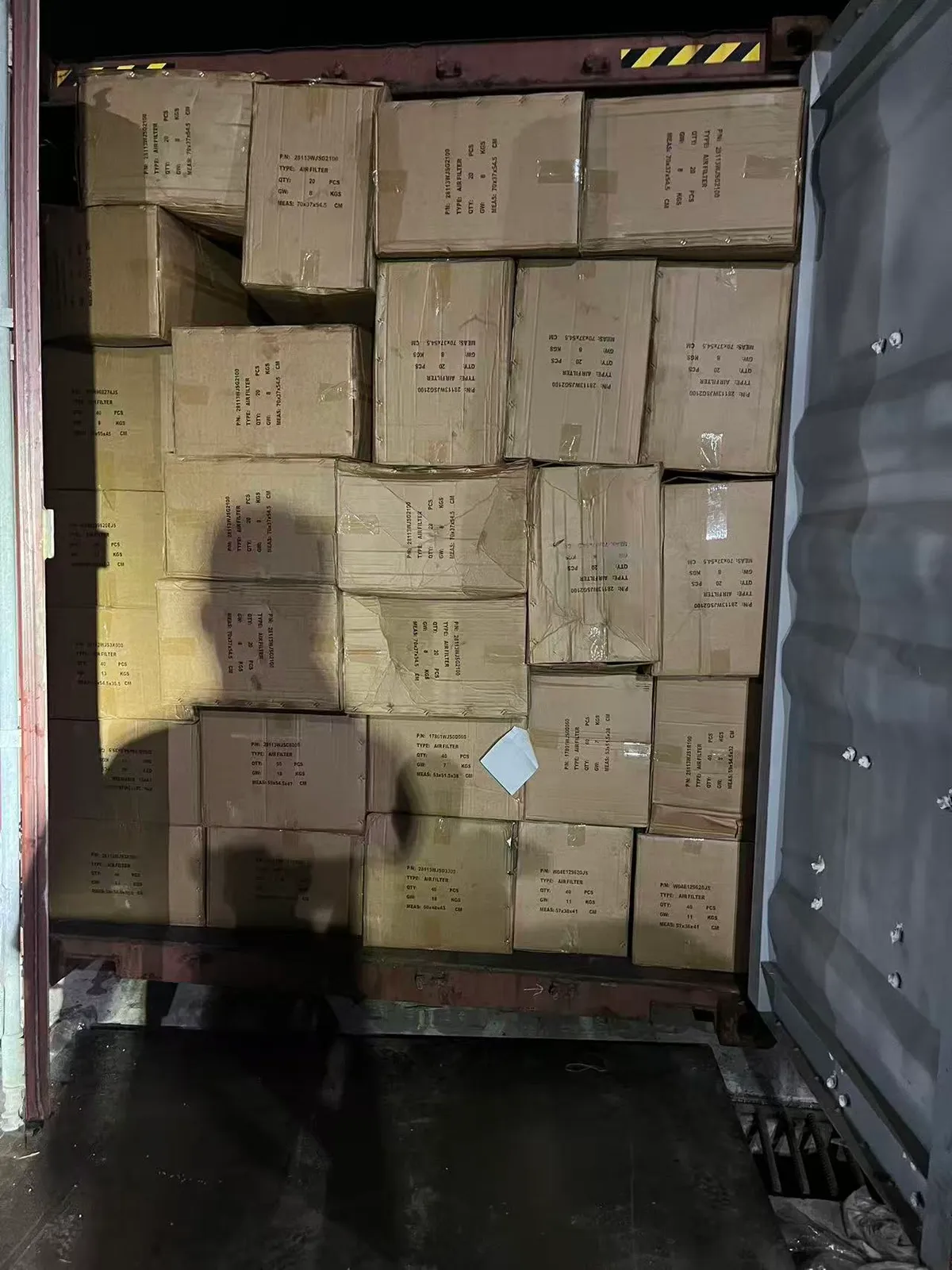
【真实图片 1: Container loaded with palletized engine parts at origin warehouse, showing mixed pallet configuration with smaller cartons stacked on top of heavier pallets, straps and corner guards visible on each unit】
Phase 3: Export customs clearance (Week 3)
Export declaration was filed at Nansha Customs. The primary challenge was the multi-HS-code nature of the shipment. Unlike a single-commodity container, this shipment contained parts falling under multiple tariff headings (8409, 8483, 8421, 8708), requiring a consolidated customs manifest with accurate line-item descriptions for each category.
Customs released the container without physical inspection after documentation review on day 3.
Phase 4: Ocean transit (Week 4–6)
The vessel departed Nansha on schedule and transited via Singapore, transshipped at Colombo, and arrived at Haifa Port after 21 days at sea. No weather-related delays were recorded during the voyage.
Phase 5: Destination clearance and delivery (Week 7)
Upon arrival at Haifa Port, the container was selected for routine X-ray scanning by Israel Customs due to the mixed auto parts classification. This added 3 days to the clearance timeline.
Challenges Encountered
Challenge 1: Multi-HS-code customs declaration
The single largest administrative challenge was filing a correct export declaration for a container holding parts across four different HS code chapters. Chinese customs regulations require accurate line-item breakdowns for mixed FCL shipments. An error in classification could result in export hold or retrospective penalties.
Challenge 2: Packaging inconsistency across suppliers
As noted earlier, one supplier's packaging for turbocharged intake pipes was inadequate for the maritime environment. Additionally, two suppliers had used recycled cartons with old barcodes and markings that could have confused the destination customs inspector.
Challenge 3: Haifa Port documentation review delay
Although the container was released by China Customs without incident, Israel Customs flagged the shipment for a documentary review upon arrival. The reviewing officer requested clarification on the country of origin for EGR valves, as some sub-components were sourced from a third country.
How We Solved Them
Solution 1: Consolidated customs declaration with professional HS code mapping
Our documentation team prepared a consolidated customs declaration with each commodity line itemized by HS code, quantity, unit value, and country of origin. We referenced the China Customs 2025 tariff schedule and cross-checked each part against the Israel Customs Tariff database to ensure consistency between export and import declarations. A pre-clearance consultation was arranged with a licensed customs broker in Haifa before the vessel departed.
Solution 2: Supplier packaging audit and corrective repacking
During the cargo consolidation phase at our Shenzhen warehouse, all incoming packages were inspected against a pre-defined packaging standard for sea freight. Items with insufficient protection were repacked using:
- 5-layer corrugated cartons with internal foam inserts for fragile components (turbo pipes, intercooler pipes)
- LDPE bags and desiccant packs for moisture-sensitive items (filters, gaskets)
- Old barcodes and markings were covered or removed before final carton sealing
Solution 3: Proactive engagement with Israel Customs broker
Once the container was flagged for documentary review in Haifa, our broker submitted a detailed country-of-origin breakdown with supporting supplier invoices and factory declarations for the EGR valves. The documentation demonstrated that final assembly and testing were performed in China, even though certain raw materials were imported. Customs accepted the explanation and released the cargo after 3 working days.
Final Timeline
| Phase | Duration | Cumulative |
|---|---|---|
| Cargo collection and consolidation | 9 days | Day 1–9 |
| Container loading and CFS | 2 days | Day 10–11 |
| Export customs clearance | 3 days | Day 12–14 |
| Ocean transit (Nansha → Haifa) | 21 days | Day 15–35 |
| Port discharge and customs hold | 5 days | Day 36–40 |
| Customs release and container de-vanning | 2 days | Day 41–42 |
| Final delivery to customer warehouse, Tel Aviv | 1 day | Day 43 |
Total door-to-door transit time: 43 days
Final Cost
| Item | Cost (USD) |
|---|---|
| Origin trucking (5 supplier pickups, Guangdong area) | $680 |
| Consolidation, warehousing, and inspection | $450 |
| Export customs declaration and documentation | $180 |
| 1×40HQ ocean freight (Nansha → Haifa) | $3,400 |
| Ocean freight surcharges (BAF, LSS, PSS) | $520 |
| Israel destination THC and port fees | $450 |
| Israel customs brokerage and clearance | $350 |
| Documentation review handling fee | $200 |
| Container de-vanning and local drayage (Haifa Port → Tel Aviv) | $520 |
| Cargo insurance (0.35% of declared value) | $290 |
Total: $7,040
The total landed cost per cubic meter was approximately $247/CBM, which the customer considered reasonable for a mixed FCL shipment with complex documentation requirements.
Customer Review
"This was our first time shipping a consolidated engine parts container with DTFU. The packaging audit at origin saved us from potential damage to the turbo pipes—one of our previous forwarders never checked supplier packaging. The customs documentation was also handled more thoroughly than what we were used to. Although the clearance took a few extra days at Haifa due to the documentary review, the broker kept us informed throughout. We will continue using DTFU for our monthly consolidations."
— Procurement Manager, Tel Aviv
Lessons Learned
-
Mixed auto parts shipments require dedicated HS code mapping. Forwarders handling engine parts with multiple tariff classifications should invest in pre-clearance classification work before the container ships. A small misclassification can cause disproportionate delays.
-
Supplier packaging cannot be assumed adequate. Even experienced auto parts suppliers use packaging designed for domestic logistics, not international sea freight. A mandatory consolidation-phase inspection with documented sign-off reduces damage claims significantly.
-
Haifa Port customs scrutiny is routine for auto components. Israel Customs regularly inspects shipments containing vehicle parts, particularly when multiple HS codes are involved. Building 3–5 extra days into the timeline for documentary review is prudent, and having a local customs broker on standby is essential.
-
FCL is the right choice for mixed consolidation above 20 CBM. Despite the higher upfront container cost compared to LCL, the per-unit cost advantage, reduced handling risk, and cleaner customs profile make FCL the logical choice for shipments of this nature.