If you're searching for the cost of shipping a container from China to Israel, you've probably already noticed a frustrating pattern: most online quotes only show port-to-port ocean freight, while the real expense lies buried in surcharges, Israel customs duties, and an 18% VAT that together can inflate your final bill by 40 to 60 percent. In 2026, with the Red Sea crisis still reshaping global shipping routes, understanding your true all-in cost has never been more important — or more complex.
This guide gives you exactly what the search results don't: actual June 2026 container shipping rates from China to Israel across all six major Chinese ports, a line-by-line door-to-door cost model, Israel-specific import duty tables by HS code, and a real-world shipment case study that shows you where every dollar goes. Whether you're a B2B importer sourcing furniture from Guangdong, an e-commerce seller shipping electronics to Tel Aviv, or a first-time buyer trying to understand DDP versus FOB, you'll walk away with a clear, numbers-backed picture of what your container shipment will actually cost — and how to avoid overpaying. For a broader view of our end-to-end service capabilities, visit our dedicated Shipping from China to Israel page, or see our detailed Shipping cost from China to Israel breakdown for additional rate context.
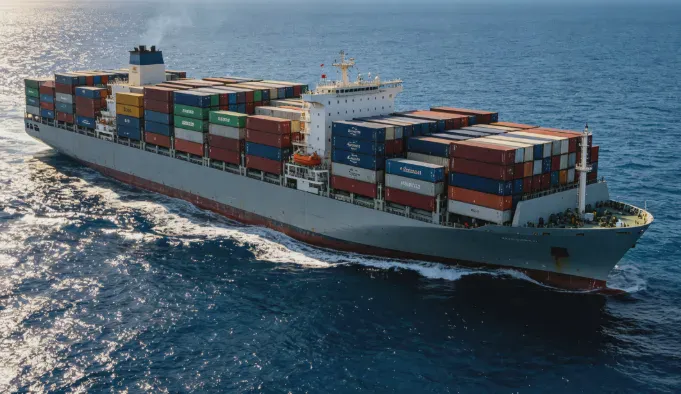
2026 Container Shipping Rates from China to Israel
The numbers below are what you came for — but they need context. Every rate you see here reflects the post-Red Sea crisis reality of mid-2026: most carriers defaulting to the Cape of Good Hope route, with elevated War Risk Surcharges baked into the figures. Use these as reliable budget benchmarks, not locked-in quotes. Ocean freight fluctuates weekly.
FCL Container Shipping Cost by Port Pair (June 2026)
The table below covers all six major Chinese container ports shipping to Israel's two gateway ports. Rates shown are port-to-port base ocean freight including BAF (Bunker Adjustment Factor) and carrier security fees. They do not include origin trucking, Chinese export customs, Israeli destination charges, import duties, VAT, last-mile delivery, or cargo insurance — those are all covered in the door-to-door cost model later in this guide.
| Origin Port (China) | Destination Port | 20ft (USD) | 40ft (USD) | 40HQ (USD) | Transit Time |
|---|---|---|---|---|---|
| Shenzhen (Yantian) | Ashdod | $2,200 – $2,800 | $3,200 – $4,100 | $3,400 – $4,300 | 22–28 days |
| Shenzhen (Yantian) | Haifa | $2,300 – $2,900 | $3,300 – $4,200 | $3,500 – $4,400 | 23–30 days |
| Shanghai (Yangshan) | Ashdod | $2,300 – $2,900 | $3,400 – $4,300 | $3,600 – $4,500 | 24–30 days |
| Shanghai (Yangshan) | Haifa | $2,400 – $3,000 | $3,500 – $4,400 | $3,700 – $4,600 | 25–32 days |
| Ningbo-Zhoushan | Ashdod / Haifa | $2,400 – $3,000 | $3,500 – $4,400 | $3,700 – $4,600 | 25–32 days |
| Guangzhou (Nansha) | Ashdod / Haifa | $2,300 – $2,900 | $3,300 – $4,200 | $3,500 – $4,400 | 23–30 days |
| Qingdao | Ashdod / Haifa | $2,600 – $3,200 | $3,800 – $4,700 | $4,000 – $4,900 | 28–35 days |
| Xiamen | Ashdod / Haifa | $2,500 – $3,100 | $3,600 – $4,500 | $3,800 – $4,700 | 26–33 days |
A few patterns worth noting: Shenzhen and Guangzhou consistently offer the lowest rates due to higher container availability and shorter sailing distance to the Cape of Good Hope corridor. Qingdao (serving northern China) runs $400–$600 higher on average for a 40ft container and adds about five extra days at sea. Ashdod is typically $50–$150 cheaper than Haifa on ocean freight alone, though your final delivery address should drive that decision, not the freight rate difference.
LCL Shipping Cost from China to Israel
If you're shipping less than a full container, LCL (Less than Container Load) lets you share container space with other importers. You pay per cubic meter (CBM) instead of a flat container rate.
| Volume Tier | Cost per CBM (USD) | Best For |
|---|---|---|
| 1–5 CBM | $120 – $180 | Samples, test orders, small batch freight |
| 5–10 CBM | $90 – $130 | SME regular shipments, seasonal restocks |
| 10–15 CBM | $70 – $100 | Near-FCL volumes, one-time large orders |
For a complete overview of ocean freight options on this route — including FCL, LCL, carrier schedules, and transit details — see our guide on Sea Freight From China to Israel. Here's the practical takeaway: above roughly 15 CBM, a 20ft FCL (Full Container Load) becomes cheaper than LCL — you're paying for the whole container but getting a lower per-unit rate. LCL also adds 5–8 days to your total timeline for consolidation at origin and deconsolidation at destination. For shipments between 5 and 15 CBM, LCL is usually the right call.
Why These Rates Change: Red Sea Crisis, Seasonality & Fuel Surcharges
The single biggest factor shaping China→Israel container costs in 2026 is the Red Sea / Suez Canal rerouting. Since late 2023, Houthi attacks in the Red Sea have forced Maersk, MSC, CMA CGM, COSCO, and virtually every major carrier to bypass the Suez Canal entirely, routing instead around South Africa's Cape of Good Hope. This adds $800–$1,500 per container in additional fuel, crew costs, and insurance — billed to you as a War Risk Surcharge or Emergency Risk Surcharge — and extends port-to-port transit by 10 to 14 days.
As of mid-2026, Cape routing remains the default for most services. Two carriers — ZIM (Israel's flag carrier) and COSCO — offer selective Suez Canal transits with enhanced naval escort, cutting transit back to 22–28 days at a $300–$500 per container premium. If transit speed matters more than the absolute lowest rate, ask your freight forwarder specifically about ZIM or COSCO Suez options. For the latest on carrier security measures and route developments, read our update on Red Sea Shipping Returns Under Tight Security.
Seasonal rate swings follow a predictable calendar:
- Pre-Chinese New Year (January–February): Factory shutdowns create a pre-holiday shipping rush. Rates spike 15–30%.
- Pre-Passover (February–March): Israeli consumer goods import surge. Rates climb 10–20%.
- Peak Season / Pre-Rosh Hashanah (August–September): Israel's busiest import window of the year. Rates jump 15–25%.
- Cheapest months to ship a container from China to Israel: April through June, and October through November. Forwarders are hungriest for volume during these windows.
Fuel surcharges (BAF/CAF) add $200–$400 per FCL on Asia-Mediterranean routes, adjusted quarterly with global oil prices. Carrier competition also matters: ZIM offers the strongest Ashdod schedule (it's their home hub), while COSCO, MSC, Maersk, CMA CGM, ONE, HMM, and Evergreen compete most aggressively on Shenzhen and Shanghai departures — which is part of why those southern Chinese ports show lower rates. Finally, 40HQ containers remain in tighter supply than 20-footers on China-outbound routes; book your 40HQ at least 2–3 weeks ahead between August and October.
Israel Import Duties, VAT & Customs Clearance for Container Shipments
Ocean freight is only part of the picture. Israeli customs will take their slice before your container leaves the port — and for many importers, this is where the real cost surprises live.
Israel Import Duty Rates by HS Code (China Origin)
Israel uses the Harmonized System (HS) for tariff classification. The duty rate your shipment faces depends entirely on the exact HS code assigned to your product. Below are rates for the most common product categories imported from China to Israel. Use this as a reference, but always confirm your specific HS subheading with your freight forwarder or Israeli customs broker — some products benefit from preferential rates under China-Israel trade agreements.
| Product Category | HS Code Range | Typical Duty Rate |
|---|---|---|
| Furniture (Wooden) | 9403 | 0–6% |
| Furniture (Metal) | 9403.20 | 0–12% |
| Electronics & Electrical Appliances | 85 | 0–12% |
| Machinery & Equipment | 84 | 0–8% |
| Textiles & Apparel | 61–63 | 6–12% |
| Footwear | 64 | 8–12% |
| Toys & Games | 9503 | 0–12% |
| Building Materials | 68–70 | 0–8% |
| Auto Parts | 8708 | 0–6% |
| Solar Panels | 8541.43 | 0% (most cases) |
| Plastic Products | 3926 | 6–10% |
Israel VAT on Imports: How to Calculate It (18%, 2026)
Israel's import VAT is 18% as of 2026 (up from 17% in prior years). Critically, VAT is calculated on the CIF value plus customs duty — not just the product cost — which means you pay tax on top of tax. Here's the formula:
- CIF Value = Cost of Goods + Insurance + Freight
- Customs Duty = CIF Value × Duty Rate (%)
- VAT Base = CIF Value + Customs Duty
- VAT = 18% × VAT Base
- Total Import Tax = Customs Duty + VAT
Let's run a real example. Say you're importing $20,000 worth of wooden furniture from China. Your ocean freight is $3,200 and insurance is $200, giving you a CIF value of $23,400. Furniture under HS 9403 carries a 6% duty:
- Customs Duty: $23,400 × 6% = $1,404
- VAT Base: $23,400 + $1,404 = $24,804
- VAT: $24,804 × 18% = $4,465
- Total tax bill: $5,869 — which is 25% of your CIF value
If you only budgeted for the product cost and freight, that $5,869 tax line item comes as an unpleasant surprise. Registered Israeli companies can reclaim VAT through their periodic filings, which makes FOB or CIF terms more attractive if you have local tax registration.
SII Certification: What Products Need It for Israel Import
The Standards Institution of Israel (SII) mandates pre-import certification for several product categories. If your goods fall into one of these buckets and you ship without SII approval, your container can be held at the port — eating demurrage fees — until certification is resolved.
Products requiring SII certification: electronics and electrical appliances, children's products and toys, construction materials, food-contact materials, and certain textiles.
The process takes 2 to 8 weeks and costs anywhere from $300 to over $2,000 depending on the testing requirements for your specific product. The good news: some SII-recognized testing labs operate in China, which means you can get your products tested and certified before they ship — eliminating the risk of post-arrival port delays. A competent freight forwarder handling China-Israel routes should coordinate this for you as part of their door-to-door service.
Israel Port Security & Other Import Notes
Israel's ports conduct rigorous security screening. Random container X-ray or scanning inspections at Ashdod and Haifa can add 1–3 days to your clearance timeline if your container is selected. This is routine and not cause for alarm — just build a couple of buffer days into your delivery expectations. Certain luxury goods also attract a purchase tax beyond standard customs duty, and food imports require kosher certification, which is a separate compliance track.
Door to Door Container Shipping Cost from China to Israel: DDP, CIF & FOB Compared
This is the section that separates an informed importer from someone who gets blindsided by add-on charges. Door to door shipping from China to Israel is not one number — it's a stack of line items that vary dramatically depending on which Incoterms you choose.
Incoterms Cost Breakdown: EXW vs FOB vs CIF vs DDP
| Incoterm | What's Included | What You Still Pay | Best For |
|---|---|---|---|
| EXW (Ex Works) | Factory gate price only | Everything: pickup, export clearance, ocean freight, insurance, destination charges, customs, duty, VAT, delivery | Buyers with their own logistics team on both ends |
| FOB (Free on Board) | Factory pickup + Chinese export clearance + delivery to origin port | Ocean freight, insurance, Israel destination charges, customs clearance, duty, VAT, last-mile delivery | Buyers who want to control carrier and routing selection |
| CIF (Cost, Insurance, Freight) | FOB + ocean freight + insurance to Israeli port | Israel destination charges, customs clearance, duty, VAT, last-mile delivery | Buyers who want the seller/supplier to handle the main carriage |
| DDP (Delivered Duty Paid) | Everything: door-to-door, all duties and VAT paid | Nothing — fixed all-in price | First-time importers, buyers wanting budget certainty and zero hassle |
Full Door-to-Door Container Shipping Cost: Line-by-Line Breakdown
Here is what a real all-in shipment looks like when you account for every cost layer. The "Total excl. duty & VAT" row is what you'll pay your forwarder. The duty and VAT you pay to Israeli customs (unless on DDP terms, where your forwarder handles it).
| Cost Component | 20ft (USD) | 40ft / 40HQ (USD) |
|---|---|---|
| Factory Pickup (China trucking) | $250 – $450 | $350 – $550 |
| China Export Customs Clearance | $100 – $200 | $100 – $200 |
| Origin Port Charges (THC, B/L, security) | $200 – $350 | $250 – $450 |
| Ocean Freight (port-to-port) | $2,200 – $3,200 | $3,200 – $4,900 |
| War Risk / Emergency Surcharge (Red Sea) | $200 – $500 | $300 – $600 |
| Cargo Insurance (0.3–0.5% of cargo value) | $60 – $150 | $90 – $250 |
| Israel Destination Port Charges (THC, docs) | $300 – $550 | $400 – $650 |
| Israel Customs Clearance (broker fee) | $150 – $250 | $150 – $250 |
| Import Duty (0–12%, product-dependent) | See Israel duties table above | See Israel duties table above |
| VAT (18% on CIF + duty) | See calculation formula above | See calculation formula above |
| Last-Mile Delivery (Israel trucking) | $250 – $500 | $300 – $600 |
| TOTAL excl. duty & VAT | $3,710 – $6,150 | $5,140 – $8,450 |
| TOTAL incl. duty & VAT (estimated) | Add 20–35% of CIF value | Add 20–35% of CIF value |
DDP Shipping vs Port-to-Port: Which Costs Less?
DDP shipping from China to Israel typically commands a 15–25% premium over self-managed CIF plus customs. But that premium buys you three things that often save money in practice: no broker-search time, no customs-delay demurrage charges, and a fixed all-in price that makes your budgeting predictable.
Choose DDP when: you're a first-time importer to Israel, you don't have an established Israeli customs broker, you want a single fixed price for your P&L, or your shipment is time-sensitive and can't afford clearance delays.
Choose FOB or CIF when: you have a trusted Israeli customs broker, you're a registered Israeli company that can reclaim VAT, or you ship regularly enough to negotiate each cost layer individually. For a deeper comparison of trade terms across different shipping scenarios, see our guide on DDP vs FOB: Which Option Saves Time and Reduces Hassle.
Hidden Container Shipping Fees Nobody Mentions in the First Quote
| Fee | Typical Cost | When It Bites |
|---|---|---|
| Demurrage / Detention | $50 – $150 per day | Container stays at port beyond free days (typically 3–5 days at Ashdod/Haifa) |
| Customs Examination Fee | $100 – $300 | Your container is selected for physical inspection |
| ISPS Security Fee | $15 – $25 per container | Applied at both origin and destination ports |
| B/L Amendment Fee | $50 – $100 | Any correction to the Bill of Lading after issuance |
| Chassis Usage Fee | $50 – $100 | Container chassis rental during trucking within Israel |
A good forwarder will list every one of these in an itemized quote upfront. If a quote only says "all-in" without a line-by-line breakdown, you're gambling on what "all" actually means.
20ft vs 40ft vs 40HQ vs LCL: Which Container Size & Shipping Method Is Cheaper?
Choosing the wrong container size can cost you hundreds or even thousands. Here's how to get it right.
Container Sizes & Loading Guide: How Much Actually Fits?
| Container Type | Internal Dimensions | Max Volume | Max Payload | Standard Pallets |
|---|---|---|---|---|
| 20ft | 5.90 × 2.35 × 2.39 m | 28–33 CBM | ~28,000 kg | 10–11 Euro pallets |
| 40ft | 12.03 × 2.35 × 2.39 m | 58–67 CBM | ~26,500 kg | 23–24 Euro pallets |
| 40ft High Cube | 12.03 × 2.35 × 2.69 m | 66–76 CBM | ~26,300 kg | 23–24 Euro pallets |
Cost per CBM: FCL vs LCL Shipping Rates Compared
| Shipping Option | Average Rate | Cost per CBM (at 80% fill) |
|---|---|---|
| 20ft FCL | $2,500 | ~$96 / CBM (26 CBM utilized) |
| 40ft FCL | $3,800 | ~$71 / CBM (53 CBM utilized) |
| 40HQ FCL | $4,000 | ~$65 / CBM (61 CBM utilized) |
| LCL (5 CBM) | $600 | $120 / CBM |
| LCL (10 CBM) | $1,100 | $110 / CBM |
The math is straightforward: above 15 CBM, a 20ft FCL beats LCL on total cost. Above 22 CBM, a 40ft container gives you the best per-CBM rate of any option.
40ft vs 40HQ: Is the High Cube Worth the Extra Cost?
A high cube shipping container costs $150–$300 more than a standard 40ft on China→Israel routes. The difference is 30 centimeters of extra internal height — 2.69 meters versus 2.39 meters.
Pay for the 40HQ when: your cargo exceeds 2.35 meters in height, you're shipping voluminous goods where that extra vertical space avoids splitting into two containers (furniture, insulation, packaging materials, empty retail display racks).
Stick with a standard 40ft when: your palletized cargo fits comfortably under 2.35 meters. You save $150–$300 with zero functional downside.
Container Choice by Cargo Type
- Shipping furniture from China to Israel: 40HQ is the default choice. Furniture is voluminous, and you'll fill the cube before you ever hit the weight limit. The extra 30 cm of height also prevents compression damage on upholstered items.
- Shipping electronics from China to Israel: 40ft or 40HQ depending on volume. Electronics are moderate density and high value — prioritize cargo insurance and consider the faster Suez transit option if inventory timing is tight.
- Machinery and equipment: 20ft is typically best. These goods are dense and heavy — you hit the 28,000 kg weight limit long before you fill the 33 CBM volume.
- Textiles and apparel: 40HQ. Lightweight, high volume, maximum CBM utilization at the lowest per-unit cost.
- Building materials (tiles, stone, hardware): 20ft. These are among the heaviest cargo categories — weight-limited, not volume-limited.
China to Israel Container Shipping: Transit Time, Ports & Routes
How long does a container take to ship from China to Israel in 2026? The answer depends entirely on routing — and the routing depends on whether your carrier uses the Suez Canal or the Cape of Good Hope.
China to Israel Shipping Transit Time (2026)
- Port-to-port via Cape of Good Hope (standard): 22–35 days — this is what most shipments will experience in 2026.
- Port-to-port via Suez Canal (premium, ZIM/COSCO select services): 18–25 days, at a $300–$500 per container premium.
- Full door-to-door timeline: 40–50 days total, including factory pickup, Chinese export clearance, ocean transit, Israeli import clearance, and last-mile delivery. For time-critical shipments, Air Shipping from China to Israel can reduce total transit to just 5–8 days door-to-door.
Ashdod vs Haifa Port: Which Israeli Port Should Your Container Go To?
| Factor | Ashdod | Haifa |
|---|---|---|
| Best for deliveries to | Tel Aviv, Jerusalem, central & southern Israel | Haifa region, Nazareth, Galilee, northern Israel |
| Share of Israeli container traffic | ~60% (largest port) | ~35% |
| Carrier options | Most carriers, most frequent sailings | Good coverage, slightly fewer services |
| Ocean freight difference | Typically $50–$150 cheaper | Slightly higher |
The rule is simple: let your delivery address decide. If your warehouse or customer is in Tel Aviv, Jerusalem, Rishon LeZion, or Be'er Sheva — ship to Ashdod. If you're delivering to Haifa, Nazareth, Tiberias, or anywhere in the Galilee — ship to Haifa. The inland trucking cost difference within Israel usually outweighs the port-to-port ocean freight difference.
Suez Canal vs Cape of Good Hope: Routing Cost & Time Comparison
| Route | Port-to-Port Transit | Surcharge Impact | Carrier Availability |
|---|---|---|---|
| Cape of Good Hope (2026 default) | 28–40 days | +$800–$1,500 per container | All major carriers |
| Suez Canal (premium, naval escort) | 22–28 days | +$300–$500 vs Cape | ZIM, COSCO (selective) |
| Pre-2023 Suez (historical reference) | 18–25 days | Baseline | No longer generally available |
Budget 40–50 days door-to-door for planning purposes. Factor in 2–3 weeks of extra inventory carrying cost versus what you would have planned in 2022 — this is the new normal for the foreseeable future.
China Departure Ports at a Glance
| Origin Port | Best For | Transit vs. Shenzhen |
|---|---|---|
| Shenzhen (Yantian) | Guangdong, Fujian factories | Baseline — fastest, cheapest |
| Shanghai (Yangshan) | Yangtze River Delta | Similar, most sailing frequency |
| Ningbo-Zhoushan | Zhejiang, Jiangsu manufacturing | Similar to Shanghai |
| Guangzhou (Nansha) | Pearl River Delta furniture & bulky cargo | Comparable to Shenzhen |
| Qingdao | Shandong, Beijing, Tianjin | +5 days, +$400–$600 |
| Xiamen | Fujian, Taiwan Strait region | Mid-range |
FAQs
Q: How much does it cost to ship a 20ft container from China to Israel?
Port-to-port ocean freight for a 20ft container currently ranges $2,200–$3,200 (June 2026), depending on origin port and destination. The full door-to-door cost excluding duty and VAT typically runs $3,710–$6,150. See the port-pair rate table and door-to-door cost model above for the exact numbers that apply to your route.
Q: How much does a 40ft container cost to ship from China to Israel?
A 40ft container runs $3,200–$4,900 port-to-port. A 40HQ adds $150–$300. Total door-to-door excluding duty and VAT: $5,140–$8,450. Remember that ocean freight alone understates your true cost by 40–60%.
Q: What is the cheapest way to ship a container from China to Israel?
The most cost-effective combination in 2026: ship a 20ft FCL from Shenzhen or Guangzhou to Ashdod, use the standard Cape of Good Hope routing, book during April–June or October–November, and use FOB or CIF terms with your own Israeli customs broker to optimize for VAT. Avoid peak seasons and the Suez premium unless transit speed is critical.
Q: How long does container shipping from China to Israel take?
In 2026, port-to-port transit takes 22–35 days (Cape routing) to 18–25 days (Suez premium routing). Full door-to-door: 40–50 days. This is 10–14 days longer than pre-2023 norms due to Red Sea rerouting.
Q: Which is the cheapest port in China to ship a container to Israel?
Shenzhen (Yantian) and Guangzhou (Nansha) consistently offer the lowest ocean freight — typically $100–$400 cheaper than Qingdao or Tianjin — due to shorter sailing distance and higher container availability in southern China.
Q: What import duties and VAT do I pay when shipping goods to Israel?
Import duty ranges from 0% to 12% depending on your product's HS code. VAT is 18% (2026 rate), calculated on CIF value plus customs duty. Together they typically add 20–35% to your CIF cost. See the duty table and step-by-step VAT calculation earlier in this guide for your specific product category.