Customer Background
Our client, a mid-size construction materials supplier based in Santo Domingo, Dominican Republic, had secured a government‑subsidized housing project in northern Haiti — approximately 60 kilometers east of Cap‑Haïtien. The project called for 1,200 square meters of polyurethane sandwich panels for roofing and wall insulation. Having sourced the panels from a manufacturer in Foshan, Guangdong province, they needed a reliable freight forwarder to handle the entire logistics chain from factory gate to job site.
The client had never imported directly into Haiti before. They had previously worked with Dominican freight agents for cross‑border trucking, but this was their first attempt at a full international ocean freight move into one of the Caribbean's most challenging ports. They approached DTFU Logistics based on a recommendation from their Foshan supplier, who had worked with us on previous China‑to‑Caribbean shipments.
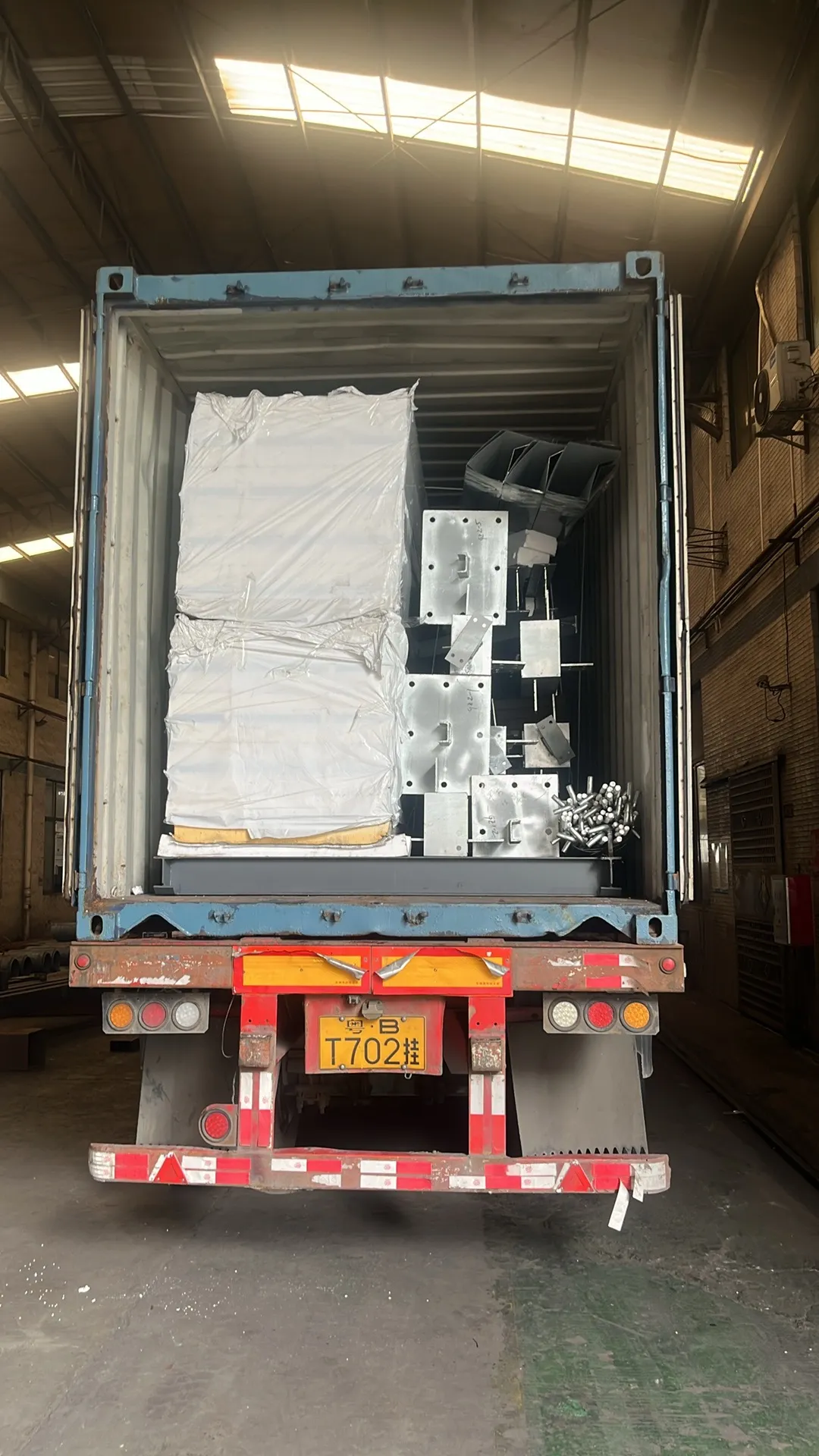
Cargo Information
| Item | Description |
|---|---|
| Commodity | Polyurethane sandwich panels (PIR core, steel facings) |
| Dimensions per panel | 2,300 mm × 1,000 mm × 50 mm |
| Total quantity | 520 panels (stacked and packed in bundles of 10) |
| Total volume | ~59.8 m³ |
| Total weight | ~12,480 kg |
| Packaging | Export-grade shrink wrap + plywood edge protection + steel strapping |
| Container type | 1 × 40′ High Cube (40HQ) — side‑loading preferred for panel cargo |
The panels were loaded vertically (on edge) inside the container, with timber dunnage and airbags between bundles to prevent shifting during the ocean voyage. This method maximized space utilization and minimized the risk of bending or creasing the steel facings.
Why This Shipping Method
For a single, dense cargo type moving directly from one factory to one project site, Full Container Load (FCL) was the obvious choice. A 40HQ container gave us the cubic capacity to fit all panels in one sealed, controlled environment — no shared space, no cross‑contamination, no transshipment handling delays at the container freight station.
LCL (less‑than‑container‑load) would have meant the panels were stripped and re‑stuffed at the transshipment hub — a major risk for a rigid, impact‑sensitive cargo like sandwich panels. Break‑bulk or Ro‑Ro was not practical for this volume and would have required specialized handling equipment that Cap‑Haïtien's port simply does not have.
The 40HQ also gave us the height clearance needed for the vertical loading method. A standard 40′ dry container (2,585 mm internal height) would have been too tight; the 40HQ (2,694 mm internal height) gave us a comfortable margin.
Shipping Process
Step 1 — Factory Pickup (Foshan → Shekou) The manufacturer loaded the container at their own warehouse in Foshan under the supervision of our DTFU loading inspector. Photos were taken of each strapping point and the container seal was recorded. The empty container was provided by the shipping line and dropped at the factory two days prior.
Step 2 — Export Customs Clearance (Shekou) Our China‑based customs broker handled the export declaration. Polyurethane sandwich panels fall under HS code 3925.90 — other builders' ware of plastics — which required no special export license. The customs clearance was processed within 6 hours.
Step 3 — Ocean Freight (Shekou → Kingston → Cap‑Haïtien) There is no direct sailing from Shekou to Cap‑Haïtien. The container was loaded onto a mainliner vessel bound for Kingston, Jamaica (one of the Caribbean's largest transshipment hubs). After a 24‑day transit to Kingston, it was discharged, grounded for 3 days, and then loaded onto a feeder vessel serving the northern Caribbean loop — Cap‑Haïtien being one of the feeder's last calls.
Step 4 — Arrival & Import Customs Clearance (Cap‑Haïtien) The vessel anchored at the Port of Cap‑Haïtien — a modest port with a single main berth and two mobile harbor cranes. Our local Haiti agent coordinated the import declaration, paid duties and taxes on the client's behalf, and arranged for a customs inspection.
Step 5 — Overland Delivery After customs release, a flatbed truck with a 40′ container chassis was hired to haul the container to the project site 60 km east. The panels were destuffed at the site warehouse under the supervision of the client's site manager.
Challenges Encountered
1. Cap‑Haïtien Port Infrastructure
Cap‑Haïtien's port is a fraction of the size of Port‑au‑Prince. It has one main alongside berth with a depth of about 9.5 meters — insufficient for large mainline vessels, which is why the Kingston transshipment was mandatory. The port operates two mobile harbor cranes, but one was out of service during our vessel's call. This created a queue and delayed discharge by 24 hours.
2. Customs Documentation Discrepancy
The Haitian customs authority flagged the commercial invoice because the unit price was listed in USD but the Incoterm was EXW (Ex Works). The local customs officer requested a revised invoice showing CIF value. This kind of administrative hurdle is extremely common in Haiti — customs officers follow the letter of the law closely, sometimes interpreting regulations differently from week to week.
3. Road Condition from Port to Job Site
The final 15 kilometers of the route from Cap‑Haïtien to the project site passed through unpaved rural roads. Heavy rains in the preceding week had left sections muddy and rutted. The flatbed truck nearly got stuck twice, requiring a local tractor to pull it through the worst sections — an expense we had not budgeted for.
4. 90‑Day Validity of Haiti Import License
The client's import license (Carte d'Identification Fiscale / CIF) was about to expire — it had only 3 weeks of validity remaining when the vessel arrived. If customs processing had dragged beyond the expiration date, the license would have needed renewal before clearance could proceed, adding weeks of delay.
How We Solved Them
Port Congestion: We maintained daily communication with our local Haiti agent, who had a man on the ground at Cap‑Haïtien port. When the crane breakdown was reported, we pre‑booked the next available discharge slot, minimizing the queue. The container was eventually discharged 28 hours late instead of the 3–4 days some other shippers experienced.
Invoice Discrepancy: Our documentation team in Shenzhen prepared a corrected commercial invoice — with the CIF value explicitly broken down (FOB value + ocean freight + insurance) — within 2 hours of receiving the customs officer's request. The revised invoice was emailed to the local agent, who printed and submitted it the same morning. Clearance was granted the next day.
Road Conditions: We hired a local trucking company that routinely serves construction sites in northern Haiti. Their driver knew the rural roads well and had pre‑arranged an agreement with a nearby farmer who owned a tractor for exactly this scenario. The towing cost was USD 150 — a small price compared to the cost of waiting for a recovery truck from Port‑au‑Prince.
Import License Expiry: Our local agent flagged the CIF expiry date before the vessel even arrived. They pre‑filed the renewal paperwork with the Ministry of Commerce so that if clearance exceeded the expiry date, the renewal would be processed within 48 hours. In the end, clearance was completed 2 days before the expiry — a close call.
Final Timeline
| Milestone | Date | Elapsed |
|---|---|---|
| Container stuffed at Foshan factory | Jan 15 | Day 0 |
| Container gated in at Shekou CY | Jan 17 | Day 2 |
| Vessel departed Shekou | Jan 19 | Day 4 |
| Arrival at Kingston, Jamaica (transshipment) | Feb 12 | Day 28 |
| Feeder vessel departed Kingston | Feb 15 | Day 31 |
| Vessel arrived Cap‑Haïtien anchorage | Feb 18 | Day 34 |
| Container discharged | Feb 20 | Day 36 |
| Customs clearance completed | Feb 23 | Day 39 |
| Delivered to job site (60 km east of Cap‑Haïtien) | Feb 24 | Day 40 |
Total door‑to‑door transit: 40 days — within the 42‑day window the client had budgeted for.
Final Cost
| Item | Cost (USD) |
|---|---|
| Origin charges (container pick‑up, container loading supervision, export customs clearance, port handling at Shekou) | $850 |
| Ocean freight (1×40HQ, Shekou → Cap‑Haïtien via Kingston transshipment) | $2,650 |
| Ocean freight surcharges (BAF, LSS, peak season) | $380 |
| Cargo insurance (0.35% of declared CIF value) | $185 |
| Destination charges (port handling at Cap‑Haïtien, terminal security, documentation fee) | $620 |
| Customs broker fee (Haiti side) | $350 |
| Import duties & taxes (HS 3925.90 — 10% duty + 10% VAT) | $1,420 |
| Inland trucking (Cap‑Haïtien port to job site, 60 km) | $380 |
| Emergency tractor assistance (muddy road towing) | $150 |
| Total | $6,985 |
The all‑in cost was approximately $5.60 per square meter of panel — well within the client's budget of $8/m² for logistics. The client later told us this was the lowest freight quote they received among five forwarders, with the second‑lowest coming in at $7,950.
Customer Review
"This was our first time importing directly into Haiti, and we were honestly nervous about the customs side. DTFU's local agent in Cap‑Haïtien was the key difference — they knew exactly which documents the customs office would question and had solutions ready before we even asked. The panels arrived intact, the transit time was exactly what they promised, and the total cost was lower than any other quote we got. We've already booked our second shipment."
— Carlos M., Procurement Manager, Santo Domingo
Lessons Learned
-
Always budget for transshipment buffer time. Haiti has no direct service from Asia. Kingston and Freeport are the two main hubs — Kingston had better feeder frequency to Cap‑Haïtien. We now recommend clients budget 7–10 days for the transshipment leg alone.
-
A local customs agent in Haiti is not optional. It is mandatory by regulation, but more importantly, a well‑connected agent can resolve documentation discrepancies in hours rather than weeks. We have since formalized our partnership with a licensed customs broker in Cap‑Haïtien.
-
Side‑loading 40HQ containers are preferred for panels. We will always specify "no top‑loading" in the shipping instructions to prevent crane spreaders from damaging the roof sheets during vessel loading/discharge.
-
Cap‑Haïtien is a viable alternative to Port‑au‑Prince for northern Haiti projects. The port is smaller, but the customs environment is less congested, and road access to the northern departments is shorter and in better condition than the routes from Port‑au‑Prince. For any construction site in the Nord or Nord‑Est departments, Cap‑Haïtien is the smarter port of entry.
-
Pre‑check Haiti import license validity early. The CIF renewal process can take 3–4 weeks. We now add a license‑validity check to our standard pre‑shipment checklist for all Haiti‑bound cargo.
Need to ship construction materials to Haiti or other challenging Caribbean destinations? Contact DTFU Logistics for a competitive quote and hands‑on support from China to the most demanding ports in the world.