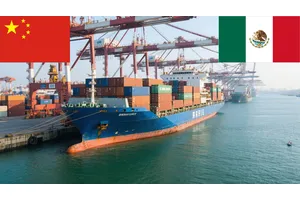
Are you looking to streamline shipping from Shanghai to Mexico but feeling overwhelmed by complex routes, costs, and customs procedures? In this comprehensive guide, we’ll explore the key aspects of international freight, including main shipping methods, trade routes, cost factors, essential documentation, and expert tips. Whether you’re a first-time importer or an experienced business, this article will help you navigate each step of the shipping process with confidence.
Overview of Shipping from Shanghai to Mexico
Shipping from Shanghai to Mexico has become increasingly important due to robust trade relations between China and Mexico. In 2025, bilateral trade continued to expand significantly, positioning Mexico as one of China's most strategic partners in Latin America. The demand for efficient, reliable, and cost-effective logistics solutions continues to rise, driven by manufacturing, electronics, automotive, textiles, and consumer goods sectors.
When planning international shipments from Shanghai—one of the world’s busiest seaports—to Mexico, businesses must navigate a complex landscape of transportation options, customs regulations, and evolving market conditions. Whether you are an established importer/exporter, a cross-border e-commerce seller, or a manufacturer, choosing the right shipping method and logistics provider is critical to your supply chain success.
Related resource: Learn more about Sea Shipping From China Mexico for ocean route insights and latest trends.
Key Trade Routes and Major Ports Between Shanghai and Mexico
The main shipping corridors between Shanghai and Mexico are well-established, relying on robust maritime and air connectivity. The primary ocean route follows the trans-Pacific path, typically transiting through the Panama Canal for east coast destinations.
Major Ports in Shanghai:
- Port of Shanghai: The world's largest container port, offering extensive connectivity and frequent sailings to global destinations, including Mexico.
- Yangshan Deep-Water Port: Part of the Port of Shanghai complex, featuring state-of-the-art facilities for containerized cargo.
Major Destination Ports in Mexico:
- Port of Manzanillo: The largest and busiest container port in Mexico, located on the Pacific coast. It is the main entry point for goods from Asia, serving cities like Mexico City, Guadalajara, and beyond.
- Port of Lázaro Cárdenas: Another key Pacific port, known for high-volume capacity and modern infrastructure.
- Port of Veracruz: Located on the Gulf of Mexico, mainly used for east-coast distribution and some transshipment cargo.
- Port of Altamira: Important for industrial and petrochemical cargo, serving the north-east region.
Key Route Overview Table:
| Origin Port (China) | Destination Port (Mexico) | Typical Route | Main Cargo Types | Avg. Transit Time (Sea) |
|---|---|---|---|---|
| Port of Shanghai | Manzanillo | Pacific Ocean -> Manzanillo | Electronics, Apparel, Machinery, Vehicles | 20–28 days |
| Port of Shanghai | Lázaro Cárdenas | Pacific Ocean -> Lázaro C. | Industrial Goods, Raw Materials, Containers | 22–30 days |
| Port of Shanghai | Veracruz | Pacific -> Panama Canal -> Gulf of Mexico | Automotive, General Cargo | 30–36 days |
Air routes typically utilize Shanghai Pudong International Airport (PVG), with major Mexican airports such as Mexico City International Airport (MEX) and Guadalajara International Airport (GDL) serving as destination hubs.
Main Shipping Methods: Ocean Freight, Air Freight, and Express
Choosing the right shipping method from Shanghai to Mexico depends on your cargo type, budget, and urgency. Each method offers distinct advantages and limitations.
Sea Freight: FCL vs LCL Options and Transit Times
Sea freight remains the most cost-effective solution for large and heavy shipments. You can choose between:
- FCL (Full Container Load): Ideal for bulk shipments, where you reserve an entire container (20FT: 28CBM, 40FT: 56CBM, 40HQ: 68CBM, 45HQ: 78CBM).
- LCL (Less than Container Load): Best for smaller shipments, where your cargo shares space with others.
FCL vs. LCL Comparison Table:
| Mode | Container Type | Capacity | Typical Use Case | Cost Efficiency | Transit Time | Risk of Damage |
|---|---|---|---|---|---|---|
| FCL | 20FT/40FT/40HQ/45HQ | 28–78 CBM | Large, single consignment | High | 20–36 days | Low |
| LCL | Shared Container | varies | Small, multiple consignments | Moderate | 24–40 days | Moderate |
Transit times for sea freight generally range from 20 to 36 days depending on the route and destination port. FCL is typically faster and more secure, as containers are sealed at origin and opened at destination.
DTFU International Logistics Co.,Ltd helps you navigate these choices by analyzing your specific cargo volume and timeline. We recommend the most cost-effective solution—whether it's FCL for security or LCL for flexibility—ensuring you maximize value without compromising on delivery standards.
For more details about container costs and options to other countries, see 20ft & 40ft Container Cost from China to Mexico.
Air Freight: When to Choose Air Shipping for Speed and Urgency
Air freight is the fastest option for shipping from Shanghai to Mexico. It is suitable for:
- Time-sensitive shipments (electronics, high-value goods, fashion, samples)
- Small to medium-sized shipments where delivery speed is critical
Key Benefits:
- Transit Time: 3–7 days (including customs clearance)
- Reliability: Fixed flight schedules minimize delays
- Security: Reduced risk of theft or damage
Comparison Table: Sea Freight vs. Air Freight
| Parameter | Sea Freight (FCL/LCL) | Air Freight |
|---|---|---|
| Transit Time | 20–36 days | 3–7 days |
| Cost (per kg) | Lower | Higher |
| Best for | Large volumes, non-urgent | Urgent, high-value, perishable |
| Carbon Footprint | Lower | Higher |
For time-critical cargo, every hour counts. DTFU International Logistics Co.,Ltd leverages longstanding airline partnerships to secure space even during peak seasons, providing the speed and reliability your supply chain demands.
Further reading: See our insights on Air Shipping From China Mexico for additional air freight guidance and tips.
Express and Courier Services: Pros and Cons for Small Shipments
Express and courier services (e.g., DHL, FedEx, UPS, TNT) provide door-to-door delivery with rapid transit times—usually 2–5 days from Shanghai to Mexico. These services are ideal for:
- Small parcels and samples
- E-commerce orders
- Documents and urgent shipments
Pros:
- Fastest international delivery available
- End-to-end tracking and customs brokerage included
- Simple pricing and easy booking
Cons:
- High cost per kilogram, especially for heavier shipments
- Stringent size and weight limitations
- Possible customs delays for restricted items
| Parameter | Courier/Express | Air Freight | Sea Freight |
|---|---|---|---|
| Typical Cargo | Parcels, small packages | Pallets, crates, bulk | Containers, pallets, breakbulk |
| Transit Time | 2–5 days | 3–7 days | 20–36 days |
| Cost | Highest per kg | High per kg | Lowest per kg |
| Tracking | Excellent | Good | Varies |
| Best for | Urgent, samples, e-commerce | Urgent, high-value | Large, non-urgent cargo |
While express services are excellent for speed, they can quickly impact your bottom line. We often advise clients on how to integrate these services strategically—using them for samples or urgent stock replenishment while relying on more economical methods for bulk orders. This balanced approach is central to how we at DTFU International Logistics Co.,Ltd help you manage your overall logistics budget.
In summary: When considering shipping from Shanghai to Mexico, evaluate your shipment size, urgency, and budget to select the optimal transport method. For tailored solutions that match your specific business needs, consider partnering with an experienced forwarder. At DTFU International Logistics Co.,Ltd, we combine over a decade of experience with up-to-date market insights to ensure your cargo arrives safely and efficiently.
Shipping Costs from Shanghai to Mexico
Factors Influencing Freight Rates
When shipping from Shanghai (China's busiest export hub) to Mexico, several key factors affect freight rates across all shipping methods (sea freight, air freight, and express courier):
-
Shipping Method: Ocean freight is generally more cost-effective for bulk shipments, while air freight provides faster transit at a higher cost. Express couriers are suitable for small, urgent parcels but come with the highest per-kilo rates.
-
Container Type & Load: Full Container Load (FCL) versus Less than Container Load (LCL). FCL offers lower per-unit costs for larger shipments, while LCL is ideal for smaller cargo but may involve higher handling fees.
-
Cargo Volume & Weight: Charges are based on either the actual weight or volumetric weight (whichever is greater). For reference:
- 20FT Container: ~28CBM (Cubic Meters)
- 40FT Container: ~56CBM
- 40HQ Container: ~68CBM
- 45HQ Container: ~78CBM
-
Seasonality & Demand: Rates fluctuate during peak shipping seasons (such as pre-Christmas, Chinese New Year, and Mexico’s high retail season).
-
Port of Origin & Destination: Costs vary depending on the specific Shanghai port (e.g., Yangshan Deep Water Port) and chosen Mexican port (e.g., Manzanillo, Veracruz, Altamira).
-
Fuel Surcharges & BAF (Bunker Adjustment Factor): Indexed to global oil prices and adjusted regularly.
-
Incoterms: The agreed term (e.g., FOB, CIF, DDP) determines which party covers which portion of the logistics chain and associated costs.
Comparison Table: Estimated Ocean Freight Rates (as of February 2026)
| Route | Container Type | Rate (USD, Approx.) | Transit Time (Days) |
|---|---|---|---|
| Shanghai – Manzanillo | 40HQ | $3,200 – $4,200 | 22 – 28 |
| Shanghai – Veracruz | 40HQ | $3,800 – $4,800 | 26 – 32 |
| Shanghai – Altamira | 40HQ | $3,600 – $4,600 | 26 – 32 |
Note: Rates above are indicative and subject to change based on market fluctuations. For a precise quote tailored to your specific shipment details, feel free to consult with DTFU International Logistics Co.,Ltd.
You may also want to review container costs and logistics to other destinations for comparison, such as 20ft & 40ft Container Cost from China to Iran or Shipping from Shanghai to Canada.
How to Get Accurate Shipping Quotes and Reduce Costs
To ensure you receive an accurate and competitive shipping quote for your shipment from Shanghai to Mexico, follow these steps:
-
Provide Comprehensive Cargo Details:
- Include exact dimensions, weight, type of goods, packaging method, and preferred shipping method (FCL, LCL, air, express).
-
Specify Pickup and Delivery Locations:
- Indicate if you require door-to-door service or just port-to-port.
-
Clarify Trade Terms (Incoterms):
- Establish who handles customs clearance, insurance, and local charges.
-
Request All-Inclusive Quotations:
- Ask for a breakdown of all potential charges: ocean/air freight, local handling, customs brokerage, delivery, and any surcharges.
-
Leverage Consolidation Services:
- For small shipments, using LCL consolidation can significantly cut costs.
-
Book in Advance:
- Advance bookings often secure better rates and space availability, especially during high season.
-
Consult a Reputable Freight Forwarder:
- Partnering with an experienced forwarder can help you identify consolidation opportunities and route optimizations that you might otherwise miss. DTFU International Logistics Co.,Ltd specializes in finding these cost-saving strategies for our clients.
Hidden Fees and Surcharges to Watch Out For
International shipping often involves additional fees that may not appear in basic freight quotes. Be vigilant about:
- Destination Terminal Handling Charges (DTHC)
- Port Security Fees
- Customs Clearance Charges
- Documentation Fees
- Peak Season Surcharges
- Demurrage & Detention: Charges for storage or late return of containers at destination ports
- Delivery Order Fee
- PSS (Peak Season Surcharge)
- CAF (Currency Adjustment Factor)
- ISPS (International Ship and Port Facility Security) Fee
- Change of Vessel or Transshipment Fees
Tip: Transparency is the bedrock of trust in logistics. Always ask for a detailed breakdown of all potential costs. At DTFU International Logistics Co.,Ltd, we believe you should never be surprised by your final invoice, which is why we provide clear, all-inclusive quotations upfront.
Customs Clearance and Required Documentation
Essential Shipping Documents
Efficient customs clearance requires the following core documents when shipping from Shanghai to Mexico:
- Bill of Lading (B/L) for sea freight, or Airway Bill (AWB) for air shipments
- Commercial Invoice
- Packing List
- Certificate of Origin (especially if claiming preferential tariffs under agreements like China-Mexico FTA)
- Import/Export Licenses (where applicable)
- Insurance Certificate (if insured)
- HS Codes declaration
Note: Incomplete or incorrect documentation is a leading cause of customs delays and penalties.
Mexico Import Regulations and Customs Procedures
Mexico enforces strict import controls to ensure compliance and security. Key customs points include:
- Advanced Cargo Manifest Submission: Mexican law requires all cargo information to be electronically submitted to customs ahead of vessel arrival.
- Taxation: Import duties (tariffs) and Value Added Tax (IVA) are charged based on the declared CIF value and HS code.
- Permits & Compliance: Certain products (e.g., electronics, chemicals, food) require special permits (NOM, COFEPRIS, etc.).
- Customs Broker Requirement: Only registered Mexican customs brokers can process clearance – this is mandatory for all commercial shipments.
- Random Inspections: Customs may select any cargo for inspection, so ensure all paperwork is correct and cargo is accurately described.
Tips for Smooth Customs Clearance and Avoiding Delays
- Accurate Documentation: Double-check all documents for consistency, correct HS codes, and product descriptions.
- Leverage Local Expertise: Navigating Mexican customs can be tricky. Our team at DTFU International Logistics Co.,Ltd stays updated on the latest regulatory changes to ensure your documentation is compliant before your cargo even leaves Shanghai.
- Stay Updated on Regulatory Changes: Both China and Mexico update their import/export policies regularly. Monitor industry updates or consult your freight forwarder for the latest rules.
- Pre-Arrange Permits and Licenses: Apply for all necessary import permits before shipping.
- Use Professional Packing: Well-packed cargo reduces inspection times and the risk of damage or rejection.
- Leverage Cargo Tracking: Real-time shipment tracking allows you to anticipate potential customs issues and proactively communicate with stakeholders.
In Summary: Shipping from Shanghai to Mexico demands careful planning and strict compliance. For businesses looking to simplify this process, DTFU International Logistics Co.,Ltd offers the experience and local knowledge needed to turn potential customs hurdles into a smooth, predictable part of your supply chain.
How to Choose the Right Freight Forwarder for Shipping from Shanghai to Mexico
Selecting the right freight forwarder is a critical step for businesses and individuals shipping cargo from Shanghai to Mexico. The choice of partner can directly influence your shipping cost, transit time, risk control, and compliance with Mexican customs regulations.
What Makes a Reliable Freight Forwarder?
When evaluating a freight forwarder, consider the following criteria:
| Criteria | Why It Matters | What to Check |
|---|---|---|
| Experience and Expertise | Ensures knowledge of Shanghai-Mexico trade, route optimization | Years in business, case studies, expert team |
| Service Range | One-stop solutions reduce management complexity | Sea, air, courier, customs, insurance, warehousing |
| Local Network | In-depth understanding of Shanghai and Mexico regulations | Network of agents and partners in both countries |
| Transparent Pricing | Avoids hidden fees and cost surprises | Detailed breakdown of costs, clear quotes |
| Customer Support | Rapid response to issues or inquiries | 24/7 support, multi-language service, dedicated account reps |
| Technology & Tracking | Real-time cargo visibility & proactive notifications | Online tracking system, shipment alerts |
| Licenses & Certifications | Compliance with international and local laws | FIATA membership, local licenses, insurance coverage |
For deeper insights into the role and importance of forwarders in the logistics chain, you may wish to read The Strategic Role of Freight Forwarders in Modern Supply Chains.
Our Commitment at DTFU International Logistics Co.,Ltd
At DTFU International Logistics Co.,Ltd, we view ourselves as an extension of your business. We understand that we aren't just moving boxes; we are managing your reputation and supply chain efficiency. With over a decade of specialized experience in the China-Mexico trade lane, here is how we support your growth:
- Over 10 Years’ Experience in handling shipments from Shanghai to Mexico across various industries.
- Comprehensive solutions covering Sea Freight, Air Freight, Amazon FBA, Warehouse, Cargo Insurance, One Stop Customs Clearance, Door-to-Door, OOG Freight, Consolidated Freight, and Breakbulk Freight.
- Strong relationships with major Shanghai ports (such as Shanghai Port) and key Mexican ports (including Manzanillo, Veracruz, and Altamira).
- In-house customs experts familiar with the latest Mexico import regulations and documentation requirements.
- Dedicated digital platform for shipment tracking and document management.
- Transparent and competitive pricing with no hidden charges.
- Local teams for last-mile delivery and problem-solving.
Tip: Always request references and real shipment examples from your forwarder, and ensure they can provide tailored advice for your specific shipping needs.
Door-to-Door Shipping Solutions and Incoterms Explained
Door-to-door shipping ensures your cargo is picked up from your supplier or warehouse in Shanghai and delivered directly to your specified address in Mexico. This “all-in-one” service is essential for businesses seeking to streamline operations, minimize handling, and avoid logistics gaps.
To better understand regional and country-specific door-to-door solutions, see our resource on Door to Door Shipping From China Mexico.
DDP, DAP, FOB: Choosing the Best Terms for Your Business
Incoterms (International Commercial Terms) clarify the responsibilities and cost burdens between buyers and sellers. Understanding the main options is crucial when shipping from Shanghai to Mexico:
| Incoterm | Full Name | Seller Responsibilities | Buyer Responsibilities | Best for |
|---|---|---|---|---|
| FOB | Free On Board | Delivery to Shanghai port, export clearance | Freight, insurance, import customs | Experienced importers with logistics resources |
| DAP | Delivered at Place | All charges to destination address in Mexico, except customs duties/taxes | Import clearance, duties, taxes | Buyers wanting simplified delivery, handle own customs |
| DDP | Delivered Duty Paid | All charges including import customs clearance, duties, and taxes | Accepting delivery | Buyers wanting full-service, minimal effort |
DDP (Delivered Duty Paid):
Most comprehensive. The seller (or their forwarder) arranges everything: pickup, international shipping, import customs, and delivers the goods cleared of all duties/taxes to your door in Mexico. This option greatly reduces risk and workload for buyers new to Mexican import procedures.
DAP (Delivered at Place):
The seller delivers right to the buyer’s address, but the buyer is responsible for import customs clearance and payment of any duties/taxes. Gives buyers more control over customs but still benefits from door-to-door logistics.
FOB (Free on Board):
The seller’s responsibility ends once goods are loaded onto the vessel at Shanghai Port. The buyer must arrange ocean freight, insurance, and all subsequent procedures. Often used by experienced shippers with their own forwarder or local team in Mexico.
Pro Tip: For first-time importers or those without a strong logistics team, DDP or DAP are safer and more convenient. DTFU International Logistics Co.,Ltd provides tailored advice and flexible Incoterms based on your needs.
End-to-End Logistics: Pickup, Delivery, and Last Mile Services
A true end-to-end logistics solution covers every link in the shipping chain:
- Pickup in Shanghai: Collection from factory, warehouse, or supplier anywhere in the Yangtze River Delta region.
- Export Customs Clearance: Preparation and submission of all required documents for export from China.
- International Transportation: Secure ocean, air, or express shipping from Shanghai to major Mexican ports or airports.
- Import Customs Clearance in Mexico: Handling all import documentation, tariff payments, and compliance checks.
- Warehousing and Sorting: Storage solutions at destination for consolidated or staged deliveries.
- Last Mile Delivery: Final transportation to your specific address in Mexico—including urban or remote locations.
Managing multiple vendors for trucking, ocean freight, and customs can be a logistical headache. DTFU International Logistics Co.,Ltd simplifies this by acting as your single point of contact. From the factory floor in Shanghai to your warehouse in Mexico, we oversee every link in the chain, giving you the freedom to focus on your core business.
Example Workflow:
| Step | DTFU Service Provided | Value to Customer |
|---|---|---|
| Factory Pickup | Local trucking, cargo inspection | Single point of contact, schedule flexibility |
| Export Customs | Document preparation, declaration | Compliance, risk mitigation, time savings |
| Main Transport | Sea, air, or express shipment booking | Cost optimization, speed, real-time tracking |
| Import Customs (Mexico) | Customs clearance, tariff handling | Avoids delays, ensures legal compliance |
| Last Mile Delivery | Local distribution, special handling | Reliable, damage-free, on-time delivery |
Conclusion: Choosing the right freight forwarder and understanding Incoterms are fundamental for smooth shipping from Shanghai to Mexico. For businesses seeking peace of mind, end-to-end management, and expert guidance, partnering with DTFU International Logistics Co.,Ltd is a strategic move to ensure your cargo arrives safely and on time.
Should you require tailored advice or a shipping quotation, feel free to contact our specialists at DTFU International Logistics Co.,Ltd. We are committed to providing transparent, efficient, and high-quality logistics solutions for every customer.
Common Challenges and Expert Tips for Successful Shipping
Shipping from Shanghai to Mexico presents unique logistical, regulatory, and operational challenges. Leveraging my 10+ years of experience in freight forwarding, I will break down the main risks and provide actionable tips to ensure your shipments arrive safely, on time, and cost-effectively.
Managing Shipping Risks and Insurance Options
International shipments are exposed to various risks, including damage, theft, delay, and loss. Proper risk management and choosing the right cargo insurance are essential for peace of mind.
Common Shipping Risks
| Risk Type | Description & Impact | How to Mitigate |
|---|---|---|
| Damage (Physical/Weather) | Rough handling, stacking, or sea turbulence can damage goods. | Use certified packaging, secure cargo, select reliable carriers. |
| Theft and Pilferage | Higher on certain trade routes or in transit hubs. | Opt for reputable forwarders, seal containers, monitor shipments. |
| Delay (Customs/Port Congestion) | Holds at Shanghai or Mexico ports cause costly delays. | Prepare all documents, verify compliance, work with experts. |
| Loss (Total or Partial) | Lost containers, misplaced cargo, or misrouting. | Comprehensive tracking, insurance, and working with reliable partners. |
Insurance Options
| Insurance Type | What It Covers | When to Consider |
|---|---|---|
| All-Risk | Most physical loss/damage, with some exclusions | High-value, fragile, or sensitive cargo |
| Total Loss Only | Only if the whole shipment is lost/destroyed | Lower value, non-fragile shipments |
| Named Perils | Specific listed risks (fire, theft, etc.) | Cost-sensitive, with lower risk profile |
Expert Tip: Always opt for comprehensive cargo insurance, especially for high-value or sensitive goods. At DTFU International Logistics Co.,Ltd, we can guide you through the various coverage options to find the one that best matches your risk profile and budget.
To understand more about how insurance costs impact your international shipping, check Shipping container insurance cost for shipments from China.
Real-World Update (2026):
Due to occasional security incidents reported at certain Mexican ports in 2025–2026, we recommend enhanced security and insurance for shipments entering Manzanillo or Veracruz.
Packaging Tips for Long-Distance International Freight
Proper packaging is crucial for protecting cargo over the long journey from Shanghai to various Mexican ports. Long-distance transport involves multiple handling points, variable climates, and extended transit times.
Best Practices for International Freight Packaging
-
Use Export-Grade Materials: Choose sturdy, weather-resistant boxes and pallets.
-
Container Optimization: For container shipments:
- 20FT Container: Max ~28CBM
- 40FT Container: Max ~56CBM
- 40HQ Container: Max ~68CBM
- 45HQ Container: Max ~78CBM
-
Reinforce and Cushion: Secure goods with shock-absorbing materials and void fill.
-
Label Clearly: Use waterproof labels with both English and Spanish instructions.
-
Comply with ISPM-15: For wooden packaging, use heat-treated, stamped wood to meet Mexico's import regulations.
| Container Type | Volume Capacity (CBM) | Best For |
|---|---|---|
| 20FT | 28 | Small to medium shipments, heavy goods |
| 40FT | 56 | Large shipments, cost-effective |
| 40HQ | 68 | High-volume, bulky but lighter cargo |
| 45HQ | 78 | Oversized, high-volume shipments |
Expert Tip: Consider consolidating LCL (Less than Container Load) shipments for cost savings, but always ensure that your goods are separated and protected from others in the container.
How to Track and Monitor Your Cargo from Shanghai to Mexico
Visibility is critical in international freight forwarding. With advancements in digital logistics, tracking shipments is now more accessible and accurate than ever.
Modern Tracking Solutions
- Online Tracking Portals: Most reliable freight forwarders (including DTFU International Logistics Co.,Ltd) offer real-time tracking for both sea freight and air freight.
- Mobile Apps: Many carriers have apps for instant updates and notifications.
- GPS/IoT Devices: For high-value or sensitive shipments, GPS trackers can be placed in the container or with the shipment to monitor location, temperature, and even humidity.
Step-by-Step: Tracking Your Shipment
-
Get Your Tracking Number: Provided by your forwarder or carrier (e.g., B/L number, AWB number, or container number).
-
Access the Portal: Log into the DTFU portal or carrier website.
-
Monitor Key Milestones:
- Cargo Pickup in Shanghai
- Departure from Port of Shanghai
- Transshipment (if any)
- Arrival at Mexican Port (e.g., Manzanillo, Veracruz**)
- Customs Clearance in Mexico
- Final Delivery
-
Set Alerts: Subscribe to email or SMS notifications for status changes or delays.
Example: Real-Time Tracking Table
| Milestone | Typical Status Update Example |
|---|---|
| Cargo Pickup (Shanghai) | “Cargo collected from supplier, loaded at warehouse” |
| Export Customs Clearance | “Customs documents submitted/approved” |
| Departure (Shanghai Port) | “Vessel departed Port of Shanghai” |
| Arrival (Manzanillo/Veracruz) | “Vessel arrived at Port of Manzanillo” |
| Import Customs Clearance | “Clearance completed – ready for delivery” |
| Last Mile Delivery | “Cargo out for delivery to consignee” |
For shippers interested in tools for real-time shipment status, explore our Cargo Tracking page.
Expert Tip: Work with a forwarder that provides end-to-end visibility. At DTFU International Logistics Co.,Ltd, our integrated tracking system keeps you informed at every stage, reducing uncertainty and allowing you to plan your inventory with confidence.
FAQs
Q1: What are the specific transit times from Shanghai to major Mexican ports?
A1: Transit times depend heavily on the destination port and the shipping line chosen. As of 2026, typical port-to-port transit times are:
- Shanghai to Manzanillo: 20 – 25 days (Direct services available)
- Shanghai to Lázaro Cárdenas: 22 – 28 days
- Shanghai to Veracruz: 30 – 35 days (Usually via Panama Canal)
- Shanghai to Altamira: 30 – 36 days
Q2: How much does it cost to ship a 20ft, 40ft, or 40HQ container from Shanghai to Mexico in 2026?
A2: Freight rates fluctuate based on fuel costs and demand, but current estimated ranges for February 2026 are:
- 20ft Container (FCL): $1,800 – $2,500
- 40ft Container (FCL): $3,000 – $4,000
- 40HQ Container (FCL): $3,200 – $4,200 Note: These are port-to-port estimates. For a precise, all-inclusive quote (including local charges or door-to-door delivery), please contact DTFU International Logistics Co.,Ltd directly.
Q3: How do I minimize shipping costs from Shanghai to Mexico?
A3: Optimize your cargo volume (use FCL if possible), book in advance to avoid peak season surcharges, and consolidate shipments. Always request an all-inclusive quote from your freight forwarder to avoid hidden fees.
Q4: What documents are needed for customs clearance in Mexico?
A4: Key documents include the Bill of Lading, Commercial Invoice, Packing List, and import permits if applicable. DTFU experts can guide you through all required paperwork to ensure smooth clearance.
Q5: Can DTFU handle door-to-door delivery (DDP) to inland cities like Mexico City or Guadalajara?
A5: Yes, absolutely. DTFU International Logistics Co.,Ltd specializes in DDP (Delivered Duty Paid) services. We handle everything from pickup in Shanghai to customs clearance and final trucking to your warehouse in Mexico City, Guadalajara, Monterrey, or any other location in Mexico.
Conclusion
Successful shipping is about more than just transport; it’s about partnership. At DTFU International Logistics Co.,Ltd, we pride ourselves on being that reliable partner for businesses trading between Shanghai and Mexico. Whether you are scaling up or just starting out, our team is ready to provide the expert guidance and support you need to succeed. For a conversation about your specific needs or a customized quote, contact our experts today.