Two quotes for the same 20GP leaving Nansha can read $1,150 and $6,500 — and both can be honest. Shipping from Guangzhou to Iran is decided long before your container reaches the terminal gate. In June 2026 an importer holding a spring contract rate of $1,150 found that no carrier would load his box at that number while the spot market had already passed $6,500. Neither quote mentioned the registrations Iran requires before a vessel is even allowed to sail.
This guide covers the Guangzhou gateway choice, 2026 FCL, LCL, air and rail rates labeled with the scope they cover, the fees quotes omit, door-to-door transit, the carrier and payment reality on a sanctioned lane, Iran's four pre-shipment steps, the three-layer import tax stack, and two landed-cost walkthroughs.
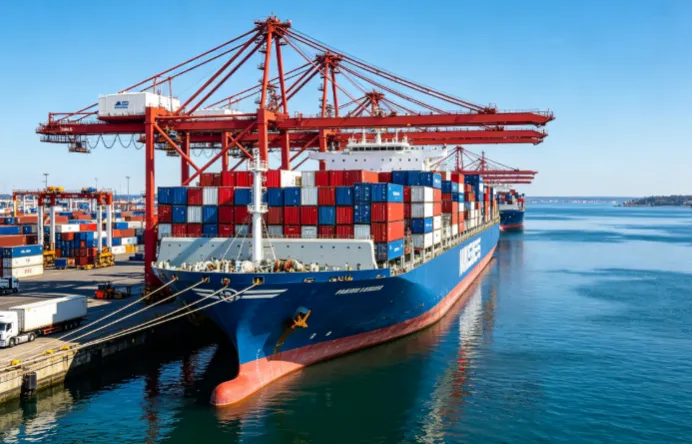
Guangzhou Port Selection for Iran-Bound Cargo: Nansha vs Huangpu vs Xinsha vs Shekou & Yantian
Your gateway sets the inland drayage bill and the sailing date. On the Iran lane, the sailing date usually matters more.
| Gateway | Best Supplier Cluster | Iran-Lane Sailings | Watch Out For |
|---|---|---|---|
| Guangzhou Nansha | Panyu, Nansha, western Dongguan, Zhongshan | Roughly weekly, 2–3 departures | Miss the cut-off and you wait a full week |
| Guangzhou Huangpu | Huangpu, Zengcheng, Baiyun, wholesale districts | Varies; often feeder-linked | Fewer direct Iran options |
| Guangzhou Xinsha | Zengcheng, northern Dongguan | Varies by carrier | Breakbulk and project cargo only |
| Shenzhen Shekou / Yantian | Eastern Dongguan, Huizhou, Shenzhen | Denser, wider carrier choice | Higher drayage from the western PRD |
Nansha to Bandar Abbas (Shahid Rajaee) is roughly 5,500 nautical miles. A direct call covers that in 18–25 days; routing via Jebel Ali or Sohar takes 25–45. But the number that costs you money is the cut-off. Iran-lane sailings run weekly, not daily, so missing the vessel cut-off by a day parks your 40HQ for seven. Put the port cut-off, VGM deadline and EIR date in writing at booking, and move cargo east to Shekou or Yantian only when a fixed delivery date or a designated carrier leaves you no choice.
Guangzhou also hosts one of China's largest Iranian trading communities, clustered around Xiaobei, Sanyuanli and Panyu. A typical shipment is three to five vendors across the Pearl River Delta, so factory pickup, carton counts against the packing list, labeling, palletizing and sealing under a Loading Inspection all have to be sequenced. Every manual handover you remove removes a chance of a missing carton. Air cargo, meanwhile, runs CAN (Baiyun) to IKA (Tehran Imam Khomeini), which takes the overwhelming majority of China–Iran air freight.
Our industry insight: the Canton Fair cycle is the most under-planned risk here. For two to three weeks after each session, warehouse space, drayage trucks and Iran-lane slots tighten at once, and bookings made in that window routinely slide a sailing.
From a Pearl River Delta base, DTFU Logistics handles factory pickup, verification, labeling, palletizing and multi-supplier consolidation into one container, so a single party owns the cargo from the last factory gate to the port. Importers whose suppliers sit closer to the coast can weigh the same lane out of Shekou and Yantian under Shipping From ShenZhen to Iran.
Sea Freight, Air Freight, Rail or Cross-Border Truck: Choosing Your Method from Guangzhou to Iran
Mode follows three variables: volume, value per cubic meter, and how rigid the deadline is.
| Mode | Best For | Transit from Guangzhou | Priced By |
|---|---|---|---|
| Sea FCL (20GP / 40GP / 40HQ) | 15 CBM or more, palletized B2B cargo | 20–28 days port-to-port | Per container |
| Sea LCL | 1–15 CBM from mixed suppliers | 22–35 days | Per CBM or Revenue Ton |
| Air freight (CAN–IKA) | 45 kg upward, launch stock, high-value goods | 3–6 days direct | Chargeable weight |
| China–Iran rail | 20GP to full train, mid-value urgent cargo | 12–18 days station-to-station | Per kg, CBM or container |
| Cross-border TIR truck | High-value cargo to inland destinations | 15–18 days door-to-door | Per truck or shared load |
LCL at $60–$130 per CBM looks cheaper until you price the whole journey. Add CFS stuffing and unstuffing, per-CBM destination charges, three to seven extra days in transit and a higher damage rate from repeated handling, and the real crossover sits at 13–15 CBM. Below it, ship LCL. Above it, book the box.
A 20GP holds roughly 28 CBM usable, a 40GP about 58, a 40HQ about 68. Dense cargo — ceramics, machinery, metal parts — belongs in a 20GP, which carries more weight per box; light bulky cargo — furniture, textiles, plastics — belongs in a 40HQ. Watch the payload ceiling: many 20GP boxes top out near 28 tons, and an overload triggers heavy-lift surcharges plus a VGM problem at the gate. Box-by-box equipment economics on this lane are set out in Sea Shipping from China to Iran.
China–Iran Rail: The Underrated Middle Ground
Block trains leave Xi'an, Yiwu, Urumqi, Wuhan and Zhengzhou, exit through Alashankou or Khorgos, cross Kazakhstan and Turkmenistan, and enter Iran at Sarakhs or Incheh Borun before terminating at Aprin Dry Port in Tehran. The route runs about 10,400 km in 12–18 days station-to-station and 15–18 days door-to-door, at roughly $7,500 per 20ft. Its value is not speed but the fact that it bypasses the Strait of Hormuz entirely. Expect gauge changes at the border, tighter box supply and fixed departure windows. For the wider trade-off between the ocean leg and the land bridge, see our Sea vs Rail Freight: Which Is Faster and More Reliable from China comparison.
Shipping Cost from Guangzhou to Iran: 2026 FCL, LCL, Air & Rail Rates
Every figure below is port-to-port, indicative for Q4 2026, and excludes origin charges, destination charges, duty and tax. Iran-lane pricing moves faster than any mainline trade, so treat these as planning ranges, never quotations. Our country-level Shipping from China to Iran overview sets out the same rate structure for other Chinese load ports.
| Service | Contract / Benchmark | Peak Spot | Transit |
|---|---|---|---|
| 20GP (~28 CBM) | $1,050–$1,800 | $6,000–$6,850 | 20–28 days |
| 40GP | $1,400–$2,300 | — | 20–28 days |
| 40HQ (~68 CBM) | $1,500–$2,500 | $8,900–$9,050 | 20–28 days |
| LCL (per CBM / RT, 1 CBM minimum) | $60–$130 | $180–$210 / RT | 22–35 days |
| Origin Port | 20GP | 40HQ | Transit |
|---|---|---|---|
| Shanghai | $1,050–$1,650 | $1,400–$2,100 | 18–25 days |
| Ningbo | $1,050–$1,650 | $1,400–$2,000 | 18–25 days |
| Guangzhou (Nansha) | $1,050–$1,800 | $1,500–$2,500 | 20–28 days |
| Shenzhen (Shekou / Yantian) | $1,200–$2,000 | $1,600–$2,600 | 20–25 days |
| Qingdao | $1,100–$1,750 | $1,450–$2,200 | 22–30 days |
| Tianjin | $1,400–$2,200 | $1,650–$2,700 | 25–32 days |
| Service | Rate | Transit |
|---|---|---|
| Air freight, CAN → IKA, general cargo | $5.00–$6.50 / kg | 3–6 days |
| Air DDP, door-to-door duty paid | $6.50–$9.00 / kg | 8–12 days |
| China–Iran rail to Tehran | $2.50–$4.50 / kg or $200–$350 / CBM | 12–18 days |
| Sea DDP via Dubai or Oman | $150–$300 / CBM | 30–45 days |
| Sea DDP, direct sailing | $200–$350 / CBM | 25–35 days |
Air freight bills on chargeable weight — the greater of actual and volumetric weight, calculated as length × width × height in centimeters divided by 6,000. A 60 × 50 × 40 cm carton occupies 20 kg of space regardless of what it weighs. Battery goods, liquids, magnets and branded products carry higher rates and require UN38.3 reports and MSDS documentation before a booking is accepted. Handling rules and rate bands for the air option are set out in Air shipping from China to Iran.
Why $1,050 and $6,850 Can Both Be True
A contract rate is an annual or quarterly agreement signed when capacity is loose. A spot rate is what a slot costs today. They are two different products, and on a lane where only a handful of carriers call Iran, spot pricing detaches from benchmark quickly.
Real-life scenario: in June 2026 an importer held a $1,150 contract rate for a 20GP from Nansha. When the cargo was ready, no carrier would accept the box at that price and the only executable booking sat above $6,500. The contract was real; it simply was not capacity. A quote without a confirmed slot is not a price.
Four questions separate the two before you budget: spot or contract, what validity date, does it include origin and destination charges, and is the slot confirmed or indicative? Beyond that, six variables move the number: carrier and routing, PSS before Chinese New Year, Nowruz and Q4, BAF/CAF/LSS, box availability, cargo weight, booking lead time — and the capacity premium this lane carries simply because so few vessels call Iran. DTFU Logistics quotes port-to-port and DDP as separate scopes and prints the validity window on every rate.
What Your Guangzhou–Bandar Abbas Quote Doesn't Show: Origin, Surcharge & Destination Fees Explained
Two quotes are comparable only when both stop at the same point on the map.
| Stage | Charge | Typical Range |
|---|---|---|
| Origin | Export declaration, THC, documentation, EIR | $210–$250 per 20GP |
| Origin | Factory pickup to Nansha | $90–$260 per container |
| Freight | BAF, CAF/LSS, PSS, GRI, heavy-lift | Varies weekly |
| Destination | DTHC, Delivery Order, licensed broker | Per container / per declaration |
| Destination | CFS unstuffing at Bandar Abbas | Per CBM — the classic low-price trap |
| Destination | Demurrage and detention | Per day, accumulating |
| Destination | Inland trucking, Bandar Abbas to Tehran (~1,300 km) | Per container |
A Four-Step Way to Normalize Any Quote
- Fix the delivery point. Does the price stop at the load port, the discharge port, or the consignee's door?
- Add origin charges so both offers start at the same factory gate.
- Add destination charges — DTHC, Delivery Order, broker fee, CFS unstuffing and inland delivery to your actual city.
- Compare one number. Total landed cost per shipment, or landed cost per CBM — never headline ocean freight.
| Port | Best For | Premium vs Bandar Abbas |
|---|---|---|
| Bandar Abbas (Shahid Rajaee) | National imports — more than 80% of volume | Baseline |
| Bushehr | Southern Iran, Shiraz | +$200–$400 |
| Bandar Imam Khomeini | Western Iran, Khuzestan, industrial cargo | +$300–$500 |
| Chabahar | Eastern Iran, Afghanistan and Central Asia transit | +$400–$800 |
All Risks cover under Institute Cargo Clauses (A) costs about 0.3%–1% of CIF value. One check matters more than the premium: confirm in writing that the policy covers the Strait of Hormuz and the Persian Gulf, because several standard war-risk clauses carve that area out. Premium benchmarks for Chinese export cargo sit in our shipping container insurance cost guide.
Our industry insight: "all-in" on this lane almost always means something narrower than the buyer hears. We annotate four lines on every quote — what is included, what is excluded, how many free days the box carries, and the daily rate once free time expires.
Guangzhou to Bandar Abbas Transit Time: Direct Sailings vs Jebel Ali Transshipment
| Leg | Days |
|---|---|
| Factory pickup and export declaration in Guangzhou | 3–6 |
| Ocean, Nansha to Bandar Abbas direct | 18–25 |
| Ocean, via Jebel Ali, Sohar or Sharjah | 25–45 |
| IRICA clearance at Shahid Rajaee | 3–14 |
| Inland delivery, Bandar Abbas to Tehran (~1,300 km) | 1–3 |
| Door-to-door, direct | 25–48 |
| Door-to-door, transshipment or peak season | 35–65 |
Four variables explain why published times range from 18 to 45 days: direct call versus transshipment, port-to-port versus door-to-door, LCL consolidation time at both ends, and peak-season congestion. Numbers published without a scope label are unusable — which is why one route page can honestly show 18–20 days in one section and 25–28 in another. Country-level baselines for the same port pairs are collected under Shipping time from China to Iran.
A direct IRISL-class call runs 18–25 days, but slots are scarce and peak premiums steep. Routing through Jebel Ali, Sohar or Sharjah offers denser schedules and often cheaper LCL and DDP consolidation, at the cost of five to fifteen extra days, another discharge and reload cycle, another document set, and a higher rollover probability.
Delays cluster after arrival, not at sea. Shahid Rajaee gives limited free time, and demurrage and detention accrue daily once it expires. The defenses are procedural: confirm the declaration channel before sailing, file documents with zero discrepancies, appoint the broker early, and keep the importer's commercial card valid. Nowruz around March slows government offices, banks and port operations; Chinese New Year and Q4 tighten slots and rates. Build three to seven days of buffer into a direct plan and seven to fourteen into a transshipment plan. Load ports behave differently on both cost and schedule — Shipping from Shanghai to Iran runs a shorter ocean leg than Nansha, though it adds inland cost for Pearl River Delta suppliers.
Sanctions, Carriers & Payment Reality: Who Actually Serves Guangzhou–Iran
This is where published guidance on this lane most often goes wrong, so it is worth being blunt.
Under current sanctions, mainstream carriers — Maersk, MSC, CMA CGM — and express integrators such as DHL, FedEx and UPS do not provide direct service to Iran. Capacity sits with IRISL, the Iranian national line, and regional NVOCC operators such as VOLTA, WOSCO and FCSL-class carriers, with transshipment through Gulf hubs. Air cargo moves mainly on Mahan Air, Iran Air and Qeshm Air.
Correction worth reading twice: several widely shared guides claim COSCO, MSC and Maersk run regular Guangzhou–Bandar Abbas services. That is not how this lane works. Build a shipping calendar around those sailings and you are queueing for a vessel that will not load your box.
Thin capacity means violent pricing: few carriers, rigid supply, and a small demand swing moves spot rates far more than it would on Asia–Europe. That single structural fact explains most of the gap between contract and peak spot on the same routing.
Settlement commonly runs through intermediary-bank T/T, or in RMB or AED, with cargo frequently routed via Dubai. SWIFT restrictions mean some banks quietly decline Iran-related transactions rather than rejecting them outright.
Our industry insight: the most common cause of a stranded container here is not the ocean leg — it is payment routed through a bank that will not touch an Iran-related transaction. We confirm the settlement channel before the container leaves the factory.
Sanctions regimes change, and compliance depends on your goods, jurisdiction and counterparties under rules administered by bodies including OFAC and the EU. This article is logistics guidance, not legal advice.
| Incoterm | Main Freight Arranged By | Iran Clearance Handled By | Best For |
|---|---|---|---|
| FOB | Buyer | Buyer | Importers with their own broker and commercial card |
| CIF | Seller | Buyer | Buyers who want freight handled but control the destination |
| DAP | Seller / forwarder | Buyer | Sellers delivering to the buyer's named place |
| DDP | Seller / forwarder | Seller / forwarder | Importers without a commercial card or local clearance capability |
An honest note: DDP is not automatically cheapest. An importer who already holds a commercial card and a licensed broker often pays less overall under FOB, because no intermediary is pricing compliance risk on their behalf. For the general framework behind that choice, see our DDP vs FOB: Which Option Saves Time and Reduces Hassle comparison.
Before Your Container Leaves Guangzhou: Iran's 4 Mandatory Pre-Shipment Steps
Iran's import regime is built around pre-shipment approval. Order registration and importer eligibility must be in place before the cargo departs — not before it arrives. Missing them does not delay clearance; it prevents it, while the container accrues storage and demurrage on the far side of the world.
| Step | What It Is | Managed By | Consequence of Skipping It |
|---|---|---|---|
| 1. Sabt Sefaresh | Mandatory import order registration before shipment | TPO framework | The shipment cannot enter the declaration process |
| 2. Commercial card (kart-e bazargani) | Importer eligibility credential | ICCIMA | No eligible importer of record |
| 3. EPL pre-declaration | Electronic pre-declaration through the IRICA single window, linked to NTSW | IRICA / NTSW | No link between pre-declaration and arrival declaration |
| 4. Licensed broker + Power of Attorney | Clearance must be filed by a licensed broker under written authority | Licensed Iranian broker | Clearance cannot legally be filed |
Sellers carry obligations too. The FIDA seller registration and the Iran-specific proforma invoice fields feed the buyer's order registration, and a proforma missing those fields can stall the process before a booking is made. Wooden packaging needs IPPC / ISPM-15 treatment marks, and the certificate of origin is normally issued through ICCIMA channels. Because these requirements are procedural and change, confirm current applicability against IRICA (EPL portal at epl.irica.gov.ir), TPO, ICCIMA and the NTSW system before committing a shipment.
Our industry insight: we run pre-shipment compliance as the first step of every Iran booking, ahead of rate confirmation. Importers who lock order registration and broker authority early pay for freight; importers who leave it late pay for freight plus storage, demurrage and a rushed air shipment of corrected documents.
Where an importer has no commercial card, DTFU Logistics maps the realistic path: supported documentation for order registration, coordination on EPL filing, and appointment of a licensed destination broker — or, where no local capability exists, a full DDP structure.
Iran Customs Clearance & Taxes: Import Duty, Commercial Benefit Tax & VAT
Iran applies a three-layer tax structure on imports, and most landed-cost errors come from budgeting only the first layer.
| Layer | Tax | Assessed On | Notes |
|---|---|---|---|
| 1 | Import duty (حقوق گمرکی) | HS Code and customs valuation (Customs / TSC value) | Typically about 4% to 55% by tariff line |
| 2 | Commercial benefit tax (سود بازرگانی) | HS Code and CIF value | An Iran-specific second layer most guides omit |
| 3 | VAT (ارزش افزوده) | CIF value plus duty, plus the commercial benefit tax where applied | Commonly around 9%; published figures range from 5% to 15% — verify before budgeting |
Classification determines every layer above it. A misclassified LED display panel assessed under a general lighting line rather than its correct tariff line can add thousands of dollars on a single 20GP. Correcting a classification after duty is paid is slow and expensive, so verify the code before the proforma invoice is finalized.
Declarations route through green, yellow and red channels with materially different inspection probability. Four habits reduce red-channel odds: documents that agree with each other, declared values reflecting the real transaction, complete certification, and a broker who knows your product category.
Clearance requires a commercial invoice with Iran-specific fields, packing list, original or telex-release B/L, certificate of origin, the importer's commercial card, the Sabt Sefaresh registration, insurance certificate, the Warehouse Receipt (قبض انبار), the Delivery Order, IPPC / ISPM-15 proof for wooden packaging, and permits for controlled goods.
ISIRI mandatory standards and TSC technical compliance certificates gate regulated categories — electrical appliances, cosmetics, food-contact materials and toys are highest risk. Persian (Farsi) labeling with bilingual marking, dates and importer details is mandatory, and non-compliant labeling means rework or return. Some goods are prohibited, others conditional, and NIMA currency allocation rules affect whether a category can be imported at all.
Door-to-Door DDP & Landed Cost: Two Guangzhou → Iran Walkthroughs
The door-to-door sequence runs: factory pickup in Guangzhou, export declaration, loading, international transit, arrival at Bandar Abbas, pre-declaration reconciliation and import clearance including duty, commercial benefit tax and VAT, container release, and inland delivery to Tehran, Isfahan, Shiraz or Mashhad. As arithmetic:
EXW goods value → origin charges → freight → insurance → CIF value → import duty → commercial benefit tax → VAT → destination THC, Delivery Order and broker fee → CFS unstuffing (LCL only) → storage and detention → inland trucking → total cost at your warehouse.
That full chain is what Door to Door Shipping from China to Iran means in practice — one contract from a Guangzhou factory gate to a Tehran warehouse.
| Cost Component | 40HQ Home Appliances to Tehran | 20GP Garments to Isfahan |
|---|---|---|
| Goods value (FOB) | $32,000 | $18,000 |
| Ocean freight (contract) | $2,100 | $1,350 |
| Origin charges | $240 | $225 |
| Cargo insurance (~0.5% of CIF) | ~$170 | ~$100 |
| Iran duty (illustrative band) | ~$4,300 | ~$2,700 |
| Commercial benefit tax (illustrative) | ~$1,200 | ~$700 |
| VAT (illustrative, on CIF + duty) | ~$3,500 | ~$2,100 |
| Destination charges, CFS, broker | ~$800 | ~$620 |
| Inland trucking to destination | ~$650 to Tehran | ~$1,050 to Isfahan |
| Total landed cost | ~$44,960 | ~$26,845 |
| Tax and fee load as % of goods value | ~30% | ~35% |
Two lessons fall out of that comparison. The inland leg is a real line item — Isfahan sits materially further from Bandar Abbas than Tehran, so a lower goods value does not mean a lower cost ratio. And an importer without a commercial card cannot execute the FOB column alone; DDP prices the compliance work in, which is why it sometimes beats a cheaper-looking FOB quote on total cost.
Real-life scenario: a Guangzhou importer sourced 50 CBM of housewares from four vendors across Foshan and Zhongshan and was preparing four separate LCL bookings. Consolidated into one 40HQ under a single loading inspection, the shipment avoided two transshipment handlings per carton and cut freight spend by roughly a third — because one party, not four, owned the export declaration.
Iran also operates free zones and special economic zones including Qeshm, Kish, Chabahar, Aras, Arvand and Maku, which support temporary storage, sorting, repacking and re-export as redistribution hubs for Iraq, Afghanistan, Central Asia and the Gulf. Tariff and tax treatment varies by zone and activity, so confirm the current regime against the relevant zone authority's official text before structuring a shipment around it. Importers who use these zones as regional distribution points usually move that corridor with us under shipping from China to Afghanistan and shipping from China to Iraq.
FAQs
How much does a 20ft container from Guangzhou to Iran cost in 2026?
Contract rates from Nansha to Bandar Abbas run about $1,050–$1,800 port-to-port; peak spot pricing has exceeded $6,000. Ask whether a figure is contract or spot. The country-level Shipping Cost from China to Iran breakdown covers other Chinese load ports.
How long does shipping from Guangzhou to Iran take?
Direct port-to-port runs 20–28 days. Door-to-door, plan 25–48 days, or 35–65 days via transshipment in peak season.
Is FCL or LCL cheaper from Guangzhou to Iran?
Below about 13–15 CBM, LCL wins on freight. Above it, FCL is cheaper per unit, faster and safer once CFS charges and extra handling are counted.
Should I ship from Nansha, Huangpu, Xinsha or Shekou/Yantian?
Nansha for the lowest drayage from most PRD factories; Shekou or Yantian when a deadline or a specific carrier matters more than inland cost.
What is Sabt Sefaresh and do I need it before shipping?
It is Iran's mandatory pre-shipment import order registration. Without it, the shipment cannot enter the declaration process, so it must be completed before departure.
How are Iran's import duty, commercial benefit tax and VAT calculated?
Duty follows HS Code and customs value; the commercial benefit tax applies on top by HS Code and CIF value; VAT applies to CIF plus duty, commonly around 9%.
What documents are required for Iran customs clearance?
Commercial invoice, packing list, B/L, certificate of origin, commercial card, Sabt Sefaresh registration, insurance certificate, Warehouse Receipt, Delivery Order and IPPC marking for wood packaging.