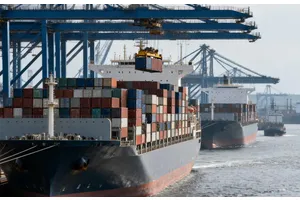
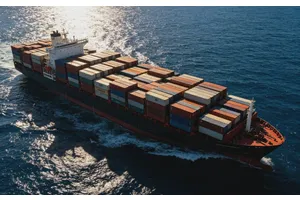
When we quote shipping from Guangzhou to Argentina, the ocean leg is the smallest part of what we are pricing. The container leaves Nansha on a 35–42 day South America East Coast rotation. What decides whether your shipment clears on schedule, or sits at a Buenos Aires terminal burning $50–$150 a day in demurrage, is the Argentine import system: the SEDI declaration that must be approved before your vessel departs, the NCM code that sets your duty rate, the 21% IVA charged on top of your freight, and a currency regime that can move your tax bill 10–20% between budgeting and clearance.
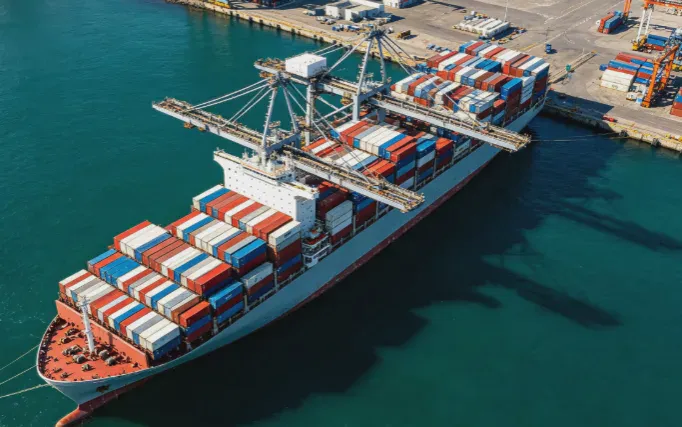
This guide covers the Guangzhou side properly — the Pearl River Delta factories, the Nansha/Huangpu gateways, the rates DTFU actually books on this lane in 2026 — then walks through Argentina's clearance, tax, and currency reality the way a forwarder who runs this lane every week would explain it. A real shipment — 320 lithium batteries delivered DDP to Patagonia — closes with the full timeline and cost ledger.
Why Guangzhou Is the Right Gate for Argentina-Bound Cargo
Guangzhou's advantage is not the port — it is that the cargo Argentina actually buys is manufactured within 100 km of Nansha. Argentina's top import categories from China — electronics, home appliances, lighting, building materials, textiles — each have a production cluster inside the Pearl River Delta:
- Foshan — furniture and ceramics, China's largest base for both
- Dongguan — consumer electronics and components
- Zhongshan — roughly 60% of global lighting production
- Shunde — home appliances
When your suppliers sit in those four cities, Guangzhou means one consolidation point instead of four separate inland hauls. We consolidate Foshan and Zhongshan cargo at a PRD warehouse before export and typically cut inland trucking 15–30% versus shipping each factory's cartons separately — one export declaration instead of four. For lighter cargo, Pearl River feeder barges move goods downriver to Nansha at roughly half the cost of trucking.
Three gateways serve the Argentina lane out of Guangzhou:
| Gateway | What It Handles | Why It Matters for Argentina |
|---|---|---|
| Nansha Port | Deep-water container terminal, ~18 million TEU annual throughput; weekly South America East Coast services (COSCO, MSC, Maersk, CMA CGM, Hapag-Lloyd) | Primary FCL/LCL loading point; direct rotations plus Singapore transshipment services to Buenos Aires |
| Huangpu Port | Upstream river port; breakbulk, project cargo, heavy machinery, feeder containers | Practical loading point for construction equipment and industrial machinery bound for Argentina |
| Baiyun International Airport (CAN) | One of China's top three air cargo hubs | Air freight to Ezeiza (EZE) via Istanbul, Doha, Dubai, or Frankfurt hubs |
Against other origins, the math depends on where your suppliers sit. For PRD-origin cargo — most of Argentina's electronics, appliance, and lighting imports — Guangzhou beats Shanghai or Qingdao once inland trucking is added, and trades about 3–8% on base ocean freight against Shenzhen's Yantian in exchange for avoiding drayage. If your suppliers are spread across provinces, Shanghai's sailing frequency may win. Our Shipping from China to Argentina overview compares every origin port; the same three gateways serve Brazil — see our Shipping from Guangzhou to Brazil guide.
What a Guangzhou to Argentina Shipment Really Costs in 2026
Rates on this lane stayed elevated through mid-2026. Carriers keep South America East Coast capacity tight while redeploying tonnage to the Asia–Europe Cape routing, the backhaul imbalance leaves equipment scarce at origin, and the Cape rerouting absorbs extra vessel capacity. A Nansha 20GP to Buenos Aires runs $7,100–$8,600 and a 40HQ $7,300–$8,900 port-to-port — roughly 15% above last year. A quote at $3,000–$4,000 on this lane today is missing something.
| Mode | Unit | 2026 Rate Range (Nansha/CAN) | Door-to-Door Transit | Best For |
|---|---|---|---|---|
| Sea FCL 20GP | Per container | $7,100–$8,600 | 40–55 days | 15–28 CBM, dense cargo |
| Sea FCL 40HQ | Per container | $7,300–$8,900 | 40–55 days | 28–68 CBM, bulky goods |
| Sea LCL | Per CBM | $100–$250 | 45–60 days | 1–15 CBM, trial orders |
| Air Freight | Per kg | $5–$9 | 5–8 days | High-value, time-critical cargo |
| Express Courier | Per kg | $8–$15 | 3–7 days | Samples, documents, under 100 kg |
| DDP Sea (all-in) | Per container/CBM | Freight + duties & taxes (≈27–45% of CIF for most goods) | 40–55 days | First-time importers, no Argentine entity |
The freight quote is only the first layer. All-in landed cost for a typical 20ft shipment — freight, origin and destination charges, brokerage, duty, statistical tax, IVA, inland trucking — lands between $9,500 and $12,000 depending on commodity and NCM. Three items routinely surprise first-timers:
- Peak-season surcharges (PSS) of $200–$600 stack on in Q4 (August–October); 40HQ boxes then need 3–4 weeks' booking lead.
- Terminal demurrage starts after 5–7 free days at Buenos Aires, $50–$150 per day — a SEDI approval still pending when the vessel arrives starts that clock immediately.
- Cargo insurance at 0.3–0.5% of CIF is optional in theory and unwise on a 35-day ocean leg; realistic premiums are in our shipping container insurance cost guide.
The LCL-versus-FCL break-even on this lane sits around 13–15 CBM. Below that, LCL (typically $100–$250/CBM) pays for exactly the space you use; above it, a 20GP usually beats LCL per cubic meter once destination handling and consolidation delays are counted:
| Your Shipment | Recommended Option | Why |
|---|---|---|
| Under 13 CBM, non-urgent | LCL | Pay only for the space you use; Nansha consolidations sail weekly |
| 13–28 CBM, dense or heavy | 20GP FCL | Lower per-CBM cost than LCL; avoids consolidation handling risk |
| Over 28 CBM, bulky or light | 40HQ FCL | Lowest cost per cubic meter; extra height absorbs packaging waste |
| Fragile, valuable, or mixed SKUs | FCL regardless of volume | Sealed container, fewer handling moves, no cargo mixing |
LCL from Nansha adds roughly 3–5 days versus direct FCL — plan inventory around the longer window. The heavy-load and high-cube logic is in our 20ft and 40ft container shipping from China to Argentina guide.
The Import Declaration: SEDI, CUIT & the Paperwork Traps Nobody Warns You About
Argentina does not let you ship and hope. Every commercial import runs through SEDI (Sistema Estadístico de Importaciones), which replaced the old SIMI and SIRA frameworks — and approval must exist before your vessel departs China. It is the single most common reason Guangzhou shipments sit at Buenos Aires terminals accruing demurrage.
The workflow:
- Your Argentine buyer (or their appointed importer of record) registers the company CUIT tax ID with AFIP, the federal revenue authority, and is included in AFIP's importer registry.
- A licensed despachante de aduana (customs broker — legally required in Argentina) files the advance import declaration (DJAI) with the product's NCM tariff code, quantities, values, and origin.
- SEDI reviews the application against AFIP's reference pricing and the importer's history, and issues an approval number.
- On arrival, the despachante presents the digital entry, pays duties and taxes, and obtains the levante (release order).
Plan for 7–15 business days of SEDI review; first-time NCM codes and values flagged against AFIP reference prices are the top rejection triggers, HS/NCM mismatches second. The declaration took 12 business days on the battery shipment below — considered fast.
| Document | Why It Matters | Who Prepares |
|---|---|---|
| Commercial Invoice | Basis for customs valuation; must show Incoterm, unit prices, and currency; a Spanish translation speeds clearance | Seller / forwarder |
| Packing List | Net/gross weights and dimensions per carton; checked against the invoice line by line | Seller / forwarder |
| Bill of Lading | Consignee must match the CUIT-registered entity exactly | Carrier / forwarder |
| CUIT Number | Must appear on every document | Importer |
| SEDI Approval Number | Print it; customs will ask for it before release | Broker |
| Certificate of Origin | Determines Mercosur duty treatment; may need consular legalization | Forwarder / chamber |
Product certifications are a separate gate that catches first-time exporters: SEDI will not approve a regulated product without them, ENACOM homologation for electronics and wireless devices, IRAM S-Mark for electrical appliances, SENASA for food and agricultural inputs, ANMAT for pharmaceuticals and medical devices, INTI labeling compliance for textiles and footwear. Start these before booking — an expired ENACOM certificate is not something a broker can fix at the terminal.
A few unwritten rules from lane experience:
- One NCM digit can move your duty rate from 2% to 35%. Get a preliminary classification from the broker before booking — classification disputes are the most common surprise bill on this lane.
- File SEDI the day cargo is booked. A pending status at vessel arrival starts the demurrage clock, and no Buenos Aires terminal cares whose delay it is.
- AFIP reference-price checks are routine. When unit prices are flagged below reference values, your broker submits a revised costing with supplier support — expect 2–3 days of back-and-forth.
- Every document carries the CUIT. A B/L consignee that does not match the CUIT-registered entity is a hold you cannot clear from Guangzhou.
The full clearance walkthrough — from digital entry to levante — is documented in our customs clearance guide.
The Tax Stack: Duty, Statistical Tax & IVA — Worked to the Dollar
Argentina taxes imports on the CIF value (cost + insurance + freight), so your freight gets taxed too. The stack: Mercosur Common External Tariff (typically 0–35% by NCM), a 3% statistical tax on CIF, and IVA (VAT) of 21% on CIF plus duty. The math for a typical 20ft of electronics at $10,000 FOB:
| Line Item | Calculation | Amount (USD) |
|---|---|---|
| Product value (FOB) | — | $10,000 |
| Ocean freight + insurance | — | $1,500 |
| CIF value (taxable base) | — | $11,500 |
| Import duty (16% for electronics) | $11,500 × 16% | $1,840 |
| Statistical tax (3%) | $11,500 × 3% | $345 |
| IVA (21%) | ($11,500 + $1,840 + $345) × 21% | $2,874 |
| Total import taxes | — | $5,059 |
That is roughly 44% of CIF, payable before customs releases your goods. Categories vary: the lithium batteries in our real case landed at about 27% of CIF (3.5% duty + 2.5% statistical + 21% IVA), while high-duty consumer goods push past 60%.
Two details most guides miss. AFIP requires advance payments of VAT and income tax at clearance — technically creditable, but reclaims take months. And companies with MiPyME (small-business) certification can be exempt from certain advance payments, which can make FOB/CIF with a good local broker genuinely cheaper for small importers. For everyone else, the peso problem below is the bigger number.
Currency Controls: Why FOB/CIF Quotes Go Wrong on This Lane
Argentina's peso has lost over 90% of its value against the dollar in five years, and the CEPO cambiario currency-control regime restricts how and when dollars can be bought, transferred, and used to pay import duties. It is often the deciding factor between a smooth shipment and a stranded one — and the topic every generic article on this route skips.
Under FOB or CIF, your buyer clears customs and pays duties and IVA in pesos at the official rate. If the peso slides between budgeting and clearance, the dollar-equivalent tax bill rises 10–20% — before the bank delays CEPO imposes on dollar transfers. On the battery shipment below, currency-control scrutiny held the client's duty payment for nine business days.
From a real shipment: SolarVolt, a renewable-energy distributor in Santa Cruz, tried to pay import duties on their battery shipment in pesos through their local bank. CEPO scrutiny delayed the transfer nine business days; we pre-funded the duty and VAT — about $3,100 — and invoiced after delivery. The cargo cleared on schedule.
Under DDP, your forwarder absorbs this layer: duties and IVA paid in dollars at the official rate, one fixed USD invoice, no AFIP or bank queue. That is why DDP dominates on this lane — and why the Incoterm decision matters more here than almost anywhere else:
| Factor | FOB / CIF | DDP |
|---|---|---|
| Customs & duty payment | Buyer (via Argentine broker) | Forwarder |
| Peso exposure at clearance | Buyer bears it | Forwarder absorbs (priced in USD) |
| AFIP advance payments | Buyer manages and reclaims | Forwarder manages |
| Cost predictability | Freight known; taxes float | One fixed all-in price |
| Best for | Importers with an established despachante | First-timers, SMEs, anyone without an Argentine logistics team |
The trade-offs beyond Argentina are covered in our DDP vs FOB comparison, with the lane-specific walkthrough in our door-to-door shipping from China to Argentina guide. Landlocked Paraguay's importers face a version of the same problem routing through Buenos Aires free zones — see our door-to-door shipping from China to Paraguay guide.
On the Ground: Buenos Aires Terminals, Demurrage & the Long Road to Córdoba and Patagonia
Knowing where your container discharges saves real money. Most containerized imports arrive at Buenos Aires' Terminal 4 (Exolgan) or the older Terminal 1–2–3 complex; Dock Sud handles liquids, chemicals, and breakbulk; La Plata, Rosario, and Bahía Blanca take overflow. Trucking rates and congestion differ between terminals; a forwarder tracking your discharge terminal can save you a day of demurrage.
The terminal clock is unforgiving: typically 5–7 free days after discharge, then demurrage runs $50–$150 per day. Peak windows — Q4 and the June–July holidays — bring berthing delays of 1–3 days at Exolgan and Terminal 4, exactly when a pending SEDI turns an inconvenience into a four-figure charge.
Inland surprises Guangzhou shippers most. Córdoba, 800 km from Buenos Aires, runs $500–$1,200 per container by truck; Mendoza is roughly 1,000 km. Patagonia is another world: the run to Santa Cruz is about 1,700 km down RN-3 (Ruta Nacional 3), a two-day drive across the plateau — and inland trucking there costs more than the ocean leg. Carriers based on the corridor (Comodoro Rivadavia, Río Gallegos) know the roads and carry backup trucks; in winter, closures and breakdowns are a real risk. The "zona fría" surcharges quoted for Patagonia are negotiable when the forwarder books a corridor carrier instead of a Buenos Aires trucker who subcontracts onward.
Seasonality shapes the whole chain: Chinese New Year and Golden Week compress Nansha capacity and push rates up in the weeks before; the Q4 peak (August–October) adds PSS of $200–$600; and the Argentine summer (December–February) and winter holidays slow clearance as terminals run reduced staff. Most rotations transship at Singapore, adding 5–7 days, and post-2024 Cape routings run 7–10 days longer than the old Suez itineraries. The current reality is 35–42 days port-to-port, 40–55 door-to-door. Port-by-port schedules are in our Sea Shipping from China to Argentina guide.
Air Freight from Guangzhou When 40 Days on the Water Is Too Long
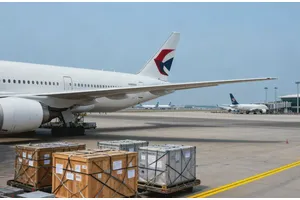
When the water leg is too slow, air freight from Guangzhou to Argentina leaves CAN and lands at Ezeiza (EZE), which handles over 85% of Argentina's international air cargo. Typical door-to-door transit is 5–8 days at $5–$9 per kilogram (2026 rates, chargeable weight basis), mostly via Istanbul, Doha, Dubai, or Frankfurt hubs.
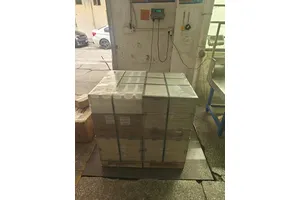
One quote-level trap: airlines bill on chargeable weight — the greater of gross weight and volumetric weight (cm³ ÷ 6,000). A 150 kg pallet of 1.5 CBM bills as 250 kg, so at $7/kg you pay $1,750, not $1,050 — why we re-measure air cargo at the CAN warehouse before quoting, and why bulky light goods that look cheap by the kilo are not. Air earns its premium when cargo value exceeds roughly 10× the freight cost, a stockout costs more than the air premium, or high-value components must reach CAN from Dongguan or Shenzhen within hours. Under 100 kg, express couriers (DHL, FedEx, UPS) run $8–$15/kg in 3–7 days. Rate brackets and EZE clearance details are in our Air Shipping from China to Argentina guide.
One Shipment, End to End: 320 Batteries to Santa Cruz
One shipment exercised every layer of this lane at once. Earlier this year we moved 320 lithium-iron-phosphate (LiFePO4) batteries — UN3480, Class 9 dangerous goods, 14.6 CBM and 2,880 kg — from Shenzhen's Bao'an district to Caleta Olivia in Santa Cruz province, Patagonia, under full DDP. Three other forwarders had turned the client down: DG cargo, a destination 1,700 km of Patagonian highway from Buenos Aires, and Argentina's "too complicated" customs.
The full timeline:
| Milestone | Elapsed |
|---|---|
| Pickup in Shenzhen (Bao'an) | Day 1 |
| Consolidation at Yantian LCL warehouse | Day 3 |
| Vessel departure (CMA CGM Rio de la Plata) | Day 6 |
| Arrival Buenos Aires, Terminal 4 (Exolgan) | Day 27 |
| Customs clearance + taxes paid | Day 38 |
| AFIP secondary inspection resolved | Day 41 |
| Departure from Buenos Aires by truck | Day 44 |
| Delivery Caleta Olivia, Santa Cruz | Day 49 |
What made it hard: an MSDS that existed only in Chinese (we arranged the Spanish translation and notarization during transit), a UN 38.3 test report, IMDG-compliant packaging, the SEDI declaration under NCM 8507.60.00 approved in 12 business days after AFIP asked for extra dangerous-goods detail, an AFIP secondary inspection resolved in 48 hours because our despachante attended on-site (the typical queue is two weeks), and a currency-control delay on the duty payment that DTFU absorbed by pre-funding the taxes. The Patagonia leg needed a corridor carrier based in Comodoro Rivadavia — when the first truck broke down, the backup kept the delay to one day.
The cost ledger, all-in:
| Item | Cost (USD) |
|---|---|
| Origin trucking (Bao'an → Yantian) | $80 |
| DG documentation & compliance | $120 |
| LCL ocean freight (14.6 CBM at contract rate) | $511 |
| Bunker adjustment factor | $65 |
| THC & port charges (origin + destination) | $195 |
| Argentina import declaration processing | $40 |
| Customs broker fees (Buenos Aires) | $220 |
| Import duties, IVA & statistical fee (≈27% of CIF) | $3,100 |
| Inland trucking (Buenos Aires → Caleta Olivia) | $950 |
| Cargo insurance (DG cargo, 110% of CIF) | $89 |
| Total DDP cost | $5,370 |
The client had budgeted $7,500 from earlier quotes; the shipment landed at $5,370 — about $16.78 per battery, 28% under budget, taxes, currency controls, and a road-delay truck swap included. The full account is in our batteries case study.
Lessons from the lane, learned the expensive way:
- File the import declaration the day cargo is booked — a "pending" status at vessel arrival starts the demurrage clock.
- Notarize the Spanish MSDS during transit; it costs nothing in time if you start early.
- Budget the destination trucking as seriously as the ocean leg — on Patagonia runs, inland transport costs more than the freight.
- One mislabeled DG box can hold an entire consolidation — dangerous goods need a specialist warehouse, full stop.
The same compliance chain applies to cargo leaving Nansha or Huangpu; for heavy equipment, Huangpu's breakbulk facilities and the sea freight service overview cover that cargo type.
Frequently Asked Questions
How long does shipping from Guangzhou to Argentina take?
Port-to-port from Nansha to Buenos Aires runs 35–42 days, most rotations transshipping via Singapore. Door-to-door averages 40–55 days. Air runs 5–8 days.
How much does it cost to ship a 20ft container from Guangzhou to Argentina in 2026?
Base ocean freight for a 20GP from Nansha is $7,100–$8,600 port-to-port (July 2026). All-in landed cost typically lands between $9,500 and $12,000.
Can I ship lithium batteries from Guangzhou to Argentina?
Yes — as Class 9 dangerous goods (UN3480) they need a UN 38.3 test report, a Spanish-language notarized MSDS, IMDG-compliant packaging, and a forwarder whose warehouse and carriers accept DG cargo. Most consolidators quietly refuse.
Before You Book: What to Ask a Forwarder on This Lane
Ask five questions before booking anyone: recent (2026) shipment evidence for Argentina, not a generic rate sheet? A licensed despachante in Buenos Aires they actually use? Dangerous-goods capability if your products might need it? Line-item, all-in pricing that includes the statistical tax and the IVA advances? Tracking from Nansha gate-in to final delivery, with someone watching the SEDI status during transit?
The last point separates forwarders on this lane: the ones we see fail quote a price, issue a B/L, and go quiet for 35 days — then the cargo arrives with a pending SEDI and a demurrage bill.
DTFU Logistics runs the PRD consolidation warehouse at Nansha, holds direct carrier contracts on the South America East Coast services that call the port, and keeps people on the ground at Buenos Aires terminals — the despachante, the corridor truckers, the AFIP inspection presence. Every shipment gets a dedicated account manager who knows this lane's paperwork and its peso math.
If your cargo is sitting in a Foshan, Dongguan, or Zhongshan warehouse right now, send your cargo details for a line-item quote on the full FOB-to-door chain, duties and currency exposure included.