Argentina is China's fourth-largest trading partner in Latin America, with bilateral trade exceeding $20 billion annually — yet for many importers, door to door shipping from China to Argentina remains one of the most misunderstood aspects of cross-border trade. If you are sourcing electronics from Shenzhen, machinery from Shanghai, or textiles from Guangzhou, you have likely wrestled with the same questions: How do I navigate Argentina's complex customs system? What will the true landed cost be after duties and taxes? And which freight forwarder can actually deliver on the promise of a hassle-free door-to-door experience?
This guide answers every one of those questions. Drawing on over a decade of hands-on freight forwarding experience on the China–Argentina route, we walk through the complete door-to-door process step by step — from supplier pickup and export documentation through ocean and air transit, Argentina's DJAI/SIRA customs clearance, duty and IVA calculation, and final delivery to your door in Buenos Aires, Córdoba, Rosario, or anywhere in Argentina. You will also find updated 2026 cost benchmarks, cargo-specific regulatory guidance, and a real-world case study so you know exactly what to expect before your shipment leaves China.
What Is Door-to-Door Shipping from China to Argentina?
Door-to-door shipping — most commonly structured as DDP (Delivered Duty Paid) under Incoterms 2020 — is a full-service logistics solution that covers every link in the supply chain: pickup from your supplier's factory or warehouse in China, Chinese export customs clearance, international freight (sea or air), Argentina import customs clearance, payment of all import duties and taxes, and last-mile trucking to your specified delivery address. When you choose a door-to-door DDP service, you receive your goods fully cleared and ready to use, with zero surprise fees at the destination.
DDP vs. Other Incoterms: Which One Works for Argentina?
Argentina's import environment is among the most regulated in Latin America, which makes the choice of Incoterms especially consequential. Here is how the most common terms compare for the China–Argentina route:
| Incoterm | Who Handles Argentina Customs? | Who Pays Duties & IVA? | Best For |
|---|---|---|---|
| EXW (Ex Works) | Buyer (you) | Buyer | Not recommended for Argentina — you assume all risk from the factory gate |
| FOB (Free on Board) | Buyer (you) | Buyer | Importers with an established despachante de aduana (licensed customs broker) in Argentina |
| CIF (Cost, Insurance, Freight) | Buyer (you) | Buyer | Buyers who want the supplier to manage ocean freight but prefer to handle Argentina customs independently |
| DDP (Delivered Duty Paid) | Freight forwarder | Freight forwarder | First-time importers, SMEs without an in-house logistics team, and anyone who wants a single all-inclusive quote |
| DAP / DDU | Buyer (you) | Buyer (you) | Importers who have their own Argentina tax payment mechanism but want the forwarder to handle customs clearance |
For the vast majority of Argentine importers — especially those importing from China for the first time — DDP door-to-door shipping eliminates the steep learning curve of Argentina's customs bureaucracy. Your forwarder's local despachante de aduana files all necessary declarations, interfaces with AFIP (Argentina's tax authority), and prepays the duties and IVA so your cargo moves from port to doorstep without delay. For a detailed side-by-side breakdown of when each trade term makes financial and operational sense, see our DDP vs FOB: Which Option Saves Time and Reduces Hassle comparison.
Key Argentina Import Terminology
Before diving deeper, familiarize yourself with the terms you will encounter throughout the import process:
- Despachante de Aduana — A licensed customs broker registered with Argentina's customs authority. Required for all commercial imports.
- DJAI (Declaración Jurada Anticipada de Importación) — The mandatory advance import declaration filed before goods can be shipped.
- SIRA (Sistema de Importaciones de la República Argentina) — Argentina's import monitoring and approval system, which replaced the older SIMI framework.
- CUIT (Clave Única de Identificación Tributaria) — The unique tax identification number every commercial importer must possess.
- IVA (Impuesto al Valor Agregado) — Argentina's value-added tax, currently 21%, applied to the CIF value plus customs duty.
- Aranceles — Customs duties, ranging from 0% to 35% depending on the HS code classification.
The Step-by-Step Door-to-Door Shipping Process
Most guides mention that door-to-door shipping is "available" to Argentina and stop there. Below, we break down exactly how it works — stage by stage, day by day — so you can plan your inventory, budget accurately, and anticipate every handoff in the chain.
Stage 1: Supplier Pickup & Export Documentation (Days 1–5)
The process begins when your freight forwarder dispatches a truck to your supplier's factory or warehouse anywhere in China — whether that is a Shenzhen electronics plant, a Yiwu wholesale market stall, or a Guangzhou textile workshop. At this stage, the forwarder typically provides:
- Cargo inspection and verification: An optional but highly recommended step where the forwarder checks goods against the purchase order for quantity, visible damage, and labeling accuracy before export. Catching issues in China is infinitely cheaper than resolving them after the cargo reaches Argentina.
- Warehouse consolidation (for LCL): If your shipment does not fill an entire container, it is transported to the forwarder's consolidation warehouse where it is grouped with other cargo bound for Argentina, reducing your per-unit shipping cost.
Simultaneously, the forwarder prepares the export documentation package:
| Document | Spanish Equivalent | Purpose |
|---|---|---|
| Commercial Invoice | Factura Comercial | Declares the transaction value, buyer/seller details, and HS codes |
| Packing List | Lista de Empaque | Details each package's contents, dimensions, and weight |
| Bill of Lading (B/L) or Airway Bill (AWB) | Conocimiento de Embarque | Serves as the contract of carriage and proof of ownership |
| Certificate of Origin | Certificado de Origen | Confirms the goods were manufactured in China; may reduce duties under Mercosur trade preferences |
Critical step — HS code classification: Argentina's customs duty rate is determined entirely by the HS (Harmonized System) code assigned to your product. A single digit error can mean the difference between a 2% and a 35% duty rate. Your forwarder should review and confirm HS codes before export declaration.
Stage 2: Export Customs Clearance & Port Departure (Days 3–7)
With documentation in order, the forwarder files the Chinese export customs declaration. Chinese export procedures are generally efficient — most shipments clear within 1–2 business days barring any compliance flags. The cargo is then transported to one of China's major container ports for loading:
| Port | Advantage for Argentina Route |
|---|---|
| Shenzhen (Yantian/Shekou) | Shortest transit to Buenos Aires (~35 days); highest sailing frequency |
| Shanghai | Largest port by volume; competitive rates; broad carrier selection |
| Ningbo | Strong South America connections; often slightly cheaper than Shanghai |
| Qingdao | Good option for cargo originating in northern China |
| Guangzhou (Nansha) | Convenient for Pearl River Delta suppliers |
Container selection: For FCL shipments, your forwarder will advise on the right container type — 20GP (~33 CBM, max ~28 tons), 40GP (~67 CBM), or 40HQ (~76 CBM, ideal for voluminous but lighter cargo). For shipments under 15 CBM, LCL consolidation is typically more cost-effective.
Stage 3: International Transit to Argentina (Sea: 30–50 Days / Air: 3–7 Days)
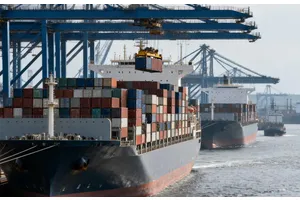
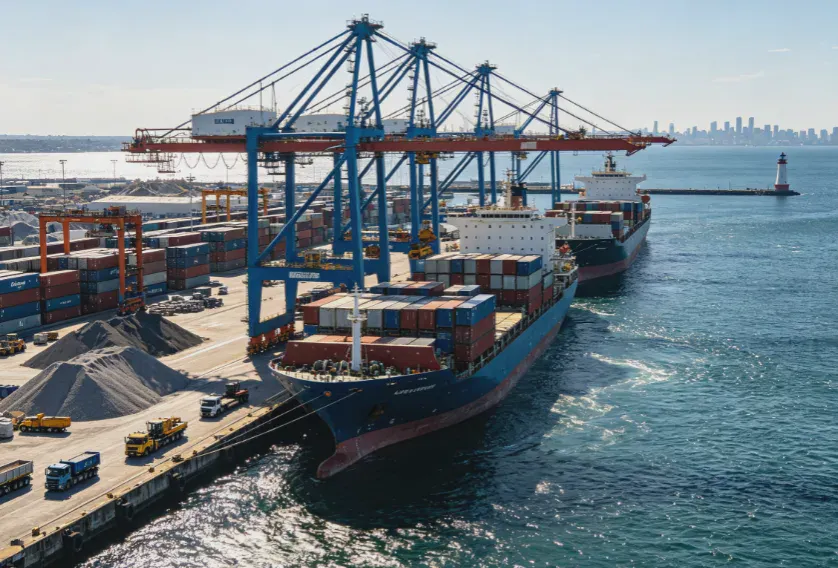
Sea freight route: Container vessels depart Chinese ports and cross the Pacific Ocean. Most services to Argentina's east coast take one of two paths — the direct South Atlantic route rounding Cape Horn, or a transshipment routing via major hubs like Singapore, Santos (Brazil), or Montevideo (Uruguay). The primary destination port is Buenos Aires (Puerto Nuevo), with Rosario and Bahía Blanca serving as secondary gateways for cargo destined to Argentina's interior. For detailed FCL/LCL rate breakdowns, vessel schedules, and port-specific transit data, see our dedicated Sea Shipping from China to Argentina guide.
Throughout transit, your forwarder's tracking platform should provide real-time vessel-position updates, estimated arrival windows, and alerts for any schedule deviations. You should never have to chase your forwarder for a status update.
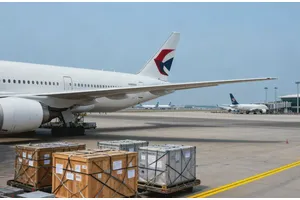
Air freight route: Cargo flies from major Chinese hubs — Shenzhen Bao'an (SZX), Shanghai Pudong (PVG), or Beijing Capital (PEK) — to Buenos Aires Ezeiza International Airport (EZE), often with a single transit stop in the Middle East or Europe depending on the carrier. Total air transit time, including ground handling at both ends, ranges from 3 to 7 days. For weight-bracket pricing, carrier options, and airport-specific transit data, see our Air Shipping from China to Argentina guide.
Stage 4: Argentina Customs Clearance & Last-Mile Delivery (Days 5–15)
This is the stage where inexperienced forwarders stumble and seasoned operators earn their reputation. The moment your vessel or aircraft departs China, your forwarder's despachante de aduana in Argentina begins the import clearance process:
- Pre-arrival filing: The despachante submits the DJAI and SIRA declarations through AFIP's online system. These must be approved before cargo can be released.
- Customs inspection upon arrival: Argentine customs (Dirección General de Aduanas) may perform a physical inspection — particularly for electronics, textiles, and high-value goods. Proper documentation and accurate declared values minimize the likelihood of a hold.
- Duty & tax assessment: AFIP calculates the import duty (aranceles), IVA (21%), statistical tax (0.5%), and any applicable perception taxes. Under DDP terms, your forwarder pays these directly.
- Cargo release & last-mile delivery: Once cleared and paid, the cargo is loaded onto a truck for final delivery to your specified address — whether that is a commercial warehouse in Buenos Aires, a distribution center in Córdoba, or a retail location in Mendoza.
Argentina Customs Clearance: DJAI, SIRA, Duties & Taxes Explained
No aspect of shipping to Argentina generates more anxiety — or more costly mistakes — than customs clearance. Below is the detailed operational picture that no compe***** guide provides.
DJAI and SIRA: Argentina's Import Gatekeepers
Argentina operates a two-tier import clearance framework that every importer must navigate:
- DJAI (Declaración Jurada Anticipada de Importación): This is the advance sworn declaration of import intent. It must be filed and approved before your goods depart China. The DJAI captures the importer's CUIT, supplier information, HS codes, CIF value, and estimated duty liability. Filing a DJAI requires a registered importer with an active CUIT — one of the reasons working through a DDP forwarder is advantageous, as they use their own or their partner's import registration.
- SIRA (Sistema de Importaciones de la República Argentina): Introduced in 2023 to replace the older SIMI system, SIRA is the import monitoring and approval mechanism administered by AFIP and the Secretariat of Commerce. SIRA approval confirms that your shipment complies with Argentina's foreign exchange and trade regulations. Processing time is typically 5–15 business days, though it can stretch longer for sensitive product categories.
Practical reality: Attempting to ship goods to Argentina without DJAI/SIRA pre-approval is the single most common cause of cargo held at port — incurring storage fees (demurrage) that can reach hundreds of dollars per day. A competent DDP forwarder initiates both filings the moment your proforma invoice is confirmed.
Argentina Import Tax Breakdown (With Real Numbers)
Argentina's effective import tax burden is substantially higher than the headline duty rate suggests because IVA cascades on top of the duty-paid value. Here is a worked example:
| Component | Calculation | Amount (USD) |
|---|---|---|
| CIF Value (Cost + Insurance + Freight) | — | $10,000 |
| Customs Duty (Arancel) @ 14% | $10,000 × 14% | $1,400 |
| Statistical Tax (Tasa de Estadística) | $10,000 × 0.5% | $50 |
| IVA (21%) | ($10,000 + $1,400) × 21% | $2,394 |
| Total Tax Burden | — | $3,844 |
| Effective Tax Rate | $3,844 ÷ $10,000 | 38.4% |
Additional perception taxes may apply depending on the importer's tax status and the province of entry — including the Percepción de IVA (an additional 20% IVA advance in certain jurisdictions) and Anticipo de Impuesto a las Ganancias (income tax withholding of 6% for registered importers). Your DDP forwarder should provide a full landed-cost breakdown specific to your HS codes and destination province before you commit.
Argentina Customs Documentation Checklist
| Document | Requirement |
|---|---|
| Commercial Invoice (Factura Comercial) | Must be in Spanish or bilingual (English/Spanish) |
| Packing List (Lista de Empaque) | Must match the Commercial Invoice exactly |
| Bill of Lading or Airway Bill | Original or telex release for sea freight |
| Certificate of Origin | May reduce duties under Mercosur preferential tariff schedules |
| DJAI Approval Certificate | Mandatory — must be obtained before shipment |
| SIRA Approval Certificate | Mandatory — confirms import clearance eligibility |
| Transport Insurance Certificate | Required for all commercial shipments |
| Product-Specific Certificates | IRAM (electronics), SENASA (agri-food), ANMAT (medical), CHAS (auto parts) |
Common Pitfalls That Cause Argentina Customs Delays
- Undervaluation: Declaring a CIF value below market norms is the fastest way to trigger an AFIP audit, customs hold, and potential fines. Argentine customs cross-references declared values against international trade databases.
- Incorrect HS code: A misclassified HS code not only results in incorrect duty payment but can also flag your shipment for a compliance review.
- Spanish-language documentation gaps: Commercial invoices and packing lists that are exclusively in English can slow clearance. Bilingual documentation is strongly recommended.
- Shipping before DJAI/SIRA approval: Cargo arriving at an Argentine port without pre-approved import declarations will sit in customs limbo, accruing daily storage charges.
- No licensed despachante de aduana: Attempting to self-clear Argentine customs without a registered broker is not viable for commercial imports.
Door-to-Door Shipping Costs & Transit Times (2026 Updated)
The cost of door-to-door shipping from China to Argentina depends on your cargo volume, chosen transport mode, origin and destination cities, and HS code classification. The tables below reflect market rates as of mid-2026.
Sea Freight DDP Costs
FCL (Full Container Load) — All-Inclusive Door-to-Door Estimates
| Route | 20GP Container | 40GP / 40HQ Container | Door-to-Door Transit |
|---|---|---|---|
| Shenzhen → Buenos Aires | $2,250 – $4,250 | $3,400 – $5,550 | 40–52 days |
| Shanghai → Buenos Aires | $2,350 – $4,350 | $3,500 – $5,650 | 45–55 days |
| Ningbo → Buenos Aires | $2,400 – $4,200 | $3,550 – $5,500 | 43–55 days |
| Qingdao → Buenos Aires | $2,500 – $4,400 | $3,650 – $5,750 | 48–58 days |
Note: The ranges above are for all-inclusive DDP service (ocean freight + both-side customs clearance + duty/IVA prepayment + last-mile delivery to Buenos Aires metropolitan area). Actual costs vary based on the HS code duty rate, destination city distance from port, and seasonal surcharges. Request a detailed landed-cost quote for your specific cargo.
LCL (Less than Container Load) DDP
- $200 – $400 per CBM all-inclusive (warehouse-to-door in Buenos Aires)
- Most cost-effective for shipments between 1 and 15 CBM
- Consolidation at origin adds approximately 3–7 days to total transit time
- Per-CBM rates decrease as total volume increases
Air Freight DDP Costs
| Weight Bracket | DDP Rate (per kg) | Door-to-Door Transit |
|---|---|---|
| Under 45 kg (Express) | $12.00 – $15.00 | 3–5 days |
| 45 – 300 kg | $8.00 – $12.00 | 5–7 days |
| 300 – 1,000 kg | $6.00 – $9.00 | 5–8 days |
| Over 1,000 kg | $5.00 – $8.00 | 7–10 days |
Route-Specific Transit Time Comparison
| Origin | Destination | Sea (Port-to-Port) | Sea (Door-to-Door) | Air (Door-to-Door) |
|---|---|---|---|---|
| Shenzhen | Buenos Aires | 30–35 days | 40–52 days | 5–8 days |
| Shanghai | Buenos Aires | 35–40 days | 45–55 days | 5–9 days |
| Shenzhen / Shanghai | Rosario | 33–40 days | 43–55 days | 7–10 days |
| Shenzhen / Shanghai | Córdoba | — | 45–58 days | 7–10 days |
| Shenzhen / Shanghai | Mendoza | — | 48–60 days | 8–12 days |
Factors That Influence Your Final Cost
Beyond the base freight rate, these variables can swing your total door-to-door cost by 15–30%:
- HS code classification: The duty rate for your specific product is the single largest cost variable. A product under HS chapter 85 (electronics) at 14% duty will cost far less to import than a product under HS chapter 61 (apparel) at 35%.
- Seasonal demand: Rates rise 15–25% during the pre-Chinese New Year rush (January–February) and the Q4 holiday peak (September–November). Booking 3–4 weeks in advance during these periods is essential.
- Destination location: Buenos Aires is the most cost-effective delivery destination. Inland cities like Córdoba, Mendoza, and Tucumán incur additional trucking costs of $200–$600 depending on distance.
- Fuel surcharges (BAF) and currency fluctuation between the USD and Chinese Yuan also impact final pricing.
Sea Freight vs. Air Freight: Choosing the Right Door-to-Door Method
| Factor | Sea Freight DDP | Air Freight DDP |
|---|---|---|
| Cost | $200 – $400 per CBM (LCL) or $2,250 – $5,750 per container (FCL) | $5 – $15 per kg |
| Door-to-Door Transit | 40–58 days | 5–10 days |
| Best For | Bulk goods, machinery, furniture, building materials, high-volume consumer products | High-value electronics, urgent orders, seasonal inventory, samples, perishable goods |
| Minimum Practical Volume | 1 CBM for LCL; 20ft container for FCL | No minimum (single package accepted) |
| Carbon Footprint | Lower per kg-km | Higher per kg-km |
Decision Framework
Choose sea freight when: Your cargo exceeds 2 CBM, has a value density below $20 per kg, and is not time-sensitive. Sea freight DDP is the default choice for the vast majority of commercial imports to Argentina — it offers the lowest cost per unit and is well-suited to Argentina's import planning cycle, which already requires several weeks for DJAI/SIRA processing.
Choose air freight when: Your cargo is under 2 CBM or 300 kg, carries a high value per kilogram (electronics, precision instruments, pharmaceuticals), or must reach Argentina urgently — for example, seasonal merchandise that missed the sea freight cutoff or emergency spare parts for machinery.
Hybrid strategy: Many established Argentine importers use sea freight for their baseline inventory (80–90% of volume) and air freight for urgent replenishment orders (10–20%). This balances cost efficiency with supply chain responsiveness. Importers distributing across South America often apply the same hybrid model to neighboring markets — see our guides on Door to Door Shipping from China to Brazil and Door to Door Shipping from China to Chile for country-specific strategies.
Express Courier DDP (DHL, FedEx, UPS)
For samples, documents, and very small e-commerce orders, express courier DDP services deliver door-to-door in 3–7 days at approximately $12–$15 per kg. Note that Argentina customs still applies to courier shipments — even a small DHL package requires proper documentation and may incur duties and IVA.
Cargo-Specific Import Regulations for Argentina
Argentina imposes different certification, labeling, and documentation requirements depending on the product category. Below are the regulations that matter most for common imports from China.
Electronics & Electrical Goods
- Certification: IRAM safety certification or recognition of an equivalent international standard (IEC, CE). Household electrical products require the S-mark (Seguridad Eléctrica).
- Labeling: Voltage, frequency, power consumption, and safety warnings must appear in Spanish on the product or packaging.
- Common HS chapters: 84 (machinery), 85 (electronics)
- Typical duty: 10–20%
Textiles, Apparel & Footwear
- Labeling: Argentine law mandates fiber composition labels, care/washing instructions, and country of origin markings in Spanish. Footwear must additionally label upper, lining, and sole material composition.
- Country of origin marking: "Hecho en China" or "Made in China" required on each item.
- Typical duty: 20–35% — Argentina actively protects its domestic textile and footwear industries through elevated tariffs.
Machinery & Industrial Equipment
- Regulatory agencies: Equipment that may contact agricultural products may require SENASA clearance. Certain machinery categories require energy efficiency labeling.
- Documentation: Operating manuals and safety documentation in Spanish are strongly recommended.
- Typical duty: 0–14% — capital goods that Argentina does not domestically produce often benefit from reduced tariff rates.
Furniture & Wood Products
- Mandatory treatment: All wooden packaging materials (pallets, crates, dunnage) must comply with NIMF 15 (ISPM 15) fumigation standards and bear the official treatment stamp.
- Additional requirements: A phytosanitary certificate may be required from Chinese authorities. Composite wood products must meet formaldehyde emission limits.
- Typical duty: 18–35%
Auto Parts & Vehicles
- Certification: Safety-critical auto parts require CHAS certification (Certificado de Homologación de Autopartes de Seguridad).
- Import licensing: Specific import licenses are required for many automotive components.
- Restriction: Used auto parts face heavy import restrictions and are frequently denied entry.
- Typical duty: 2–18% for original equipment; 14–35% for aftermarket parts.
Restricted & Prohibited Product Categories
| Category | Requirement |
|---|---|
| Used Goods | Heavily restricted — requires special permits; often denied |
| Used / Refurbished Electronics | Strict controls; phones and computers face additional scrutiny |
| Pharmaceuticals & Medical Devices | Require ANMAT registration before import |
| Food & Beverages | Require SENASA pre-approval; Spanish-language labeling with expiry dates |
| Toys | Require safety certification (Seguridad de los Juguetes) |
How to Choose a Reliable Freight Forwarder for China–Argentina Shipping
Argentina is not a market where any generalist freight forwarder will suffice. The DJAI/SIRA system alone disqualifies forwarders who lack in-country expertise. Use the following criteria to separate genuine Argentina specialists from those who simply list "Argentina" on their website.
7 Must-Check Criteria
- Argentina-specific import capability — Does the forwarder file DJAI and SIRA in-house through a registered Argentinian despachante de aduana partner? If they cannot explain both systems clearly, they lack operational capacity.
- True DDP landed-cost quoting — Can they provide a line-by-line quote that includes ocean/air freight, both-side customs clearance, all duties and IVA, and last-mile delivery? A quote that omits duties or uses vague "estimated customs fees" is a red flag.
- Licensing and accreditation — Look for FIATA (International Federation of Freight Forwarders Associations) and IATA (International Air Transport Association) accreditation as baseline professional standards.
- Transparent pricing structure — A trustworthy forwarder breaks down each cost component rather than providing a single opaque number.
- Real-time tracking and dedicated support — You should have access to an online tracking platform and a dedicated account manager who understands both Chinese export logistics and Argentine import procedures.
- Cargo insurance — Comprehensive coverage should be available, and the claims process should be clearly explained upfront. For a full breakdown of coverage options, premium factors, and what to look for in a policy, see our guide on shipping container insurance cost for shipments from China.
- Argentina-specific references — Ask for case studies or testimonials from other importers shipping to Argentina. A forwarder who cannot produce Argentina-specific references likely has limited experience on the route.
Red Flags
- Cannot explain DJAI or SIRA → no Argentina operational capability
- Quote is 30%+ below market → likely excludes duties or uses undervaluation (which triggers AFIP audits)
- No physical office or registered legal entity in Argentina
- Vague about transit times without route-specific data
- Cannot provide a sample DDP landed-cost breakdown for your specific HS code
Real-World Case Study: Electronics Shipment from Shenzhen to Buenos Aires
An Argentine consumer electronics importer needed to ship 18 CBM of smart home devices from their supplier in Shenzhen to their warehouse in the Buenos Aires metropolitan area. Previously using a FOB arrangement with separate Chinese and Argentine brokers, they faced inconsistent customs clearance times and difficulty reconciling charges from multiple parties.
Switching to a single DDP door-to-door service, here is how the shipment performed:
| Metric | Detail |
|---|---|
| Cargo | 18 CBM, 3,200 kg, HS 8517.62 (smart home devices) |
| Duty Rate | 14% (CET for HS 8517.62) |
| Service | LCL sea freight DDP |
| Timeline | Pickup Day 1 → Vessel departed Day 5 → Arrived Buenos Aires Day 38 → Customs cleared Day 44 → Delivered Day 48 |
| Total Door-to-Door Transit | 48 days |
| All-In DDP Cost | ~$5,750 (ocean freight, both-side customs clearance, duties, IVA, and last-mile delivery included) |
| Savings vs. Previous FOB + CIF Arrangement | ~18% (~$1,260 saved through service consolidation and the forwarder's preferential customs exchange rate) |
The key takeaway: consolidating all logistics stages under a single DDP forwarder eliminated coordination overhead, accelerated customs clearance by having the DJAI/SIRA filed the moment the commercial invoice was confirmed, and produced a fully predictable landed cost before the container was even booked. For a broader perspective on how professional logistics partners create value beyond freight booking, read our analysis of The Strategic Role of Freight Forwarders in Modern Supply Chains.
Frequently Asked Questions
How long does door-to-door shipping from China to Argentina take?
Sea freight door-to-door: 40–55 days (including customs clearance and last-mile delivery). Air freight door-to-door: 5–10 days. Express courier DDP: 3–7 days. The Argentina customs stage typically accounts for 5–15 days, depending on whether DJAI/SIRA pre-approval was obtained before shipment and whether the cargo is selected for physical inspection.
What is the cheapest way to ship door-to-door from China to Argentina?
For shipments over 15 CBM, FCL sea freight DDP is the most cost-effective at approximately $150–$350 per CBM all-inclusive. For 1–15 CBM, LCL sea freight DDP at $200–$400 per CBM. For shipments under 1 CBM and under 100 kg, air freight or express courier may actually be more cost-effective when you account for LCL minimum charges and consolidation delays.
Do I need an import license to ship goods from China to Argentina?
Yes. Commercial importers must possess a CUIT (tax identification number) and obtain DJAI/SIRA approval before goods depart China. Certain product categories — electronics, medical devices, food, chemicals, firearms — require additional permits and certifications. A DDP freight forwarder manages all of these requirements on your behalf.
What documents are required for door-to-door shipping to Argentina?
The core document set includes: Commercial Invoice (Factura Comercial, bilingual), Packing List (Lista de Empaque), Bill of Lading or Airway Bill, Certificate of Origin, DJAI approval, SIRA approval, and any product-specific certificates (IRAM, SENASA, ANMAT, or CHAS depending on cargo type).
Can I ship used goods from China to Argentina via door-to-door?
Used goods face heavy import restrictions in Argentina. Used electronics, machinery, vehicles, and clothing require special permits and are frequently denied entry. We strongly recommend consulting your freight forwarder before purchasing any used goods for import to Argentina.
How are import duties calculated for DDP shipping to Argentina?
Duties are calculated on the CIF value (Cost + Insurance + Freight): Customs Duty = CIF value × HS code duty rate (0–35%). IVA (21%) is then applied on (CIF value + Customs Duty). Additional taxes — statistical tax (0.5%), VAT perception (varies by province), and income tax withholding (6%) — may also apply. Your DDP forwarder provides an estimated landed-cost breakdown before shipment.
Which Chinese ports offer the best service for shipping to Argentina?
Shenzhen (Yantian/Shekou) offers the shortest transit to Buenos Aires (~35 days port-to-port) and the highest sailing frequency. Shanghai provides the broadest carrier selection and competitive rates. Ningbo and Qingdao are strong alternatives for cargo originating in eastern and northern China, respectively.
Can I track my door-to-door shipment in real time?
Yes. Reputable freight forwarders provide online tracking platforms that display your shipment's status at every stage: supplier pickup confirmation, export clearance, vessel/aircraft departure, mid-transit milestones, Argentina port/airport arrival, customs clearance status, and last-mile delivery progress.
Get Started with Door-to-Door Shipping to Argentina
Navigating door-to-door shipping from China to Argentina does not need to be complicated — but it does require a freight forwarder who understands both sides of the equation. The right partner handles DJAI/SIRA filings before your cargo leaves China, provides a transparent landed-cost breakdown that includes every duty and tax, and delivers your goods to your doorstep on a predictable timeline.
At DTFU Logistics, we have spent over a decade building exactly that capability on the China–Argentina route. As a FIATA and IATA-certified freight forwarder specializing in Shipping From China to Argentina, headquartered in Shenzhen — with a registered despachante de aduana partner in Buenos Aires — we provide all-inclusive DDP door-to-door shipping that eliminates customs uncertainty and gives you a single point of accountability from pickup to delivery.
Our team offers:
- Direct carrier contracts with major shipping lines and airlines for competitive rates and guaranteed space — even during peak season
- In-house Argentina customs capability — DJAI/SIRA filing managed by our Buenos Aires-based customs brokerage team
- Real-time online cargo tracking so you always know where your shipment stands
- Dedicated account managers who speak your language and understand both Chinese and Argentine logistics
- Comprehensive cargo insurance options to protect your investment
- Transparent landed-cost quotes — no hidden fees, no surprise charges at destination
Ready to ship? Contact our team today for a free consultation and a tailored DDP door-to-door shipping quote for your specific cargo, volume, and destination in Argentina.