If you are importing machinery, electronics, furniture, auto parts, or construction materials into Argentina, understanding the real cost and logistics behind 20ft and 40ft shipping from China to Argentina is the difference between a profitable shipment and an expensive surprise. In July 2026, ocean freight rates on the China–Argentina lane remain elevated — 20GP containers are running $7,000 to $8,500 and 40HQ containers $7,200 to $8,800 port-to-port, with month-over-month increases of roughly 15% to 16% as carriers maintain tight capacity discipline on South America East Coast services.
But the headline rate is only half the picture. Over the last decade of moving more than 1,200 TEUs to Buenos Aires, Rosario, and beyond for Argentine importers, I have seen too many buyers fixate on the freight quote while ignoring the three things that actually determine total cost: container selection (20ft vs 40ft), Argentina's customs clearance process, and the Incoterm you choose. This guide covers all three — with real shipment data and a case study from Shenzhen to Santa Cruz — so you can budget accurately and ship without surprises. For a broader overview of DTFU's services on this lane, see our dedicated Shipping from China to Argentina landing page.
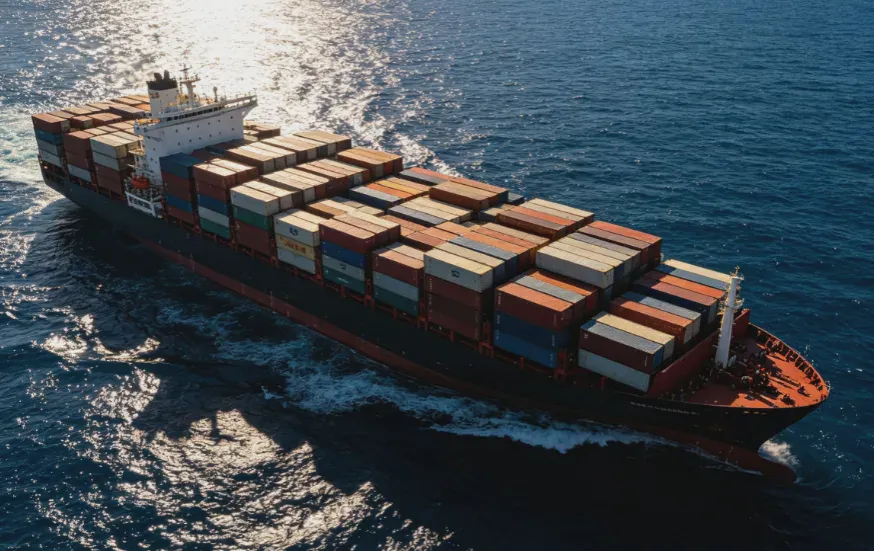
20ft vs 40ft vs 40HQ Container Comparison: Specs, Capacities & Decision Matrix
Before you request a single quote, the most important decision you will make is container size. Pick wrong, and you either pay for empty space or split your cargo across two shipments when one would have sufficed.
Here is what each container type actually holds and what it weighs:
| Specification | 20GP | 40GP | 40HQ |
|---|---|---|---|
| Internal Dimensions (L×W×H) | 5.90 × 2.35 × 2.39m | 12.03 × 2.35 × 2.39m | 12.03 × 2.35 × 2.69m |
| Volume Capacity | 28–30 m³ | 58–60 m³ | 68–70 m³ |
| Max Payload | 24,000 kg | 30,480 kg | 30,480 kg |
| Tare Weight | 2,300 kg | 3,700 kg | 4,000 kg |
| Best For | Heavy, compact cargo | Medium-density bulk | Bulky, lightweight goods |
These numbers tell a story that most freight forwarders will not spell out for you. A 40HQ holds over twice the volume of a 20GP — but carries only about 27% more weight. If your product is dense (metal parts, machinery components, tiles, glass bottles), a 40ft container will run out of payload long before you fill its cubic capacity. You end up paying for air.
Here is a decision matrix I use with clients when they are unsure which box to book:
| Your Cargo Profile | Recommended Container | Why |
|---|---|---|
| Weight > 20 tons (watch HWS) | 20GP | A 40ft will hit its payload limit well before filling its volume. Maersk charges a $400 Heavy Load Surcharge (HWS) on 20GP containers with VGM > 20 tons — factor this in. |
| Volume > 28 CBM, weight < 18 tons | 40HQ | Lowest cost per cubic meter. The extra 10 CBM over a standard 40GP costs only $100–$200 more. |
| Volume 15–28 CBM, weight > 18 tons | 20GP | FCL is safer and often cheaper than LCL at this volume — and you avoid consolidation delays. |
| Volume < 15 CBM | LCL or 20GP (compare) | At ~15 CBM, LCL and a 20ft FCL are often neck-and-neck on total cost. Get quotes for both before deciding. |
A real example: we recently shipped an 18.5-ton brick-making machine from Qingdao in a 40HQ. The machine's auxiliary equipment was bulky but relatively light — at 60 CBM and 18.5 tons, the 40HQ was the only box that could take the volume without exceeding payload limits. The consignee had initially requested a 20GP to save on freight, but the machine simply would not fit. Fitting the right box to the cargo — not the other way around — is rule number one.
2026 Container Shipping Rates: 20ft & 40ft Costs from Major Chinese Ports to Argentina
Ocean freight rates to South America have been climbing throughout 2026 as carriers manage capacity on the East Coast lane. (For detailed sea freight processes and port-specific routing, refer to our Sea Shipping from China to Argentina guide.) The table below reflects port-to-port FCL rates as of July 2026 — these are base ocean freight only, excluding local charges at origin and destination (covered in the next section).
| Origin Port | Destination | 20GP (USD) | 40GP / 40HQ (USD) | Transit Time |
|---|---|---|---|---|
| Shanghai | Buenos Aires | $7,000–$8,500 | $7,200–$8,800 | 32–40 days |
| Shenzhen (Yantian) | Buenos Aires | $7,200–$8,700 | $7,400–$9,000 | 32–38 days |
| Ningbo | Buenos Aires | $6,900–$8,400 | $7,100–$8,700 | 35–42 days |
| Qingdao | Buenos Aires | $7,300–$8,900 | $7,500–$9,100 | 38–45 days |
| Guangzhou (Nansha) | Buenos Aires | $7,100–$8,600 | $7,300–$8,900 | 35–42 days |
Why does Shenzhen sometimes cost more than Shanghai? It is not about distance — Shenzhen to Buenos Aires is actually the shortest transit on this lane at 32–38 days. The premium reflects demand: Shenzhen (Yantian) is the primary export gateway for electronics and consumer goods — two of Argentina's largest import categories from China. Higher cargo density on that corridor means higher competition for slots.
Qingdao, meanwhile, tends to be pricier and slower because fewer services call there directly for the Argentina trade. Most Qingdao shipments transship at Shanghai or Busan, adding 5–7 days and $200–$400 in additional handling.
A note on rate validity: these are July 2026 spot-market estimates. The South Atlantic lane remains tight on capacity, and carriers typically honor quotes for 2–3 weeks at most. If your shipment is 6–8 weeks out, lock in a rate with your forwarder now — do not wait.
Transit Times & Shipping Routes for Container Freight from China to Argentina
Port-to-port transit is only one leg of the journey. Here is what a typical end-to-end timeline looks like for an FCL shipment to Buenos Aires:
| Phase | Duration | What Happens |
|---|---|---|
| Factory pickup & trucking to port | 1–2 days | Cargo collected from supplier, transported to CY |
| Export customs & loading | 2–3 days | Declaration filed, container gated in, loaded onto vessel |
| Ocean transit | 32–45 days | Depends on origin port and carrier rotation |
| Argentina import clearance | 3–7 days | SEDI verification, duty/VAT payment, release order |
| Inland trucking (Buenos Aires → final destination) | 1–4 days | Depends on distance; Córdoba ~800 km, Mendoza ~1,000 km |
| Total door-to-door | ~40–55 days | Plan inventory accordingly |
Buenos Aires handles the vast majority of containerized imports. For cargo destined to the interior — Córdoba, Mendoza, Rosario, Santa Fe — the inland trucking leg adds 1–4 days and $500–$1,500 per container depending on distance.
A word on port congestion: Buenos Aires' Exolgan and Terminal 4 facilities have experienced berthing delays of 1–3 days during peak periods (Q4 and the weeks before Argentina's major holidays in June–July). If your cargo arrives during a congested window, expect an extra 2–3 days before unloading. Build this into your timeline if you have a hard delivery deadline.
During the 2025 Q4 peak, we saw clients who booked 2 weeks out paying $800–$1,200 above the prevailing rate just to secure space. Those who booked 4 weeks ahead — even without a confirmed sailing — locked rates before the surge. The gap between booking early and booking late is often the difference between a profitable quarter and a margin wipeout.
Total Cost Breakdown: Ocean Freight, Surcharges & Hidden Costs Explained
If a forwarder quotes you "$7,000 for a 20ft to Buenos Aires," ask one question: "What is not included in that number?" Here is where the money actually goes:
| Cost Category | Line Item | 20GP (USD) | 40HQ (USD) | Charged By |
|---|---|---|---|---|
| Ocean Freight | Base rate (O/F) | $6,500–$8,500 | $6,800–$8,800 | Carrier |
| Origin Charges | THC (Terminal Handling) | $150–$250 | $200–$350 | Origin port |
| Origin Charges | Documentation & customs filing | $80–$150 | $80–$150 | Forwarder / broker |
| Origin Charges | Trucking (factory → port) | $200–$500 | $300–$600 | Trucking company |
| Surcharges | BAF (Bunker Adjustment) | Included in O/F | Included in O/F | Carrier |
| Surcharges | HWS (Heavy Load Surcharge) | $400 (VGM > 20t) | N/A | Carrier |
| Surcharges | PSS (Peak Season Surcharge) | $200–$500 | $300–$600 | Carrier |
| Destination Charges | THD / delivery order | $200–$350 | $250–$400 | Destination port |
| Destination Charges | Customs brokerage | $150–$300 | $150–$300 | Broker |
| Duties & Taxes | Import duty (varies by HS code) | 0–35% of CIF | 0–35% of CIF | Argentina Customs |
| Duties & Taxes | Statistical tax | 3% of CIF | 3% of CIF | Argentina Customs |
| Duties & Taxes | VAT (IVA) | 21% of (CIF + duty) | 21% of (CIF + duty) | AFIP |
| Inland Transport | Port → final warehouse | $500–$1,200+ | $600–$1,500+ | Local carrier |
| Optional | Cargo insurance | ~$100–$300 | ~$150–$400 | Insurer |
Three hidden costs most Argentine importers discover too late:
First, demurrage and detention. Buenos Aires terminals typically give 5–7 free days after container discharge. After that, demurrage runs $50–$150 per day. If your SEDI approval is delayed and customs cannot release the cargo, the clock ticks. A 10-day delay eats $500–$1,500 — entirely avoidable if you file the SEDI before the vessel departs China, not after it arrives.
Second, the Maersk Heavy Load Surcharge (HWS) took effect on May 29, 2026. Any 20GP container to Argentina with a VGM exceeding 20 metric tons now carries a $400 surcharge. If you regularly ship dense cargo in 20ft containers, budget this in — or explore splitting the load across two LCL consignments if the math works.
Third, currency exposure. If you import under CIF or FOB and pay Argentine customs duties in pesos, a devaluation between the time you budget and the time you clear can add 10–20% to your tax bill. This is one reason DDP is increasingly popular — your forwarder pays in dollars at the official rate, and you get a fixed, predictable cost. For a complete walkthrough of how DDP works on this lane, check our Door to Door Shipping from China to Argentina guide.
Argentina Customs Clearance & Import Regulations for Container Shipments
Argentina does not make importing easy. If you have shipped to Shipping Cost from China to Chile, Peru, or even Shipping from China to Brazil, you will find Argentina's process noticeably more bureaucratic. Here is what you actually need to know — not the generic "you need a commercial invoice" list that every other guide copies.
SEDI: The Gatekeeper You Cannot Skip
Since late 2023, Argentina replaced the old SIMI system with SEDI (Sistema Estadístico de Importaciones). Every containerized import must receive SEDI approval before customs will process the entry.
The workflow is: register your company's CUIT (tax ID) with AFIP → submit the DJAI (Declaración Jurada Anticipada de Importación) → SEDI review → approval number issued → cargo cleared at port.
Common reasons SEDI applications get rejected or delayed: - CIF value flagged as "abnormal" against AFIP's reference pricing database - Missing product certifications (see below) - HS code mismatch between the SEDI declaration and the commercial invoice - Importer lacks import history for the declared NCM code
We recently handled a shipment of lithium batteries to Santa Cruz where the SEDI took 12 business days to approve — and that was considered fast. AFIP requested additional DG specification details mid-review. Our Buenos Aires-based customs broker handled the back-and-forth directly; without local representation, that review could have stretched to 3–4 weeks.
Duties, Taxes & a Real Calculation
Argentina taxes imports on the CIF value (Cost + Insurance + Freight), not FOB. This inflates the taxable base — your freight cost itself gets taxed.
Here is a realistic calculation for a 20ft container of electronics with a product FOB value of $10,000:
| Line Item | Calculation | Amount (USD) |
|---|---|---|
| Product value (FOB) | — | $10,000 |
| Ocean freight + insurance | — | $1,500 |
| CIF value (taxable base) | — | $11,500 |
| Import duty (16% for electronics) | $11,500 × 16% | $1,840 |
| Statistical tax (3%) | $11,500 × 3% | $345 |
| VAT / IVA (21%) | ($11,500 + $1,840 + $345) × 21% | $2,874 |
| Total import taxes | — | $5,059 |
That is nearly half the freight cost — and it is paid before the cargo is released. Budget for it.
Product-Specific Certifications
Certain categories require mandatory Argentine certifications before SEDI approval. If your supplier has never exported to Argentina, they will not know this:
| Product Category | Required Certification | Authority |
|---|---|---|
| Electronics & wireless devices | ENACOM homologation | ENACOM |
| Food, beverages, agricultural inputs | SENASA registration | SENASA |
| Textiles & footwear | INTI labeling compliance | INTI |
| Pharmaceuticals & medical devices | ANMAT registration | ANMAT |
| Electrical appliances (safety) | IRAM S-Mark certification | IRAM |
If you are shipping electronics and your Chinese supplier's ENACOM certificate is expired — or never existed — the SEDI will not be approved. Start the certification process before the cargo is booked, not after.
Document Checklist (Print This)
- Commercial Invoice — Must show Incoterm, unit price, total value, and currency. Spanish translation recommended.
- Packing List — Net/gross weight per carton, dimensions, total pieces.
- Bill of Lading — Consignee must match the CUIT-registered entity exactly.
- CUIT Number — Must appear on every document. Mismatches cause rejection.
- HS Code / NCM — Argentina uses the Mercosur NCM classification. Double-check with your broker.
- Certificate of Origin — Required for certain categories. May need consular legalization.
- SEDI Approval Number — Print it. Customs will ask for it.
DDP vs CIF vs FOB: Which Incoterm Saves You the Most on Argentina Imports?
For a broader comparison of these trade terms beyond just Argentina, see our in-depth guide: DDP vs FOB: Which Option Saves Time and Reduces Hassle.
Argentina's currency controls and layered tax system make the Incoterm decision more consequential here than on almost any other trade lane.
| Factor | FOB | CIF | DDP |
|---|---|---|---|
| Freight payment | Buyer arranges & pays | Seller arranges, buyer pays (in product price) | Seller arranges & pays (all-in) |
| Customs & duties | Buyer's responsibility | Buyer's responsibility | Seller's responsibility |
| Currency risk | Buyer bears all peso exposure | Buyer bears peso exposure at clearance | Seller bears peso exposure (priced in) |
| Best for | Importers with an established Argentine broker | Importers who want freight bundled but can handle clearance | Importers who want a single fixed price, zero administrative burden |
Why DDP often wins for Argentina specifically:
Argentina's peso has depreciated over 90% against the dollar in the last five years. When you clear customs under FOB or CIF, you pay duties in pesos converted at the official rate — but if the peso slides between your budget date and clearance date, your dollar-equivalent cost increases. Under DDP, your forwarder handles the payment and you get a fixed USD invoice. The cost is predictable.
The AFIP pre-payment system adds another layer. Argentina requires importers to pre-pay VAT and income tax advances at clearance — amounts that are technically creditable later, but reclaiming them can take months of bureaucratic follow-up. Under DDP, your forwarder manages these payments and you never need to engage with AFIP.
That said, DDP is not always cheapest. If your company qualifies for Argentina's MiPyME (small business) certification, you may be exempt from VAT and income tax advance payments. In that case, FOB or CIF combined with local self-clearance could be cheaper — but you need a competent Argentine customs broker.
We shipped 320 lithium iron phosphate batteries from Shenzhen to Santa Cruz under DDP. Total cost was $5,370 — 28% below the client's $7,500 budget. The flat DDP rate absorbed currency risk, AFIP inspection delays, and the 1,700 km Patagonian inland trucking leg. The client received one invoice, one tracking number, and zero calls from Argentine customs.
Real-World Case Studies: How to Optimize Your 20ft or 40ft Shipment
Case 1: Heavy Equipment — Switching Carriers Mid-Booking
In April 2026, we booked an 18.5-ton brick-making machine (~60 CBM) from Qingdao. The original carrier canceled the sailing two weeks before ETD — the vessel had been reassigned to cover Asia-Europe Cape routing demands, a ripple effect of the Red Sea crisis.
Our team pivoted to COSCO on the same rotation within 24 hours. Because we hold direct carrier allocations on the Qingdao–Middle East lane, we secured a 40HQ slot and pre-positioned the empty container at the CY two days before cutoff — insulating the shipment from last-minute equipment rollover. The machine loaded on schedule, arrived in 21 days, and cleared customs in 2 working days. The client's production line went live on time.
Lesson: When routes are volatile, your forwarder's carrier relationships matter as much as the quoted rate. A backup vessel identified before a blank sailing is announced keeps a 5–7 day delay from becoming a 14–21 day delay.
Case 2: Argentina DDP — Lithium Batteries to Patagonia
SolarVolt, an Argentine renewable energy distributor in Santa Cruz, needed 320 LiFePO4 batteries (14.6 CBM, 2,880 kg) shipped from a Shenzhen factory to their warehouse in Caleta Olivia — 2,600 km south of Buenos Aires. Three other forwarders had turned them down, citing Argentina's customs complexity and the DG cargo classification.
DTFU handled the full DDP chain: MSDS translation and Spanish notarization, SEDI pre-filing (approved in 12 business days), export clearance at Yantian, LCL consolidation, Buenos Aires customs (including an AFIP physical inspection resolved in 48 hours with on-site broker attendance), and trucking down RN-3 through Patagonia. Total transit: 49 days door-to-door. Total cost: $5,370 — 28% under the client's budget.
Lesson: For high-complexity destinations like Argentina, DDP removes the three biggest pain points — documentation risk, currency exposure, and inland logistics coordination. The $5,370 covered everything, including a road-delay truck swap in Patagonia that the client never even knew about.
Case 3: LCL Fragile Cargo — Packaging Matters More Than Speed
A Senegalese building materials distributor shipped four crates of quartz kitchen tops via LCL from Shenzhen. The factory's standard flat wooden crates were designed for FCL — adequate when the container is packed tight and sealed, but dangerously exposed to forklift handling and cargo shifting in an LCL consolidation.
Our Shenzhen warehouse rebuilt the crates into heavy-duty A-frame packaging, strapped them to the container's corner walls with steel wire, and enforced a strict "no top-stow" policy. The shipment arrived in Dakar with zero cracks, chips, or edge damage — a result the client's previous forwarder had never achieved in three prior attempts.
Lesson: In LCL shipping, packaging is not the supplier's problem — it is yours. One damaged crate in a shared container can hold up the entire consolidation at the destination CFS.
Frequently Asked Questions
How much does it cost to ship a 20ft container from China to Argentina in 2026?
Port-to-port ocean freight for a 20GP ranges from approximately $7,000 to $8,500 (Shanghai to Buenos Aires, July 2026). All-in cost — including local charges, customs clearance, duties, and inland delivery — typically falls between $9,500 and $12,000 depending on the commodity, port pair, and Incoterm.
How much does a 40ft container cost from China to Argentina?
A 40HQ costs approximately $7,200 to $8,800 port-to-port. The 40HQ premium over a standard 40GP is about $100–$200, but the 10–12 extra cubic meters make it the better value for volume cargo.
How long does it take to ship a container from China to Argentina?
Sea transit is 32 to 45 days port-to-port. Full door-to-door — including factory pickup, export clearance, ocean freight, Argentina customs, and inland trucking — averages 40 to 55 days.
What documents do I need to import a container from China to Argentina?
Commercial Invoice (with Incoterm, unit price, currency), Packing List, Bill of Lading, SEDI approval number, and CUIT number are mandatory. Certain product categories also require a Certificate of Origin, ENACOM, SENASA, or INTI certification.
Get a Transparent Quote for Your 20ft or 40ft Container to Argentina
Choosing between a 20ft and 40ft container is the first decision. Getting the customs paperwork right is the hard part. But the most expensive mistake Argentine importers make is simpler than either — it is working with a forwarder who does not know the Argentina lane well enough to warn you about the SEDI delay, the HWS surcharge, or the inland trucking bottleneck before it hits your invoice.
With over 10 years of hands-on experience on the China–Argentina route and more than 1,200 TEUs delivered to Buenos Aires, Rosario, and points across Argentina's interior, DTFU Logistics — a FIATA and IATA certified freight forwarder based in Shenzhen — has seen every edge case this lane can throw at a shipment. Our dedicated account managers build custom shipping plans with transparent, line-item pricing and real-time tracking from factory pickup to final doorstep delivery.
Whether you need a 20GP for heavy machinery, a 40HQ for your e-commerce inventory, or a full DDP solution that covers SEDI filing, duties, and last-mile delivery to Córdoba or Santa Cruz — we handle the entire chain so you do not have to.
For more container shipping guides on other trade lanes, see our 20ft and 40ft Shipping from China to Nigeria and 20ft and 40ft Shipping from China to Finland articles, or explore our Shipping container insurance cost guide to protect your cargo.
Contact us today for a free, no-obligation shipping quote — or send your cargo details on WhatsApp for a same-day response.