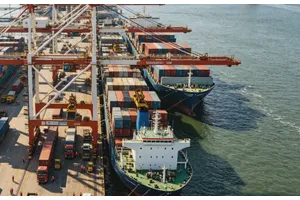
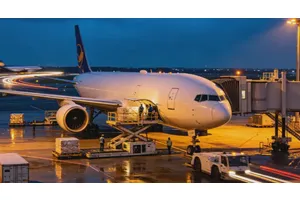
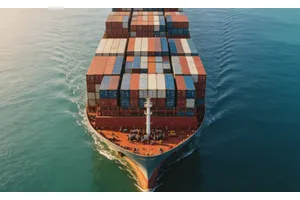
Shipping cost from China to Guatemala is the first number every importer asks for — and the one most quotes quietly get wrong. Two forwarders can price the same lane at $3,200 and $8,900. Neither is lying: they are quoting different layers of the same journey, and that gap is where importers lose money.
This guide prices the 2026 China–Guatemala lane the way you actually pay for it: the three cost layers behind every quote, current FCL, LCL, air, express and DDP rates, the surcharges that move your bill after booking, and the correct landed-cost formula for DAI and IVA 12%.
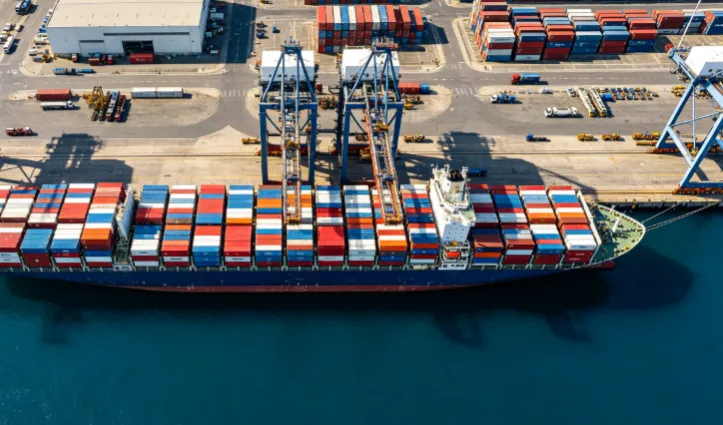
How Much Does It Cost to Ship from China to Guatemala in 2026?
| Shipping mode | 2026 cost range | What the number covers | Transit time | Best for |
|---|---|---|---|---|
| LCL sea freight | $100–$180 per CBM | Base ocean freight plus CFS and terminal charges at both ends | 30–40 days | Under 13–15 CBM, trial orders |
| FCL 20ft (20GP) | $2,500–$3,500 | Port-to-port: base freight, origin and destination charges | 25–35 days | 15–28 CBM or dense cargo |
| FCL 40ft (40GP) | $3,500–$4,700 | Same scope as 20ft | 25–35 days | 28–55 CBM, regular programs |
| FCL 40HQ (high cube) | $3,500–$4,800 | Same scope as 20ft, 67 CBM usable | 25–35 days | Light, bulky cargo: furniture, packaging |
| Air freight | $4.50–$10.00 per kg | Airport-to-airport, billed on chargeable weight | 5–9 days | Urgent, high-value goods |
| Express courier | $9.00–$12.00 per kg | Door-to-door; DAI and IVA usually not included | 2–5 days | Samples, spare parts, e-commerce parcels |
| DDP door-to-door | $4,500–$5,800 per 20ft; $6.50–$11.00 per kg by air | Everything, including DAI, IVA and final delivery | 35–49 days by sea | First-time importers, Amazon FBA sellers |
Every figure is port-to-port, Q3 2026, on 2–3 weeks' validity, except the last row. The scope column is what most quotes leave out — and the reason two numbers for the same route can differ by 200%. If you are still choosing between modes rather than comparing rates, start with our lane overview of shipping from China to Guatemala and come back once the mode is fixed.
What "shipping cost" actually includes: the three-layer cost model
| Layer | What it covers | Typical 2026 range | Who charges it |
|---|---|---|---|
| 1. Base freight | Ocean or air base rate plus BAF and CAF | See Sections 2–4 | The carrier, billed through your forwarder |
| 2. Origin + destination local charges | China export declaration, origin THC, documentation, VGM, destination THC, delivery order, deconsolidation | Origin $180–$420 plus destination $150–$520 per shipment | Forwarder and terminals at both ends |
| 3. Guatemala landed taxes and delivery | DAI, IVA 12%, broker fee, storage, inland trucking, custodia | Typically 8–25% of CIF, plus delivery | SAT, the agente aduanero, truckers |
| Port-to-port total | Layers 1 + 2, a complete quote to the Guatemalan terminal gate | $2,500–$3,500 per 20ft | — |
Layers 1 and 2 are what a forwarder prices. Layer 3 is not shipping at all — it is importing, and for most first-time buyers it is the larger and less predictable number.
Why two quotes for the same route can differ by 2x
Published 20ft rates on this lane in 2026 ranged from about $2,500 to $4,550 (1.8x), LCL from $60 to $230 per CBM (3.8x), and air from $4.00 to $14.19 per kg (3.5x). Carriers did not create that spread — scope did. Force every forwarder onto six facts before you compare:
- Incoterm and scope layer — EXW, FOB, CIF, DDP, or base freight only?
- Exact ports — Puerto Quetzal or Santo Tomás de Castilla, and which Chinese origin port?
- Surcharges — are BAF, CAF, GRI and PSS inside the number?
- Destination charges — are destination THC, delivery order and deconsolidation included?
- Taxes — are DAI and IVA quoted, or explicitly excluded?
- Validity and currency — how long is the rate locked, and is the exchange rate fixed?
Our industry insight — the $3,200 vs. $8,900 problem. A $3,200 quote is almost always a base ocean rate with fuel and peak-season surcharges still to be added, no origin handling and no destination charges. The $8,900 quote includes all of it plus clearance and delivery. Align the scope, and the honest spread between two reputable forwarders on the same sailing is 5–15%. Anything wider is a scope difference, not a price difference.
Transit time vs. actual delivery: the two clocks
Port-to-port transit is a shipping-line statistic; delivery time is what your warehouse feels. FCL sails in 25–35 days but arrives door to door in 35–49. LCL takes 30–40 days port-to-port and 38–55 door to door, because consolidation waiting and bonded deconsolidation add 3–5 days. Air is 5–9 days door to door. Plan inventory on the second number: seven extra days can trigger demurrage at one end and a stockout at the other, and both usually cost more than upgrading to air.
Container Shipping Cost from China to Guatemala: 20ft, 40ft & 40HQ FCL Rates
| Origin port | 20GP | 40GP | 40HQ | Notes |
|---|---|---|---|---|
| Shenzhen (Yantian / Shekou / Chiwan) | $2,850–$3,050 | $3,900–$4,150 | $4,000–$4,300 | Deepest carrier competition on this lane |
| Guangzhou / Nansha | $2,950–$3,150 | $4,000–$4,250 | $4,100–$4,400 | Same weekly strings, shorter drayage for PRD factories |
| Shanghai / Yangshan | $3,100–$3,300 | $4,250–$4,500 | $4,350–$4,650 | Most direct sailings of any origin |
| Ningbo-Zhoushan | $3,150–$3,350 | $4,300–$4,550 | $4,400–$4,700 | Convenient for Zhejiang suppliers |
| Xiamen | $3,300–$3,500 | $4,450–$4,650 | $4,550–$4,750 | Solid South China alternative |
| Qingdao | $3,350–$3,550 | $4,550–$4,750 | $4,650–$4,800 | Northern China; repositioning adds cost |
| Tianjin (Xingang) | $3,400–$3,600 | $4,600–$4,800 | $4,700–$4,800 | Fewer direct calls, more transshipment |
| Hong Kong | $3,250–$3,450 | $4,400–$4,600 | $4,500–$4,700 | Higher local charges, strong air-sea options |
All figures are port-to-port to Puerto Quetzal, Q3 2026. Off-peak windows (May–July) have printed as low as $2,500 for a 20GP ex-Shenzhen.
Shenzhen anchors most China–Guatemala pricing through the deepest carrier competition and the widest choice of weekly departures. Guangzhou and Nansha run many of the same strings with shorter inland trucking for Pearl River Delta suppliers, while Shanghai, Ningbo and Xiamen offer the highest direct-sailing frequency. Qingdao, Tianjin and other northern ports add $200–$500 per container through feeder repositioning. On sailings, OOCL TLP6 connects Shanghai to Puerto Quetzal in roughly 22 days and Evergreen WSA6 runs Ningbo to Puerto Quetzal in about 25 days; everything else transships through Manzanillo (Mexico), Manzanillo (Panama), Balboa or Kingston, adding 3–7 days. Two of those hubs are gateway ports in their own right, and the relay economics resemble the ones we price in our shipping from China to Mexico guide. Book 2–3 weeks out in normal markets.
40GP vs. 40HQ vs. 20GP: which box actually costs you less
| Container | Usable volume | Typical payload | Rate vs. 20GP | Choose it when |
|---|---|---|---|---|
| 20GP | ~28 CBM | ~28 tonnes | Baseline | Cargo is dense: tiles, hardware, machinery, liquids |
| 40GP | ~58 CBM | ~26 tonnes | +$900–$1,200 | Volume is moderate and cargo is heavyish |
| 40HQ | ~67 CBM | ~26 tonnes | +$1,000–$1,300 | Cargo is light and bulky: furniture, packaging, textiles |
The 40GP and 40HQ are not the same product and should never be quoted at one price. The high cube adds roughly 9 CBM of usable volume for $50–$150 more — on light cargo, the cheapest incremental cubic meter available. For how that premium behaves across trades, see high cube shipping container cost from China.
What a container quote does not include
- Destination demurrage and detention after free time expires
- Destination THC, delivery order and port systems fees
- Semáforo red-light inspection costs and storage at $120 per day
- DAI, IVA 12% and the agente aduanero fee
- Inland trucking from Puerto Quetzal and custodia on the CA-9 corridor
Rate validity warning. Ocean quotes on this lane are usually valid 14–30 days. A quote that is not currency-locked can move 10–20% on CAF alone, and a GRI announced mid-month applies to cargo loaded after its effective date — even if you booked before it.
LCL Shipping Cost from China to Guatemala per CBM
| Shipment size | Rate per CBM | Minimum billable | Typical all-in (origin + destination) |
|---|---|---|---|
| 1 CBM | $160–$230 | 1 CBM (some forwarders 2 CBM) | $280–$420 |
| 3 CBM | $135–$200 | 1 CBM | $520–$780 |
| 5 CBM | $125–$185 | 1 CBM | $800–$1,150 |
| 10 CBM | $115–$170 | 1 CBM | $1,450–$2,050 |
| 15 CBM | $100–$155 | 1 CBM | $2,000–$2,800 |
The "per CBM" headline is the most misunderstood number on this lane, because three charges sit outside it: consolidation and CFS handling at origin, deconsolidation at $40–$75 per CBM plus destination THC, and the almacén fiscal (bonded warehouse) stripping that every LCL shipment into Guatemala must go through, adding 3–5 days.
Revenue ton: why your 3 CBM shipment can bill as 5
LCL bills on the revenue ton — the greater of cubic meters or metric tons. A 3 CBM shipment of tiles weighing 5,000 kg bills as 5 revenue tons. Low-density cargo (furniture, foam, packaging) bills on volume; high-density cargo (hardware, ceramics, machinery parts) bills on weight. Ask for both figures before accepting a per-CBM rate.
FCL vs. LCL break-even for the Guatemala lane
| Item | LCL, 12 CBM / 2,400 kg | FCL, 20GP |
|---|---|---|
| Ocean or consolidation charge | 12 × $140 = $1,680 | $2,850 |
| Origin charges | $220 | $180 |
| Destination charges | 12 × $55 + $120 = $780 | $260 |
| Port-to-port total | $2,680 | $3,290 |
| Effective cost per CBM | $223 | $274 |
At 12 CBM, LCL wins by about $600 — but costs 5–10 extra days and involves more handling. Break-even sits at roughly 13–15 CBM depending on cargo density and destination charges. Above that, FCL is cheaper per CBM, faster and touched by fewer hands. If this is your first time choosing between the two modes on this lane, our sea shipping from China to Guatemala guide covers the booking and consolidation side in more depth.
Air Freight Cost from China to Guatemala per kg
| Chargeable weight | Rate per kg | Transit time | Best for |
|---|---|---|---|
| 45–100 kg | $8.50–$10.00 | 5–9 days | Samples, launches, urgent spares |
| 100–300 kg | $6.50–$8.50 | 5–9 days | Replenishment, high-value electronics |
| 300–500 kg | $5.50–$7.00 | 6–9 days | Mid-volume restocking, seasonal peaks |
| 500 kg+ | $4.50–$6.00 | 6–10 days | Program airfreight, urgent production inputs |
Rates are airport-to-airport from PVG, SZX, CAN, HKG or PEK into La Aurora International Airport (GUA), Q3 2026, excluding DAI, IVA, clearance and delivery. For routing options, cut-off times and consolidation detail on the air side, see our air shipping from China to Guatemala guide.
Chargeable weight: why your 100 kg shipment can bill as 160 kg
Air billing uses chargeable weight — the greater of gross weight and volumetric weight, calculated as length × width × height (cm) ÷ 6000. Express couriers use a divisor of 5000, making the same carton bill 20% heavier. A pallet of assembled furniture measuring 120 × 100 × 130 cm occupies 0.26 CBM and bills at 260 kg volumetric against maybe 100 kg actual. Compress packaging, stack to full pallet height, and confirm the divisor in writing.
Why there is no direct China–Guatemala freighter
There is no scaled direct freighter service between China and Guatemala. All air cargo connects through US or Mexican hubs, so "flight time" is a fraction of your lead time — connection windows and COMBEX-IM, the bonded air-cargo terminal at La Aurora, do the rest. In the Black Friday and Christmas build-up, COMBEX-IM congestion alone adds 2–3 days.
Express courier vs. air freight: different rules, different costs
Express couriers (DHL, FedEx, UPS) quote $9.00–$12.00 per kg on 2–5 day transit and, under roughly 150 kg, run their own clearance channel that bypasses the main COMBEX-IM queue. Commercial air freight is cheaper above ~150–200 kg but needs a broker and a DUCA declaration. The same break-point logic — the weight at which the premium for speed stops paying for itself — is worked through in air freight vs express from China to the USA.
Guatemala's de minimis threshold is commonly cited at USD 50. Treat that as a boundary for personal effects, samples and documents only — commercial imports are dutiable at any value, and splitting orders into parcels to stay under the threshold is a compliance risk. SAT penalizes under-declaration beyond roughly 15% variance.
When air freight is actually the cheaper choice
Air costs roughly 4–8x more per kilogram than sea, yet it still wins when a stockout costs more than the freight premium. Compare the margin lost per day of delay, plus capital tied up in a 35-day pipeline, against the air–sea rate gap. For high-value electronics, short-window fashion and production inputs that would idle a line, the math usually favors air — especially once you price in demurrage, storage and markdowns on late sea cargo.
What Actually Drives Your Rate: BAF, CAF, GRI, PSS and THC Explained
| Charge | What it is | Typical 2026 impact | Trigger |
|---|---|---|---|
| BAF (Bunker Adjustment Factor) | Fuel surcharge | $150–$400 per TEU | Oil prices and low-sulfur fuel spreads |
| CAF (Currency Adjustment Factor) | Currency surcharge | 10–20% of base freight | RMB/USD movement |
| GRI (General Rate Increase) | Carrier rate increase | $150–$600 per container | Quarterly carrier adjustments, clustered around peak season |
| PSS (Peak Season Surcharge) | Peak-season surcharge | Up to $1,000 | August–October, pre-Chinese New Year |
| THC | Terminal handling at origin and destination | $200–$350 per port | Fixed, per port |
| VGM, documentation, ISPS, delivery order | Filing and documentation fees | $80–$250 per shipment | Fixed, per shipment |
These six lines are where a "cheap" quote becomes an expensive invoice. Ask which of them is inside the number and which is "subject to change."
Quote validity, currency lock and why your bill moved
If your invoice came in above the quote, the cause is usually a GRI effective date after your booking, a CAF adjustment on an unlocked rate, or destination charges that were never included. Lock both the rate and the exchange rate in writing for a defined window, and ask for the destination side as a fixed all-in amount rather than an estimate.
Free time, demurrage and detention
Guatemalan terminals typically allow 5–7 days of free time. After that, demurrage (container at the terminal) and detention (container outside it) accrue, on top of bonded storage at about $120 per day. Pre-clearance is the practical defense: file the DUCA and settle DAI and IVA before the vessel berths so your container moves on a green light the day it is discharged.
Our commitment to transparency. DTFU Logistics quotes the China–Guatemala lane as itemized lines — origin charges, base freight, surcharges, destination charges — so the number you compare is the number you pay.
Guatemala Import Duty, IVA 12% and Customs Clearance Cost
This is where most published guides on this lane are simply wrong — which matters, because Layer 3 usually outweighs the freight itself.
| Tax | Rate | Dutiable base | Notes |
|---|---|---|---|
| DAI (Derechos Arancelarios a la Importación) | 0–15%, most consumer goods 5–10% | CIF value | CACM Common External Tariff; machinery and raw materials sit at or near zero |
| IVA (value-added tax) | 12% | (CIF + DAI + other dutiable charges) | Calculated separately, not included in the tariff |
| IPRIMA | Varies | Vehicle value | First-registration tax, vehicles only |
| FTA relief | None for China-origin goods | — | No China–Guatemala FTA; CAFTA-DR benefits US-origin goods only |
Two corrections matter. IVA is not "included in the tariff" — it is a separate 12% charge. And the IVA base is CIF plus DAI, not CIF alone; getting that wrong understates your import taxes by 5–10%. Classification follows the SAC / ACI Central American tariff nomenclature (Versión 6, August 2025), under the CAUCA / RECAUCA legal framework.
Landed cost = CIF
            + DAI (rate × CIF)
            + IVA (12% × [CIF + DAI + other dutiable charges])
            + broker fee + destination charges + inland trucking + insurance
| Line | Example A: 20GP building materials | Example B: air shipment of electronics |
|---|---|---|
| Goods + freight + insurance (CIF) | $18,000 | $9,000 |
| DAI | 5% = $900 | 10% = $900 |
| IVA base | $18,900 | $9,900 |
| IVA 12% | $2,268 | $1,188 |
| Broker fee | $120 | $120 |
| Destination or terminal handling | $350 | $150 |
| Inland delivery | $400 | $180 |
| Compliance (COGUANOR conformity) | — | $450 |
| Total landed cost | $22,038 | $11,988 |
| Taxes as a share of CIF | 17.6% | 23.2% |
As a quick check on any shipment: on a CIF value of $10,800 with DAI at 10%, you pay $1,080 in duty, and IVA is 12% of $11,880 = $1,425.60, for total taxes of $2,505.60. Dense cargo like the building materials in Example A carries its own packing and classification quirks, which are covered in shipping building materials from China.
Customs clearance cost in Guatemala: SAT, DUCA and the agente aduanero
| Cost item | Typical amount | Notes |
|---|---|---|
| Agente aduanero (licensed broker) | from $120 per shipment | Mandatory for commercial imports |
| DUCA / DUCA-F declaration and SEADEX Web filing | included, or $30–$80 | Electronic pre-declaration is effectively mandatory |
| Port systems and terminal fees | $45–$120 | Puerto Quetzal terminal charges |
| Bonded warehouse stripping (LCL) | $40–$75 per CBM | Almacén fiscal |
| Storage | $120 per day | Applies after free time and during inspections |
| Red-light inspection handling | $0–$250 plus delay | Semáforo physical inspection |
Under the Semáforo system, most containers clear immediately on a green light (Levante Sin Incidencias). Roughly 5–10% are flagged red for Aforo Físico, adding 5–10 days and storage charges. Budget for it rather than assume you will dodge it.
To import commercially in your own name you need an NIT and an RTU, which take 2–4 weeks once your documents are in order. Treat that as project time, not dead time: file the registration alongside your production run. Importers without a local entity either register — which unlocks IVA input credit — or ship DDP through a forwarder that imports under its own registration.
Regulated categories add their own lead time: electronics under COGUANOR NTG 29001 conformity take 2–6 weeks at $300–$900 per line, telecom equipment needs SIT homologación (3–8 weeks), food, cosmetics and pharmaceuticals need an MSPAS Registro Sanitario (4–8 weeks), and plant or animal products need a MAGA permit (1–4 weeks). Non-compliant wood packaging is the most avoidable delay of all: ISPM-15 heat treatment is mandatory, and a mismarked pallet can hold up a whole container for re-palletization at Q500–Q2,000 on your account.
Door to Door Shipping Cost from China to Guatemala (DDP vs DDU vs FOB)
DDP pricing on this lane runs $4,500–$5,800 per 20ft, or $6.50–$11.00 per kg by air, against $2,500–$3,500 port-to-port. The premium of roughly $1,800–$2,600 per container covers broker fees of $300–$500, DAI, IVA at 12%, destination handling of $200–$350 and inland delivery of $250–$600. It looks expensive until you compare it with a container sitting on a terminal.
| Incoterm | Who clears export | Who pays freight | Who pays DAI/IVA | Risk transfers at | Best for |
|---|---|---|---|---|---|
| EXW | Buyer | Buyer | Buyer | Supplier's door | Buyers with their own China-side logistics |
| FOB | Seller | Buyer | Buyer | On board at the Chinese port | Registered importers who clear locally |
| CIF | Seller | Seller | Buyer | Destination port | Importers with a local broker |
| DDP | Seller or forwarder | Seller | Seller | Buyer's warehouse | First-time importers, e-commerce sellers |
DDP is not automatically cheaper. If you hold an active RTU and work with your own agente aduanero, FOB plus local clearance is usually the lower-cost path — and it lets you reclaim IVA as input credit. On a $30,000 electronics order, the real difference is not price but exposure: FOB leaves you carrying freight, insurance, clearance and tax risk, while DDP collapses all of it into one invoice. Choose on structure, not on the headline rate. The trade-off between simplicity and control is set out in DDP vs FOB: which option saves time and reduces hassle.
Port choice economics: Puerto Quetzal vs. Santo Tomás de Castilla
| Factor | Puerto Quetzal (Pacific) | Santo Tomás de Castilla (Caribbean) |
|---|---|---|
| Distance to Guatemala City | ~98–100 km via CA-9 South | ~297 km via CA-9 North |
| Share of China-origin cargo | ~85% | Small, mostly Atlantic-coast consignees |
| Routing | Direct trans-Pacific sailings | Panama Canal transshipment |
| Transit and cost impact | Baseline | +7–10 days, +$200–$400 per container |
| Best for | Most importers: Guatemala City, Escuintla, Quetzaltenango | Consignees in Izabal, Zacapa and the eastern corridor |
For the vast majority of importers, Puerto Quetzal is the correct gateway. Santo Tomás makes sense only when your destination is genuinely in the east, where the shorter inland leg offsets the longer ocean leg. The Caribbean routing also depends on canal slot availability, which is why we track conditions on that corridor in our shipping from China to Panama guide.
| Destination | Distance from PRQ | Trucking cost (FCL) | LCL delivery |
|---|---|---|---|
| Guatemala City (Zona 10 / 12, Mixco, Villa Nueva) | ~100 km | $250–$600 | ~$90 plus handling |
| Escuintla | ~55 km | $180–$350 | $70–$120 |
| Quetzaltenango | ~230 km | $450–$850 | $150–$260 |
Add custodia for high-value loads on the CA-9 corridors — see Section 8.
Sellers shipping to Amazon FBA or local 3PLs usually need DDP with labeling and appointment handling built in: FNSKU labeling, carton prep, palletization and delivery to the fulfillment center or a bonded warehouse. Because these shipments are tax-inclusive by definition, the landed-cost formula above is the only reliable way to price them, and because they are low-density, 40HQ economics usually beat LCL from about 20 CBM upward.
Hidden Costs and the Cheapest Way to Ship from China to Guatemala
| Hidden cost | Trigger | Typical impact |
|---|---|---|
| Demurrage and detention | Free time expires (5–7 days at destination) | $80–$200 per container per day |
| Bonded and terminal storage | Red-light inspection, late clearance | $120 per day |
| Semáforo red-light inspection | Random, ~5–10% of containers | +5–10 days |
| ISPM-15 non-compliant pallets | Mismarked or untreated wood | Q500–Q2,000 to re-palletize |
| Documentation corrections | Invoice/packing list mismatch | $50–$300 plus delay |
| Unlocked CAF/GRI | Quote not currency-locked | 10–20% of base freight |
Cargo theft on the CA-9 South corridor — Puerto Quetzal through Escuintla to Guatemala City — is a real, priced risk in Guatemala, not a theoretical one. Custodia (armed escort) is the standard mitigation for high-value FCL: electronics, apparel and finished consumer goods, at roughly $150–$600 per run. For the cover side of that exposure, see shipping container insurance cost for shipments from China.
Real-life scenario — the 14 CBM shipment that should have been a 20GP. A Guatemala City importer consolidated 14 CBM of furniture and building hardware from three Shenzhen suppliers and shipped LCL through Puerto Quetzal: about $2,850 port-to-port with a 41-day door-to-door. The next order grew to 19 CBM, and we moved it to a 20GP: $2,850 in freight plus $260 destination charges and $480 inland delivery, arriving in 37 days. The freight bill moved less than 15%, capacity nearly doubled, and the cargo was handled twice instead of six times. Breaking the LCL habit at the right volume is the largest single saving available to most importers on this lane.
| Lever | Mechanism | Typical saving |
|---|---|---|
| 1. Consolidate suppliers into one shipment | Raise CBM utilization and cross the FCL break-even | 10–30% |
| 2. Match the box to the cargo | Dense cargo in 20GP, bulky cargo in 40HQ | 5–15% |
| 3. Avoid peak-season booking | Sidestep PSS and GRI windows | 10–25% |
| 4. Choose the origin port | Shenzhen vs. northern ports | $200–$500 per container |
| 5. Classify correctly under SAC/HS | Wrong codes mean overpaid DAI and red-light attention | Several DAI points |
| 6. Book 3–4 weeks ahead, with NIT/RTU in parallel | Avoids peak premiums and 2–4 weeks of registration time | $300–$1,000 |
| Period | Risk driver | Cost and delay impact |
|---|---|---|
| Jan–Feb | Chinese New Year factory and port shutdown | Tight space, +5–14 days, GRI |
| Mar–Apr | Semana Santa national holiday | Clearance and inland delivery +2–5 days |
| May–Jul | Quiet season | Baseline rates; best booking window |
| Jun–Nov | Rainy season; CA-9 landslides | Inland transit +1–3 days |
| Aug–Oct | Peak-season surcharges | Rates +15–30%, +5–15 days |
| Nov–Dec | Black Friday and Christmas peak | Air +2–3 days at COMBEX-IM, sea +5–15 days |
To sanity-check any quote, multiply your CIF value by the duty rate you expect, add 12% IVA on that sum, then add the broker fee, destination charges and inland trucking, and compare the result against the landed-cost examples above. If a quote lands far below that model, a layer is missing. If it lands far above, ask which line is inflated.
FAQs
How much does it cost to ship a 20ft container from China to Guatemala?
A 20GP runs $2,500–$3,500 port-to-port in 2026, with $2,850 typical ex-Shenzhen. Add DAI, IVA and delivery and a realistic door-to-door figure lands between $4,500 and $5,800.
How much does it cost to ship a 40ft container from China to Guatemala?
A 40GP costs $3,500–$4,700 port-to-port; a 40HQ costs $3,500–$4,800 and carries 67 CBM instead of 58. Neither rate includes DAI, IVA or inland delivery.
How much is LCL shipping per CBM from China to Guatemala?
$100–$180 per CBM depending on volume, plus deconsolidation of $40–$75 per CBM. Shipments under 1 CBM bill at a 1–2 CBM minimum, and density can trigger revenue-ton billing.
How much does air freight from China to Guatemala cost per kg?
$4.50–$6.00 per kg above 500 kg, $6.50–$8.50 between 100 and 300 kg, and up to $10.00 per kg under 100 kg. Transit is 5–9 days, connecting through US or Mexican hubs.
What is the cheapest way to ship from China to Guatemala?
Sea freight — LCL below 13–15 CBM, or a well-filled 20GP above it. Booking in May–July, consolidating suppliers and avoiding peak-season surcharges typically cuts total cost by 15–30%.
How much are Guatemala's import duties and IVA on goods from China?
DAI is 0–15% of CIF, with most consumer goods at 5–10%. IVA is a separate 12% on CIF plus DAI. Together they usually equal 15–25% of CIF, with no FTA relief for China-origin goods.
Is DDP cheaper than FOB for shipping to Guatemala?
Not necessarily. DDP adds a $1,800–$2,600 premium per container. If you hold an NIT/RTU and can reclaim IVA input credit, FOB with local clearance is usually cheaper; DDP wins on simplicity.
Getting a Quote You Can Actually Compare
| Check | What to verify |
|---|---|
| 1. Guatemala-side broker network | A licensed agente aduanero with SAT experience and Spanish-language documentation |
| 2. Itemized quoting | Line-by-line origin, freight, surcharge and destination charges instead of one bundled number |
| 3. DDP and RTU capability | The ability to import on your behalf if you have no local entity yet |
| 4. China-side consolidation | Multi-supplier pick-up and consolidation before sailing |
| 5. Risk resources | Cargo insurance and custodia arrangements on the CA-9 corridor |
DTFU Logistics has moved cargo from China since 2014, from our base in Shenzhen, and handles the China–Guatemala lane end to end. We hold FIATA and IATA accreditation, and our network covers 120+ countries. For this lane that means direct carrier contracts with the lines serving Puerto Quetzal, fixed destination charges quoted upfront, DDP capability under our own registration, cargo insurance and custodia on the CA-9 corridor, and 24/7 support with a dedicated account manager and real-time shipment tracking.
Our standard is transparent and flexible logistics solutions without hidden fees — which is why we quote this lane the way this article describes it: three layers, every line visible.