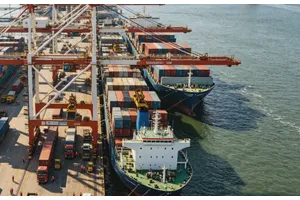
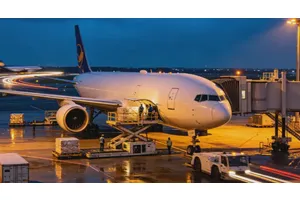
Guatemala is the only country in Central America where your cargo can enter through two different oceans — and that single fact shapes everything about importing from China. A 40ft container of building materials can land at Puerto Quetzal on the Pacific after about 30 days at sea, or arrive at Santo Tomás de Castilla on the Caribbean after a longer, Panama-Canal-routed journey. The port you pick changes your freight bill, your transit time, and which SAT customs office clears your goods. For most importers — especially those without a registered Guatemalan business entity — the cleanest way to navigate all of it is a single door to door shipping from China to Guatemala partner who picks up at the factory and delivers to a specific address, with duties paid and paperwork handled.
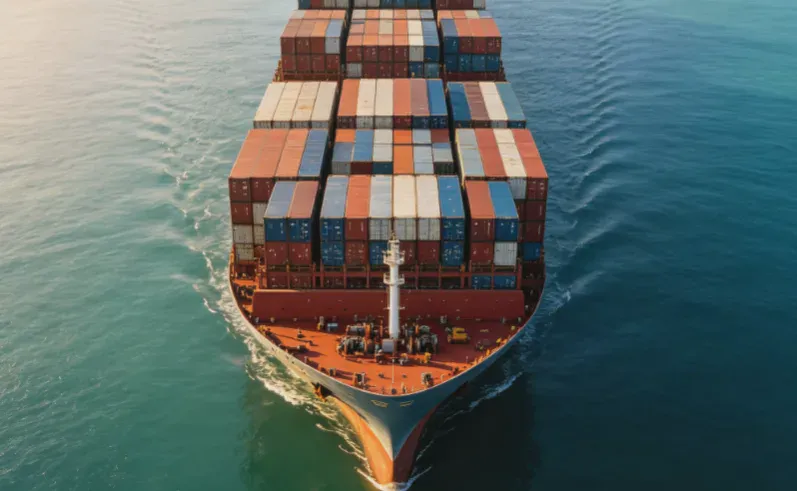
At DTFU Logistics, we consolidate and clear shipments out of our Shenzhen hub for Guatemala City importers every single week — the rates, transit times, and customs walkthroughs in this guide come from those real bookings, not from a published tariff card. Here is exactly how door-to-door shipping to Guatemala works in 2026, what it costs, and where first-time importers typically get burned.
What Door to Door Shipping from China to Guatemala Actually Covers
Door to door shipping is the logistics equivalent of ordering a complete package: one freight forwarder takes responsibility for every leg of the journey, from your supplier's factory floor in China to your warehouse, store, or home address in Guatemala. You get one contract, one point of contact, and — under the right Incoterm — one all-inclusive price.
The full chain runs through six stages:
- Supplier pickup — goods are collected from the factory or warehouse in China (from one supplier or several, consolidated at a hub warehouse).
- China export customs — export declaration filed, documents prepared, cargo handed to the carrier.
- International transit — by sea to Puerto Quetzal or Santo Tomás de Castilla, or by air to La Aurora International Airport (GUA) in Guatemala City.
- Guatemala import clearance — a licensed customs broker (agente aduanero) files the declaration with SAT, the national tax and customs authority.
- Duties and taxes — import duty (DAI) and 12% IVA are calculated and settled.
- Last-mile delivery — cleared cargo is trucked to your final address, whether that is Zone 10 in Guatemala City, a bodega in Mixco, or a shop in Antigua.
Incoterms 2020 decide who owns each stage. The two that matter for door-to-door buyers are DDP (Delivered Duty Paid) and DAP/DDU (Delivered at Place / Duty Unpaid):
| Service Level | What's Included | Best For |
|---|---|---|
| Full Door-to-Door (DDP) | Pickup + export + transit + SAT clearance + duties & IVA prepaid + delivery | First-time importers, no RTU registration, anyone wanting one fixed price |
| Door-to-Door (DAP/DDU) | Same journey, but you pay duties & taxes at delivery | Importers with a local customs broker or tax representative |
| FOB + your own broker | You buy the international leg; your own agente aduanero clears in Guatemala | Established importers with an active RTU and in-country team |
| EXW + DIY | Supplier hands cargo to your carrier at the factory; you coordinate everything | Large importers with dedicated logistics staff |
Under DDP, the forwarder prepays the Guatemalan duties and IVA, so the price you are quoted is the price you pay — no surprise bill from SAT at the port. That single feature makes DDP the default choice for the majority of first-time Guatemala importers we work with. Our door-to-door shipping service page walks through how the full chain is managed, and customs clearance explains the SAT side in more detail.
Puerto Quetzal vs Santo Tomás de Castilla: Choosing Your Gateway
No other Central American country gives you this choice, and it is the first decision that shapes your door-to-door quote. Guatemala has one major Pacific port and one major Caribbean port, and they are very different propositions for China-origin cargo:
| Factor | Puerto Quetzal (Pacific) | Santo Tomás de Castilla (Caribbean) |
|---|---|---|
| Share of China-origin cargo | ~85% | ~15% |
| Route from China | Trans-Pacific sailing + feeder via Manzanillo, Panama | Panama Canal transshipment |
| Typical ocean transit | 25–35 days | 32–45 days (roughly 7–10 days longer) |
| Main inland corridor | CA-9 South to Guatemala City | CA-9 North / Atlantic corridor |
| Best for | Guatemala City, Antigua, Quetzaltenango, south & west | Eastern Guatemala: Zacapa, Izabal, Puerto Barrios area |
Puerto Quetzal (PRQ) is the country's primary gateway. Operated in part by APM Terminals on the Pacific coast, it handles the overwhelming majority of Asian imports — in our experience, around 85% of China-origin commercial cargo enters here. China-bound vessels sail trans-Pacific and typically transship once at Manzanillo, Panama, before a feeder leg brings the container up the coast. From the port, cargo moves on the CA-9 South highway straight to Guatemala City, about 100 km away.
Santo Tomás de Castilla (STC) on the Caribbean coast only makes sense when your final destination is in eastern Guatemala — Zacapa, Izabal, or the Puerto Barrios region. Cargo routed there transships through the Panama Canal, which adds roughly 7–10 days to the voyage. We rarely recommend STC for China origins; the extra time and the canal tolls rarely pay off unless you are already operating east of the capital. For the full breakdown of FCL, LCL, and port-to-port economics on this lane, our sea shipping from China to Guatemala guide covers it in depth.
There are no direct sailings from China to either Guatemalan port. Every container transships — usually through Manzanillo or Balboa in Panama, sometimes via the US East Coast. Plan your inventory around that reality, and let your forwarder pick the service with the tightest connection windows. Our sea freight services are structured around exactly these trans-Pacific loops into Central America.
Door-to-Door Transit Times: Sea, Air & Express
How long does door to door shipping from China to Guatemala actually take? The honest answer depends on mode — and on whether the SAT traffic light turns red on your container.
Sea Freight Door-to-Door: 30–52 Days
The ocean leg is only part of the story. A full door-to-door timeline includes deconsolidation (for LCL), customs clearance, and the inland trucking leg:
| Leg | FCL | LCL |
|---|---|---|
| Ocean transit (China → Guatemala) | 25–35 days | 30–40 days |
| Deconsolidation at bonded warehouse (almacén fiscal) | — | 3–5 days |
| SAT customs clearance (Semáforo) | 3–5 days | 3–5 days |
| Last-mile trucking to your door | 1–2 days | 1–2 days |
| Total door-to-door | ~30–45 days | ~38–52 days |
LCL cargo must be deconsolidated at a bonded warehouse before clearance can even begin — that 3–5 day step is why LCL always runs longer than FCL on the same sailing. If your shipment draws a red channel inspection, add another 2–4 days on top.
Air Freight Door-to-Door: 5–9 Days
When speed matters more than cost, air freight lands at La Aurora International Airport (GUA) and clears through the COMBEX-IM customs warehouse:
| Service Level | Door-to-Door Transit | Best For |
|---|---|---|
| Express Courier (DHL/UPS/FedEx) | 2–5 days | Parcels under 150 kg, samples, documents |
| Priority Air Freight | 3–5 days | Urgent commercial shipments |
| Standard Air Freight | 5–7 days | Regular commercial cargo |
| Economy / Deferred Air Freight | 7–10 days | Budget-conscious shipments |
The standard 5–7 day air figure already includes the connection through a North American hub (Miami, Los Angeles, or Mexico City) and SAT clearance at COMBEX-IM. Our dedicated air shipping from China to Guatemala guide breaks down every route and airline option.
What Delays Door-to-Door Shipments
A few recurring culprits add days to otherwise clean timelines:
- Red channel (canal rojo) inspection — SAT's random traffic-light system physically inspects your cargo; add 2–4 days.
- COMBEX-IM backlogs — the air cargo warehouse congests badly in the weeks before Black Friday and Christmas.
- Puerto Quetzal congestion — berth or gate delays during peak season, typically Q4.
- Documentation gaps — an English-only invoice or a packing list that does not match the cargo is the single most common cause of holds.
- Chinese New Year — factories and carriers wind down for 2–3 weeks around late January/February; book before the rush.
2026 Door-to-Door Costs from China to Guatemala
Your total door-to-door cost is the sum of freight, clearance, duties and taxes, and inland delivery. Here are the realistic 2026 market ranges we are actually quoting on this lane:
| Shipping Mode | Unit | Typical Cost Range | Door-to-Door Transit |
|---|---|---|---|
| Sea — 20ft FCL | per container | $2,500 – $3,500 | ~30–45 days |
| Sea — 40ft / 40HQ FCL | per container | $3,500 – $4,800 | ~30–45 days |
| Sea — LCL | per CBM | $100 – $180 | ~38–52 days |
| Air Freight | per kg (45 kg+) | $4.50 – $10.00 | 5–9 days |
| Express Courier | per kg | $9.00 – $12.00 | 2–5 days |
Air freight rates drop steeply with weight: expect roughly $7–10/kg at 45–99 kg, $6–9/kg at 100–299 kg, and $4.50–7.00/kg once you pass 1,000 kg. The per-kg figure you are quoted is calculated on chargeable weight — whichever is greater of actual weight or volumetric weight (L × W × H in cm ÷ 6,000) — so bulky-but-light cargo costs more than the scale suggests.
Container Rates by Origin Port
Where your cargo departs China moves the price noticeably. Indicative mid-2026 door-to-door container levels:
| Origin Port (China) | 20ft FCL (from) | 40ft / 40HQ FCL (from) |
|---|---|---|
| Shenzhen (Yantian / Shekou) | $2,850 | $3,900 |
| Guangzhou (Nansha) | $2,950 | $4,000 |
| Shanghai | $3,100 | $4,250 |
| Ningbo | $3,150 | $4,300 |
| Qingdao | $3,350 | $4,550 |
Shenzhen and Guangzhou consistently quote lowest because the Pearl River Delta is the heart of the export machine feeding this lane — and because our consolidation hub there means shorter inland collection distances for Guangdong suppliers.
What a Door-to-Door Quote Contains
A transparent forwarder breaks the price down so you can see what you are paying for:
| Cost Component | What It Covers |
|---|---|
| Ocean or Air Freight | The main international transport leg |
| Origin Charges | China export clearance, terminal handling, documentation |
| Destination Clearance | SAT brokerage (agente aduanero) and port/airport handling |
| Duties & Taxes | DAI import duty and 12% IVA (included under DDP) |
| Inland Delivery | Final trucking from Puerto Quetzal or GUA to your address |
| Cargo Insurance | Optional protection against loss or damage |
A genuine door-to-door price runs roughly 10–20% higher than a port-to-port rate because it bundles destination clearance, duty prepayment, and last-mile trucking. Rates also move with the season — expect peak-season surcharges in the run-up to Chinese New Year and the year-end holiday rush. If you want a precise quote for your cargo, our shipping from China to Guatemala page links straight to the team that books this lane every week.
Duties & Taxes: The Real Landed-Cost Math
Two charges apply to every commercial import from China, both calculated on the CIF value (Cost of goods + Insurance + Freight):
- Import Duty (DAI — Derecho Arancelario a la Importación): typically 0% to 15% of CIF, depending on the HS Code. Most consumer goods fall in the 5–10% band; machinery and raw materials often qualify for lower or zero rates.
- IVA (Value-Added Tax): a flat 12%, applied to (CIF Value + Import Duty).
Worked example: you import $10,000 of consumer goods from Shenzhen. Ocean freight and insurance add $800, making the CIF value $10,800. The applicable HS Code carries a 10% duty rate:
| Calculation Step | Amount |
|---|---|
| CIF Value (goods + freight + insurance) | $10,800.00 |
| Import Duty (DAI, 10%) | + $1,080.00 |
| Subtotal for IVA (CIF + duty) | $11,880.00 |
| IVA (12%) | + $1,425.60 |
| Total Duties & Taxes Due | $2,505.60 |
That is a 23% total tax burden on a typical 10%-duty shipment — a number you should know before you price your goods for the Guatemalan market.
The CAFTA-DR Reality Check
Guatemala is a signatory to CAFTA-DR (the Dominican Republic–Central America Free Trade Agreement), which can eliminate duties on qualifying goods. Here is the catch most importers misunderstand: the preference applies to goods originating in member countries. Goods made in China do not qualify, so Chinese-origin shipments pay the full DAI and IVA — no certificate of origin changes that. A Certificate of Origin is still worth carrying for mixed-origin cargo, but do not build your pricing around a CAFTA-DR exemption for Chinese goods.
The RTU Barrier — and Why DDP Bypasses It
To clear commercial imports under standard terms (FOB/CIF), the importer must be registered with SAT and hold an active RTU (Registro Tributario Unificado) — Guatemala's unified tax registration. If you are a first-time importer, an e-commerce seller, or a small business without a legal entity in Guatemala, you do not have one, and you cannot easily get one without local incorporation and a representante legal.
This is the single biggest reason door-to-door DDP exists for this market: the forwarder uses its own local trading entity's RTU to clear the goods, pays the duties and IVA up front, and delivers. You never need to register, never receive a bill from SAT, and never risk a hold because your paperwork is not in order. If you are weighing trade terms, our DDP vs FOB comparison lays out exactly when each makes sense.
How SAT Clears Your Shipment: The Semáforo System
The Superintendencia de Administración Tributaria (SAT) is Guatemala's tax and customs authority, and its clearance process runs on a randomized traffic-light system (Semáforo) that every China–Guatemala importer eventually meets:
- Green channel (Levante sin Incidencias): your paperwork is accepted and the cargo is released immediately after duties are paid. Most clean shipments clear this way in 3–5 days at the port.
- Red channel (Aforo Físico): a customs officer physically opens your container or cartons and verifies the goods against the commercial invoice. Add 2–4 days.
Your broker files the electronic declaration — the DUCA (Declaración Única Centroamericana) — through the SAT portal, attaching all supporting documents. Payment of assessed duties happens through an authorized Guatemalan bank, with confirmation transmitted electronically to SAT.
Documents SAT Requires
| Document | Spanish Name | Why SAT Needs It |
|---|---|---|
| Bill of Lading / Airway Bill | Conocimiento de Embarque / Guía Aérea | Proof of carriage and cargo description |
| Commercial Invoice | Factura Comercial | Declares value — must be Spanish or bilingual |
| Packing List | Lista de Empaque | Itemized weights and counts; discrepancies trigger fines |
| Certificate of Origin | Certificado de Origen | Needed for any trade-agreement claim |
| Importer Tax Registration | RTU (Registro Tributario Unificado) | Proves the importer is registered with SAT |
| Import License | Licencia de Importación | Regulated goods only: electronics, chemicals, food |
The packing list warning we give every client: SAT is famously strict about document precision. If your packing list declares 100 boxes and the count comes to 101 — or the declared weight is off by even a few kilograms — you face fines and the cargo is held until the discrepancy is resolved. Demand exact, verified numbers from your Chinese supplier before the shipment leaves. We have seen first-time importers lose weeks over a one-box difference that a factory QC check would have caught in minutes.
Real Shipment: The Container That Carried Guatemala-Bound Textiles
Numbers are abstract until they move. Here is a door-to-door LCL scenario built from a consolidation we ran this year — the same 40GP container on MSC's Andes Service that carried tablets for an El Salvador distributor also carried textiles bound for Guatemala and auto parts for Honduras, routed Yantian → Shanghai (transshipment) → Manzanillo, Panama (transshipment) → Central America.
The Guatemala leg looked like this: a Guatemala City clothing importer bought 3 CBM of printed textiles from a Guangzhou supplier. The goods were picked up, palletized at our Shenzhen consolidation warehouse, and shipped LCL under DDP — clearing through the SAT green channel at Puerto Quetzal and trucked up the CA-9 South to the importer's bodega in Zone 12.
| Cost Item | Amount (USD) |
|---|---|
| LCL sea freight (3 CBM, Guangzhou → Puerto Quetzal) | $360 |
| CFS consolidation & palletizing (Shenzhen hub) | $48 |
| China export customs clearance | $35 |
| B/L documentation | $25 |
| Destination THC & CFS charges (Puerto Quetzal) | $90 |
| Customs brokerage (agente aduanero) | $120 |
| Import duty — DAI (10% of $4,400 CIF) | $440 |
| IVA (12% of CIF + duty) | $580.80 |
| Trucking Puerto Quetzal → Guatemala City (CA-9) | $90 |
| Total door-to-door (DDP) | $1,788.80 |
Three details made this shipment smooth, and they are the same three we watch on every Central American LCL:
- Transshipment monitoring. Manzanillo is a busy hub and LCL cargo can be misrouted if nobody is watching. We tracked the container at every milestone and confirmed the feeder connection within 36 hours of discharge.
- Dunnage and placement. Light textile pallets were loaded door-side with plywood dividers separating them from heavier cargo — a cheap step that prevents crushed cartons on a 30-day voyage.
- Documents verified before departure. The commercial invoice was checked for Spanish-language compliance and the packing list confirmed against the supplier's actual carton count before the container sailed, not after it arrived.
The whole shipment — pickup to Zone 12 — took 41 days door to door, inside the expected LCL range, with zero customs surprises. For importers serving several Central American markets at once, our door to door shipping from China to Panama and shipping from China to Honduras services use the same consolidation and transshipment playbook across the region.
How to Choose Your China–Guatemala Forwarder
Not every forwarder that claims Guatemala coverage has actually cleared a container at Puerto Quetzal. When you evaluate a partner for door-to-door shipping from China to Guatemala, check five things:
- Real Guatemala experience. Do they know the SAT Semáforo system, the RTU requirement, and the COMBEX-IM routines? The difference between a smooth green-channel release and weeks of demurrage is usually local knowledge.
- True door-to-door capability. Confirm they handle the full chain — pickup, export, transit, clearance, duties, delivery — through their own teams or vetted local partners, not just the port-to-port leg.
- Direct carrier relationships. Forwarders with direct contracts to major shipping lines (MSC, Maersk, CMA CGM, COSCO, ONE) and airlines secure better rates and, critically, better space when peak season hits.
- Transparent all-inclusive pricing. You should get a line-item breakdown — freight, origin charges, destination clearance, duties, inland delivery — not a vague per-kg number with a long tail of "local charges to be advised."
- Tracking and a human being. Real-time visibility from pickup to delivery, plus a dedicated account manager who answers when the container is sitting at Manzanillo.
This is where DTFU Logistics earns its place on your shortlist. We are a FIATA- and IATA-certified forwarder established in Shenzhen in 2014, serving 120+ countries with direct carrier contracts, a 24/7 tracking platform, and dedicated account managers who know this lane cold. Beyond Guatemala, we run air shipping from China to Costa Rica and the full Central American network, so a regional import strategy can be handled by one partner. If your cargo is headed to an Amazon fulfillment model rather than a single address, our Amazon FBA service covers the same door-to-door chain with FBA-specific labeling and delivery requirements, and our tracking platform gives you and your customers end-to-end visibility.
FAQs
How long does door to door shipping from China to Guatemala take?
Sea freight runs roughly 30–45 days door-to-door for FCL and 38–52 days for LCL, including deconsolidation, SAT clearance, and inland delivery. Air freight takes 5–9 days door-to-door, and express courier (DHL/UPS/FedEx) delivers in 2–5 days for parcels under 150 kg.
How much does door to door shipping from China to Guatemala cost?
Sea: 20ft FCL $2,500–$3,500, 40ft/40HQ FCL $3,500–$4,800, LCL $100–$180 per CBM. Air: $4.50–$10.00/kg depending on weight tier. Express courier: $9.00–$12.00/kg. A door-to-door quote runs roughly 10–20% higher than port-to-port because it includes clearance, duties, and last-mile delivery.
What are the import duties and taxes in Guatemala?
Import duty (DAI) is typically 0–15% of the CIF value depending on HS Code, and IVA is a flat 12% calculated on (CIF + duty). A $10,800 CIF shipment at 10% duty incurs $1,080 duty plus $1,425.60 IVA — $2,505.60 total.
Which port should I ship to: Puerto Quetzal or Santo Tomás de Castilla?
Default to Puerto Quetzal on the Pacific — about 85% of China-origin cargo enters there, with the shortest transit (25–35 days) and the fastest highway link to Guatemala City. Choose Santo Tomás de Castilla only if your final destination is in eastern Guatemala (Zacapa, Izabal, Puerto Barrios area), accepting 7–10 extra days of transit.
What documents do I need to clear customs in Guatemala?
A Bill of Lading or Airway Bill, a Commercial Invoice (in Spanish or bilingual), a Packing List, a Certificate of Origin where relevant, and the importer's RTU registration. Regulated goods (electronics, chemicals, food) additionally need an Import License. Discrepancies between the packing list and actual cargo cause fines and holds.
What is the difference between DDP and DDU door-to-door?
Under DDP (Delivered Duty Paid), the forwarder prepays all duties and IVA, so the quoted price is final. Under DDU/DAP (Delivered Duty Unpaid), goods arrive at your door but you pay the duties and taxes at that point — which requires local representation and an RTU.
Can DTFU ship Amazon FBA stock door to door to Guatemala?
Yes. Our Amazon FBA service follows the same door-to-door chain — pickup, export, sea or air transit, SAT clearance, delivery — with FBA-specific labeling, box requirements, and shipment planning for the Guatemalan market. Contact our team to plan the shipment around your selling season.
Conclusion
Door to door shipping from China to Guatemala exists because importing into this market is genuinely hard to do alone: two possible gateway ports, no direct sailings, a Spanish-language customs system built on a traffic light, and a tax registration requirement that locks out unregistered buyers. A door-to-door DDP partner collapses all of that into one contract — pickup in China, SAT clearance, duties prepaid, delivery to your door, one price.
Sea freight gives you the lowest cost for volume, air freight buys you weeks, and DDP removes the RTU barrier entirely. The key is choosing a forwarder with real Puerto Quetzal experience and transparent pricing. If you are ready to simplify your next shipment, contact DTFU Logistics for a free all-inclusive door-to-door quote — and let our team handle the details from your supplier's factory to your door in Guatemala.