Shipping cost from China to Argentina is the first number every importer wants — and the number most quotes get wrong. Two forwarders can send you the same route label, "China to Buenos Aires," one at $3,200 and one at $8,900. Neither is lying: they are quoting different layers of the same journey, and that gap is where importers quietly lose money.
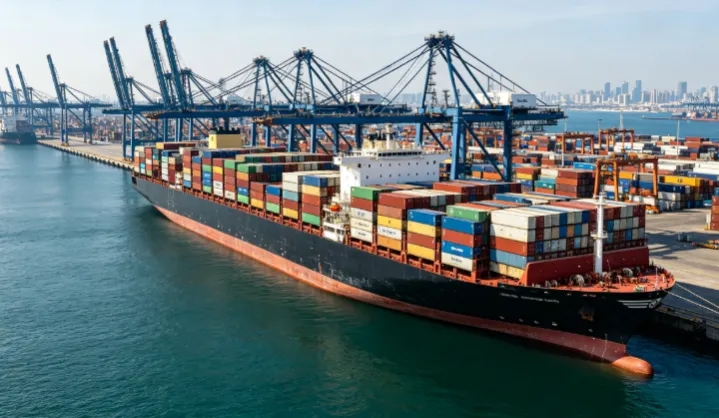
This guide to shipping from China to Argentina breaks the 2026 lane into three cost layers — ocean freight, origin and destination charges, and Argentine import taxes — then gives you current FCL, LCL, air and DDP rates, the customs rules that apply in 2026 (ARCA, not AFIP), and eight levers to pull your landed cost down.
How Much Does It Cost to Ship from China to Argentina in 2026?
| Shipping mode | 2026 cost range | What the number covers | Transit time | Best for |
|---|---|---|---|---|
| LCL sea freight | $95–$280 per CBM | Base ocean freight plus terminal charges at both ends | 35–50 days | Under ~13 CBM, trial orders |
| FCL 20ft (20GP) | $7,100–$8,600 | Ocean freight plus origin and destination charges (port-to-port) | 35–42 days | 15–28 CBM or heavy cargo |
| FCL 40ft (40GP / 40HQ) | $7,300–$8,900 | Same scope as 20ft | 35–42 days | 28–58 CBM, regular import programs |
| Air freight | $5–$9 per kg | Airport-to-airport, billed on chargeable weight | 5–8 days | Urgent, high-value goods |
| Express courier | $9–$18 per kg | Door-to-door; duties and IVA usually not included | 3–6 days | Samples, documents, e-commerce parcels |
| DDP door-to-door | $210–$480 per CBM or $6.5–$13.5 per kg | Everything, including duty and IVA | 40–55 days by sea | First-time importers, e-commerce sellers |
Rates reflect Nansha and Yantian sailings to Buenos Aires, Q3 2026.
What "shipping cost" actually includes: the three-layer cost model
| Layer | What it covers | 20GP to Buenos Aires | Who charges it |
|---|---|---|---|
| 1. Ocean freight | Base rate plus BAF/CAF/EBS fuel and environmental surcharges | $5,200–$6,100 | The carrier |
| 2. Origin + destination charges | Origin THC, export declaration, trucking to port, documentation; destination THC, delivery order, customs systems fee | $1,900–$2,500 | Your forwarder and the terminals |
| Port-to-port total | A complete quote up to the Argentine terminal gate | $7,100–$8,600 | — |
| 3. Argentine taxes and delivery | Import duty, statistics tax, IVA, percepciones, broker fee, inland trucking | 27–45% of CIF, plus delivery | ARCA and your customs broker |
Layers 1 and 2 are what a forwarder quotes; Layer 3 is importing, and usually bigger.
Why two quotes for the same route can differ by 4x
Published 20ft rates in 2026 ranged from $2,300 "ocean freight" to $9,680 on an unstated basis.
Our industry insight — the $3,200 vs. $8,900 problem. A $3,200 quote is almost always a base ocean rate with fuel and peak-season surcharges still to be added; $8,900 includes all of it. Align the scope and the honest spread between two reputable forwarders on the same sailing is 5–15% — anything wider is scope, not price. Before comparing quotes, put every forwarder on one scope: Incoterm, exact ports, which surcharges are inside, and quote validity.
Port-to-port transit is a carrier statistic; delivery time is what your warehouse feels. FCL sails in 35–42 days but lands door to door in 40–55; LCL runs 35–44 and 48–65 after discharge, despachante de aduana processing and inland trucking.
20ft and 40ft Container Shipping Cost from China to Argentina (FCL)
| Origin port | 20GP | 40GP | 40HQ | Notes |
|---|---|---|---|---|
| Shenzhen (Yantian / Shekou / Chiwan) | $7,100–$8,600 | $7,300–$8,900 | $7,300–$8,900 | Deepest South America East Coast coverage on this lane |
| Guangzhou / Nansha | $7,100–$8,600 | $7,300–$8,900 | $7,300–$8,900 | Same weekly services; shorter drayage for Pearl River Delta factories |
| Shanghai / Yangshan | $7,300–$8,800 | $7,500–$9,100 | $7,500–$9,100 | Highest direct-sailing frequency |
| Ningbo-Zhoushan | $7,300–$8,800 | $7,500–$9,100 | $7,500–$9,100 | Convenient for Zhejiang suppliers |
| Qingdao | $7,500–$9,100 | $7,700–$9,400 | $7,700–$9,400 | Northern China; barge or rail repositioning adds cost |
| Tianjin / Xiamen | $7,600–$9,200 | $7,800–$9,500 | $7,800–$9,500 | Fewer direct calls, more transshipment |
All figures are port-to-port to Buenos Aires, Q3 2026, inclusive of charges at both ends.
Shenzhen anchors most of our pricing: Yantian, Shekou and Chiwan carry the deepest carrier competition on this lane. Shanghai and Ningbo offer the most direct sailings; Qingdao and the northern ports add $200–$500 per container through repositioning and thinner coverage.
What an FCL quote does not include
- HWS (heavy weight surcharge) — about $400 per container once VGM exceeds 20 tonnes
- PSS (peak season surcharge) — $200–$600 per container, August to October
- ORC, documentation and telex release fees, plus demurrage and detention once free time expires
- Cargo insurance — carrier liability is capped far below commercial value; container insurance for shipments from China is priced separately from freight
- Import duty, IVA and inland delivery, always billed separately
20GP vs 40GP vs 40HQ: which box costs less per unit
Upgrading to a high cube container is the easiest win on this lane: the 40HQ prices identically to a 40GP most weeks, so it wins on any cargo lighter than roughly 450 kg/CBM, while a 20GP wins only above about 700 kg/CBM.
Rate volatility is structural: few carriers run dedicated Asia–South America East Coast services, so rates hold firmer than on the transpacific — yet Red Sea rerouting and the August–October peak can still move base rates 10–20% in a month. Track the SCFI; price off a live quote.
LCL Shipping Cost from China to Argentina per CBM
| Cargo volume | Rate per CBM | Indicative ocean freight |
|---|---|---|
| 1–3 CBM | $180–$280 | Minimum charge usually applies ($250–$400) |
| 4–6 CBM | $140–$200 | $560–$1,200 |
| 7–10 CBM | $115–$160 | $805–$1,600 |
| 11–14 CBM | $95–$140 | $1,045–$1,960 |
| 15+ CBM | Compare against FCL | Break-even territory |
A "$115 per CBM" quote typically excludes the origin consolidation fee ($30–$60 per CBM), CFS receiving and documentation, and on the Argentine side deconsolidation, CFS storage, destination THC and the delivery order — pushing the all-in cost to $180–$250 per CBM.
The FCL break-even here lands closer to 18–22 CBM than the textbook 13–15, because Argentine FCL rates are high enough that a dedicated container wins only once you fill most of it. Below that, LCL plus consolidation is the better buy. For sailing schedules, port pairs and equipment, see our sea shipping from China to Argentina guide.
Air Freight Cost from China to Argentina per kg (and Express Courier)
Air freight is priced per kilo on chargeable weight — the greater of actual and volumetric weight, calculated as length × width × height (cm) ÷ 6000 for air and ÷ 5000 for courier. A 60 × 50 × 40 cm carton bills 20 kg volumetric against 12 kg actual, so you pay for 20 kg — the source of most air invoice surprises.
| Shipment size | Rate per kg | Typical transit | Notes |
|---|---|---|---|
| 45–100 kg | $7.50–$9.00 | 5–8 days | Minimum chargeable weight usually 45 kg |
| 100–300 kg | $6.50–$8.50 | 5–8 days | The sweet spot for urgent replenishment |
| 300–500 kg | $5.50–$7.50 | 6–9 days | Consolidator rates begin to bite |
| 500 kg+ | $5.00–$6.50 | 6–10 days | Compare against LCL — the gap narrows fast |
| Express courier | $9.00–$18.00 | 3–6 days | Door-to-door, but duties and IVA excluded |
Ezeiza (EZE) is Argentina's cargo gateway and handles nearly all scheduled freight; Aeroparque (AEP) is not a practical import gateway. On the Chinese side, CAN, PVG and SZX carry the strongest South America capacity, with HKG adding frequency at the cost of a border truck movement. Our air shipping from China to Argentina guide covers carrier options, cut-off times and airport pairs in more detail.
Express courier to Argentina: what the $400 exemption really covers
Under the courier regime, a private individual may receive up to USD 400 FOB per shipment, five times a year, capped at USD 3,000 FOB per item — and only IVA is exempted. Couriers also exclude duties from their published per-kg rates, so a "$12 per kg" door-to-door quote can double at delivery. Ask for a DDP quote to get the final number.
When air freight is the cheapest option
Air beats sea when interest, insurance and warehousing savings on 30 extra days exceed the air premium, or when a stockout would cost more than the freight. Below roughly 100 kg, air is often cheaper landed per unit than LCL once consolidation fees are added; above 500 kg the advantage disappears.
Argentina Import Duty, IVA and Customs Clearance in 2026
Layer 3 is where quotes diverge most, and where outdated posts do real damage. AFIP no longer exists; customs and tax collection sit with ARCA, created under Decree 953/2024. SIRA, SIRASE, SEDI, the CEF and the 30% Impuesto PAIS are all gone — SIRA and SIRASE in December 2023, SEDI via RG 5651/2025, Impuesto PAIS with RG 5604/2024.
The 2026 Argentine import tax structure
| Charge | Rate in 2026 | Base | Recoverable? |
|---|---|---|---|
| Import duty (MERCOSUR CET) | 0–35% | CIF value | No |
| Statistics tax | ~0.5% | CIF value | No |
| IVA (VAT) | 21% (10.5% on some goods) | CIF + duty | Yes, against output IVA |
| Percepción de Ganancias | ~3% | CIF + duty | Yes, against income tax |
| Ingresos Brutos | 0–5%, province-dependent | CIF + duty | Partly, in some provinces |
| Anti-dumping duties | Case by case | CIF value | No |
Two corrections worth memorizing. The statistics tax is about 0.5%, not the 3% several compe***** pages publish — at $50,000 CIF that error overstates your cash need by $1,250. And there is no free trade agreement between China and Argentina, so Form A and GSP preferences do not apply.
How to import into Argentina in 2026: the current process
Commercial imports run through ARCA's SIM / Sistema Malvina, with declarations filed via VUCEA. You need a CUIT, and Argentine law requires a licensed despachante de aduana — you cannot self-clear a commercial shipment. Every product line carries an NCM code, which sets the duty rate and whether a prior regulatory approval applies. Clearance typically costs $150–$400 for the despachante, $120–$350 for terminal handling and $250–$600 for inland delivery.
Regulated categories to check before you ship
Some goods cannot clear on paperwork alone. ANMAT approves food, cosmetics and medical devices, ENACOM certifies telecom equipment, SENASA covers agricultural goods, and INTI-linked certification (S-Mark, IRAM) applies to electricals and toys. Lithium batteries need UN38.3 reports, an MSDS and IMDG Class 9 compliance by sea or UN3480 / UN3481 by air; wooden packaging must carry ISPM 15 marking.
Worked example: landed cost on a $10,000 CIF shipment
Take consumer electronics at 16% duty. Duty is $1,600, statistics tax $50, IVA at 21% of $11,600 is $2,436, and the percepción de Ganancias adds about $348 — roughly $4,434 in taxes, or 44% of CIF. Add $750 of despachante, terminal and inland charges and your cash outlay reaches $15,184, +51.8% on the invoice. The honest figure is lower: IVA and percepciones are recoverable, so a registered importer's true cost is closer to $12,400, or +24%.
Door to Door Shipping Cost from China to Argentina (DDP)
Door to door shipping from China to Argentina under DDP (Delivered Duty Paid) terms answers the question importers actually ask: what will this cost me, delivered? One number covers supplier pickup in China, export clearance, freight, Argentine duty, statistics tax, IVA, the despachante fee and inland delivery.
| Cargo | DDP rate | Typical all-in example | Door-to-door transit |
|---|---|---|---|
| LCL, 1–5 CBM | $260–$480 per CBM | 3 CBM: $780–$1,440 | 45–60 days |
| LCL, 6–14 CBM | $210–$340 per CBM | 10 CBM: $2,100–$3,400 | 42–58 days |
| Air DDP, 45–300 kg | $9.00–$13.50 per kg | 150 kg: $1,350–$2,025 | 8–14 days |
| FCL, 20GP / 40HQ | Quote per container | 20GP: $11,500–$14,500 landed | 40–55 days |
What DDP includes, and what it does not
A genuine DDP quote includes origin pickup, export declaration, freight, both terminal handling charges, duty, statistics tax, IVA, the despachante fee and delivery to the door. It excludes storage after free time, demurrage and detention, and certifications such as ANMAT or ENACOM.
The importer of record must be an Argentine entity with a CUIT. Without one, some forwarders import under their own name and re-invoice you — legal for some goods, a compliance risk for others, never available for regulated categories. Confirm the importer of record before you pay.
DDP vs FOB vs CIF: which Incoterm keeps you in control
| Incoterm | Your cost exposure | Risk transfer | Best for |
|---|---|---|---|
| EXW | Highest — you arrange everything from the factory gate | At the factory | Importers with an established China-side forwarder |
| FOB | Freight, insurance, duty, IVA, delivery | When goods are loaded at the Chinese port | The industry default; maximum control |
| CIF | Duty, IVA, destination charges, delivery | At the Argentine port | Buyers who want the seller to book freight |
| DDP | One fixed price, nothing else | At your delivery address | First shipments, e-commerce, no CUIT-side capability |
The further right you move, the less you control routing and the more you pay for convenience. FOB plus a transparent landed-cost calculation usually beats DDP by 8–15%; DDP wins when you have no customs capability.
Destination ports and inland delivery
Buenos Aires handles most of this trade through Puerto Nuevo, Exolgan, Dock Sud and La Plata; Zárate and Rosario serve the industrial corridor. Inland delivery adds $250–$600 in the metro area, $600–$1,200 to Córdoba, Mendoza or Tucumán, and $1,200–$2,500 to Patagonia. If the same buying program reaches customers elsewhere in South America, remember that neither documents nor tax rules carry over: shipping from China to Brazil and shipping from China to Chile each run under their own import regime.
For Amazon FBA sellers, DDP to a third-party warehouse beats direct injection — Amazon's Argentine footprint is limited.
The Cheapest Way to Ship from China to Argentina: 8 Cost Levers
Most importers chase the lowest per-CBM or per-kg rate and lose more elsewhere. These eight levers move landed cost more than negotiation does.
| Lever | Typical saving | How it works |
|---|---|---|
| 1. Choose the right mode | 20–60% | LCL below ~18 CBM, FCL above; air only under 100 kg or for stockouts |
| 2. Consolidate shipments | 10–25% | Quarterly full-container buying beats monthly LCL |
| 3. Correct NCM classification | 5–35% | A wrong code at 35% on goods that qualify at 16% is a self-inflicted wound |
| 4. Ship volumetric cargo in 40HQ | 8–15% per CBM | The extra 10 CBM prices identically to a 40GP |
| 5. Avoid peak season | 5–12% | Book outside the August–October PSS window |
| 6. Negotiate free time | $400–$1,500 per container | Extra days at the Argentine terminal cost more than the freight saving |
| 7. Reduce packaging volume | 5–15% | LCL and air both bill on volume, not weight |
| 8. Fix your Incoterm | 8–15% | FOB with your own forwarder versus seller-arranged DDP |
The two levers buyers underuse are classification and free time. NCM classification can legally swing your duty rate by 19 percentage points, and it is decided at the invoice, not the port. Free time at Argentine terminals is tight and demurrage bills are rarely negotiable, so if your despachante needs 10–14 days, negotiate 14 at booking. The Incoterm you accept decides who owns the customs relationship; our DDP vs FOB comparison shows where each structure wins.
Our industry insight — a real shipment we moved this year. A Shenzhen seller shipped 320 LiFePO4 battery packs to Buenos Aires: 14.6 CBM, 2,880 kg, declared under UN3480 with UN38.3 reports, an MSDS and IMDG Class 9 documentation. LCL was impractical at that density, so we built a DDP solution at $5,370 total, delivered in 49 days door to door, with import taxes at about 27% of CIF. The lesson is not the rate: correct classification, verified battery documentation and a single-number DDP structure kept the shipment off the inspection queue.
FAQs
How much does it cost to ship a 20ft container from China to Argentina?
A 20GP from Shenzhen or Nansha to Buenos Aires runs $7,100–$8,600 port-to-port in 2026, charges at both ends included. Landed, expect $11,500–$14,500.
Is it cheaper to ship LCL or FCL to Argentina?
LCL is cheaper below roughly 18–22 CBM. Above that a 20GP wins: Argentine FCL rates are high, and LCL's fixed charges at both ends accumulate quickly.
How long does shipping from China to Argentina take?
FCL takes 35–42 days port to port and 40–55 days door to door; LCL takes 35–44 and 48–65 days delivered. Air freight runs 5–8 days.
What is the import duty on goods from China to Argentina?
MERCOSUR's common external tariff ranges from 0% to 35%, with most consumer goods at 12–20% and electronics around 14–16%. No China–Argentina free trade agreement exists, so no preferential rate applies.
How much is IVA on imports into Argentina?
21% on CIF value plus duty, with a reduced 10.5% rate on certain goods. IVA is recoverable against your output IVA, so it is a cash-flow item, not a permanent cost.