Are you looking to optimize your sea shipping from China to Bolivia but not sure where to start? As a FIATA- and IATA-certified freight forwarder with over 12 years of hands-on experience moving cargo from China to South America, our team at DTFU Logistics has navigated virtually every scenario — from customs holds at Arica to last-mile deliveries in Santa Cruz. In this comprehensive, 2026-updated guide, we’ll break down essential information on ocean freight routes, major ports, FCL and LCL shipping options, and insider tips you won’t find in generic shipping manuals. Dive in to discover everything you need for smooth, cost-effective sea freight from China to Bolivia!
Sea Freight Routes and Major Ports
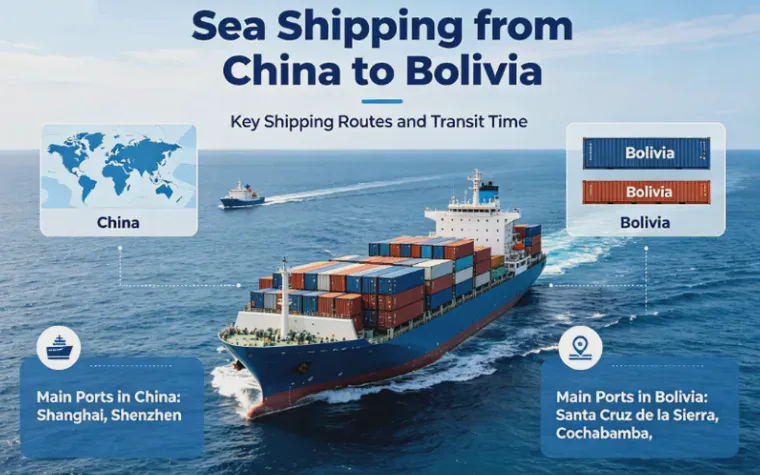
Shipping goods by sea freight from China to Bolivia requires understanding the available shipping routes, major ports, and typical transit times. Due to Bolivia being a landlocked country, all sea cargo destined for Bolivia must first arrive at major seaports in neighboring countries, such as Chile and Peru, before being transported overland by truck or rail into Bolivia. Choosing the right ports and understanding the route structure is crucial for timely and cost-effective delivery.
Insider Insight: In our experience managing Bolivia-bound shipments, port selection at the transshipment point is the single most underrated decision. Arica handles the lion’s share of Bolivian transit cargo under long-standing international agreements, but Matarani is increasingly competitive for southern Bolivia — especially when Chilean rail capacity tightens during peak season.
Related reading: If you’re interested in neighboring countries’ sea freight solutions, you may also want to check out Sea Shipping from China to Paraguay and Sea Shipping from China to Argentina.
Main Departure Ports in China for Bolivia Shipments
China is home to the world’s busiest and most advanced container ports. When exporting cargo to Bolivia, the following main Chinese ports are commonly used as departure points:
| Port Name | Location | Key Advantages for Bolivia Shipments |
|---|---|---|
| Shanghai Port | Shanghai | Largest port in the world; frequent vessel departures; extensive shipping line options |
| Shenzhen Port | Guangdong | Major export hub for electronics and manufactured goods; efficient container handling |
| Ningbo-Zhoushan Port | Zhejiang | High cargo throughput; competitive rates; direct connections to South America |
| Guangzhou (Nansha) Port | Guangdong | Strong LCL consolidation services; strategic location for South China exporters |
| Qingdao Port | Shandong | Northern China’s key export gateway; suitable for machinery, bulk cargo |
| Xiamen Port | Fujian | Fast customs clearance; good for mid-sized shipments |
Most shipments from these ports are routed via transpacific or round-the-world services operated by major shipping lines, with containers being transshipped at key hubs in Asia or directly to South America’s Pacific Coast. At DTFU Logistics, we maintain direct carrier contracts with top shipping lines on this corridor, which means secured space and competitive rates — even when market capacity tightens during Q4 peak season.
Key Destination Ports in Bolivia
Because Bolivia does not have its own seaports, international sea cargo arrives at ports in Chile or Peru before being transported inland. The primary destination gateways used for Bolivian shipments are:
| Port Name | Country | Significance for Bolivia |
|---|---|---|
| Port of Arica | Chile | Main entry point for Bolivian imports; excellent road/rail connections to La Paz and other Bolivian cities; offers special bonded warehouse areas for Bolivian cargo |
| Port of Iquique | Chile | Alternative port for northern Bolivia; duty-free zone benefits for certain goods |
| Port of Antofagasta | Chile | Used for bulk cargo; access to southern Bolivia via railway |
| Port of Matarani | Peru | Increasingly popular; connected to Bolivia by the Southern Interoceanic Highway |
Port of Arica (Chile) is the most established route, as it offers exclusive facilities and customs zones for Bolivian transit cargo under international agreements. Once the cargo arrives, it is transported by truck or train to major cities in Bolivia, such as La Paz, Santa Cruz, and Cochabamba.
Expert Tip: For time-sensitive shipments, we typically recommend routing through Arica rather than Iquique. While Iquique offers a duty-free zone (Zona Franca) that can benefit certain re-export scenarios, Arica’s bonded warehouse infrastructure and direct rail link to Viacha, Bolivia, streamline customs transit and reduce inland handoff delays by 2–4 days on average.
Further reading: For businesses exploring sea freight options throughout South America, see Sea Shipping from China to Venezuela for more insights.
Typical Transit Times and Shipping Schedules
Transit times for sea shipping from China to Bolivia depend on the port pair, shipping schedule, route, and the type of service (direct, transshipment, or via feeder networks). Below is an overview of average sea transit times from main Chinese ports to the principal gateway ports serving Bolivia:
| Origin Port (China) | Destination (Chile/Peru) | Ocean Transit (Days) | Inland Transit to Bolivia (Days) | Total Est. Transit Time (Days) |
|---|---|---|---|---|
| Shanghai | Arica (via Callao/Valparaiso) | 28–35 | 3–6 | 31–41 |
| Shenzhen | Arica (via transshipment) | 30–37 | 3–6 | 33–43 |
| Ningbo | Arica | 30–38 | 3–6 | 33–44 |
| Guangzhou | Arica | 31–39 | 3–6 | 34–45 |
| Shanghai | Matarani (Peru) | 27–33 | 4–8 | 31–41 |
Note: Transit times vary due to vessel schedules, transshipment delays, customs clearance, and inland logistics. Peak seasons or port congestion may cause additional delays. In our direct experience, the most common bottleneck isn’t the ocean leg — it’s Bolivian customs pre-clearance documentation errors or Chilean port strikes (historically affecting Arica 1–2 times per year). We mitigate this by pre-validating all paperwork with our local agents before the vessel even arrives. Booking with a reliable freight forwarder, such as DTFU International Logistics Co.,Ltd, ensures optimal routing and real-time tracking to minimize transit risks.
Shipping Methods: FCL vs LCL
When considering sea shipping from China to Bolivia, the main international ocean freight options are Full Container Load (FCL) and Less than Container Load (LCL). Choosing the right method depends on your shipment size, urgency, and budget.
Full Container Load (FCL) Shipping: Pros and Cons
FCL means your cargo fills an entire shipping container, which is sealed at origin and only opened at the destination or bonded port. Main container sizes are:
- 20FT (28 CBM)
- 40FT (56 CBM)
- 40HQ (68 CBM)
- 45HQ (78 CBM)
Advantages of FCL:
- Cost Efficiency: Lower per-cubic-meter cost for larger shipments.
- Faster Handling: Direct stuffing/de-stuffing reduces cargo handling and risk of damage.
- Security: Container is sealed and not shared with other shippers’ goods.
- Flexibility: Suitable for all cargo types, including machinery, electronics, and bulk commodities.
Disadvantages of FCL:
- Higher Initial Cost: Not economical for small shipments.
- Requires Enough Volume: Ideally for shipments ≥15–20 CBM.
Less than Container Load (LCL) Shipping: When Is It Suitable?
LCL allows multiple shippers to share a container. Your cargo is consolidated with others and separated at the destination.
When to Choose LCL:
- Small Volume: Ideal for shipments less than 12–15 CBM.
- Frequent Shipments: Good for regular, smaller consignments.
- Budget Constraints: Lower upfront spending than FCL.
Advantages:
- Cost-sharing: Pay only for the space used.
- No Need for Full Container: Flexible for small or irregular shipments.
Disadvantages:
- Longer Transit Time: Extra handling during consolidation and deconsolidation.
- Higher Risk of Damage: Cargo is handled more often.
- Potential Delays: Dependent on other consignees’ cargo readiness.
How to Choose the Right Shipping Method for Your Cargo
Selecting between FCL and LCL depends on several factors:
| Criteria | FCL | LCL |
|---|---|---|
| Cargo Volume | ≥15–20 CBM | <15 CBM |
| Cost Efficiency | More economical for bulk shipments | Cost-effective for smaller loads |
| Handling Speed | Faster, direct delivery | Slower due to multiple loading/unloading |
| Cargo Safety | Less risk, sealed container | More handling, higher risk |
| Urgency | Recommended for urgent, high-value shipments | Suitable for less time-sensitive cargo |
| Budget | Higher upfront but lower per-unit cost for volume | Lower upfront for small shipments |
For most businesses, FCL is the preferred choice if the volume justifies the cost and the goods are valuable or time-sensitive. LCL offers flexibility but requires planning for potential delays.
Expert Tip: While FCL is often the default recommendation for Bolivia due to reduced handling and lower damage risk during the overland segment, we’ve seen clients with 12–14 CBM shipments achieve better landed costs by choosing LCL and consolidating with regular scheduled deconsolidation at our Arica bonded warehouse. The right answer depends on your Incoterms 2020 agreement with your supplier, your inventory carrying costs, and whether you have a customs broker in Bolivia or need us to handle DDP (Delivered Duty Paid) end-to-end. Consulting with a trusted and experienced freight forwarder like DTFU International Logistics Co.,Ltd ensures you receive tailored advice on the most suitable shipping method for your supply chain needs. Our team will analyze your cargo profile and delivery deadlines to recommend the most efficient and cost-effective solution, including door-to-door, customs clearance, and cargo insurance services.
Sea Freight Costs from China to Bolivia
Factors Affecting Ocean Freight Rates
Understanding the cost structure of sea shipping from China to Bolivia is essential for effective budgeting and supply chain planning. The main factors influencing ocean freight rates include:
- Origin and Destination Ports: Shipping costs vary depending on the specific ports in China (such as Shanghai, Shenzhen, Ningbo) and in Bolivia (notably Puerto Aguirre and inland destinations like Santa Cruz). Due to Bolivia's landlocked position, cargo typically arrives via Chilean or Peruvian ports, then continues overland.
- Container Type & Size: The choice between a 20ft Container (28 CBM), 40ft Container (56 CBM), 40HQ (68 CBM), or 45HQ (78 CBM) impacts the total cost. Larger containers offer a lower cost per cubic meter but require more cargo to maximize value.
- FCL vs LCL: Full Container Load (FCL) shipments are charged per container, while Less than Container Load (LCL) is based on volume (CBM) or weight. LCL rates can be higher per CBM due to handling and consolidation.
- Cargo Nature: Hazardous, oversized, or temperature-sensitive goods may incur surcharges.
- Market Demand & Seasonality: Rates fluctuate due to global events, peak shipping seasons (such as pre-Christmas or Chinese New Year), or ongoing geopolitical and supply chain disruptions.
- Fuel Prices (BAF): Fluctuating bunker adjustment factors directly impact freight rates.
- Additional Services: Value-added options such as cargo insurance, door-to-door delivery, or customs brokerage affect the final cost.
- Route and Transit Time: Direct routes are typically more cost-effective and faster, but may not always be available for Bolivia, which usually involves multimodal transport (sea + land) transit.
Typical Price Ranges and Cost Breakdown
Below is a sample cost breakdown for sea shipping from China to Bolivia (2026 reference, compiled from our actual quoted shipments during Q1–Q2 2026). These figures reflect post-pandemic rate normalization and current fuel surcharge levels, but actual rates fluctuate weekly based on carrier capacity, BAF adjustments, and seasonal demand. Always request a binding quotation for your specific cargo profile:
| Container Size/Service | China Port | Bolivia Port (via Arica, Chile) | Estimated Ocean Freight (USD) | Estimated Land Freight (USD) | Total (USD) | Transit Time (Days) |
|---|---|---|---|---|---|---|
| 20ft FCL | Shanghai | Santa Cruz | $2,800 – $3,400 | $1,700 – $2,200 | $4,500 – $5,600 | 40–45 |
| 40ft FCL | Ningbo | La Paz | $4,400 – $5,200 | $2,200 – $2,600 | $6,600 – $7,800 | 42–48 |
| LCL (per CBM) | Shenzhen | Cochabamba | $220 – $270 | $110 – $150 | $330 – $420 | 40–50 |
Note: Rates may vary based on currency exchange, fuel surcharge, customs duties, and seasonal demand. For updated quotes, contact DTFU International Logistics Co.,Ltd.
Why Bolivia Costs More Than Direct Coastal Routes: Because Bolivia is landlocked, every shipment incurs a mandatory multimodal transport surcharge — ocean freight to Chile/Peru plus overland trucking/rail to Bolivia. Additionally, Bolivian customs requires a DUA (Documento Único de Administración) for transit declarations, which adds documentation complexity and agent fees not required for direct-port deliveries. We always quote these as line items so you know exactly where your money goes.
Cost Breakdown Example (40ft FCL):
| Cost Component | Estimated USD |
|---|---|
| Ocean Freight | $4,800 |
| Terminal Handling Charge | $350 |
| Documentation Fee | $75 |
| Land Transport (Chile-Bolivia) | $2,400 |
| Customs Clearance | $250 |
| Insurance (optional) | $80 |
| Total | $7,955 |
Hidden Charges and How to Avoid Them
Unanticipated fees can inflate your shipping budget. Here are the most common hidden charges and tips to mitigate them:
-
Destination Charges: Local charges at destination, like THC (Terminal Handling), delivery, and storage fees.
- Tip: Request a full cost breakdown from your freight forwarder upfront.
-
Demurrage & Detention: Charges for holding containers beyond free time at port or with the carrier.
- Tip: Prepare documents in advance and coordinate timely pickup and delivery.
-
Customs Inspection Fees: Costs if your cargo is randomly selected for inspection.
- Tip: Ensure accurate, complete documentation to reduce risk.
-
Cargo Insurance: Sometimes not included in standard quotes.
- Tip: Ask specifically for insurance coverage, especially for high-value goods.
-
Additional Services: If you require door-to-door, unpacking, or warehousing services, these are billed separately.
- Tip: Confirm all service needs with your provider beforehand.
Working with an established freight forwarder like DTFU International Logistics Co.,Ltd ensures pricing transparency and helps you avoid unexpected expenses.
Step-by-Step Sea Shipping Process
A clear understanding of the step-by-step shipping process is essential for successful sea shipping from China to Bolivia. Here’s a comprehensive guide:
Pre-Shipment Preparation and Required Documents
Proper preparation ensures smooth transit and customs clearance:
-
Cargo Information: Accurately declare shipment details—weight, dimensions, commodity type, and value.
-
Packaging & Labeling: Use robust packaging, moisture protection, and clear labeling according to international standards.
-
Key Documents:
- Commercial Invoice
- Packing List
- Bill of Lading (B/L)
- Certificate of Origin (as required)
- Import/Export Licenses (if applicable)
- Cargo Insurance Certificate (if purchased)
- MSDS (Material Safety Data Sheet, for hazardous goods)
-
Booking with Freight Forwarder: Choose a reliable partner (DTFU International Logistics Co.,Ltd) to arrange routing, documentation, and space booking.
-
Customs Pre-clearance: Verify HS codes, check for restricted/prohibited items, and ensure compliance with both Chinese and Bolivian regulations.
Customs Clearance in China and Bolivia
Efficient customs clearance is crucial to avoid delays and extra costs:
-
China Customs:
- Submit accurate documentation electronically.
- Pay export duties (if applicable).
- Complete inspections (random or as required).
-
Transit via Chile/Peru:
- Since Bolivia is landlocked, cargo typically enters via Arica (Chile) or Ilo (Peru).
- Coordinate with local agents for seamless transshipment.
-
Bolivia Customs:
- Appoint a licensed customs broker (Agente Aduanero) for declarations. Bolivia’s customs system (SIA) is fully electronic, but document accuracy is paramount — mismatched HS codes or commercial invoice values are the #1 reason for inspections.
- Present all required documents, including the DUA (Documento Único de Administración) for transit cargo arriving via Chile/Peru.
- Settle applicable import duties, GBA (Gravamen Aduanero Boliviano), and VAT (currently 13% for most goods as of 2026).
- Prepare for inspection or quarantine if required (especially for food, pharma, or chemical products). Bolivia’s SENASAG (National Service for Agricultural Health and Food Safety) has strict phytosanitary controls on wood packaging — ensure your pallets bear the IPPC mark.
-
Insider Tips:
- Pre-clear before arrival: We always submit Bolivian customs pre-declarations while cargo is still at sea. This single step has reduced our clients’ port storage fees by an average of 40%.
- Keep copies of all documents — digital and physical. Bolivian customs may request original stamped copies for high-value shipments.
- Work closely with your freight forwarder to avoid compliance issues. DTFU’s bilingual operations team in Shenzhen coordinates directly with our Arica and La Paz agents to ensure documentation consistency across three jurisdictions (China, Chile/Peru, Bolivia).
Cargo Tracking and Delivery to Final Destination
Modern supply chains require real-time visibility and reliability:
-
Cargo Tracking:
- Utilize online tracking platforms provided by carriers or your freight forwarder.
- Receive email/SMS updates for key milestones (departure, transshipment, arrival).
-
Inland Delivery in Bolivia:
- Organize overland transport from port (e.g., Arica or Ilo) to final destination (e.g., Santa Cruz, La Paz, Cochabamba).
- DTFU International Logistics Co.,Ltd offers door-to-door and one-stop customs clearance services for maximum convenience.
-
Proof of Delivery (POD):
- Upon successful delivery, obtain signed POD documentation for your records.
-
After-sales Support:
- Professional logistics providers, like DTFU, offer 24/7 customer service and problem resolution to ensure your shipment arrives safely and on time.
Tips for Efficient and Cost-Effective Sea Shipping
Choosing a Reliable Freight Forwarder
Selecting a reliable freight forwarder is crucial for smooth, secure, and cost-effective sea shipping from China to Bolivia. The right partner not only ensures the safety of your cargo but also provides end-to-end solutions, transparent communication, and value-added services.
Key Criteria for Choosing a Freight Forwarder:
| Criteria | Why It Matters | DTFU International Logistics Co.,Ltd Advantage |
|---|---|---|
| Experience & Global Network | Extensive experience and established global networks reduce transit risks. | Over 12 years in international freight forwarding, direct China-Bolivia routes, strong agent network in South America. |
| Service Portfolio | Comprehensive services cover all logistics needs. | Offers Sea Freight, Road Freight, Air Freight, Amazon FBA, Warehouse, Cargo insurance, Customs clearance, Door to Door, OOG, Consolidated, Breakbulk Freight. |
| Transparent Pricing | No hidden fees; clear quotations help avoid unexpected costs. | Upfront quotations with itemized breakdowns; all charges disclosed. |
| Customer Support | Responsive support resolves issues quickly and keeps you informed. | 24/7 multilingual support, real-time cargo tracking and updates. |
| Local Expertise | Knowledge of China and Bolivia port operations, customs, and regulations. | Dedicated teams in both countries, up-to-date on latest trade and customs policies. |
Why Choose DTFU International Logistics Co.,Ltd?
As a FIATA- and IATA-certified international logistics provider headquartered in Shenzhen since 2014, DTFU delivers tailored solutions for global traders. Our robust network, deep industry knowledge, and customer-centric approach make us a trusted partner for shipping between China and Bolivia.
Packaging and Labeling Best Practices
Proper packaging and labeling are essential for the safe, efficient, and compliant shipping of goods via ocean freight. They help prevent damage, ensure smooth customs clearance, and minimize delays or extra costs.
Best Practices for Packaging:
- Use Quality Materials: Select strong, moisture-resistant packaging suited to long sea journeys.
- Correct Sizing: Match package size to the goods; avoid excess empty space to prevent shifting.
- Reinforce Heavy Loads: Palletize and secure cargo with straps and shrink wrap for added stability.
- Protect Fragile Items: Use bubble wrap, foam, or custom inserts.
- Sealing: Ensure cartons are tightly sealed with durable tape.
Labeling Guidelines:
- Clear Identification: Mark each package with the consignee, shipper, and destination port (e.g., Puerto de Arica, Puerto de Ilo).
- International Shipping Markings: Include handling instructions (e.g., "Fragile," "This Side Up," "Keep Dry") in English and/or Spanish.
- Compliance: Attach all mandatory shipping labels, HS codes, and any special handling symbols.
- Barcode/QR Codes: Consider adding for traceability, especially for consolidated or FCL/LCL shipments.
Bolivia-Specific Packaging Note: Bolivia’s overland segment from Arica involves significant altitude changes (from sea level to over 3,600m at La Paz) and rough mountain-road handling. We strongly recommend double-wall corrugated cartons for general cargo and reinforced crating for machinery. One of our clients shipping precision instruments learned this the hard way — standard single-wall cartons collapsed under altitude pressure changes, causing moisture ingress. After switching to vacuum-sealed inner wrapping and plywood crates, zero damage on six subsequent shipments.
Tip: Proper packaging and labeling reduce the risk of customs inspections, cargo delays, or damage during transit.
Common Mistakes to Avoid in International Shipping
International sea shipping is complex, and mistakes can lead to delays, extra costs, or customs issues. Here are some frequent pitfalls to watch out for:
| Mistake | Consequence | How to Avoid |
|---|---|---|
| Incorrect Documentation | Customs delays, fines, or cargo holds | Double-check commercial invoices, packing lists, and BL accuracy. |
| Misdeclaring Cargo | Penalties, shipment rejection | Ensure cargo descriptions and HS codes are accurate and complete. |
| Improper Packaging | Damage, insurance claim denials | Follow best practices; consult your freight forwarder. |
| Underestimating Lead Times | Missed deadlines, disrupted supply chain | Plan around transit schedules; allow time for customs clearance. |
| Ignoring Local Regulations | Seizure, fines, extra documentation needed | Stay updated on Bolivia import policies; partner with experts. Bolivia specifically requires a Registro Sanitario for cosmetics and food products, and SENASAG approval for wood packaging without IPPC marks. |
| Choosing the Wrong Shipping Method (FCL/LCL) | Higher costs, inefficient logistics | Evaluate cargo size, urgency, and consult your freight partner. |
| Not Insuring Cargo | Potential loss not covered | Always opt for cargo insurance, especially for high-value goods. |
| Overlooking Hidden Charges | Surprise costs upon arrival | Request full cost breakdown from your forwarder in advance. |
Expert Advice: Collaborate closely with your freight forwarder, like DTFU International Logistics Co.,Ltd, to proactively identify and avoid these pitfalls. Our experts provide ongoing guidance and pre-shipment checks to ensure every step is handled correctly.
Recommended: For more detailed breakdowns of sea shipping costs to other South American destinations, you may refer to Sea Shipping cost from China to Colombia or Sea Shipping from China to Uruguay.
FAQs
Q1: How long does sea shipping from China to Bolivia typically take?
A: The usual transit time for sea freight from major Chinese ports (e.g., Shanghai, Shenzhen, Ningbo) to Bolivia (via Puerto de Arica or Puerto de Ilo with onward trucking) is around 35-45 days depending on the route, shipping schedule, and customs clearance efficiency. In our operational data, pre-clearing Bolivian customs documentation before vessel arrival consistently shaves 3–5 days off total transit time.
Q2: What documents are required for sea shipping to Bolivia?
A: You will need a Bill of Lading (B/L), Commercial Invoice, Packing List, Certificate of Origin, and any import permits required by Bolivian authorities. For transit cargo arriving via Chile or Peru, a DUA (Documento Único de Administración) is also mandatory. Hazardous goods require an MSDS and IMDG Code compliance declaration. Your freight forwarder can assist in preparing all necessary paperwork and pre-validating HS codes against Bolivia’s SIA tariff database.
Q3: Which shipping method should I choose—FCL or LCL?
A: If your cargo volume matches a full container (e.g., 20FT = 28CBM, 40FT = 56CBM, 40HQ = 68CBM), FCL is often more cost-effective and secure — especially for Bolivia, where every extra handling step at the transshipment port increases damage risk during the overland mountain transit. For smaller shipments (under 12–15 CBM), LCL allows you to share space and costs. We typically recommend LCL shippers add cargo insurance with coverage for "rough handling during road transport" since the Arica-to-La Paz segment involves steep grades and altitude changes that standard marine insurance alone may not fully cover.
Q4: Are there any hidden costs I should be aware of?
A: Standard charges include ocean freight, documentation, customs clearance, port handling, and last-mile delivery. Bolivia-specific costs that often surprise first-time importers include: Bolivian customs broker fees (mandatory for SIA declarations), DUA processing charges, inland transit bond fees for cargo moving through Chile/Peru, and altitude-adjusted trucking surcharges for routes above 3,000m. We provide transparent, itemized quotations — including all destination charges — so you know your total landed cost before the cargo departs China.
Q5: How do I choose the right freight forwarder for China-Bolivia shipments?
A: Look for FIATA or IATA certification (proof of professional standards), proven experience on the China–South America corridor, transparent pricing with line-item breakdowns, and dedicated local agents in both the transshipment port (Arica/Ilo) and Bolivia. Ask specifically: Do you pre-clear Bolivian customs before arrival? and Can you provide door-to-door DDP service? DTFU International Logistics Co.,Ltd meets all these criteria and specializes in China to Bolivia sea shipping with a one-stop service solution.