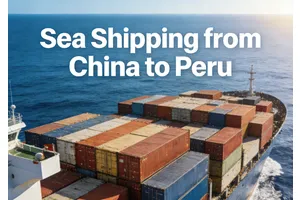
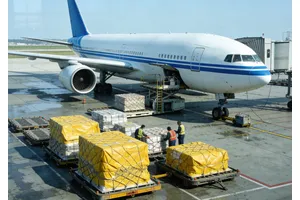
If you're importing goods from China to Peru, the single biggest question on your mind is probably this: how much does it actually cost to ship a container from China to Peru? Not the vague "it depends" answer. Not a freight rate that triples once port fees, surcharges, and customs charges hit your invoice. The real, all-in number — so you can budget accurately and avoid unpleasant surprises when your shipment arrives at Callao.
The good news? A massive structural shift on the China–Peru trade lane has fundamentally changed the cost equation. COSCO's new deep-water Port of Chancay — operational since late 2024 — now offers direct container routes from Southern China to Peru, slashing transit times from 35+ days to as little as 23 days and cutting freight costs by 10–20%. If you're still only looking at Callao routes, you're likely leaving money on the table.
In this guide, we'll break down real 2026 container shipping costs — for every major Chinese port, every container type (20ft, 40ft, 40HC), and every common trade term (FOB, CIF, DDP). You'll get transparent cost-component tables, a head-to-head Chancay vs Callao comparison, a step-by-step shipping process walkthrough, and eight actionable strategies to lower your total landed cost. Let's dive in.
Container Shipping Costs from China to Peru
Before we get into why prices vary, let's answer the core question directly. Below are the real-world price ranges you can expect when shipping a container from China to Peru in 2026 — based on actual carrier rates, forwarder quotes, and market data from Q1–Q2 2026.
FCL Container Shipping Costs (20ft, 40ft, 40HC)
FCL (Full Container Load) means you're renting the entire container exclusively for your cargo. As a leading provider of sea shipping from China to Peru, DTFU Logistics offers competitive FCL rates on both Chancay and Callao routes. FCL is the most cost-effective option when your shipment volume exceeds roughly 15 cubic meters (CBM).
| Container Type | Chancay Route (Direct) | Callao Route (Traditional) |
|---|---|---|
| 20ft Container (20GP) | $1,850 – $2,400 | $2,000 – $2,800 |
| 40ft Container (40GP) | $2,800 – $3,900 | $3,200 – $4,500 |
| 40ft High Cube (40HC) | $3,000 – $4,100 | $3,400 – $4,800 |
| Reefer Container (40RF) | $4,500 – $5,800 | $5,000 – $6,500 |
Note: These ranges cover ocean freight plus standard BAF (Bunker Adjustment Factor) surcharges. They do not include origin charges in China (trucking, export customs), destination charges in Peru (THC, customs clearance, duties), or optional cargo insurance. For all-in costs, see the Incoterms comparison in Section 5.
What these numbers mean in practice:
- A 20ft container holds roughly 28–30 CBM or 18–22 tons — ideal for smaller import volumes or dense/heavy cargo.
- A 40ft standard container holds roughly 58–60 CBM — the sweet spot for most mid-volume importers. Despite being only ~60% more expensive than a 20ft, it carries over twice the volume, delivering far lower cost-per-unit.
- A 40ft High Cube (40HC) adds an extra foot of height (9'6" vs 8'6"), giving you ~68 CBM — perfect for bulky but lightweight goods like furniture, insulation materials, or packaging. For a deeper breakdown of high cube shipping container costs from China, including how 40HC compares to standard containers across different trade lanes, see our dedicated guide.
- Reefer (refrigerated) containers command a significant premium due to specialized equipment and power supply requirements at both ports. Expect to pay $1,500–$2,500 more than a standard dry container of the same size.
LCL (Less than Container Load) Shipping Costs per CBM
If your shipment is too small to fill an entire container, LCL (Less than Container Load) lets you share container space with other importers' cargo. You only pay for the volume you use, measured in cubic meters (CBM).
| LCL Route | Cost per CBM (USD) | Typical Transit Time |
|---|---|---|
| China → Chancay (LCL) | $65 – $120 | 28–35 days |
| China → Callao (LCL) | $80 – $150 | 35–42 days |
LCL makes financial sense for shipments under approximately 15 CBM. Above that threshold, FCL (Full Container Load) typically becomes cheaper on a per-unit basis — even if you don't completely fill the container. We'll cover this break-even calculation in Section 7.
Door-to-Door Container Shipping Cost Overview
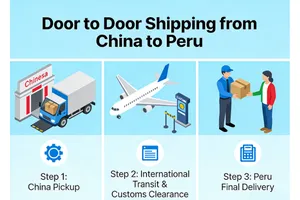
Door-to-door container shipping bundles everything from the supplier's factory in China to your warehouse in Peru. For a detailed walkthrough of the full service, see our guide on door to door shipping from China to Peru. A typical door-to-door quote (usually under DDP terms) includes:
- Factory pickup and trucking to the port
- China export customs clearance
- Ocean freight (including BAF and security surcharges)
- Cargo insurance
- Peru import customs clearance and brokerage
- Import duties and IGV (VAT at 18%)
- Last-mile trucking to your final destination
As a rough estimate, door-to-door adds 15–25% on top of the port-to-port ocean freight cost — but it eliminates the headache of coordinating four different service providers across two countries and two languages.
Quick Reference: All-Inclusive Cost Estimates
| Scenario | Container | Route | Season | Estimated All-In (USD) |
|---|---|---|---|---|
| Budget-conscious | 20ft | Chancay | Off-peak | $2,200 – $2,800 |
| Standard importer | 40ft | Callao | Normal | $3,800 – $5,000 |
| High-volume | 40HC | Chancay | Off-peak | $3,500 – $4,600 |
| Urgent restock | 20ft | Callao | Peak (Sept–Oct) | $2,800 – $3,500 |
| Perishable goods | 40RF | Callao | Normal | $5,500 – $7,000 |
Key Factors That Affect Your Container Shipping Costs
Costs don't fluctuate randomly. Once you understand the levers, you can time your shipments, negotiate better rates, and avoid surprise surcharges.
Container Type & Load: 20ft vs 40ft vs 40HC Cost Efficiency
The container you choose has an outsized impact on your per-unit shipping cost. Here's why:
- A 40ft container costs roughly 50–60% more than a 20ft container — but holds 2.2× the volume (60 CBM vs 28 CBM).
- This means your cost per CBM is roughly 30–40% lower with a 40ft container.
- A 40ft High Cube (40HC) costs only marginally more than a standard 40ft ($100–$300 extra) but gives you an additional 8 CBM — making it the most cost-efficient option for lightweight, bulky cargo.
When to choose each container type:
| If your shipment is... | Choose... |
|---|---|
| Under 15 CBM | LCL (less than container load) |
| 15–28 CBM or very heavy (>18 tons) | 20ft FCL |
| 28–60 CBM, standard weight | 40ft FCL |
| 50–68 CBM, lightweight/bulky | 40ft High Cube (40HC) |
Also worth noting: Maersk introduced a $400 heavy-weight surcharge on 20ft containers exceeding 20 tons in 2026. If your cargo is dense (machinery, metals, tiles), a 40ft container spreads the weight over a larger footprint and may help you avoid this surcharge entirely.
Seasonal Price Fluctuations: When to Ship (and When to Avoid)
Container shipping rates follow a predictable seasonal rhythm. Understanding this pattern can save you 20–40% on freight costs.
| Season | Months | Rate Trend | Notes |
|---|---|---|---|
| Pre-Chinese New Year | January – February | 🔴 Peak (+25–40%) | Factories rush to ship before the 2-week CNY shutdown |
| Post-CNY Lull | March – April | 🟢 Lowest rates | Carriers compete to fill vessels after the holiday lull |
| Mid-Year Stable | May – August | 🟡 Normal | Steady demand, predictable rates |
| Pre-Holiday Rush | September – October | 🔴 Peak (+20–35%) | Golden Week (China) + Q4 retail inventory buildup |
| Year-End | November – December | 🟢 Moderate | Rates soften before the pre-CNY spike begins |
Best months to ship: March–April and November consistently offer the most competitive rates. If your procurement cycle allows flexibility, scheduling container bookings during these windows is one of the easiest ways to cut costs.
Fuel Surcharges (BAF) & Hidden Add-Ons That Inflate Your Bill
The ocean freight rate you see on a quote is rarely the final number. Below are the most common add-ons — and how to spot them.
| Surcharge | What It Is | Typical Range | How to Manage It |
|---|---|---|---|
| BAF (Bunker Adjustment Factor) | Fuel cost adjustment, recalculated quarterly | $150–$350 per container | Ask if BAF is included in your quoted rate |
| THC (Terminal Handling Charge) | Port loading/unloading at origin and destination | $100–$250 per end | Always verify if THC is in your quote — it's often excluded |
| PSS (Peak Season Surcharge) | Carrier surcharge during high-demand periods | $200–$500 per container | Avoid by shipping off-peak |
| Demurrage | Fee for leaving a container at the terminal past free days | $50–$150 per day | Clear customs promptly; work with a forwarder who monitors free-time windows |
| Detention | Fee for keeping the container outside the port past the allowed free days | $50–$200 per day | Schedule trucking and unloading immediately after container release |
| Customs Examination Fee | Charged if Peruvian customs (SUNAT) selects your container for physical inspection | $200–$600 | Ensure documentation is accurate and complete to minimize inspection risk |
The most important rule: always request an all-inclusive quote that itemizes every line item — ocean freight, BAF, origin THC, destination THC, documentation fees, and any applicable security surcharges. A "$1,550 container rate" that excludes $800 in surcharges is not cheaper than a "$2,200 all-in rate."
Cargo Type, Weight & Special Handling Costs
Not all cargo is created equal in the eyes of carriers. Specialty cargo commands specialty pricing:
- Heavy/oversized cargo: Machinery, industrial equipment, steel coils, and stone/tile products often incur weight surcharges. Carriers impose per-ton overweight fees beyond standard thresholds.
- Hazardous goods (DG — Dangerous Goods): Chemicals, batteries, flammable liquids, and compressed gases require DG documentation, specialized packing, and stowage — adding $300–$800 per container in surcharges.
- Perishable goods: Require reefer containers, which cost $1,500–$2,500 more than dry containers and add power monitoring fees at both origin and destination.
- High-value cargo: Always purchase cargo insurance, typically 0.2–0.5% of the declared cargo value. A single damaged container can wipe out months of margin — insurance is not where you cut corners. For a complete breakdown of shipping container insurance costs for shipments from China, including coverage types and premium calculation, check our insurance guide.
China to Peru Container Shipping Routes
This is where the biggest opportunity — and the biggest oversight among compe***** guides — lies. If you stopped reading here, the one takeaway is this: Chancay Port has fundamentally changed China–Peru shipping economics.
Port of Chancay: The Game-Changer for China–Peru Shipping
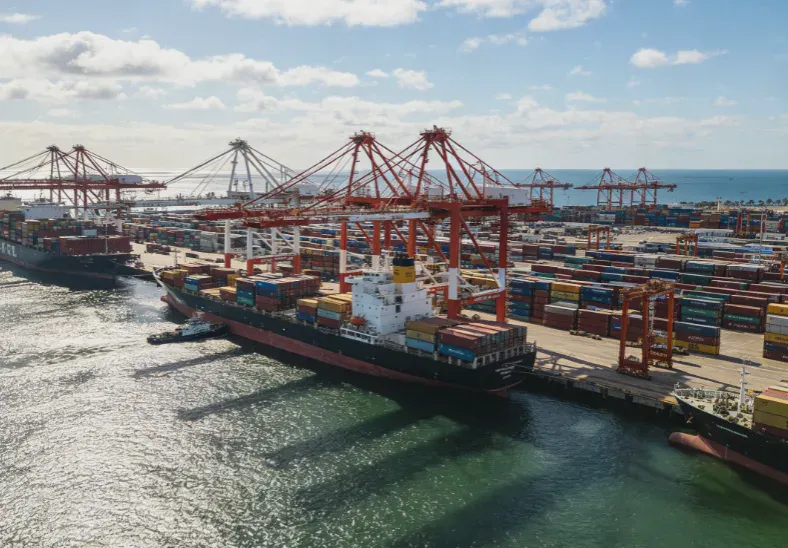
In November 2024, COSCO Shipping — one of the world's largest container carriers — inaugurated Phase 1 of the Port of Chancay, a $3.6 billion deep-water megaport roughly 80 kilometers north of Lima. This is not a minor infrastructure upgrade. It is the first port on South America's entire west coast capable of handling ultra-large container vessels (ULCVs) of 18,000+ TEU directly from Asia — without transshipment.
Before Chancay, most China-to-Peru container traffic had to transship through intermediary hubs like Manzanillo (Mexico), Balboa (Panama), or Buenaventura (Colombia) before reaching Callao. Each transshipment added days of waiting, handling fees, and delay risk. Chancay eliminates that bottleneck entirely.
Key facts about Chancay Port:
- Investment: $3.6 billion (Phase 1), with eventual expansion to $6+ billion
- Capacity (Phase 1): ~1 million TEU annually; ultimate capacity ~1.5 million TEU
- Operational since: November 2024
- Key direct routes from China: Guangzhou (Nansha), Shanghai (Yangshan), Ningbo (Beilun)
- Supported vessel size: Up to 18,000+ TEU (the largest vessels COSCO deploys)
Chancay vs Callao: Cost & Transit Time Head-to-Head
| Route | Transit Time | 20ft Cost | 40ft Cost | Weekly Sailings | Primary Carriers |
|---|---|---|---|---|---|
| Shenzhen → Chancay | 23–28 days | $1,850 – $2,400 | $2,800 – $3,900 | 2–3 | COSCO, OOCL |
| Shenzhen → Callao | 30–35 days | $2,000 – $2,800 | $3,200 – $4,500 | 3–4 | Maersk, MSC, Hapag-Lloyd |
| Shanghai → Chancay | 23–28 days | $1,950 – $2,500 | $2,900 – $4,100 | 2 | COSCO |
| Shanghai → Callao | 32–36 days | $2,100 – $2,800 | $3,300 – $4,500 | 3–4 | Multiple carriers |
| Ningbo → Chancay | 23–28 days | $1,950 – $2,500 | $2,900 – $4,100 | 1–2 | COSCO |
| Ningbo → Callao | 33–37 days | $2,100 – $2,800 | $3,300 – $4,600 | 3 | Multiple carriers |
| Qingdao → Callao | 34–38 days | $2,200 – $2,900 | $3,400 – $4,800 | 2–3 | Maersk, MSC |
| Guangzhou (Nansha) → Chancay | 23–28 days | $1,850 – $2,400 | $2,800 – $3,800 | 2–3 | COSCO, OOCL |
The bottom line: If your supplier is in Southern China — Guangdong province, Shenzhen, Guangzhou, or Fujian — the Chancay route saves you 5–12 days of transit and $150–$600 per container compared to Callao. For Northern/Eastern China ports (Shanghai, Ningbo), Chancay direct routes are available but with fewer weekly sailings.
Major China Departure Ports at a Glance
| Port | Region | Chancay Direct? | Transit to Callao | Best For |
|---|---|---|---|---|
| Shenzhen (Yantian/Shekou) | South (Guangdong) | ✅ Yes | 30–35 days | Electronics, consumer goods, Amazon FBA |
| Guangzhou (Nansha) | South (Guangdong) | ✅ Yes | 32–36 days | Furniture, building materials, textiles |
| Shanghai (Yangshan) | East/Central | ✅ Yes | 32–36 days | Machinery, industrial equipment, chemicals |
| Ningbo (Beilun) | East/Central | ✅ Yes | 33–37 days | Home goods, hardware, auto parts |
| Qingdao | North | ❌ (transship only) | 34–38 days | Heavy machinery, steel, agricultural products |
If your factory is inland — Yiwu, Chongqing, Chengdu, Zhengzhou — your goods will likely consolidate at Shanghai or Ningbo via truck or rail before loading onto an ocean vessel. Your freight forwarder should handle this inland leg as part of a door-to-port or door-to-door quote.
Beyond Peru, DTFU Logistics also serves importers across South America with dedicated routes and local customs expertise. If you're sourcing from China for multiple markets in the region, explore our services for shipping from China to Chile, shipping from China to Brazil, shipping from China to Colombia, and shipping from China to Ecuador, shipping from China to Bolivia, and shipping from China to Argentina.
Incoterms & Total Landed Cost: FOB, CIF & DDP Explained for Peru Imports
A container shipping quote means nothing without the Incoterms 2020 context. The same 40ft container can cost you $3,500 or $22,000 depending on which trade term governs the transaction — because each Incoterm shifts different cost buckets to the buyer or seller. Understanding this is the single most important skill for any importer.
Quick Incoterms Refresher: What They Mean for Container Shipping
Visualize the journey from your supplier's factory to your Lima warehouse as a chain of cost-and-risk links:
Factory Gate → Chinese Port → On Board Vessel → Peruvian Port → Customs Clearance → Your Warehouse
Each Incoterm defines exactly where along this chain the seller's responsibility ends and yours begins. The shift is not just about who pays the bill — it's about who carries the risk if something goes wrong at that stage.
| Incoterm | Seller Pays For... | Buyer Pays For... | Risk Transfers At... |
|---|---|---|---|
| EXW (Ex Works) | Nothing beyond factory gate | Everything: trucking, export clearance, freight, import clearance, duties, delivery | Factory gate |
| FOB (Free On Board) | Factory → trucking → Chinese port → loading onto vessel | Ocean freight, insurance, import clearance, duties, last-mile delivery | When cargo crosses the ship's rail at the Chinese port |
| CIF (Cost, Insurance & Freight) | FOB scope + ocean freight + minimum insurance | Import clearance, duties, last-mile delivery | When cargo is unloaded at the Peruvian port |
| DDP (Delivered Duty Paid) | Everything: door-to-door, including import duties and VAT | Nothing (aside from receiving the goods) | At your warehouse door |
FOB, CIF & DDP: Cost Comparison for a 40ft Container from Shenzhen to Peru
Let's ground this in a real scenario. Say you're importing a 40ft container of consumer electronics from a supplier in Shenzhen, cargo value $85,000, HS code qualifies for 0% duty under the China–Peru Free Trade Agreement.
| Cost Component | FOB (You Arrange Freight) | CIF (Supplier Arranges Freight) | DDP (Forwarder Does Everything) |
|---|---|---|---|
| Factory → Shenzhen Port Trucking | $350 (you pay) | $350 (supplier pays) | ✓ Included |
| China Export Clearance | $250 (you pay) | $250 (supplier pays) | ✓ Included |
| Ocean Freight (Shenzhen → Chancay) | $3,200 (you book & pay) | $3,200 (supplier pays) | ✓ Included |
| BAF Surcharge | $180 (you pay) | $180 (supplier pays) | ✓ Included |
| Cargo Insurance | $255 (optional, you arrange) | $255 (supplier arranges) | ✓ Included |
| Peru Import Clearance (SUNAT) | $350 (you pay) | $350 (you pay) | ✓ Included |
| Import Duty (FTA: 0%) | $0 | $0 | $0 |
| IGV (VAT 18% on CIF value) | ~$15,750 (you pay) | ~$15,750 (you pay) | ~$15,750 (forwarder advances, you reimburse) |
| Chancay → Lima Warehouse Trucking | $420 (you arrange & pay) | $420 (you arrange & pay) | ✓ Included |
| Total Logistics Cost (excl. IGV) | $5,005 | $4,585 | $4,800 – $5,500 |
| Total Landed Cost (incl. IGV) | ~$20,755 | ~$20,335 | ~$20,550 – $21,250 |
Key insight: Under DDP, the logistics line items may appear slightly higher than piecing together FOB freight yourself — but the value is in reduced complexity, single-point accountability, and zero surprise fees. When your FOB shipment hits an unexpected customs inspection, demurrage accrues against you. When a DDP forwarder's shipment is inspected, demurrage accrues against them. For a detailed side-by-side comparison, read our guide on DDP vs FOB: which option saves time and reduces hassle.
Which Incoterm Should Peruvian Importers Choose?
- First-time importer or small business? → DDP. You get one contact, one invoice, and one throat to choke if something goes wrong. The premium is worth the peace of mind.
- Experienced importer with a trusted customs broker in Peru? → FOB or CIF. You control the freight negotiation and can potentially shave 5–10% off logistics costs — provided you have the time and expertise to manage the process.
- Amazon FBA seller shipping to a Peru-based prep center or directly to consumers? → DDP. Amazon's compliance requirements leave no room for customs delays or documentation errors.
- The hidden cost of the "wrong" Incoterm: Choosing FOB to save $300 on freight, then paying $800 in demurrage because your customs broker missed a SUNAT document deadline, is a false economy that plays out more often than you'd think.
Step-by-Step: How to Ship a Container from China to Peru
For first-time importers, the logistics process can feel opaque. Here's exactly what happens — and what you need to do — at each stage.
Step 1: Booking & Preparing Documentation
Your freight forwarder is your quarterback. Choose one with:
- Proven China-to-Peru volume (carrier relationships = better rates)
- Chancay Port operational experience (new port = new procedures)
- In-house customs brokerage on both ends (no handoffs = fewer errors)
Required documents before your container can move:
| Document | Who Prepares It | Purpose |
|---|---|---|
| Commercial Invoice | Supplier | Declares goods description, value, HS codes, Incoterm |
| Packing List | Supplier | Details weight, dimensions, and package count of every item |
| Bill of Lading (B/L) | Carrier / Forwarder | The contract of carriage — the most important shipping document |
| Certificate of Origin | Supplier / Chamber of Commerce | Required to claim preferential duty rates under the China–Peru FTA |
Getting your HS codes right at this stage is critical. An incorrect HS code can trigger a higher duty rate at Peruvian customs, delay clearance by days, or — in the worst case — result in fines. Your freight forwarder should review all HS classifications before the container is loaded.
Step 2: Export Customs Clearance in China
Once the container is packed and trucked to the port (Yantian, Shekou, Nansha, Yangshan, Beilun, etc.), your forwarder files the export declaration with China Customs. This process typically takes 1–3 business days for standard cargo.
Common causes of export clearance delays in China:
- HS code mismatch between the invoice and the customs declaration
- Brand/IP rights issues (counterfeit concerns trigger inspections)
- Incomplete or inconsistent commodity descriptions
A competent forwarder catches these issues at the document review stage — before the container reaches the port gate.
Step 3: Ocean Transit & Shipment Tracking
After the vessel departs, your container spends 23–38 days at sea depending on the route:
- Chancay direct: 23–28 days
- Callao (with transshipment): 30–38 days
For time-sensitive cargo that can't wait for ocean transit, air shipping from China to Peru delivers in 5–10 days — ideal for high-value electronics, urgent samples, or seasonal inventory that missed the sea freight window.
Modern freight forwarders provide online container tracking — you should be able to log into a portal and see your container's real-time position, estimated arrival date, and any milestone updates (vessel departure, transshipment port arrival/departure, destination port arrival). At DTFU Logistics, our tracking platform updates every milestone automatically so you're never left wondering where your cargo is.
Step 4: Import Customs Clearance in Peru
This is where the process gets country-specific — and where an experienced forwarder earns their fee.
Peruvian customs is administered by SUNAT (Superintendencia Nacional de Aduanas y de Administración Tributaria). When your container arrives at Chancay or Callao, your customs broker files the import declaration (Declaración Única de Aduanas, or DUA).
Peru import duties and taxes at a glance:
| Charge | Rate | Applied To |
|---|---|---|
| Ad Valorem Duty | 0%, 6%, or 11% (by HS code) | CIF value (cost + insurance + freight) |
| IGV (Impuesto General a las Ventas — VAT) | 18% | CIF value + duty |
| IPM (Impuesto de Promoción Municipal) | 2% | CIF value + duty |
| Perception (Advance Income Tax) | 3.5–5% (varies) | CIF value + duty (creditable against annual income tax) |
The China–Peru Free Trade Agreement is your most powerful cost-reduction tool. In effect since 2010, the FTA eliminates or reduces import duties on thousands of product categories originating from China. With a valid Certificate of Origin (Form F) , many consumer goods, electronics, textiles, and machinery imports qualify for 0% ad valorem duty — potentially saving you 6–11% on your CIF value.
Importer requirements in Peru:
- RUC (Registro Único del Contribuyente): Your Peruvian tax ID number — mandatory for all importers
- Customs broker registration: Either hire a licensed Peruvian customs broker or work with a forwarder who provides in-house brokerage
- Sector-specific permits: Certain goods (pharmaceuticals, food, cosmetics, telecom equipment) require prior authorization from Peruvian regulatory agencies before customs will release them
Step 5: Final Delivery & Last-Mile Logistics
Once SUNAT releases your container, it's trucked from Chancay or Callao to your final destination:
- Chancay → Lima: ~80 km, 2–3 hours, approximately $400–$500
- Callao → Lima: ~15 km, 1–2 hours, approximately $250–$350
- Callao → Arequipa: ~1,000 km, 16–20 hours, approximately $1,200–$1,800
- Callao → Cusco: ~1,100 km, 18–22 hours, approximately $1,500–$2,000
When your container arrives, inspect it immediately. Check the container seal number against your Bill of Lading. Photograph any damage to the container exterior before opening. Count your cartons against the packing list. If anything is missing or damaged, document it immediately — cargo insurance claims have strict filing deadlines.
8 Smart Ways to Reduce Your Container Shipping Costs from China to Peru
Cost optimization isn't about finding the cheapest rate — it's about finding the lowest total landed cost. Here are eight strategies that go beyond "shop around for quotes."
1. Choose Chancay Over Callao
If your supplier is in Guangdong, Fujian, or Zhejiang provinces, the Chancay direct route is the single biggest cost-and-time lever available to you in 2026. You save $150–$600 per container and 5–12 days of transit versus the traditional Callao route with transshipment. Over four shipments per year, that's $600–$2,400 in annual freight savings — plus faster inventory turns.
2. Optimize Your Container Choice
Use the CBM break-even framework:
| Your Cargo Volume | Optimal Choice | Why |
|---|---|---|
| <15 CBM | LCL | You'd be paying for empty space in a 20ft |
| 15–28 CBM | 20ft FCL | FCL becomes cheaper per-CBM than LCL around this threshold |
| 28–55 CBM | 40ft FCL | Roughly 50% more cost for 100%+ more capacity vs 20ft |
| 55–68 CBM | 40ft High Cube (40HC) | The marginal cost over a standard 40ft (~$100–$300) buys you ~8 extra CBM |
Don't pay to ship air. If your cargo is bulky but light (furniture, insulation, packaging materials), a 40HC is almost always the right call.
3. Ship During Off-Peak Windows
The difference between peak and off-peak freight rates can be stark: a 40ft container that costs $4,500 in September might cost $3,200 in March. If your inventory planning allows it, schedule container bookings for March–April or November — you'll lock in the year's lowest rates and have more carrier options to choose from.
4. Consolidate LCL Shipments Strategically
If you're consistently shipping 8–12 CBM per month, you're in an awkward middle ground — too much for cost-effective LCL, not enough for FCL. The solution: consolidation. Work with a freight forwarder who can combine your shipments across multiple suppliers into one consolidated container. You get near-FCL rates at well below FCL volume requirements. Some forwarders also offer shared-container programs where multiple importers' cargo is consolidated into a single 40ft container, with each paying only for their allocated CBM at a blended rate.
5. Lock In Long-Term Contracts
If you ship two or more containers per month, negotiate an annual service contract with your carrier or forwarder. These contracts lock in a base rate for 12 months and typically include guaranteed space allocation — which is particularly valuable during Q3 peak season when spot market rates can spike 30%+ and available slots disappear within hours.
6. Leverage the China–Peru Free Trade Agreement
This is a cost lever most importers overlook. A valid Certificate of Origin (Form F) can reduce your import duty on qualifying goods from 6–11% to 0%. On an $85,000 shipment, that's a savings of $5,100–$9,350 — dramatically more than any freight rate negotiation could achieve. Ask your supplier or forwarder to verify whether your HS codes qualify for FTA preferential rates before every shipment.
7. Choose DDP to Eliminate Hidden Markups
When you assemble a logistics chain piece by piece — one company for China-side trucking, another for export clearance, a carrier for ocean freight, a separate Peruvian broker for import clearance, a local trucking company for last mile — every handoff adds a markup and creates a gap where accountability falls through the cracks. A single DDP forwarder gives you one transparent price, one accountable party, and fewer layers of margin built into your total cost.
8. Work with an Experienced China-to-Peru Freight Forwarder
A forwarder who ships 50+ containers per month on the China–Peru lane has:
- Negotiated carrier rates you cannot access as an individual importer
- Established customs brokerage relationships at both ends
- Experience with Chancay's specific operational procedures (which are still evolving as the port matures)
- The ability to consolidate your cargo with other shipments for better LCL rates
At DTFU Logistics, we've specialized in China-to-Peru container shipping since 2014. Our dedicated account managers handle everything from supplier coordination in China to SUNAT clearance in Peru — so you spend your time growing your business, not chasing shipping documents. For more context on how a professional partner adds value at every stage, read our analysis of the strategic role of freight forwarders in modern supply chains.
FAQs
How much does a 20ft container cost from China to Peru in 2026?
A 20ft container from China to Peru costs approximately $1,850 – $2,800 USD for the ocean freight component, depending on the origin port, destination (Chancay vs Callao), season, and carrier. Chancay direct routes from Shenzhen or Guangzhou are the most affordable at $1,850–$2,400, while Callao routes from Northern ports like Qingdao run $2,200–$2,800. For door-to-door DDP service, expect an additional 15–25% on top of these base freight rates.
How much does a 40ft container cost from China to Peru?
A 40ft container from China to Peru costs $2,800 – $4,800 USD depending on route and season. Standard 40ft containers (40GP) range from $2,800–$4,500, while 40ft High Cube (40HC) containers range from $3,000–$4,800. The Chancay direct route from Southern China ports (Shenzhen, Guangzhou) consistently offers the lowest rates at $2,800–$3,900 for a standard 40ft.
How long does sea freight take from China to Peru?
Container shipping transit time from China to Peru depends entirely on the route. Chancay direct routes take 23–28 days, while traditional Callao routes (involving transshipment) take 30–37 days. Add 3–5 days on each end for trucking, customs clearance, and last-mile delivery — so total door-to-door time ranges from roughly 30–45 days depending on the route and port pair.
What is the cheapest way to ship a container from China to Peru?
The cheapest way to ship is FCL sea freight via the Chancay direct route during off-peak season (March–April or November). A 20ft container on this route can cost as little as $1,850. For smaller shipments under 15 CBM, LCL (Less than Container Load) at $65–$150 per CBM is the most cost-effective option. For similar cost breakdowns to neighboring markets, see our guides on the cost of shipping a container from China to Ecuador and sea shipping cost from China to Colombia.
What documents do I need to import a container into Peru?
You need: (1) Commercial Invoice with detailed goods descriptions and HS codes, (2) Packing List with weight and dimensions per carton, (3) Bill of Lading (B/L) issued by the carrier, (4) Certificate of Origin (Form F) to claim preferential rates under the China–Peru FTA, and (5) any product-specific permits or registrations required by Peruvian regulatory agencies (DIGEMID for pharmaceuticals, DIGESA for food, MTC for telecom equipment).
How much are import duties and taxes in Peru?
Peru imposes three main charges on imports: Ad Valorem Duty (0%, 6%, or 11% depending on HS code, applied to CIF value), IGV (VAT) at 18% (applied to CIF + duty), and IPM (Municipal Promotion Tax) at 2% (applied to CIF + duty). Many Chinese-origin goods qualify for 0% ad valorem duty under the China–Peru Free Trade Agreement with a valid Certificate of Origin.
Can I ship door-to-door from China to Peru?
Yes. Door-to-door container shipping — typically structured under DDP (Delivered Duty Paid) terms — covers the entire journey: factory pickup in China, export customs clearance, ocean freight, cargo insurance, import customs clearance in Peru, duty and VAT payment, and last-mile trucking to your warehouse. This is the most convenient option for first-time importers and businesses without dedicated logistics teams.
What's the difference between Chancay and Callao ports for container shipping?
Chancay is COSCO's new $3.6 billion deep-water megaport (operational since November 2024) offering direct China-to-Peru container routes with 23–28 day transit on ultra-large vessels. Callao is Peru's traditional main port, handling far more total volume but requiring transshipment for most Chinese origin cargo, resulting in 30–37 day transit. Chancay is faster and more cost-effective for shipments from Southern China; Callao offers more carrier options and more frequent sailings from Northern Chinese ports. Both ports serve the Lima metropolitan area, with Chancay located ~80 km north and Callao adjacent to Lima's western edge.
For importers sourcing from multiple suppliers across China and distributing throughout the Americas, our shipping from China to Americas hub page covers routes, services, and regional expertise for the entire Western Hemisphere.