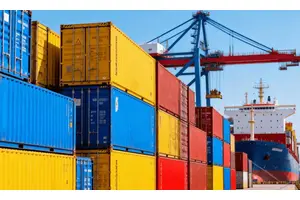
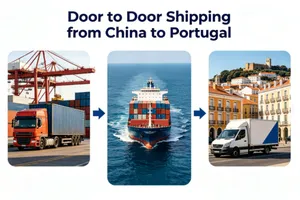
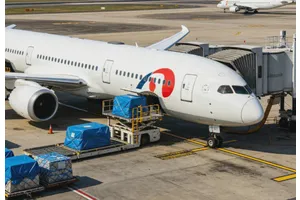
A freight forwarder from China to Portugal is hired for the ocean leg and paid for the EU border. The sea crossing is the dependable part: 28–35 days direct to Lisbon or Sines from Shenzhen or Shanghai, at 2026 rates of $2,200–$3,000 for a 20ft container and $4,200–$4,800 for a 40ft. What separates a smooth delivery from a container sitting on Portuguese quay storage at $30–80 a day is the compliance stack that surrounds every EU import: the EORI number that must exist before customs will look at your shipment, the ICS2 pre-arrival declaration that must be filed before your cargo even loads, the TARIC classification that sets your duty, and the 23% IVA calculated on top of it all.
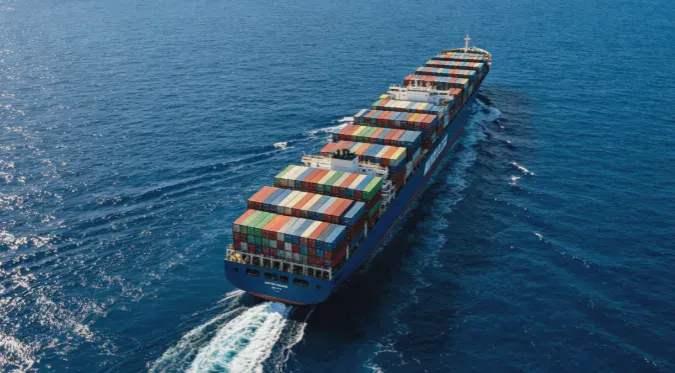
This guide is written from the operations side of that lane. DTFU Logistics has run China–Portugal containers through Sines, Leixões, and Lisbon all year — out of Shenzhen, Shanghai, and Ningbo — clearing them with licensed Portuguese despachantes under the AT. Below is the vetting checklist we would use to hire a forwarder for this lane, the 2026 rate ranges we actually book, and the compliance reality most Portugal guides skip.
What a Good Forwarder Does for You on This Lane
The ocean booking, the container, the B/L — those are commodities. Any forwarder can arrange them. The value on this lane is in the four compliance layers that decide whether your goods clear in days or weeks:
| Compliance Layer | What It Is | Who Files | Lead Time |
|---|---|---|---|
| EORI number | EU-wide importer registration; mandatory for any customs declaration | Importer of record (or forwarder's entity under DDP) | 1–5 working days once registered |
| ICS2 / ENS declaration | EU Import Control System pre-arrival safety filing | Forwarder's EU filing team | Before cargo loads at origin |
| TARIC classification | EU 10-digit HS extension setting duty + controls | Forwarder + Portuguese broker | Before booking |
| SAD + IVA settlement | Single Administrative Document + 23% VAT payment | Portuguese despachante | At clearance |
The forwarder that runs all four in-house — rather than handing the shipment to a random Portuguese broker at arrival — is the one that protects your timeline and your landed cost. The EORI and TARIC work happen before the vessel departs; the ICS2 filing happens before loading; only the SAD and IVA settlement happen at the border. A forwarder that starts thinking about compliance when the ship docks has already lost the week you paid them to save.
EORI, ICS2, and the EU Compliance Stack: What Your Forwarder Must Handle
EORI (Economic Operators Registration and Identification) is the single EU-wide number that identifies your business to customs in every member state. Without an active EORI linked to a Portuguese or other EU entity, your container cannot be declared — period. If you are the importer of record, your forwarder should verify your EORI before booking and flag it if it is missing; if you buy DDP, the forwarder's own EU entity carries the registration and the declaration.
ICS2 is the EU's Import Control System, the successor to ICS that rolled out in stages through the mid-2020s. It requires an Entry Summary Declaration (ENS) — a safety and security filing with cargo details, consignee, and routing — to be lodged before the goods are loaded onto the vessel at origin. A missing or late ENS means the cargo can be stopped at the EU border for screening; the filing is not something a broker can fix after arrival. This is the layer where a forwarder's EU-side systems earn their keep, and it is the one most Portugal guides never mention.
TARIC is the EU's 10-digit goods classification, and it sets both the duty rate and any import controls. Portuguese customs (the AT) works from TARIC codes, so the Chinese supplier's 8-digit HS code is only the starting point — the extension to the EU code is where duty surprises are born. A 30-minute TARIC review before booking, done by someone who clears in Portugal weekly, prevents the back-duty assessments and holds that follow misclassification. The general mechanics of the declaration sit in our customs clearance from China guide; on this lane, the EU layers above are the forwarder's real job description.
Sines vs Leixões vs Lisbon: Choosing the Right Portuguese Gateway
| Port | Region Served | Typical Transit (from China) | Notes |
|---|---|---|---|
| Sines | Nationwide deep-water gateway | 30–35 days (Shenzhen direct) | Portugal's largest deep-water port; direct Asia services; lowest congestion |
| Lisbon | Lisbon + south | 28–35 days direct / 36–45 transship | River-port; frequent services; city-adjacent |
| Leixões | Porto + northern Portugal | 35–45 days via Rotterdam/Sines | Closest to northern industrial clusters; no direct mainline from most Chinese ports |
The gateway logic is simple: match the port to the region and use Sines when the schedule allows. Sines is the deep-water workhorse — direct services call there from Shenzhen, Shanghai, and Ningbo, and its modern terminal keeps berth times short. Lisbon draws the most services because of its volume, but its river location adds pilotage and tidal considerations that Sines avoids. Leixões, serving the Porto region, has no direct mainline from most Chinese ports — cargo arrives via Rotterdam or Sines and truck the last leg — so it wins only when your supplier or buyer sits in the north and the extra days are acceptable. Some published guides claim there are no direct sailings to Portugal at all; that is outdated — the direct Sines and Lisbon services are exactly why DTFU routes this lane the way we do, and why our Shenzhen-to-Sines bookings consistently run 30–35 days. The port-by-port rates for every gateway combination are in our 20ft and 40ft shipping from China to Portugal guide.
How to Choose a Freight Forwarder from China to Portugal
| # | Capability | Why It Decides This Lane | Question to Ask |
|---|---|---|---|
| 1 | EORI handling | Without an active EORI, nothing clears | "Whose EORI files the declaration — mine or yours?" |
| 2 | ICS2 filing at origin | ENS must exist before loading | "Who files the ENS, and can I see the filing confirmation?" |
| 3 | Licensed Portuguese despachante | Only they can transact with the AT | "Is your Lisbon broker licensed, and how fast is red-channel support?" |
| 4 | IVA-aware quoting | 23% IVA math + deferral option changes cash flow | "Do you model IVA in the quote, and can we use the deferral regime?" |
| 5 | Direct Sines/Lisbon contracts | Transshipment adds days and handling | "Which direct services do you hold contracts on?" |
Run every candidate forwarder through these five before comparing prices. The forwarder that answers with specifics — a named broker, a named direct service, a written ENS confirmation — is running the lane. One that answers with generalities is reselling a rate, and on this lane the rate is the smallest part of the total.
Red Flags: What a Bad China to Portugal Forwarder Looks Like
The failure patterns on this lane are consistent, and they are all visible before you book if you ask the right questions:
| Red Flag | Why It Costs You | What to Ask Instead |
|---|---|---|
| "EORI? Your buyer handles that" | No EORI, no declaration, container sits on storage | "Whose EORI files the SAD — can you confirm it is active?" |
| No ICS2/ENS process | Cargo flagged at the EU border for a missing entry summary | "Show me the ENS confirmation from your last Portugal shipment" |
| No licensed broker in Portugal | Clearance speed out of their control | "Who is your Lisbon despachante, and are they AT-licensed?" |
| Quote stops at the ocean line | IVA 23% and destination charges arrive later | "Itemize the destination side, including IVA" |
| "No direct sailings exist" | Outdated routing knowledge; they will transship needlessly | "Which direct Sines or Lisbon services do you book?" |
| No TARIC review | Misclassification → re-assessment, holds, back-duty | "Will your team review TARIC before the vessel sails?" |
The same discipline applies to the wider Europe strategy: if Portugal is one of several EU markets you serve, a forwarder with real Iberian and China to Europe network depth — rather than a Portugal-only lane reseller — keeps your compliance consistent across the union, from the EORI registration to the IVA treatment.
Freight Forwarder Cost from China to Portugal: 2026 Rate Ranges
| Shipping Method | 2026 Rate | Transit |
|---|---|---|
| 20ft container (port-to-port) | $2,200–$3,000 | 28–38 days |
| 40ft container (port-to-port) | $4,200–$4,800 | 30–40 days |
| 40HQ container (port-to-port) | $4,300–$4,800 | 30–40 days |
| LCL sea freight | $120–$180 per CBM | 35–45 days |
| Air freight | $4.00–$12.00 per kg | 4–8 days |
| Rail (via China–Europe Express) | $6,500–$8,000 per 40ft | 21–28 days |
Two patterns matter in the rate table. First, southern Chinese ports price $100–300 below Shanghai and Qingdao on the same destination, because Shenzhen and Guangzhou sit closer to the main east–west trunk routes — the port-pair detail is in our sea shipping cost from China to Portugal guide. Second, the Q3–Q4 peak adds 15–25% to base rates, so the Q1–Q2 window is the cheapest booking period. These lines are port-to-port and exclude the Portuguese side: destination THC, brokerage, port storage if delayed, and the IVA — which is why the worked example in Section 7 matters more than the headline rate. If your cargo is voluminous enough to consider the high-cube option, the extra-height economics are worked out in our high cube container cost guide.
Air freight deserves one planning note on this lane: while the headline per-kilo rate is $4.00–12.00, the chargeable weight uses the greater of actual and volumetric weight (1 CBM ≈ 167 kg for air), so a light, bulky shipment can cost far more than its gross weight suggests. Run both numbers before choosing air for textiles or packaging-heavy goods — and remember that the same EORI and TARIC rules apply to air cargo at LIS or OPO that apply to sea cargo at Sines.
How Long Does Sea Freight from China to Portugal Take?
| Route | Port-to-Port | Door-to-Door |
|---|---|---|
| Shanghai → Lisbon (direct) | 30–35 days | 38–45 days |
| Shanghai → Sines (direct) | 33–38 days | 40–48 days |
| Shenzhen → Lisbon (direct) | 28–33 days | 36–43 days |
| Shenzhen → Sines (direct) | 30–35 days | 38–45 days |
| Shenzhen → Leixões (via Rotterdam) | 35–45 days | 42–52 days |
| Ningbo → Lisbon | 30–35 days | 38–45 days |
Door-to-door adds 7–10 days over the ocean leg: factory pickup and container loading (1–2 days), inland transport to the Chinese port (1–3 days), export clearance (1–2 days), discharge and import clearance in Portugal (1–3 days), and final trucking (1–2 days). A complete door-to-door container shipment therefore lands at 35–55 days total, depending on the routing. Red-channel inspections add 4–10 days on top — which is precisely why the pre-departure compliance work described above is the cheapest schedule insurance on this lane. Air freight compresses the journey to 4–8 days door-to-door via Lisbon (LIS) or Porto (OPO), and rail via the China–Europe Express runs 21–28 days with the last leg trucked from Madrid or Entroncamento.
Portugal IVA and Import Duty: The 23% Math and the VAT Deferral Option
Portugal's standard IVA (VAT) is 23% for mainland imports — 22% in Madeira and 18% in the Azores — calculated on the CIF value plus the import duty. The EU duty itself is set by TARIC and is often 0–5% for Chinese-origin manufactured goods. Here is the math on a $35,000 CIF shipment:
| Line Item | Amount |
|---|---|
| CIF value | $35,000 |
| Import duty (0% example) | $0 |
| IVA base | $35,000 |
| IVA at 23% | $8,050 |
With a duty-bearing product the compounding shows: on $50,000 CIF at 5% duty, the IVA base becomes $52,500 and the IVA $12,075. The full duty and IVA examples are worked through in our cost of shipping a container from China to Portugal guide.
One option changes the cash-flow math for registered importers: the VAT deferral regime (diferimento). Instead of paying the IVA at clearance, a Portuguese-registered importer in good standing can defer the payment to the periodic VAT return, keeping the cash in the business for weeks. It requires the right fiscal status and the right declaration path — which is a forwarder-and-broker question, not a DIY one. If your Portuguese entity is registered for IVA, ask your forwarder whether your shipment qualifies for deferral before you assume the 23% must leave your account at the port.
Lisbon Clearance Practice: The AT, the Channels, and What Slows Everything Down
Portuguese customs — the Autoridade Tributária e Aduaneira (AT) — processes the SAD (Single Administrative Document) electronically, and clearance is genuinely fast when the paperwork is right: 1–3 days for a clean declaration. The delays live in the same three places they live everywhere, only with local names:
- The red channel: a declaration selected for physical inspection adds 4–10 days and runs the port storage clock. Selection is driven by risk algorithms — importer history, declared values, TARIC consistency — so flawless documentation is the only reliable way to stay in the fast lane.
- Port storage: Lisbon terminals charge roughly $30–60 per day and Sines $40–80 per day after the free-time window (typically 3–7 days). The free days run from discharge, not from clearance, so a slow broker converts directly into storage charges.
- The document set: the SAD, commercial invoice, packing list, B/L, and EORI must agree line by line. The AT is an EU border — a missing digit in the EORI or a TARIC code that does not match the goods is a hold, not a warning.
Operational insight: across the Portugal shipments we clear, the pattern is consistent — the containers that fly through the AT are the ones whose TARIC codes were reviewed in China and whose SAD was pre-drafted before the vessel arrived. The ones that sit are the ones where the supplier's HS code was filed as-is and the broker discovered at clearance that the goods classify differently, triggering a re-assessment and a red-channel look. We run the TARIC review at booking, draft the SAD while the ship is at sea, and hand the Portuguese desk a document set that needs no corrections. Thirty minutes in Shenzhen prevents two weeks in Sines.
FAQs
1. How much does a freight forwarder charge to ship from China to Portugal?
Ocean freight runs $2,200–$3,000 for a 20ft and $4,200–$4,800 for a 40ft port-to-port in 2026; LCL is $120–180 per CBM; air freight $4–12 per kg. Forwarder fees and destination charges add several hundred dollars before IVA.
2. How long does sea freight take from China to Portugal?
28–38 days port-to-port depending on the routing — Shenzhen to Lisbon direct in 28–33 days, Shanghai to Lisbon in 30–35. Door-to-door totals run 35–55 days.
3. What is the IVA rate on imports to Portugal?
23% on mainland Portugal (22% Madeira, 18% Azores), calculated on the CIF value plus import duty. On a $35,000 CIF shipment at 0% duty, IVA is $8,050.
4. What import duty applies from China to Portugal?
The EU TARIC rate for your goods — often 0–5% for Chinese-origin manufactured goods, with higher rates on textiles, footwear, and ceramics. The correct 10-digit TARIC code must be on the declaration.
5. How do I know if a freight forwarder is reliable for Portugal?
Ask the five questions: whose EORI files the declaration, who files the ICS2/ENS, is the Portuguese broker licensed, is IVA modeled in the quote (and deferral considered), and which direct Sines/Lisbon services they hold contracts on.
6. What documents do I need to import from China to Portugal?
The commercial invoice, packing list, bill of lading, your EORI number, and the TARIC-classified goods description feed the SAD filed by your despachante. The certificate of origin matters when a preferential duty applies, and the ICS2 entry summary is filed before loading — your forwarder should assemble the full set before the vessel departs.
If you are planning a shipment to Lisbon, Porto, or anywhere in Portugal, send your cargo details — commodity, HS code if you have it, weight, volume, and destination — and DTFU Logistics will quote the lane with the EU stack included: EORI verified, the ICS2 entry filed before your cargo loads, the TARIC review done at booking, the 23% IVA modeled on your CIF value, and clearance through our licensed Portuguese despachante. We book direct services into Sines and Lisbon weekly, we route Leixões cargo through the fast transshipment options, and we track every container until the AT releases it and the truck delivers. Request your China–Portugal freight forwarder quote here.