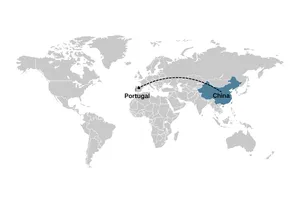
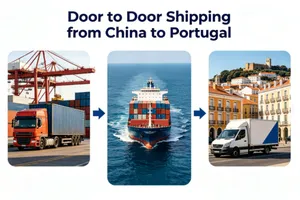
If you are sourcing products from China and need to ship a 20ft or 40ft shipping from China to Portugal, you have probably already discovered that most online resources only give you a vague price range — without explaining what you are actually paying for, how to choose between container sizes, or what happens once your cargo reaches Portuguese customs. This guide changes that.
We handle FCL shipments to Portugal every week — from factory floors in Foshan and Ningbo to warehouses in Porto and Lisbon — so the numbers in this guide come from live quotes and actual bills of lading, not generic rate sheets. We will walk you through the real cost of a 20ft or 40ft container in 2026, including the fees most forwarders gloss over until the invoice arrives. No fluff, no hidden line items — just what you need to budget, book, and land your cargo in Portugal without surprises.
20ft & 40ft Container Specifications
Before comparing costs or choosing a container size, you need to understand what you are actually working with. A 20-foot container and a 40-foot container are not simply "double the size" — their weight limits, door dimensions, and pallet capacity all follow different rules. Below are the standard ISO container specifications you will encounter when booking FCL (Full Container Load) shipments.
| Specification | 20GP (20ft General Purpose) | 40GP (40ft General Purpose) | 40HQ (40ft High Cube) |
|---|---|---|---|
| External Dimensions (L×W×H) | 6.058m × 2.438m × 2.591m | 12.192m × 2.438m × 2.591m | 12.192m × 2.438m × 2.896m |
| Internal Dimensions (L×W×H) | 5.898m × 2.352m × 2.393m | 12.032m × 2.352m × 2.393m | 12.032m × 2.352m × 2.698m |
| Door Opening (W×H) | 2.340m × 2.280m | 2.340m × 2.280m | 2.340m × 2.585m |
| Internal Volume | 33.2 m³ | 67.7 m³ | 76.3 m³ |
| Max Gross Weight | 30,480 kg | 30,480 kg | 30,480 kg |
| Tare Weight (empty) | 2,300 kg | 3,750 kg | 3,940 kg |
| Max Payload (net cargo) | ~28,200 kg | ~26,500 kg | ~26,300 kg |
| Max Euro Pallets (1200×800mm) | 11 | 25 | 25 |
| Max Standard Pallets (1200×1000mm) | 10 | 21 | 21 |
Pro Tip: The 20GP has a higher payload capacity (28,200 kg) than the 40GP (26,500 kg) despite being half the size, because the container's own weight is lighter. If you are shipping high-density goods like steel products, ceramic tiles, or heavy machinery, a 20ft container lets you load more net weight per shipment — while a 40ft container makes better sense for volume-heavy but lighter cargo like furniture, textiles, or plastic goods.
How Many Pallets Actually Fit?
For Euro pallets (1200×800mm, the standard across EU logistics), the numbers are straightforward: 11 in a 20GP and 25 in a 40GP or 40HQ. If your supplier uses standard American-style pallets (1200×1000mm), capacity drops to 10 and 21 respectively.
The 40HQ's extra 30cm of internal height (2.698m vs 2.393m) matters most when your cargo stacks high — think furniture, appliances, or boxed consumer goods where every vertical inch unlocks additional SKU capacity per shipment.
20ft vs 40ft Container: Which One Should You Choose?
This is the single most important decision you will make — and one that no compe***** guide adequately answers. The right choice depends on three variables: cargo volume, cargo weight, and unit economics.
Decision Matrix: 20ft vs 40ft vs LCL
| If Your Cargo Volume Is… | And Your Cargo Weight Is… | Recommended Option |
|---|---|---|
| Under 15 m³ | Any weight | LCL (Less than Container Load) — more cost-effective than a half-empty 20ft |
| 15–28 m³ | Under 22,000 kg | 20GP — right volume range, strong payload capacity |
| 15–28 m³ | Over 26,000 kg (dense goods) | 20GP — higher net payload than 40ft options |
| 29–55 m³ | Under 22,000 kg | 40GP — lower per-CBM cost, ideal for voluminous cargo |
| 29–55 m³ | 22,000–26,500 kg | 40GP — still within payload limits |
| 55–72 m³ | Under 26,000 kg | 40HQ — maximizes volume for light, bulky goods |
| Over 55 m³ | Over 26,000 kg | Split across multiple containers — exceeding max gross weight is illegal and dangerous |
The Per-CBM Economics
Here is the math most importers miss. A 20GP costs between $2,200 and $3,000 (port-to-port, 2026 rates) for roughly 30 usable cubic meters — approximately $73–$100 per CBM. A 40GP costs $4,200 to $4,800 for roughly 60 usable cubic meters — approximately $70–$80 per CBM. A 40HQ costs $4,300 to $4,800 for roughly 68 usable cubic meters — approximately $63–$71 per CBM.
Even though the 40ft containers cost more in absolute terms, the per-unit shipping cost per cubic meter is consistently 15–30% lower compared to a 20ft. If your cargo volume comfortably exceeds 30 CBM and you can manage the higher upfront payment, the 40ft option almost always delivers better unit economics.
40GP vs 40HQ: When the High Cube Pays Off
The price difference between a 40GP and a 40HQ is typically only $100–$200, yet the 40HQ provides an additional 8.6 m³ of cargo space. We have a separate deep-dive on high cube shipping container cost from China that breaks down the full cost-benefit of going with 40HQ versus standard containers. If you are shipping goods where vertical stacking is possible (furniture, home goods, textiles, boxed consumer products), spending an extra $100 for 8.6 extra cubic meters — that's over $11 per CBM gained — is almost always a worthwhile investment.
Heads-up: If your cargo is extremely dense (steel coils, dense stone tiles, heavy machinery components), you will max out the weight limit long before you fill the volume of a 40ft container. In those cases, a 20GP with its higher payload capacity is actually the smarter choice.
2026 Container Shipping Costs from China to Portugal
The ocean freight market has remained relatively stable through the first half of 2026, with rates settling at more predictable levels compared to the volatility of 2024–2025. Below are the current port-to-port FCL shipping rates compiled from our real-time carrier quotes (as of Q2 2026). These cover the ocean freight portion only and do not include origin handling, destination charges, or customs fees — those are covered in the full breakdown section below.
Port-to-Port Rate Matrix (Q2 2026, USD)
| Origin Port (China) | Destination Port (Portugal) | 20GP | 40GP | 40HQ | Route Type |
|---|---|---|---|---|---|
| Shanghai | Lisbon | $2,300–$2,900 | $4,200–$4,600 | $4,300–$4,800 | Direct / Via Suez |
| Shanghai | Leixões (Porto) | $2,350–$2,950 | $4,250–$4,700 | $4,350–$4,850 | Via Rotterdam / Sines |
| Shanghai | Sines | $2,400–$3,000 | $4,300–$4,800 | $4,400–$5,000 | Deep-water direct |
| Ningbo | Lisbon | $2,250–$2,850 | $4,100–$4,500 | $4,200–$4,700 | Direct / Via Suez |
| Ningbo | Leixões | $2,300–$2,900 | $4,150–$4,600 | $4,300–$4,750 | Via Rotterdam |
| Shenzhen (Yantian) | Lisbon | $2,150–$2,750 | $3,900–$4,300 | $4,000–$4,500 | Via Suez / Algeciras |
| Shenzhen (Yantian) | Leixões | $2,200–$2,800 | $3,950–$4,400 | $4,100–$4,550 | Via Rotterdam / Sines |
| Shenzhen (Yantian) | Sines | $2,250–$2,850 | $4,050–$4,450 | $4,150–$4,650 | Deep-water direct |
| Qingdao | Lisbon | $2,400–$3,000 | $4,300–$4,700 | $4,400–$4,900 | Via Suez |
| Qingdao | Leixões | $2,450–$3,050 | $4,350–$4,800 | $4,450–$5,000 | Via Rotterdam |
| Guangzhou (Nansha) | Lisbon | $2,200–$2,800 | $3,950–$4,350 | $4,050–$4,500 | Via Suez |
| Guangzhou (Nansha) | Sines | $2,300–$2,900 | $4,100–$4,500 | $4,200–$4,650 | Via Algeciras |
Important Rate Notes: These prices are spot rates valid for bookings made in June–July 2026. Ocean freight rates are dynamic — they are influenced by fuel surcharges (BAF), seasonal demand swings, carrier capacity adjustments, and geopolitical developments. The peak shipping season (August through October) typically adds 15–25% to base rates. Always request a confirmed quote within 7 days of your planned booking date.
Why Do Shenzhen and Guangzhou Rates Run Lower?
You will notice a pattern in the table above: shipments from Shenzhen and Guangzhou are consistently $100–$300 cheaper than those from Shanghai or Qingdao. This is primarily because southern Chinese ports are closer to the main East-West shipping trunk routes passing through the South China Sea, while northern ports like Shanghai and Qingdao add an extra 1–2 days of feeder transit before the vessel reaches the mainline. Additionally, Shenzhen (Yantian) and Guangzhou (Nansha) face intense carrier competition due to their massive export volumes, which keeps rates more competitive than less-congested northern alternatives. If you are comparing options across multiple forwarders, our dedicated shipping from China to Portugal service page has more details on current sailings, contracted rates, and booking lead times.
Full Cost Breakdown: Every Fee You Need to Budget For
The ocean freight rate is only one piece of the total puzzle. Importers who budget solely on the per-container freight quote are routinely caught off-guard by additional charges at both ends. We previously published a general cost of shipping container from China to Portugal overview — the tables below go deeper with exact line items so you can build an accurate budget before you book.
China-Side Costs (Origin Charges)
| Cost Item | 20GP (USD) | 40GP/40HQ (USD) | Notes |
|---|---|---|---|
| Factory to Port Trucking | $200–$600 | $300–$800 | Depends on factory distance to port |
| Export Customs Declaration | $80–$150 | $80–$150 | Single-entry customs filing |
| Terminal Handling Charge (THC) | $150–$250 | $200–$350 | Paid to the terminal at origin port |
| Documentation Fee (B/L) | $50–$80 | $50–$80 | Bill of Lading issuance |
| VGM (Verified Gross Mass) | $15–$30 | $15–$30 | SOLAS-mandated weight verification |
| Fumigation (if wooden packaging) | $100–$250 | $150–$350 | Only required for solid wood packing |
| Origin Charges Subtotal | $595–$1,360 | $795–$1,760 |
Ocean Freight & Surcharges
| Cost Item | 20GP (USD) | 40GP/40HQ (USD) | Notes |
|---|---|---|---|
| Base Ocean Freight | $2,150–$3,000 | $3,900–$4,850 | From rate matrix above |
| BAF (Bunker Adjustment Factor) | Included in rate | Included in rate | Fuel surcharge — typically bundled |
| Low-Sulfur Surcharge (IMO 2020) | Included in rate | Included in rate | Mandatory for all carriers |
| Peak Season Surcharge (PSS) | $200–$400 | $300–$600 | Applies Aug–Oct only |
| Ocean Segment Subtotal | $2,150–$3,400 | $3,900–$5,450 |
Portugal-Side Costs (Destination Charges)
| Cost Item | 20GP (USD) | 40GP/40HQ (USD) | Notes |
|---|---|---|---|
| Destination THC | $150–$300 | $200–$400 | Paid at Portuguese port |
| Customs Clearance Fee | $150–$300 | $150–$350 | Broker fee for import declaration |
| Import Duty | 0–12% of CIF value | 0–12% of CIF value | Varies by HS code and product category |
| IVA (VAT) at 23% | 23% of (CIF + Duty) | 23% of (CIF + Duty) | Mandatory on all imports |
| Port Storage (if delayed) | $30–$60/day | $40–$80/day | Free time varies by terminal (3–7 days typical) |
| Inland Trucking to Final Address | $300–$800 | $400–$1,000 | Depends on final destination within Portugal |
| Destination Charges Subtotal | $600–$1,460+ | $750–$1,830+ | Excluding duty and VAT, which scale with cargo value |
Total Landed Cost Estimate (Excluding Duty & VAT)
| Container Type | China Side | Ocean Freight | Portugal Side | Total (Pre-Duty) |
|---|---|---|---|---|
| 20GP | $595–$1,360 | $2,150–$3,400 | $600–$1,460 | $3,345–$6,220 |
| 40GP | $795–$1,760 | $3,900–$5,450 | $750–$1,830 | $5,445–$9,040 |
| 40HQ | $795–$1,760 | $4,000–$5,500 | $750–$1,830 | $5,545–$9,090 |
Transparency note from our team: When you request a quote from DTFU Logistics, we provide a line-by-line breakdown that clearly distinguishes between costs we control (freight, handling, clearance) and government-mandated charges (duty, VAT). There are no hidden fees buried in the final invoice.
Transit Times by Port Pair: China to Portugal
Transit time from China to Portugal depends heavily on whether your shipment takes a direct sailing or a transshipment route. Direct routes are faster but less frequent; transshipment routes add days but offer more flexible schedules.
| Origin Port | Destination Port | Direct Sailing | Via Transshipment | Sailing Frequency |
|---|---|---|---|---|
| Shanghai | Lisbon | 30–35 days | 38–45 days | Weekly |
| Shanghai | Leixões | N/A (no direct) | 38–48 days (via Rotterdam/Sines) | Weekly |
| Shanghai | Sines | 33–38 days | 40–48 days | Weekly |
| Ningbo | Lisbon | 30–35 days | 38–45 days | Weekly |
| Shenzhen | Lisbon | 28–33 days | 36–43 days (via Algeciras) | 2× Weekly |
| Shenzhen | Leixões | N/A (no direct) | 35–45 days (via Rotterdam) | Weekly |
| Shenzhen | Sines | 30–35 days | 38–45 days | Weekly |
| Qingdao | Lisbon | 32–38 days | 40–48 days | Weekly |
| Guangzhou | Lisbon | 28–34 days | 36–44 days | Weekly |
Door-to-Door Timeline: What the Full Journey Looks Like
A complete door-to-door container shipment from a factory in China to a warehouse in Portugal typically adds 7–10 days to the ocean transit time:
| Stage | Time Required |
|---|---|
| Factory pickup & container loading | 1–2 days |
| Inland transport to Chinese port | 1–3 days |
| Export customs clearance | 1–2 days |
| Port waiting & vessel loading | 1–3 days |
| Ocean transit | 28–45 days (see table above) |
| Unloading at Portuguese port | 1–2 days |
| Import customs clearance | 1–3 days |
| Inland transport to final destination | 1–2 days |
| Total Door-to-Door | 35–55 days |
For a broader look at freight pricing beyond just containerized cargo — including LCL, breakbulk, and multi-modal options — see our sea shipping cost from China to Portugal overview.
Portugal Customs Clearance & Import Duties
Portugal is a full member of the EU Customs Union, which means imports from China are subject to both EU-wide customs regulations and Portuguese domestic tax law. Getting this part right is critical — mistakes in customs documentation are the number one cause of avoidable delays at Portuguese ports. The same customs framework applies across all 27 member states, so if your business also moves cargo to other European markets, our shipping from China to Europe hub covers country-specific import guidance for every major destination.
Portugal IVA (VAT) at 23%: How It Is Calculated
The standard VAT rate in Portugal — known locally as IVA (Imposto sobre o Valor Acrescentado) — is 23% for mainland Portugal (22% in Madeira, 18% in Azores). IVA is calculated on the total CIF value plus import duty, not just on the cargo value alone.
Example calculation for a 40GP shipment of furniture with a CIF value of $35,000:
| Step | Calculation | Amount (USD) |
|---|---|---|
| 1. CIF Value (goods + insurance + freight) | — | $35,000 |
| 2. Import Duty (furniture, 0% rate) | $35,000 × 0% | $0 |
| 3. IVA Base | $35,000 + $0 | $35,000 |
| 4. IVA at 23% | $35,000 × 23% | $8,050 |
| Total Import Cost | $35,000 + $0 + $8,050 | $43,050 |
If your product category attracts a non-zero duty rate, the math compounds:
Example for electronics (HS 8471) with a 5% duty rate on a CIF value of $50,000:
| Step | Calculation | Amount (USD) |
|---|---|---|
| CIF Value | — | $50,000 |
| Import Duty at 5% | $50,000 × 5% | $2,500 |
| IVA at 23% | ($50,000 + $2,500) × 23% | $12,075 |
| Total Tax Burden | $2,500 + $12,075 | $14,575 |
Import Duty Rates for Common Product Categories
| Product Category | EU HS Code Chapter | Typical Duty Rate |
|---|---|---|
| Furniture (wooden) | Ch. 94 | 0% |
| Furniture (metal) | Ch. 94 | 0% |
| Textiles & Apparel | Ch. 61–63 | 8–12% |
| Footwear | Ch. 64 | 8–17% |
| Electronics & Computers | Ch. 84–85 | 0–5% |
| Machinery & Equipment | Ch. 84 | 0–2.7% |
| Toys & Games | Ch. 95 | 0–4.7% |
| Ceramic Tiles | Ch. 69 | 5–10% |
| Plastic Products | Ch. 39 | 0–6.5% |
| Solar Panels | Ch. 85 | 0% |
Portuguese customs authorities classify goods using the EU TARIC database. We strongly recommend having your freight forwarder verify the exact HS code and applicable duty rate before shipping — an incorrect classification can trigger back-duty assessments, penalties, and shipment holds.
EORI Number: Your EU Import Passport
Any business importing goods into Portugal (or any EU country) is required to hold an EORI number (Economic Operators Registration and Identification number). This unique identifier is used on all customs declarations across the EU. Without one, your container cannot clear Portuguese customs — period.
Portuguese EORI numbers are issued by the Autoridade Tributária e Aduaneira (AT). The format is PT followed by a 9-digit tax ID number. If your business is registered outside the EU, you can still apply — DTFU Logistics assists clients with the EORI application process as part of our customs brokerage service.
Essential Shipping Documents for Portugal Customs
| Document | Required? | Purpose |
|---|---|---|
| Commercial Invoice | ✅ Mandatory | Declares cargo value, seller, buyer, HS codes |
| Packing List | ✅ Mandatory | Details weight, dimensions, package count |
| Bill of Lading (B/L) | ✅ Mandatory | Proof of ownership & contract of carriage |
| Certificate of Origin | ⚠️ Often required | Qualifies goods for reduced/zero duty under EU schemes |
| EUR.1 Movement Certificate | ⚠️ If applicable | For goods claiming preferential tariff treatment |
| CE Declaration / Compliance Docs | ⚠️ Product-dependent | Required for electronics, machinery, toys, PPE |
Door-to-Door (DDP) Container Shipping to Portugal
For importers who prefer a hands-off experience, DDP (Delivered Duty Paid) shipping covers everything: factory pickup in China, export customs, ocean freight, import customs clearance in Portugal, payment of all duties and IVA, and final delivery to your doorstep or warehouse. If you are still deciding between Incoterms, our DDP vs FOB comparison walks through the time, cost, and risk trade-offs of each approach.
What DDP Covers — and What It Does Not
Included in DDP:
- Factory/warehouse pickup anywhere in mainland China
- Export customs declaration & documentation
- Full ocean freight (FCL)
- Import customs clearance at the Portuguese port
- Import duty payment
- IVA (23% VAT) payment
- Final trucking delivery to any address in mainland Portugal
Not included (you still handle):
- Product compliance certifications (CE marking, etc.)
- Cargo insurance (available as an optional add-on)
- Storage or demurrage charges caused by consignee delays
For a complete walkthrough of the end-to-end DDP journey — including pickup, customs milestones, and final delivery — see our dedicated door to door shipping from China to Portugal guide.
DDP All-Inclusive Pricing (2026 Estimates)
| Container Type | DDP Total (USD) | What This Includes |
|---|---|---|
| 20GP DDP | $4,500–$7,500 | Pickup + freight + clearance + duty + VAT + delivery |
| 40GP DDP | $7,500–$11,500 | Pickup + freight + clearance + duty + VAT + delivery |
| 40HQ DDP | $7,800–$11,800 | Pickup + freight + clearance + duty + VAT + delivery |
The wide range in DDP pricing reflects the two biggest variables: the CIF value of your goods (which determines duty and VAT) and the final delivery distance within Portugal. A shipment delivered to a Lisbon warehouse costs less in last-mile trucking than one heading to a remote address in the Algarve or the interior north. Many importers distributing across the Iberian Peninsula split inventory between Portugal and Spain — we provide the same DDP service for shipping from China to Spain, helping you serve both markets from a single logistics partner.
Why DTFU Logistics for Your Portugal Container Shipments
DTFU Logistics is a FIATA and IATA dual-certified international freight forwarder headquartered in Shenzhen, China, with a dedicated service network covering 120+ countries — including full-service operations in Portugal through our European logistics partners.
What sets us apart for China-to-Portugal FCL shipments:
- Multi-port coverage across China. We do not tie you to a single departure port. Our operations cover Shenzhen (Yantian), Guangzhou (Nansha), Shanghai (Yangshan), Ningbo, and Qingdao — we route your container through whichever origin port minimizes your total inland and ocean cost.
- Direct carrier contracts. We hold negotiated rates with major shipping lines (Maersk, MSC, CMA CGM, COSCO, Hapag-Lloyd, ONE), which means your quote reflects real market rates — not marked-up middleman pricing.
- Portugal customs expertise. Our dedicated clearance team handles Portuguese import declarations daily. We pre-audit your commercial documents to catch HS code mismatches, valuation issues, or missing certificates before they become port delays.
- End-to-end visibility. Every shipment is tracked through our 24/7 online platform. You receive milestone updates at key checkpoints: vessel departure, port arrival, customs status, and final delivery confirmation.
- No hidden fees. Every quote includes a line-by-line cost breakdown. Government charges (duty, VAT) are calculated transparently — you never pay an inflated "all-in" rate with embedded markups.
If you are ready to get a precise quote for your 20ft or 40ft shipment to Portugal — or if you just want to talk through your logistics options with an experienced specialist — reach out to our team today. We respond to every inquiry within one business day with a tailored, no-obligation shipping plan.
FAQs
How much does it cost to ship a 20ft container from China to Portugal in 2026?
Port-to-port ocean freight for a 20GP container currently ranges from $2,150 to $3,000 depending on the specific port pair. The all-in landed cost including origin handling, freight, destination charges (but excluding duty and VAT) ranges from approximately $3,350 to $6,220. If you opt for DDP door-to-door service, expect to budget $4,500 to $7,500 inclusive of all charges and taxes for a typical shipment.
How much does a 40ft container cost to ship from China to Portugal?
Port-to-port ocean freight for a 40GP container ranges from $3,900 to $4,850 (Q2 2026). For a 40HQ, add approximately $100–$200. Full landed costs including all handling charges (pre-duty/VAT) range from $5,450 to $9,090. DDP door-to-door service for a 40GP or 40HQ runs $7,500 to $11,800 depending on cargo value and delivery location.
How long does container shipping from China to Portugal take?
Direct sailings take 28–38 days port-to-port, with Shenzhen and Guangzhou routes typically 2–5 days faster than Shanghai or Qingdao departures. A full door-to-door movement (factory pickup → final delivery in Portugal) takes 35–55 days depending on transshipment connections, customs clearance speed, and inland transport distances.
Should I choose 20ft or 40ft for my shipment?
Choose a 20ft container if your cargo volume is under 30 CBM, or if your goods are very dense and heavy (over 22,000 kg) — the 20GP has a higher net payload capacity. Choose a 40ft or 40HQ container if your cargo exceeds 30 CBM or if you are shipping voluminous but lighter goods where the lower per-CBM cost (15–30% cheaper than 20ft) improves your unit economics.
What is the VAT rate in Portugal for imports from China?
The standard Portuguese IVA is 23%, calculated on the CIF value plus any applicable import duty. Certain goods (essential food, pharmaceuticals, some agricultural products) may qualify for reduced rates of 13% or 6%.
What documents do I need to ship a container from China to Portugal?
At minimum, you need a Commercial Invoice, Packing List, and Bill of Lading. Depending on your product type, you may also need a Certificate of Origin, EUR.1 Movement Certificate (for preferential duties), and product compliance documents (CE marking declarations for regulated goods).
For importers expanding beyond Portugal into other European markets, we apply the same detailed cost framework in our guides for 20ft & 40ft container cost from China to France and 20ft & 40ft container cost from China to Germany — same transparency, different destination.