Are you wondering how much sea shipping cost from China to Portugal and what factors most influence your final bill? As a FIATA- and IATA-certified freight forwarder headquartered in Shenzhen with over a decade of hands-on experience managing FCL and LCL shipments across the China–Europe maritime corridor, we’ve handled everything from full container loads of industrial machinery bound for Porto to consolidated textile shipments for Lisbon retailers. Navigating ocean freight rates, Incoterms 2020, port fees, and EU customs surcharges is genuinely complex — and a single documentation error or poorly chosen shipping term can inflate your final bill by hundreds of dollars.
In this comprehensive, 2026-updated guide, we’ll draw from our direct operational experience to break down the main sea routes we book daily, the real cost components most forwarders gloss over, practical calculation methods with actual pricing context, and actionable money-saving tips you won’t find in generic rate sheets. Whether you’re a first-time importer or a seasoned buyer optimizing your Portugal supply chain, this guide will help you navigate your sea freight journey with confidence and avoid hidden surprises.
Main Sea Routes and Ports Connecting China and Portugal
When considering sea shipping cost from China to Portugal, understanding the primary maritime routes and main ports involved is crucial for optimizing both transit time and cost.
Main Sea Routes: In our decade of booking China-to-Portugal cargo, the majority of shipments follow one of two routing strategies:
-
Asia-Europe Mainline (Suez Canal Route):
- Vessels depart from major Chinese ports such as Shanghai, Shenzhen, Ningbo, Qingdao, or Guangzhou.
- The route crosses the South China Sea, passes through the Strait of Malacca, enters the Indian Ocean, then transits the Suez Canal, and finally reaches the Mediterranean Sea.
- Ships continue through the Gibraltar Strait, entering the Atlantic Ocean, and finally call at Portuguese ports.
- Operational note: Since the Red Sea disruptions began in late 2023, we’ve seen many carriers on this lane divert around the Cape of Good Hope, adding 10–14 days to transit. For time-sensitive Portugal cargo, we now actively monitor which carriers have resumed Suez transits versus those still on the Cape route.
-
Transshipment via European Hub Ports:
- Some shipments are first discharged at large transshipment hubs like Rotterdam (Netherlands), Antwerp (Belgium), or Algeciras (Spain), then feeder vessels deliver cargo to Portugal.
- Our experience: For LCL cargo, transshipment via Algeciras often offers the most competitive rates to Lisbon, though it adds 3–5 days compared to direct mainline services. We typically present both options to clients so they can balance cost versus speed.
Key Ports in China:
| Port Name | Location | Annual Throughput (TEU) | Route Relevance |
|---|---|---|---|
| Shanghai | East China | 47 million | Largest export port, most vessel options to Europe |
| Shenzhen | South China | 30 million | Strong connections to European destinations |
| Ningbo | East China | 31 million | Cost-effective alternatives to Shanghai |
| Qingdao | North China | 24 million | Good for northern exporters |
| Guangzhou | South China | 23 million | Major southern hub |
Key Ports in Portugal:
| Port Name | Location | Description |
|---|---|---|
| Port of Lisbon | Central West | Largest container port, main import/export hub |
| Port of Leixões | North | Serves Porto region, important for industry |
| Port of Sines | South | Deepwater, suitable for largest vessels |
Cargo Traffic Overview:
- The annual container throughput between China and Portugal has increased steadily over the past decade due to growing trade relations, especially in electronics, textiles, automotive components, and machine parts.
- The Port of Sines is becoming increasingly crucial for direct container services connecting Asia and Southern Europe, offering state-of-the-art facilities and shorter inland transportation times for south Portugal. In 2025, Sines handled its first dedicated COSCO direct call from Asia, giving importers in the Algarve and southern industrial zones a genuine alternative to Lisbon.
Case Study: Last year, a Portuguese electronics distributor was routing all their Shanghai cargo through Rotterdam, then trucking to Lisbon — a process taking 38–42 days door-to-door. After our team analyzed their supply chain, we switched them to a direct Sines service with final-mile trucking. Transit dropped to 32 days, and they saved approximately €1,200 per container in combined port handling and inland transport costs. This is the kind of routing optimization we evaluate for every regular client.
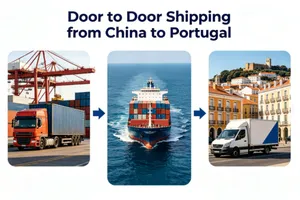
For those also interested in regional shipping trends, you may find our in-depth analysis on the Sea Shipping cost from China to Spain and Door to Door Shipping from China to Portugal highly relevant.
Key Factors Affecting Sea Shipping Cost from China to Portugal
Understanding the components that influence the sea shipping cost from China to Portugal will help you make informed decisions and optimize your supply chain.
Freight Rates: Influencing Elements and Trends
Freight rates fluctuate due to multiple factors. In our experience quoting thousands of China-to-Europe containers annually, here is what actually moves the market on the Portugal lane:
- Fuel Prices (Bunker / VLSFO): Bunker Adjustment Factors (BAF) are added when fuel prices rise. As of 2026, Very Low Sulfur Fuel Oil (VLSFO) prices in Singapore — the regional benchmark — directly impact the BAF lines on your invoice. We monitor this weekly and lock BAF-inclusive rates for long-term contracts whenever possible.
- Supply and Demand: Peak seasons, geopolitical events, and port congestion impact rates. The Red Sea rerouting since late 2023 removed roughly 15–20% of effective Asia-Europe capacity, keeping rates elevated through 2024 before the market corrected in late 2025.
- Container Imbalances: High export volumes from China and fewer imports create equipment shortages. We see this most acutely in Q1 after Chinese New Year, when empty containers are stranded in Europe and shippers in Shenzhen or Guangzhou face equipment imbalance surcharges (EIS) of $50–$150 per box.
- Carrier Alliances: The three main shipping alliances (2M, Ocean Alliance, THE Alliance) adjust capacity through blank sailings and service consolidations. For Portugal, Ocean Alliance carriers (COSCO, CMA CGM, Evergreen) typically offer the most frequent direct connections to Sines and Lisbon.
- Service Level: Direct mainline services are faster but command a premium. Transshipment via Algeciras or Rotterdam can save $200–$400 per 40HQ but adds 4–8 days. We always present both options with full cost-time transparency.
Recent Trend: As of Q2 2026, rates have stabilized closer to pre-pandemic averages following the post-2024 market correction, though ongoing Red Sea routing adjustments and EU port labor actions continue to introduce volatility. For updated, competitive rates, consult a professional freight forwarder such as DTFU International Logistics Co.,Ltd.
| Year/Quarter | Average FCL 40HQ Rate (Shanghai to Lisbon, USD) |
|---|---|
| Q1 2025 | $3,200 |
| Q3 2025 | $2,900 |
| Q1 2026 | $2,800 |
| Q2 2026 | $2,650 |
(Data based on market surveys and shipping indexes; rates fluctuate with fuel, demand, and route disruptions)
Impact of Incoterms on Total Shipping Cost
Incoterms (International Commercial Terms) define the allocation of costs and responsibilities in international transactions. The choice of Incoterm directly affects your total logistics cost:
- EXW (Ex Works): Buyer pays all transportation and handling from the seller's premises in China to the destination in Portugal.
- FOB (Free On Board): Seller pays for inland China transport and origin port charges; buyer covers ocean freight and all costs at the destination.
- CFR/CIF (Cost & Freight/Cost, Insurance & Freight): Seller covers costs up to Portuguese port; under CIF, insurance is included.
- DAP/DDP (Delivered At Place/Delivered Duty Paid): Seller handles almost all costs, including inland delivery in Portugal.
| Incoterm | Who Pays Main Charges? | Buyer’s Cost Risk |
|---|---|---|
| EXW | Buyer (all stages) | Highest risk, highest control |
| FOB | Buyer (from port of shipment) | Lower than EXW |
| CIF | Buyer (from port of discharge) | Seller handles main transport |
| DAP | Seller (incl. destination inland) | Easiest for buyer, higher price |
Our Recommendation: For most small-to-medium importers shipping to Portugal, FOB offers the best balance of cost control and simplicity — you pay for ocean freight and destination charges, but you choose your forwarder (like DTFU) rather than accepting the seller’s often marked-up freight arrangement. CIF is convenient but be aware: under CIF, the seller chooses the carrier and coverage, which sometimes results in slower routings or minimal insurance.
A common mistake we see: Buyers agreeing to EXW without realizing they must arrange export customs clearance in China — something most European importers cannot easily manage from abroad. Unless you have a trusted representative in China, avoid EXW. DDP is the easiest for the buyer but expect the seller to embed all risk premiums into their price; for regular importers, DAP plus your own customs broker often works out cheaper.
Always clarify Incoterms 2020 explicitly in your sales contract, including the named port or place (e.g., "CIF Lisbon, Incoterms 2020"). Ambiguity here is a leading cause of cost disputes.
Seasonal Fluctuations and Surcharge Considerations
Shipping rates and surcharges can vary significantly depending on the season:
-
Peak Season (August-October):
- Driven by pre-holiday stockpiling, rates from China to Europe, including Portugal, can rise by 20% or more.
- General Rate Increases (GRI) and Peak Season Surcharges (PSS) are common during this period. In our 2025 data, we saw GRI announcements of $500–$800 per 40HQ on the Asia-Mediterranean lane in September.
-
Off-Peak Season (January-March):
- Lower demand after the holiday rush and Chinese New Year may lead to decreased rates, but blank sailings (canceled voyages) can reduce capacity. We typically advise clients with flexible schedules to book in late February or early March for the best rate-to-space ratio.
-
Surcharges to Watch:
- BAF (Bunker Adjustment Factor): Adjusts for fuel costs.
- CAF (Currency Adjustment Factor): Adjusts for currency volatility.
- War Risk Surcharge: May apply if geopolitical tensions affect shipping lanes. Since late 2023, the Red Sea situation has forced many carriers to reroute around the Cape of Good Hope, extending transit times and adding war-risk premiums on Asia-Europe services.
- Congestion Surcharge: Imposed during periods of heavy traffic or operational disruptions at key ports.
| Surcharge Type | Typical Range (USD/Container) | When Applicable |
|---|---|---|
| BAF | $100 – $400 | Fuel price surges |
| PSS | $150 – $500 | Peak season |
| Congestion Surcharge | $75 – $350 | Major port congestion |
| War Risk | $10 – $50 | Geopolitical instability |
Pro Tip: Partnering with an experienced freight forwarder like DTFU International Logistics Co.,Ltd enables you to anticipate these fluctuations, secure space during high-demand periods, and avoid unexpected costs.
For tailored solutions, competitive quotes, and end-to-end logistics support—including Sea Freight, Road Freight, Air Freight, Amazon FBA, Warehousing, Cargo Insurance, Customs Clearance, Door-to-Door, OOG Freight, Consolidated Freight, and Breakbulk Freight—contact DTFU International Logistics Co.,Ltd. We are committed to delivering highly professional, cost-effective, and high-quality logistics services for global traders.
Detailed Breakdown of Ocean Freight Charges
FCL vs. LCL: How Container Type Changes Your Cost
In sea shipping from China to Portugal, understanding the difference between FCL (Full Container Load) and LCL (Less than Container Load) is crucial for cost optimization.
-
FCL (Full Container Load): You book an entire container for your cargo. It’s ideal for large shipments where you maximize the container's capacity. FCL rates are quoted per container (per box) and are generally not affected by whether you fill the container to 50% or 95%. However, you must respect the maximum gross weight — on the China-Europe lane, the practical limit is often 21–22 metric tons for a 20FT and 26–27 metric tons for a 40FT/40HQ due to road weight restrictions in Portugal, even though the container itself can technically hold 28,000 kg.
Container Type Size Capacity (CBM) Typical Cargo Weight Limit (kg) 20FT 20’ x 8’ x 8’6” 28 CBM 28,000 40FT 40’ x 8’ x 8’6” 56 CBM 28,000 40HQ (High Cube) 40’ x 8’ x 9’6” 68 CBM 28,000 45HQ (High Cube) 45’ x 8’ x 9’6” 78 CBM 29,500 -
LCL (Less than Container Load): You share container space with other shippers. Pricing is calculated based on the cargo’s volume (CBM) or weight (metric tons / w/M), whichever is greater, using the standard sea freight ratio of 1 CBM = 1,000 kg. LCL is cost-effective for smaller loads but comes with higher per-unit costs, more handling at the CFS (Container Freight Station), and sometimes 3–5 days of additional transit time for consolidation and deconsolidation.
Quick Cost Comparison Example (2026 Average Estimates):
| Route | FCL 20FT | FCL 40HQ | LCL (per CBM) |
|---|---|---|---|
| Shanghai to Lisbon | $1,200–$1,600 | $2,000–$2,500 | $80–$120 |
| Shenzhen to Porto | $1,250–$1,700 | $2,100–$2,600 | $85–$130 |
Note: Real-time rates may vary depending on market demand, fuel prices, and space availability. The LCL rates above include origin CFS handling but exclude destination deconsolidation fees, which typically add €35–€65 per CBM in Lisbon.
Key Considerations:
- Choose FCL if your load exceeds 15–18 CBM or when security and minimal handling are priorities. Also consider FCL if your cargo is fragile or high-value — fewer handling points mean less risk.
- Opt for LCL for small shipments under 12 CBM; however, factor in extra costs for consolidation, deconsolidation, and longer dwell times at both loading and discharge CFS facilities. A hidden cost many overlook: LCL cargo is more likely to face Portuguese customs inspection because mixed containers trigger higher risk scores in the EU’s automated customs systems.
Common Additional Charges: BAF, CAF, Documentation & Handling Fees
Apart from base freight rates, sea shipping costs comprise several surcharges and fees:
| Name | Description | Typical Range (2026) |
|---|---|---|
| BAF (Bunker Adjustment Factor) | Adjusts for changes in marine fuel (bunker / VLSFO) prices. | $100–$350/container |
| CAF (Currency Adjustment Factor) | Covers USD-EUR fluctuation risk; applied by some European carriers. | 2%–10% of base freight |
| Documentation Fee | Charged for Bill of Lading (B/L) issuance, customs paperwork, and related documentation. | $30–$80 per shipment |
| Handling Fee | For cargo handling at ports, CFS warehouses, or during consolidation. | $15–$45 per CBM (LCL) |
| Security Fee | For enhanced port security measures (ISPS compliance). | $10–$30 per container |
| PSS (Peak Season Surcharge) | Temporary surcharge during high-demand periods (August–October, pre-Christmas). | $150–$500/container |
| War Risk Surcharge | Applied on Asia-Europe lanes due to Red Sea / Gulf of Aden instability. | $25–$75/container |
| EIS (Equipment Imbalance Surcharge) | Charged when empty container availability is tight at origin. | $50–$150/container |
Pro Tip: Transparent freight forwarders like DTFU International Logistics Co.,Ltd provide a detailed quote, breaking down all applicable surcharges upfront, helping you avoid unexpected hidden costs.
If you are comparing international shipping costs in other regions, our guide to the Sea Shipping cost from China to Costa Rica offers valuable benchmarks.
Port Charges, Customs Fees, and Inland Transportation Costs
-
Port Charges (THC — Terminal Handling Charges): Levied at both the origin (China) and destination (Portugal) ports for container handling, terminal usage, and stevedoring. In our experience, Portuguese THC is typically lower than Northern European hubs like Rotterdam or Hamburg, making Portugal an attractive final destination. Typical handling charges in 2026 are:
- China: $125–$220 per container (varies by port; Shanghai and Ningbo tend to be at the lower end)
- Portugal: €100–€180 per container (Lisbon and Sines are comparable; Leixões sometimes charges a slight premium for specialized equipment)
-
Customs Fees:
- China: Export customs clearance ($60–$120 per shipment). DTFU handles this in-house for all FOB/EXW bookings.
- Portugal: Import customs fees (usually €50–€100), plus VAT (23%) and customs duties depending on the HS code and origin. Under the EU-China trade framework, Most Favored Nation (MFN) duty rates apply unless a specific trade agreement provides relief.
-
Inland Transportation Costs: Costs for moving your container from the port to your warehouse or final destination. Portugal’s highway network (A1, A2, A6 motorways) is well-developed, but trucking capacity can tighten during harvest season (September–October) when agricultural exports compete for haulage.
- Short-haul (within 50km of the port): €120–€300
- Long-haul (>100km): €350–€800
- Tip: For regular deliveries to Porto from Lisbon or Sines, consider negotiating a monthly trucking contract rather than spot rates — we’ve seen savings of 12–18% for clients shipping 4+ containers monthly.
-
Other Possible Costs:
- Demurrage/Detention Fees: For containers outside the port after the free time. Standard free time in Portugal is 7 days for demurrage (port storage) and 14 days for detention (container usage). Exceeding these can cost €25–€65 per day. We actively monitor container releases to avoid these fees for our clients.
- Inspection Fees: If your cargo is subject to inspection by Portuguese Customs (Autoridade Tributária e Aduaneira). Random inspections are relatively rare for standard consumer goods but more common for electronics, food products, and first-time importers. An inspection can add €150–€400 in handling and storage costs.
How to Calculate Your Sea Shipping Cost from China to Portugal
Step-by-Step Example: Calculating All-In Shipping Price
Let’s walk through a real-world scenario for a 40HQ container shipped from Shanghai, China to Lisbon, Portugal in June 2026.
Step 1: Base Ocean Freight
- 40HQ rate: $2,200
Step 2: Surcharges
- BAF: $250
- CAF (5%): $110
Step 3: Origin Charges (China)
- Port handling: $150
- Export customs clearance: $80
- Documentation fee: $50
Step 4: Destination Charges (Portugal)
- Port handling: €150 (~$165)
- Import customs fee: €80 (~$88)
Step 5: Inland Delivery (to warehouse in Lisbon, 30km from port)
- Trucking: €160 (~$176)
Step 6: VAT & Duties
- Assume declared cargo value: $25,000
- Duty (average 4%): $1,000
- VAT (23% on CIF + Duty): ($2,200 + $250 + $110 + $150 + $80 + $50 + $165 + $88 + $176 + $1,000) × 23% = ~$1,035
Total Estimate:
| Cost Item | USD |
|---|---|
| Ocean Freight | $2,200 |
| Surcharges | $360 |
| China Charges | $280 |
| Portugal Charges | $253 |
| Inland Delivery | $176 |
| Duties | $1,000 |
| VAT | $1,035 |
| Grand Total | $5,304 |
Note: Exchange rates and real-time surcharges fluctuate. Always request updated quotes.
Essential Documents Required and Their Impact on Cost
Proper documentation ensures smooth customs clearance and avoids costly delays or fines.
| Document | Purpose | Impact on Cost |
|---|---|---|
| Bill of Lading (B/L) | Serves as the shipment contract and title of goods | Mandatory, included in doc fees |
| Commercial Invoice | Shows transaction value for customs duty assessment | Crucial for correct tax calculation |
| Packing List | Details cargo contents and packaging | Required, no extra fee |
| Certificate of Origin | Proves the manufacturing country (may lower duty via trade deals) | Sometimes incurs $50–$80 |
| Import/Export Licenses | As per goods or trade regulations | Required for certain goods |
| Insurance Certificate | Proof of cargo coverage (recommended for high-value goods) | 0.1–0.5% of cargo value |
Missing or incorrect documents can result in:
- Customs holds or fines
- Additional inspection costs
- Storage and demurrage fees
DTFU International Logistics Co.,Ltd offers one-stop customs clearance and complete documentation management, minimizing risks and ensuring efficient cargo flow.
A detailed understanding of the various components of sea shipping cost from China to Portugal allows businesses to budget accurately, avoid hidden fees, and select the best shipping mode. Partnering with a reputable freight forwarder like DTFU International Logistics Co.,Ltd ensures you receive professional advice, transparent pricing, and comprehensive logistics support for every step of your international trade journey.
Ready to Ship? Get Your Free, Itemized Quote Today
Whether you’re moving your first 20FT container from Ningbo to Lisbon or optimizing a monthly FCL program from Shenzhen to Porto, DTFU International Logistics Co.,Ltd provides the expertise, carrier network, and pricing transparency you need.
What you get when you request a quote:
- ✅ Itemized pricing with zero hidden fees — ocean freight, BAF, CAF, documentation, port handling, customs clearance, and inland delivery, broken down line by line.
- ✅ Route comparison — direct vs. transshipment, Suez vs. Cape routing, with honest transit-time estimates based on current vessel schedules.
- ✅ Complimentary HS code verification and EU compliance pre-check (CBAM, CE marking, ICS2 readiness).
- ✅ Dedicated account manager — one expert point of contact from factory pickup in China to warehouse delivery in Portugal.
Contact Ivan Chan at DTFU International Logistics Co.,Ltd today for your tailored sea freight solution. With FIATA and IATA dual certification, direct contracts with Ocean Alliance and 2M carriers, and over a decade of China–Europe logistics expertise, we ensure your cargo arrives safely, compliantly, and on budget — every time.
Last updated: May 2026. Rates, surcharges, and regulations are subject to change; always request a current quote before booking.
Tips to Reduce Sea Freight Costs from China to Portugal
Best Practices for Packing and Consolidation
Efficient packing and consolidation play a pivotal role in reducing overall sea shipping cost from China to Portugal. Here are some professional and actionable tips:
-
Optimize Container Usage: Choose the container size that closely matches your shipment volume. Remember:
- 20FT container: Capacity is 28 CBM
- 40FT container: Capacity is 56 CBM
- 40HQ container: Capacity is 68 CBM
- 45HQ container: Capacity is 78 CBM
-
Consolidate Shipments (LCL): If you don't have enough cargo to fill a full container (FCL), consider Less than Container Load (LCL) shipping. By consolidating your cargo with others, you share costs and minimize wasted space.
-
Use High-Quality Packaging: Well-packed cargo prevents damage and reduces claims. It may also result in lower insurance premiums.
-
Minimize Dead Space: Arrange goods to reduce empty spaces. Avoid over-packing, as this can lead to higher volumetric charges.
-
Standardize Cartons: Using standard-sized cartons makes palletization and container loading more efficient, reducing manual handling fees.
Choosing the Right Freight Forwarder and Service Level
Selecting a reliable freight forwarder can greatly impact shipping cost and service quality. Here’s what to consider:
- Experience and Reputation: Work with established, reputable companies such as DTFU International Logistics Co.,Ltd, which is recognized for its cost-effective, high-quality, and one-stop international logistics services.
- Service Portfolio: Ensure your forwarder can handle all aspects—Sea Freight, Air Freight, Road Freight, Amazon FBA, Warehouse, Cargo Insurance, Door-to-Door, OOG Freight, and Consolidated Freight.
- Transparent Pricing: Choose forwarders who provide detailed quotations, clearly listing all charges (BAF, CAF, documentation, port, customs, handling, etc.).
- Tailored Service Level: Match your service level (standard, expedited, premium) to your actual needs. If your delivery timeline is flexible, select a standard service for cost savings.
For businesses looking for regional alternatives, see our article on Door to Door Shipping from China to Spain.
Negotiating Freight Rates and Avoiding Hidden Fees
Effective negotiation and vigilance can help avoid unnecessary costs:
- Request All-Inclusive Quotes: Always ask for “all-in” prices, covering ocean freight, surcharges, documentation, handling, and destination charges.
- Clarify Surcharges: Understand each surcharge—such as BAF (Bunker Adjustment Factor), CAF (Currency Adjustment Factor), and GRI (General Rate Increase)—and when they apply.
- Negotiate During Off-Peak Seasons: Shipping rates often drop during off-peak seasons. Plan shipments accordingly for lower costs.
- Sign Long-Term Contracts: If you have regular shipments, negotiate long-term contracts for more stable rates.
- Check for Volume Discounts: Larger, regular shipments may qualify for reduced rates.
- Audit Invoices: Review all freight invoices for discrepancies or unexpected charges.
- Work with a Trusted Partner: DTFU International Logistics Co.,Ltd offers transparent pricing and proactive advice to help you avoid hidden fees and optimize your logistics budget.
Comparing Sea Shipping with Other Shipping Methods
Cost, Transit Time, and Reliability Comparison
When weighing sea shipping cost from China to Portugal against other logistics modes, consider the following:
| Shipping Method | Average Cost (USD/CBM) | Transit Time (Days) | Reliability | Best For |
|---|---|---|---|---|
| Sea Freight | $50–$120 | 25–35 | High (weather-dependent) | Large, heavy, non-urgent cargo |
| Air Freight | $400–$600 | 3–7 | Very High | Urgent, high-value, or perishable goods |
| Rail Freight | $150–$300 | 15–22 | Moderate–High | Faster than sea, cheaper than air; mid-size |
- Sea Freight is the most cost-effective for bulk shipments, but has the longest transit time.
- Air Freight offers the fastest delivery but at a much higher price, making it suitable for time-sensitive or high-value items.
- Rail Freight (via China–Europe rail corridors) is a compromise between cost and speed, ideal for certain trade lanes and cargo types.
When to Choose Sea Freight Over Other Options
Sea shipping from China to Portugal is the preferred choice when:
- You are shipping large volumes or heavy goods where cost is a primary concern.
- Your cargo is not time-sensitive, and you can accommodate longer lead times.
- You require specialized services (e.g., OOG Freight, Breakbulk Freight).
- You want to minimize your carbon footprint compared to air freight.
When to Consider Other Methods:
- If you have urgent or high-value goods, air freight may be justified despite higher expenses.
- For medium-volume shipments where speed is important but cost is also a concern, rail freight can be a viable alternative—especially as rail links between China and Europe mature.
For customized advice and end-to-end logistics solutions, DTFU International Logistics Co.,Ltd is ready to analyze your shipment needs and help you select the best shipping mode for your business.
If you are interested in shipping cost benchmarks for other European destinations, our analysis of the Sea Shipping Cost from China to France may provide helpful reference.
Common Challenges and Solutions in Sea Shipping to Portugal
Customs Clearance Issues and Compliance Tips
Customs clearance is one of the most critical stages in sea shipping from China to Portugal. Delays or additional costs frequently arise due to compliance errors, incomplete documentation, or changes in import/export regulations. Below are the most common challenges and actionable solutions:
Common Customs Clearance Challenges
| Challenge | Description | Impact on Cost/Time |
|---|---|---|
| Incomplete or inaccurate documentation | Missing, wrong, or inconsistent details in shipping documents such as the Bill of Lading, Commercial Invoice, or Packing List | High risk of delays and fines |
| Non-compliance with product regulations (CE marking, etc.) | Goods not meeting EU standards (e.g., safety, labeling, sanitary regulations) | Rejection, confiscation, or penalties |
| Unexpected changes in customs duty and VAT rates | Due to periodic policy updates in Portugal or the EU | Increased landing costs |
| Inadequate tariff classification (HS codes) | Misclassification can lead to higher duties or legal disputes | Financial and legal risks |
| Missing or incorrect Incoterms usage | Errors in defining responsibilities between buyer and seller can result in disputes | Shared liability, extra costs |
Compliance Tips
-
Work with a professional freight forwarder: Engaging an expert like DTFU International Logistics Co.,Ltd ensures all documents (Bill of Lading, Commercial Invoice, Packing List, Certificate of Origin, etc.) are correctly prepared and submitted. According to FIATA best-practice guidelines, incomplete documentation is the root cause of over 60% of customs delays in EU ports.
-
Stay updated with EU regulations: Regularly monitor changes in import regulations in Portugal and the European Union. Key 2026 developments importers must know:
- CBAM (Carbon Border Adjustment Mechanism): Now requires verified emissions reporting for imports of cement, steel, aluminum, fertilizers, electricity, and hydrogen. Importers must register in the EU CBAM Transitional Registry and submit quarterly reports with actual embedded emissions data. Failure to comply can result in fines of €10–€50 per tonne of unreported emissions.
- EU EES (Entry/Exit System): While primarily for passenger travel, enhanced border digitalization is streamlining cargo risk profiling. Ensure your EORI number is active and linked to your Portuguese VAT ID.
- ICS2 (Import Control System 2): All maritime cargo to the EU now requires advance security filing at the House B/L level before loading. DTFU files this automatically for all bookings.
-
Verify HS codes and product compliance: Ensure your products are classified correctly and meet all CE or other EU certification standards. For electronics, RED (Radio Equipment Directive) compliance is increasingly checked at Portuguese ports.
-
Use clear Incoterms (e.g., FOB, CIF, DAP): Clearly define responsibility for customs clearance, delivery, and insurance.
-
Consider Customs Brokerage Services: Leveraging the One stop customs clearance service by DTFU International Logistics Co.,Ltd can minimize customs risks and optimize clearance time. Our Lisbon-based customs partner handles approximately 200+ TEU monthly, giving us direct insight into current inspection priorities and processing speeds.
DTFU Exclusive: Pre-Shipment Document & Compliance Checklist (China → Portugal)
Use this 12-point checklist — refined from our 10+ years of EU-bound shipments — before your cargo departs China. In our data, shippers who complete this checklist reduce customs hold-ups by over 70%:
| # | Check Item | Status |
|---|---|---|
| 1 | Bill of Lading (B/L) — Shipper, consignee, and notify party details match exactly across all documents | ☐ |
| 2 | Commercial Invoice — Value in USD or EUR, accurate HS codes, and Incoterms 2020 stated clearly | ☐ |
| 3 | Packing List — Matches invoice line-by-line; weights and dimensions accurate per package | ☐ |
| 4 | Certificate of Origin — Issued by CCPIT or authorized chamber; stamped and signed | ☐ |
| 5 | Import/Export Licenses — Valid for controlled goods (electronics, chemicals, medical devices) | ☐ |
| 6 | CE Marking / RED / REACH — Product compliance certificates attached for applicable goods | ☐ |
| 7 | EORI Number — Importer’s EU EORI is active and linked to Portuguese VAT ID | ☐ |
| 8 | CBAM Reporting — Embedded emissions data collected from supplier (for steel, cement, aluminum, fertilizers, hydrogen, electricity) | ☐ |
| 9 | ICS2 Filing — Advance security data submitted at House B/L level before vessel loading | ☐ |
| 10 | Insurance Certificate — Coverage at 110% of CIF value; all-risk recommended | ☐ |
| 11 | Container Weight (VGM) — Verified Gross Mass submitted to carrier 24h before cutoff | ☐ |
| 12 | AWB Pre-Alert / Arrival Notice — Destination broker alerted 5 days before ETA | ☐ |
Download a printable PDF version of this checklist by contacting our team.
Delays, Damages, and How to Mitigate Risks
Common Causes of Delays and Damages
| Cause of Delay/Damage | Typical Scenario | Solution/Best Practice |
|---|---|---|
| Port congestion at major Chinese or Portuguese ports | Peak shipping season or unexpected events (strikes, weather) | Book shipments in advance, track vessel schedules |
| Inadequate cargo packaging or consolidation | Poor packing leads to damage during transit | Use professional packing & consolidation services |
| Document discrepancies or late submission | Errors in documentation cause customs hold-ups | Double-check all documents well before vessel departure |
| Weather disruptions at sea | Storms in the South China Sea or Atlantic Ocean | Include buffer time in planning, choose reliable carriers |
| Transshipment or routing changes | Cargo routed via third-country ports, increasing risk | Direct routing where possible, select experienced forwarders |
Risk Mitigation Strategies
- Opt for cargo insurance: Protect your shipment against loss, damage, or theft with comprehensive Cargo insurance services provided by DTFU International Logistics Co.,Ltd.
- Ensure professional packing: For both FCL and LCL shipments, proper packaging and stowage are crucial. Use high-quality pallets, moisture-proof packing, and experienced consolidation services to minimize damage.
- Track your shipment: Leverage digital tracking systems offered by advanced freight forwarders. This enables real-time updates and faster response to unexpected events.
- Choose the right service provider: A reliable partner like DTFU International Logistics Co.,Ltd, with proven expertise in sea freight to Portugal, can handle unforeseen issues and provide end-to-end solutions.
- Plan for peak seasons: Avoid last-minute bookings during Golden Week (China) or Christmas/New Year (Europe) to minimize congestion and surcharges.
FAQs
Q1: What are the main sea ports used for shipping from China to Portugal?
A: Major Chinese ports include Shanghai, Shenzhen, Ningbo, and Qingdao. In Portugal, the primary receiving port is Port of Sines (Porto de Sines), with Lisbon and Leixões also frequently used for imports.
Q2: How long does sea shipping from China to Portugal usually take?
A: Typical transit times range from 28 to 38 days port-to-port for direct mainline services via the Suez Canal. However, since the Red Sea disruptions, carriers routing around the Cape of Good Hope have pushed this to 38–48 days. For example:
- Shanghai → Sines (direct): ~32–36 days (Suez routing)
- Shenzhen → Lisbon (via Algeciras): ~35–40 days
- Ningbo → Lisbon (Cape of Good Hope): ~42–48 days
Door-to-door delivery adds an additional 3–7 days for customs clearance and inland trucking in Portugal.
Q3: What documents are required for customs clearance in Portugal?
A: Essential documents include the Bill of Lading, Commercial Invoice, Packing List, Certificate of Origin, and any applicable product certificates (e.g., CE marking, sanitary certificates).
Q4: Can I ship both FCL and LCL cargo from China to Portugal?
A: Yes, both FCL (Full Container Load) and LCL (Less than Container Load) options are available, depending on your cargo volume and shipping budget.
Q5: How can I reduce the risk of delays or cargo damage?
A: Work with a reputable freight forwarder such as DTFU International Logistics Co.,Ltd, ensure all documentation is accurate, and opt for cargo insurance and professional packing services.
Q6: What are the common additional charges apart from freight costs?
A: Expect charges like BAF (Bunker Adjustment Factor), CAF (Currency Adjustment Factor), documentation fees, port charges, customs duties, and inland transportation costs within Portugal.
Q7: Is it possible to arrange door-to-door sea freight delivery in Portugal?
A: Yes, comprehensive logistics providers like DTFU International Logistics Co.,Ltd offer door-to-door, one-stop customs clearance, and even warehouse solutions in Portugal. For a full breakdown of such services, check out our complete guide to Door to Door Shipping from China to Portugal.