Are you comparing container quotes from China to Afghanistan and finding that the same 40ft box is priced anywhere between $3,400 and $9,000 — with nobody explaining the difference? This guide answers the cost question directly: what a 20ft and 40ft container actually costs on each of the three corridors into Afghanistan, what every published quote does and does not include, what Kabul, Kandahar, Herat and Mazar-i-Sharif each add, and the landed-cost formula you can apply to your own shipment.
Why Container Prices to Afghanistan Vary by 300 Percent
Search for a container rate from China to Afghanistan and you will find figures that cannot all be right. One forwarder publishes $3,400–$6,500 for a 40ft container. Another publishes $6,000–$9,000 for the same box. Both are describing real prices, and neither is lying.
The reason is scope, and on a doubly landlocked destination like Afghanistan scope is almost the whole story. A container moving from China to Kabul passes through at least four distinct stages, each of which can be included or excluded from a quote:
- Ocean freight from a Chinese port to a transit port — Karachi, Port Qasim or Bandar Abbas
- Transit-country customs and border formalities under the Afghanistan–Pakistan Transit Trade Agreement or the Iranian equivalent
- Inland trucking from the transit port across a land border to an Afghan entry point
- Afghan customs clearance, duty and inland delivery to the final city
A quote that covers only the first stage and the trucking to the border is a real, legitimate product. So is a DDP quote that covers all four. The trouble is that both get published as "the cost of shipping a container to Afghanistan," and buyers compare them as though they were the same thing.
There is a second reason rates diverge, and it is specific to this lane: the three corridors are genuinely different products with different cost structures, different transit times and different risk profiles. An Iran-corridor quote and a Pakistan-corridor quote are not competing prices for identical service.
What Your Afghanistan Container Quote Actually Includes
This table is the reference to hold against any quote you receive. Find the scope that matches your quote, and you will know what you are actually buying.
| Quote type | Typical 20ft total | What is included | What you still pay separately |
|---|---|---|---|
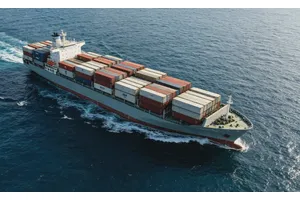
| Ocean only (China → Karachi) | $750 – $1,100 | Ocean freight to Port of Karachi | Origin charges, transit customs, bonded trucking, border fees, Afghan duty, inland delivery |
| "To border" / sea + truck | $3,400 – $6,500 (40ft) | Ocean freight plus trucking to Torkham, Chaman or Islam Qala | Transit documents, border handling on the Afghan side, Afghan duty and BRT, delivery to your city |
| Door-to-door DDP (to Kabul) | $6,000 – $9,000 (40ft) | Everything: origin handling, ocean, transit clearance, trucking, Afghan customs, duty and delivery | Nothing for the shipment itself — but the quote excludes your own import registration |
| DDP to Herat via Iran corridor | $5,200 – $8,000 (40ft) | Same as above on the Iran routing | Same as above |
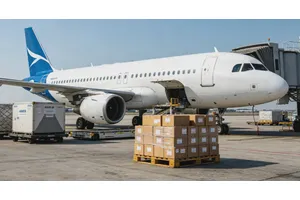
| Air freight (to Kabul) | $4.50 – $9.00 per kg | Airport-to-airport or door delivery depending on the rate | Higher cost per kg means this only suits urgent, high-value or light cargo |
Two entries in that table deserve emphasis. (For a fuller breakdown of the air option, the air freight guide for this lane covers weight brackets and routing.) First, the wide $3,400–$6,500 band for a "to border" 40ft is not sloppiness — it reflects how much the trucking leg varies with fuel, border queue length and whether the load is within axle limits. Second, a DDP quote that looks expensive next to an ocean-only rate is not necessarily poor value; it is a different product with different risk held by a different party.
The single most useful question to ask any forwarder: "Quote me the same container both to the border and to my city door, with duty and BRT shown as separate lines." That one request eliminates almost all scope confusion before you commit, and it is the format DTFU quotes Afghanistan work in as standard.
Container Rates by Corridor: Pakistan, Iran and Central Asia
Afghanistan has no seaport, so every container crosses at least one land border. There are three usable corridors, and the cost difference between them is smaller than the risk difference.
The Pakistan Corridor: Karachi to Torkham or Chaman
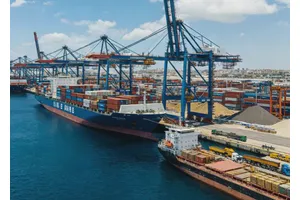
The Pakistan corridor carries the largest share of Afghanistan's containerised trade, because Karachi and Port Qasim offer the deepest sailing frequency from China. Two border crossings matter:
| Route | Ocean (China → Karachi) | Transit time (ocean) | Inland leg | Door-to-door total |
|---|---|---|---|---|
| Shenzhen → Karachi → Torkham → Kabul | $1,200 – $1,800 (20ft) | 18–25 days | $1,500 – $3,500 trucking, 10–20 days | 40–60 days |
| Shenzhen → Karachi → Chaman → Kandahar | $1,200 – $1,800 (20ft) | 18–25 days | Similar trucking band | 40–60 days |
| Shanghai → Karachi → Torkham → Kabul | $1,300 – $1,900 (20ft) | 22–28 days | $1,500 – $3,500 trucking | 45–65 days |
Torkham is the main crossing for Kabul, Jalalabad and the eastern provinces; Chaman and Spin Boldak serve Kandahar and the south. Torkham's advantage is a shorter run to Kabul. Its disadvantage is congestion — the crossing handles a very high volume of both transit and bilateral traffic, and a queue that adds two days in a normal week can add a week when the border is under pressure.
The Iran Corridor: Bandar Abbas to Islam Qala
| Route | Ocean (Shanghai → Bandar Abbas) | Transit time (ocean) | Door-to-door total | Notes |
|---|---|---|---|---|
| Shanghai → Bandar Abbas → Islam Qala → Herat | $1,500 – $2,200 (20ft) | 22–30 days | 40–60 days | Natural fit for western Afghanistan; smoother trucking leg, heavier paperwork |
The Iran corridor usually costs more at the ocean leg and involves a more demanding documentary environment, including sanctions-related banking constraints that make payment for freight genuinely awkward. Where it wins is geography: for Herat and the western provinces it avoids crossing the whole of Pakistan, and importers in that region often find it the more practical routing despite the paper burden.
The Central Asia Rail Corridor: Hairatan and the Block Trains
| Route | Typical 20ft | Transit | Best for |
|---|---|---|---|
| Chongqing / Xi'an → Alashankou → Kazakhstan → Uzbekistan → Hairatan → Mazar-i-Sharif | Quoted per train; typically competitive with ocean+road for full volumes | 20–30 days | Northern Afghanistan, Mazar-i-Sharif, Kunduz |
| China → Khorgos → Central Asia → Aqina / Torghundi | Quoted per train | 22–35 days | Turkmenistan border destinations |
Rail is the corridor most importers overlook. China's standard gauge changes to CIS broad gauge at Alashankou or Khorgos, which means a physical transfer of containers, and the service is generally offered at block-train scale rather than for a single container. For an importer moving regular consolidated volume into northern Afghanistan, it can be both cheaper and more predictable than the road route — but it is not the same product as a single-box booking, and it only makes sense once volume is established.
Per-City Container Costs: Kabul, Kandahar, Herat and Mazar-i-Sharif
The destination city changes the cost more than most importers expect, because the inland leg after the border is priced separately.
| Destination | Entry border | Inland from border | Typical 20ft door-to-door | Notes |
|---|---|---|---|---|
| Kabul | Torkham | ~250 km, Jalalabad road | $4,300 – $5,200 | Longest main-corridor road leg; Salang Pass not involved on this routing |
| Kandahar | Chaman / Spin Boldak | ~120 km | $4,100 – $5,000 | Shortest major-city leg; best suited to the Chaman crossing |
| Herat | Islam Qala | ~120 km | $4,200 – $5,100 | Iran corridor; smoother road, heavier transit paperwork |
| Mazar-i-Sharif | Hairatan | ~20 km | $3,900 – $4,900 | Shortest leg of all when the rail corridor is used |
Which corridor suits you depends on the destination city and the season, and it is a discussion worth having before the booking rather than after — DTFU routes Afghanistan cargo on all three, so the recommendation follows your delivery address rather than our convenience.
A note on winter planning that applies to the northern routes: the Salang tunnel and pass, which carries the main road link between Kabul and northern Afghanistan, closes periodically in winter and spring because of snow and avalanche risk. Shipments bound for Mazar-i-Sharif or Kunduz via Kabul should build in a winter buffer, or use the rail corridor into Hairatan to avoid the pass altogether.
LCL, FCL or Rail: The Container Cost Break-Even
| Cargo volume | Cheapest option | Why |
|---|---|---|
| Under 3 CBM | LCL at $130 – $200 per CBM | FCL fixed costs dominate at this size |
| 3 – 8 CBM | LCL | Per-CBM rate still beats a full container |
| 8 – 14 CBM | Break-even zone | Ask for both; LCL fixed charges at the transit port can flip the answer |
| 15 CBM and above | FCL 20ft | A full container costs no more and avoids repeated handling |
| 25 CBM and above | FCL 40ft | Per-CBM cost drops sharply |
| Full train volumes | Rail via Hairatan | Lowest per-container cost where volume and destination suit |
Two nuances make the break-even on this lane different from a normal ocean route. First, LCL cargo to Afghanistan is deconsolidated and re-loaded at least once — often at Karachi or Bandar Abbas — and every additional handling step is a chance for damage, shrinkage or mis-labelling. Second, the proportion of cost that is fixed rather than volume-driven is unusually high on this lane, because transit documentation, border handling and customs brokerage are charged roughly per consignment rather than per cubic metre. That pushes the practical break-even toward the lower end of the usual range, closer to 12 CBM than 15.
The Landed-Cost Formula for a Landlocked Destination
Most "cost to ship" articles stop at a rate table. For a landlocked destination that is not enough, because the ocean rate is often less than half the total. Here is the formula, with a worked example for a 20ft container from Shenzhen to Kabul:
| Layer | Component | Example amount |
|---|---|---|
| 1 | Ex-works goods value (or FOB value) | $18,000 |
| 2 | Origin charges: factory haulage, export clearance, THC, documentation | $340 |
| 3 | Ocean freight China → Karachi | $1,450 |
| 4 | Transit-country filing: APTTA transit bond, Afghan Transit Manifest | $150 |
| 5 | Destination port charges at Karachi | $260 |
| 6 | Bonded trucking Karachi → Torkham | $1,900 |
| 7 | Border handling and Afghan-side fees | $180 |
| 8 | CIF value for Afghan customs (goods + freight + insurance) | $20,540 |
| 9 | Afghan customs duty (varies by HS code, commonly 2–10%) | $1,230 |
| 10 | BRT (Business Receipt Tax) | $410 |
| 11 | Customs broker and depot charges | $220 |
| 12 | Inland delivery to your Kabul warehouse | Included in layer 6 if quoted DDP |
| Total landed, before your own margin | ≈ $22,740 |
Three things this table makes visible. The inland leg from Karachi to the border — layer 6 — is the single largest freight component, larger than the ocean crossing itself. The Afghan tax layers are charged on a CIF value that includes the freight, so every dollar of freight also increases your duty base. And the proportion of the total that is predictable in advance is high, which is why a properly scoped quote can be trusted on this lane while a teaser rate cannot.
Afghanistan Import Duty, BRT and the 2% Withholding
Afghan import charges are less familiar to most importers than the destination systems in other markets, so the components are worth naming.
| Charge | Basis | Typical rate | Notes |
|---|---|---|---|
| Customs duty (tariff) | CIF value | Commonly 2–10% depending on HS code; some categories higher | The "5% average" often quoted hides wide variation — check your own HS code |
| BRT (Business Receipt Tax) | CIF value plus duty | Typically 2% | Charged on the duty-inclusive value, not on CIF alone |
| Fixed tax on high-value goods | Declared value | Set amounts by value band | Applies to specified high-value categories |
| 2% withholding | Invoice value | 2% | Withheld at import and creditable against later tax liability |
| Broker and depot fees | Per consignment | $180 – $400 | Varies with whether your entry goes to inspection |
Afghanistan's customs administration uses the ASYCUDA World system, the same platform used across much of the region, and declarations are filed electronically through a licensed broker — the same customs clearance discipline that applies on any market where the broker is mandatory. The practical consequence for importers is that your HS classification is the dominant variable in your duty bill. An electronic accessory classified under one heading and the same item under another can differ by several percentage points of duty — and on a $20,000 consignment, that is real money. Getting the classification reviewed before the shipment sails is cheaper than arguing about it after; our overall cost guide for this lane sets out the same tax layers against live rate examples.
There is also a documentation point that catches importers repeatedly: certain goods require consular or chamber attestation, and permits apply to regulated categories including pharmaceuticals and telecoms equipment. These are not customs formalities that can be sorted at the border; they have to exist before the cargo moves.
Transit-Country Costs: APTTA, Border Fees and Torkham Detention
The transit layer is where a "cheap" Afghanistan quote most often becomes an expensive one, because these costs are incurred in a country that is not your destination and are governed by rules most importers never read.
The Afghanistan–Pakistan Transit Trade Agreement (APTTA) governs container movement from Karachi and Port Qasim into Afghanistan. Its key features for your budget:
- The Afghan Transit Manifest must be filed and it cannot be amended after submission. An error in the manifest — a wrong package count, a mismatched description — is not a correction you make at the border; it becomes a delay.
- Bonded carrier rules mean the trucking is performed by licensed carriers under bond, and deviations or unauthorised stops put the bond at risk.
- A defined list of restricted categories may not move under transit, even when the same goods could be imported bilaterally. Pre-screening your HS codes against that list before booking is the only way to avoid discovering the problem at Karachi.
The cost of getting this wrong is specific and documented. Torkham detention is charged per day, and closure or congestion events have cost importers more than $1,000 per week in accumulated charges. In the worked comparison of two importers moving the same 20ft container, the one who pre-filed documents cleared Torkham in two days at no penalty; the one who arrived with a missing transit stamp spent seven days at the border and paid $480 in detention alone, on top of a rush agent fee and a $950 re-trucking charge after the container was found to exceed axle limits and had to be split across two vehicles.
That last item is worth stating plainly because it is entirely avoidable: weigh your cargo before it is stuffed. Axle-load limits on the Pakistan transit route mean an overloaded 20ft container will be split at the border, and the re-trucking cost is borne by the importer.
What Moves Container Costs in 2026, and How to Cut 15–30 Percent
Book before the peaks. Chinese New Year and the early-October Golden Week holiday tighten capacity on Asia–Pakistan sailings, and the fourth-quarter peak does the same. Shippers who book space two to three weeks ahead in these windows usually pay less than those who book inside them.
Match the container to the cargo, not to habit. A 40ft container used for 18 CBM of cargo is a 40ft container's worth of fixed charges for half a container's payload. Conversely, splitting a 30 CBM load into two LCL consignments pays the transit documentation and brokerage twice.
Weigh and plan the load before stuffing. As above — split re-trucking at the border is one of the largest avoidable line items on this lane.
Consolidate at origin. Cargo gathered at one Chinese consolidation point and shipped as a single full container costs less, in total, than several partial shipments each carrying their own transit paperwork.
Pre-screen the HS codes. Both for the Afghan duty rate and against the transit restricted list, before the booking is confirmed.
Choose the corridor for your destination, not for a headline rate. If you are delivering to Herat, the Iran corridor's higher ocean rate is often offset by avoiding the full Pakistan crossing. If you are delivering to Mazar-i-Sharif at volume, the rail corridor deserves a comparison.
Insure the transit. Cargo crossing a transit country by bonded truck has exposure that port-to-port coverage does not address, and cargo insurance priced on the full CIF value covers the road leg as well as the ocean one.
Budget the whole chain, then compare. The $4,490 and $6,630 containers in the comparison above were the same size, on the same lane, in the same year. The difference was entirely planning.
FAQs
How much does it cost to ship a 20ft container from China to Afghanistan?
Ocean freight from China to Karachi runs $750–$1,100 depending on the load port. Door-to-door to Kabul, an all-in 20ft container typically lands between $4,300 and $5,200 including transit trucking, Afghan duty and delivery.
How much for a 40ft container?
A 40ft "to border" quote runs $3,400–$6,500, while a full DDP service to a Kabul address runs $6,000–$9,000. The gap is scope, not price competition — check which you are being quoted.
Why is Afghanistan shipping so expensive compared with other Asian destinations?
Because it is doubly landlocked. Every container pays ocean freight, transit-country customs, bonded trucking across a land border and then Afghan clearance and inland delivery. There is no way to reach Kabul without crossing at least one other country's customs regime.
What is the cheapest way to ship a container to Afghanistan?
For full containers to northern Afghanistan, the Central Asia rail corridor via Hairatan can be the lowest cost per container. For most single-container shipments, the Pakistan corridor to Karachi then Torkham or Chaman is the standard route, and LCL is cheaper than FCL below roughly 12 CBM.
How long does a container take from China to Afghanistan?
Ocean transit to Karachi is 18–25 days from southern China. Adding transit clearance, border crossing and inland delivery, door-to-door to Kabul typically runs 40–60 days.
What documents do I need?
A commercial invoice, packing list, bill of lading, certificate of origin, and the transit documents for your corridor — APTTA transit paperwork and the Afghan Transit Manifest on the Pakistan route. Some categories also need chamber attestation or an import permit.
Conclusion: Pricing a Container to Afghanistan Correctly
On this lane the ocean freight is the smallest part of the story. The costs that decide your final number are the transit layer, the inland trucking to the border and the Afghan tax base — and all three are knowable before you book.
The practical sequence that keeps costs predictable, and the one we apply to Afghanistan bookings: choose the corridor for your destination city rather than for a headline rate; weigh and plan the load before stuffing; pre-screen your HS codes against both the Afghan tariff and the transit restricted list; file the transit manifest correctly the first time; and insist that any quote you compare states its scope line by line. Those are the checks DTFU runs before an Afghanistan container is booked, because on this lane they decide the final number more than the ocean rate does.
If you want a container cost for your actual shipment — corridor, city, HS code and delivery address included — contact us and we will set the scope out line by line rather than returning a single number. For comparison, our China to Afghanistan lane page covers the service options, and the sea freight cost guide for this route breaks the ocean leg down by load port.