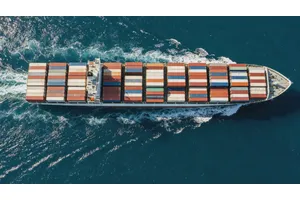
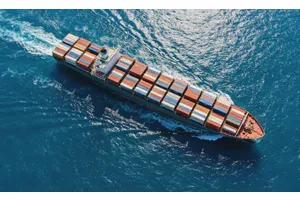
Here's a fact most shipping guides won't tell you: sea freight to Austria isn't 30 days — it's 47 to 59 days door-to-door.
Austria is one of only a handful of landlocked countries in Europe. Every container that arrives at Hamburg, Rotterdam, or Koper still needs another 7 to 14 days of truck or rail transit before it reaches Vienna, Graz, or Linz. That's nearly two months of tied-up capital, exposed inventory, and hoping your Christmas stock doesn't arrive in January.
Air shipping from China to Austria lands directly at Vienna International Airport (VIE). No inland transshipment. No Adriatic port congestion. Three to eight days from a Chinese airport to an Austrian address.
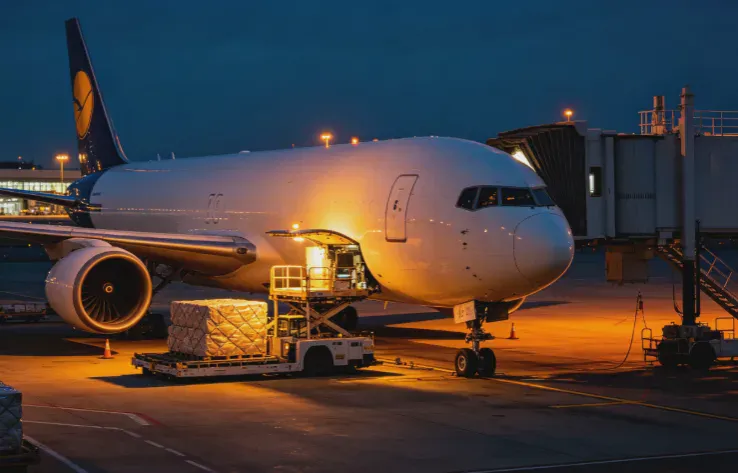
This guide is for importers, e-commerce sellers, and SMEs who need to move goods from China to Austria by air — and want real numbers, not marketing claims. You'll get current 2026 rates, door-to-door timelines that account for customs reality, a clear breakdown of Austrian import duties, and seven cost-saving strategies that working freight forwarders actually use. For a complete overview of all shipping modes — including sea freight, rail, and door-to-door services to Austria — visit our dedicated shipping from China to Austria page.
How Long Does Air Shipping from China to Austria Take? Real Transit Times
Transit time depends on which service tier you choose — and the difference between "airport-to-airport" and "door-to-door" is where most first-time importers get tripped up.
Express air shipping (DHL, FedEx, UPS) delivers in 2 to 5 days door-to-door. It's fast and simple — but only viable for shipments under 100 kg. Above that weight, courier rates become economically irrational compared to standard air freight. For a deeper breakdown of when each service tier makes sense, see our comparison of Air Freight vs Express: Which Is Faster and More Cost-Effective from China to USA.
Standard air freight takes 3 to 8 days airport-to-airport, with the sweet spot at 100 to 1,000 kg. Add 1 day for China-side pickup and export clearance, 1 to 2 days for Austrian import clearance, and 1 day for last-mile delivery. A flight from Shanghai Pudong (PVG) to Vienna (VIE) might take 5 days in the air, but your total door-to-door timeline is realistically 8 to 10 days.
Consolidated or economy air freight takes 5 to 10 days airport-to-airport. Your cargo waits at the origin airport until enough shipments are consolidated onto a single pallet or Unit Load Device (ULD). You save 20 to 30% on the per-kg rate but lose 3 to 4 extra days. This works well for non-urgent bulk shipments of 300 kg or more.
Air + Truck via a European hub takes 6 to 9 days door-to-door. Instead of flying directly to Vienna, your cargo lands at a major EU cargo hub — Frankfurt (FRA), Amsterdam (AMS), or Liège (LGG) — then trucks the final leg to Austria. This routing is often 15 to 25% cheaper than a direct VIE flight, because hub airports have far higher cargo capacity and more competitive pricing.
Transit Times by Origin Airport
| Origin Airport | Destination | Typical Transit |
|---|---|---|
| Hong Kong (HKG) | Vienna (VIE) | 3–5 days |
| Shanghai Pudong (PVG) | Vienna (VIE) | 4–6 days |
| Shenzhen (SZX) | Vienna (VIE) | 5–7 days |
| Guangzhou (CAN) | Vienna (VIE) | 5–7 days |
| Beijing (PEK) | Vienna (VIE) | 5–7 days |
Realistic door-to-door budget: Take the airport-to-airport transit above, then add 1 day for China-side pickup and export clearance, 1 to 2 days for Austrian import clearance, and 1 day for last-mile delivery. Always plan for the door-to-door number, not the flight time.
Air Freight from China to Austria Cost: 2026 Rates per Kg & How Pricing Works
2026 Market Rates (USD/kg, All-In Estimates)
Air freight rates in 2026 are significantly lower than they were in 2024 and early 2025. Two forces drove this shift: Chinese airlines added roughly 2,900 new weekly China–Europe passenger flights in summer 2025, flooding the market with belly-hold cargo capacity, while the US–China tariff war simultaneously pushed exporters to redirect volumes toward Europe, intensifying competition among carriers on European routes.
If you locked in annual freight contracts at 2025 rate levels, renegotiate now. The market has shifted in your favor.
| Weight Tier | Rate Range (USD/kg) | Realistic Budget |
|---|---|---|
| 45–99 kg | $3.00–$6.00 | $5.00 |
| 100–299 kg | $2.30–$5.00 | $4.00 |
| 300–499 kg | $1.90–$4.50 | $3.50 |
| 500–999 kg | $1.50–$4.00 | $3.00 |
| 1,000+ kg | $1.50–$3.80 | $2.80 |
DDP (Delivered Duty Paid) air freight — the all-inclusive door-to-door option — runs $5.00 to $9.00 per kg. This covers supplier pickup in China, export customs clearance, international air freight, Austrian import customs clearance, all import duties and the 20% Import VAT (Einfuhrumsatzsteuer / EUSt), and last-mile delivery to any address in Austria. If you don't have an Austrian EORI number or a VAT registration, DDP is the simplest path — one price, one point of contact, no customs surprises.
Volumetric Weight: Why Your 50 kg Shipment Gets Charged as 80 kg
Air freight isn't priced on actual weight alone. It's priced on chargeable weight — whichever is higher between actual gross weight and volumetric (dimensional) weight.
The formula: Volumetric Weight (kg) = Length × Width × Height (cm) ÷ 6,000
Here's a real example. You ship three cartons, each 60 × 50 × 40 cm. The actual weight is 10 kg per carton — 30 kg total. But the volumetric weight is (60 × 50 × 40 × 3) ÷ 6,000 = 60 kg. You are paying for 60 kg of aircraft space, not 30 kg of goods. This is the single biggest pricing surprise for first-time air freight shippers.
The packaging trap is worse than most people realize. If your supplier ships in oversized boxes with 40% empty space, your volumetric weight inflates by 40%. You are literally paying to ship air. Right-sizing your packaging before the cargo leaves the factory is the easiest cost reduction on the table — see Section 8 for specific strategies.
Surcharges: What Base Rate Doesn't Include
A "$3.00/kg base rate" can easily land at $4.50/kg once surcharges are applied. Here's what to budget for:
| Surcharge | Typical Range | Notes |
|---|---|---|
| Fuel Surcharge (FSC) | 10–25% of base rate | Adjusted monthly based on jet fuel index |
| Security Surcharge (SCC) | $0.10–$0.25/kg | Mandatory for all air cargo |
| Terminal Handling | $50–$150 flat | Charged at both origin and destination |
| Customs Clearance Fee | $50–$150 flat | Per customs entry, origin + destination |
| AWB / Documentation Fee | $15–$50 flat | Air Waybill issuance |
Always demand an all-in quote. Any forwarder who gives you a base rate without surcharges isn't being transparent — they're setting up a bait-and-switch.
Air Freight from Shanghai, Shenzhen & Major Airports to Vienna, Austria: Routes & Airlines
Which Chinese Origin Airport to Use
Your choice of departure airport affects your rate, transit time, and airline options. Here's how to choose:
Shanghai Pudong International Airport (PVG) offers the most frequent departures to Vienna and the widest selection of carriers. It's the best all-around option for general cargo from eastern and central China. Transit to VIE: 4 to 6 days.
Hong Kong International Airport (HKG) is the world's busiest air cargo hub and offers the fastest transit to Vienna at 3 to 5 days. It's the best choice for high-value electronics and time-critical shipments from southern China. Expect slightly higher rates than PVG.
Shenzhen Bao'an International Airport (SZX) is the natural choice for electronics and tech exports from the Pearl River Delta. Transit to VIE: 5 to 7 days. If your suppliers are in Shenzhen, Dongguan, or Huizhou, trucking to SZX is typically faster and cheaper than routing through HKG.
Guangzhou Baiyun International Airport (CAN) benefits from China Southern Airlines' extensive network and competitive pricing. Transit to VIE: 5 to 7 days. A strong option for southern China cargo when cost matters more than one or two days of transit.
Beijing Capital International Airport (PEK) is the primary gateway for northern China — Beijing, Tianjin, Hebei, and beyond. Transit to VIE: 5 to 7 days. Rates run slightly above PVG due to lower cargo capacity on the PEK–Europe lane.
Destination: VIE Is Your Only Real Option
Vienna International Airport (VIE) handles over 95% of Austria's air cargo. Secondary Austrian airports — Linz (LNZ), Salzburg (SZG), Graz (GRZ) — have minimal cargo service. Any shipment arriving at VIE can be trucked to any address across all nine Austrian states within one day of customs clearance. Don't overcomplicate your routing by trying to fly closer to a secondary city. From Vienna, many importers distribute goods across Central and Eastern Europe. If your business serves multiple markets in the region, we also provide dedicated shipping from China to Germany, shipping from China to Czech Republic, and shipping from China to Hungary — with the same freight forwarding expertise we bring to every Austria shipment.
Airline Selection: It's Not Just About the Rate
| Airline | Primary Hub | Best For |
|---|---|---|
| Lufthansa | Frankfurt (FRA) | Maximum reliability; seamless EU customs via Frankfurt |
| China Southern | Guangzhou (CAN) | Best value; good coverage of secondary Austrian cities |
| Turkish Airlines | Istanbul (IST) | Strong Central/Eastern Europe network; competitive mid-tier |
| Air China | Beijing (PEK) | Northern China origin cargo; direct options available |
| Emirates | Dubai (DXB) | Premium service for high-value or fragile cargo |
| Ethiopian Airlines | Addis Ababa (ADD) | Budget option for non-urgent bulk; longer, less predictable transit |
Practical picks: Choose Lufthansa when reliability is non-negotiable — a delayed shipment costs more than the rate premium. Choose China Southern for regular cost-sensitive shipments. Avoid Ethiopian Airlines for anything time-sensitive; the one-stop routing via Addis Ababa introduces variability you can't afford on a tight schedule. If you also ship to nearby European markets by air, check our dedicated guides on air shipping from China to Germany, air shipping from China to France, and air shipping from China to Italy.
Air Freight Shipping Process from China to Austria
Understanding the process helps you spot where things go wrong before they do. Here are the six steps from supplier pickup to final delivery — and where delays actually happen.
The 6 Steps
Step 1 — Booking & Pickup (1 to 2 days): Confirm your cargo specifications — exact weight, carton dimensions, product type, and HS Code classification. Your freight forwarder reserves space with the selected airline and dispatches a truck to collect the goods from your supplier. This is the moment to audit your supplier's documentation. See below.
Step 2 — China Export Clearance (1 day): Your forwarder files an export customs declaration with China Customs. The two documents that matter most at this stage are the Commercial Invoice (HS codes, declared value, incoterms) and the Packing List (carton-by-carton breakdown). Once the declaration is accepted, the Air Waybill (AWB) is issued — this is both your contract of carriage and your tracking number.
Step 3 — Airport Handling & Departure (1 day): Your cargo undergoes X-ray security screening at the departure airport. It's then built onto a pallet or into a Unit Load Device (ULD) and loaded onto the aircraft. The flight departs.
Step 4 — In-Transit (1 to 5 days): Direct flight or one-stop via a hub. You can track your cargo in real time using the AWB number on your forwarder's online tracking platform or the airline's cargo portal.
Step 5 — Austrian Import Clearance (1 to 2 days): The aircraft lands at VIE and your cargo moves to a bonded warehouse. Your customs broker files the import declaration with Zollamt Österreich (Austrian Customs). Duties and VAT are assessed, paid, and the cargo is released. This step is where most shipments get delayed — see the next section for the full breakdown.
Step 6 — Last-Mile Delivery (1 day): Cleared cargo is trucked from VIE to the final delivery address. A Proof of Delivery (POD) confirms the shipment is complete.
Where Delays Actually Happen
The airline is almost never the problem. Commercial carriers on China–Europe routes are highly reliable.
The real bottlenecks:
- Supplier documentation errors in China: Your supplier writes the wrong HS code or a vague cargo description on the Commercial Invoice. China Customs rejects the export declaration. Your cargo hasn't even left the ground, and you've already lost 2 to 3 days.
- Austrian import clearance issues: Missing EORI number, incorrect invoice valuation, no CE marking on regulated products. Your cargo sits in the VIE bonded warehouse, accruing storage fees at €0.05 to €0.15 per kg per day — after the first 48 free hours.
The fix: Have your freight forwarder audit all supplier documents before the cargo moves. A 30-minute document review prevents a 3-day customs hold.
Austrian Customs Clearance, Import Duties & Required Documents for Air Freight
Most air freight guides for China-to-Europe shipping completely skip country-specific customs details. If your shipment is landing in Austria, you need to understand Austrian customs — not generic EU customs. This section covers what you'll actually encounter at Vienna International Airport.
Austria Customs at a Glance
Austrian customs is administered by Zollamt Österreich, operating under the Federal Ministry of Finance (Bundesministerium für Finanzen / BMF). Austria is a full member of the EU Customs Union — meaning goods cleared by Austrian customs can circulate freely across all 27 EU member states without additional customs formalities. For a broader view of your logistics options across the continent, explore our shipping from China to Europe services covering all EU destinations.
The framework governing all procedures is the Union Customs Code (UCC). In practical terms, this means your freight forwarder or customs broker files an electronic import declaration, duties and VAT are calculated automatically based on the declared HS code and CIF value, and release happens once payment is confirmed.
The single most important thing to know: you cannot clear commercial goods through Austrian customs without an EORI number (Economic Operators Registration and Identification). The format for Austrian-registered businesses is ATEOS followed by 11 digits. You apply through the BMF's online portal, FinanzOnline.
If you are a non-EU business without an EORI, this is not a dealbreaker. Your freight forwarder can clear the goods as an indirect customs representative using their own EORI. This is standard practice for DDP shipments and first-time importers.
What You'll Actually Pay at Austrian Customs
| Charge | Rate | Applied On |
|---|---|---|
| Import Duty | 0%–12% (depends on HS code) | CIF value (Cost + Insurance + Freight) |
| Import VAT (EUSt) | 20% | CIF value + Import Duty |
| Excise Duty | Varies by product | Alcohol, tobacco, and energy products only |
HS code duty examples for common imports: - Electronics, computers, and semiconductors: 0%–3% - Machinery and industrial equipment: 0%–2.7% - Furniture and home goods: 0%–5.6% - Textiles, apparel, and footwear: 6%–12%
VAT recovery note: If your business is VAT-registered in Austria or another EU member state, you can reclaim the 20% EUSt through your periodic VAT return. Non-registered importers pay the 20% and cannot recover it. This single factor often determines whether DDP or DDU makes more sense for your business.
DDP vs. DDU for Air Freight to Austria
DDP (Delivered Duty Paid) means your freight forwarder handles everything — pickup in China, export clearance, air freight, Austrian import clearance, payment of all duties and the 20% VAT, and last-mile delivery. You receive one all-in quote and one invoice. Cost: $5.00 to $9.00 per kg.
Choose DDP if: you don't have an EORI number, you're not VAT-registered in Austria, this is your first shipment to Austria, or you're shipping to Amazon FBA in Europe. DDP eliminates complexity and the risk of customs holds due to paperwork errors.
DDU (Delivered Duty Unpaid) means your forwarder handles the logistics — pickup, export clearance, air freight, import clearance filing — but you pay the import duties and VAT directly to Austrian customs, typically through your own customs broker or deferment account.
Choose DDU if: you're VAT-registered in Austria or the EU, you have an established relationship with an Austrian customs broker, and your primary goal is reclaiming EUSt through your tax return while minimizing upfront costs. For a comparison with a neighboring EU market, see our guide on DDP shipping from China to Germany.
Document Checklist — What Austrian Customs Actually Checks
| Document | Why It Matters |
|---|---|
| Commercial Invoice | HS codes, declared values, incoterms, and buyer/seller details. Errors on this document are the number one cause of customs holds at VIE. |
| Packing List | Carton-by-carton breakdown of weights and dimensions. Must match the Commercial Invoice exactly. Discrepancies trigger physical inspections. |
| Air Waybill (AWB) | Your contract of carriage and tracking document. Issued by the airline (Master AWB) or freight forwarder (House AWB). |
| Certificate of Origin | Required if you want to claim preferential (reduced) duty rates under an EU free trade agreement. Not always mandatory, but always worth having. |
| CE Declaration of Conformity | Mandatory for electronics, machinery, toys, medical devices, and personal protective equipment (PPE). Without it, goods are denied entry — no exceptions. |
| Power of Attorney (POA) | Authorizes your customs broker to file the import declaration and make payments on your behalf. |
The Three Most Expensive Customs Mistakes
1. HS code misclassification. Assigning the wrong HS code means the wrong duty rate is applied. Austrian customs cross-references declared HS codes against the EU TARIC database. If they find a mismatch, you're liable for the difference in duties plus penalties. For a $50,000 shipment misclassified from 12% to 3%, that's $4,500 in unpaid duties — before the fine.
2. Undervaluation. Austrian customs benchmarks declared CIF values against market data for similar goods. If your declared value is significantly below market, they flag the shipment and request proof of transaction value. If you can't substantiate the declared value, they reassess it upward — and you pay the difference in duties and VAT, plus a penalty.
3. Missing CE marking. If your product falls under an EU directive that requires CE marking — and you don't have a valid Declaration of Conformity — Austrian customs will not release the goods. Your options are to re-export them (at your cost) or have them destroyed (at your cost). There is no workaround for commercial shipments.
Air Freight vs Sea Freight from China to Austria: Complete Cost & Time Comparison
Side-by-Side Comparison
| Method | Door-to-Door Time | Cost | Austria-Specific Note |
|---|---|---|---|
| Air Freight | 5–10 days | $3.00–$5.00/kg | Direct to VIE; no inland transit |
| Express Courier | 2–5 days | $7–$20/kg | Sub-100 kg only; rates are prohibitive above that |
| Sea-Air via Dubai | 14–18 days | ~$2.50–$4.00/kg | 50% cheaper than pure air; underused option |
| Rail Freight | 18–25 days | $80–$160/CBM | Direct rail link to Vienna South Freight Center |
| Sea LCL + Inland Trucking | 40–55 days | $80–$120/CBM | 7–14 days of inland trucking from the port |
| Sea FCL + Inland Trucking | 40–55 days | $1,500–$3,500/container | Same inland transit problem as LCL |
When Air Freight Actually Justifies the Premium
For a detailed head-to-head of non-air alternatives, read our analysis on Sea vs Rail Freight: Which Is Faster and More Reliable from China.
Most importers compare freight rates in isolation — $3.50/kg for air vs. $1.00/kg for sea. That comparison misses everything that matters.
The inventory cost test: If your goods are worth $50 per kg and sea freight ties up your capital for 40 extra days in transit, the inventory carrying cost alone (financing, warehousing, insurance, obsolescence risk) often exceeds the air freight premium. Do the total landed cost math — not just the freight rate comparison.
The stockout cost test: One week of lost sales during peak season costs more than a full year of air freight premiums for most consumer goods. If your product is seasonal, fashion-driven, or promotional, missing the sales window is the most expensive mistake you can make.
The Austria geography factor: Austria has no seaport. Every sea freight container must be transshipped from Hamburg, Rotterdam, Koper, or Trieste and trucked or railed inland for another 7 to 14 days. Rotterdam is one of the busiest entry points for sea freight into Europe. For detailed routing through Dutch ports, see our sea shipping from China to Netherlands guide. The "30 to 40 days" sea freight estimate you read online is 47 to 59 days door-to-door in Austria. Air freight does the same journey in 5 to 10 days. That is not three times faster — it is five to six times faster.
Cheapest Air Freight from China to Austria: 7 Proven Cost-Saving Strategies
1. Hit the weight breaks — not just above them. Air freight per-kg rates drop at 45 kg, 100 kg, 300 kg, 500 kg, and 1,000 kg thresholds. Shipping 95 kg means you're paying the 45 to 99 kg bracket — find 5 kg more, consolidate it into the shipment, and you unlock the 100 kg rate. Three separate shipments of 220 kg each cost more than one consolidated 660 kg shipment. The per-kg rate difference between shipping at 220 kg and 660 kg is roughly 30%.
2. Book 3 to 6 weeks ahead and avoid the obvious spikes. Spot market bookings carry a 20 to 30% premium over advance bookings. The demand spikes are predictable: pre-Chinese New Year (January to February), Q4 holiday peak (October to December), and Canton Fair weeks (April and October). Plan your shipments around these windows.
3. Use Air + Truck routing instead of direct VIE flights. Frankfurt, Amsterdam, and Liège have far higher cargo capacity than Vienna and therefore more competitive pricing. Fly your cargo to one of these hubs, then truck it to Austria in 1 to 2 days at roughly $0.15 to $0.25 per kg. Net savings: 15 to 25% compared to a direct VIE flight.
4. Shrink your packaging. Every cubic centimeter costs money at the formula of ÷ 6,000. A 60 × 50 × 40 cm box has a volumetric weight of 20 kg. Shrink it to 55 × 45 × 38 cm and the volumetric weight drops to 15.7 kg — same goods, 22% less freight cost. Vacuum-pack textiles. Flat-pack furniture components. Use right-sized boxes, not whatever the supplier has lying around.
5. Use FOB incoterms, not CIF. Under CIF (Cost, Insurance, Freight) terms, your supplier selects the carrier — and they optimize for their own convenience, not your cost or reliability. Under FOB (Free On Board) terms, you select the carrier and freight forwarder. You control the routing, the airline, and the rate. For a deeper comparison of how your incoterm choice affects your total shipping costs and risk, see our guide on DDP vs FOB: Which Option Saves Time and Reduces Hassle.
6. Use Sea-Air via Dubai for mid-urgency cargo. Ship by sea from China to Jebel Ali (12 to 15 days), then by air from Dubai to Vienna (1 day flight plus handling). Total door-to-door: roughly 16 days at about 50% less than pure air freight. It's an underused option that bridges the gap between air speed and sea cost.
7. Commit to one freight forwarder. Consistent shipping volume earns you negotiated annual rates, priority space allocation during peak season, and faster customs clearance through an established broker relationship. Jumping between forwarders to chase the lowest spot quote every time costs more in reduced service quality, customs delays, and rate instability than you save.
FAQs
How long does air shipping from China to Austria actually take?
Standard air freight takes 3 to 8 days airport-to-airport. Door-to-door — including pickup in China, export and import customs clearance, and last-mile delivery in Austria — takes 5 to 10 days. Express courier services (DHL, FedEx, UPS) deliver in 2 to 5 days door-to-door.
Can I ship electronics with lithium batteries by air to Austria?
Yes, but only under IATA Dangerous Goods Regulations (DGR) compliance. Lithium-ion batteries shipped alone are classified as UN 3480; batteries packed with equipment are UN 3481. You need UN-specification packaging, a Dangerous Goods declaration, and an IATA DG-certified freight forwarder. Not all airlines accept all battery types — confirm carrier acceptance before booking. Budget an extra 1 to 2 days for DG documentation processing.
What is the cheapest air freight option from China to Austria?
Consolidated economy air freight at 500 kg or more gives the lowest per-kg rate. Air + Truck routing via Frankfurt or Amsterdam saves an additional 15 to 25% compared to direct VIE flights. For mid-urgency shipments, Sea-Air via Dubai cuts costs by roughly 50% versus pure air freight.
Which Chinese airport is best for air freight to Austria?
Hong Kong (HKG) offers the fastest transit at 3 to 5 days. Shanghai Pudong (PVG) offers the most frequent departures and widest carrier selection. Shenzhen (SZX) and Guangzhou (CAN) are strong alternatives for cargo originating in southern China.