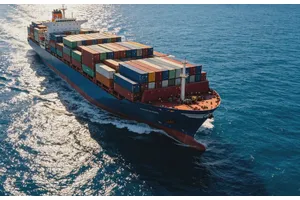
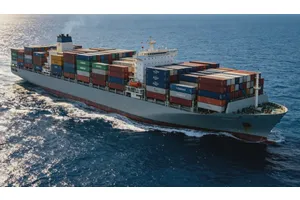
The question every importer asks before booking — "when will my cargo actually be at my warehouse?" — gets the most evasive answer in freight. The shipping time from China to Israel looks simple on a carrier's schedule: 24 days, Shanghai to Ashdod. Then the vessel sails a day late, the container waits three days for a berth, customs holds it over a Friday, and suddenly your "24 days" is 37.
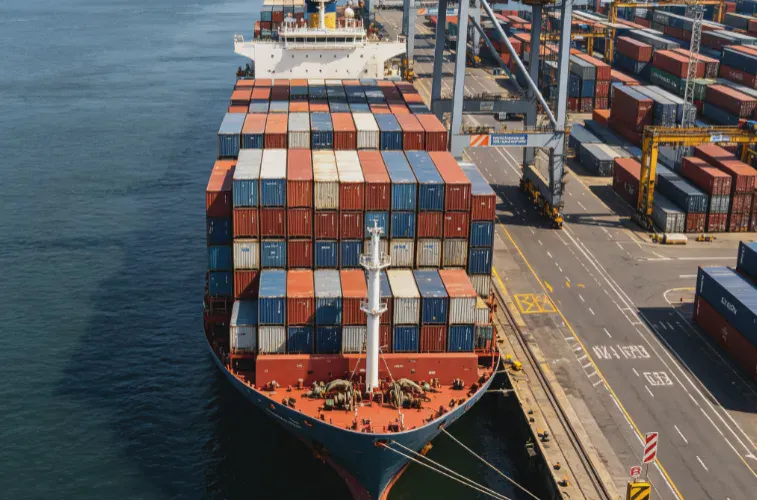
This guide gives you the honest version. We break down the real transit time for every mode, where the days actually go between your Chinese supplier and your Israeli warehouse, the three Israel-specific delays that wreck schedules — Shabbat, the Jewish holiday calendar and security inspections — and how to compress the total by 10–15 days. The numbers below match the rest of our China–Israel guides and the timelines we quote at DTFU Logistics on real bookings this year. For the rates that pair with these times, our shipping from China to Israel guide is the companion piece.
How Long Does Shipping from China to Israel Take in 2026?
Here is the full picture, from the four modes available on this lane:
| Shipping Mode | Typical Transit Time | Door-to-Door Total | Best For |
|---|---|---|---|
| Sea freight, direct vessel | 22 – 28 days port-to-port | ~30 – 40 days | Standard FCL/LCL, best balance |
| Sea freight, transshipment | 30 – 45 days port-to-port | ~38 – 55 days | Budget routings, off-peak |
| Air freight (consolidated) | 3 – 7 days | 5 – 12 days | Urgent, high-value cargo |
| Express courier (DHL/FedEx/UPS) | 3 – 7 days | 3 – 7 days | Parcels under ~100 kg, samples |
Three truths sit under this table. First, the direct-vessel number is only achievable if you book a direct service — and on the Israel lane that means choosing the right carrier and sailing week, because a large share of "cheap" quotes are transshipment routings in disguise. Second, every door-to-door estimate above assumes clean documentation and no security inspection; add 3–5 days when the container gets pulled for screening. Third, the calendar matters more than the vessel: a container that arrives on a Thursday before Sukkot or Passover can lose more days to closures than it spent crossing the Mediterranean. Those three truths are the rest of this guide.
Sea Freight Transit Times: Direct vs Transshipment Routes to Ashdod and Haifa
The single biggest lever on sea transit is the routing structure, and it is worth $0 to let a quote hide it.
Direct services run from major Chinese ports to Ashdod or Haifa with no cargo transfer. ZIM — whose home port is Haifa — operates Asia–Israel express loops that call at Chinese ports and transit the Suez Canal to Haifa, and Maersk, MSC and CMA CGM all run direct Mediterranean services that include Israel calls. From South China ports, direct transit runs 22–28 days; from Shanghai and the north, 24–30 days depending on the rotation. (For the rates on those direct loops, our sea shipping cost guide has the current figures by port pair.)
Transshipment routings move your container to a hub — Singapore, Colombo, Port Klang, sometimes Piraeus or a northern European port — where it transfers to a second vessel. This adds 8–17 days to the transit and introduces connection risk: miss the feeder and you wait a week for the next one. The savings are real (transshipment is often 15–30% cheaper than direct in peak season), but the price is paid in schedule reliability, which matters exactly when it matters most.
| Routing | Typical Port-to-Port | Reliability |
|---|---|---|
| Direct (Suez) — South China → Haifa/Ashdod | 22 – 28 days | High, fixed weekly loops |
| Direct (Suez) — Shanghai/Ningbo → Haifa | 24 – 30 days | High |
| Transshipment via Singapore/Colombo | 30 – 45 days | Medium — connection risk |
| Cape of Good Hope rerouting | +10 – 14 days over Suez | Used during Red Sea disruptions |
One more reality from the last two years: when Red Sea security deteriorates, some carriers reroute Israel-bound cargo around the Cape of Good Hope, adding 10–14 days to the sailing. It is not every sailing and not every month — our Red Sea update tracks the situation — but it is exactly the kind of surprise that a forwarder watching the routing market daily catches before your cargo sails, not after.
A practical rule for reading any transit-time quote: ask for the routing structure in writing — the mother vessel, the hub (if any), and the connecting service. If the answer includes "via" any port you didn't choose, you are on a transshipment routing and the schedule should say 30–45 days, not the direct number. Quotes that blur this distinction are how "22–28 days" becomes a 40-day reality, and it is the most common complaint we hear from importers switching forwarders on this lane.
The Door-to-Door Timeline: Where 43 Days Actually Go
Theory is fine; let's look at a real shipment. This is one of our actual 2026 files: a 40HQ of engine parts consolidated in Guangdong, shipped from Nansha to Haifa, delivered to a Tel Aviv warehouse. The door-to-door total was 43 days, and every day is accounted for:
| Stage | Duration | Cumulative |
|---|---|---|
| Cargo collection from 5 suppliers (Guangdong) | 9 days | Day 1–9 |
| Container loading and consolidation | 2 days | Day 10–11 |
| Export customs clearance (Nansha) | 3 days | Day 12–14 |
| Ocean transit (Nansha → Haifa, via Singapore/Colombo) | 21 days | Day 15–35 |
| Port discharge + customs hold (X-ray + documentary review) | 5 days | Day 36–40 |
| Customs release + de-vanning | 2 days | Day 41–42 |
| Trucking to Tel Aviv warehouse | 1 day | Day 43 |
Read that table twice, because it contains the whole lesson of this article: only 21 of the 43 days were the ocean voyage. Nine days went to collecting cargo from multiple suppliers, five days to discharge and clearance (including the inspection hold), and the rest to the fixed costs of the door-to-door chain. For a single-supplier FCL, the first nine days compress to one or two. For an LCL consolidation, they grow. The schedule you can actually influence is not the sailing — it's everything around it. The service structure behind that chain is described step by step in our door-to-door Israel guide.
How Long Does Customs Clearance Take in Israel?
Once the vessel ties up, the clock splits into three parts: discharge, clearance, and delivery.
Discharge and availability takes 1–2 days in normal conditions — the terminal unloads the vessel and makes the container available for pickup or examination. Customs clearance runs 1–3 days when the declaration is clean and pre-submitted — the same customs clearance workflow we run on every Israel file — and Israel's Sha'ar Olami (Global Gate) electronic system allows pre-clearance before the vessel even arrives, which is the single fastest legal way to shorten this stage. SII issues are the exception that eats weeks: goods in regulated categories (electronics, toys, appliances, building materials) can't clear without Standards Institution of Israel approval, and a container that arrives without it sits at the port, demurrage ticking, until certification is resolved — a problem that should have been solved in China, before sailing.
| Stage | Typical Time | What Extends It |
|---|---|---|
| Vessel discharge, container available | 1 – 2 days | Port congestion, strikes (Ashdod more prone) |
| Customs clearance (clean docs) | 1 – 3 days | Valuation queries, missing certificates |
| SII-regulated goods | Weeks if not pre-approved | Missing certification — solve before sailing |
| Pickup / de-vanning / delivery | 1 – 2 days | Trucking capacity around holidays |
Ashdod vs Haifa matters here too. Ashdod handles most commercial cargo and sits close to the Tel Aviv/Gush Dan center, but it is more prone to labor actions and congestion — in our experience, its discharge and clearance times run slower in peak weeks. Haifa operates more smoothly and is ZIM's home port, though it adds an hour-plus of trucking to central Israel. The port choice is a schedule decision, not just a geography one.
Shabbat and Jewish Holidays: The Calendar That Stops Israeli Ports
Here is the Israel-specific factor that no generic transit-time article mentions, and it costs importers real money every year.
Every week, from Friday afternoon until Saturday evening, Israeli ports, customs and trucking stop for Shabbat. That is 1.5 days of the work week gone, permanently. On top of that, the holiday calendar shuts the system for multi-day stretches: Passover in April, Rosh Hashanah and Sukkot in September/October, plus other observances. During these windows the port may work reduced hours or not at all — while the demurrage clock keeps running.
The math hurts in a specific pattern: a container that arrives at Ashdod on a Thursday before a holiday weekend can lose three to four of its five free days to closures, then start paying $50–$150 per day storage for a container nobody could have moved anyway. Experienced Israel shippers do two things: they schedule arrivals for a Sunday or Monday, and they treat the holiday calendar as a planning input from the moment they book. If your forwarder doesn't raise the holiday question when you give them an expected arrival date, find one who does.
The calendar that matters for 2026 planning looks like this — treat these as windows, not dates, and confirm the exact dates when you book:
| Period | What Shuts Down | Planning Rule |
|---|---|---|
| Every week, Fri afternoon – Sat evening | Ports, customs, trucking (Shabbat) | Arrive Sunday/Monday; never Thursday |
| April | Passover — multi-day closure, reduced operations | Avoid arrivals in this window |
| Late September / early October | Rosh Hashanah + Sukkot — the longest closure stretch | Book sailings to land after the window |
| Other observances | Shavuot (spring), Yom Kippur (within the autumn cluster) | Check the full calendar at booking |
The cost of ignoring this calendar is not theoretical — it's the most common demurrage claim we see on the Israel lane, and it is entirely avoidable with a two-minute calendar check at booking time.
Israel Security Inspections: The 3–5 Day Wildcard No Schedule Accounts For
Israel runs some of the most rigorous maritime security screening in the world, and it applies to everyone. When your container is selected — X-ray scanning, physical examination, or both — add 3 to 5 days to the timeline, plus handling fees for unpacking and repacking.
It is a lottery with a heavy tail, not a punishment: in the 43-day shipment above, the container was pulled for X-ray (3 days) and then hit a documentary review over one component's country of origin (3 more working days). Both cleared; both moved the delivery date. The practical response is not to fight the system — it's to make sure your documentation is clean enough to survive scrutiny (consistent invoice values, correct HS codes, origin documentation), and to build the 3–5 day buffer into any promised arrival date. Any quote or ETA that doesn't mention inspection risk is a quote that hasn't been honest with you.
Air Freight and Express Timelines: When 3–7 Days Beats 30
When the calendar or the cargo won't wait, air is the answer. Consolidated air freight from major Chinese airports to Ben Gurion (TLV) runs 3–7 days including transit — cargo flies via European or Gulf hubs on the daily widebody rotations, and door-to-door lands at 5–12 days. Express courier (DHL, FedEx, UPS) covers parcels under about 100 kg in 3–7 days door-to-door with customs handled by the courier's own broker — the simplest option in freight, at the highest per-kilo price.
The economics have a clear line: at roughly 5–10× the sea rate per kilo, air only makes sense for high-value, urgent or lightweight cargo — spare parts, electronics, samples, seasonal fashion that missed the boat. But "missed the boat" is exactly the point: when a launch date or a production line is waiting, the extra cost of air is cheaper than the cost of the delay. Our air freight guide covers the mode in full.
A quick decision example shows how the modes coexist in practice. An electronics importer with a $40,000 shipment of 300 kg of networking gear, and a customer contract that starts in three weeks: sea would take 30+ days and miss the deadline entirely, so the correct answer is air at roughly $5.50–$7.00/kg — about $2,000 in freight — to land inside 7 days. The same importer's next order, 18 CBM of enclosures with no deadline, goes by direct sea at a fraction of the cost. The mistake is treating the modes as rivals; they are two gears in the same machine, and the shift point is the deadline, not the invoice.
The Real Cost of Slow Shipping: What 10 Extra Days Mean for Your Inventory
Transit time is not a logistics detail — it is a working-capital number, and most importers never calculate it. Here is the math.
Suppose you carry $50,000 of China-sourced inventory with an annual inventory-carrying cost of 10% (financing, warehousing, insurance, obsolescence). Ten extra days at sea:
- Carrying cost: $50,000 × 10% × (10/365) = $137 — trivial, right?
Now add the real costs. If that inventory is seasonal stock (Passover household goods, summer fashion, back-to-school electronics), a 10-day delay can push delivery past the selling window — the entire margin on a stockout, not just 10 days of interest. Add expediting: when a delay is discovered, importers pay for split shipments, airfreight top-ups or partial deconsolidation, easily $800–$2,500 per event. And add the softer cost: for Amazon FBA sellers and retailers, stockouts cost sales and ranking position.
The honest framing: for a $50,000 container, paying $300–$600 more for a direct sailing instead of a transshipment routing is not a cost — it's buying 8–17 days of schedule reliability for a fraction of the carrying and stockout exposure. That is the arithmetic behind every "why should I pay for direct?" conversation on this lane. The direct-vs-transshipment rate spread behind that math is quantified in our shipping cost from China to Israel guide.
The seasonal-stock case makes it concrete. Consider a Tel Aviv retailer importing Passover household goods that must hit shelves in early April. A transshipment routing booked carelessly can land the container in the second week of April — after the shopping peak — turning a $60,000 inventory investment into clearance merchandise. The same goods on a direct service, sailed in February with a planned late-March arrival, sell at full margin. For seasonal importers, transit time is not a cost line at all: it is the business model. That is why the question "which sailing week?" belongs before "what's the rate?" — the rate question has a range, and the sailing-week question has a right answer.
How to Compress Your China–Israel Shipping Time by 10–15 Days
None of this is inevitable. Across our Israel shipments, the difference between the fastest and slowest door-to-door results is consistently 10–15 days, and it comes from eight controllable choices:
- Book a direct service, not a transshipment quote — the single biggest saving (8–17 days).
- Pre-clear via Sha'ar Olami — submit the declaration while the vessel is at sea; saves 1–3 days at the port.
- Choose Haifa during Ashdod peak weeks — smoother discharge when Ashdod congests.
- Schedule arrival for Sunday/Monday — never land on a Thursday before Shabbat or a holiday.
- Check the Jewish holiday calendar before booking the sailing week — Passover and Sukkot are predictable; plan around them.
- Start SII certification before production, not after — avoids the multi-week port hold entirely.
- Book 3–4 weeks ahead in Q4 — peak-season rolls are the quiet killer of schedules; fixed space doesn't roll.
- Keep documentation audit-clean — invoice values, HS codes and origin data that survive inspection scrutiny avoid the 3–5 day review holds.
Do all eight and a 43-day door-to-door shipment becomes a 28–32-day one. Do none, and the calendar, the port and the security lottery decide your delivery date for you. Incoterms shape who controls the schedule, too — under DDP the timeline sits with the forwarder, which is why our DDP vs FOB guide recommends it for buyers who need certainty.
The eighth point deserves emphasis, because it's the one most importers discover too late: schedule compression is decided at booking, not at the port. Once the container is on a transshipment routing with a mid-October arrival, no amount of expediting at Haifa recovers the two weeks the routing gave away. That is why the quotes we issue at DTFU always lead with the sailing-week and routing options side by side — direct vs transshipment, arrival window, holiday check — so the schedule decision is made when it can still change the outcome. A forwarder who only asks "FCL or LCL?" is not planning your timeline; they're just taking your booking.
FAQs
How long does sea shipping from China to Israel take?
22–28 days port-to-port on a direct service; 30–45 days with transshipment. Door-to-door totals run 30–40 days direct and up to 55 days transshipped, before inspections.
What is the fastest shipping method from China to Israel?
Express courier (DHL/FedEx/UPS) at 3–7 days door-to-door for parcels, and consolidated air freight at 3–7 days to Ben Gurion. Both cost 5–10× the sea rate.
How long does customs clearance take in Israel?
1–3 days with clean, pre-submitted documentation via the Sha'ar Olami system. Missing SII certification or valuation queries can stretch this to weeks.
How much delay does an Israeli security inspection cause?
Typically 3–5 days plus handling fees when a container is selected for X-ray or physical examination. It's routine screening, not a penalty — build the buffer in.
How long does air freight from China to Israel take?
3–7 days transit, 5–12 days door-to-door for consolidated cargo via TLV; express couriers are 3–7 days door-to-door for small parcels.
What is the cheapest shipping time option to Israel?
Transshipment sea freight in the off-season is the cheapest per CBM — at the price of 30–45 day transits and connection risk. Direct sea in Q1 is the best value balance.
Get a schedule you can actually plan around. DTFU Logistics quotes every China–Israel shipment with a named sailing week, a direct-vs-transshipment routing decision, and a door-to-door window that accounts for the Shabbat calendar, holiday closures and the security-inspection buffer — the same way we schedule the real shipments in this guide. Contact us with your cargo details and we'll send the timeline within one business day.