Your supplier confirms the goods are ready, your forwarder quotes "about 30 days," and you build your launch plan around that number. Ten weeks later the container is still clearing at Buenaventura, and your best-selling SKU is out of stock. If you are planning around the shipping time from China to Colombia, that gap between the quoted figure and the real delivery date is the single most expensive variable in your supply chain — and it almost always comes from one misunderstanding.
Nearly every guide on this route quotes port-to-port transit days as if they were door-to-door days. They are not the same thing, and the difference is routinely five to ten days. In this guide we break the China–Colombia lane down the way a freight forwarder actually sees it: a method-by-method timing table, an eight-port origin matrix, a stage-by-stage door-to-door timeline, the customs clock at DIAN, a 12-month delay-risk calendar, and seven levers you can pull to shorten your shipment. For a full overview of the services behind these timings, see our shipping from China to Colombia lane page. Every figure below reflects how this lane operates in 2026.
How Long Does Shipping from China to Colombia Take? A 2026 Transit-Time Overview
The honest answer is: it depends on the mode, and it depends on which clock you are reading. A forwarder quoting "30 days" is quoting port-to-port transit time — the time your cargo spends at sea and at the terminal. Your goods do not reach your warehouse the moment they are discharged; there is still customs clearance and inland trucking. The table below is the one we wish every importer started with.
| Shipping Method | Port-to-Port Transit | Customs (DIAN) | Inland Delivery | Total Door-to-Door | Best For |
|---|---|---|---|---|---|
| Sea Freight – FCL to Buenaventura (direct) | 25–35 days | 2–5 days | 2–6 days | ~32–46 days | Bulk cargo, 15+ CBM, cost-first buyers |
| Sea Freight – FCL to Cartagena / Barranquilla | 30–45 days | 2–5 days | 2–6 days | ~38–56 days | Caribbean-coast and Atlantic distribution |
| Sea Freight – LCL | 35–55 days (+3–7 days consolidation) | 2–5 days | 2–6 days | ~40–60 days | Shipments under ~15 CBM |
| Air Freight (standard) | 5–10 days | 1–3 days | 1–3 days | ~7–14 days | High-value, time-sensitive goods |
| Air Express (DHL / FedEx / UPS / EMS) | 3–7 days | included | included | 3–7 days | Urgent parcels under ~100 kg |
| DDP (door-to-door, duties paid) | Sea or air leg + full handling | included | included | Sea ~35–50 / Air ~8–15 days | Buyers who want a hands-off solution |
If you have read other guides and seen sea freight quoted as 25–35 days, 30–40 days and 30–45 days on the same afternoon, you are not losing your mind. Those figures are all defensible — they are measuring different things. A quote for Shanghai to Buenaventura direct is genuinely faster than one that assumes transshipment through Panama, and a quote from Qingdao is genuinely slower than one from Shenzhen. Sections two and seven reconcile those numbers. If you import across several Latin American markets, the same method is applied to another coast in our shipping time from China to Chile guide.
Our industry insight: The most common dispute we resolve is not a slow vessel — it is a customer who budgeted the port-to-port number and forgot the destination clock. When we quote transit time, we always quote the port-to-port and door-to-door figures side by side, because a number you can plan around is worth more than a number that flatters the proposal.
How Long Does Sea Freight Take from China to Colombia? FCL vs LCL, Pacific vs Caribbean
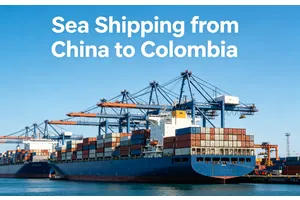
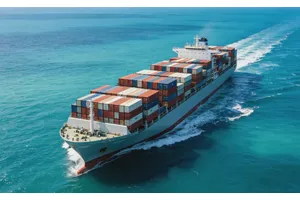
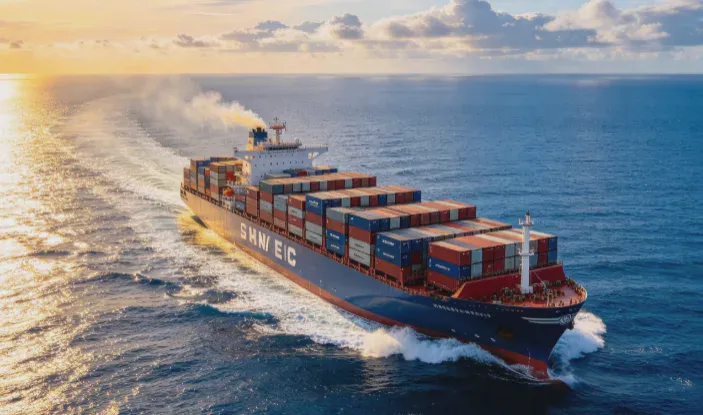
Ocean freight carries the overwhelming majority of cargo on this lane, and China is Colombia's largest import source, which is why sea shipping from China to Colombia is the default choice for most importers. The first thing to understand is that Colombia has two coasts, and they do not behave the same way. Buenaventura, on the Pacific, is the main gateway for cargo arriving from Asia and the natural entry point for Bogotá, Cali and Medellín. Cartagena, on the Caribbean, is the primary Atlantic gateway and a key hub for trade with the United States, Europe and the wider Caribbean. Choosing the right coast is the single biggest sea-freight timing decision you will make.
Pacific vs Caribbean: Two Different Clocks
- Pacific (Buenaventura): typically 25–35 days port-to-port for FCL, with the shortest schedules when a direct sailing is available.
- Caribbean (Cartagena / Barranquilla): typically 30–45 days, because Caribbean-coast routings frequently transship through hubs such as Cartagena, Kingston, Freeport or via the Panama Canal, and each connection adds dwell time.
The practical rule: cargo bound for the interior — Bogotá, Medellín, Cali and the coffee axis — usually moves through the Pacific; cargo bound for Barranquilla, Santa Marta or Caribbean-region distribution usually moves through the Atlantic. The same coast-first logic shapes every lane in the region, which is why importers scaling beyond one market often start from our shipping from China to the Americas hub.
LCL Transit Time from China to Colombia: Why Consolidation Adds a Week
LCL (Less than Container Load) cargo is cheaper per shipment but structurally slower. Your cargo must first wait at origin for enough compatible freight to fill a container — typically 3–7 days — and once it arrives it must be deconsolidated before release, adding another 3–5 days at destination. In practice, LCL runs seven to twelve days slower than FCL on the same lane, which is why we quote it as 35–55 days port-to-port rather than a single figure.
The break-even point is usually around 15 CBM. Above that volume, FCL is faster, cheaper per cubic meter and less exposed to handling damage, because your cargo is not sharing a box with strangers' freight. To see how those volumes translate into dollars, our sea shipping cost from China to Colombia breakdown walks through FCL and LCL pricing.
Direct vs Transshipment: The Five-to-Ten-Day Swing
The next largest variable is whether the vessel sails direct or transships. A direct sailing typically saves five to ten days over a transshipment routing and carries far lower rollover risk — the chance that your container misses its connecting vessel and waits a full week for the next one. A good forwarder will tell you which specific service string your booking lands on, because the difference between the fastest and slowest string on the same port pair can be a full week. If your routing leans on a Panama or Caribbean hub, our sea shipping from China to Panama guide covers the connection side in more depth.
The June 2026 Direct Route and the Inland Reality
In June 2026, Colombia opened a new direct commercial maritime route linking Buenaventura to Shanghai, a development expected to trim transit times and cost on the Pacific lane. It is one reason Pacific FCL figures are trending toward the lower end of their range. Two operational details still decide whether you hit your window: accurate VGM (Verified Gross Mass) submission, because a rolled booking costs a week rather than a day, and realistic documentation ahead of the CY cut-off.
Our industry insight: A Bogotá home-goods importer shipping roughly 18 CBM from Ningbo was consistently booking LCL to save on freight. When we modeled the full picture — consolidation fees, destination deconsolidation, and an extra week of inventory carrying cost — switching to a 20ft FCL cut their landed cost by around 12% and removed a week of uncertainty. The cheaper option was not the cheaper option.
Shipping Time by Origin Port: Shanghai to Buenaventura, Guangzhou to Cartagena and More
Your choice of Chinese origin port matters less than most importers expect — the destination coast and the direct-vs-transshipment decision usually dominate — but it still moves the clock. The matrix below reflects typical 2026 service patterns.
| Origin Port (China) | → Buenaventura (Pacific) | → Cartagena / Barranquilla (Caribbean) | Routing Note |
|---|---|---|---|
| Shanghai | 25–35 days | 32–38 days | Direct June-2026 Buenaventura service available |
| Ningbo | 26–36 days | 32–40 days | Strong Latin-America coverage |
| Shenzhen / Yantian | 28–38 days | 35–42 days | Electronics and light-industrial specialty |
| Guangzhou / Nansha | 28–38 days | 33–42 days | South-China sourcing hub |
| Qingdao | 30–40 days | 33–43 days | North-China gateway |
| Tianjin (Xingang) | 30–42 days | 35–45 days | North-China heavy cargo |
| Xiamen | 28–38 days | 33–42 days | Southeast-coast gateway |
| Hong Kong | 28–40 days | 33–43 days | Flexible transshipment options |
How to read this table: the fastest port pairs are the ones where a high-frequency Chinese gateway connects to a Pacific destination with a direct sailing. The slowest combinations are low-frequency origins feeding Caribbean ports that depend on a transshipment hub. If your supplier is inland, the nearest efficient export port beats a "faster" headline port that adds a day of trucking to get there.
Choosing Your Destination Port
- Buenaventura — Colombia's main Pacific container port and the default choice for cargo headed to Bogotá, Cali and Medellín. Handled roughly 1.94 million tonnes in a single month in 2026.
- Cartagena — the primary Caribbean gateway and transshipment hub, best for Atlantic-coast and Caribbean-region distribution.
- Barranquilla — an Atlantic/river port on the Magdalena with channel-draft considerations; suited to northern coastal distribution.
- Santa Marta — a Caribbean port serving bulk and general cargo.
The Inland Leg Nobody Quotes
Discharge is not delivery. Trucking inland from the Pacific port climbs into the Andes toward Bogotá, Medellín and Cali, and this leg adds two to six days on top of the ocean transit. In Colombia's rainy seasons, budget the upper end of that range.
How Long Does Air Freight Take from China to Colombia?
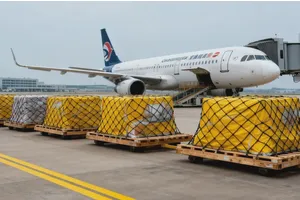
Air freight is the fastest mainstream option, but its timing profile rests on one fact most guides under-explain: there is essentially no direct China–Colombia freighter network. Every air shipment transships, typically through Miami (MIA), Panama City (PTY) or via Europe. So air transit time is not flight time — it is flight time plus connection time plus export and import clearance.
| China Departure Airport | Colombia Arrival Airport | Typical Transit | Note |
|---|---|---|---|
| Shanghai (PVG) | Bogotá El Dorado (BOG) | 5–7 days | Via Europe or the USA |
| Guangzhou (CAN) | Bogotá El Dorado (BOG) | 5–8 days | Frequent services via Miami |
| Shenzhen (SZX) | Bogotá El Dorado (BOG) | 6–9 days | Ideal for electronics |
| Hong Kong (HKG) | Bogotá El Dorado (BOG) | 6–10 days | Premium global hub |
A realistic five-to-ten-day breakdown looks like this: 1–2 days for cargo acceptance, security screening and palletization at origin; 2–4 days for the flight legs and connections; and 1–3 days for customs clearance and delivery. Bogotá's El Dorado International Airport (BOG) is the main air gateway — Latin America's largest cargo airport, handling about 809,000 tonnes in 2024 and undergoing a \$3.1 billion expansion (the EDMAX project) that aims to lift annual cargo capacity toward 1.2 million tonnes. Medellín (MDE) and Cali (CLO) serve regional importers. For routing options and airport-level detail, see our dedicated air shipping from China to Colombia guide.
Air Freight vs Sea Freight Time from China to Colombia
| Factor | Air Freight | Sea Freight (FCL) |
|---|---|---|
| Port-to-port transit | 5–10 days | 25–45 days |
| Door-to-door total | ~7–14 days | ~32–56 days |
| Typical cost level | ~$4–$10 per kg | per container |
| Billing basis | Chargeable weight (greater of actual weight or volume ÷ 6000) | Per container |
| Best cargo profile | High-value, lightweight, urgent | Heavy, bulky, non-urgent |
The practical rule: if the value of the goods per kilogram is high enough that a stockout costs more than the air premium, fly it. If the goods are heavy, bulky and tolerant of a month at sea, ship them. Everything else is a blend.
Door to Door Shipping Time from China to Colombia: The Full Stage-by-Stage Timeline
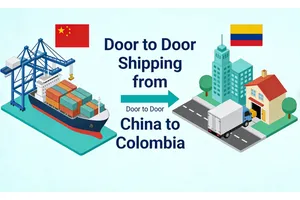
This is where most guides stop — and where the real planning happens. Door-to-door shipping time from China to Colombia is the sum of eight stages, each with its own clock and its own failure modes. If you would rather hand the whole sequence to one team, our door to door shipping from China to Colombia service covers every stage below.
| Stage | What Happens | Typical Duration |
|---|---|---|
| 1. Supplier pickup / consolidation | Factory pickup, delivery to origin warehouse | 1–3 days |
| 2. Export customs declaration (China) | Declaration, release, VGM submission | 1–3 days |
| 3. Container loading & CY cut-off | CY cut-off, SI cut-off, vessel loading | 1–2 days |
| 4. Ocean or air leg | Direct sailing or transshipment | 25–45 days (sea) / 5–10 days (air) |
| 5. Transshipment dwell (if applicable) | Waiting at Panama, Cartagena or a hub airport | 0 days, or 4–10 days |
| 6. Discharge at Buenaventura / Cartagena | Unloading, terminal release | 1–3 days |
| 7. DIAN customs clearance | Declaration, inspection, duty payment | 2–5 working days |
| 8. Inland trucking & delivery | To Bogotá, Medellín, Cali or your warehouse | 2–6 days |
Add stages one through three and you get three to eight days of origin-side work before the vessel even sails. Add stages six through eight and you get five to fourteen days of destination-side work after it arrives. That means a "30-day" port-to-port quote realistically translates into a door-to-door delivery of roughly 35 to 50 days. When you are planning a launch or a promotional season, that is the number that matters.
Our industry insight: Importers routinely reverse-engineer this incorrectly. They take their required delivery date, subtract the transit time their forwarder quoted, and place the purchase order. The correct method is to subtract transit time plus origin collection plus clearance plus inland delivery, then add a buffer for the season. Getting that arithmetic right is often worth more than any rate negotiation.
DDP vs FOB vs CIF: Who Owns the Clock and the Duty
DDP (Delivered Duty Paid) follows the same physical timeline but removes most coordination risk from your side — the forwarder arranges pickup, export clearance, the international leg, destination customs clearance, duty and tax payment, and final delivery under one quote.
| Option | Who Clears Customs | Who Pays Duty | Timeliness Risk |
|---|---|---|---|
| FOB + your own broker | You | You | You own every delay |
| CIF + your own broker | You | You | Destination fees surprise you |
| DDP | Forwarder | Forwarder | Lowest — one party owns the clock |
Under DDP, the forwarder typically acts as Importer of Record; under FOB or CIF, you do. That single difference decides who holds the bond, who is liable for penalties and who resolves a customs dispute — which is why SMEs and first-time importers often choose DDP for its simplicity. If you are still weighing the two, DDP vs FOB: Which Option Saves Time and Reduces Hassle breaks down the trade-offs.
Amazon FBA Transit Time from China to Colombia
For e-commerce sellers, timing around Amazon FBA or third-party fulfillment hinges on appointment windows, labeling and palletization, and the importer-of-record question. Building in 2–3 extra days for inbound receiving appointments is standard practice, and pre-clearing documents before arrival is what prevents a fast shipment from sitting.
China to Colombia Customs Clearance Time: How Long Does DIAN Take?
Destination clearance is the most controllable part of the clock — and the part where importers most often lose days. Colombian customs is administered by DIAN (Dirección de Impuestos y Aduanas Nacionales), with declarations handled through MUISCA and import permits staged through VUCE (Ventanilla Única de Comercio Exterior). For a clean, correctly documented container, clearance typically takes 1–3 days; we advise budgeting 2–5 working days to allow for inspection.
Documents That Keep the Clock Short
An error in any one of these restarts the clock:
- Commercial invoice — showing description, quantity, unit price and CIF value
- Packing list — contents, weights and dimensions per carton
- Bill of Lading (B/L) or Air Waybill (AWB)
- Certificate of Origin — for tariff preference or verification
- Import registration / VUCE permits where the product is regulated
- Customs broker authorization — Colombian law requires a licensed agente aduanero for most commercial imports
The Tax and Duty Stack You Must Budget
Cost and time are linked here, because a dispute over duties is itself a delay.
| Charge | Basis | Typical Rate |
|---|---|---|
| Arancel (import duty) | CIF value | ~0–20%, tiered by HS code |
| IVA (value-added tax) | CIF + duty | 19% |
| De minimis threshold | Per shipment value | USD 200 |
| Special tariffs (2026) | Category | e.g. vehicles 40%, low-value footwear 35% |
Because duty and IVA are calculated on the CIF value, under-declaring to save tax is a clearance-delay risk, not a saving. Note also that there is no China–Colombia free trade agreement, so standard tariff rates apply; a valid Certificate of Origin still matters for verification and any applicable preferences. Two thresholds trip up first-time importers: an Andean Custom Value Declaration is required at USD 5,000 FOB or above, and an Import Declaration (filed by a customs broker) at USD 1,000 or above.
Regulated Goods and Wood Packaging
Certain categories need prior approval before the clock can even start — for example INVIMA for food and health products, ICA for agricultural and animal goods, and ANE for telecommunications and electrical approvals. Wooden packaging must be ISPM-15 treated and marked; non-compliant wood can trigger re-palletization at destination, with charges plus storage while it is sorted.
Why Is Shipping from China to Colombia Delayed? The 12-Month Risk Calendar
When importers ask us why shipping from China to Colombia is delayed, the answer is almost never "the ship was slow." It is one of a handful of predictable, calendar-driven events — plus the Panama Canal, whose drought-related slot and draft restrictions can extend schedules for affected strings.
| Period | Risk Driver | Expected Impact |
|---|---|---|
| Jan–Feb | Chinese New Year factory and port slowdown | +3–7 days; book 2–3 weeks early |
| Mar–Apr | Post-CNY ramp-up; Colombia rainy season | Space tightens; inland +0–2 days |
| May–Jul | Relative calm; most stable window | Baseline |
| Jun–Sep | South China typhoon season | +1–5 days, occasional port closures |
| Aug–Oct | Peak season surcharge (PSS) and tight space | +3–10 days, higher rates |
| Oct 1–7 | Golden Week in China | +3–7 days |
| Oct–Nov | Colombia rainy season | Inland delivery +0–2 days |
| Nov–Dec | Pre-holiday peak | +3–10 days |
Port Congestion, Blank Sailings and Rollovers
Beyond the calendar, three operational events cause most delays. Port congestion at Buenaventura during peak season slows discharge and terminal release. Blank sailings — cancelled vessel calls used to manage capacity — can push your cargo to the next departure, sometimes a full week later. Rollovers happen when a container misses the CY cut-off or the vessel is overbooked; a rolled container at a transshipment hub can wait a week or more.
Delay Diagnostic Table: Symptom, Cause, Fix
| Symptom | Likely Cause | Who to Ask | Fix |
|---|---|---|---|
| "The sailing slipped a week" | Rollover or blank sailing | Forwarder booking desk | Re-book; request a direct service |
| "Stuck at transshipment for 10 days" | Hub congestion (Panama / Cartagena) | Carrier via forwarder | Evaluate an alternate routing |
| "On hold at Buenaventura" | DIAN inspection or a document mismatch | Customs broker | Correct the invoice and supporting documents |
| "Loaded but no B/L released" | Late SI, unpaid freight or telex delay | Forwarder documentation team | Submit SI before cut-off; confirm payment terms early |
| Unexpected storage bill | Cargo sat past free time (Bodegaje / demurrage) | Destination agent | Clear before free time expires |
The Fastest Way to Ship from China to Colombia — and 7 Levers to Shorten Transit Time
If speed is the priority, the ranking is straightforward. Express courier (DHL, FedEx, UPS, EMS) is fastest at 3–7 days door-to-door, but only economical for small, high-value parcels under about 100 kg. Air freight is next at 5–10 days port-to-port, or roughly 7–14 days door-to-door. The fastest sea option is a direct Pacific FCL sailing into Buenaventura, typically 25–35 days.
Seven Levers That Actually Move the Clock
- Choose a direct sailing over transshipment. The single largest lever, worth five to ten days and lower rollover risk.
- Ship from a high-frequency origin port. Shanghai, Ningbo and Shenzhen/Yantian offer the densest schedules and shortest direct transits.
- Convert to FCL above roughly 15 CBM. You avoid the 3–7 day consolidation wait and destination deconsolidation delay.
- Respect the cut-offs. Hitting the CY cut-off, SI cut-off and VGM deadline keeps you on the intended vessel.
- Pre-clear your documentation. A complete, correct document set lets DIAN release in 1–3 days instead of five-plus.
- Book two to three weeks ahead. Early booking protects both space and pricing, especially from August through December.
- Blend air and sea deliberately. Send high-value or replenishment cargo by air and steady inventory by sea, so your fastest mode covers your riskiest SKUs.
Shipping Time and Cost from China to Colombia: The Trade-Off
Every day you save costs money, and the relationship is not linear. Sea freight is the slowest and cheapest per unit; air freight is the fastest and most expensive per kilogram; DDP sits in the middle on cost but at the top on predictability because it removes coordination risk. The right question is not "what is the fastest option" but "what is the cost of one extra day of delay to my business." For fast-moving consumer goods, that number is often high enough to justify air; for machinery or building materials, it rarely is.
Partnering with a Forwarder Who Protects Your Schedule
Transit time is ultimately a coordination problem, and coordination is what a good forwarder is for — the subject of our deeper piece on the strategic role of freight forwarders in modern supply chains. DTFU Logistics has been moving cargo from China to Colombia and 120+ other destinations since 2014, with dual FIATA and IATA certification. Because we hold direct contracts with major carriers and airlines, we secure space and competitive rates even when capacity tightens — the difference between sailing this week and sailing next week. Our dedicated account managers pre-screen documentation before it reaches DIAN, our 24/7 tracking platform makes every milestone visible, and our comprehensive cargo insurance covers the risk no schedule can eliminate.
Our industry insight: During peak-season capacity crunches, the importers who keep their schedules are the ones whose forwarder has contracted space rather than relying on the spot market. We have kept clients on their intended sailings through August-to-October crunches precisely because the allocation was secured in advance — which is why we advise booking two to three weeks ahead rather than chasing the cheapest spot rate a week out.
FAQs
How long does air freight from China to Colombia take?
Air freight takes 5–10 days port-to-port, or roughly 7–14 days door-to-door once customs and inland delivery are included. There is no direct freighter network, so all cargo connects through a hub.
Why does door-to-door take longer than port-to-port?
Because the quote you were given is almost always port-to-port. Add origin pickup and export clearance (3–8 days) plus destination clearance and inland trucking (5–14 days) to reach a realistic door-to-door figure.
How long does customs clearance take in Colombia?
For a clean, correctly documented container, DIAN clearance typically takes 1–3 days. Budget 2–5 working days to allow for inspection, and remember that a licensed customs broker is required for most commercial imports.
What is the fastest way to ship from China to Colombia?
Air express through DHL, FedEx or UPS is fastest at 3–7 days door-to-door, but it is only economical for small, high-value shipments under about 100 kg. The fastest sea option is a direct Pacific FCL sailing into Buenaventura.
Which Chinese port has the shortest transit time to Colombia?
Shanghai, Ningbo and Shenzhen/Yantian generally offer the shortest and most frequent direct transits, particularly to Buenaventura. The destination coast usually matters more than the origin port.