Are you wondering how to efficiently manage shipping from Shanghai to USA while controlling costs and ensuring timely delivery? Navigating the world of freight forwarding, customs procedures, and shipping methods can be overwhelming for businesses of all sizes. In this comprehensive guide, we’ll break down the key steps, compare sea freight vs. air freight, and share expert tips to help you make informed shipping decisions between Shanghai and the USA.
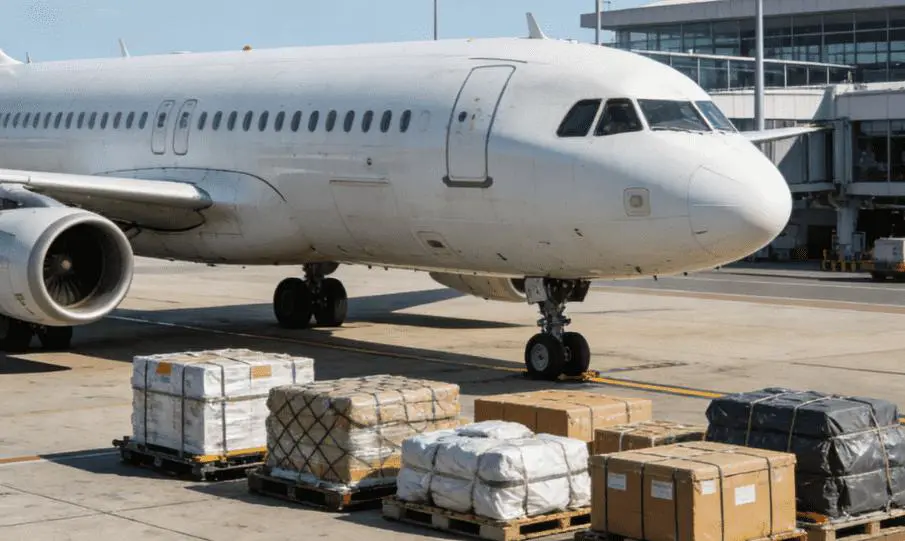
Overview of Shipping from Shanghai to USA
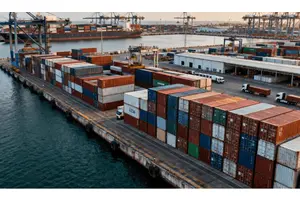
Shipping from Shanghai – one of China’s largest and busiest export hubs – to the USA remains a vital logistics route for global trade. The Port of Shanghai is the world’s busiest container port, handling millions of TEUs (Twenty-foot Equivalent Units) annually, and connects with all major US ports such as Los Angeles, Long Beach, New York/New Jersey, and Savannah. Whether you are an importer, e-commerce seller, manufacturer, or SME, understanding the logistics landscape, typical transit times, and cost dynamics is crucial for supply chain efficiency and cost control.
As of Dec 2025, geopolitical factors, US-China trade relations, and ongoing supply chain adjustments post-pandemic continue to affect shipping schedules, customs regulations, and freight rates. It is essential to stay updated on the latest policies and market changes impacting the Shanghai-USA shipping corridor.
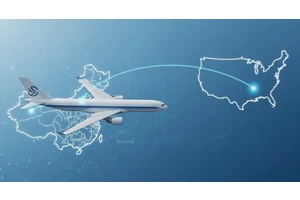
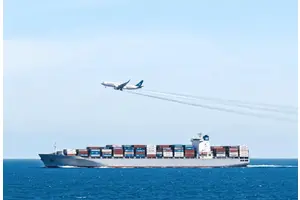
Freight forwarding from Shanghai to USA can be managed through multiple solutions. The two main modes are Sea Freight and Air Freight, each with its own advantages, disadvantages, and best-use scenarios. Choosing the right shipping method depends on volume, budget, lead time, and the nature of your goods.
Main Shipping Methods: Sea Freight vs. Air Freight
When shipping from Shanghai to the USA, the choice between Sea Freight and Air Freight significantly affects cost, speed, and logistics complexity. Below is a comprehensive comparison (for reference on port routes, you may also find shipping routes from China to USA West Coast helpful):
| Shipping Mode | Typical Transit Time | Best for | Capacity (Standard Container) | Cost (2025 est., Shanghai to US West Coast) | Advantages | Disadvantages |
|---|---|---|---|---|---|---|
| Sea Freight | 15–30 days (port-to-port) | Bulk cargo, heavy or non-urgent goods | 20FT: 28CBM, 40FT: 56CBM, 40HQ: 68CBM, 45HQ: 78CBM | $2,000–$4,500 per 40HQ (variable) | Cost-effective, suitable for large volumes, flexible for different cargo types | Slower, affected by port congestion, complex documentation |
| Air Freight | 3–7 days (airport-to-airport) | Urgent, high-value, time-sensitive goods | 1–6 CBM per shipment (typical) | $5.5–$10 per kg (fluctuates by season and volume) | Fastest transit, safer for delicate goods, less documentation | Higher cost, limited by size/weight, airline capacity constraints |
Note: Costs and transit times are indicative and may fluctuate due to market dynamics, seasonality, and global events. For the most accurate and up-to-date rates, always consult a professional freight forwarder such as DTFU International Logistics Co., Ltd.
Advantages and Disadvantages of Ocean Freight
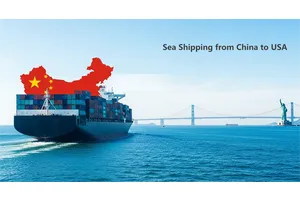
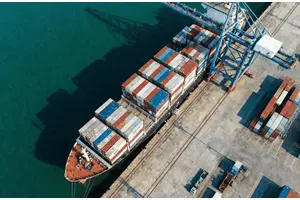
Ocean Freight is the most popular and cost-effective shipping method for moving goods from Shanghai to the USA, especially for full container loads (FCL) and less-than-container loads (LCL).
Advantages:
- Economical for Large Volumes: Shipping large or heavy shipments is significantly cheaper per unit compared to air freight.
- Flexible Container Options: Multiple container sizes available (20FT, 40FT, 40HQ, 45HQ), suitable for most cargo types.
- Suitable for a Wide Range of Goods: From general merchandise to oversized and hazardous freight.
Disadvantages:
- Longer Transit Times: Usually 2–4 weeks port-to-port, potentially longer with network congestion or customs delays.
- Greater Documentation and Compliance: More paperwork and regulatory compliance needed, including bills of lading, packing lists, and certificates of origin.
- Port Congestion Risks: Seasonal surges or global events may cause delays at both Shanghai and US ports.
- Cargo Handling Risks: Higher risk of damage or loss if not professionally packed and handled.
Pro Tip: To minimize risks and optimize your shipping experience, work with a reliable freight forwarder like DTFU International Logistics Co., Ltd, which offers end-to-end sea freight, customs clearance, cargo insurance, and consolidated freight services.
When to Choose Air Freight for Shanghai-USA Shipments
Air Freight is best chosen when speed, reliability, and cargo value outweigh cost concerns. It is ideal for:
- Urgent Shipments: New product launches, promotional events, or short lead-time requirements.
- High-Value or Perishable Goods: Electronics, medical equipment, fashion, or temperature-controlled items.
- Small Volumes: When shipping less than 1–2 CBM, air freight can sometimes be more cost-effective than LCL sea freight, considering total logistics costs.
- Supply Chain Emergencies: Restocking or resolving supply shortages quickly.
Considerations:
- Cargo Size & Weight Limits: Airlines have strict regulations on size, weight, and hazardous material transport.
- Higher Freight Costs: Air freight is several times more expensive than sea freight per kg/CBM.
- Carbon Footprint: Air shipping has a higher environmental impact.
Advice: If your business requires fast delivery and minimal inventory holding, or you are shipping high-value goods, air freight is the optimal choice. Always compare the total landed cost and transit time with your business needs.
DTFU International Logistics Co., Ltd provides expert consultation to help you evaluate whether sea or air freight is best for your shipment profile. We ensure transparent pricing, clear guidance on documentation, and complete door-to-door solutions for both shipping modes.
In summary, understanding the pros and cons of Sea Freight and Air Freight is fundamental to optimizing your shipping from Shanghai to the USA. The right freight forwarder, such as DTFU International Logistics Co., Ltd, will guide you in choosing the most efficient and cost-effective solution for your unique business needs. For tailored advice or the latest shipping rates, contact our specialists today.
Step-by-Step Guide to Shipping from Shanghai to USA
Shipping from Shanghai to USA involves a series of structured steps. As a Senior Logistics Analyst at DTFU International Logistics Co., Ltd, I will guide you through each stage to ensure a smooth, compliant, and cost-effective shipping experience.
Required Documents and Customs Procedures
To ensure seamless transportation from Shanghai (China) to the USA, accurate documentation and adherence to customs policies are crucial. Missing or incorrect documents can cause delays, fines, or even confiscation of cargo.
Essential Documents:
| Document Name | Purpose | Issued By/To | Notes |
|---|---|---|---|
| Commercial Invoice | Details the transaction and item value; used for customs valuation | Exporter to Importer | Must match shipment contents and declared value |
| Packing List | Describes packing details, weight, and dimensions | Exporter | Facilitates customs inspection |
| Bill of Lading (B/L) or Air Waybill (AWB) | Contract of carriage and receipt of goods | Carrier | B/L for sea freight, AWB for air freight |
| Export/Import License (if applicable) | Legal permission to export/import specific goods | Exporter/Importer | Required for controlled goods |
| Certificate of Origin | Certifies the country of origin, used for tariffs and compliance | Exporter | May be requested by US Customs |
| Arrival Notice | Notifies consignee of shipment arrival | Carrier/Forwarder | Needed for cargo pickup |
| Customs Declaration (Entry Summary) | Provides details for US Customs clearance | Importer/Customs Broker | Electronic filing via ACE (Automated Commercial Environment) system |
| ISF (Importer Security Filing, 10+2) | Advanced cargo information for US Customs, required for sea freight | Importer/Customs Broker | Must be filed at least 24 hours before vessel loading |
Customs Procedures:
-
Pre-Shipment Preparation:
- Ensure all documents are accurate and in English.
- Confirm goods are not restricted or prohibited.
-
ISF Filing (for Sea Freight):
- The US requires the Importer Security Filing (ISF, 10+2) at least 24 hours before cargo is loaded onto the vessel in Shanghai.
- Missing the ISF deadline can result in heavy penalties.
-
Export Customs Clearance in China:
- Chinese Customs requires the clearance of all export shipments.
- DTFU International Logistics offers one-stop customs clearance service to minimize the risk of delay.
-
Import Customs Clearance in the USA:
- Upon arrival, submit the Entry Summary (CBP Form 3461/7501) and all relevant documents.
- Pay applicable duties and taxes.
- Goods may be inspected at random by U.S. Customs and Border Protection (CBP).
-
Delivery:
- Once customs release is granted, arrange for final delivery to the destination.
Pro Tips for Avoiding Delays:
- Double-check HS codes and product descriptions.
- Use a reliable freight forwarder like DTFU International Logistics Co., Ltd for document validation and full-process tracking.
- Stay updated with US-China trade regulations, as tariffs and restrictions can change.
Typical Transit Times by Shipping Method
Transit time is a key driver in supply chain planning. Below are average lead times for major shipping options from Shanghai to several key US entry points.
For more details on shipping duration and influencing factors, you can consult shipping time from China to USA.
| Shipping Method | Route Example | Destination Port (USA) | Average Transit Time* | Best for |
|---|---|---|---|---|
| Sea Freight (FCL) | Shanghai → Los Angeles | Port of Los Angeles | 14-18 days | Full containers, cost-sensitive shipments |
| Sea Freight (FCL) | Shanghai → New York | Port of New York/New Jersey | 27-32 days | East Coast delivery, larger volumes |
| Sea Freight (LCL) | Shanghai → Los Angeles | Port of Los Angeles | 18-24 days | Smaller shipments, shared containers |
| Air Freight | Shanghai → Los Angeles | LAX Airport | 2-5 days | Urgent, high-value, or perishable cargo |
| Air Freight | Shanghai → Chicago | ORD Airport | 3-6 days | Fast delivery to US Midwest |
| Express Courier | Shanghai → USA (DHL/UPS/FedEx) | Door-to-Door | 1-4 days | Samples, documents, small parcels |
*Transit times are estimates and may vary due to seasonal congestion, customs clearance, weather, and global events (e.g., port strikes, COVID-19 impacts).
Shipping Costs from Shanghai to USA
Estimating the shipping cost from Shanghai to USA requires understanding several variables. Costs are influenced by the mode of transport, cargo volume and weight, surcharges, destination, and current market conditions.
Breakdown of Freight Charges and Surcharges
Typical Components of Shipping Costs:
| Cost Component | Description | Applies to |
|---|---|---|
| Ocean Freight/Air Freight | Main charge for cargo movement from Shanghai to US port/airport | Sea, Air |
| Local Charges (Origin) | Export customs clearance, trucking, terminal handling at Shanghai | Sea, Air |
| Documentation Fees | Preparation of documents (B/L, manifests, certificates) | Sea, Air |
| Destination Charges | Unloading, handling, delivery within USA | Sea, Air |
| Surcharges | Bunker Adjustment Factor (BAF), Peak Season Surcharge (PSS), Security fees, GRI, etc. | Sea, Air |
| Insurance | Optional but recommended (cargo insurance coverage) | Sea, Air |
| Customs Duties & Taxes | US import tariffs (based on HS code, China-US trade policy) | All shipments |
| ISF Filing Fee | Fee for Importer Security Filing (mandatory for sea freight) | Sea |
Sample Cost Comparison Table (as of Dec 2025):
| Shipping Mode | 20’GP (28 CBM) | 40’GP (56 CBM) | 40’HQ (68 CBM) | Air Freight (per kg, 100kg+) |
|---|---|---|---|---|
| Shanghai → LA (FCL Sea) | $2,200-$3,000 | $3,900-$4,800 | $4,300-$5,200 | – |
| Shanghai → NY (FCL Sea) | $3,100-$4,200 | $5,900-$7,500 | $6,500-$8,200 | – |
| Shanghai → USA (LCL Sea) | $60-$85/CBM | – | ||
| Shanghai → USA (Air) | – | – | – | $6.5-$9.8 USD/kg |
Rates are market averages and fluctuate due to seasonality, fuel rates, and demand. For tailored rates, please contact DTFU International Logistics Co.,Ltd for a custom quote.
Factors Affecting Total Shipping Costs
When shipping from Shanghai to the USA, total costs depend on:
- Mode of Transport: Air freight is faster but costlier than sea freight.
- Cargo Volume & Weight: Higher volume/weight reduces per-unit cost, but increases total.
- Container Type: 20FT, 40FT, 40HQ, or consolidated (LCL). E.g., 40HQ offers more capacity—ideal for high-volume shipments.
- Origin/Destination Terminals: Ports like Port of Los Angeles, Port of Long Beach, and Port of New York have differing local fees.
- Seasonal Surcharges: Peak demand seasons (pre-Chinese New Year, US holiday season) can cause General Rate Increases (GRIs).
- Fuel and Security Surcharges: BAF (Bunker Adjustment Factor), EBS (Emergency Bunker Surcharge), and security fees affect final costs.
- Customs Duties/Tariffs: The ongoing US-China trade situation can impact duty rates, so accurate HS classification is critical.
- Insurance: Premiums depend on cargo value and risk factors.
- Additional Services: Amazon FBA, warehouse storage, door-to-door delivery, and cargo consolidation provided by DTFU International Logistics Co., Ltd.
Industry Tip: For cost optimization, consolidate shipments when possible and plan ahead to avoid peak season surcharges. If shipping to other countries in the Americas, see related topics like shipping time from China to Chile.
In summary, successful shipping from Shanghai to USA requires careful documentation, understanding of lead times by shipping methods, and a clear breakdown of all cost components. As regulations and market conditions evolve, working with a reputable freight forwarder like DTFU International Logistics Co., Ltd—offering comprehensive services from sea and air freight to customs clearance and warehousing—ensures your cargo arrives safely, on time, and within budget.
For personalized shipping solutions and up-to-date quotes, please contact Ivan Chan at DTFU International Logistics Co., Ltd.
Customs Clearance and Import Regulations in the USA
Shipping from Shanghai to USA requires a thorough understanding of US customs clearance procedures and import regulations. Compliance is crucial to ensure your cargo enters the United States efficiently and without costly delays. Below, I will outline the essential requirements and common pitfalls based on current regulations and years of hands-on experience.
Essential US Customs Requirements for Chinese Imports
When importing from China to the United States, shippers must fulfill specific documentation and regulatory obligations. These include:
| Document | Purpose | Key Points |
|---|---|---|
| Bill of Lading (B/L) | Contract of carriage; proof of shipment | Must match cargo details with other documents. |
| Commercial Invoice | Declares value and description of goods | Ensure accuracy for tariff calculation and customs verification. |
| Packing List | Details on cargo packaging and content | Should align with shipping and customs documents. |
| Arrival Notice | Notifies consignee of cargo arrival | Issued by freight forwarder or carrier before cargo arrival. |
| ISF Filing (10+2) | Importer Security Filing (for ocean freight, required by CBP) | Must be filed at least 24 hours before cargo departs from Shanghai; fines apply for late filing. |
| CBP Entry Manifest | Declares goods to US Customs and Border Protection (CBP) | Must be submitted by customs broker or importer. |
| Customs Bond | Guarantees payment of duties and compliance | Required for commercial shipments over $2,500; two types: single entry and continuous. |
| Other Permits & Licenses | For regulated products (food, pharmaceuticals, electronics, etc.) | May need FDA, FCC, or USDA clearance depending on cargo type. |
Note: All information on import documents must be consistent and truthful. Incomplete or inaccurate data is a leading cause of customs delays.
Additional Considerations
- Tariff Classification: Ensure correct HS codes are used; misclassification may lead to penalties or seizure.
- Section 301 Tariffs: Many Chinese goods face additional duties due to ongoing US-China trade measures; always verify current tariff status (refer to the USTR and CBP updates).
- Importer of Record: Every shipment must have a designated Importer of Record (IOR) responsible for compliance and payment of duties.
Common Mistakes and How to Avoid Clearance Delays
Even experienced shippers can encounter issues during customs clearance. Below are frequent mistakes and actionable tips to avoid them:
| Common Mistake | Potential Consequence | How to Avoid |
|---|---|---|
| Incomplete or inaccurate documentation | Clearance delays, fines, cargo hold | Double-check all paperwork; use a checklist; partner with experts |
| Late ISF (10+2) filing for ocean shipments | Penalties up to $5,000 per filing | File ISF at least 24 hours before vessel departure from Shanghai |
| Incorrect tariff codes (HS codes) | Misapplied duties, shipment seizure | Consult a licensed customs broker for proper classification |
| Under/overstating cargo value | Fines, audits, loss of credibility | Declare true value; keep detailed records and supplier invoices |
| Missing required permits for regulated goods | Entry refusal, destruction of goods | Consult US government agency (FDA, FCC, USDA) if importing such items |
| Using unreliable freight forwarders | Documents mishandled, shipment stuck | Choose reputable partners like DTFU International Logistics Co.,Ltd |
Tips from Experience
- Work with a knowledgeable freight forwarder who is familiar with both Chinese and US customs requirements. A seasoned provider like DTFU International Logistics Co.,Ltd offers one-stop customs clearance and compliance support, significantly reducing your risk of delays.
- Leverage digital platforms for document management and track all submissions with time stamps.
- Stay updated on regulatory changes, particularly regarding Section 301 tariffs and new CBP requirements.
- Prepare for inspections: Random or targeted inspections can happen. Ensure cargo matches all declarations and is properly labeled.
How to Select a Reliable Freight Forwarder in Shanghai
Choosing the right freight forwarder is critical for a smooth, cost-effective, and compliant shipping experience from Shanghai to USA. Here’s a professional guide to making an informed choice:
Key Services to Look For in a Freight Forwarder
A high-quality freight forwarder should offer more than basic transportation. When evaluating providers, look for these essential services:
| Service | Why It Matters | DTFU International Logistics Co.,Ltd Advantage |
|---|---|---|
| Sea Freight (FCL/LCL) | Covers full container (FCL) and less-than-container (LCL) shipping demands | Diverse carrier contracts ensure optimal schedules and rates |
| Air Freight | When speed is critical | Direct and consolidated options from major Shanghai airports |
| Road Freight | Last-mile delivery, inland transportation | Extensive domestic network in China and USA |
| Amazon FBA/3PL Warehousing | For e-commerce and distribution | Integrated FBA prep, storage, and delivery to US fulfillment centers |
| Customs Clearance (One-Stop Service) | Smooth import/export procedures | Expert in both China export and US import clearance, avoiding delays |
| Cargo Insurance | Protects against losses in transit | Customized insurance solutions at competitive rates |
| Door-to-Door Delivery | End-to-end convenience; minimized handling risks | True one-stop solution, minimizing handoffs |
| OOG, Breakbulk, and Consolidated Freight | For oversized, bulk, or combined shipments | Specialized handling and project logistics expertise |
| Real-time Tracking & Customer Support | Transparency, peace of mind | Advanced tracking platform and dedicated customer care |
Pro tip: Always verify that your forwarder is licensed and has positive industry references.
Tips for Comparing Shipping Quotes and Service Quality
It’s tempting to select the lowest quote, but price alone rarely reflects true value or reliability. Here’s how to compare logistics partners for shipments from Shanghai to USA:
1. Quote Transparency
A professional forwarder will provide a clear breakdown of all charges, including:
- Freight charges (ocean/air)
- Fuel surcharges
- Port charges
- Documentation and handling fees
- Customs clearance costs
- Insurance (if required)
- Door delivery costs
2. Assessing Service Quality
| Factor | What to Check | Red Flags |
|---|---|---|
| Company experience | Years in business, specialization in China-USA routes | No local presence or references |
| Certifications | NVOCC, FMC, WCA, CIFA memberships | Unlicensed operation |
| Customer reviews | Independent reviews, testimonials | Frequent complaints, lack of feedback |
| Responsiveness | Speed and clarity of communication | Delayed or vague responses |
| Problem-solving ability | How issues or delays are handled | Lack of contingency planning |
3. Value-added Services
Look for options such as:
- Customs consulting
- Supply chain optimization
- Flexible payment terms
- Online cargo tracking
4. DTFU International Logistics Co.,Ltd: The Reliable Choice
With over a decade of experience, DTFU International Logistics Co.,Ltd is a trusted partner for global traders. We offer comprehensive, cost-effective, and high-quality logistics solutions tailored to your needs, including sea freight, air freight, Amazon FBA, cargo insurance, and door-to-door delivery. Our local Shanghai experts and US operations ensure your Shanghai to USA shipments arrive safely, on time, and fully compliant.
For more information on door-to-door services between China and the United States, you might explore Door to Door Shipping From China USA.
Shipping Solutions for E-commerce and Small Businesses
As global trade grows, efficient shipping from Shanghai to USA has become a critical factor for e-commerce sellers and SMEs seeking to expand into the North American market. The right logistics strategy can drive customer satisfaction, reduce costs, and help you stay ahead of compe*****s. Below, I provide a detailed guide to best practices, cost-saving tips, and proven solutions tailored for online retailers and small business owners.
Using Amazon FBA or 3PL Warehouses in the USA
Fulfillment by Amazon (FBA) and working with professional 3PL (Third-Party Logistics) warehouses are two of the most popular shipping solutions used by businesses exporting from Shanghai to the USA.
How Amazon FBA Works
- FBA allows sellers to ship their products directly to Amazon’s fulfillment centers in the USA.
- Amazon handles storage, order fulfillment, customer service, and returns.
- Sellers benefit from access to Prime customers and faster delivery times.
Shipping from Shanghai to Amazon FBA in the USA typically involves:
- Preparation: Products must meet Amazon’s packaging and labeling standards.
- Freight Forwarding: Goods are shipped via sea freight (most common for bulk, cost-sensitive shipments) or air freight (for urgent, high-value items).
- Customs Clearance: Proper documentation and compliance with US import regulations are critical.
- Final Mile Delivery: After clearing customs, goods are delivered to Amazon’s designated warehouse.
3PL Warehouse Solutions
3PL providers offer storage, order fulfillment, and shipping to customers across the USA. This is especially useful for businesses wanting more flexibility than FBA or servicing multiple marketplaces (like Shopify, Walmart, eBay).
Key advantages:
- Flexible warehousing (you can split inventory between several warehouses for faster delivery).
- Customizable value-added services (kitting, re-labeling, returns processing).
- Multi-channel fulfillment capabilities.
Comparison: Amazon FBA vs. 3PL Warehouses
| Feature | Amazon FBA | 3PL Warehouses |
|---|---|---|
| Reach | Prime customers, high visibility | Any channel, more flexible |
| Storage Fees | Higher during peak seasons | Often more flexible |
| Branding Control | Limited (Amazon-branded packaging) | Full customization |
| Returns Handling | Amazon manages | 3PL can offer custom rules |
| Inventory Distribution | Centralized per Amazon’s network | Your choice (multi-locational) |
| Integration | Amazon ecosystem | Integrates with many platforms |
DTFU International Logistics Co.,Ltd provides end-to-end solutions for shipping from Shanghai to Amazon FBA or any 3PL warehouse in the USA, ensuring compliance with all customs and product requirements.
Cost-effective Shipping Tips for SMEs and Startups
Controlling logistics costs has a direct impact on profits, especially for small businesses and e-commerce sellers. Here are actionable tips to optimize your shipping from Shanghai to USA:
1. Choose the Right Shipping Method
For additional insights into ocean and air freight options from China to the USA, you can refer to these in-depth guides: Sea Shipping from China to USA and Air Shipping from China to USA.
| Shipping Method | Typical Transit Time | Best For | Cost Level | Container Capacity |
|---|---|---|---|---|
| Sea Freight | 18-32 days (port-to-port) | Large, non-urgent shipments | Lowest | 20FT (28CBM), 40FT (56CBM), 40HQ (68CBM), 45HQ (78CBM) |
| Air Freight | 3-7 days | Urgent, small-high value items | Higher | Varies by aircraft |
| Express | 1-4 days | Samples, very urgent docs | Highest | Small parcels only |
- Consolidated Freight: Combine shipments with other exporters to share container costs.
- OOG (Out of Gauge) Freight: For oversized cargo, plan ahead as costs can be significantly higher.
2. Optimize Packaging
- Use packaging that reduces weight and volume to lower freight charges.
- Ensure cartons and pallets comply with US standards to avoid delays and extra fees.
3. Batch Shipments when Possible
- Larger, less frequent shipments are often more cost-effective than multiple small consignments due to lower per-unit shipping rates.
4. Work with a Reliable Freight Forwarder
A trusted partner like DTFU International Logistics Co.,Ltd can provide:
- Transparent pricing with a full breakdown of freight charges and surcharges.
- One-stop customs clearance and compliance support to avoid costly delays.
- Cargo insurance to protect your goods in transit.
- Door to Door service, ensuring a seamless experience from Shanghai factory to US destination.
5. Leverage Real-time Tracking and Data
Use platforms that offer shipment visibility, allowing you to manage your inventory and respond quickly to supply chain disruptions.
6. Stay Updated on Trade Policies
- In Dec 2025, changes in US-China trade tariffs and customs regulations may impact costs or eligibility for certain products. Regularly consult reliable sources or your logistics partner for updates.
7. Get Multiple Quotes
- Compare offers from at least three forwarders but focus on total value (service quality, lead time, reliability) not just the lowest price.
FAQs
Q1: What is the cheapest way to ship from Shanghai to the USA for small businesses?
A: Sea freight (especially LCL – Less than Container Load) is typically the most cost-effective way for bulk shipments. For smaller or urgent orders, consider air freight or consolidated express options.
Q2: How long does shipping from Shanghai to an Amazon FBA warehouse in the USA usually take?
A: By sea freight, transit time is typically 18-32 days port-to-port, plus customs and last-mile delivery. Air freight can take 3-7 days. Plan additional time for customs clearance and FBA warehouse appointment scheduling.
Q3: Can I ship directly from my supplier in Shanghai to Amazon FBA in the USA?
A: Yes. With the help of a professional freight forwarder like DTFU International Logistics Co.,Ltd, you can ship directly from the manufacturer to Amazon’s distribution center, handling all needed documentation and compliance.
Q4: What documents are required for shipping from Shanghai to the USA?
A: Key documents include Commercial Invoice, Packing List, Bill of Lading (or Airway Bill), and applicable import licenses. Your freight forwarder will assist in preparing and submitting all documents.
For more details, visit DTFU International Logistics Co.,Ltd.