"How can I get my products from China to the USA faster?"
If you're an importer, you've likely asked yourself this question. In a world where speed is a competitive advantage, waiting weeks for a container ship to cross the Pacific can feel like an eternity. This is where air shipping comes in, offering a powerful solution for businesses that need to move goods quickly and efficiently.
But is air freight the right choice for you? This comprehensive guide will walk you through everything you need to know about Air Shipping from China to USA. We'll cover the pros and cons, costs, transit times, customs procedures, and how to choose the right logistics partner. By the end of this article, you'll have the knowledge to make informed decisions and optimize your supply chain.
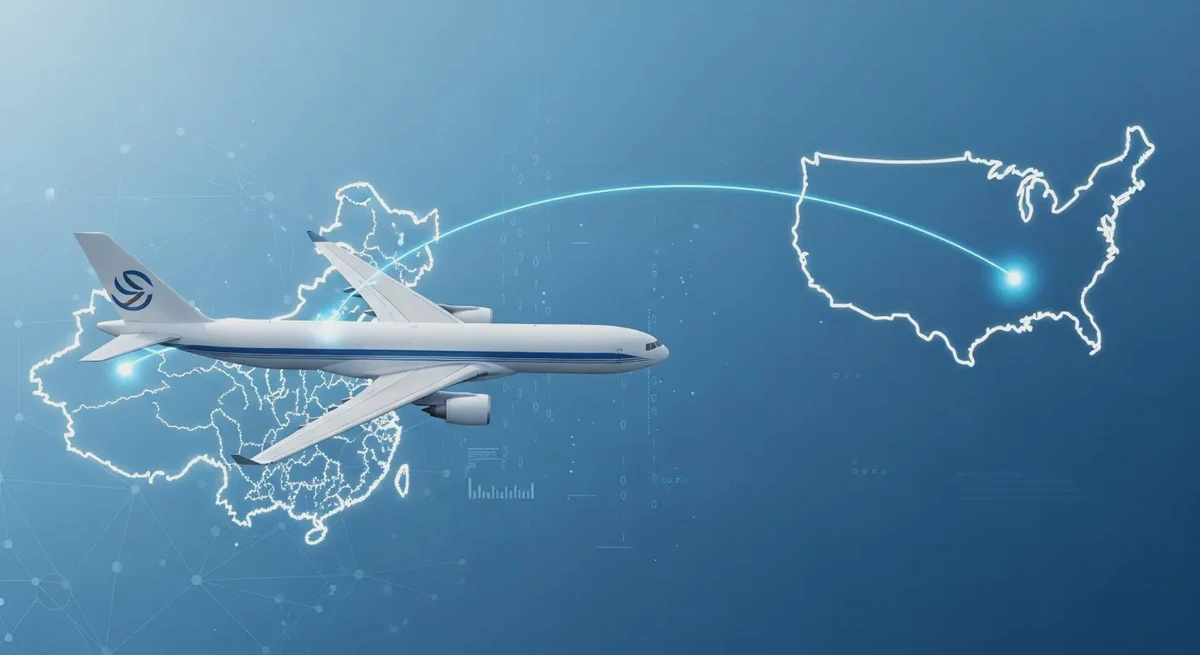
Why Choose Air Freight? The Need for Speed and Security
The most significant advantage of air freight is its speed. While ocean freight can take 20-40 days, air shipments can arrive in a matter of days. This makes it the ideal choice for time-sensitive cargo, such as:
High-value electronics: The less time expensive goods are in transit, the lower the risk of theft or damage.
Perishable goods: For items with a limited shelf life, the speed of air freight is essential.
Seasonal products: Getting your products to market quickly is crucial for seasonal items.
Urgent restocks: When you're running low on inventory, air freight can replenish your stock in a fraction of the time it would take by sea.
Beyond speed, air freight also offers a higher level of security. Airports have stringent security protocols, and the shorter transit times mean less opportunity for things to go wrong. This added security is particularly important for valuable or fragile items.
Air Freight vs. Sea Freight: A Head-to-Head Comparison
| Feature | Air Freight | Sea Freight |
|---|---|---|
| Transit Time | 3-10 days | 20-40 days |
| Cost | Higher | Lower |
| Security | High | Moderate |
| Carbon Footprint | High | Low |
| Ideal For | High-value, time-sensitive, or perishable goods | Large, heavy, or non-urgent goods |
While air freight is faster and more secure, it's also more expensive and has a larger carbon footprint. For large, heavy, or non-urgent shipments, sea freight is often the more economical choice.
Deconstructing the Costs: How Much Does Air Freight from China to the USA Cost?
Air freight is the most expensive shipping method, so it's crucial to understand the costs involved. The price of air freight is typically calculated based on the chargeable weight of your shipment. This is the greater of the actual weight and the volumetric weight.
Volumetric weight is a measure of the space your shipment occupies. It's calculated using a formula that varies slightly between carriers, but a common one is:
(Length x Width x Height in cm) / 6000 = Volumetric Weight in kg
Airlines use chargeable weight to ensure they are fairly compensated for both heavy, dense shipments and light, bulky shipments.
Here's a general idea of what you can expect to pay for air freight from China to the USA:
Express Air Freight: Rates can range from $7.54 to $9.54 per kilogram.
Standard Air Freight: For shipments between 150 and 500 kilograms, you can expect to pay around $3 to $8 per kilogram. For heavier shipments, the per-kilogram rate may be lower.
It's important to note that these are just general estimates. The final cost of your air shipment will be influenced by a variety of factors:
Weight and Volume: As mentioned, the chargeable weight is a primary cost driver.
Origin and Destination: The distance between the departure and arrival airports will impact the price. Shipping to a major hub like Los Angeles (LAX) will likely be cheaper than shipping to a smaller, more remote airport.
Carrier and Service Level: Different airlines and freight forwarders offer varying rates and service levels. Express services will always be more expensive than standard air freight.
Fuel Surcharges: Airlines often apply fuel surcharges that can fluctuate with global oil prices.
Seasonal Demand: During peak shipping seasons, demand for air freight increases, which can drive up prices.
Type of Goods: Hazardous materials or items that require special handling will incur additional fees.
Additional Services: Services like insurance, customs brokerage, and door-to-door delivery will add to the overall cost.
Air Freight Transit Times: How Long Will It Really Take?
While significantly faster than sea freight, it's important to have realistic expectations about air shipping transit times. The total time it takes for your goods to get from a supplier in China to your doorstep in the USA involves more than just the flight time. Here's a breakdown of the typical timeline:
Express Air Freight: This is the fastest option, often taking between 1 to 5 days. Major couriers like DHL, FedEx, and UPS excel in this area, offering door-to-door services that streamline the entire process.
Standard Air Freight: This is a more economical option than express, with transit times typically ranging from 3 to 10 days. The process is more involved than with express services, including consolidation of shipments, which can add to the overall time.
Several factors can influence the total transit time:
Direct vs. Indirect Flights: Direct flights are faster but more expensive. Indirect flights with layovers can add to the transit time.
Customs Clearance: Delays in customs at either the origin or destination can hold up your shipment. Proper documentation is key to a smooth customs process.
Inland Transportation: The time it takes to transport your goods from the factory to the airport in China and from the airport to your final destination in the US will also contribute to the overall transit time.
Time of Year: Peak seasons, such as the lead-up to major holidays, can lead to congestion and longer transit times.
Navigating Customs and Documentation: A Crucial Step
Customs clearance is a critical part of the international shipping process. Failure to comply with customs regulations can result in delays, fines, and even seizure of your goods. Both China and the USA have their own set of customs procedures that must be followed.
Key Documents for Air Freight from China to the USA:
Commercial Invoice: This document details the transaction between the seller and the buyer. It includes information about the goods, their value, and the terms of the sale.
Packing List: This provides a detailed breakdown of the contents of your shipment, including the weight, dimensions, and number of packages.
Air Waybill (AWB): This is the contract between the shipper and the airline. It contains crucial information about the shipment and serves as a tracking document.
Certificate of Origin: This document certifies the country where the goods were manufactured. It may be required for certain products to qualify for preferential tariff treatment.
Shipper's Letter of Instruction (SLI): This form provides your freight forwarder with all the necessary information to handle your shipment correctly.
The Customs Process:
Export Clearance in China: Your goods must be cleared for export by Chinese customs. This involves submitting the necessary documentation and may include an inspection of the cargo.
Import Clearance in the USA: Upon arrival in the USA, your shipment must be cleared by U.S. Customs and Border Protection (CBP). This involves submitting the required import documents and paying any applicable duties and taxes.
Customs Duties and Taxes:
The amount of duty you'll have to pay depends on the type of goods you're importing and their declared value. The Harmonized Tariff Schedule (HTS) of the United States is used to classify goods and determine the applicable duty rate.
It's highly recommended to work with a licensed customs broker to navigate the complexities of customs clearance. A good broker will ensure that your documentation is in order and that you are in full compliance with all regulations.
The Role of a Freight Forwarder: Your Logistics Partner
For most businesses, working with a freight forwarder is the most efficient and cost-effective way to manage air shipments from China to the USA. A freight forwarder is a logistics expert who acts as an intermediary between you and the various transportation services involved in getting your goods from point A to point B.
Benefits of Using a Freight Forwarder:
Expertise and Experience: Freight forwarders have in-depth knowledge of international shipping regulations, customs procedures, and transportation networks.
Negotiated Rates: Because they handle a high volume of shipments, freight forwarders can often secure better rates from airlines than individual shippers can.
Consolidation Services: If you have a smaller shipment, a freight forwarder can consolidate it with other shipments to reduce your costs.
End-to-End Service: Many freight forwarders offer a complete door-to-door service, managing every aspect of the shipping process from pickup at the factory to final delivery.
Documentation Management: A good freight forwarder will handle all the necessary documentation, ensuring that everything is accurate and complete.
When choosing a freight forwarder, look for a company with a strong track record in the China-US trade lane. Get quotes from multiple forwarders and compare their services and pricing. At DTFU Logistics, we specialize in providing seamless and reliable freight forwarding services from China to the USA. Our experienced team can handle all your air freight needs, ensuring your goods arrive on time and on budget.
Top Air Cargo Carriers for a the China-USA Route
Several major airlines and cargo carriers operate on the busy China-USA route. Some of the top players include:
Express Couriers: DHL, FedEx, and UPS are well-known for their fast and reliable express services.
Major Airlines: Many passenger airlines also have significant cargo operations, including China Southern Airlines, Air China, and Cathay Pacific.
Cargo-Only Airlines: Companies like Atlas Air and Cargolux specialize in air freight and operate large fleets of cargo aircraft.
Your freight forwarder will be able to recommend the best carrier for your specific needs based on factors like cost, transit time, and the type of goods you are shipping.
Packing and Insurance: Protecting Your Investment
Proper packaging is essential to ensure that your goods arrive at their destination in good condition. Air freight can be subject to turbulence and handling during loading and unloading, so it's important to use sturdy packaging materials.
Use strong, double-walled corrugated boxes.
Wrap individual items in bubble wrap or other cushioning material.
Fill any empty space in the box with packing peanuts or other dunnage to prevent items from shifting.
Clearly label each box with the shipper's and consignee's information.
Cargo Insurance:
While air freight is generally safe and secure, accidents can happen. Cargo insurance provides financial protection against loss or damage to your goods during transit. The cost of insurance is typically a small percentage of the value of your goods and is a worthwhile investment for peace of mind. Most freight forwarders can arrange cargo insurance for you.
Conclusion: Making the Right Choice for Your Business
Air shipping from China to the USA is a fast and reliable option for getting your goods to market quickly. While it is more expensive than sea freight, the speed and security it offers can be invaluable for many businesses. By understanding the factors that influence costs and transit times, navigating the customs process effectively, and partnering with a reliable freight forwarder like DTFU Logistics, you can make air freight a seamless and successful part of your supply chain.
Whether you're a seasoned importer or just starting, we hope this guide has provided you with the information you need to make informed decisions about your air shipping needs. With careful planning and the right partners, you can leverage the power of air freight to grow your business and stay ahead of the competition.