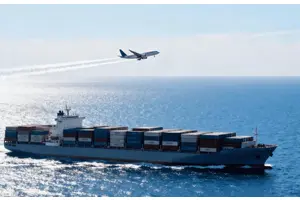
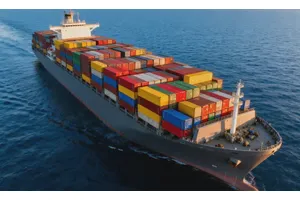
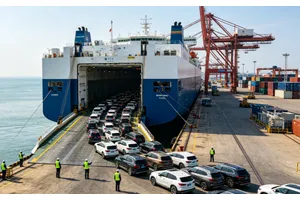
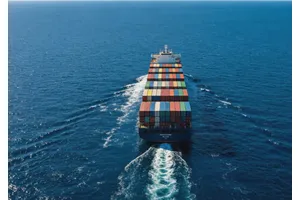
The container is stuffed at a factory in Panyu at 9 a.m. By lunch it is on a truck heading for the Nansha terminal, 45 minutes away. By Friday it is on a vessel that will cross the Strait of Malacca and either thread the Suez Canal or round the Cape of Good Hope — depending on the Red Sea situation — and in four to six weeks it will discharge at Felixstowe, Southampton or London Gateway. That is the reality of shipping from Guangzhou to UK: one of the fastest factory-to-port links in China feeding one of the busiest trade lanes on earth.
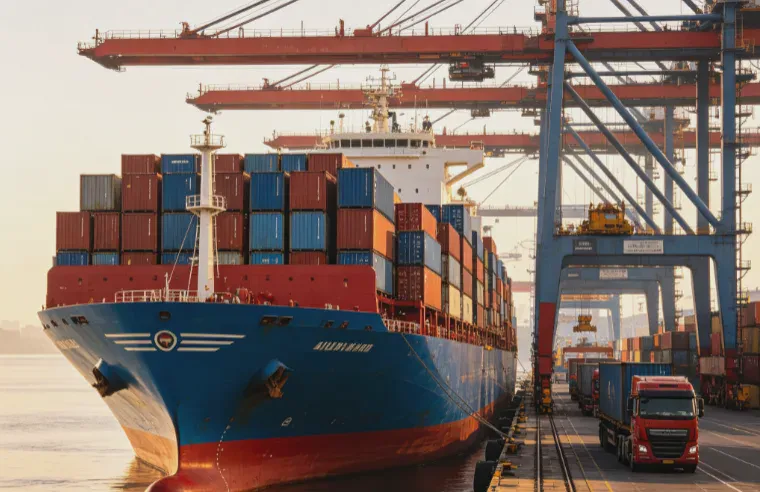
Guangzhou is not a second-choice origin. It is the export gateway for the densest manufacturing region in China — the Pearl River Delta — and the home of the country's most important wholesale supply chains: the fabrics of Zhongda, the garments of Shahe, the small commodities of Yide Lu. If your suppliers sit anywhere between Foshan and Dongguan, shipping out of Guangzhou (via the deep-water Nansha terminal or the older Huangpu port) is usually cheaper and faster than trucking the same cargo 1,500 km north to reach a "cheaper" sailing from Shanghai — a mistake the DTFU operations desk watches importers make every year.
This guide covers the Guangzhou end properly — Nansha's weekly Asia–Europe sailings, the price and transit picture versus Shanghai and Shenzhen, the Baiyun (CAN) air-freight option — and then the UK end: which British port to discharge at, the post-Brexit customs machinery (CDS, EORI, duty, 20% VAT), and a real door-to-door cost stack. Every rate and transit figure below matches our shipping from China to UK lane data, so you can compare this guide with any other origin guide on the site without contradictions.
Shipping from Guangzhou to UK: Why Nansha Is the Natural Gateway for Pearl River Delta Factories
The Pearl River Delta (PRD) is the manufacturing core of southern China, and Guangzhou sits at its center. The practical consequence for UK-bound cargo:
- Foshan (furniture, ceramics, sanitary ware) — 1–1.5 hours by truck to Nansha.
- Zhongshan (lighting, hardware, appliances) — 1–1.5 hours.
- Dongguan (electronics, apparel, footwear) — 1.5–2 hours.
- Panyu and Shunde (appliances, textiles) — 30–60 minutes.
- Guangzhou city markets (Yide Lu wholesale goods, Zhongda fabrics, Shahe garments) — 30–60 minutes.
No other Chinese port complex has this density of manufacturing within two hours. A container loaded at the factory in Foshan on Wednesday can be on a Friday sailing from Nansha; the same cargo trucked to Shanghai would add two days and $400–$700 in inland haulage before it even reached the terminal. For UK-bound furniture, ceramics, textiles, and consumer goods — the cargo the PRD is famous for — Guangzhou is the shortest distance between factory and vessel.
On the terminal side, Nansha is the deep-water port that handles mainline Asia–Europe vessels, with Maersk, MSC, CMA CGM, COSCO, and ONE all running weekly loops through South China. Huangpu, the older river port, serves feeder and smaller-lot traffic. The practical difference: mainline UK services load at Nansha, so your cargo must reach the Nansha yard by the vessel cut-off (usually 24–48 hours before departure) — which is why we schedule PRD pickups a full day ahead of the cut-off and treat rollover (missing the sailing) as the costliest failure on this lane: a rollover quietly adds 7–14 days while you wait for the next weekly sailing.
Guangzhou to UK Sea Freight Costs: 20ft, 40ft and LCL Rates from Nansha in 2026
These are the 2026 rate ranges we book on the Guangzhou–UK lane — port-to-port, excluding UK-side charges and taxes:
| Container | Capacity | Rate range (USD) | Notes |
|---|---|---|---|
| 20ft FCL | 28 CBM | $1,600–$2,800 | Low season $1,600–$2,200; dense cargo |
| 40ft FCL | 56 CBM | $2,800–$5,500 | China-wide band; Guangzhou sits mid-range |
| 40ft High Cube | 68 CBM | +$150–$300 over 40ft | Best value for light, voluminous cargo |
| LCL | per CBM | ~$100–$120 | 1 CBM minimum; improves with volume |
A typical 5 CBM LCL shipment from Guangzhou lands around $500–$600 before UK-side charges; 10 CBM drops toward $80/CBM as consolidation discounts kick in. Above roughly 15 CBM, always price the FCL first — the 40ft at around $50–55/CBM beats LCL per cubic meter almost every time, and the math is laid out in our sea shipping cost from China to UK guide. For the container-type comparison — 20ft vs 40ft vs 40HQ pricing on China–UK lanes — see high cube shipping container cost from China.
When rates move: the same calendar rules apply from Guangzhou as from any Chinese port. Chinese New Year (late January/February) triggers a pre-holiday booking surge; Golden Week (October) tightens capacity; Q4 brings Peak Season Surcharges from August through October. And the Red Sea factor: whenever diversions around the Cape of Good Hope are in force, expect roughly $1,000–$2,000 per container in added war-risk and fuel surcharges — and longer transits, as below.
Guangzhou vs Shanghai vs Shenzhen: Shipping Time and Price Comparison to the UK
Here is the honest comparison for UK-bound cargo, with transit on the normal Suez routing:
| Origin | Typical 20ft rate | Ocean transit (Suez) | Ocean transit (Cape) | Best for |
|---|---|---|---|---|
| Guangzhou (Nansha) | $1,600–$2,800 | 28–35 days | 38–48 days | PRD factories; wholesale-market cargo; furniture/textiles/ceramics |
| Shenzhen (Yantian/Shekou) | $1,600–$2,800 | 28–35 days | 38–48 days | Electronics and hi-tech from the Shenzhen belt |
| Shanghai (Yangshan) | $1,600–$2,800 | 28–35 days | 38–48 days | Yangtze River Delta suppliers; highest sailing frequency |
Transit times to UK ports are broadly similar across all three origins — the vessel speed and routing dominate, not the 200 nautical miles between Chinese ports. The differences are in frequency (Shanghai has more weekly sailings, so more schedule flexibility), price (Guangzhou and Shenzhen compete with Shanghai within the same bands), and inland logistics (PRD factories lose money being trucked north). The door-to-door reality — including UK customs clearance (usually 1–2 working days) and inland haulage — lands around 35–45 days on the Suez routing, and our shipping time from China to UK guide breaks the leg-by-leg math down.
One note on quoting: right now, live rate platforms quote Shanghai→Felixstowe at 47–61 days because their algorithms reflect Cape-of-Good-Hope routings during Red Sea diversions. Those quotes are real for the diversion routing — but they are not the only option. A forwarder booking the Suez routing as soon as conditions allow gets you back to 28–35 days. Always ask which routing the transit quote assumes, and watch the Red Sea security situation with your forwarder.
Which UK Port Should Your Guangzhou Container Discharge At?
Your container can land at several British ports, and the choice changes your inland bill:
- Felixstowe — the UK's largest container port, handling roughly 40% of Britain's containerized imports. The default arrival point for Asia–Europe services from Nansha, with the deepest inland haulage network — but the worst congestion history, and furthest from the Midlands and the North.
- Southampton — deep-water south-coast port taking the largest Asia–Europe vessels, with a steadier clearance rhythm in recent years; strong for the South West and Wales.
- London Gateway — DP World's modern Thames port, closest major hub to London with direct rail links; fewer services than Felixstowe, so check whether your carrier's Nansha loop calls there.
The last mile is where UK geography gets real — inland haulage is a serious line item:
| Destination from port | Felixstowe | Southampton | London Gateway |
|---|---|---|---|
| London (distribution zones) | ~2–2.5 h | ~1.5–2 h | ~1 h |
| Birmingham (Midlands) | ~2.5–3.5 h | ~2.5–3 h | ~2.5 h |
| Manchester / Leeds (North) | ~4–5 h | ~4–4.5 h | ~4–4.5 h |
| Glasgow (Scotland) | ~7–8 h | ~7.5 h | ~7.5 h |
A container discharged at Felixstowe and trucked to a Glasgow warehouse can add $900–$1,200 in haulage on top of the ocean rate. That is why we ask for the delivery postcode before recommending a port — a habit that routinely saves UK importers $300–$800 per container. For the wider Europe picture from China, our shipping from China to Europe page compares UK-bound and continental flows.
UK Customs After Brexit: CDS, EORI and the 20% VAT Math for Guangzhou Shipments
Since Brexit, importing into the UK runs through machinery many first-time Guangzhou importers have never touched. Three things matter:
1. CDS (Customs Declaration Service). All import declarations are filed through CDS, HMRC's electronic system. Your forwarder files the entry and the system issues the clearance decision — there is no paper queue, which means document quality at origin decides clearance speed at destination. Fix the documents in Guangzhou and clearance takes a day; ship them wrong and you pay storage from day one.
2. EORI number. Every importer needs a GB-prefixed EORI number before goods can clear. It is free and takes 5–10 minutes online; without it, your container sits at the port on demurrage. Under DDP, the forwarder clears on its own EORI — but if you clear in your own name, register before the vessel departs Nansha, not after it arrives.
3. Duty and VAT. Import duty is charged on the CIF value under the UK Global Tariff, and the rate depends entirely on the HS code:
| Product category | Typical HS codes | Customs duty |
|---|---|---|
| Electronics & consumer appliances | 84, 85 | 0%–2% |
| Machinery & mechanical parts | 84 | 0%–2% |
| Textiles & apparel | 61, 62 | up to 12% |
| Footwear | 64 | 8%–17% |
| Ceramics & porcelain | 69 | up to 9% |
| Toys & games | 95 | 0%–4.7% |
Most electronics and machinery — a big slice of what leaves Guangzhou — clear at 0–2%. The categories that hurt are classic consumer goods: textiles up to 12%, footwear up to 17%. Then comes the number that surprises every first-time importer: 20% import VAT, calculated on CIF plus duty:
| Calculation step | Amount (USD) |
|---|---|
| CIF value (goods + insurance + freight) | $10,000.00 |
| Customs duty (2% for electronics) | + $200.00 |
| Dutiable value for VAT | $10,200.00 |
| Import VAT (20%) | + $2,040.00 |
| Total import tax due | $2,240.00 |
Two things soften this: Postponed VAT Accounting (PVA), which lets VAT-registered importers defer import VAT to their VAT return instead of paying at clearance, and the £135 threshold for low-value e-commerce consignments, where import VAT is collected at point of sale. If you are VAT-registered, PVA is free cash flow — ask your forwarder to set it up. The China-side export process that feeds this is covered on our customs clearance page.
Air Freight from Guangzhou Baiyun (CAN) to London: The 3–10 Day Option
When 35 days is too long, Guangzhou Baiyun International Airport (CAN) is the largest air-cargo hub in South China — and for garment and 3C (electronics) exporters it is usually the natural origin. CAN has daily freighter and belly capacity on the Europe lanes: China Southern's own network, Ethiopian Airlines via Addis Ababa for Africa–Europe connections, and Qatar Airways/Emirates via Doha and Dubai for UK-bound transit.
| Mode | Door-to-door time | Typical rate |
|---|---|---|
| Air freight (CAN → LHR/STN, 100 kg+) | 3–10 days | ~$5.00–$8.00/kg |
| Express courier (DHL/FedEx/UPS) | 3–5 days | ~$8–$13/kg |
The air sweet spot is 100–1,000 kg of high-value, time-sensitive cargo — seasonal fashion that missed the sea-freight window, electronics launches, urgent spare parts. Below 100 kg, express couriers are usually cheaper and simpler. One CAN-specific advantage: the airport sits 30–40 minutes from the Shahe and Zhongda markets, so a garment order finished on Monday can be on a Tuesday freighter — a speed-to-market edge that northern origins cannot match. DTFU books CAN departures for garment and electronics clients weekly, with Ethiopian and China Southern routings the workhorses on the UK lane. Our air shipping from China to UK guide covers the carrier and pricing detail.
Door-to-Door from a Guangzhou Factory to a UK Warehouse: Process and Cost Stack
Most first-time importers from Guangzhou choose door-to-door under DDP (Delivered Duty Paid): pickup at the factory, export clearance, ocean freight, UK customs clearance, duty and VAT prepaid, delivery to a specific address — one contract, one price. Here is the cost stack for a 20ft FCL from Nansha to a Birmingham warehouse, the structure we quote on this lane in 2026 (duty and VAT excluded — they depend on your goods and HS codes):
| Cost item | USD estimate |
|---|---|
| Ocean freight (Nansha → Felixstowe) | $1,800 |
| Origin charges (export clearance, terminal handling, docs) | $160 |
| Bunker Adjustment Factor (fuel surcharge) | $320 |
| Destination charges (DTHC, port handling) | $280 |
| UK customs clearance & brokerage | $180 |
| Inland haulage (Felixstowe → Birmingham) | $420 |
| Insurance (optional, 0.15–0.3% of cargo value) | $35 |
| Total estimated cost (excl. duty & VAT) | ~$3,195 |
A door-to-door quote runs roughly 60–90% above the headline ocean rate — that gap is normal, the price of touching zero documents yourself. Under DDP the forwarder owns the CDS filing, the EORI, the duty and VAT prepayment, and the haulage booking; under DAP the same chain runs but import taxes are billed at delivery. For the full comparison, our DDP vs FOB guide explains which Incoterm leaves which burden with you, and the door-to-door shipping page shows how the chain is run end to end. Two lane-specific guides go deeper on the all-in numbers: door-to-door shipping from China to UK and DDP shipping from China to UK.
Guangzhou Cargo, Packing and Consolidation: Getting the Most from Your Container
The PRD's wholesale markets give Guangzhou exporters a structural advantage — if they consolidate properly. A typical multi-supplier order looks like this: fabrics from Zhongda, finished garments from a Shahe workshop, packaging from Yide Lu. Each supplier alone produces far less than a container; combined, they often fill one.
- Consolidate before you ship. Ship all supplier orders to one consolidation warehouse in Guangzhou over a 2–3 week window, then load a single FCL. One export declaration, one vessel, one clearance — typically 20–30% cheaper than shipping each order as separate LCL.
- Compress the cartons. Guangzhou freight is billed per CBM on LCL; a carton with 20% dead space is 20% wasted freight. Standardize carton sizes and let the consolidation warehouse re-palletize.
- Fumigate the wood. Any wooden pallets, crates, or dunnage must carry the ISPM 15 stamp — UK enforcement is strict, and unstamped wood gets treated at destination at your expense. Guangzhou suppliers know this, but verify anyway; we catch unstamped pallets on PRD pickups monthly.
- Think FBA. If your cargo is headed to an Amazon UK fulfillment center, the same Guangzhou consolidation works — cartons arrive labeled and ready. Our Amazon FBA service page explains the labeling and booking rules.
Common Mistakes Guangzhou Exporters Make Shipping to the UK
- Trucking PRD cargo to Shanghai for a "cheaper" sailing. The ocean rate difference rarely exceeds the $400–$700 inland haulage you pay to create it. If your factory is in the PRD, ship from Guangzhou.
- Missing the Nansha cut-off. Mainline vessels have firm yard cut-offs; cargo arriving late rolls to next week — 7–14 days lost. We schedule PRD pickups a day ahead of cut-off, every time.
- Ignoring the Chinese holiday calendar. Golden Week (October) and CNY gridlock PRD trucking and booking windows; Qingming and the mid-autumn festival add smaller but real delays. Book space and arrange trucking around them.
- Choosing the wrong UK port for the postcode. A Glasgow-bound container landed at Felixstowe costs an extra haulage leg; a London-bound one landed at Southampton adds a day. Give the forwarder the delivery postcode before booking.
- Misdeclaring HS codes or values on textiles. Textiles up to 12% duty and the 20% VAT make under-declaration tempting — and CDS cross-checks declarations against invoices, with penalties that dwarf the saving. Guangzhou garment exporters get burned here more than any other category.
FAQs
1. How much does it cost to ship a 20ft container from Guangzhou to UK?
$1,600–$2,800 port-to-port in 2026 — low season $1,600–$2,200, peak up to $2,800+. A 40ft runs $2,800–$5,500; a 40HQ adds roughly $150–$300. Door-to-door DDP adds clearance, duty/VAT prepayment and inland delivery.
2. How long does shipping from Guangzhou to UK take?
Port-to-port 28–35 days on the Suez routing, 38–48 via the Cape. Add 5–10 days for UK customs and inland delivery — the realistic door-to-door figure is 35–45 days.
3. Which Chinese port is best for UK-bound cargo — Guangzhou, Shanghai or Shenzhen?
All three run within the same rate bands and transit times. Choose by supplier location: PRD factories ship from Guangzhou/Shenzhen (Nansha/Yantian); Yangtze Delta suppliers ship from Shanghai. Trucking cargo to the "wrong" port costs more than the rate difference.
4. How much is LCL from Guangzhou to the UK?
Roughly $100–$120/CBM (within the $85–$170 band depending on volume), 1 CBM minimum. A typical 5 CBM shipment costs about $500–$600 before UK-side charges.
5. Do I need to pay VAT and duty on imports from China to the UK?
Yes. Import duty applies at the UK Global Tariff rate for your HS code (electronics and machinery 0–2%, textiles up to 12%, footwear up to 17%), plus 20% import VAT on (CIF + duty). VAT-registered importers can use Postponed VAT Accounting to defer it.
6. What is the fastest way to ship from Guangzhou to UK?
Air freight from Baiyun (CAN) to Heathrow/Stansted runs 3–10 days at roughly $5.00–$8.00/kg for 100 kg and up. Express couriers deliver small urgent parcels in 3–5 days at roughly $8–$13/kg.
7. What documents do I need for a Guangzhou-to-UK shipment? Bill of Lading, commercial invoice, packing list, Certificate of Origin, EORI (if self-clearing), and import licenses for regulated goods. All three main documents must match exactly — CDS cross-checks them.
Ship from Guangzhou with a Forwarder Who Knows the PRD
Shipping from Guangzhou to UK is a mature lane with competitive rates and a predictable tax structure — once the CDS machinery is handled. The winning formula: consolidate PRD suppliers into one Nansha FCL, book the Suez routing when conditions allow, choose the UK port by postcode, and get the documents checked before the container leaves the yard.
DTFU runs a Guangzhou consolidation hub covering the Zhongda, Shahe and Yide Lu supply chains, books mainline Nansha sailings with direct carrier contracts, and handles the UK side — CDS filing, EORI, duty and 20% VAT under PVA where it applies — with the same team that works the Shanghai lane. Send us your cargo details and delivery postcode, and we will quote the lane the way it actually runs, itemized line by line.