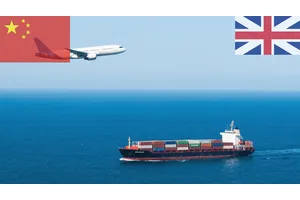
China exported over 5.2 million vehicles in 2025, and the United Kingdom has rapidly become one of the top five European destinations for Chinese-made cars — from affordable EVs like the BYD Seagull to premium SUVs from NIO and Zeekr. But ask a simple question — how much to ship a car from China to UK — and the answers you'll find online range anywhere from £1,200 to over £12,000. That's a 10× spread, and for most first-time importers, it's not just confusing — it's alarming.
Here's why that spread exists: most online quotes only cover ocean freight — the base cost of moving a vehicle from a Chinese port to a UK port. They leave out the six to eight additional cost layers that stack on top: export documentation, marine cargo insurance, terminal handling charges, UK import duty, VAT, customs clearance brokerage, port fees, inland transport, and — crucially — the post-arrival compliance and registration costs that turn a cleared vehicle into a road-legal UK car. Whether you're handling international car transport for the first time or expanding an existing vehicle logistics China to UK operation, the gap between "shipping quote" and "total landed cost" is where budgets break.
In this guide, we close that gap. As a freight forwarder with over a decade of experience managing vehicle shipments from China to more than 120 countries, our team at DTFU Logistics has handled hundreds of car exports — including regular shipping from China to UK for individual importers and commercial dealers alike — and we're going to walk you through every single cost you'll face, line by line, with real 2026 numbers. By the end, you'll have a complete, no-surprises budget for shipping your car from China to the UK.
Car Shipping Cost China to UK 2026: The Quick-Answer Price Table
Before we dive into the details, here's the number most readers came for. The table below shows all-inclusive total landed costs — meaning ocean freight, insurance, UK import duty (10%), VAT (20%), customs clearance, and basic registration fees combined — organized by vehicle type and shipping method. These are real-world ranges based on 2026 market data from multiple carriers and forwarders.
| Vehicle Type | Shipping Method | Total Landed Cost (All-In) | Total Transit Time |
|---|---|---|---|
| Small Car / Sedan (e.g., Toyota Corolla, Honda Civic) | RoRo (Roll-on/Roll-off) | £4,500 – £6,500 | 28–35 days |
| Small Car / Sedan | 20ft Container (FCL) | £5,500 – £7,500 | 30–38 days |
| SUV / Large Car (e.g., BMW X5, Land Rover) | RoRo | £6,000 – £8,500 | 28–35 days |
| SUV / Large Car | 40ft Container (FCL) | £7,500 – £10,000 | 32–40 days |
| Chinese EV (e.g., BYD Atto 3, MG4) | RoRo | £5,000 – £7,500 | 28–35 days |
| Chinese EV | Container (DG-compliant) | £7,000 – £10,000 | 32–40 days |
| Luxury Car (>£40,000 value) | 40ft Container (FCL) | £12,000 – £18,000+ | 32–40 days |
| Two Cars (shared 40ft) | Shared Container / Consolidated Shipping | £4,000 – £6,000 per car | 30–38 days |
The core formula driving every number in this table is straightforward:
Total Landed Cost = (CIF Value × 1.10 × 1.20) + UK Registration & Compliance Costs
Where CIF stands for Cost (vehicle purchase price) + Insurance + Freight — the Incoterms 2020 basis used by HMRC to calculate import taxes. The 1.10 multiplier is import duty (10%), and the 1.20 multiplier is VAT (20%) applied on top. Registration and compliance costs — DVLA fees, Vehicle Excise Duty (VED) , potential IVA (Individual Vehicle Approval) , and any required modifications — are added separately and detailed in Section 6.
If you're searching for the cheapest way to ship a car from China to UK, the short answer is: standard sedan, RoRo shipping, booked 3+ months ahead during the off-peak season (March–May or September–November), departing from Shanghai or Ningbo. For a typical £8,000–£15,000 vehicle, that path keeps your total landed cost under £6,500. Every money-saving tactic is unpacked in Section 9.
These are shipping a car from China to UK price ranges grounded in current market data. Your exact cost depends on your departure port, vehicle size, season, and shipping method — each factor is explained in full below. If you're also considering imports to North America, our guide on how much to ship a car from China to USA breaks down the comparable costs and process for the US market.
RoRo vs. Container vs. Shared Container: Shipping Methods, Costs & Transit Times
Choosing the right shipping method is the single biggest cost-control decision you'll make. Each method has a different cost structure, risk profile, and set of restrictions. Here's how they compare.
What Is Roll-on/Roll-off (RoRo) Shipping and How Much Does It Cost?
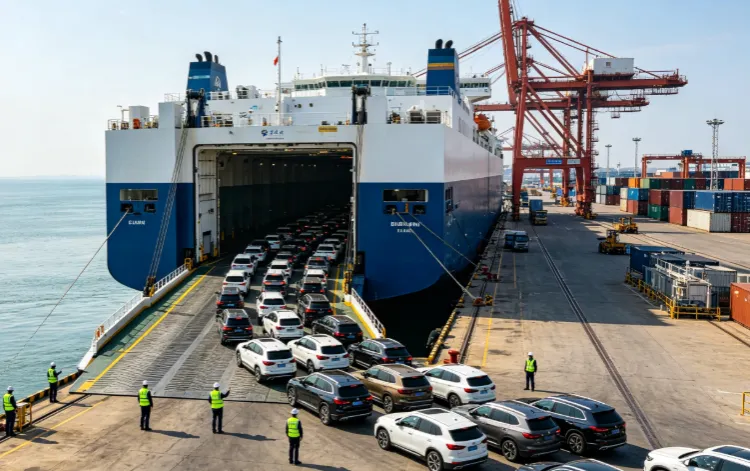
Roll-on/Roll-off (RoRo) shipping is the most common method for international vehicle transport. Your car is driven directly onto a specialized car carrier vessel via built-in ramps and secured on multi-level vehicle decks — essentially a floating parking garage designed exclusively for wheeled cargo.
RoRo shipping cost China to UK car ranges from £1,200 to £2,500 for port-to-port service, with a typical transit time of 21–28 days. Major RoRo carriers operating the China-to-Europe lane include COSCO, Wallenius Wilhelmsen, K-Line (Kawasaki Kisen), and Grimaldi — each with different sailing schedules, transit times, and vehicle acceptance policies.
RoRo is ideal for standard, drivable passenger vehicles where budget is the priority. It's typically 30–50% cheaper than container shipping for a single car. However, there are important restrictions: personal belongings cannot be left inside the vehicle (this is a strict international shipping regulation — UK customs will reject the shipment), and not all Chinese ports offer RoRo service. Shanghai, Tianjin, and Guangzhou/Nansha have dedicated RoRo terminals; Qingdao and Shenzhen have limited RoRo availability and may require container shipping instead.
Container Shipping a Car from China to UK — FCL Costs & When to Choose It
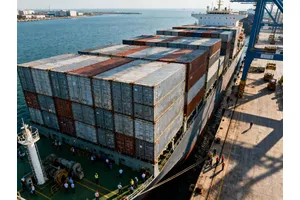
Container shipping for vehicles involves loading your car into a sealed steel shipping container, which is then lifted onto a container vessel. This method offers maximum protection — your vehicle is shielded from weather, salt spray, and handling risks throughout the journey.
FCL (Full Container Load) car shipping costs break down by container size:
- 20ft container: Fits one standard passenger car or small crossover. Typical cost £1,800–£3,200 port-to-port.
- 40ft container: Fits one large SUV, one luxury vehicle, or up to two compact cars racked together. Typical cost £2,800–£4,800 port-to-port.
The 20ft vs 40ft container car shipping cost from China decision depends on two factors: your vehicle's dimensions and whether you want to ship personal items alongside the car. Unlike RoRo, containers allow personal belongings inside the vehicle — though everything must be declared on the packing list and is subject to customs inspection.
Container shipping car from China to UK cost is 30–50% higher than RoRo, but the premium is justified for high-value vehicles (>£30,000), classic or modified cars, non-running vehicles, or any situation where you need the security of a sealed, weatherproof environment. Container shipping is available from all major Chinese ports.
Shared Container / Consolidated Shipping — The Budget Option Most Importers Overlook
Shared container car shipping China to UK — also called consolidation or LCL (Less than Container Load) for vehicles — is a cost-saving approach where two importers share a single 40ft container, each loading one car. Each party pays roughly £1,200–£2,000 for their share of the freight, saving 15–25% compared to booking a full container alone.
The trade-offs are real: transit takes 3–7 days longer because the container must wait to be filled at origin, and coordination between two unconnected shippers requires a freight forwarder experienced in consolidation. But for budget-conscious importers who want container-level protection at near-RoRo pricing, it's an option worth exploring.
Four-Way Comparison: RoRo vs. 20ft Container vs. 40ft Container vs. Shared Container
| Factor | RoRo | 20ft Container (FCL) | 40ft Container (FCL) | Shared Container |
|---|---|---|---|---|
| Cost (port-to-port) | £1,200 – £2,500 | £1,800 – £3,200 | £2,800 – £4,800 | £1,200 – £2,000/car |
| Transit Time | 21–28 days | 28–35 days | 30–38 days | 30–40 days |
| Vehicle Security | Medium (exposed decks) | High (sealed, weatherproof) | High (sealed, weatherproof) | Medium-High |
| Personal Items Allowed | ❌ No | ✅ Yes (declared) | ✅ Yes (declared) | ⚠️ Limited |
| Best For | Standard drivable cars, budget priority | High-value single car, personal items needed | Large vehicles, 2 small cars | Budget-conscious, flexible timeline |
| Insurance Rate | 0.3–0.5% of declared value | 0.2–0.4% of value | 0.2–0.4% of value | 0.3–0.5% of value |
Quick decision guide: If your car is worth under £30,000, is fully operational, and you don't need personal items inside — go RoRo. If it's worth over £30,000, classic, modified, or you need to pack belongings — go container. If you're shipping two cars or can find a consolidation partner — shared container gives you container security at RoRo-level pricing. For a detailed breakdown of container dimensions, loading configurations, and exact pricing by port pair, see our guide on 20ft & 40ft container cost from China to UK.
Door-to-Door Car Shipping from China to UK
This is the section most compe*****s avoid — a line-by-line car shipping from China to UK price breakdown covering every fee from the factory gate in China to your driveway in the UK. Understanding these line items is how you spot a transparent quote from one loaded with hidden costs.
Understanding the True Cost Stack — Why Quotes Vary by 2–3×
Ocean freight pricing isn't a single number. It's a stack of components that carriers and forwarders assemble differently. Here's the actual structure:
Base Ocean Rate → + BAF (Bunker Adjustment Factor / fuel surcharge) → + Peak Season Surcharge (Jun–Aug, pre-Chinese New Year: +15–35%) → + Port Congestion Surcharge (when applicable) → + THC (Terminal Handling Charges at origin and destination) → + Documentation Fees
A quote that looks £800 cheaper on the base rate may actually cost more after surcharges are applied — or worse, arrive without essential components like destination THC or customs clearance, leaving you to pay hundreds in unexpected port fees. Always ask for an all-in, line-item quote.
Pre-Shipment Costs — Vehicle Inspection, Cleaning & Export Documentation (China Side)
Before your car reaches the port, these costs apply:
| Cost Item | Typical Range | Notes |
|---|---|---|
| Pre-shipment inspection vehicle China | £50 – £100 | Dated photos of all panels; critical evidence for insurance claims |
| Undercarriage cleaning (biosecurity) | £30 – £60 | UK Border Force requirement — soil and seeds must be removed |
| Document notarization & English translation | £80 – £150 | Vehicle registration certificate, purchase invoice |
| Certificate of origin China vehicle | £30 – £60 | Required for UK customs to determine duty rate |
| Commercial invoice vehicle export China | Included in forwarder fee | Must be in English, with accurate declared value |
| Packing list car export | Included in forwarder fee | Details vehicle specs, VIN, shipping particulars |
| UKCA certification (if applicable) | £170 – £280 | Mandatory from 2026 for non-type-approved vehicles |
| Inland transport to departure port | £100 – £400 | Depends on distance from seller/factory to port |
| Export customs clearance for vehicle imports UK (China side) | £80 – £150 | Handled by your freight forwarder |
Ocean Freight for Vehicles — Base Rate, Surcharges & the Bill of Lading
| Cost Item | RoRo | 20ft Container | 40ft Container |
|---|---|---|---|
| Ocean freight for vehicles (base rate) | £1,100 – £2,000 | £1,600 – £2,800 | £2,500 – £4,200 |
| BAF (fuel surcharge) | £80 – £180 | £120 – £200 | £180 – £300 |
| Peak season surcharge (Jun–Aug, pre-CNY) | +15–35% | +15–35% | +15–35% |
| Terminal Handling Charges (origin + destination) | £150 – £250 | £200 – £350 | £250 – £400 |
| Bill of lading car shipping fee | £30 – £60 | £30 – £60 | £30 – £60 |
The bill of lading (B/L) is the most important document in your shipment — it serves simultaneously as a receipt for the goods, a contract of carriage, and a document of title (whoever holds the original B/L owns the right to claim the cargo at destination). Your freight forwarder will issue this and it must be presented for UK customs clearance.
Marine Cargo Insurance for Vehicles — What's Covered, What's Not
Marine cargo insurance for vehicles typically costs 0.2–0.5% of the vehicle's declared value — roughly £30–£125 for a £15,000 car. But the premium isn't the most important number; the coverage scope is.
Most policies are written under Institute Cargo Clauses:
- Clause A (All Risks): The broadest coverage — recommended for vehicle transport. Covers total loss, partial damage, theft, and General Average contribution.
- Clause B: Named perils only — covers specific listed risks.
- Clause C: Minimum coverage — major casualties only (sinking, fire, collision).
What Clause A covers: physical damage during loading/unloading, weather damage, theft, collision, fire, General Average. What it excludes: inherent vice (pre-existing mechanical issues), insufficient packing, and — critically — personal items left inside the vehicle unless separately declared and insured.
Here's a fact most first-time shippers don't realize: carrier liability under international maritime law is typically capped at around £100–£200 per vehicle under the Hague-Visby Rules — not the vehicle's actual value. Without separate marine cargo insurance, a total loss during transit leaves you recovering pocket change on a £20,000 car. Always insure for the full declared value, and always take dated, high-resolution photographs of every panel and the interior before the vehicle leaves for the port. For a deeper look at premium calculations, coverage tiers, and the claims process, see our guide on shipping container insurance cost for shipments from China.
UK Destination Charges — Port Fees, Customs Broker & Final Delivery
| Cost Item | Typical Range | Notes |
|---|---|---|
| UK port charges & unloading | £150 – £300 | Varies significantly by port |
| Customs clearance broker fee | £80 – £250 | Strongly recommended; DIY clearance is complex |
| Customs examination (if selected) | £100 – £350 | Risk-based random selection; ~5–15% of shipments |
| Inland transport (port to final UK address) | £150 – £500 | Depends on distance; car transporter or flatbed |
Hidden Costs Importing a Car to UK — 5 Fees That Catch Buyers Off Guard
Experienced importers know to budget for these, but most guides don't mention them:
- Demurrage & Storage (£30–£150/day): If you don't clear customs and collect the vehicle within the free time period (typically 3–5 days at UK ports), daily storage charges begin accumulating immediately.
- Customs Examination Fee (£100–£350): If HMRC or Border Force selects your shipment for physical inspection, you'll pay for the examination itself plus any associated handling — even if no issues are found.
- Quarantine Cleaning (£300–£800): If biosecurity inspectors find soil, plant material, or insects on the undercarriage, the vehicle is impounded and professionally cleaned at your expense before release.
- Late NOVA Penalty (£100–£1,000): Failing to submit the Notification of Vehicle Arrivals (NOVA) to HMRC within 14 days of the vehicle's arrival incurs escalating penalties.
- Non-Compliant Modification Rework (£200–£2,000+): If your vehicle fails the MOT because of non-UK-spec lights, speedometer, or emissions equipment, you'll pay for parts and labor to bring it into compliance — with no choice but to fix it before registration.
The single best defense against all five: work with a freight forwarder who provides a door-to-door car shipping from China to UK cost estimate that includes destination handling and clearance, and who proactively guides you through the post-arrival compliance steps. For importers looking for an all-inclusive service, our door to door shipping from China to UK guide covers every stage from supplier pickup to final UK delivery.
UK Import Taxes, Duties & VAT: How Much You'll Actually Pay to Import a Car from China
Import taxes are the single largest line item in your total cost — typically 30–35% of the vehicle's CIF value. Here's exactly how they're calculated.
UK Car Import Duty Rate & Customs Duty on Vehicles from China
The UK car import duty rate for passenger vehicles (HS Code 8703) imported from China is 10% of the CIF value (Cost + Insurance + Freight). This is the standard rate under the UK Global Tariff and — unlike e-bikes from China, which face additional anti-dumping duties — there are currently no supplementary tariffs on Chinese passenger cars.
Customs duty car import UK from China is calculated by HMRC based on the transaction value declared on the commercial invoice, which must reflect the actual price paid or payable. HMRC has the authority to challenge valuations that appear artificially low; if they determine a different market value, you'll be assessed additional duty plus potential penalties. Declare honestly and back it up with the original purchase invoice and proof of payment.
HMRC vehicle import rules also require you to have an EORI number (Economic Operators Registration and Identification) — a GB-prefixed identifier used for all customs declarations. This is free to obtain online and takes 5–10 minutes.
UK Import VAT on Vehicles — The 20% You Can't Ignore
UK import VAT on vehicles is charged at 20% on the total of: CIF value + Import Duty. In formula terms:
VAT = (CIF Value + Import Duty) × 20%
For VAT-registered businesses in the UK, import VAT can be reclaimed through the normal VAT return process — this is a major cash flow consideration for commercial importers. Private individuals cannot reclaim import VAT unless they qualify for Transfer of Residence (ToR) relief.
UK Car Import Tax Calculator — Worked Examples at Three Price Tiers
Let's walk through three real-world calculations under Incoterms 2020 CIF car shipping terms, where the seller arranges and pays for freight and insurance to the UK port.
Example A — £8,000 Budget Car (RoRo, Shanghai → Southampton):
| Calculation Step | Item | Amount |
|---|---|---|
| — | Vehicle FOB value | £8,000 |
| — | + Ocean freight (RoRo) | £1,500 |
| — | + Marine insurance (0.3%) | £24 |
| = | CIF Value | £9,524 |
| 1 | Import Duty (10% × CIF) | £952 |
| 2 | VAT (20% × (CIF + Duty)) | £2,095 |
| = | Total Tax Payable | £3,047 |
Example B — £22,000 Mid-Range EV (Container, Ningbo → Felixstowe):
| Calculation Step | Item | Amount |
|---|---|---|
| — | Vehicle FOB value | £22,000 |
| — | + Ocean freight (20ft container) | £2,800 |
| — | + Marine insurance (0.4%) | £88 |
| = | CIF Value | £24,888 |
| 1 | Import Duty (10%) | £2,489 |
| 2 | VAT (20%) | £5,475 |
| = | Total Tax Payable | £7,964 |
Example C — £50,000 Luxury SUV (40ft Container, Tianjin → Southampton):
| Calculation Step | Item | Amount |
|---|---|---|
| — | Vehicle FOB value | £50,000 |
| — | + Ocean freight (40ft container) | £3,800 |
| — | + Marine insurance (0.3%) | £150 |
| = | CIF Value | £53,950 |
| 1 | Import Duty (10%) | £5,395 |
| 2 | VAT (20%) | £11,869 |
| = | Total Tax Payable | £17,264 |
How Much Does It Cost to Import a Car from China to UK — The All-In Formula
The complete import a car from China to UK total cost including tax formula that ties everything together:
Total Landed Cost = FOB Price + Freight + Insurance + Import Duty (10% × CIF) + VAT (20% × (CIF + Duty)) + UK Clearance Fees + Port Charges + Inland Delivery + DVLA Registration (£55) + First-Year VED + Modifications (if needed) + IVA (if needed)
For a quick estimate, how much does it cost to import a car from China to UK? Roughly 32–35% on top of the vehicle's purchase-and-freight cost goes to duty and VAT alone. Registration, compliance, and modifications then add an additional £300–£6,000 depending on vehicle type and approval pathway.
Personal Import VAT Relief — Transfer of Residence (ToR)
If you're relocating to the UK and bringing your personal vehicle, you may qualify for Transfer of Residence (ToR) relief, which exempts you from paying the 20% import VAT — saving £1,400–£3,000 on a typical vehicle.
To qualify, you must: - Have owned and used the vehicle outside the UK for at least 6 consecutive months before moving - Not sell, lend, or dispose of the vehicle for 12 months after import - Be moving your normal place of residence to the UK - Apply for ToR approval via HMRC's online portal before the vehicle ships
This relief does not waive the 10% import duty — only the 20% VAT. Duty still applies, and all other compliance requirements (UKCA/IVA, registration, VED) remain unchanged.
UK Car Import Regulations 2026: Registration, IVA, VED & Compliance Costs
Customs clearance is not the finish line. Before your car can legally drive on UK roads, it must pass through a series of compliance and registration steps — and each carries a cost that import guides routinely overlook.
UKCA Certification & Certificate of Conformity — Mandatory from 2026
The most significant regulatory change for 2026: UKCA (UK Conformity Assessed) marking is now mandatory for vehicles imported into Great Britain that do not hold an existing EU or UN type approval recognized by the UK. This replaces the previous CE marking framework.
Obtaining a certificate of conformity UK vehicle import through a third-party certification agent costs £170–£280. The certification verifies that the vehicle meets UK safety, environmental, and technical standards. Without it, HMRC and the DVLA will not process your registration — and enforcement has tightened significantly: non-compliant vehicles now face a seizure and rejection rate of approximately 21% at UK ports, up from roughly 12% in 2024.
Vehicles that already hold a valid EU Whole Vehicle Type Approval (WVTA) or UK type approval (including most models from MG, BYD, ORA, and Polestar sold through official UK dealer networks) typically do not need separate UKCA certification — the existing approval serves the same purpose.
IVA (Individual Vehicle Approval) — When Your Car Needs It & What It Costs
IVA (Individual Vehicle Approval) is required when a vehicle does not have existing UK vehicle type approval or mutual recognition vehicle approval UK under post-Brexit arrangements. This is common for personally imported vehicles, particularly Chinese-market models not officially sold in the UK.
There are two tiers: - Basic IVA: For personally imported vehicles, simpler requirements. Cost: £1,000–£2,000 including testing fees and any minor compliance work. - Normal IVA: For commercially imported vehicles or those requiring full certification. Cost: £2,000–£5,000+ depending on required modifications.
Vehicles already sold through UK dealer networks (MG, BYD, ORA, Polestar/Geely) typically have UK type approval from the manufacturer, meaning no IVA is required. This is a significant cost advantage — if you're choosing between a dealer-sold Chinese EV and a China-market exclusive model, factor in the IVA cost differential.
NOVA (Notification of Vehicle Arrivals) — The 14-Day Deadline
NOVA (Notification of Vehicle Arrivals) is a mandatory electronic notification submitted to HMRC within 14 days of the vehicle's physical arrival in the UK. It records the vehicle's details, importer information, and arrival date. The submission itself is free, but late filing incurs penalties starting at £100 and escalating with continued non-compliance.
Your customs broker or freight forwarder typically handles NOVA submission as part of the clearance package — confirm this is included in your service agreement.
DVLA Vehicle Registration — V5C, Fees & Required Documents
DVLA vehicle registration import requires submitting the following to the DVLA:
- Completed V5C application form (form V55/5 for used vehicles, V55/4 for new)
- Original foreign registration certificate with certified English translation
- UK insurance certificate (valid on the VIN, not registration number)
- Valid MOT certificate (if the vehicle is over 3 years old)
- Proof of identity (UK driving license or passport)
- £55 registration fee
- Evidence of type approval (UKCA, CoC, or IVA certificate)
- NOVA confirmation reference
- Payment for first-year Vehicle Excise Duty
Processing typically takes 2–4 weeks. The vehicle cannot be driven on public roads until the V5C registration number is issued and number plates are fitted.
First-Year Vehicle Excise Duty (VED) & Luxury Car Tax
First-year vehicle tax rate UK is determined by CO₂ emissions:
| CO₂ Emissions (g/km) | First-Year VED Rate (2026) |
|---|---|
| 0 (Electric Vehicles) | £10 |
| 1–50 | £10 |
| 51–75 | £130 |
| 76–90 | £270 |
| 91–100 | £350 |
| 101–110 | £390 |
| 111–130 | £440 |
| 131–150 | £540 |
| 151–170 | £1,360 |
| 171–190 | £2,190 |
| 191–225 | £3,300 |
| 226–255 | £4,680 |
| Over 255 | £5,490 |
This is where Chinese EVs have a major advantage: £10 first-year VED vs. potentially thousands for a high-emission petrol vehicle.
The luxury car tax UK import — officially the Expensive Car Supplement — adds £425 per year for years 2 through 6 of the vehicle's life if the list price exceeds £40,000. From April 2026, the threshold for zero-emission vehicles rises to £50,000, giving premium EVs a slight break. This is an ongoing cost, not a one-time fee — budget for it if you're importing a vehicle in this price bracket.
UK Vehicle Modifications — Headlights, Speedometer & Rear Fog Light Costs
Many Chinese-market vehicles require physical modifications before they pass a UK MOT:
| Modification | Approximate Cost | When Required |
|---|---|---|
| Headlight conversion (LHD→RHD beam pattern) | £200 – £600 | Most non-UK-spec vehicles |
| Speedometer (km/h to mph overlay or replacement) | £100 – £400 | If not dual-display km/h and mph |
| Rear fog light (UK-spec, driver's side) | £80 – £200 | If not factory-fitted or wrong side |
| DPF filter report (diesel vehicles) | £100 – £250 | Diesel vehicles for emissions compliance |
Some higher-spec Chinese vehicles (particularly those built for export markets) already have dual-unit speedometers and adjustable headlight beams, eliminating these costs. Check your specific model before budgeting.
China to UK Shipping Routes: Ports, Transit Times & Lane-Specific Costs
The port you ship from in China directly impacts your freight cost, available shipping methods, and transit time. Here's the lane-level data that generic guides don't provide.
Major Chinese Departure Ports for Car Export
| Departure Port | RoRo Available? | Container Available? | Typical RoRo Freight Range | Best For |
|---|---|---|---|---|
| Shanghai port car export | ✅ (largest RoRo volume in China) | ✅ | £1,100 – £1,900 | All vehicle types, best frequency |
| Ningbo | ✅ | ✅ | £1,200 – £2,000 | Zhejiang-sourced vehicles, shorter transit |
| Tianjin port RoRo terminal | ✅ (major northern RoRo hub) | ✅ | £1,300 – £2,200 | Northern China vehicles, Beijing/Tianjin area |
| Guangzhou / Nansha | ✅ | ✅ | £1,200 – £2,100 | Southern China vehicles, many EVs (BYD HQ proximity) |
| Qingdao | ⚠️ Limited RoRo | ✅ | £1,300 – £2,200 | Shandong province; container preferred |
| Shenzhen | ⚠️ Limited RoRo | ✅ | £1,400 – £2,300 | Pearl River Delta; container preferred |
Shanghai is the workhorse — it has the highest sailing frequency, the most carrier options, and typically the most competitive rates. Tianjin is the northern alternative with a dedicated RoRo terminal serving Beijing and surrounding provinces. Guangzhou/Nansha is strategically positioned near BYD's Shenzhen headquarters and multiple EV factories in Guangdong.
UK Arrival Ports for Vehicle Imports
- Southampton port vehicle import UK: The UK's primary RoRo vehicle terminal, handling the majority of car imports from Asia. Ships from Shanghai/Ningbo/Tianjin dock here. Ideal for RoRo shipments.
- Felixstowe port car import: The UK's largest container port. The default destination for containerized vehicle shipments. Excellent inland road connections.
- London Gateway: A rapidly growing container hub with modern facilities and good access to London and the Southeast.
- Liverpool: Convenient for destinations in Northern England and Scotland. Container service only.
- Bristol (Royal Portbury): Secondary RoRo option; less frequent sailings but can be convenient for Southwest England.
China to UK Shipping Routes — Transit Times by Port Pair
How long does it take to ship a car from China to UK? Here's the lane-specific answer:
| Route (China → UK) | RoRo Transit | Container Transit |
|---|---|---|
| Shanghai → Southampton | 23–28 days | 28–32 days |
| Ningbo → Southampton | 21–26 days | 27–30 days |
| Tianjin → Southampton | 26–32 days | 30–36 days |
| Guangzhou → Felixstowe | 24–30 days | 28–35 days |
| Shenzhen → London Gateway | 25–30 days | 30–35 days |
Add 5–10 days to these figures for door-to-door total time: 1–3 days for pre-shipment preparation at origin, 2–5 days for UK customs clearance and port release, and 1–3 days for inland delivery.
Ship Car from Shanghai to UK Cost vs. Shenzhen to UK Cost
Ship car from Shanghai to UK cost: £1,100–£1,900 for RoRo — the best combination of competitive pricing and sailing frequency. Shanghai offers 3–5 sailings per week to Southampton, meaning less waiting time at the port and more flexibility on dates.
Ship car from Shenzhen to UK cost: £1,400–£2,300, but RoRo availability is limited, so container shipping is often the default. The cost premium is offset by proximity to Guangdong's manufacturing clusters if you're collecting a vehicle directly from a factory or dealership in the Pearl River Delta — you may save enough on inland transport to offset the higher ocean freight.
Peak Season Surcharges — When to Book
Rates spike 15–35% during two windows: - June through August (summer peak — high consumer shipping demand across all cargo types) - Two weeks before Chinese New Year (late January/early February — factories and ports rush to clear shipments before the holiday shutdown)
The best booking windows for the lowest rates are March through May and September through November. During these periods, carriers have available capacity and forwarders can negotiate better rates. Book at least 4–6 weeks in advance for peak season sailings; 2–3 weeks is usually sufficient during off-peak. For more detailed transit time data across all major UK-bound routes, check our guide on how long does shipping take from China to UK.
Shipping Chinese Electric Cars to the UK: Costs, DG Rules & EV Brand Guide
China's electric vehicle export surge has transformed the UK car import landscape — and shipping an EV comes with distinct rules, costs, and considerations that differ from shipping a traditional combustion-engine vehicle.
Chinese Car Export Boom 2026 — Why EVs Are Flooding the UK Market
The Chinese car export boom 2026 has been staggering: China exported over 4.2 million vehicles in 2024, a 23.7% year-on-year increase, with the UK absorbing more than 213,000 units as one of the top five destinations globally. The driver is straightforward economics — Chinese EVs offer feature parity with European compe*****s at a 20–40% lower price point, even after shipping and import taxes.
Chinese EV brands UK market presence now includes: BYD (Seagull, Dolphin, Atto 3, Seal), MG (MG4, MG5, ZS EV — manufactured in China under SAIC), ORA (03 / Funky Cat), NIO (ET5, ET7, EL6), Xpeng (G6, P7), and Zeekr (001, X). Many of these are sold through official UK dealer networks, meaning they already carry UK type approval — but a growing number of buyers are importing models directly from China that aren't yet available in the UK market.
Shipping Chinese Electric Car to UK Cost — EV vs. ICE Comparison
Shipping Chinese electric car to UK cost differs from a petrol/diesel vehicle in several line items:
| Cost Component | ICE Vehicle | Electric Vehicle | Difference |
|---|---|---|---|
| Ocean freight (RoRo) | £1,200 – £1,900 | £1,300 – £2,200 | +£100–£300 (EV surcharge) |
| DG Class 9 documentation | N/A | £80 – £150 | New cost for EVs |
| Insurance premium | 0.3–0.4% | 0.4–0.6% | Higher risk classification |
| UK Import Duty | 10% | 10% | Same rate (currently) |
| First-Year VED | £10 – £5,490 | £10 | Major EV advantage |
| Expensive Car Supplement | £425/yr (>£40K) | £425/yr (threshold £50K from Apr 2026) | Slight EV advantage |
The higher freight and insurance costs for EVs are partially offset by dramatically lower UK road tax — a £10 first-year VED vs. potentially thousands for a high-emission vehicle.
Shipping EV Batteries from China to UK — DG Class 9 Compliance
Shipping EV batteries from China to UK — whether integrated in a vehicle or shipped as separate units — falls under Dangerous Goods (DG) Class 9 classification (UN 3171 for battery-powered vehicles, UN 3480 for lithium-ion batteries). This is the single most important operational difference between shipping an EV and a conventional car.
Key requirements include: - State of Charge (SOC): The IMO (International Maritime Organization) mandates batteries be maintained at 30–50% charge for ocean transport. Fully charged or fully depleted batteries are rejected at the port. - UN 38.3 test summary: Each battery model must have passed UN 38.3 safety testing (altitude simulation, thermal cycling, vibration, shock, external short circuit, overcharge) and the test summary document must accompany the shipment. - MSDS (Material Safety Data Sheet): Required for the battery system, detailing chemical composition, firefighting procedures, and handling precautions. - Carrier restrictions: Not all RoRo vessels accept EVs. COSCO and Wallenius Wilhelmsen accept EVs on most sailings with proper DG documentation; some smaller carriers do not. Fewer sailing options can mean higher costs or longer waiting times at the departure port. - Fire suppression surcharge: Some carriers add a $50–$100 per-vehicle EV surcharge to cover enhanced fire monitoring and suppression equipment.
UK Tariff on Chinese Electric Vehicles — Current Rates & Future Outlook
UK tariff on Chinese electric vehicles currently stands at the standard 10% import duty rate — the same as combustion-engine vehicles, with no additional anti-dumping or countervailing duties. This differs from the EU, which has imposed provisional countervailing duties of 17–38% on Chinese EVs following its anti-subsidy investigation.
UK trade policy could shift. The Department for Business and Trade has stated it is monitoring the EU's approach, and while no formal investigation has been launched, importers should budget with the understanding that tariffs could change. For now, the 10% rate makes the UK one of the most favorable major markets for Chinese EV imports. For businesses distributing vehicles across the continent, our shipping from China to Europe hub page covers all major European destinations — including shipping from China to Germany, the EU's largest automotive market.
Import Chinese Electric Car to UK Regulation — Type Approval Pathway
Import Chinese electric car to UK regulation for type approval depends on how you're importing:
- Through a UK dealer network: MG, BYD, ORA, and Polestar models sold officially in the UK already carry UK type approval. No additional testing needed.
- Personal import of a dealer-sold model: Same vehicle, same type approval — but you'll need the Certificate of Conformity from the manufacturer to evidence it.
- Personal import of a China-market exclusive model: These require IVA, adding £1,000–£5,000+ and potential modification costs. Popular examples include the BYD Seagull and BYD Seal U, which are sold in China but not yet (or just recently) available through UK dealers.
Before purchasing a Chinese EV for UK import, verify its UK type approval status. It's the difference between a £55 registration fee and a multi-thousand-pound certification process.
Cheapest Way to Ship a Car from China to UK
The difference between paying £4,500 and £8,500 to ship the same car often comes down to timing, method choice, and knowing which reliefs you qualify for. Here are seven strategies our team uses to reduce total landed cost for clients.
1: Book 3+ Months Ahead & Avoid Peak Season (Save 20–35%)
Ocean freight rates are highly seasonal. During the summer peak (June–August) and the pre-Chinese New Year rush (January/February), carriers add 15–35% peak season surcharges across all routes. Booking during the off-peak windows — March through May or September through November — not only avoids the surcharge but gives you more carrier options and better sailing availability. For a RoRo shipment that would cost £1,500 in March, the same route in July could run £1,950–£2,000.
2: Use a Freight Forwarder Instead of Booking Direct with Shipping Lines (Save 15–25%)
Shipping lines sell to freight forwarders at contract rates that individual shippers cannot access. A freight forwarder car shipping China to UK consolidates volume across multiple clients to negotiate discounts of 15–25% below published tariff rates — savings that flow through to your quote. Beyond price, a forwarder handles the paperwork chain (bill of lading, export declaration, customs clearance, NOVA submission) that would otherwise require you to coordinate with three to five separate parties across two countries.
When comparing car shipping companies China to UK, look for: FIATA and IATA certifications (verifiable through the respective association directories), direct contracts with carriers on the China–Europe lane, a physical office in China (essential for pre-shipment coordination), and quotes that are fully itemized — not lump sums. For a broader perspective on what a good forwarder brings to your supply chain, read our analysis of the strategic role of freight forwarders in modern supply chains.
3: Choose RoRo Over Container for Standard Vehicles (Save £500–£2,000)
If your vehicle is a standard, drivable passenger car worth under £30,000, and you don't need to ship personal belongings inside it, RoRo is almost always the right call. The cost savings are substantial — £500–£2,000 less than container shipping for a single vehicle — and the transit time is 5–10 days faster. RoRo is a mature, safe transport method: carriers use wheel chocks, lashing straps, and multi-level dedicated car decks designed specifically for vehicle transport.
4: Share a 40ft Container with Another Importer (Save £800–£1,500 per Car)
Consolidated shipping splits a 40ft container between two importers, each paying roughly £1,200–£2,000 instead of £2,800–£4,800 for a dedicated 40ft unit. The key is finding a reliable consolidation partner — your freight forwarder can match your shipment with another vehicle heading to the same UK port within a similar timeframe. Expect 3–7 extra days of transit time for the consolidation window.
5: Claim Personal Import VAT Relief — Transfer of Residence (Save Up to £3,000)
If you qualify for ToR relief (owned the vehicle 6+ months before relocating, won't sell for 12 months after import), you can reclaim the 20% import VAT. On a £15,000 vehicle with £3,000 in tax, that's a £3,000 saving. Apply via HMRC's online portal before the vehicle ships — retroactive claims are significantly harder to process. Keep all documentation proving both ownership duration and your change of residence (utility bills, rental agreements, employment contracts).
6: Remove Non-Original Modifications Before Shipping (Save 10–15% on Declared Value)
Aftermarket parts — custom wheels, body kits, performance exhausts, aftermarket audio — inflate your vehicle's customs valuation. UK customs assesses duty on the vehicle's condition as presented, including modifications. Removing non-original parts and returning the vehicle to factory specification before shipping can lower the declared value by 10–15%, saving an equivalent percentage on both import duty and VAT. Keep pre-modification and post-modification photos as evidence.
7: Ship with DDP (Delivered Duty Paid) to Avoid Surprise Fees
Incoterms 2020 DDP car shipping means your freight forwarder provides a single, all-inclusive price covering every cost from the Chinese departure port to your UK address — ocean freight, insurance, export clearance, import duty, VAT, customs brokerage, port fees, and final delivery. The price you're quoted is the price you pay, with no variable surcharges.
DDP isn't always cheaper than managing logistics yourself, but it eliminates the risk of surprise costs that can blow up a budget — demurrage charges you didn't know to plan for, customs exams you weren't expecting, inland delivery fees quoted separately. For first-time importers or anyone who values price certainty over squeezing out the last 5% of savings, DDP is the safest route. Learn more about how it works in our dedicated DDP shipping from China to UK guide, or read our comparison of DDP vs FOB: which option saves time and reduces hassle to understand which Incoterm best fits your situation.
At DTFU Logistics, we've been shipping vehicles from China to over 120 countries since 2014. We hold FIATA and IATA dual certifications, maintain direct contracts with all major RoRo carriers and container lines serving the China–Europe lane, and pair every client with a dedicated account manager who handles the entire process from pre-shipment inspection to UK customs clearance. Our 24/7 online tracking platform lets you monitor your vehicle's location at every stage of transit.