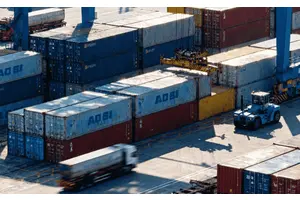
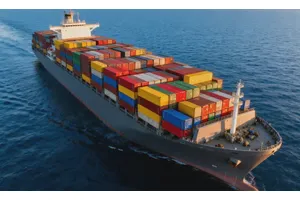
The container leaves Yangshan Deep-Water Port on a Tuesday, and the Shanghai skyline disappears behind it within the hour. Shipping from Shanghai to UK starts here — at the world's busiest container port — and the course runs down the East China Sea, across the South China Sea, through the Strait of Malacca, and then splits into two Britains: the short route through the Suez Canal to the English Channel, and the long route around the Cape of Good Hope that every Asia–Europe service took while the Red Sea was unsafe. Either way, the destination is the same — Felixstowe, Southampton or London Gateway — and the cargo is the newest shipment on one of the most mature, high-frequency trade lanes on earth.
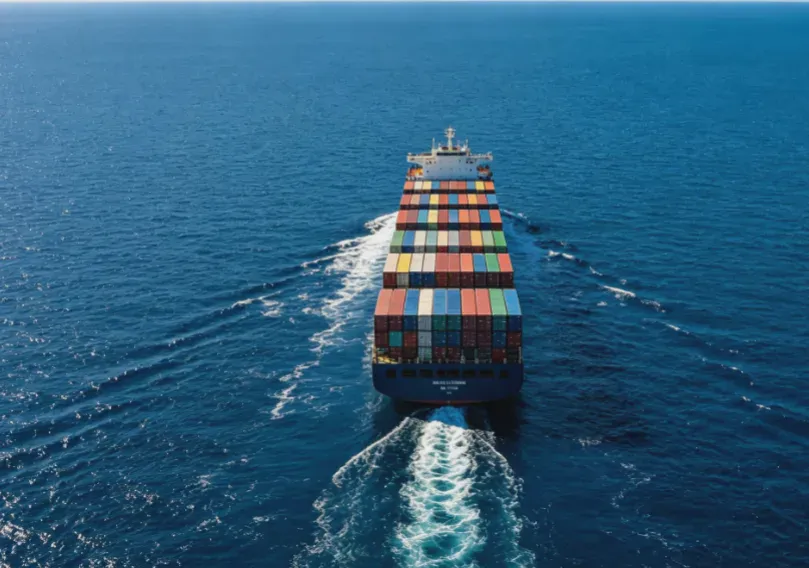
This is a lane DTFU Logistics works every week, and it is different from most China–UK corridors people write about. Shanghai is not just another origin; it is the origin — the biggest export gateway for UK-bound cargo, with more direct weekly sailings to British ports than any Chinese city. What trips importers up is rarely the ocean part; it is everything after the vessel arrives: the post-Brexit customs machinery, the 20% VAT math, and which British port your container should actually land at.
This guide covers the real 2026 costs for FCL and LCL sea freight from Shanghai to the UK, transit times by routing, post-Brexit customs and tax (CDS, EORI, duty and 20% VAT), choosing between Felixstowe, Southampton and London Gateway — and two real shipments we handled on this lane, with their cost breakdowns.
Why Shanghai Is the Natural Origin for UK-Bound Cargo
Three things make Shanghai the default answer when a UK buyer asks where to ship from:
- The hinterland. Shanghai sits at the mouth of the Yangtze River Delta, the densest manufacturing region in China. Suppliers in Jiangsu (textiles, electronics, auto parts), Zhejiang (hardware, tools, furniture) and Anhui (machinery) can truck goods to Shanghai in hours — if your factory is anywhere from Nanjing to Ningbo, Shanghai is almost always the lowest-cost export point.
- The port itself. Cargo loads at Yangshan Deep-Water Port, connected to the mainland by the 32 km Donghai Bridge, or at the Waigaoqiao terminal complex on the Yangtze. Yangshan takes the largest Asia–Europe vessels; Waigaoqiao sits closer to the city and suits factory-direct containers. A good forwarder picks the terminal based on where your factory is and which carrier's berth your booking is on.
- Sailing frequency. Shanghai has more direct departures to the UK than any other Chinese port. Carriers on the Asia–North Europe loops — MSC, Maersk, CMA CGM, COSCO, ONE and HMM — call weekly, giving more sailing dates and more leverage on space in peak season.
The voyage is roughly 10,500 nautical miles on the Suez routing. Red Sea disruptions forced a detour around the Cape of Good Hope adding 3,500 nautical miles and 10–14 days to every China–UK transit — a shift that re-priced the lane and still shapes how forwarders quote transit times. Our shipping from China to UK overview covers the full-lane picture, and the Red Sea security situation drives which routing your carrier actually uses.
Sea Freight Costs from Shanghai to UK: FCL & LCL Rates (2026)
Ocean freight is the backbone of this corridor. These are the realistic 2026 rate ranges we have been booking for full containers from Shanghai to the UK — port-to-port, excluding destination charges and taxes:
| Container Type | Capacity | Rate Range (USD) | Notes |
|---|---|---|---|
| 20ft FCL | 28 CBM | $1,600 – $2,800 | Dense cargo up to ~28 CBM; low season $1,600–$2,200 |
| 40ft FCL | 56 CBM | $3,000 – $4,800 | ~1.7–1.9× the 20ft rate, not double |
| 40ft High Cube | 68 CBM | ~$150 – $300 over 40ft | Best value for light, voluminous cargo |
For context, China-wide averages on the UK lane run $1,500–$3,000 for a 20ft and $2,800–$5,500 for a 40ft; Shanghai sits mid-range. The 40ft is almost always the better per-cubic-meter deal — around $54/CBM against $57/CBM — so clients with 20–25 CBM of light cargo should price a 40ft before committing to a 20ft.
LCL from Shanghai: When You Don't Have a Full Container
If your shipment is under about 15 CBM, LCL (Less than Container Load) is the economical choice — you pay only for the space your cargo occupies in a shared container:
| Origin | Destination | LCL Rate (USD/CBM) | Minimum | Transit Time |
|---|---|---|---|---|
| Shanghai | Felixstowe / Southampton | $85 – $170 | 1 CBM | 28 – 38 days |
| Shenzhen | Felixstowe / Southampton | $90 – $175 | 1 CBM | 28 – 38 days |
| Ningbo | Felixstowe / Southampton | $85 – $170 | 1 CBM | 28 – 38 days |
A 5 CBM LCL shipment from Shanghai typically lands in the $500–$600 range (about $100–$120/CBM) before UK-side charges; 10 CBM drops toward $80/CBM as consolidation discounts kick in. The trade-off: LCL adds consolidation in Shanghai and deconsolidation at a bonded UK warehouse, stretching door-to-door timing by several days. Above 15 CBM, always get an FCL quote first — the math almost always favors the full container. Our sea shipping cost from China to UK article breaks the lane down from the China-wide angle, and our sea freight page explains how FCL and LCL bookings work.
When Rates Move
Watch the calendar: Chinese New Year (late January/February) triggers a pre-holiday booking surge, Golden Week (October) tightens capacity, and Q4 brings Peak Season Surcharges (PSS) from August through October. Book annual volumes in Q1 if you can — we consistently find better space and flexibility. And watch the Red Sea: Cape reroutes add roughly $1,000–$2,000 per container in war-risk and fuel surcharges.
How Long Does Shipping from Shanghai to UK Take?
The direct answer: 28–35 days port-to-port for most Shanghai→UK bookings on the normal Suez routing. What changes that number:
| Routing | Shanghai → UK Port | Notes |
|---|---|---|
| Direct sailing (via Suez) | 28 – 35 days | The standard for Shanghai; multiple weekly services |
| Via Cape of Good Hope (Red Sea reroute) | 38 – 48 days | +10–14 days and higher surcharges while diversions are in force |
| Transshipment (e.g. Singapore, Rotterdam) | 30 – 40 days | Can be cheaper; adds a hub call and ~2–7 days |
| LCL (any routing) | 30 – 45 days | Includes consolidation/deconsolidation buffer |
The real door-to-door number — including discharge, UK customs clearance (usually 1–2 working days) and inland trucking — lands around 35–45 days on the Suez routing. Our rule of thumb: take the ocean transit, add five days for the UK side, and plan stock accordingly. Shipping time from China to UK has the details.
Two realities to budget for. First, Felixstowe congestion windows: the 2021–2022 port crunch and the 2022 strikes pushed berthing delays to weeks at the worst moments, and importers without buffer watched demurrage eat their margin. Second, the Cape factor: whenever Red Sea diversions are in force, a 31-day sailing becomes 42. Book with a forwarder who monitors both.
Felixstowe, Southampton or London Gateway: Choosing Your UK Port
Your container can land at several British ports, and the choice changes your inland picture and your bill:
- Felixstowe — the UK's largest container port, handling roughly 40% of Britain's containerized imports. The default arrival point for Shanghai services, with the deepest inland haulage network — but the worst congestion history, and furthest from the Midlands and the North.
- Southampton — a deep-water south-coast port that handles the largest Asia–Europe vessels, with a steadier clearance rhythm than Felixstowe in recent years; strong for the South West and Wales.
- London Gateway — DP World's modern Thames port, the closest major hub to London, with direct rail links into the capital's distribution zones. Great for London and the South East; fewer services than Felixstowe, so check sailing frequency.
The last mile is where UK geography gets real — inland haulage is a serious line item:
| Destination from Port | Felixstowe | Southampton | London Gateway |
|---|---|---|---|
| London (distribution zones) | ~2 – 2.5 h | ~1.5 – 2 h | ~1 h |
| Birmingham (Midlands) | ~2.5 – 3.5 h | ~2.5 – 3 h | ~2.5 h |
| Manchester / Leeds (North) | ~4 – 5 h | ~4 – 4.5 h | ~4 – 4.5 h |
| Glasgow (Scotland) | ~7 – 8 h | ~7.5 h | ~7.5 h |
A container discharged at Felixstowe and trucked to a Glasgow warehouse can add $900–$1,200 in haulage on top of the ocean rate — sometimes more than the UK THC itself. That is why we ask for the delivery postcode before recommending a port. Our shipping from China to Europe page covers how UK-bound and continental flows compare.
UK Customs After Brexit: CDS, EORI & the 20% VAT Math
Since Brexit, importing into the UK runs through a different machine than it did inside the EU customs union. Three things matter for every Shanghai shipment:
1. CDS (Customs Declaration Service). All import declarations are now filed through CDS, the system HMRC built to replace the old CHIEF platform. Your forwarder files the import entry electronically and the system issues a clearance decision. There is no paper queue — the process runs on accurate data, which is why document quality at origin decides your clearance speed at destination.
2. EORI number. Every importer needs a GB-prefixed EORI number (Economic Operators Registration and Identification) before goods can clear. It is free and takes 5–10 minutes online; without it, your container sits at the port while demurrage runs. Under DDP the forwarder clears on its own EORI — but if you clear in your own name, sort this before your vessel departs, not after it arrives.
3. Duty and VAT. Import duty is charged on the CIF value (Cost + Insurance + Freight) under the UK Global Tariff, and the rate depends entirely on the HS code:
| Product Category | Typical HS Codes | Customs Duty |
|---|---|---|
| Electronics & consumer appliances | 84, 85 | 0% – 2% |
| Machinery & mechanical parts | 84 | 0% – 2% |
| Textiles & apparel | 61, 62 | up to 12% |
| Footwear | 64 | 8% – 17% |
| Ceramics & porcelain | 69 | up to 9% |
| Toys & games | 95 | 0% – 4.7% |
Most electronics and machinery — the bulk of what ships out of Shanghai — clear at 0–2%. The categories that hurt are classic consumer goods: textiles up to 12%, footwear up to 17%. Get the HS code right before departure — misclassification is the most common cause of a customs hold.
Then comes the number that surprises every first-time importer: 20% import VAT, calculated on CIF value plus duty:
| Calculation Step | Amount (USD) |
|---|---|
| CIF Value (goods + insurance + freight) | $10,000.00 |
| Customs Duty (2% for electronics) | + $200.00 |
| Dutiable Value for VAT | $10,200.00 |
| Import VAT (20%) | + $2,040.00 |
| Total Import Tax Due | $2,240.00 |
On a $10,000 CIF shipment of electronics, you pay $2,240 in import tax — 22.4% on top of the landed value. Two things soften this: Postponed VAT Accounting (PVA), which lets VAT-registered importers defer import VAT to their VAT return instead of paying at clearance, and the £135 threshold for low-value e-commerce consignments, where import VAT is collected at the point of sale. If you are VAT-registered, PVA is free cash flow — ask your forwarder to set it up.
Documents for Clearing at Felixstowe, Southampton or London Gateway
| Document | Notes |
|---|---|
| Bill of Lading (B/L) | Original or telex release; issued at Shanghai |
| Commercial Invoice | Value and description; must match the B/L exactly |
| Packing List | Itemized weights, dimensions and counts |
| Certificate of Origin (COO) | Confirms Chinese origin; used for duty assessment |
| EORI Number | GB-prefixed; mandatory for all imports |
| Import Licenses / Certificates | Only for regulated goods (food, chemicals, CE-marked products) |
The most common clearance failure we see is a mismatch between the commercial invoice, packing list and manifest — different unit counts, rounding discrepancies, vague descriptions. HMRC's CDS checks the declaration against all three. Fix the documents in Shanghai and clearance takes a day; ship them wrong and you pay storage from day one.
Door-to-Door & DDP from Shanghai to UK
Most first-time importers from Shanghai choose door-to-door service under DDP (Delivered Duty Paid) terms: the forwarder collects from the factory, exports, ships, clears UK customs, prepays duty and VAT, and delivers to a specific address — one contract, one price, no EORI or UK VAT registration on your side. If you have UK representation and want to control the tax reclaim, DAP (Delivered at Place, duties unpaid) delivers the same way but bills the import taxes at delivery.
Here is a typical cost stack for a 20ft FCL from Shanghai to Felixstowe with delivery to a Birmingham warehouse — the structure we quote on this lane in 2026 (duty and VAT excluded — they depend on your goods and HS codes):
| Cost Item | USD Estimate |
|---|---|
| Ocean Freight (Shanghai → Felixstowe) | $1,900 |
| Origin Charges (export clearance, terminal handling, docs) | $170 |
| Bunker Adjustment Factor (fuel surcharge) | $320 |
| Destination Charges (DTHC, port handling) | $280 |
| UK Customs Clearance & Brokerage | $180 |
| Inland Haulage (Felixstowe → Birmingham) | $420 |
| Insurance (optional, 0.15–0.3% of cargo value) | $35 |
| Total Estimated Cost (excl. duty & VAT) | ~$3,305 |
A door-to-door quote runs roughly 60–90% above the headline ocean rate — that gap is normal, the price of not touching a single document yourself. Our door-to-door shipping from China to UK and DDP shipping from China to UK guides go deeper on the all-in numbers.
The Surcharges That Hide Inside "Cheap" Quotes
When comparing forwarder quotes, ask what's included. The standard surcharge stack:
| Surcharge | Typical Range (USD) |
|---|---|
| Port Handling Charge (origin & destination) | $90 – $220 |
| UK Destination THC (DTHC) | $200 – $350 |
| Documentation Fee | $45 – $95 |
| Bunker Adjustment Factor (BAF) | $180 – $350 |
| Currency Adjustment Factor (CAF) | 1% – 3% of freight |
| Security / War-Risk Surcharge (ISPS) | $15 – $45 |
A quote that excludes these is not cheaper — it is incomplete. The classic trap: a low headline rate plus a destination charge sheet that appears only after your container is at sea.
Common Mistakes When Shipping from Shanghai to UK
- Choosing the wrong UK port for the final destination. A London-bound container landed at Felixstowe costs an extra haulage leg; a Scottish-bound container landed at Southampton adds a day of trucking. Give your forwarder the postcode before booking.
- Skipping the EORI registration. It is free and takes minutes, yet importers still discover they need one after the vessel has sailed. Under DDP it is handled for you; clearing in your own name without one means the container waits.
- Misdeclaring HS codes or values. CDS cross-checks your declaration against your invoice and packing list. Under-declared values get flagged and penalized — "I didn't know" is not a defense HMRC accepts.
- Ignoring UK-side charges when comparing quotes. A forwarder quoting $200 less on ocean freight but $300 more on DTHC and haulage is not cheaper. Ask for the destination charge sheet in writing before you book.
- No buffer for congestion or rerouting. Felixstowe's congestion history and the Red Sea diversions prove the point: plan for the delay that might happen, not the schedule that should happen. Zero slack in your stock plan means one port strike away from a broken launch.
Lesson we repeat to every first-time UK importer: treat the ocean transit time as the optimistic case, add a week of UK-side buffer, and never let a container leave Shanghai with documents that haven't been checked against each other. Every delay we have eaten on this lane traced back to one of those two failures.
For comparison, our shipping from Shenzhen to UK guide covers the same destination from a South China origin — and air shipping from China to UK is the speed option when cargo is urgent.
FAQs
How much does it cost to ship a 20ft container from Shanghai to UK?
A 20ft FCL from Shanghai to the UK runs $1,600–$2,800 port-to-port in 2026 — low season $1,600–$2,200, peak up to $2,800+. A 40ft runs $3,000–$4,800; a 40HQ adds roughly $150–$300. Door-to-door DDP adds clearance, duty/VAT prepayment and inland delivery.
How long does shipping from Shanghai to UK take?
Port-to-port transit is 28–35 days on the Suez routing, 38–48 via the Cape. Add 5–10 days for UK customs clearance and inland delivery — the realistic door-to-door figure is 35–45 days.
How much is LCL shipping from Shanghai to the UK?
LCL from Shanghai runs $85–$170 per CBM (1 CBM minimum). A typical 5 CBM shipment costs about $500–$600 before UK-side charges; larger volumes get better per-CBM rates.
Do I need to pay VAT and duty on imports from China to the UK?
Yes. Import duty applies at the UK Global Tariff rate for your HS code (electronics and machinery 0–2%, textiles up to 12%, footwear up to 17%), and 20% import VAT applies on (CIF + duty). VAT-registered importers can use Postponed VAT Accounting to defer it.
What is the fastest way to ship from Shanghai to UK?
Air freight from Shanghai Pudong (PVG) to Heathrow or Manchester runs 4–7 days at roughly $5.00–$8.00/kg for 100 kg and up. Express courier (FedEx, DHL, UPS) delivers small urgent parcels in 3–5 days at roughly $8–$13/kg.
Do I need an EORI number to import into the UK?
Yes — a GB-prefixed EORI number is mandatory for any business clearing its own imports. It is free and takes about 5–10 minutes to apply for. Under DDP, your forwarder clears on its own EORI, so no registration is needed on your side.
Conclusion
Shipping from Shanghai to UK is a mature, high-frequency lane with real competitive rates — 20ft containers from $1,600, LCL from $85/CBM, direct sailings in 28–35 days, and a predictable tax structure once you know the CDS machinery: ocean freight plus surcharges, duty by HS code, 20% VAT, and a UK-side chain of THC, clearance and haulage that can exceed the headline ocean rate.
The two real shipments show what good execution looks like: documents verified before the container leaves Shanghai, FBA compliance handled before the truck arrives, inland haulage locked before the vessel sails, and buffer built for congestion.
If you are ready to move your next shipment out of Shanghai, contact DTFU Logistics for a free all-inclusive quote. We are a FIATA- and IATA-certified forwarder with a Shenzhen headquarters since 2014, serving 120+ countries with direct carrier contracts, 24/7 cargo tracking and a dedicated account manager who works the Shanghai–UK lane every week — from the factory gate in the Yangtze River Delta to your door in Birmingham, Manchester or Glasgow.