Are you searching for the most efficient way to move your goods with a shipping agent from China to Australia? Choosing the right partner can determine your success in international trade. In this comprehensive guide, we’ll explore what a shipping agent does, highlight the main shipping methods, reveal how to select the best agent, and explain the entire shipping process. Whether you’re new to global logistics or seasoned in import-export, this blog has everything you need for smooth, affordable shipping from China to Australia.
What Is a Shipping Agent from China to Australia?
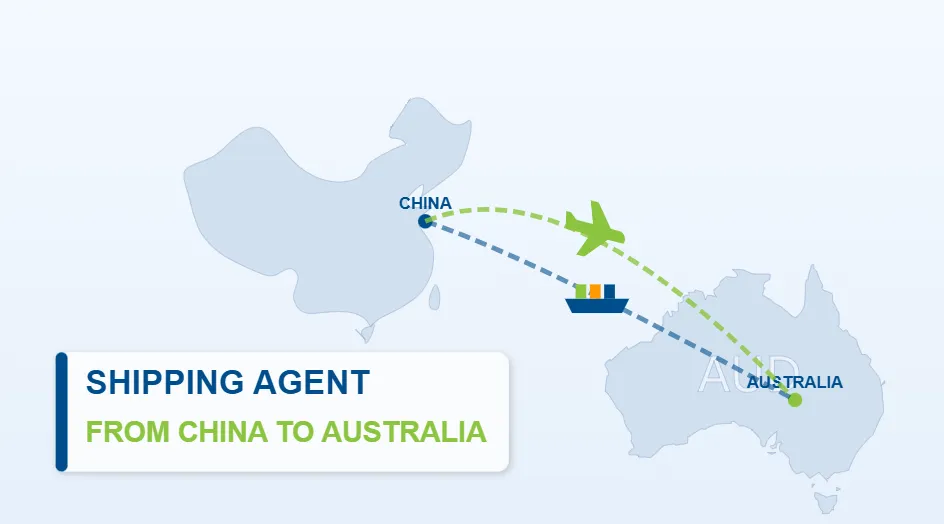
A shipping agent (also known as a freight forwarder) is a professional logistics provider that acts as an intermediary between exporters/importers and transportation services. Specifically, a shipping agent from China to Australia manages the entire shipping process, from the moment goods leave the factory in China until they arrive at the final destination in Australia. Their role includes booking cargo space, coordinating with carriers, handling export and import customs clearance, arranging relevant documentation, and ensuring cargo insurance.
A reputable shipping agent like DTFU International Logistics Co., Ltd offers a one-stop international logistics service covering a wide range of solutions such as sea freight, air freight, road freight, Amazon FBA logistics, warehousing, cargo insurance, consolidated freight, breakbulk freight, and door-to-door delivery. Our team leverages deep market knowledge and extensive experience in the China-Australia shipping corridor, ensuring compliance with both Chinese and Australian regulations.
Shipping agents play a crucial role in the supply chain by:
- Negotiating competitive freight rates.
- Advising on best shipping methods and routes.
- Coordinating multi-modal transport (sea, air, road).
- Managing documentation, customs, and insurance processes.
- Minimizing transit times and disruptions.
Key Benefits of Using a Shipping Agent for China-Australia Trade
Engaging a trusted shipping agent offers a myriad of benefits for businesses and individuals involved in China-Australia trade:
- Expertise on Regulations and Compliance:
The regulatory landscape between China and Australia is strict, especially with frequent updates in Australian quarantine and biosecurity policies. An experienced shipping agent ensures your shipments comply with all regulations, avoiding costly delays or penalties. - Cost-Effective Solutions:
By leveraging established carrier relationships and consolidated shipments, shipping agents like DTFU International Logistics Co., Ltd secure competitive rates, optimizing your shipping budget. - Time and Resource Savings:
Agents manage end-to-end logistics, from booking to delivery, freeing you to focus on your core business. - Risk Management:
Comprehensive cargo insurance, proper packaging guidance, and professional handling reduce risks of damage, loss, or regulatory issues. - Customized Services:
A dedicated agent tailors solutions to your cargo type, delivery schedule, and budget—whether you require FCL (Full Container Load), LCL (Less than Container Load), air freight, or express courier. - Transparent Communication:
Real-time tracking, clear updates, and a single point of contact streamline your logistics operations.
At DTFU International Logistics Co., Ltd, our team combines deep industry experience with a commitment to reliability and transparency, making us a trusted choice for shipping from China to Australia.
Further reading: For more details about Australia-related freight services, see our guide on Shipping cost from China to Australia.
Main Shipping Methods from China to Australia
Selecting the right shipping method is essential for balancing cost, speed, and reliability. There are three primary modes:
Sea Freight: FCL vs. LCL Options
Sea freight is the most widely used and cost-effective transportation mode for large-volume shipments from China to Australia. There are two main options:
| Shipping Option | Description | Capacity | Best For | Transit Time (to Sydney) | Cost Efficiency |
|---|---|---|---|---|---|
| FCL (Full Container Load) | Exclusive use of a full container; ideal for larger shipments or high-value goods. | 20FT (28CBM), 40FT (56CBM), 40HQ (68CBM), 45HQ (78CBM) | High-volume cargo | 16-25 days | Lower per-unit cost |
| LCL (Less than Container Load) | Cargo from multiple shippers consolidated into one container. | Shared | Smaller shipments | 20-28 days | Flexible for low volume, but higher per CBM cost |
Key Ports and Routes
Major Chinese Departure Ports:
- East China: Shanghai (Global hub), Ningbo-Zhoushan (Best for Zhejiang manufacturing).
- South China: Shenzhen (Yantian/Shekou), Guangzhou (Nansha), Hong Kong.
- North China: Qingdao, Tianjin (Gateway to Northern China).
Major Australian Arrival Ports:
- East Coast: Sydney (Port Botany), Melbourne (Busiest container port), Brisbane.
- West Coast: Fremantle (Serving Perth and Western Australia).
- South Australia: Adelaide.
Recent Trends:
Due to ongoing global supply chain challenges, sea freight transit times may fluctuate. In 2026, most routes have stabilized, but booking in advance remains crucial during peak seasons.
Advantages:
- Most economical for heavy or bulky items.
- Wide range of container types for different cargo (OOG, breakbulk, reefer, etc.).
DTFU International Logistics Co., Ltd offers tailored sea freight solutions, including door-to-door and customs clearance services.
Interested in sea shipping for Australia? Explore our specialized Sea Shipping From China Australia resource.
Air Freight: When Speed Matters
For time-sensitive or high-value shipments, air freight is the preferred choice. It is significantly faster than sea freight, usually taking 3-7 days from major Chinese airports (e.g., Shanghai PVG, Guangzhou CAN) to Australian hubs (Sydney SYD, Melbourne MEL).
| Factor | Air Freight | Sea Freight |
|---|---|---|
| Transit Time | 3-7 days | 16-28 days |
| Best For | Urgent shipments, electronics, perishables, samples | Bulk cargo, non-urgent |
| Cost | Higher | Lower |
| Handling | Strictly regulated, secure | Suitable for most goods |
Note:
Recent increases in air cargo demand—especially from the e-commerce sector—may temporarily affect rates and availability.
DTFU International Logistics Co., Ltd provides competitive air freight services, supported by real-time tracking, insurance options, and door-to-door delivery.
For a deeper look at transit times, check our article: How long to ship from China to Australia.
Express Courier Services: Fastest Delivery Solutions
Express courier services (e.g., DHL, FedEx, UPS, TNT) are ideal for small parcels, samples, or urgent documents. These services provide door-to-door delivery from anywhere in China to any address in Australia within 2-5 days.
| Service | Transit Time | Weight Limit | Tracking | Customs Included? | Best Use Case |
|---|---|---|---|---|---|
| Express Courier | 2-5 days | Up to 70kg (standard) | Yes | Yes | Samples, urgent documents, small parcels |
Advantages:
- Fastest option available.
- Full tracking and customs clearance included.
- Reliable for B2C and cross-border e-commerce.
Considerations:
- Higher per kg cost.
- Volumetric weight charges may apply.
DTFU International Logistics Co., Ltd partners with leading couriers to provide competitive express rates and reliable service, ensuring your urgent goods arrive quickly and safely.
Each shipping method has distinct advantages. Choosing the right one depends on your cargo characteristics, delivery timeline, and budget. As a highly professional and cost-effective international logistics service provider, DTFU International Logistics Co., Ltd is ready to advise and support you, ensuring your shipment from China to Australia is seamless, compliant, and cost-efficient.
How to Choose the Best Shipping Agent for China to Australia
Selecting the right Shipping Agent from China to Australia is crucial for efficient, cost-effective, and reliable international freight forwarding. Here’s a step-by-step guide to help you make an informed decision:
1. Evaluate Professional Experience & Reputation
Choose a shipping agent with a demonstrated track record in handling China-Australia trade routes. Look for:
- Years of experience in freight forwarding.
- Direct partnerships with major shipping lines and airlines.
- Positive client testimonials and verifiable case studies.
- Industry recognition or memberships (e.g., FIATA, CIFA).
DTFU International Logistics Co.,Ltd stands out as a trusted service provider with over a decade of expertise, handling thousands of shipments annually between China and Australia.
2. Range of Services Offered
A reliable shipping agent should provide a comprehensive, one-stop logistics solution, such as:
| Service Type | Description |
|---|---|
| Sea Freight (FCL & LCL) | Full Container Load and Less than Container Load options for flexibility and cost control. |
| Air Freight | Fast transit for urgent and high-value cargo. |
| Road Freight | Inland haulage from factories/warehouses to departure/arrival ports. |
| Express Courier | Door-to-door delivery of small parcels via carriers like DHL, FedEx, UPS, TNT. |
| Amazon FBA | End-to-end solutions for e-commerce sellers shipping to Amazon warehouses in Australia. |
| Warehouse & Consolidation | Storage, packing, labeling, and cargo consolidation services. |
| Cargo Insurance | Protection against loss, damage, or theft in transit. |
| Customs Clearance | Professional handling of all customs documentation and compliance at both origin and destination. |
| OOG & Breakbulk Freight | Expertise in oversized, heavy, or non-containerized shipments. |
DTFU International Logistics Co.,Ltd is renowned for offering all the above services as a cost-effective and high-quality one-stop solution.
3. Transparency in Pricing
- Insist on itemized quotations with a clear breakdown of all charges (freight, surcharges, customs fees, etc.).
- Assess for hidden fees or ambiguous terms.
- Compare rates across different shipping agents, but remember that the lowest price may not guarantee the best service.
4. Customer Service & Communication
- Responsive communication in English and Chinese.
- Dedicated account manager for real-time shipment updates.
- Professional guidance on documents, customs, and insurance.
5. Strong Local Networks
- Presence or close partnerships in both China and Australia ensure efficient cargo handling, customs clearance, and last-mile delivery.
- Familiarity with major Chinese ports (e.g., Shanghai, Shenzhen, Ningbo, Qingdao, Guangzhou) and Australian ports (Sydney, Melbourne, Brisbane, Fremantle).
6. Compliance & Risk Management
- Up-to-date with latest regulations from both Chinese Customs and Australian Border Force (ABF).
- Proactive in advising clients about evolving trade policies, import restrictions, and documentation requirements.
Choosing a professional and experienced shipping agent like DTFU International Logistics Co.,Ltd ensures your cargo is managed safely, on time, and in line with global logistics standards.
If you are interested in comparing freight options for other destinations, see: Shipping From China to Australia.
Complete Shipping Process from China to Australia
Shipping goods from China to Australia involves a series of well-defined steps. Below is an in-depth guide to the process, including key documentation and customs clearance procedures.
Step-by-Step Guide: Booking to Delivery
| Step | Description |
|---|---|
| 1 | Inquiry & Quotation: Share your cargo details (type, size, weight, value, Incoterms, destination). |
| 2 | Booking: Confirm the shipping schedule, mode (Sea/Air/Express), and space with your shipping agent. |
| 3 | Cargo Preparation: Package, label, and prepare goods as per shipping and destination requirements. |
| 4 | Export Customs Declaration (China): Submit necessary documents to Chinese customs for export clearance. |
| 5 | Cargo Pickup/Transport to Port: Trucking of cargo to the departure port/airport/express facility. |
| 6 | Loading & Shipment: Container loading onto vessel or aircraft, or handover to courier. |
| 7 | In-Transit Updates: Agent provides tracking and status updates (ETA, delays, transshipment info). |
| 8 | Arrival at Australian Port/Airport: Cargo is unloaded and transferred to customs clearance zone. |
| 9 | Import Customs Clearance (Australia): Submission of documents to ABF and payment of import duties/GST. |
| 10 | Final Delivery: Cargo is delivered to consignee’s address, warehouse, or Amazon FBA center. |
Container Capacity Reference (for Sea Freight):
| Container Type | Capacity (CBM) |
|---|---|
| 20FT | 28 CBM |
| 40FT | 56 CBM |
| 40HQ | 68 CBM |
| 45HQ | 78 CBM |
Required Documents and Customs Clearance Procedures
Correct documentation is critical for smooth customs clearance and compliance with both Chinese and Australian regulations. Below are the key documents needed:
| Document Name | Purpose / Note |
|---|---|
| Bill of Lading (B/L) or Air Waybill (AWB) | Proof of shipment; required for cargo release at destination |
| Commercial Invoice | Details the transaction value and nature of goods; used for customs valuation |
| Packing List | Lists each item, quantity, dimensions, weight; supports customs checks |
| Export Declaration (China) | Official export registration with Chinese Customs |
| Import Declaration (Australia) | Lodged with Australian Border Force (ABF); includes cargo description and value |
| Certificate of Origin | Sometimes required to confirm goods’ country of origin for duty assessment |
| Import Permits / Licenses | Certain goods (e.g., food, chemicals, electronics) require additional permits under Australian law |
| Insurance Certificate | Proof of cargo insurance (for claims in case of loss/damage) |
Customs Clearance Tips:
- Australian regulations are strict regarding biosecurity (especially food, wooden packaging, animal/plant products).
- Ensure all goods comply with the Australian Department of Agriculture, Fisheries and Forestry (DAFF) and Australian Competition and Consumer Commission (ACCC) requirements.
- Accurately declare the value and classification (HS Code) of your goods to avoid fines or delays.
- Engage a professional customs broker or a full-service agent like DTFU International Logistics Co.,Ltd for seamless clearance.
Recent Policy Update (2026):
Australia has updated its import requirements for certain electronics and consumer goods, enforcing stricter energy efficiency and consumer safety standards. Stay updated and confirm with your agent before shipping.
Value of Partnering with DTFU International Logistics Co.,Ltd
Choosing a professional shipping agent like DTFU International Logistics Co.,Ltd provides:
- End-to-end visibility and control over your supply chain.
- Single point of contact for all logistics, customs, and insurance matters.
- Proactive advice on cost-saving strategies and the latest regulatory changes.
- High-quality, reliable, and cost-effective freight services tailored to your business needs.
For more information and a free shipping consultation, contact us today.
Shipping Costs and Factors Affecting Freight Rates
Breakdown of Shipping Charges: Sea Freight vs. Air Freight vs. Express Courier
When shipping goods from China to Australia, understanding the cost structure for various shipping methods is key for budgeting and decision making. Below is a comprehensive breakdown:
| Shipping Method | Typical Transit Time | Cost Structure Components | When to Use |
|---|---|---|---|
| Sea Freight | 12-25 days (port-port) | - Ocean freight charge - Bunker adjustment factors - Port/terminal handling - Customs clearance - Local delivery (if DDP/DDU) - Documentation & insurance |
Large, heavy, or non-urgent shipments |
| Air Freight | 2-7 days | - Air cargo charge (per kg/volumetric weight) - Fuel surcharge - Security fee - Customs clearance - Local airport charges - Delivery to door (if needed) |
High-value, time-sensitive goods |
| Express Courier | 1-5 days | - Price per parcel (based on gross/volumetric weight) - Fuel & remote surcharges - Customs clearance (usually handled by courier) - Door-to-door delivery |
Small parcels, samples, urgent items |
Sea Freight:
- FCL (Full Container Load) is cost-effective for large volumes (e.g. 20FT ≈ 28CBM, 40FT ≈ 56CBM, 40HQ ≈ 68CBM, 45HQ ≈ 78CBM).
- LCL (Less than Container Load) is suitable for small shipments consolidated with others; charged by CBM.
| Container Type | Approximate Capacity | Major Australia Destination Ports (Sydney, Melbourne, Brisbane) | Average Freight (2026) |
|---|---|---|---|
| 20FT | 28 CBM | AUD 1,540 - 1,960 (Port-to-Port) | 12-17 days |
| 40FT | 56 CBM | AUD 2,450 - 3,150 | 12-17 days |
| 40HQ | 68 CBM | AUD 2,590 - 3,500 | 12-17 days |
Note: Rates fluctuate depending on seasonality, global demand, fuel costs, and port congestion.
Air Freight:
-
Priced per kg or by dimensional (volumetric) weight.
-
More expensive than sea, but much faster.
-
Current spot rates (as of Q2 2024):
- General cargo: approx. AUD 7.5 - 12.0/kg (Shanghai/Guangzhou/Beijing to Sydney/Melbourne/Brisbane)
Express Courier:
- Major providers: DHL, FedEx, UPS, TNT; fast, tracked, reliable.
- 5kg parcel: AUD 150 - 250 (China to major Australian cities).
- Includes door-to-door, customs handling, and tracking.
Other Charges
- Documentation Fees: Bill of lading, airway bill, customs paperwork.
- Insurance: Highly recommended, especially for high-value or fragile goods.
- Port Charges: Vary by port, may include security, storage, and quarantine inspection.
Tips to Reduce Freight Costs from China to Australia
- Consolidate Shipments: Combine multiple small shipments into one FCL or a single LCL, reducing per-unit cost.
- Plan Ahead: Book early, especially during peak season (September–February), to avoid premium surcharges.
- Optimize Packaging: Use standardized container sizes and maximize CBM usage to avoid paying for “air” (unused space).
- Choose the Right Incoterm: Terms like FOB or CIF can shift cost responsibilities; understand what is included.
- Negotiate with Freight Forwarders: Work with experienced agents like DTFU International Logistics Co.,Ltd for volume discounts and tailored solutions.
- Select the Optimal Route: Direct routes or less congested ports may save time and handling charges.
- Take Advantage of Warehousing: Use consolidation and temporary storage to optimize cargo flows and batch shipments.
- Understand Customs and Duties: Accurate paperwork prevents delays and extra fees.
- Review Surcharges: Scrutinize invoices for unnecessary fuel, security, or handling surcharges.
- Leverage Technology: Real-time tracking and inventory management can prevent urgent, costly shipments.
As a professional, DTFU International Logistics Co.,Ltd offers expert advice and custom solutions to help clients minimize shipping expenses without sacrificing efficiency or reliability.
For more insights on related global container costs, you might be interested in our article on Containers Shipping Cost from China to Canada.
Real Success Story: Saving 18% on Logistics Costs for a Melbourne Furniture Importer
The Challenge:
A growing e-commerce furniture brand based in Melbourne was sourcing goods from three different factories in Guangzhou and Foshan. They were originally shipping these as three separate LCL (Less than Container Load) shipments. This approach resulted in:
- High per-CBM freight charges.
- Triplicated documentation fees.
- Complex customs clearance issues regarding BMSB (Brown Marmorated Stink Bug) fumigation requirements for wooden furniture.
The DTFU Solution:
Our team at DTFU International Logistics stepped in with a tailored consolidation plan:
- Warehousing & Consolidation: We coordinated with all three suppliers to deliver goods to our Shenzhen warehouse within a specific 3-day window.
- Optimized Loading: Instead of three LCL shipments, we consolidated the cargo into a single 20FT FCL (Full Container Load).
- Unified Compliance: We arranged a single, certified fumigation treatment for the entire container prior to loading, ensuring full compliance with Australian Department of Agriculture standards.
The Result:
- Cost Savings: The switch from LCL to FCL reduced the total logistics spend by 18%.
- Time Efficiency: Unified customs clearance at Port of Melbourne saved approximately 5 days compared to clearing three separate partial shipments.
- Risk Mitigation: Zero delays at the border due to pre-verified fumigation certificates.
“Professional logistics isn't just about moving boxes; it's about optimizing the entire supply chain. This case demonstrates how DTFU transforms logistics from a cost center into a competitive advantage.”
Common Challenges and How to Avoid Shipping Delays
Navigating Australian Import Regulations and Compliance
Shipping to Australia requires strict adherence to local import laws, which are among the world’s most comprehensive, especially regarding biosecurity.
Key Regulatory Considerations:
- Australian Border Force (ABF): Enforces import regulations, tariff classifications, and Goods and Services Tax (GST).
- Department of Agriculture, Fisheries and Forestry (DAFF): Oversees quarantine, biosecurity, and agricultural imports.
- Prohibited and Restricted Items: Wood packaging, plant/animal products, and hazardous materials are highly regulated.
- Documentation: Commercial invoice, packing list, bill of lading/airwaybill, import permits (when applicable).
- Tariff and GST: 5–10% for most goods over AUD 1,000 value; ensure HS codes and values are correct.
Compliance Best Practices:
- Work with a knowledgeable shipping agent to ensure up-to-date compliance with the latest Australian regulations.
- Pre-check all documentation and get import permits (if required) in advance.
- Clearly declare the nature, value, and origin of your goods.
- Monitor regulatory updates: For example, in 2026, new biosecurity surcharges and stricter inspection of certain goods are in effect.
A professional agent, such as DTFU International Logistics Co.,Ltd, provides one-stop customs clearance and ensures all legal requirements are met smoothly.
Packaging, Labeling, and Insurance Best Practices
Proper packaging and accurate labeling are essential to prevent delays, reduce damage, and ensure smooth customs clearance.
Packaging:
- Use export-grade materials (e.g., ISPM 15-certified wood) for all shipments.
- For sea freight, ensure cargo can withstand movement, humidity, and stacking.
- For air freight/express, minimize weight and volume while providing sufficient protection.
Labeling:
- Each carton or pallet must be labeled with contents, consignee details, and handling instructions (e.g., “Fragile”, “This Side Up”).
- Include relevant HS codes and country of origin.
- Match labels exactly to shipping documents to avoid customs holds.
Insurance:
- Cargo insurance is vital for all international shipments.
- Covers loss, theft, or damage in transit.
- DTFU International Logistics Co.,Ltd offers comprehensive cargo insurance solutions for peace of mind.
Pro Tips:
- Photograph and record the condition of goods before shipping.
- Use tamper-proof seals for higher value goods.
- Provide packing lists inside and outside cartons for easy inspection.
By following these best practices, you can effectively reduce risk and avoid unnecessary shipping delays when moving goods from China to Australia.
FAQs
Q1: How long does it take to ship from China to Australia?
A: Transit times vary by method: Sea freight typically takes 12–25 days, air freight 2–7 days, and express courier 1–5 days door-to-door.
Q2: What documents are needed for customs clearance into Australia?
A: Essential documents include a commercial invoice, packing list, bill of lading or airway bill, and import permits for restricted items.
Q3: What is the best shipping method for urgent cargo?
A: Air freight or express courier are recommended for time-sensitive shipments, offering the fastest transit and customs processing.
Q4: Are there any restricted or prohibited items for import into Australia?
A: Yes. Australia has strict biosecurity laws. Items like untreated wood, food, seeds, and hazardous chemicals are either restricted or require special permits.
Q5: What are the current shipping container costs from China to Australia in 2026?
A: As of January 2026, a 20FT container typically costs between AUD 1,540 - 1,960, while a 40FT container ranges from AUD 2,450 - 3,150. Rates vary based on the departure port and seasonal demand.
Q6: How can a shipping agent help me reduce my shipping costs?
A: A professional agent like DTFU can lower costs by consolidating LCL shipments into FCL (saving up to 20%), optimizing packaging to reduce volumetric weight, and ensuring compliance to avoid costly customs fines or fumigation delays.
Q7: What are the main ports for sea freight between China and Australia?
A: Major China ports include Shanghai, Shenzhen, Ningbo, and Guangzhou. Major Australian ports are Sydney, Melbourne, and Brisbane. There are frequent, direct shipping routes between these ports.
Q8: Are there hidden costs in shipping quotes I should watch out for?
A: Yes. Be aware of destination charges such as port handling fees, customs clearance fees, import duties/GST, and quarantine inspection fees. A transparent quote from DTFU will itemize these clearly.
Q9: When is it more cost-effective to choose FCL over LCL?
A: Generally, if your cargo volume exceeds 13-15 CBM, booking a full 20FT container (FCL) is often cheaper than paying per-CBM rates for LCL, and it also offers better security and faster clearance.