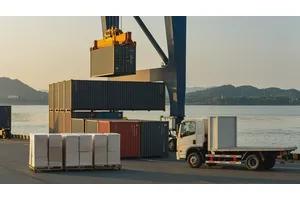
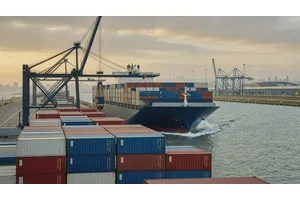
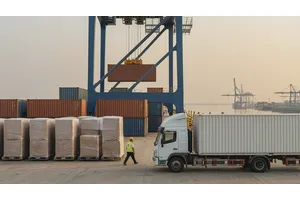
Are you trying to find the cheapest way to ship from China to Finland without the price doubling somewhere between the quay and your warehouse? This guide goes through what the lane really costs this autumn, which method is genuinely cheapest at your volume, and the two Finnish rules — 25.5% import VAT and the end of the €150 duty relief — that decide whether a cheap freight rate stays cheap.
The first thing to get straight is that "cheapest" on this lane is not a freight question. Finland has one of the highest VAT rates in the European Union, no direct container service from China, and, since this summer, no functioning rail corridor from the east. The freight rate you are quoted is real money, but it is usually the smaller half of the decision.

Cheapest Shipping from China to Finland in 2026: The Numbers First
If you only read one paragraph: for most importers the cheapest mode is shared container space (LCL) below roughly 18 cubic metres, a 20ft full container above it, and air only when your goods are worth more than about €40 per kilo and needed inside two weeks. A 1 CBM trial shipment lands at your Finnish door for roughly $350–600 all-in; a 20ft box is a $4,500–6,500 project before VAT. The full-lane picture, including the services that sit either side of the ocean leg, is on our shipping from China to Finland page.
| Method | Typical 2026 cost (China → Finland) | Door-to-door transit | Cheapest for |
|---|---|---|---|
| Sea LCL | $110–200 per CBM, minimum 1–2 CBM | 38–52 days | Trial orders, 1–15 CBM, mixed SKUs |
| Sea FCL 20ft | $2,400–3,500 ocean, ~$4,500–6,500 landed door | 34–48 days | 18–28 CBM of dense or bulky cargo |
| Sea FCL 40ft / 40HQ | $3,500–5,000 / $3,800–5,300 ocean | 34–48 days | 30–60 CBM at the lowest cost per CBM |
| Air freight | $3.20–7.50 per kg by weight tier | 5–9 days | Restocks, samples, high value density |
| Express courier | $9–15 per kg for small parcels | 3–7 days | Under 50 kg, urgent documents and spares |
| Rail via Poland plus ferry or truck | $3,900–4,500 for a 20ft | 22–28 days | Almost nobody — see the rail section |
| DDP all-in (sea LCL) | $150–250 per CBM | 40–55 days | Buyers without an EORI number or importer status |
| DDP all-in (air) | $6–12 per kg | 7–12 days | High-value cargo, trade-fair and launch deadlines |
Those ranges are what we quote on real China–Finland bookings this quarter, not last year's price sheet. Treat them as the shape of the market: the spread between your best and worst quote on identical cargo will be wider than the spread between the modes.
Why the Cheapest Shipping Quote to Finland Is Rarely the Cheapest Shipment
A quote that stops at the port is the most common way Finnish importers lose money. Here is how a 20ft container of consumer goods to Tampere actually divides up once everything is paid:
| Cost component | Share of a typical 20ft to an inland Finnish address |
|---|---|
| Ocean freight to a European gateway plus Baltic feeder | 45–55% |
| Origin charges (THC, export declaration, documents) | 4–7% |
| Destination THC, delivery order, port dues at the Finnish port | 7–12% |
| Finnish customs clearance and broker fee | 3–5% |
| Import duty (product dependent) | 0–17% |
| Inland trucking inside Finland | 8–16% |
| Buffer for demurrage, storage and inspection | 0–10% |
| Import VAT (25.5%, recoverable if you are VAT-registered) | 20–35% on top |
The wider cost anatomy — surcharges, origin fees, the Finnish fee schedule — is broken out in our sea shipping cost from China to Finland and container cost breakdown guides. Two things follow. The Finnish side — port charges, clearance, trucking — commonly adds €700–1,300 to a 20ft box, and many "cheap" quotes exclude it. And the tax line at the bottom is often bigger than the ocean line at the top.
Ask every forwarder one question before comparing numbers: does this price deliver to my postcode in Finland, cleared, with duty included, or does it stop when the container is discharged? The gap between those two answers on the same box is usually $800–1,600.
Sea Freight from China to Finland: Gateways, Feeders and What Actually Sets the Rate
No container line runs a direct China–Finland string. Your box crosses to a northern European gateway — Rotterdam, Hamburg, Bremerhaven or Gdańsk — and then moves to Finland on a Baltic feeder, or it is carried on a Baltic-loop service that calls Helsinki on its way through. That structural detail explains most of the timing complaints on this lane: the ocean leg is 30–36 days and the last hop adds 4–8 days plus a $250–600 feeder charge per container.
Four Finnish gateways do the work:
| Port | Role on this lane | Practical notes |
|---|---|---|
| Helsinki (Vuosaari) | Main container and trailer gateway; most frequent feeder calls | Best choice for Helsinki, Espoo, Vantaa, Tampere and Lahti distribution; ice-class services keep it open in winter |
| HaminaKotka | Largest general port in Finland; containers, bulk and transit cargo | Often cheaper for south-east Finland and for very large or project cargo; convoying delays in hard ice years |
| Turku and Naantali | West-coast gateways with Swedish feeder links | Sensible for Turku, Pori and Vaasa destinations, less so for eastern Finland |
| Rauma and Oulu | Regional ports for west and north | Only competitive when the consignee is close; south-north trucking is expensive |
Rates move with the origin port more than most buyers expect, because the feeder and the carrier's European network both price differently out of each Chinese load port:
| Origin port (China) | 20ft to Helsinki-Vuosaari | 40ft to Helsinki-Vuosaari | Transit |
|---|---|---|---|
| Shanghai | $2,400–3,500 | $3,500–5,000 | 34–42 days |
| Ningbo | $2,400–3,500 | $3,500–5,100 | 34–42 days |
| Shenzhen-Yantian | $2,500–3,600 | $3,600–5,200 | 38–46 days |
| Guangzhou-Nansha | $2,500–3,700 | $3,700–5,250 | 40–46 days |
| Qingdao | $2,700–3,900 | $3,900–5,450 | 38–46 days |
| Tianjin-Xingang | $2,800–4,100 | $4,100–5,600 | 42–48 days |
Notice the $400 spread between Shanghai and Tianjin on identical cargo. If your supplier can shift goods to a cheaper load port, that usually pays for the domestic trucking; our sea freight from China desk prices both before booking, and the wider port-pair table is in the 20ft and 40ft guide.
LCL or FCL: The CBM Break-Even That Moves Cheap Shipping to Finland
You will read on most freight sites that the cross-over between LCL and a 20ft container sits at 13–15 CBM. On China–Finland that number is wrong, and the reason is Finnish destination handling.
LCL cargo cannot simply be unloaded. It is deconsolidated at a Helsinki container freight station, charged per CBM for handling (typically €25–45, with a minimum charge), and released to you only after that. Add the fixed charges that do not scale with volume — origin documentation, export declaration, destination CFS handling, clearance, one delivery run — and the LCL option carries roughly $650–900 of fixed cost that a container does not.
| Volume | LCL all-in (freight + fixed, door) | 20ft FCL all-in, door | Cheaper option |
|---|---|---|---|
| 3 CBM | ~$1,150–1,500 | not economic | LCL |
| 6 CBM | ~$1,500–1,950 | not economic | LCL |
| 10 CBM | ~$2,000–2,600 | ~$4,400–4,900 | LCL by a wide margin |
| 15 CBM | ~$2,600–3,400 | ~$4,400–4,900 | LCL, but the gap is closing |
| 20 CBM | ~$3,200–4,200 | ~$4,400–4,900 | Near parity — check the real quote |
| 24 CBM | ~$3,700–4,900 | ~$4,400–4,900 | FCL wins, and wins on transit |
| 28 CBM | over a container's practical limit | ~$4,400–4,900 | FCL |
So the honest cross-over is 18–22 CBM, not 13–15. Above it the container wins on cost and on four to fourteen days of transit — LCL waits in a Chinese consolidation warehouse for other people's cargo, then waits again in Helsinki. If the cargo has to reach a warehouse rather than a port, price it as door-to-door shipping from the start.
One caveat for dense cargo: LCL is priced on whichever is greater, CBM or weight at a 1:1,000 ratio. A 10 CBM pallet of tiles or machinery spares weighing nine tonnes will be charged as nine cubic metres at least, and often more, which flips the maths back toward a container earlier than the table suggests.
Air Freight from China to Finland: Where Per-Kilo Pricing Actually Wins
Air is the wrong answer for anything bulky and cheap, and the right answer for a narrow band of cargo: high value density, a hard deadline, or a small restock that would otherwise leave a container half empty.
| Chargeable weight | Rate per kg | Door-to-door | Typical use |
|---|---|---|---|
| 45–99 kg | $5.20–7.50 | 6–10 days | Samples, launch stock, spare parts |
| 100–299 kg | $4.30–6.20 | 5–9 days | E-commerce restock, medical and laboratory goods |
| 300–499 kg | $3.80–5.20 | 5–8 days | Seasonal top-ups, electronics |
| 500–999 kg | $3.50–4.80 | 5–8 days | Consistent weekly replenishment |
| 1,000 kg+ | $3.20–4.40 | 5–7 days | High-value industrial components |
Two mechanics decide your invoice. The first is chargeable weight: airlines bill the greater of actual kilos and volume at 1:6,000, so a carton measuring 60 × 50 × 50 cm pays for 25 kg even if it weighs 18 kg. The second is the minimum: below 45 kg you are paying for 45 kg whether you ship 12 kg or 44 kg, which is why express couriers are usually the better deal under 50 kg and air freight the better deal above 100 kg.
Helsinki-Vantaa is well served from China — Finnair Cargo's own network out of Shanghai plus belly capacity — and airport clearance is fast when the paperwork is right. For value-dense cargo the $6–12 per kg air DDP figure often beats a sea shipment that misses its selling season. The airport process is in our air shipping from China to Finland guide.
There Is No Rail Option to Finland in 2026 — Here Is What Replaced It
Search for cheap shipping to Finland and you will still find pages quoting "direct China–Europe rail to Finland, 12–15 days, 20ft for $4,300". Those numbers are stale in a way that matters, so let us be blunt about it.
Finland's land border crossings with Russia have been closed since December 2023, and the Finnish Government confirmed on 4 June 2026 that they remain closed until further notice. Russia then suspended rail border movements with Finland, Estonia and Latvia from 1 July 2026. The Kouvola rail yard that used to receive Chinese block trains, cleared through Vainikkala, is not a live option for China-origin cargo today.
What "rail to Finland" now means is a China–Poland or China–Germany block train, then a ferry or a truck through the Baltics and a second border. That runs 22–28 days door to door at roughly $3,900–4,500 for a 20ft — more than sea, with two extra handlings. It is defensible for medium-value cargo with a hard deadline. It is not the cheap option, and any quote calling it 12–15 days to Helsinki describes a route that no longer runs.
Practically, that leaves sea and air. If a forwarder offers you rail to Finland as the cheap route, that is a useful signal about how current the rest of their pricing is.
Finland's 25.5% VAT: The Line Item That Decides Your Landed Cost
Finland's standard VAT rate is 25.5%, raised from 24% on 1 September 2024, and it applies to imports from outside the EU from the first euro. The reduced rates are 13.5% for food, food supplements, books and artworks, and 10% for subscribed magazines and periodicals. Finnish Customs levies it on the customs value plus duty plus the transport cost to the EU border.
That base matters. VAT is not charged on your FOB price; it is charged on CIF plus duty. A $12,000 FOB order with $1,600 of freight and insurance and a 4.7% duty rate produces:
| Step | Amount |
|---|---|
| FOB goods value | $12,000 |
| Freight and insurance to the EU border | $1,600 |
| CIF customs value | $13,600 |
| Import duty at 4.7% | $639 |
| VAT base (CIF + duty) | $14,239 |
| VAT at 25.5% | $3,631 |
Total import taxes: $4,270, or 31% of the CIF value. On this shipment the VAT is nearly six times the duty, and it is more than the ocean freight on many lanes.
Now the part almost nobody writes about, and the single largest lever on this lane: if your company is registered for VAT in Finland, you do not pay that $3,631 at customs at all. Since 1 January 2018, the VAT on imports by VAT-registered businesses is self-assessed and declared on the periodic VAT return rather than collected by Customs. There is no application, no approval, no bank guarantee required — it applies automatically to any importer entered in the Finnish VAT register. You report the import VAT as payable and deduct it as input VAT in the same return, so for fully taxable business the net cash effect is zero.
Compare that with a buyer who is not VAT-registered in Finland — a private importer, a foreign company without a Finnish registration, or a small trader who never registered because "it was only one container". They pay the full 25.5% at clearance, out of pocket, and cannot deduct it. On the example above that is $3,631 of working capital gone for the four to eight weeks it takes to sell the goods.
Buying DDP and letting a forwarder be importer of record puts that VAT inside their price instead of yours — simpler, and more expensive; the trade-off is in DDP vs FOB. The cheapest configuration is not the cheapest rate: EORI (Finnish EORI is the Business ID prefixed with FI), VAT registration, postponed accounting, and a broker who files correctly. Registration costs a fraction of one container's VAT.
Duty, Anti-Dumping and the €3 Low-Value Rule: What Changed in 2026
Duty is the smaller of the two taxes but the more dangerous one, because it is product-specific and it is where anti-dumping bites.
| Product group | Typical EU duty rate on China-origin goods |
|---|---|
| Laptops, phones, many electronics and components | 0% |
| Machinery, machine parts, tools | 0–2.7% |
| Furniture, lighting, most toys | 0–4.7% |
| Plastics, rubber, paper products | 3–6.5% |
| Ceramic tableware, glassware | 5–12%, plus anti-dumping on some lines |
| Footwear | 8–17% |
| Apparel and textiles | 8–12% |
| Vehicles, e-bikes, e-scooters | 6–22%, plus anti-dumping duties |
There is no EU–China free trade agreement, so most-favoured-nation rates apply, and on top sit anti-dumping and countervailing duties on specific Chinese products: e-bikes have carried combined duties up to 79.3% for non-cooperating exporters, with 10.3–70.1% for cooperating producers plus 3.9–17.2% countervailing. Ceramic tableware, solar glass, some steel products, fasteners and some tyres carry similar measures. A 13% anti-dumping duty on a €30,000 order is €3,900 — more than the ocean freight. Check TARIC before you order.
The 2026 change nobody has priced in yet concerns small parcels. The EU abolished the €150 customs duty relief on 1 July 2026 under Council Regulation (EU) 2026/382, replacing it with a temporary flat duty of €3 per item — per tariff line, not per parcel — for consignments up to €150 in distance sales. That rate runs until 1 July 2028, when normal tariffs apply. Two further pieces arrive on 1 November 2026: product identifiers become mandatory in the declaration data, and the EU's handling fee on low-value parcels starts to apply.
For a Finland-focused seller this changes parcel-direct fulfilment. A five-SKU parcel now carries €15 of duty where it carried none; three tariff lines is €9 before freight, VAT and handling. Bulk import plus domestic fulfilment has become the cheaper route for multi-SKU assortments — the opposite of the 2024 advice — and any air-parcel quote from the spring needs re-running.
Documents, EORI and the Paperwork That Costs Nothing to Get Right
None of the paperwork on this lane costs money to do correctly, and all of it costs money to get wrong. Our customs clearance team files these declarations daily and the errors below are the ones that actually appear on Finland-bound files. The set that Finnish Customs actually looks at:
- EORI number. Mandatory for clearing goods in the EU; Finnish format is FI plus the Business ID. Without it the shipment cannot be declared at all.
- Customs declaration through Tulli's e-service. Filed by you or your broker; the declaration date fixes the exchange rate and the VAT period.
- Entry summary declaration (ICS2). The carrier files the master-level filing, but consolidated or house-level cargo needs complete house data before loading — missing data stops the cargo loading.
- Commercial invoice and packing list. Show the EORI, Incoterm, currency and HS code per line, with a description that matches the goods. Generic descriptions ("parts", "samples") are the most common cause of a physical inspection here.
- CE marking and an EU responsible person under GPSR. In force since 13 December 2024; consumer products need an EU-established responsible operator named on the product or packaging, and marketplace compliance checks ask for it before a listing goes live.
- Finnish producer responsibility registrations. Packaging needs registration through an approved producer responsibility organisation, and electrical goods and batteries carry WEEE and battery obligations. A missing registration can stop a container being released for retail sale.
If you sell through Amazon in the Nordics, note the structural fact that shapes the cheapest routing: there is no Amazon fulfilment network in Finland. Finnish demand is served from Amazon's Swedish and German fulfilment centres, so "FBA Finland" cargo is usually a delivery to Sweden or Germany plus Pan-European placement, not a Finnish warehouse. Shipping to the wrong country and then paying an intra-EU transfer is a common and entirely avoidable cost. Our Amazon FBA team maps that before booking.
Hidden Finnish Charges and the Winter Premium Nobody Quotes
These are the line items that turn a $4,500 container into a $6,000 one. They are all normal, all local, and all usually missing from the first quote you receive:
| Charge | Typical level | When it applies |
|---|---|---|
| Destination THC at the Finnish port | €150–300 per container | Every container at discharge |
| Delivery order / release fee | €50–120 | Before the container can leave the port |
| LCL deconsolidation at the CFS | €25–45 per CBM, minimum charge | All LCL cargo |
| Customs clearance and brokerage | €80–200 per declaration | Every shipment |
| Demurrage after free time | €50–150 per day | After 5–7 free days at Vuosaari |
| Port storage | €20–60 per day | Beyond free storage |
| Customs examination, if selected | €100–500 | Random or risk-based |
| Inland delivery, Helsinki metropolitan area | €120–250 | Up to about 30 km |
| Inland delivery to Tampere or Turku | $350–600 | 160–170 km |
| Inland delivery to Oulu or Lapland | $900–1,600 | 600 km+ |
| Currency exposure on a USD ocean rate | 1–3% of the freight | Billed in USD, paid in EUR |
Insurance is the one line worth paying for rather than avoiding: a feeder, a deconsolidation and a road leg mean more handlings than a direct port call, and our guide to container insurance cost explains what marine cover pays. The winter line belongs in the same table. Baltic ice forms from early January to late March; Vuosaari and HaminaKotka stay open with icebreaker assistance, but convoying and slower steaming add a surcharge and three to five days. Book December cargo to clear before the turn of the year, and negotiate seven days of combined free time rather than accepting the carrier's five.
Seven Ways Importers Cut 15–30% Off a China–Finland Budget
Ordered by how much they actually save, not by how easy they are:
- Register for VAT and use postponed accounting. On a mid-value container this is worth more than any rate negotiation, because it removes a five-figure cash outflow from the transaction entirely.
- Move from LCL to a 20ft at 18–22 CBM. Below that LCL is genuinely cheaper; above it, paying per CBM plus fixed handling is the expensive habit.
- Consolidate suppliers in China. Finnish buyers typically buy from four to ten small factories. Shipping to one Shenzhen, Ningbo or Yiwu consolidation warehouse and loading a single container converts multiple LCL bookings, multiple clearance fees and multiple delivery runs into one of each, and saves 20–35% on the total.
- Book around the calendar. Rates and space tighten before Chinese New Year, through the August–October peak season surcharge window, and into the pre-Christmas Nordic import rush. Cargo that can sail in March–May or September usually pays 10–20% less on the ocean leg; the wider European rate picture is on our shipping from China to Europe hub.
- Choose the load port, not just the destination. Shanghai and Ningbo are consistently $100–400 cheaper to Helsinki than Tianjin or Xiamen on the same box. If your supplier can move goods to a consolidation warehouse, the trucking cost is recovered.
- Take the door delivery quoted in euros, with Finnish charges itemised. A USD port-to-port rate that looks $300 cheaper loses to a EUR door rate that already includes THC, delivery order and trucking — and it removes the currency surprise.
- Check the HS code and anti-dumping status before you order. A 13% anti-dumping duty on e-bikes or ceramics dwarfs every freight saving on this page. Classification is free; reclassification after arrival is not.
For shipments that need to arrive at a fixed date, the honest advice is to pay for air on part of the order rather than lose the season on all of it. An all-air shipment at $6–12 per kg is expensive; air-freighting 15% of an order and sailing the rest is usually the cheapest way to protect a launch.
FAQs
1. What is the cheapest way to ship from China to Finland? Shared container space (LCL) for anything under about 18 CBM, a 20ft full container from 18–28 CBM, and air only for high value density or an urgent restock. Sea is cheaper per unit than rail now that the eastern rail corridor is closed, and far cheaper than air for anything weighing more than a few hundred kilos.
2. How much does it cost to ship a 20ft container from China to Finland? Ocean freight runs $2,400–3,500 depending on the load port, and a 20ft delivered cleared to an inland Finnish address typically lands at $4,500–6,500 before VAT. Add 25.5% VAT on the CIF value plus duty if you are not VAT-registered in Finland.
3. How long does shipping from China to Finland take? Sea port to port is 34–48 days including the Baltic feeder, and 38–52 days door to door. LCL adds 7–14 days for consolidation and deconsolidation. Air is 5–9 days door to door, express 3–7 days.
4. Why is Finnish import VAT so high? Because Finland's standard VAT rate is 25.5%, one of the highest in the EU, and it applies to the CIF value plus duty from the first euro. It is a VAT, not a cost — VAT-registered businesses recover it, and since 1 January 2018 they do not even pay it at customs.
5. Do I need an EORI number to import from China to Finland? Yes, any business clearing goods in the EU needs one. Finnish EORI numbers are the Business ID prefixed with FI. Without it the shipment cannot be declared, and a forwarder cannot clear it on your behalf as importer of record unless you have one.
6. Is rail freight from China to Finland still available? Not as a direct service. Finland's eastern crossings have been closed since December 2023 and Russia suspended rail border movements from 1 July 2026. What remains is rail to Poland or Germany plus a ferry or truck, which is slower and usually more expensive than sea.
7. Can I avoid the 25.5% VAT entirely? Only if you are a VAT-registered business importing for taxable purposes, in which case the import VAT is offset against your input VAT and the net cost is zero. There is no exemption for private importers or non-registered companies, and no de minimis for commercial imports.
8. What is the cheapest time of year to ship from China to Finland? March to May and September are usually the softest rate windows. Avoid the pre-Chinese New Year rush in January and February, the August–October peak season surcharge period, and the December ice-season start on the Baltic.
9. How much is LCL shipping from China to Finland per CBM? $110–200 per CBM depending on origin port and volume, plus $650–900 of fixed charges across origin handling, destination CFS handling, clearance and delivery. At low volumes the fixed charges dominate, which is why a 3 CBM shipment often costs more per CBM than a 12 CBM one.
10. Do I have to pay duty on low-value parcels from China to Finland now? Yes. The €150 duty relief was abolished on 1 July 2026 and replaced by a temporary €3 duty per item for consignments up to €150, running until 1 July 2028. VAT at 25.5% still applies on top, and product identifiers become mandatory in the declaration data from 1 November 2026.
Working Out What Your Own Shipment Should Cost
The cheapest shipping from China to Finland is a routing decision, a registration decision and a timing decision, in that order. Get the VAT registration and postponed accounting in place and you have already saved more than a rate negotiation will ever return. Load a 20ft at 18–22 CBM instead of paying per CBM, consolidate your suppliers, and avoid the January and September windows, and the same cargo arrives for 15–30% less than the reactive version of the same shipment.
If you want the arithmetic run on your own cargo — commodity, volume, weight, supplier city and Finnish delivery postcode — contact us and we will lay out the ocean leg, the Finnish charges, the duty rate your HS code actually attracts, and whether the VAT has to leave your account at all. That is a more useful answer than a headline rate, and it is the one that decides what you really pay.