Are you searching for the fastest and most reliable way to transport goods between China and Finland in 2026? Air Shipping from China to Finland offers unmatched speed and efficiency, but navigating routes, customs, documentation, and costs can be complex. In this comprehensive 2026 guide, based on our 10+ years of hands-on experience managing China-Europe logistics, we’ll explore the main airports, essential shipping processes, pricing factors, and expert tips to optimize your air freight experience. Whether you’re a business owner or an importer, this blog will help you master every step of air cargo shipping from China to Finland.
Main Airports and Air Routes for China–Finland Freight
Major Chinese Airports Handling Exports to Finland
When shipping cargo by air from China to Finland, the choice of departure airport significantly impacts transit time, cost, and service reliability. The most active air cargo hubs in China for exports to Finland include:
| Airport Name | IATA Code | Location | Key Features | Main Cargo Airlines to Finland/Europe |
|---|---|---|---|---|
| Beijing Capital International Airport | PEK | Beijing | Northern China gateway; major international hub | Air China, Finnair, Lufthansa Cargo |
| Shanghai Pudong International Airport | PVG | Shanghai | One of world’s busiest cargo airports; strong FBA links | China Eastern, Lufthansa, Finnair, Emirates |
| Guangzhou Baiyun International Airport | CAN | Guangzhou | Southern China; major electronics and consumer goods flow | China Southern, Qatar Airways Cargo |
| Shenzhen Bao’an International Airport | SZX | Shenzhen | Electronics exports; close to Hong Kong hub | SF Airlines, China Southern |
| Chengdu Shuangliu International Airport | CTU | Chengdu | Western China origin; growing international connections | Air China |
| Hong Kong International Airport | HKG | Hong Kong SAR | Largest global cargo hub; gateway for South China | Cathay Pacific, Finnair, Emirates |
Shanghai Pudong and Beijing Capital are the most frequent origins for direct and connecting flights to Finland. Guangzhou and Shenzhen are ideal for South China’s manufacturing export base, while Hong Kong offers extensive capacity and multimodal options, especially for urgent shipments.
Top Finnish Airports Receiving Cargo from China
Finland serves as a key entry point for air cargo from Asia into Northern Europe and the Nordic region. The main destination airports are:
| Airport Name | IATA Code | Location | Cargo Capabilities | Connectivity |
|---|---|---|---|---|
| Helsinki-Vantaa Airport | HEL | Helsinki | Largest cargo airport in Finland; 24/7 operations | Direct flights from China, strong EU links |
| Tampere-Pirkkala Airport | TMP | Tampere | Secondary hub; flexible for charters | Feeder services to/from Helsinki |
| Oulu Airport | OUL | Oulu | Northern Finland access; limited cargo | Domestic and intra-EU connections |
Helsinki-Vantaa Airport is the primary gateway, benefiting from its strategic position between Asia and Europe. It provides direct scheduled freighter and passenger aircraft cargo services from major Chinese airports.
Popular Air Freight Routes and Transit Hubs
The typical air cargo flows between China and Finland leverage both direct and indirect routing. Key route features include:
- Direct Flights: Finnair and major Chinese airlines operate direct flights between Shanghai (PVG), Beijing (PEK), and Helsinki (HEL). Direct service ensures the fastest transit (often <1 day flight time).
- Indirect/Transhipment Routes: When direct capacity is limited or for cost-saving, shipments may transit via key European hubs such as Frankfurt (FRA), Amsterdam (AMS), or Copenhagen (CPH) before final delivery to Finland.
- Hong Kong (HKG) is often used as a superhub for consolidating high-value and urgent freight, offering multiple daily departures into Europe.
- Express and Integrator Services: For small parcels and e-commerce, companies like DHL, FedEx, and UPS utilize their own network hubs in Leipzig, Cologne, or Paris, with fast connections to Finland.
Typical Transit Time Comparison (Direct vs. Indirect)
| Origin | Destination | Route Type | Typical Transit Time (Airport to Airport) |
|---|---|---|---|
| PVG | HEL | Direct | 1–2 days |
| PEK | HEL | Direct | 1–2 days |
| HKG | HEL | Indirect via FRA/AMS | 2–4 days |
| CAN | HEL | Indirect | 2–4 days |
Step-by-Step Guide: Air Shipping Process from China to Finland
Booking & Preparing Your Cargo for Air Transport
- Select a Reliable Freight Forwarder: Choose an experienced partner such as DTFU International Logistics Co.,Ltd, renowned for its expertise in China–Europe air freight and one-stop logistics solutions.
- Cargo Details Confirmation: Prepare full product specifications (dimensions, gross/net weight, HS code, value, and packing list).
- Booking Space: Reserve space with airlines or consolidators, considering transit time, cost, and frequency.
- Packaging: Package goods according to IATA and airline regulations. Air cargo requires sturdy, stackable, and often lighter packaging to optimize cost and safety.
- Labeling: Accurate labeling (including consignee, shipper, destination, and special handling instructions) ensures smooth handling and customs compliance.
- Cargo Pickup: Arrange pickup from your warehouse or factory to the departure airport, supported by local trucking or consolidation arrangements.
Tip: For cross-border e-commerce and sensitive electronics, consider specialized packaging and insurance options.
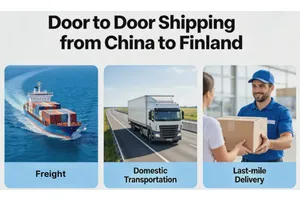
For businesses also looking into cost-effective alternatives, you may refer to our guide on Door to Door Shipping from China to Finland, which offers insight into comprehensive logistics services tailored to the China–Finland corridor.
Export Customs Clearance in China
Export customs clearance is a critical process to ensure legal compliance and avoid delays.
Steps:
- Document Preparation: Key documents include Commercial Invoice, Packing List, Air Waybill (AWB), Export Customs Declaration Form, and any relevant export licenses.
- Customs Declaration: Submit documents to Chinese Customs electronically or via a customs broker. DTFU provides in-house customs clearance to simplify this step.
- Inspection & Release: Customs may inspect cargo randomly or based on risk profiles. Once cleared, goods are released for loading.
- Export Tax Rebate Processing: For eligible exporters, DTFU can assist in obtaining VAT rebates upon successful clearance.
Common Mistakes to Avoid:
- Incomplete or inaccurate documentation
- Misdeclared cargo value or HS code
- Ignoring special requirements for restricted or controlled items
Air Cargo Transit and Tracking
Once your cargo is airborne, timely visibility is crucial for operational planning.
In-Transit Steps:
- Airline Handling: Cargo is loaded onto passenger or freighter aircraft. For consolidations, several shipments may share a single AWB.
- Transit Hubs: If indirect routing, cargo may be transshipped at major European hubs such as Frankfurt, Amsterdam, or Copenhagen.
- Tracking: DTFU provides real-time tracking services through airline systems and our own digital logistics platform. Shippers receive regular status updates, including departures, arrivals, and any exceptions.
- Cargo Insurance: DTFU offers optional insurance coverage for high-value or fragile goods.
Best Practice: Always monitor milestones such as flight departure, transit, arrival, and customs entry for better predictability.
Import Customs Clearance in Finland
After arrival, your shipment must clear Finnish Customs (Tulli) before it can be delivered. The EU's ICS2 (Import Control System 2) regulations have also made pre-arrival data and security declarations stricter.
Key Steps:
- Pre-Arrival Preparation (ICS2 Compliance): Ensure all documents (Commercial Invoice, Packing List, AWB, Certificate of Origin, import permits) are ready. Under ICS2, detailed cargo data (ENS - Entry Summary Declaration) must be submitted before loading.
- Customs Declaration: Submit the import declaration through the Finnish Customs online portal or via DTFU’s local brokerage team.
- Duty & VAT Payment: Pay any applicable customs duties, VAT (25.5% standard rate as of 2026), and specific fees. DTFU can advise on HS classification to avoid overpaying duties.
- Inspection: Finnish Customs may inspect shipments randomly or based on risk profiles (e.g., restricted electronics or new importers).
- Release & Final Delivery: Upon clearance, cargo is transferred to local delivery networks, including options for door-to-door, bonded warehouse, or Amazon FBA delivery.
Avoid Delays By:
- Double-checking that all documents match cargo details
- Complying with Finnish import regulations and product standards
- Leveraging a knowledgeable freight forwarder like DTFU for smooth local handling
At DTFU International Logistics Co.,Ltd, we are committed to guiding you through each step, from strategic airport selection to professional customs clearance. With our deep experience in air shipping from China to Finland, you benefit from competitive rates, reliable schedules, and hands-on customer support tailored to your unique logistics needs.
Air Freight Costs and Pricing Factors
How Air Freight Rates are Calculated (Weight, Volume, Distance)
When shipping cargo by air freight from China to Finland, understanding how rates are calculated is crucial for budgeting and choosing the best shipping solution. Air freight rates are determined by a combination of the following factors:
1. Chargeable Weight: Actual Weight vs. Volumetric Weight
-
Actual Weight: The gross weight of your cargo, including packaging and pallets.
-
Volumetric (Dimensional) Weight: Air freight pricing often uses the greater of actual or volumetric weight. Volumetric weight = (Length x Width x Height in cm) / 6000.
-
Example: If cargo measures 120cm x 80cm x 60cm and weighs 50kg
- Volumetric weight = (120x80x60)/6000 ≈ 96kg
- Chargeable weight = 96kg (since it's higher than actual weight)
2. Distance & Route
- Rates increase with distance between origin and destination airports.
- Direct flights are sometimes more expensive but offer faster transit.
- China to Finland direct air freight routes, for example, may differ in price from shipments routed via transit hubs such as Frankfurt or Amsterdam due to handling and transfer charges.
If you’re considering other air shipping solutions in Europe, our resource on Air Shipping from China to Germany provides an in-depth comparison of costs and procedures for neighboring markets.
3. Type of Goods & Special Handling
- Dangerous goods, perishable cargo, or oversized shipments may incur higher rates.
- Special handling requirements, such as temperature control or security screening, result in surcharges.
4. Market Demand & Seasonality
- Peak seasons (such as pre-Christmas or Chinese New Year) see higher rates due to increased demand.
- Cargo space availability fluctuates with global economic shifts and airline capacity.
5. Service Level
- Express, standard, and deferred services each have different price points.
- Door-to-door options, versus airport-to-airport, affect total cost.
Sample Rate Comparison Table
| Route | Min. Chargeable Weight | Standard Rate (USD/kg) | Express Rate (USD/kg) | Transit Time (Days) |
|---|---|---|---|---|
| Beijing → Helsinki (Direct) | 45 kg | $3.80 | $5.00 | 2–4 |
| Shanghai → Helsinki (Via FRA) | 45 kg | $4.10 | $5.50 | 4–6 |
| Guangzhou → Helsinki (Direct) | 45 kg | $4.00 | $5.20 | 3–5 |
Note: Rates are indicative for 2026 and subject to market fluctuations. For a precise, up-to-date quote, please contact DTFU International Logistics Co.,Ltd.
Additional Charges and Surcharges to Consider
In addition to base rates, air shipping from China to Finland can include several surcharges. Understanding these fees ensures accurate cost estimation:
- Fuel Surcharge: Adjusted regularly in response to global fuel prices.
- Security Surcharge: Covers enhanced cargo security checks, especially for shipments to the European Union.
- Terminal Handling Charge (THC): Fees for handling cargo at origin and destination airports.
- Customs Clearance Fees: Charges for processing export and import customs.
- Remote Area Delivery: Applies if final destination is outside major cities like Helsinki.
- Documentation Fee: For preparing air waybills and required paperwork.
- Insurance: Optional but highly recommended to protect against loss or damage.
- Screening Fees: Especially for sensitive or high-value shipments.
Typical Surcharge Breakdown Table
| Surcharge Type | Typical Range (USD) | Notes |
|---|---|---|
| Fuel Surcharge | 0.50–1.00/kg | Varies with global fuel prices |
| Security Fee | 15–50/Shipment | Mandatory for EU-bound cargo |
| Handling Fee | 30–80/Shipment | Applies at both departure and arrival airports |
| Documentation Fee | 20–40/Shipment | For paperwork and AWB issuance |
| Insurance | 0.15–0.50% of cargo value | Optional but recommended |
Tips to Optimize Air Shipping Costs
Optimizing your air shipping costs from China to Finland is essential for competitiveness. In our experience, shippers who proactively plan can save 15-20% on freight costs. Here are our expert strategies:
- Consolidate Shipments: Combine multiple consignments to reach higher weight brackets (+100kg or +300kg), which secure significantly lower per-kg rates.
- Optimize Packaging: Air freight charges by volumetric weight if the box is too large. Use compact, sturdy packaging to reduce "dead space"—this is especially impactful for lightweight but bulky goods.
- Avoid the "Cheap Quote" Trap: Be transparent about your cargo. Some forwarders offer artificially low base rates but hide Terminal Handling Charges (THC) or security fees. Always request an all-in quote.
- Plan Around Chinese Holidays: Avoid shipping during the weeks preceding Chinese New Year (Jan/Feb) or Golden Week (October) when rates spike by up to 30% due to capacity crunches.
- Work with a Professional Freight Forwarder: Experienced providers like DTFU International Logistics Co.,Ltd can leverage established block space agreements (BSAs) with airlines to secure space even during peak seasons.
Required Documents and Customs Regulations
Essential Documentation for Air Shipping
Proper documentation is critical for smooth air freight from China to Finland. Missing or incorrect paperwork can lead to delays, fines, or seizure. The key documents include:
- Air Waybill (AWB): The main contract of carriage; includes shipper, consignee, cargo details, and routing.
- Commercial Invoice: Details value, description, and terms of sale for the goods.
- Packing List: Specifies contents, packaging type, and marks/numbers.
- Export Customs Declaration (China): Required for all goods leaving China.
- Certificate of Origin: Proves origin of goods; may be required for preferential tariffs.
- Import License (if required): Some goods entering Finland or the EU need special permits.
- Insurance Certificate: If applicable, confirms cargo insurance coverage.
Finnish Customs Rules & Clearance Procedures
Finland, as part of the European Union, follows EU customs regulations. Successful import clearance requires compliance with the following:
- Import Declaration: Submit electronically via Finnish Customs’ system (TULLI).
- Tariff Classification & Valuation: Assign correct HS codes and declare accurate cargo value.
- VAT & Duties: Importers must pay Value Added Tax (VAT) (25.5% standard rate as of 2026) and applicable duties based on product type and origin.
- EORI Number: All importers/exporters must have an Economic Operators Registration and Identification (EORI) number.
- Product Compliance: Some products require CE marking, health certificates, or conformity declarations.
- Random Inspections: Finnish Customs may inspect shipments for compliance, safety, or security reasons.
Typical Import Clearance Process
- Arrival of cargo at Helsinki-Vantaa Airport or other Finnish gateway.
- Carrier or agent submits arrival manifest.
- Importer or their agent files customs declaration electronically.
- Customs reviews documents, may request additional info or conduct inspection.
- Duties, taxes, and fees are assessed and paid.
- Release of cargo for delivery.
Common Mistakes and How to Avoid Delays
In our daily operations, we see many shippers face unnecessary delays or fines due to avoidable mistakes. Here are the most frequent issues, with expert advice to prevent them:
| Common Mistake | Real-World Consequence | How to Avoid |
|---|---|---|
| Incomplete or vague goods description | Cargo held for ICS2 non-compliance | Use precise terminology (e.g., "Men's cotton t-shirts" instead of "clothes") |
| Incorrect HS code classification | Paying 5-10% more in duties or facing fines | Consult with experienced customs brokers or DTFU experts |
| Declaring unreasonably low cargo value | Value challenged by Finnish Customs | Provide accurate, verifiable commercial invoices |
| Missing EORI number for EU imports | Cargo stuck at Helsinki Airport | Register for an EORI number before the cargo leaves China |
| Ignoring CE marking requirements | Goods seized or destroyed at border | Verify product-specific safety regulations in advance |
| Delayed customs payments | Storage fees accrue at the terminal | Prepare funds and arrange prompt VAT/Duty payment |
Working with a reliable and experienced freight forwarder like DTFU International Logistics Co.,Ltd reduces risk of paperwork errors, ensures compliance with both Chinese export and Finnish import requirements, and streamlines the overall shipping process.
For those looking to compare multimodal possibilities, see our guide on Shipping from China to Finland for both air and sea freight alternatives.
Transit Times and Delivery Speed for Air Cargo
Average Air Freight Transit Time from China to Finland
The average air freight transit time from China to Finland ranges from 3 to 7 days for direct shipments, depending on the chosen departure and arrival airports, as well as the specific service level. Here is a comparison table for reference:
| Main Route | Typical Transit Time (Airport-to-Airport) | Notes |
|---|---|---|
| Shanghai (PVG) → Helsinki (HEL) | 3–5 days | Most direct flights; fastest route |
| Guangzhou (CAN) → Helsinki (HEL) | 4–6 days | Possible transit in Europe |
| Beijing (PEK) → Helsinki (HEL) | 3–5 days | Frequent direct cargo flights |
| Shenzhen (SZX) → Helsinki (HEL) | 4–7 days | May include transit/stopover |
| Hong Kong (HKG) → Helsinki (HEL) | 3–6 days | Major international airfreight hub |
These timeframes reflect airport-to-airport transit. Door-to-door services may require an extra 1–3 days, accounting for pickup, final delivery, and customs clearance at both ends.
Fastest vs. Most Cost-Effective Air Shipping Options
When shipping cargo by air from China to Finland, shippers usually choose between two main service levels:
| Service Type | Transit Time (Airport-to-Airport) | Cost Level | Typical Use Cases |
|---|---|---|---|
| Express Air Freight | 1–3 days | Highest | Urgent shipments, samples, documents |
| Standard Air Freight | 3–7 days | Standard | General commercial cargo |
| Deferred/Air Consolidation | 5–10 days | Lowest | Cost-sensitive, less urgent cargo |
- Express Air Freight (such as offerings from DHL, FedEx, UPS) is the fastest but comes at a premium price. It's suitable for urgent, time-critical shipments.
- Standard Air Freight is the most common choice for business shipments, offering a balance between speed and cost.
- Air Consolidation (Deferred services) groups cargo from multiple shippers, reducing costs but adding transit time due to waiting for consolidation and indirect routing.
Factors Influencing Air Transit Time
Several factors can affect the actual transit time for air freight shipments from China to Finland:
- Departure and Arrival Airports: Major hubs like Shanghai PVG, Beijing PEK, and Helsinki HEL offer more direct flights and faster processing.
- Flight Frequency and Schedule: High-frequency routes offer more flexibility and shorter waiting times.
- Customs Clearance Efficiency: Delays may occur due to incomplete documentation or heightened inspections. Both Chinese and Finnish customs processes are generally efficient, but peak seasons (e.g., Chinese New Year, holiday periods) can slow operations.
- Type of Goods and Security Screening: Dangerous goods, batteries, or high-value cargo may require additional checks, impacting speed.
- Weather and Seasonal Disruptions: Extreme weather at origin, destination, or transit hubs can cause flight delays.
- Geopolitical and Global Events: In 2026, factors like airspace restrictions (e.g., Russian airspace closures) and geopolitical tensions continue to impact available capacity, timetables, and routing choices.
- Carrier and Service Level: Reputable carriers and premium services typically deliver faster, more reliably.
For the most predictable transit times, it’s advisable to work with an experienced freight forwarder who can provide real-time updates and alternative routing if needed.
How to Choose the Best Air Freight Forwarder from China to Finland
Selecting the right air freight forwarder is crucial for smooth, cost-effective, and reliable shipping. Here are key criteria to consider:
1. Industry Experience and Network
Choose a forwarder with proven experience in China–Finland trade lanes and established partnerships with major airlines and handling agents at both origin and destination. For example, DTFU International Logistics Co.,Ltd has over 10 years of operational expertise and a strong local presence in both China and Europe.
2. Comprehensive Service Portfolio Tailored to Your Needs
A top-tier forwarder shouldn't just offer generic options; they must provide specialized solutions that solve real supply chain pain points. At DTFU, our service portfolio for the Finland route goes far beyond basic freight:
- Multimodal Agility: We seamlessly integrate Air Freight with Road Freight (TIR trucking) across Europe to ensure your cargo reaches remote Finnish locations (like Oulu or Rovaniemi) just as efficiently as Helsinki.
- True Door-to-Door (DDP/DDU): We don't just drop off at the airport. Our network handles the critical last-mile delivery, directly to your warehouse, storefront, or Amazon FBA center.
- In-House Customs Expertise: Instead of relying on third-party brokers, our dedicated teams manage both export clearance in China and complex ICS2/import clearance in Finland, minimizing the risk of holds.
- Specialized Cargo Handling: We routinely manage complex shipments that others turn away, including oversized equipment (OOG Freight), temperature-sensitive goods, and high-value electronics requiring strict security protocols.
- Risk Mitigation: Beyond standard Cargo Insurance, we provide proactive risk assessment and routing alternatives when global disruptions occur.
This depth of capability ensures that whether you're a startup testing the market or a large enterprise with complex supply chains, we have the infrastructure to support your growth without bottlenecks.
3. Transparent Pricing and Cost Control
Request detailed, all-inclusive quotes with clear breakdowns of freight charges, fuel surcharges, terminal fees, and optional services. DTFU International Logistics practices full transparency, helping you avoid hidden costs and optimize your budget.
4. Tracking and Proactive Communication
Real-time cargo tracking, proactive updates, and accessible customer service are essential for peace of mind. A professional provider offers digital tracking tools and informs you of any possible delays or issues immediately.
5. Customs and Compliance Support
Ensure your forwarder is well-versed in both Chinese export and Finnish import regulations, providing guidance on documentation and assisting with any regulatory changes or challenges.
6. Reputation and References
Look for positive customer feedback, industry certifications, and membership in recognized logistics associations. Always request references for similar trade routes.
Why Choose DTFU International Logistics Co.,Ltd?
As a highly professional, cost-effective, and one-stop international logistics service provider, DTFU International Logistics Co.,Ltd offers:
- Decade-long expertise in China–Finland shipping
- End-to-end services (Air/Sea/Road, Door-to-Door, Customs, Insurance, Warehousing, FBA, OOG & more)
- Dedicated account managers and 24/7 support
- A reputation for reliability, flexibility, and customer-centric solutions
Contact our team for a tailored solution that meets your specific shipping needs.
FAQs
Q1: How long does air freight from China to Finland usually take?
A: Standard transit times are 3–7 days airport-to-airport. Express shipments can arrive in 1–3 days, while consolidated or deferred options may take up to 10 days.
Q2: What documents are needed for air shipping from China to Finland?
A: You will typically need a commercial invoice, packing list, air waybill, and any required customs or import permits.
Q3: Can I track my shipment in real-time?
A: Yes, most reputable freight forwarders, including DTFU International Logistics, provide digital tracking so you can monitor your cargo’s status and expected delivery.
Q4: What factors affect the cost of air freight?
A: Pricing depends on shipment weight, volume, route, service level, and any additional surcharges or handling fees.
Q5: How do I select the right air freight forwarder?
A: Look for experience on the China–Finland route, comprehensive service, transparent pricing, strong customer service, and good industry reputation. DTFU International Logistics Co.,Ltd is a reliable choice for all your logistics needs.
Q6: Are there any restrictions on goods shipped by air to Finland?
A: Yes, both Chinese and Finnish authorities restrict certain items like dangerous goods, counterfeit products, and some electronics. Always check with your forwarder for the latest regulations.
Q7: Can DTFU handle door-to-door delivery and customs clearance?
A: Absolutely! DTFU International Logistics offers one-stop solutions, including door-to-door delivery and full customs support in both China and Finland.