Are you watching a container sit at Los Angeles for a week with no rail car under it? Here is what actually changed at San Pedro Bay this month, why the delay is on the rail leg rather than at the gate, what the sea leg costs in December 2026, and how to route your next order around the backlog instead of through it.
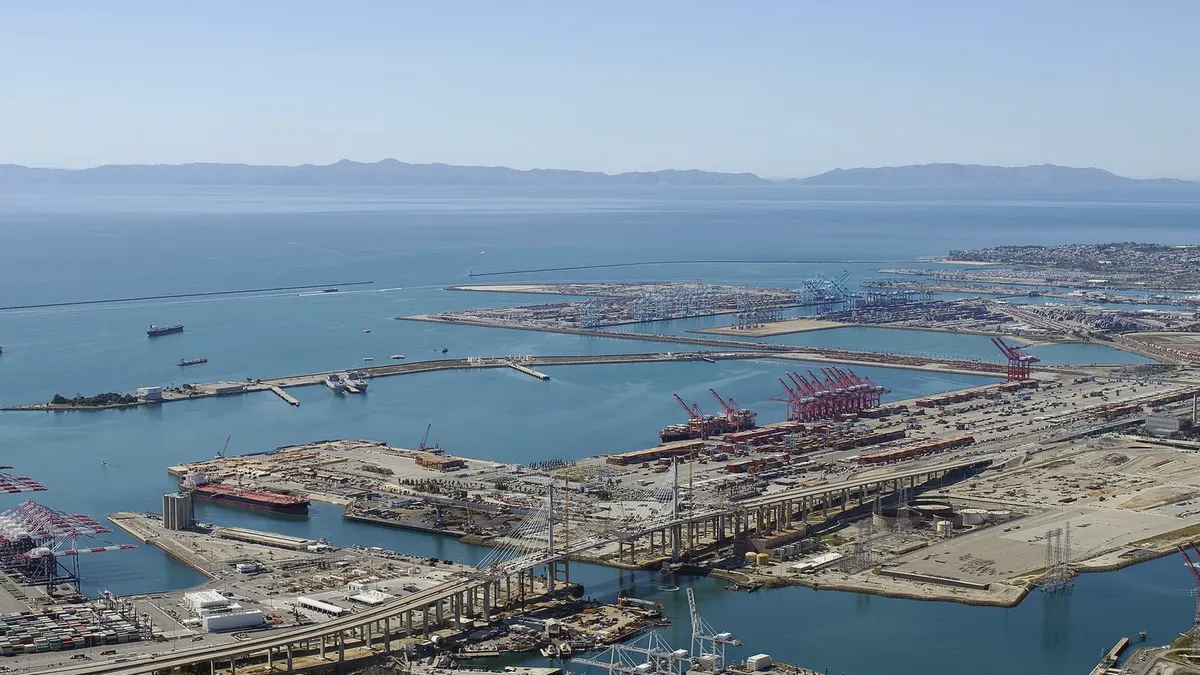
What Changed at Los Angeles and Long Beach in November 2026
Two things happened in the same fortnight, and only one of them was the strike.
On Saturday 21 November the Pacific Maritime Association and the International Longshore and Warehouse Union reached a tentative agreement covering about 250 watchmen in Local 26, hours after the contract deadline of 12:01 a.m. Pacific. The unit is small — roughly 2% of the ILWU workforce at the two ports — but it controls gate access and security patrols at six container terminals that handle about 85% of Long Beach's cargo and 33% of Los Angeles'. The real exposure was never those 250 jobs: it was the thousands of longshore workers, clerks and foremen on separate contracts who were expected to respect a picket line. The deal still has to be ratified, no terms have been published, and the old contract stays extended while members vote. Terminals and gates are running normally.
The second development is the one that will cost importers money through January. The Port of Los Angeles moved 1,026,872 TEU in October 2026, a record for the month and the second-highest monthly total in its history, one month after September's all-time record of 1,042,652 TEU. It is the first time any US port has cleared a million TEU in consecutive months. Loaded imports were 538,620 TEU, up 25% year on year and 30% above the port's five-year October average, and empties hit 373,271 TEU as carriers repositioned equipment back to Asia. From June to October the port handled close to 5 million TEU, its strongest five-month run in 118 years (Port of Los Angeles, 12 November 2026).
Record volume through a fixed gate, a fixed yard and a fixed rail ramp is a queue. What the queue looks like on any given day is now published, which is the useful part.
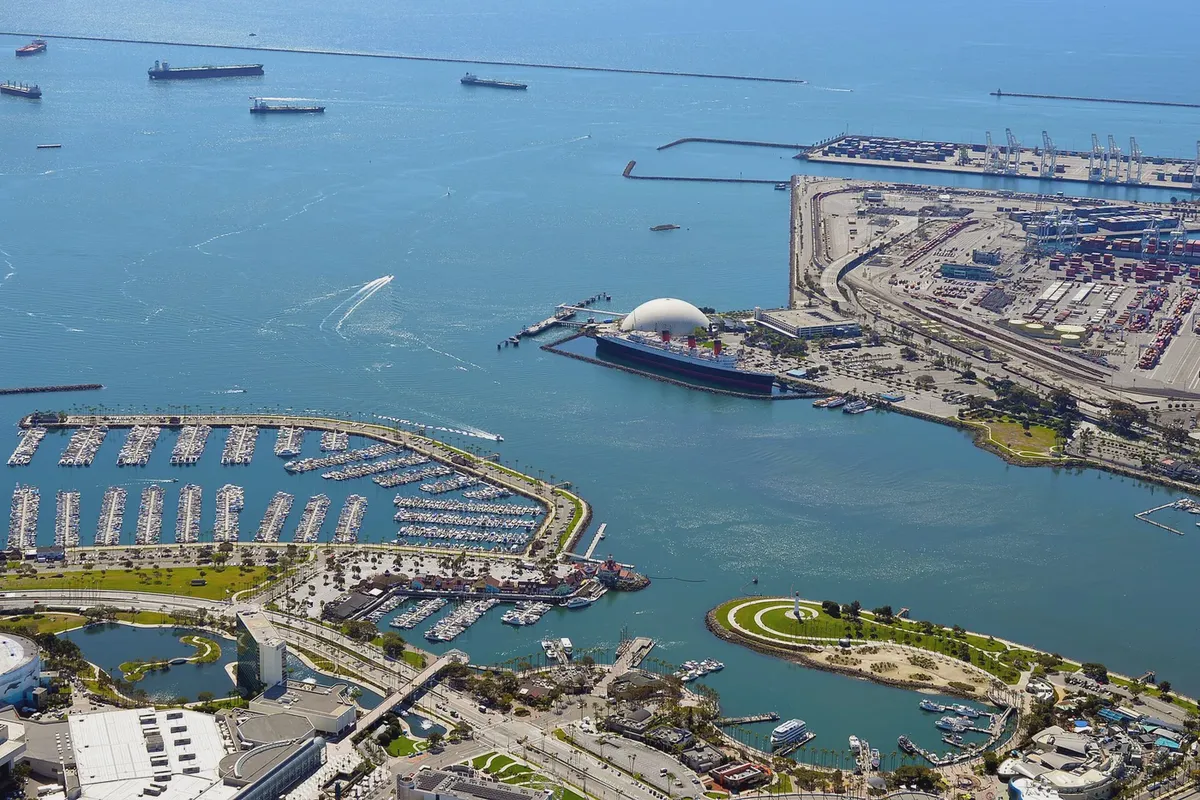
Where the Nine Days Actually Go: On-Dock Rail and the BNSF Corridor
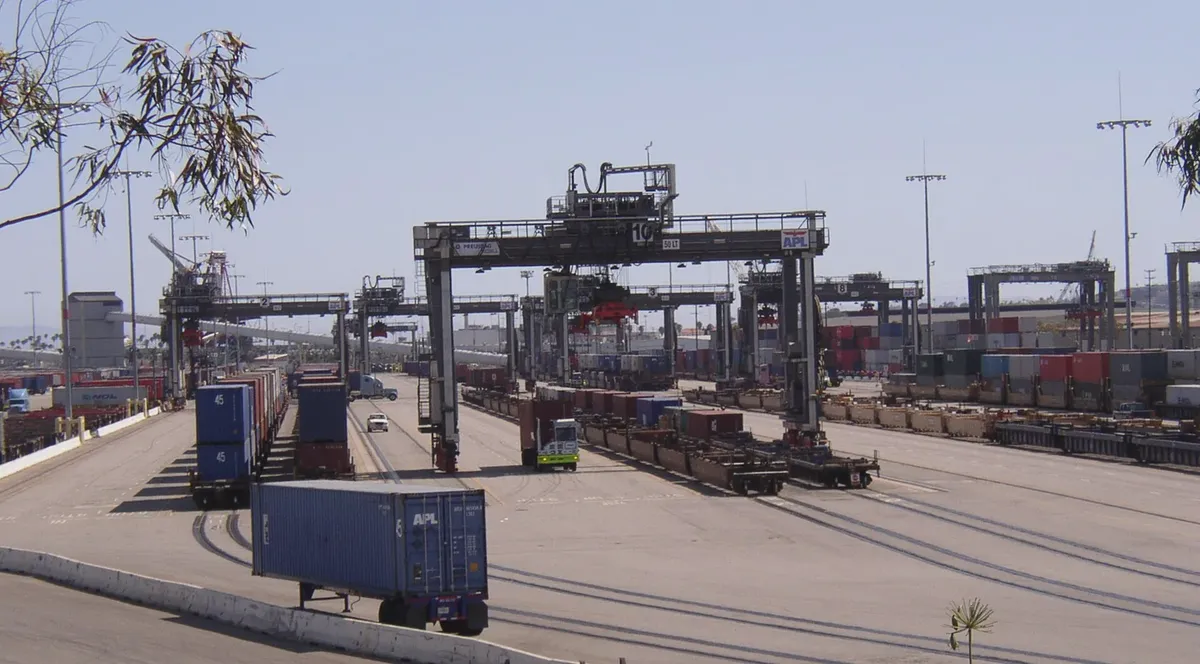
Local cargo is not the problem. Average dwell for boxes on terminal at Los Angeles was 3.2 days in the port's 19 November operations report. Rail cargo is a different animal: average on-dock rail dwell was 6.6 days that day, against a 13.4-day peak for the month.
Daily counts are blunter still. On 17 November, 20,931 import containers were staged at Los Angeles waiting for an on-dock train, and 9,475 of them had been waiting nine days or longer — 45.3%. Long Beach had 20,723 waiting, with 3,979 at nine days or more (19.2%), 17,556 of them BNSF-bound (Port of Los Angeles and Port of Long Beach daily rail reports, compiled by The Dwell). The terminal split shows where it concentrates:
Terminal (Los Angeles) | Waiting for rail | 9+ days | 9+ share |
|---|---|---|---|
Fenix Marine Services | 9,453 | 4,490 | 47.5% |
APM Terminals Pier 400 | 4,324 | 1,901 | 44.0% |
West Basin Container Terminal | 4,226 | 1,594 | 37.7% |
TraPac | 1,461 | 551 | 37.7% |
Everport | 1,472 | 530 | 36.0% |
Yusen Terminals | 2,951 | 434 | 14.7% |
Port total | 23,887 | 9,500 | 39.8% |
Source: Port of Los Angeles on-dock rail report of 10 November 2026, as compiled by The Dwell and republished by Worldwide Logistics Group. Point-in-time inventory of rail-bound boxes, not average dwell.
Three mechanisms sit behind those numbers, and each has a different fix.
Railcar supply. Intermodal railcar availability in Southern California has been short while import volume ran at record levels, so rail-bound boxes stall first — the observation C.H. Robinson made to clients in November.
Corridor recovery. Flooding in New Mexico and Arizona disrupted BNSF's Southern Transcon, the main line from Southern California to Chicago and Texas. The route reopened, but BNSF has been working through the accumulated backlog since. Average BNSF transit from Los Angeles to Chicago went from 5.34 days on 26 October to 7.16 days on 2 November. Add ramp congestion at the inland end and a box booked on a 5-day rail plan can lose a week before it is grounded.
Equipment competition. With a record 373,271 empty TEU moved out of Los Angeles in October, empties are competing with loaded boxes for the same gate slots, chassis and yard space. That is why drayage turns per driver fall during these stretches — one more reason to book trucking before the vessel arrives rather than after.
The origin side is not neutral either. Yantian's berth 12 has been out of service to the end of November since a Maersk-operated vessel struck a ship-to-shore crane there on 9 November, cutting mega-vessel berth capacity at South China's busiest gate; seven-day average vessel waiting time at Shanghai was 2.14 days and Shekou's yard density was above 90% in the week to 17 November (Kuehne+Nagel port updates). If your allocation is flexible, a Ningbo or Nansha load port can be the cheaper calendar even at the same ocean rate.
Shipping from China to the US West Coast: December 2026 Rates
These are the port-to-port ocean bands DTFU Logistics is quoting on Yantian, Ningbo and Shanghai bookings this month, before origin charges, destination fees and duty:
Gateway | 20GP | 40GP | 40HQ | Ocean transit |
|---|---|---|---|---|
Los Angeles / Long Beach | $3,300–4,300 | $5,100–6,300 | $5,300–6,600 | 15–19 days |
Oakland | $3,400–4,400 | $5,200–6,400 | $5,400–6,700 | 16–20 days |
Seattle / Tacoma | $3,400–4,400 | $5,200–6,400 | $5,400–6,700 | 16–21 days |
New York / New Jersey | $4,600–5,700 | $7,000–8,400 | $7,200–8,700 | 30–36 days |
Savannah / Charleston | $4,700–5,800 | $7,100–8,500 | $7,300–8,800 | 31–38 days |
Houston | $4,800–5,900 | $7,200–8,600 | $7,400–8,900 | 32–39 days |
For smaller consignments and urgent replenishment:
Mode | Rate | Minimum / notes |
|---|---|---|
LCL to US West Coast | $95–155 per CBM | 2 CBM minimum, CFS handling extra |
LCL to US East Coast / Gulf | $110–175 per CBM | 2 CBM minimum |
Air freight (PVG/SZX/HKG to LAX/ORD/JFK) | $5.80–8.20 per kg | 100–499 kg |
Air freight, 500 kg and above | $4.80–6.60 per kg | 3–5 days airport to airport |
Express courier | $9.50–14.50 per kg | 2–4 days door to door |
Sea DDP (all-in, duty paid) | $210–320 per CBM | Quote needs HS code and value |
Drewry's World Container Index on 19 November put the composite at $4,176 per 40ft, down 3% and the fourth consecutive weekly fall; Shanghai–Los Angeles at $7,026 (−5%, a 12-week low) and Shanghai–New York at $8,194 (−9%, a 15-week low). The gap between the index and the bands above is scope, not inconsistency: the index tracks spot port-to-port bookings made this week, while the bands reflect named-account and NVOCC allocations booked weeks ahead, where the December peak surcharges have not landed yet. A quote that comes in far below both, on a 40HQ in December, is usually missing a surcharge or a destination fee — ask which.
How Long Shipping from China to the US West Coast Takes in December
Port-to-port the sea leg is unchanged: 15–19 days from South China to Los Angeles or Long Beach, 16–21 days to the Pacific Northwest, 30–36 days all-water to New York, 32–39 to Houston. The variation is all at the ends.
Routing | Port-to-port | Door to door |
|---|---|---|
FCL, China → Los Angeles / Long Beach, local delivery | 15–19 days | 22–32 days |
FCL, China → US West Coast, on-dock rail to Midwest | 15–19 days | 30–42 days |
FCL, China → US East Coast all-water | 30–36 days | 36–48 days |
LCL, China → US West Coast | 16–21 days | 30–38 days |
LCL, China → US East Coast | 30–38 days | 42–52 days |
Air freight, China → US | 3–5 days | 5–8 days |
Two adjustments belong in any December plan. First, on-dock rail is running at 6.6 days average against a 3.2-day local equivalent, and BNSF's Los Angeles–Chicago leg is at 7.16 days rather than 5.34 — budget 5–7 days of rail plus 3–6 days of ramp handling for an inland door, not the 5-day rail figure on the routing guide. Second, a vessel that misses its berth window at Los Angeles or Long Beach adds 2–4 days to everything downstream; with terminal-level rail backlogs as uneven as the table above, which terminal your booking lands at matters as much as which carrier.
Work backwards from your shelf date: 8–9 weeks from supplier departure for a West Coast local door, 10–12 weeks for a Midwest rail door in the current conditions. For detail on the ocean-only numbers, see our guide to shipping time from China to USA.
The Duty Stack and the Fees That Decide Your Landed Cost
Ocean freight is the visible cost and rarely the largest one. US duty is assessed on transaction value — the price you actually paid the supplier — and international freight and insurance are excluded from that base. Guides that teach CIF-based duty (the norm for most destination markets) overstate it here, and on a 40HQ the error runs from several hundred dollars to more than $2,000 depending on the duty rate.
Layer | Rate | Applies to |
|---|---|---|
MFN duty (HTSUS column 1) | Product-specific, 0–12% typical | All Chinese-origin goods |
Section 301 List 1–3 | 25% | Listed HTS lines |
Section 301 List 4A | 7.5% | Listed HTS lines |
Section 301 forced-labor duty (9903.05.31) | 12.5% | China-origin goods from 24 July 2026, unless displaced |
Section 232 | 25% on many derivatives, up to 50% on primary aluminium | Steel and aluminium content |
AD/CVD | Order-specific | Where a case exists |
Two rules decide most classifications. Section 232 displaces the 12.5% forced-labor layer on covered goods, so cabinets, steel sinks and aluminium windows show 232 instead of the forced-labor rate. And the Section 301 rate follows the HTS line, not the product category — furniture is 25%, not List 4A's 7.5%, while faucets and hardware are often 7.5%.
Product | HS | Base duty (MFN + 301 + forced labor or 232) |
|---|---|---|
Wooden tables, cabinets, nightstands | 9403.60 | 37.5% |
Upholstered wooden chairs, kitchen cabinets | 9401.61 / 9403.40 | 50% |
Porcelain and ceramic tiles | 6907.21 | 46–47.5% |
LED panels, chandeliers, lamps | 9405.11 / 9405.19 | 41.4–45.1% |
Mattresses | 9404.29 | 43.5% |
Wooden interior doors | 4418.29 | 42.3% |
On top of duty, two customs fees: MPF at 0.3464% of value (FY2027 minimum $34.58, maximum $670.86) and HMF at 0.125%, ocean cargo only.
Worked example — one 40HQ of wooden furniture (HS 9403.60, 37.5% base duty), FOB Ningbo $28,000, delivered to a Los Angeles warehouse:
Line | Amount |
|---|---|
Goods, FOB Ningbo | $28,000.00 |
Ocean freight, 40HQ | $5,300.00 |
Origin charges (export clearance, THC, documents) | $480.00 |
Marine insurance | $120.00 |
Destination terminal and handling fees | $420.00 |
ISF / AMS filing | $45.00 |
Customs brokerage (entry) | $150.00 |
Drayage to Los Angeles warehouse | $380.00 |
Import duty, 37.5% of $28,000 | $10,500.00 |
Merchandise Processing Fee, 0.3464% | $96.99 |
Harbor Maintenance Fee, 0.125% | $35.00 |
Total landed | $45,526.99 |
Duty is 23% of the landed total and freight is 11.6%. That is the real hierarchy for a furniture importer, and it is why a $300 swing in the ocean rate is worth less attention than the HS line.
One more item for anyone who paid duties in 2025 or early 2026: the IEEPA tariffs were struck down by the Supreme Court on 20 February 2026, and CBP stopped collecting them on 24 February 2026. Refunds run through the CAPE function in the ACE portal, must be filed by the importer of record or the broker who filed the entries, and CBP had certified about $128.4 billion in duties plus interest for Treasury disbursement as of 5 November. If those entries are yours and nobody has filed, that is money sitting in a queue.
West Coast, East Coast or Transload: Which Route Wins This Winter
The default answer — West Coast is cheaper — is still right, but the margin narrows once the rail leg is priced. For a 40ft container into the Midwest:
Option | Ocean | Inland | Door-to-door |
|---|---|---|---|
Los Angeles + on-dock rail to Chicago | $5,100–6,300 | $1,900–3,200 per 40ft | 30–42 days |
New York all-water + truck to Chicago | $7,000–8,400 | $1,600–2,600 | 36–46 days |
Los Angeles + transload to a 53-foot domestic trailer | $5,100–6,300 | Transload handling plus domestic linehaul | 26–36 days |
The West Coast still wins on cost by roughly $1,300–1,600 all-in, and the East Coast wins on certainty: no on-dock rail queue, no BNSF corridor recovery, one all-water leg. If your inventory has a hard date and your margin can absorb the difference, New York or Savannah is the lower-variance booking this winter, not the cheaper one.
Transloading at the port is the third option and the one importers forget under pressure. Strip the box in a Los Angeles warehouse, load into domestic 53-foot trailers, and you stop paying per diem on a container that is waiting for a train that has not been assigned. It costs money at the port and saves it inland — worth pricing whenever your destination is more than one rail ramp away from the discharge port, or when the free-time clock has already started running. Amazon FBA sellers run the same arithmetic with an appointment slot on top, and the rail-versus-transload call usually decides whether the shipment makes its delivery window; Amazon FBA shipping from China covers the inbound mechanics.
Book Into December or Wait for January? The Rate Calendar
Transpacific spot has now fallen for seven consecutive weeks. Drewry recorded a 5% drop to Los Angeles and a 9% drop to New York in the week to 19 November and expects further declines next week, even as carriers announced 10 blank sailings for the week of 23 November against four the week before. That combination — falling rates plus withdrawn capacity — describes carriers defending a floor ahead of the 2027 annual contract round rather than a market collapse.
For planning, three dates matter:
Early December. Targeted, vessel-specific promotional rates are the pattern when carriers need to fill a specific sailing without repricing the trade. If your cargo is ready and not urgent, that window is worth waiting for; it is usually a few hundred dollars per 40ft, not thousands.
First half of January. This is the booking window for anything that must arrive before Chinese New Year, which falls on 6 February 2027 with factories closing from 5 February. Pre-holiday peak surcharges are filed from mid-December and capacity tightens four to five weeks out, so January's prices will be set by how much space is left, not by the December trend line.
Late January. Too late for a West Coast rail door if your supplier is still producing. A 40-day door-to-door plus a 5–7 day rail leg plus a week of production slippage eats the whole buffer.
If you are comparing Incoterms before you book, DDP vs FOB changes who absorbs the demurrage and per diem exposure in a month like this one; if your box choice is still open, high cube shipping container cost covers when the 40HQ earns its premium.
Five Things to Fix on Your Next US Booking
Book drayage and rail (or transload) at the same time as the ocean leg. Ramp appointments and truck capacity are the constrained items this quarter; ITS Logistics has been telling shippers to plan extra trucking capacity through Lunar New Year. At DTFU we book the inland leg with the ocean booking for exactly this reason: a container that clears customs in 3.2 days and then waits nine days for a train has not been handled, only moved.
Extend free time before arrival, in writing. Terminal free time for import boxes typically runs four to seven calendar days depending on terminal and carrier contract. Once it expires, demurrage on the box and per diem on the equipment accrue daily, and neither is negotiable after the fact.
Choose rail or transload at booking, not on the quay. The decision changes the destination handling, the delivery address on the arrival notice and the customs entry — retrofitting it after discharge is where the extra week appears.
File ISF 24 hours before loading and confirm the bond. ISF (10+2) and AMS are both due 24 hours before loading at origin, with penalties up to $5,000 per violation, and every shipment now needs an entry since the $800 de minimis suspension became indefinite in June 2026. A continuous bond from $50,000 or a single-entry bond covers the filing; an EIN and importer-of-record status come first.
Insure the inland leg, not just the ocean. Congested terminals mean more handling, more transfers and more time sitting in a yard. Our guide to container insurance cost explains what a policy covers once the box leaves the vessel, and cargo insurance for shipping from China is priced per shipment against the declared value.
FAQs
Is there a strike at the ports of Los Angeles and Long Beach right now?
No. The Pacific Maritime Association and ILWU Local 26 reached a tentative agreement on 21 November 2026 covering about 250 watchmen, and terminals and gates have kept working normally. The deal is subject to ratification by Local 26 members, no vote date has been published, and the old contract stays extended until they vote. A rejection would reopen the risk, so treat ratification as a live item for Q1 2027 planning rather than a closed one.
How long does shipping from China to the US West Coast take in December 2026?
Port-to-port, 15–19 days from Yantian, Ningbo or Shanghai to Los Angeles or Long Beach, and 16–21 days to Seattle or Tacoma. Door to door that is 22–32 days for local delivery, 30–42 days for a Midwest door via on-dock rail, and 30–38 days for LCL.
How much does a 40ft container from China to Los Angeles cost right now?
$5,100–6,300 for a 40GP and $5,300–6,600 for a 40HQ, port-to-port. Drewry's Shanghai–Los Angeles spot print was $7,026 per 40ft on 19 November 2026, and the difference reflects spot versus named-account allocation, not a different lane.
Why is my container waiting nine days for rail at Los Angeles?
Three things at once: a shortage of intermodal railcars in Southern California, BNSF still working through the backlog left by flooding on its Southern Transcon route in New Mexico and Arizona, and import volume at record levels. On 17 November, 45.3% of rail-bound import boxes at Los Angeles had waited nine days or longer.
Should I ship to the West Coast or the East Coast this winter?
West Coast is still cheaper to most inland points by roughly $1,300–1,600 per 40ft all-in on the rates above, but East Coast all-water has no rail queue. If the delivery date is hard and the margin allows it, New York or Savannah is the lower-risk routing through January.
How do I avoid demurrage when the port is congested?
Three levers: extend free time with the terminal and carrier before arrival, decide rail versus transload at booking so the box is not parked waiting for a train slot, and pre-clear customs so the entry is ready before discharge. Terminal free time is typically four to seven calendar days; after that, demurrage and per diem accrue daily with no retroactive relief.
What is the cheapest way to ship 5 CBM from China to the US?
LCL at $95–155 per CBM to the West Coast, so roughly $475–775 plus CFS handling and destination fees. The FCL break-even is around 15–19 CBM on this lane; below that LCL wins, above it a 20GP is usually cheaper per unit. Rate detail and the CFS fee stack are in our LCL shipping from China to the USA guide.
Is air freight worth it in December?
At $5.80–8.20 per kg for 100–499 kg, air costs roughly 8–12 times the ocean rate per kilogram. It pays when the stock-out cost is higher than the premium — typically a hot SKU or a launch date — not as a congestion workaround for a full container.
What duty will I pay on Chinese goods entering the US now?
Four layers can apply: MFN duty by HTS line, the Section 301 list rate (25% for Lists 1–3, 7.5% for List 4A), the 12.5% Section 301 forced-labor duty under HTS 9903.05.31 in force since 24 July 2026, and Section 232 where steel or aluminium content applies — 232 displaces the forced-labor layer. Duty is assessed on transaction value, not CIF.
Can I still claim a refund of IEEPA duties I paid?
Yes, if you were the importer of record on entries that paid IEEPA duties before 24 February 2026. File a CAPE declaration in the ACE portal — only the importer of record or the broker that filed the entries can do it. CBP says valid refunds are generally issued within 60–90 days of acceptance, and about $128.4 billion had been certified for disbursement as of 5 November 2026.
When will West Coast congestion ease?
Local cargo is already moving at 3.2 days average dwell; the rail leg is the constraint, at 6.6 days average and a 13.4-day peak in November. Rail backlog typically clears in the first quarter, but Chinese New Year on 6 February 2027 pulls the next volume wave forward into January, so plan on elevated rail dwell through February rather than a clean reset in January.
Do I need a customs bond to import from China to the US?
Yes. Either a continuous bond (from about $50,000, priced annually) or a single-entry bond per shipment, plus an EIN and importer-of-record status. ISF and AMS are filed 24 hours before loading, and the entry itself is filed by a licensed broker on CBP Form 7501.
If your container is already sitting in a Los Angeles yard waiting for a train, or your next purchase order has to land before Chinese New Year, send the booking details and the delivery address — DTFU Logistics books this lane out of Yantian, Ningbo and Shanghai every week, so we can tell you which terminal, which railroad and which delivery week your cargo realistically lands in, and price the door-to-door leg on the ship and rate terms you actually use. More on the lane: sea freight from China, door-to-door shipping from China and China customs clearance service — or contact us with the HS code and we will quote the duty and the freight separately.