Are you trying to plan a shipment from Shanghai to Colombia and finding that every quote you get is a range so wide it tells you nothing? If you are comparing a Shanghai-specific quote with the broader Shipping from China to Colombia market, this guide narrows it down: the 2026 rate bands for 20ft, 40ft and LCL cargo into Buenaventura and Cartagena, the terminal cut-offs that decide whether you catch your sailing, how long the door-to-door chain really takes once the Andean inland leg is added, and how Colombia's DIAN customs and 19% IVA land on your invoice.
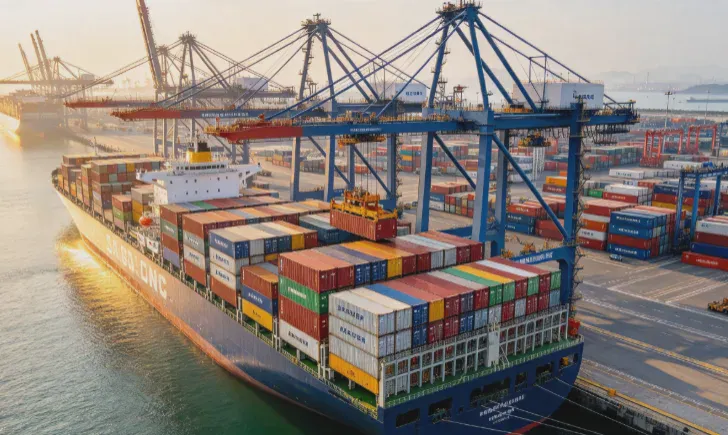
Why Ship from Shanghai to Colombia?
For a large share of Colombian importers, Shanghai is the only origin that makes commercial sense — because the goods they buy are made within a few hundred kilometres of the port.
The Yangtze River Delta — Shanghai itself plus Jiangsu and Zhejiang provinces — is where a dense cluster of the goods Colombia imports most heavily is produced: textile machinery, solar mounting hardware, LED lighting, auto parts, plastic moulds, small appliances and industrial components. A factory in Ningbo, Suzhou, Wuxi or Hangzhou is a one-day truck haul from the Shanghai terminals. When your supplier sits in that belt, routing your cargo out of Shanghai removes an entire inland trucking leg from the cost stack, and that leg is rarely cheap — a cross-province container haul to a distant load port can add several hundred dollars and four to six days of domestic transit before your cargo even reaches a ship.
Shanghai also carries the deepest sailing frequency of any Chinese port toward the South American west coast. Shanghai Port has held the position of the world's busiest container port for more than a decade, and the Pacific services calling at Yangshan connect to Buenaventura through a relatively small set of transshipment patterns, which means more sailings per week and more carrier options when one service is full. That frequency is what DTFU books against on this lane, and it is why a Colombia booking can usually still be placed when a single carrier's allocation has closed.
There is a second advantage that only shows up under pressure: because so much export volume moves through Shanghai, the port's container freight stations and export clearance channels are built for scale. In peak season, when CFS capacity tightens elsewhere and LCL cargo waits for consolidation, Shanghai's consolidation network usually still has room.
What Shanghai does not give you is the lowest headline ocean rate on every route — that distinction usually belongs to Ningbo and Shenzhen. The decision is therefore not "which port is cheapest" but "which port is cheapest once my factory location, my sailing deadline and my consolidation needs are priced in." For importers sourcing in the Delta, Shanghai wins that calculation.
Shanghai to Colombia Shipping Costs in 2026: FCL, LCL and Air Rates
Cost is the first thing almost every importer asks about, so here are the current bands we see on this lane, stated as port-to-port ocean freight unless marked otherwise.
FCL Container Rates from Shanghai
| Container Type | Shanghai → Buenaventura | Shanghai → Cartagena | Typical Cargo |
|---|---|---|---|
| 20ft (20GP) | $2,400 – $3,000 | $3,000 – $3,800 | 28–33 CBM, heavy goods, machinery |
| 40ft (40GP) | $3,800 – $4,800 | $4,200 – $5,200 | 58–67 CBM, volume cargo, furniture |
| 40ft High Cube (40HQ) | $3,900 – $4,900 | $4,300 – $5,300 | Bulky cargo — see high cube container costs |
Spot-market ranges, mid-2026, port-to-port. Contract rates on committed volume run 10–20% below these figures. Ocean rates on this lane move within a single quarter, so treat any number older than about six weeks as indicative only.
The gap between the two Colombian coasts is the largest pricing decision on this lane, and it is structural rather than seasonal. Buenaventura is on the Pacific, reachable from Shanghai on trans-Pacific services; Cartagena is on the Caribbean side, so cargo either crosses through the Panama Canal or runs on a different rotation entirely. That routing difference consistently costs $600–$1,000 more per container, which is why an importer in Bogotá or Cali should never accept a Cartagena quote without asking why.
LCL Rates from Shanghai
| Origin | Destination | LCL Rate per CBM | Minimum Charge |
|---|---|---|---|
| Shanghai | Buenaventura | $90 – $150 | 1 CBM |
| Shanghai | Cartagena | $110 – $170 | 1 CBM |
LCL pricing carries a trap for first-time importers: the per-CBM rate is only part of the invoice. Destination deconsolidation, CFS handling and documentation at the Colombian end bill separately, and on small shipments those fixed charges can approach the ocean freight itself — which is why the break-even math below matters more than the headline rate.
Air Freight Rates from Shanghai
| Weight Tier | Rate per kg | Typical Use |
|---|---|---|
| 45–99 kg | $9.00 – $12.00 | Samples, urgent spare parts |
| 100–299 kg | $8.00 – $10.00 | First production samples, e-commerce restock |
| 300–499 kg | $7.50 – $9.00 | Mid-volume commercial cargo |
| 500–999 kg | $7.00 – $8.50 | Regular replenishment |
| 1,000 kg and above | $7.50 – $8.50 | Bulk air cargo |
Air freight on this lane is never a single flight. There is no meaningful direct cargo service between mainland China and Colombia, so your cargo transits through a hub — Miami, Panama City or Mexico City are the usual ones — and each transfer adds handling, a customs touchpoint and a day or two of schedule risk.
What a Shanghai–Colombia Shipment Actually Costs
Reading a rate table is not the same as budgeting a shipment. Here is a 20ft container of LED lighting and mounting hardware moving from a Suzhou factory to a Bogotá warehouse:
| Cost Component | Amount | Notes |
|---|---|---|
| Ocean freight, Shanghai → Buenaventura | $2,700 | Mid-band 20ft rate |
| Origin charges (pickup, export clearance, THC) | $380 | Suzhou factory to Yangshan |
| Destination THC and port charges | $290 | Buenaventura terminal + CFS handling |
| Inland trucking Buenaventura → Bogotá | $950 | Andean route, 20ft chassis |
| Customs duty | $990 | 10% of $9,900 CIF |
| IVA (19%) | $2,069 | 19% of CIF + duty |
| Customs broker and documentation | $180 | Licensed agente de aduanas |
| Total landed | $7,559 | Excluding cargo insurance |
The number worth pausing on is the tax line: duty plus IVA come to $3,059 on a shipment whose ocean freight was $2,700. Freight is not the main cost of importing into Colombia — the tax stack is. Importers who budget only the freight and meet the IVA at clearance are the ones who end up in cash-flow trouble.
If you want a country-level benchmark before narrowing your quote to one Chinese origin port, compare these figures with our Sea Shipping cost from China to Colombia guide.
Choosing Your Shanghai Terminal: Yangshan, Waigaoqiao or Wusongkou
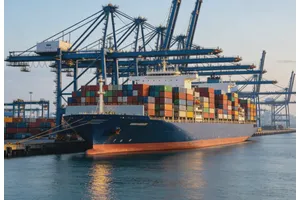
Shanghai is not one port but several, and which terminal your cargo departs from changes your cut-off times, your trucking cost and sometimes your sailing date. Importers who treat "Shanghai" as a single point of departure are the ones who miss documentation deadlines.
| Terminal | Location | Main Use | Practical Notes |
|---|---|---|---|
| Yangshan Deep-Water Port | Offshore, connected by the Donghai Bridge | Ocean-going mainline vessels | The default for Colombia-bound FCL. Deep water takes the largest vessels. Add transit time and cost for the bridge haul from the mainland |
| Waigaoqiao | Pudong, on the Yangtze estuary | Mainline and some feeder services | Closer to central Shanghai, popular with factories in northern Pudong and Jiangsu |
| Wusongkou | Baoshan district | Feeder and coastal services, some intra-Asia | Not usually the load port for a Colombia mainline sailing, but relevant for feeder connections |
The detail that decides whether you catch your sailing is the cut-off sequence. For a Yangshan mainline sailing you are working backwards from the vessel's departure through several hard deadlines: the shipping instruction cut-off (commonly 3–4 days before sailing), the VGM or verified gross mass submission (usually one day before), and the container gate-in deadline. Because Yangshan sits offshore, trucking from a mainland factory crosses the Donghai Bridge, and that haul needs to be booked as part of the plan rather than treated as a same-day errand.
For a factory in Suzhou, Wuxi or southern Jiangsu, Yangshan is normally the right choice despite the bridge haul, because the mainline frequency to the Pacific is there. For a factory in northern Pudong or across the Yangtze in Nantong, Waigaoqiao can be faster and cheaper. The correct answer depends on the factory address, and a forwarder who asks for that address before quoting is the one who will not surprise you later.
One more Shanghai-specific point: if your cargo is LCL, your container is loaded at a consolidation warehouse rather than at the quay, and the cut-off you must respect is the CFS cut-off, which is typically earlier than the terminal gate-in. LCL cargo that arrives at the CFS after cut-off misses the sailing even though the vessel has not left. We see this most often with importers who book LCL using FCL mental models.
How Long Does Shipping from Shanghai to Colombia Take?
Transit time is where quotes diverge most, because the honest answer includes four separate legs: origin handling in Shanghai, the ocean voyage, destination port handling and the inland move. For a wider benchmark beyond this Shanghai-origin lane, see our Sea Shipping from China to Colombia guide.
| Segment | Port-to-Port (Buenaventura) | Port-to-Port (Cartagena) |
|---|---|---|
| Shanghai CFS/terminal to sailing | 3–5 days | 3–5 days |
| Ocean transit | 30–40 days | 33–43 days |
| Destination port and customs | 3–6 days | 3–6 days |
| Inland delivery | 2–5 days | 1–3 days |
| Door-to-door total (FCL) | 38–56 days | 40–57 days |
Two clarifications matter for planning. First, LCL adds time at both ends: consolidation waiting in Shanghai can add three to seven days before your cargo sails, and deconsolidation at the Colombian CFS adds a few more after arrival. An LCL shipment on this lane routinely lands seven to twelve days behind an FCL shipment that left on the same vessel.
Second, the inland leg is not a rounding error in Colombia. Buenaventura sits at sea level on the Pacific, and Bogotá sits at 2,640 metres. The road between them climbs the Andes, and the main route includes the Alto de La Línea pass, a section that is periodically affected by landslides, fog and heavy-vehicle congestion during the rainy seasons. Cali is close to the port and quick; Medellín and Bogotá add real distance and real risk. Importers who plan a tight delivery promise around a Buenaventura arrival without building in slack for the mountain route are the ones who pay storage.
FCL or LCL from Shanghai: The Break-Even Math
The rule of thumb most forwarders repeat is that FCL becomes cheaper somewhere between 13 and 15 cubic metres. That is broadly right, but the exact crossover on this lane depends on the destination charges, which differ between a full container and groupage.
| Cargo Volume | LCL Cost (Shanghai → Buenaventura) | FCL 20ft Cost | Cheaper Option |
|---|---|---|---|
| 5 CBM | $450 – $750 plus fixed charges | Not viable | LCL |
| 10 CBM | $900 – $1,500 plus fixed charges | $2,400 – $3,000 plus fixed charges | LCL, narrowly |
| 15 CBM | $1,350 – $2,250 plus fixed charges | $2,400 – $3,000 plus fixed charges | Break-even zone |
| 20 CBM | $1,800 – $3,000 plus fixed charges | $2,400 – $3,000 plus fixed charges | FCL |
| 28 CBM (full 20ft) | Not practical | $2,400 – $3,000 plus fixed charges | FCL, decisively |
The "plus fixed charges" qualifier is doing real work here. LCL carries a set of fixed destination fees — deconsolidation, CFS handling, documentation — that do not shrink with volume. When those are added, the true crossover often moves closer to 12 CBM than to 15. A 14 CBM shipment is frequently cheaper as LCL, and just as frequently not, depending on how the destination charges are quoted. The practical advice: ask for both numbers with all destination charges itemised before you decide, because a per-CBM comparison alone will mislead you.
Air Freight from Shanghai Pudong to Bogotá: When It Pays
Air freight from Shanghai to Colombia means Shanghai Pudong International Airport (PVG) on the origin side and El Dorado International Airport (BOG) in Bogotá as the main destination, with Medellín's José María Córdova (MDE) as a secondary option. If you are weighing the mode decision more closely, our Air Shipping from China to Colombia guide shows how hub transfers and chargeable weight change the real total.
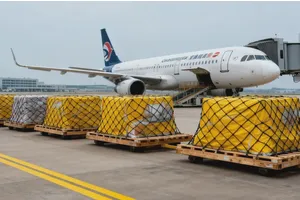
The transit promise is roughly three to seven days door-to-door, but that only holds when the routing is clean. Because no direct China–Colombia cargo service exists at meaningful scale, realistic paths run through Miami, Panama City or Mexico City, and each transfer adds handling plus, on some carriers, a customs touchpoint in the transit country. When a hub congests — Miami in the pre-holiday peak, for example — a nominally four-day air shipment stretches past a week.
Air freight also punishes volumetric cargo. Chargeable weight is the greater of actual weight and volumetric weight, and volumetric weight is cubic centimetres divided by 6,000 — 5,000 on some express services. Light, bulky cargo can therefore be charged at two or three times its scale weight, so calculate the volumetric figure before assuming air is affordable.
Air earns its premium on this lane in four situations: a production line waiting on a critical spare part, a selling window that closes before sea transit can deliver, first-order samples needed before a purchase decision, and high-value low-weight electronics where six weeks of inventory carrying cost exceeds the air premium. Outside those, sea freight is almost always the better commercial call.
Colombia Customs Clearance: DIAN, VUCE, RUT and the 19% IVA
Colombian import clearance runs through DIAN, the national tax and customs authority, with the VUCE single-window platform handling permit and licence coordination. Knowing the sequence before your container arrives is the difference between a three-day clearance and a two-week one.
What you need in place before the vessel arrives:
- RUT registration — your tax identification record with DIAN. An importer clearing goods commercially needs the appropriate responsibilities registered; without the right registration, you cannot act as the importer of record at all.
- Firma digital (digital signature) — required for filing through DIAN's systems.
- VUCE registration — needed for goods that require prior permits or licences, which includes many categories Colombian customs will not release without documentation.
- A licensed agente de aduanas (customs broker) — for commercial imports above the simplified-import threshold, clearance runs through a licensed broker. This is not optional paperwork; it is the legal channel.
The tax stack on your CIF value:
| Tax | Rate | Base |
|---|---|---|
| Arancel (import duty) | 0% – 15% typical, up to 35% for some categories | CIF value |
| IVA (value-added tax) | 19% | CIF value + duty |
| Anti-dumping duties | Varies by product | Applied to specified Chinese-origin categories |
There is no free trade agreement between China and Colombia, so Chinese-origin goods pay the standard tariff. That is a meaningful difference from neighbours like Chile or Peru, which have agreements with China, and it is why Colombian importers cannot assume the tariff treatment their compe*****s in neighbouring countries enjoy.
Two categories deserve specific warning. Textiles, apparel and footwear carry elevated tariff levels, and Chinese-origin textiles and footwear have attracted anti-dumping measures. Steel products have had similar attention. If your cargo falls into one of those categories, the duty figure in your budget should be built from your specific HS code's treatment, not from a generic band. This is not a place to estimate.
The inspection channel your entry is assigned also affects timing. Colombian customs uses a traffic-light system: green channel entries clear on document review, yellow requires a documentary check, and red triggers physical inspection of the container. Red-channel inspection adds days and, if it happens while your container is accruing port storage, it adds cost. Pre-inspection or advance filing while the vessel is still at sea, done through your broker, is the standard way experienced importers reduce that exposure.
Door-to-Door from Shanghai: The Inland Leg and DDP
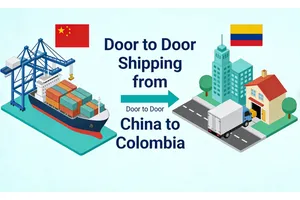
Door-to-door service on this lane means one party takes responsibility from your supplier's door in China to your warehouse in Colombia, including export clearance, ocean freight, Colombian customs, duty, IVA and inland delivery rather than a simple port-to-port booking.
The inland leg is where door-to-door arrangements earn their fee. A shipment destined for Bogotá, Medellín or the interior is not finished when the container clears Buenaventura — it still has to cross the Andes. Several practical points apply:
- Chassis availability and weight limits. Not every 20ft load is comfortable on the mountain route; overweight boxes can require redistribution.
- Weather windows. The rainy seasons affect the La Línea corridor, and a transit that normally takes a day and a half can stretch to three.
- Port storage (bodegaje). Storage at the Colombian port is charged daily and is not trivial, which is why pre-filing documentation is a commercial decision, not just an administrative one.
- Free time versus demurrage. Container free time at destination is finite. If the inland move is delayed past it, both demurrage and detention begin accruing.
Under a DDP arrangement, the forwarder handles all of it and quotes a single delivered figure. Under DAP or DDU, the forwarder delivers to the named place but the importer remains responsible for duty and IVA. The choice is not purely about cost — DDP shifts cash-flow timing and compliance risk to the forwarder, which is valuable if you do not yet have the RUT registrations and broker relationship to clear commercially on your own. If you are deciding between delivered and port-based terms, the DDP vs FOB: Which Option Saves Time and Reduces Hassle comparison is a useful next read. If you want to see how that full-delivery structure is usually quoted in practice, our Door to Door Shipping from China to Colombia guide is the closest like-for-like comparison.
Cutting Cost and Avoiding the Standard Traps
The cost levers that work on this lane, in the order they usually produce results.
Match the load port to the factory, not to the rate table. A $300 saving from a cheaper Chinese port evaporates if moving your cargo there costs $500 in domestic trucking and four extra days. For Delta-sourced cargo, Shanghai is usually already the correct answer.
Consolidate shipments to cross the break-even. Two 8 CBM LCL shipments cost more than one 16 CBM shipment that can travel as FCL. If your buying pattern allows it, batching shipments is often the single largest saving available.
Book around the calendar. Chinese New Year, the early-October Golden Week holiday and the August-to-November peak into South America all tighten capacity and raise rates. The quieter windows — February to April and June to July — usually secure better pricing on the same service.
Watch the Panama Canal, if your cargo goes to Cartagena. Canal throughput is sensitive to drought conditions and water levels, which have caused transit slot restrictions in recent years. Caribbean-coast routings via the Canal carry schedule risk that Pacific routings to Buenaventura do not. Importers already comparing Shipping From China to Panama will recognise the same bottleneck. If Buenaventura suits your inland destination, taking it removes that variable entirely.
Insurance is not a cost lever, it is a requirement. Cargo moving 30-plus days across the Pacific with an overland mountain leg afterwards has real exposure. Cargo insurance is inexpensive relative to the value at risk, and skipping it is a false economy.
Verify documentation before the vessel sails. This is the step DTFU checks first on every Colombia booking, because amendments after departure are slow and occasionally impossible. Amendments after departure are slower, more expensive and occasionally impossible. The documents to have correct at origin: commercial invoice with accurate HS codes, packing list with piece counts that match, bill of lading instructions, certificate of origin where relevant, and any product-specific permits your Colombian broker identifies.
FAQs
How much does it cost to ship a container from Shanghai to Colombia?
A 20ft container from Shanghai to Buenaventura runs $2,400–$3,000 port-to-port at mid-2026 rates, and a 40ft runs $3,800–$4,800. Cartagena routings cost roughly $600–$1,000 more because of the Caribbean routing. These figures exclude duty, IVA and inland delivery.
How long does shipping from Shanghai to Colombia take?
Ocean transit to Buenaventura is 30–40 days. Adding origin handling, destination clearance and inland delivery, a door-to-door FCL shipment takes roughly 38–56 days. LCL adds seven to twelve days because of consolidation and deconsolidation.
Is LCL or FCL cheaper from Shanghai to Colombia?
The crossover sits around 12–15 CBM once fixed destination charges are included. Below roughly 12 CBM, LCL is normally cheaper. Above 15 CBM, FCL wins and scales better. Request both quoted with all destination charges itemised before deciding.
What taxes will I pay on a shipment from Shanghai to Colombia?
Import duty based on your HS code (typically 0–15%, higher for textiles, footwear and some steel), plus 19% IVA calculated on CIF value plus duty. There is no China–Colombia free trade agreement, so standard tariff treatment applies.
Do I need a customs broker in Colombia?
For commercial imports above the simplified threshold, yes — clearance runs through a licensed agente de aduanas. You also need RUT registration and a firma digital as importer of record.
Can I ship batteries or electronics from Shanghai to Colombia?
Electronics need conformity documentation and accurate HS classification. Lithium batteries are regulated dangerous goods requiring MSDS and UN38.3 reports, and several carriers restrict them — declare them at booking, since undeclared batteries are a common cause of container holds.
What documents do I need for a Shanghai to Colombia shipment?
At origin: commercial invoice with accurate HS codes, packing list with matching piece counts, bill of lading instructions, and a certificate of origin where the product requires one. At destination your broker needs your RUT, firma digital and any VUCE permit the HS code triggers.
Conclusion: Planning a Shanghai–Colombia Shipment That Holds Together
The successful Shanghai–Colombia shipments are not the ones with the lowest ocean rate. They are the ones where the load port matched the factory, the container matched the cargo volume, the documentation was right before sailing, and the budget included duty and IVA rather than stopping at freight.
The recurring failure looks the same every time: an importer books on a teaser ocean rate, discovers the tax stack at clearance, then discovers the Andean inland leg on top. Each of those is foreseeable, and each is cheap to plan for at the quotation stage — DTFU quotes this lane with all three layers visible from the start.
If you are working out the real delivered cost of a Shanghai–Colombia shipment — including the terminal cut-offs at Yangshan, the customs sequence at DIAN, and the inland leg to your actual Colombian address — contact us and we will put together a line-by-line quote with the scope stated openly, with shipment tracking from gate-in at Shanghai through to your Colombian delivery address.