Planning shipping from Guangzhou to Jamaica in 2026? Guangzhou is the factory floor of Southern China — apparel wholesalers in Zhongda, electronics assemblers in Panyu, and building-material suppliers across the Pearl River Delta all ship their goods to Jamaican importers through this city. Yet most pages ranking for this route only talk about "China to Jamaica" in general, as if a container leaving Nansha were the same as one leaving Shanghai. It is not. Your origin port determines your cut-off time, your sailing frequency, your transshipment routing, and ultimately your landed cost.
In this 2026 guide, our team at DTFU Logistics — a FIATA and IATA certified freight forwarder founded in 2014 and moving cargo from China to more than 120 countries — walks you through real sea freight rates ex-Nansha and Huangpu, LCL pricing per cubic meter, air freight from Guangzhou Baiyun (CAN), the complete DDP door-to-door process, Jamaica Customs Agency clearance, and the import duty and GCT math that decides whether your margin survives the shipment. By the end, you will know which Guangzhou port to book from, which Jamaican gateway to use, and how to compare quotes without getting burned by hidden destination charges.
Sea Freight from Guangzhou to Jamaica: Nansha, Huangpu, and Yantian Port Options
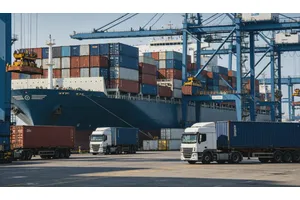
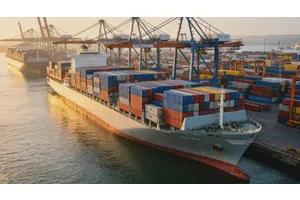
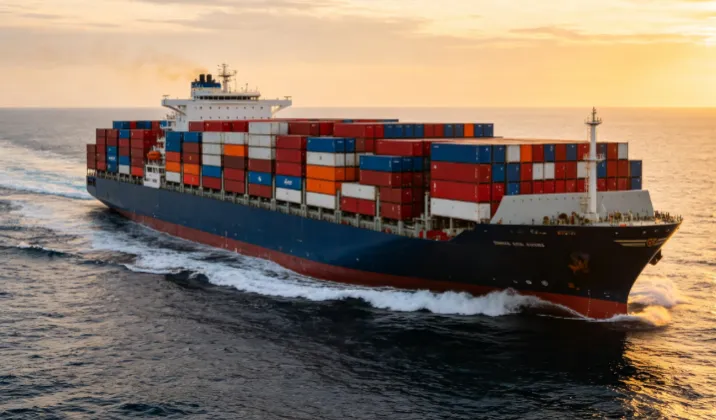
Sea freight remains the backbone of China–Caribbean trade, and from Guangzhou you have three realistic departure points. Nansha Port is the workhorse: it is Guangzhou's primary deep-water container gateway, with the widest selection of weekly mainline services and the most reliable cut-off windows for Southern China exporters. Huangpu Port, closer to the city center and to suppliers in Tianhe and Zengcheng, is often the cheaper choice for shorter inland trucking — but it carries fewer direct sailings and more feeder connections. Yantian Port in neighboring Shenzhen is the practical fallback when Nansha's sailing days do not fit your production schedule; the extra 2–3 hours of trucking frequently buys you a faster vessel and a shorter overall transit.
The reason Guangzhou matters for this lane is geography. Suppliers across Foshan, Dongguan, Zhongshan, and the wider Pearl River Delta sit within a few hours of Nansha, which keeps drayage costs low and lets you push your cargo cut-off much closer to the vessel's departure. If your goods are ready late, that flexibility is worth real money. Importers comparing origins across the country can read our national Shipping From China to Jamaica service page alongside this Guangzhou-specific guide.
On the destination side, Jamaica has two commercial gateways you should know. Kingston Port handles the large majority of the island's containerized commercial imports and connects directly to the Kingston Freeport Terminal, making it the default for wholesalers and distributors. Montego Bay serves the northwest coast, the tourism belt, and retailers whose customers sit closer to Ocho Rios and Negril than to the capital. Shipping to the wrong coast means an inland truck haul across the island — a cost many importers only discover after the container arrives. Jamaica also sits inside our wider Shipping From China to Americas network, so importers serving several markets in the region can plan them under one operating standard.
FCL (Full Container Load) and LCL (Less than Container Load) are the two ways to use a vessel. With FCL you book the whole box, keep it sealed from factory to consignee, and pay a flat rate. With LCL you buy space by volume and share the container with other importers.
Our Industry Insights: One routing detail catches importers off guard on this lane — there is no truly direct mainline service from Guangzhou to Jamaica. Almost every consignment relays through Panama (Balboa or Colón), Miami, or the Kingston regional hub, where it is transshipped onto a feeder vessel. Each relay adds cost and time, and connection windows vary by carrier. When you compare quotes, always ask which transshipment port your cargo uses and how many connections it makes. A quote that is $200 cheaper but adds a second relay can cost you a week of shelf time.
How Much Does It Cost to Ship from Guangzhou to Jamaica? (2026 FCL 20ft & 40ft Rates)
Container pricing is where most importers lose visibility. Below are the 2026 port-to-port ranges you should expect from Guangzhou's Nansha and Huangpu terminals to Kingston and Montego Bay for standard commercial cargo. If you want a carrier-by-carrier view of national averages before you negotiate, our Sea Shipping cost from China to Jamaica breakdown is a useful benchmark.
| Shipping Method | Typical 2026 Cost | Best For | Est. Transit |
|---|---|---|---|
| FCL — 20ft container (20GP) | $2,800 – $3,500 | Bulk commercial goods, machinery, construction materials | 30–45 days |
| FCL — 40ft / 40HQ container | $3,500 – $4,500 | High-volume, light-to-medium cargo where cube matters more than weight | 30–45 days |
| LCL sea freight | $80 – $150 per CBM | 1–15 CBM of mixed or trial-order goods | 35–50 days |
| Air freight (standard) | $5.00 – $8.00 per kg | Urgent, high-value or lightweight cargo | 5–8 days |
| Air freight (express courier) | Priced per shipment tier | Documents, samples, parcels under 100 kg | 3–5 days |
A 40ft container normally prices at roughly 1.25 to 1.4 times the 20ft rate — a 40HQ often costs only marginally more than a 40GP while giving you nine additional cubic meters of usable space, which matters enormously for light goods like furniture, textiles, and packaging materials.
Why do quotes for the "same" shipment differ by hundreds of dollars? Because a headline number is rarely an all-in number. A usable quote has to account for four layers of cost: the base ocean freight; carrier surcharges such as BAF and low-sulphur fuel fees; origin local charges at Nansha or Huangpu (terminal handling, documentation, booking, seal, VGM filing); and destination charges in Jamaica (terminal handling, JCA processing, and delivery). Peak season adds another layer — rates from October through December, and again in the weeks before Chinese New Year, routinely climb 20–40% as capacity tightens.
That same seasonality cuts in your favor too. The quieter window from roughly March through August typically offers the softest pricing of the year, so if your inventory planning allows flexibility, shifting a shipment by a few weeks can be one of your largest single savings.
Real-Life Scenario: A Kingston-based building-supplies retailer was sourcing tiles and fixtures from three Foshan suppliers, each shipping separately as LCL. Their landed cost was inflated by three sets of origin charges, three sets of documentation fees, and three deconsolidation charges in Jamaica. We collected all three purchase orders at our Guangzhou consolidation warehouse, packed them into a single 40HQ, and shipped it as one FCL consignment. The retailer cut their per-cubic-meter cost by roughly a third and gained a predictable, single-container release at Kingston Port instead of chasing three separate deconsolidation notices. If you move similar cargo, our guide to Shipping Building Materials from China covers the packaging and customs specifics in more depth.
LCL Shipping Cost from Guangzhou to Jamaica per CBM: When LCL Beats FCL
If you are testing a product, ordering mixed SKUs, or buying less than a container's worth of goods, LCL is the natural entry point, and the practical rate is $80 to $150 per cubic meter out of Guangzhou. LCL is priced on whichever is greater: your volume in cubic meters, or your weight converted at a standard ratio — so dense cargo such as tiles, hardware, or liquids is usually rated per tonne rather than per CBM.
The important question is not "is LCL cheaper?" but "at what point does LCL stop being cheaper?" In practice, LCL makes sense up to roughly 12 to 15 CBM. Above that threshold, a 20ft FCL almost always delivers a lower cost per cubic meter, because you stop paying for shared handling, origin consolidation, and destination deconsolidation. Run the math on your actual volume rather than assuming you are too small for a container.
| Comparison | LCL | FCL (20ft) |
|---|---|---|
| Best volume | 1–15 CBM | 15–28 CBM |
| Pricing basis | Per CBM or per tonne | Flat per container |
| Origin handling | Consolidated with other cargo | Loaded directly, sealed |
| Destination handling | Deconsolidation required | Released as a unit |
| Added transit time | +5 to 10 days | Baseline |
| Cargo security | Shared container | Exclusive container |
| Split shipments | Flexible per order | Requires volume to fill |
There is also a volumetric weight rule you should understand before you pack. Air freight divides length × width × height in centimeters by 6,000; ocean freight uses a cubic-meter basis. Either way, bulky, low-density cargo pays for the space it occupies, not just the scale weight. Trimming dead space in cartons and pallets is one of the cheapest cost reductions available to you.
For importers buying from several suppliers, consolidation is the real LCL advantage. Rather than paying a minimum charge three or four times, your suppliers deliver into one warehouse, the cargo is combined, and it sails as a single consignment.
Air Freight from Guangzhou (CAN) to Jamaica (KIN/MBJ): Rates and Delivery Time
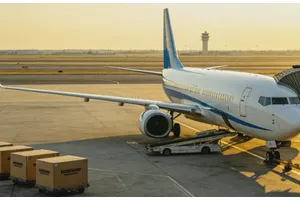
When speed protects revenue, air freight wins. Flights depart from Guangzhou Baiyun International Airport (CAN) and arrive at Norman Manley International Airport (KIN) in Kingston or Sangster International Airport (MBJ) in Montego Bay. Our dedicated Air Shipping from China to Jamaica page covers airport handling, screening, and documentation in more detail. Standard air freight runs $5.00 to $8.00 per kilogram with a transit time of 5 to 8 days, while priority and express courier services reach Jamaica in 3 to 5 days for documents, samples, and parcels typically under 100 kg.
Here is the detail most guides leave out: there are no scheduled freighter services connecting mainland China directly to Jamaica. Your cargo will relay through a Miami, Panama, or Caribbean gateway before it reaches the island. That relay affects both your transit time and, in some cases, security screening and documentation requirements — so ask your forwarder which gateway your shipment uses and whether any handover adds a day or two.
Air freight also carries stricter compliance requirements on certain product categories. Lithium batteries, power banks, solar panels and inverters, cosmetics, and aerosols must be declared with correct documentation, including safety data sheets and, where applicable, IATA-compliant packing. Misdeclared dangerous goods are a leading cause of airport holds, fines, and cargo rejection.
Air freight makes economic sense when the value-to-weight ratio is high, when the goods are urgent spare parts or seasonal restocks, or when a stockout costs more than the freight premium. As a rule of thumb, air is worth considering when your cargo is under about 500 kg or when the product value comfortably exceeds roughly $30 per kilogram. If you run parallel programs to North America, our Shipping from Guangzhou to USA guide applies the same origin-port logic to a different destination market.
How Long Does Shipping from Guangzhou to Jamaica Take? Transit Time by Mode
Transit time is where planning either holds together or falls apart. The table below sets out realistic door-relevant timelines for the Guangzhou–Jamaica lane.
| Mode | Typical Transit Time | Notes |
|---|---|---|
| Sea freight — FCL | 30–45 days | Port-to-port; varies with transshipment routing |
| Sea freight — LCL | 35–50 days | Adds 5–10 days for consolidation and deconsolidation |
| Sea freight — DDP door-to-door | 40–50 days | Includes pickup, clearance, duty payment, and delivery |
| Air freight — standard | 5–8 days | Via Miami, Panama, or a Caribbean gateway |
| Air freight — express | 3–5 days | Courier networks, best under 100 kg |
| Air freight — DDP door-to-door | 5–10 days | All-inclusive, duty and delivery handled |
Several factors move these numbers. Hurricane season runs from June through November, and port closures or precautionary shutdowns in the Caribbean can delay feeder connections by days at a time. Chinese New Year and the October–December pre-holiday peak tighten capacity and push cut-off dates earlier. At destination, JCA inspection holds and terminal congestion at Kingston can add several days that have nothing to do with your vessel's schedule. Because almost every routing touches a relay hub, forwarders that also run Door to Door Shipping from China to Panama services tend to hold stronger feeder connections into the Caribbean.
Your Guangzhou cut-off matters more than most importers realize. Missing the Nansha cut-off means waiting for the next sailing or repositioning the container to Yantian — a decision that can add seven to ten days to your delivery date.
Our Industry Insights: We advise clients importing on this lane to treat hurricane season as a planning constraint, not an emergency. Between June and November, we build two to three buffer days into quoted delivery windows and encourage importers to hold safety stock for fast-moving SKUs. We also monitor carrier blank-sailing notices weekly; when a service is pulled, we rebook onto an alternate routing before the cargo reaches the terminal rather than after it is rolled. That proactive step has saved clients multiple stockouts during peak season.
Door to Door Shipping Guangzhou to Jamaica DDP: The 5-Step Process and All-In Pricing
For small and medium-sized importers without an in-house logistics team, the most practical option is door to door shipping Guangzhou to Jamaica under DDP (Delivered Duty Paid). In a DDP arrangement, the forwarder takes responsibility for the entire journey, and you receive your goods at your warehouse or storefront with nothing left to pay. You can see how that service is packaged end to end on our Door to Door Shipping from China to Jamaica page.
The process breaks into five stages:
- Pickup — Goods are collected from your supplier's factory in Guangzhou or anywhere in the Pearl River Delta.
- Export customs — We file the Chinese export declaration, handle licensing where required, and deliver the container to the terminal before cut-off.
- Main carriage — The international sea or air leg, including any transshipment through Panama, Miami, or the Kingston hub.
- Import clearance — We clear your cargo through the Jamaica Customs Agency, classify HS codes, and pay import duty and GCT on your behalf.
- Final delivery — Local trucking delivers to your warehouse, store, or project site anywhere on the island.
Because DDP bundles freight, duty, tax, clearance, and delivery into one price, it is quoted per kilogram or per cubic meter rather than as a freight rate. This is exactly why DDP quotes vary so widely between providers: the freight component is often less than half of the all-in number, and the rest depends on how the forwarder classifies your goods, what duty rate applies, and what it charges for clearance and last-mile delivery. On this lane, a large part of that freight component comes down to the relay hub your forwarder controls, so it is worth understanding Shipping From China to Panama capacity before you compare quotes.
Ask any provider what their DDP price excludes. Legitimate exclusions include storage and demurrage if clearance documents arrive late, special inspection fees, and the cost of returning or abandoning cargo that cannot be imported. Everything else — duty, GCT, terminal charges, and delivery — should be inside the number.
Incoterms 2020 determines where your responsibility ends. Under EXW you own the cargo from the factory gate, including Chinese inland transport and export clearance. Under FOB Guangzhou your supplier delivers to the port and you control the ocean leg. Under DDP the forwarder owns the entire chain. For most Jamaican SMEs buying from multiple suppliers, DDP removes the most friction; if you already work with a trusted local broker and want tighter cost control, FOB plus your own broker can be more economical at higher volumes. If you are weighing those two models, our comparison of DDP vs FOB: Which Option Saves Time and Reduces Hassle breaks down the trade-offs in cost, control, and paperwork.
Customs Clearance in Jamaica: JCA, ASYCUDA World, and the C87 Import Entry
Customs is where shipments either move or stall. Jamaica's border is managed by the Jamaica Customs Agency (JCA), which processes commercial imports through the ASYCUDA World platform. All commercial cargo requires a formal import entry, and while self-filing is technically possible, most importers work through a licensed customs broker or customs house agent.
Prepare these documents before your cargo sails, not after it lands:
- Commercial Invoice — exact description, quantity, unit value, and terms of sale
- Packing List — carton count, weights, dimensions, and how the cargo is packed
- Bill of Lading (B/L) or Airway Bill (AWB) — the transport document issued by the carrier or forwarder
- C87 Form — the import entry declaration used to clear commercial goods
- Certificate of Origin — required for certain product categories and preferential treatment
- Permits and licences — for restricted categories such as food, pharmaceuticals, motor vehicles, and telecommunications equipment
Two requirements are routinely missed by first-time importers, and both can stop a shipment dead at the port. Jamaican importers generally need a TRN (Tax Registration Number), and commercial import and wholesale activity typically requires a Trader's Licence. Sorting these out takes time — start before your goods leave Nansha, not when the arrival notice lands in your inbox.
The most common clearance problems are predictable: an HS code classified incorrectly, a declared value that does not match the commercial invoice, or a missing permit for a restricted commodity. Each one triggers an inspection window that adds days at Kingston Port and exposes you to storage and demurrage charges that accumulate daily. Accurate documentation submitted upfront is the cheapest insurance you can buy on this lane.
Jamaica Import Duty and GCT 15%: How to Calculate Your Landed Cost
Understanding Jamaica's tax structure before you buy is what separates a profitable import from a painful one. Import Duty is assessed on the CIF value — the cost of the goods plus insurance plus freight — using the CARICOM Common External Tariff (CET). On top of duty, General Consumption Tax (GCT) at 15% is applied to the combined total of CIF plus duty for most commercial goods. Certain product categories also attract an environmental levy or cess.
The table below illustrates how product category changes the outcome on the same $10,000 CIF shipment.
| Product Category (HS Chapter) | Indicative Duty Rate | Duty on $10,000 CIF | GCT 15% Base | Approx. Total Duty + GCT |
|---|---|---|---|---|
| Consumer electronics (Ch. 84–85) | 0–15% | $0 – $1,500 | $10,000 – $11,500 | $1,500 – $3,225 |
| Apparel and textiles (Ch. 61–64) | 10–25% | $1,000 – $2,500 | $11,000 – $12,500 | $2,650 – $4,375 |
| Building materials, plastics (Ch. 39, 68–69) | 5–20% | $500 – $2,000 | $10,500 – $12,000 | $2,075 – $3,800 |
| Furniture and lighting (Ch. 94) | 10–20% | $1,000 – $2,000 | $11,000 – $12,000 | $2,650 – $3,800 |
| Vehicle parts (Ch. 87) | 0–20% | $0 – $2,000 | $10,000 – $12,000 | $1,500 – $3,800 |
Indicative bands for budgeting only. Actual rates depend on your specific HS code and current JCA tariff schedules.
On a $10,000 CIF apparel shipment, duty plus GCT can approach $4,400 — a cost that has to be priced into your retail margin from day one, not discovered at the port.
Jamaica also restricts and prohibits certain goods. Prohibited items include illegal drugs, counterfeit currency, counterfeit branded goods, and certain weapons. Restricted items requiring prior permits include pharmaceutical products, agricultural produce and food items, motor vehicles, and specific communication equipment. Conformity-checked categories may also require approval from the Jamaica Bureau of Standards (JBS). Confirming your product's status before you place the purchase order is far cheaper than resolving it after arrival.
Real-Life Scenario: A Montego Bay electronics importer was declaring a mixed container of accessories under a single generic HS code, paying a blended duty rate that was higher than necessary for several product lines. We reviewed the commercial invoice line by line, reclassified the low-duty components under their correct HS codes, and submitted the revised entry before the vessel arrived. The corrected classification reduced their assessed duty and GCT by several hundred dollars on that shipment alone — savings they now repeat on every order.
Cheapest Shipping from Guangzhou to Kingston Jamaica: 7 Cost-Cutting Strategies
There is no single cheapest way to move cargo on this lane. The right answer depends on your volume, your product, your HS code, and how urgently you need the goods. Before tactics, it helps to understand The Strategic Role of Freight Forwarders in Modern Supply Chains and what a well-run partner actually controls on your behalf. But seven strategies reliably reduce cost:
- Match volume to mode. Below roughly 12–15 CBM, ship LCL. Above it, book a 20ft FCL for a far lower cost per cubic meter.
- Consolidate your Guangzhou suppliers. Multiple LCL bookings mean multiple minimum charges. Combining them into one consignment removes duplicate handling at both ends.
- Book three to four weeks ahead. Rates climb 20–40% from October to December and again before Chinese New Year. Early booking locks space and prices.
- Ship in the March–August window. Off-peak sailings are typically meaningfully cheaper than peak-season capacity.
- Cut volumetric weight. For LCL and air, every unnecessary centimeter of carton and pallet space is billable. Reduce it.
- Choose the right Jamaican gateway. Discharging at the port nearest your warehouse — Kingston or Montego Bay — avoids a cross-island truck haul.
- Verify your HS code before shipping. Correct classification prevents overpayment of duty and avoids inspection holds.
Two mistakes undo all seven. The first is chasing the lowest headline rate without asking what it excludes; a quote that hides destination charges is not a cheaper quote. The second is skipping cargo insurance. On a route that runs through hurricane season and at least one transshipment point, a single damaged or delayed container can erase a full year of margin on that product line, while comprehensive coverage costs a fraction of the cargo's value. Our breakdown of Shipping container insurance cost for shipments from China explains how premiums are calculated and what a policy actually covers.
Our Industry Insights: The forwarder you choose performs like an eighth lever. A forwarder with direct contracts with mainline carriers and NVOCCs typically secures space and rates 10–15% below spot market, and — more importantly — prevents the expensive errors that quietly consume the savings of a cheap quote. DTFU Logistics operates a consolidation warehouse in Guangzhou with a free storage window while your suppliers deliver, combines purchases into a single FCL or LCL consignment, and backs every shipment with 24/7 milestone tracking and a dedicated account manager so you are never guessing where your cargo is.
FAQs
How much does it cost to ship a 20ft or 40ft container from Guangzhou to Jamaica in 2026?
A 20ft container from Nansha or Huangpu to Kingston or Montego Bay generally runs $2,800–$3,500, and a 40ft or 40HQ container $3,500–$4,500, port-to-port. These base rates exclude origin and destination local charges, clearance, duty, and inland delivery.
How long does shipping from Guangzhou to Jamaica take by sea and by air?
Sea freight FCL takes 30–45 days port-to-port, with LCL adding 5–10 days for consolidation and deconsolidation. Air freight takes 5–8 days at standard service and 3–5 days by express courier.
What is the cheapest way to ship from Guangzhou to Kingston, Jamaica?
For volumes under roughly 12–15 CBM, LCL sea freight is the lowest absolute-cost option. Above that, a 20ft FCL is cheapest per cubic meter. Air freight is only economical for urgent or high-value cargo.
How are import duty and GCT 15% calculated on my Jamaican imports?
Import Duty is assessed on the CIF value under the CARICOM Common External Tariff, and GCT at 15% is then applied to CIF plus duty. On a $10,000 CIF shipment, total duty and tax commonly falls between roughly $1,500 and $4,400 depending on the product category.
What documents do I need for sea and air shipments from Guangzhou to Jamaica?
A commercial invoice, packing list, Bill of Lading (sea) or Airway Bill (air), the C87 import entry, a Certificate of Origin where applicable, and any permits required for restricted goods. Your importer TRN and Trader's Licence details are also needed at clearance.
Shipping from Guangzhou to Jamaica rewards preparation more than luck. Get three things right — the right departure port in Southern China, the right Jamaican gateway, and accurate duty and GCT calculation from the start — and your landed cost becomes something you can forecast instead of something that surprises you. DTFU Logistics has been moving cargo from China to global markets since 2014, with FIATA and IATA certification, direct carrier contracts, consolidation warehousing in Guangzhou, comprehensive cargo insurance, and door-to-door DDP solutions designed for importers who would rather grow their business than manage paperwork. Contact our team for a free, no-hidden-fee quote on your next shipment from Guangzhou to Jamaica.