A Kingston distributor of solar lighting had imported from China for two years under FOB terms. Their last shipment before switching to DDP cost them 13 days of delays, a customs re-classification scare over a $2,000 difference in duty, and a demurrage bill they hadn't budgeted for. The freight itself was fine — the problem was everything around it. That story, and the numbers from the DDP shipment that finally fixed it, run through this guide.
Shipping from China to Jamaica looks simple on a rate sheet. One price for a container, one transit window, done. The reality on this lane is different: there are no direct ships, Kingston's port fees can double an LCL quote, Jamaican customs runs on a system most first-time importers have never heard of (ASYCUDA World), and hurricane season can throw your November inventory into a different quarter entirely. This guide gives you the real 2026 rates — and the local knowledge that keeps those rates from becoming surprises.
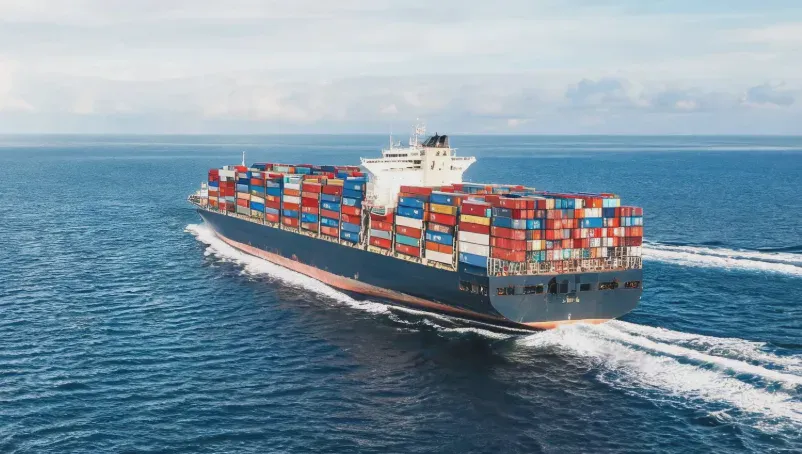
Why There Are No Direct Ships and What It Costs You
The Transshipment Reality
Here is the first thing that surprises most importers: there is no direct China–Kingston mainline service. Every container from China to Jamaica transships through a regional hub — most commonly Colón/Cristobal (Panama), Caucedo (Dominican Republic), or Miami. That adds 3–7 days and a second port's worth of handling to your journey, and it's the main reason transit times on this lane range so widely:
| Routing | Typical Ocean Transit | Notes |
|---|---|---|
| China → Colón (Panama) → Kingston | 30–38 days | Most common, one transshipment |
| China → Caucedo (DR) → Kingston | 32–40 days | Alternative Caribbean hub |
| China → Miami → Kingston | 35–45 days | Frequent but adds US handling |
| Multi-stop (Mexico / US Gulf) | 40–50 days | Cheapest base rate, slowest |
Because of the transshipment, you are paying for two terminal handlings, not one — and the destination terminal is the one nobody quotes upfront.
Kingston Freeport Terminal (KFTL): The Only Game in Town
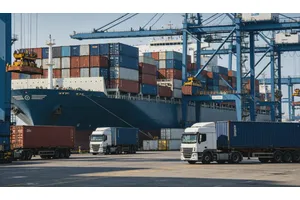
Kingston Freeport Terminal Limited (KFTL) handles over 90% of Jamaica's containerized cargo. Operated by CMA CGM, it's a modern terminal — but it's also a monopoly from the importer's perspective, and it behaves like one:
- Peak-season congestion: November–December (Christmas build-up) regularly adds 3–5 days to delivery timelines
- LCL stripping fees: this is the trap. Kingston LCL local charges — stripping, terminal handling, and warehouse release fees — frequently equal or exceed the ocean freight itself. A quote that looks cheap at $100/CBM can land at $200/CBM effective by the time your cargo clears the CFS
- Storage charges start after a short free window, and they escalate
Our experience: We consistently see first-time importers shocked by KFTL destination charges because their forwarder quoted base ocean freight and added the Jamaica-side fees later. On this lane, "all-in" is not a luxury — it's the only quote that tells you the truth. Ask for the DDC (Destination Delivery Charge) breakdown before booking, not after your cargo arrives.
The Air Freight Alternative
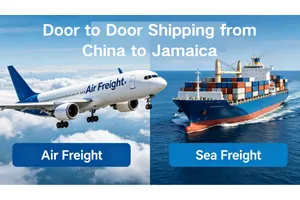
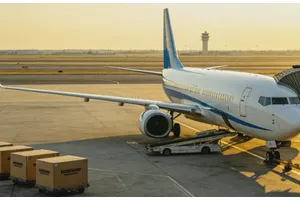
If your cargo is under 1,000 kg and time matters more than money, air freight via Miami or Panama reaches Kingston (KIN) in 5–10 days door-to-door. It costs 3–5× sea freight per kg, but for high-value electronics, urgent restocks, and seasonal launches, it often beats the inventory cost of 40 days at sea.
2026 Sea Freight Rates from China to Jamaica: FCL, LCL & 40HQ
Master Rate Table (Port-to-Port Ocean Freight, Mid-2026)
| Container Type | Estimated Ocean Freight (USD) | Best For |
|---|---|---|
| LCL (per CBM) | $80 – $120 | Shipments under 12–15 CBM — beware Kingston stripping fees |
| 20ft Container (TEU) | $2,500 – $3,200 | Dense, heavy goods (machinery, building materials) |
| 40ft Container (FEU) | $3,500 – $4,800 | Voluminous goods (furniture, apparel, retail) |
| 40ft High Cube (40HQ) | $3,800 – $5,100 | Lightweight bulky cargo (max ~68 CBM) |
These are freight-only numbers — moving the box from a Chinese port to Kingston, nothing more. Rates fluctuate with season (20–40% swings at peak), carrier GRI (General Rate Increases), and fuel costs. Annual contract rates typically run 15–25% below spot.
What the Kingston-Side Fees Add (the Part Quotes Hide)
Here's what actually lands on your final bill in Jamaica, beyond ocean freight:
| Fee | Typical Cost (USD) | Notes |
|---|---|---|
| KFTL terminal handling | $150 – $300 | Per container at Kingston |
| LCL stripping charge | $60 – $120 per CBM | Only for LCL — this is the trap |
| Delivery Order (D/O) fee | $50 – $100 | Required to release cargo |
| Customs broker fee | $150 – $400 | Licensed Jamaica broker |
| Port storage | $40 – $100/day | After free period; escalates |
| Inland trucking (Kingston → Montego Bay) | $400 – $800 | Island-wide delivery |
| Inland trucking (Kingston local) | $150 – $300 | Kingston metro / Spanish Town |
Total landed cost worked example — a 20ft container of consumer goods, CIF value $15,000:
| Cost Element | Calculation | Amount |
|---|---|---|
| Ocean freight (20ft, mid-2026) | Market rate | $2,500 – $3,200 |
| Import duty (CARICOM CET, 20% example) | $15,000 × 20% | $3,000 |
| GCT (16.5%) | ($15,000 + $3,000) × 16.5% | $2,970 |
| CAF + SCF + environmental levy | Various | $150 – $300 |
| Clearing agent + KFTL fees | Fixed | $300 – $600 |
| Total, delivered to Kingston gate | — | $9,100 – $10,100 |
The freight was $2,500–$3,200. The landed cost is roughly three times that. That's the shape of China–Jamaica economics — duty plus GCT alone adds about 40% of the CIF value on top of freight.
FCL vs LCL: The Break-Even Math That Actually Matters in Kingston
Break-Even Analysis
| Shipment Volume | LCL Total (at $100/CBM) | 20ft FCL Total (at ~$2,800 + fees) | Verdict |
|---|---|---|---|
| 5 CBM | $500 | ~$3,400 | LCL wins |
| 10 CBM | $1,000 | ~$3,400 | LCL wins |
| 12 CBM | $1,200 | ~$3,400 | Near break-even |
| 15 CBM | $1,500 | ~$3,400 | FCL likely cheaper |
| 20 CBM | $2,000 | ~$3,400 | FCL wins |
The tipping point sits around 12–15 CBM — but on this lane, the KFTL stripping fees tilt the math further toward FCL. A 12 CBM LCL shipment can pay $720–$1,440 in stripping charges alone at Kingston, on top of the per-CBM freight. Consolidating multiple suppliers into one FCL container at a China warehouse (a free 30-day storage window at our consolidation hubs) bypasses those destination charges entirely — we do this for Yiwu + Shenzhen + Ningbo multi-supplier orders all the time.
Container Choice for Caribbean Cargo
| Container | Best For | Notes |
|---|---|---|
| 20ft | Dense, heavy goods | Machinery, tiles, construction materials — weight fills it before volume |
| 40ft | Standard retail cargo | The volume-versus-cost sweet spot |
| 40HQ | Bulky, light goods | Furniture, mattresses, retail display stock |
For a deeper look at container cost math on any lane, see our guide on high cube shipping container cost from China.
Real Case Study: Solar Lights from Nansha to Kingston (DDP, 1×20GP)
This is a real shipment we handled — de-identified for confidentiality. It's the closest thing to a roadmap you'll find for this lane.
The Shipment at a Glance
| Item | Detail |
|---|---|
| Commodity | Inverter solar lights (street + garden models) |
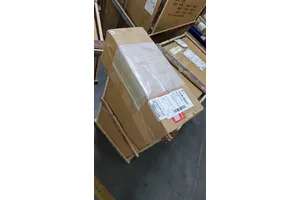
| Quantity | 580 cartons, palletized |
| Volume / Weight | 24.6 CBM / 11,280 kg |
| Container | 1×20GP dry van |
| HS Code | 9405.40 (electric lamps) — ~20% duty under CARICOM CET |
| Service | DDP (door-to-door, all duties and taxes included) |
The customer: a Kingston-based renewable energy distributor with a lean two-person logistics team. They had used FOB terms plus a local broker for two years and were tired of chasing receipts, disputing duty assessments, and eating demurrage. This was their first DDP shipment.
The Journey Step by Step
| Phase | Detail | Duration |
|---|---|---|
| Origin trucking | Nanshan (Shenzhen) → Nansha port, flatbed, lashed + weatherproofed | 1 day |
| Export clearance | Standard filing at Nansha; routine HS code, no restrictions | 1 day |
| Ocean freight | COSCO vessel, Nansha → Kingston via Panama Canal | 26 days at sea |
| Jamaica clearance | Filed via our Kingston broker in ASYCUDA World | 2 days (incl. query) |
| Final delivery | Trucked to customer's Kingston distribution center | 1 day |
| Total door-to-door | — | 36 days |
Two Real Problems We Solved
Problem 1 — Supplier weight discrepancy. The supplier's packing list said 9,950 kg; the container actually weighed 11,280 kg at the terminal — a 13% difference that triggered an export declaration re-check. Our operations team obtained a corrected packing list and invoice from the supplier and re-filed within 4 hours, before the vessel cutoff. No demurrage, no delay to the sailing.
Lesson: Ask for a weighbridge certificate at the supplier's warehouse before loading. A 13% discrepancy is not rare with smaller suppliers — and it's cheaper to fix in Shenzhen than at KFTL.
Problem 2 — Customs classification query. Jamaican customs flagged the shipment and questioned whether the integrated inverters should be classified as "electrical transformers" (HS 8504, higher duty) instead of lighting fittings (9405.40). This is a classic grey area for solar products combining LED fixtures with inverter controllers. We submitted the manufacturer's technical datasheet, product label photos, and circuit board images showing the inverters are integrated driver circuits serving a lighting function. After a two-day review, customs upheld the original classification and released the container at the estimated duty rate.
Lesson: If your product combines functions (solar + inverter + lighting), prepare the technical documentation before the vessel arrives — datasheets, labels, and photos win classification disputes fast.
The Full Cost Breakdown
| Cost Item | Amount (USD) |
|---|---|
| Origin trucking (Nanshan → Nansha) | $280 |
| Export customs clearance (China) | $120 |
| Ocean freight (Nansha → Kingston, 1×20GP) | $2,650 |
| Port handling & document fees (origin) | $350 |
| Jamaican customs broker fee | $250 |
| Import duty (20% CET) | $2,160 |
| General Consumption Tax (GCT) | $1,350 |
| Environmental levy (0.5%) | $240 |
| Destination trucking & delivery | $450 |
| Total DDP cost | $7,850 |
The customer paid one all-inclusive price and had zero out-of-pocket costs at destination. Their own words: "We didn't have to wire money to a Jamaican broker, chase receipts, or worry about customs delays. The only hiccup was the weight certificate, and that was handled on the China side without us getting involved." They estimate DDP saved them 10–15 hours of administrative work per shipment versus their old FOB-plus-broker arrangement — and they've repeated the arrangement since.
Jamaican Customs in Practice: ASYCUDA, C82, TCC & HS Classification
The ASYCUDA World System
The Jamaica Customs Agency (JCA) runs all import declarations through ASYCUDA World — an electronic customs management system. Your broker files a C82 customs declaration through it, along with the commercial invoice, packing list, bill of lading, and certificate of origin. If your declaration is accurate and complete, clearance at Kingston typically takes 3–5 business days. Errors trigger inspections, and inspections trigger storage fees.
Importer Requirements
| Requirement | Who Needs It | Notes |
|---|---|---|
| Tax Compliance Certificate (TCC) | The importer of record | Issued by TAJ; validates tax status |
| TRN (Tax Registration Number) | The importer of record | Jamaica's tax ID |
| Importer registration | The importer of record | With Jamaica Customs |
| Licensed customs broker | The filer | C82 must be filed by a licensed broker |
This is the quiet reason DDP keeps winning for Kingston SMEs: under DDP, the forwarder's registered importer entity and broker handle all of it — you don't need a TCC, a TRN arrangement, or a broker relationship of your own. If you're a first-time importer, that's the entire learning curve removed.
HS Classification Reality
Borderline products get queried — it's not personal, it's revenue protection. The case study's solar lights are one example; common query categories include electronics with integrated components, lighting fixtures, and mixed-material goods. Documentation that wins disputes:
- Manufacturer's technical datasheet
- Product label photos
- Circuit board / internal component images
- A written HS classification justification
Have these ready before the vessel arrives, not after the query lands. Our customs clearance team prepares this documentation proactively for exactly this reason.
Duties & Taxes: CARICOM CET, GCT and the Fees on Top
Import Duty (CARICOM CET)
Jamaica applies the CARICOM Common External Tariff — duty is ad valorem on the CIF value, typically 0–20% for most consumer and industrial goods. Examples from our lane experience:
| Product Category | Typical Duty Rate |
|---|---|
| Machinery & industrial inputs | 0–5% |
| Electronics & components | 5–10% |
| Furniture & consumer goods | 15–20% |
| Solar lighting (HS 9405.40) | ~20% |
| Vehicles, alcohol, tobacco | 20–40% (top end) |
GCT (General Consumption Tax)
GCT is 16.5%, applied to the CIF value plus the import duty:
GCT = 16.5% × (CIF Value + Import Duty)
Using the earlier example: $15,000 CIF at 20% duty gives $3,000 duty, an $18,000 tax base, and $2,970 of GCT. If your business is GCT-registered in Jamaica, you can claim input GCT back on your return — if not, it's a real cost.
The Other Levies
| Levy | Rate | Notes |
|---|---|---|
| Customs Administration Fee (CAF) | ~3.5% of CIF (varies) | JCA administrative charge |
| Standard Compliance Fee (SCF) | Small % of CIF | Trade facilitation levy |
| Environmental levy | 0.5% | On most imports |
| Special Consumption Tax | By product | Alcohol, tobacco, vehicles, some consumer goods |
Duty + GCT + levies together typically add 40–55% of the CIF value on top of freight — the number most rate calculators never show you.
Incoterms: What Jamaican Importers Should Actually Choose
The Four Realistic Options
| Incoterm | Freight | Insurance | Jamaica Duty/GCT | Clearing | Last-Mile | Risk Transfers |
|---|---|---|---|---|---|---|
| EXW | Buyer | Buyer | Buyer | Buyer | Buyer | At factory gate, China |
| FOB | Buyer | Buyer | Buyer | Buyer | Buyer | Loaded on vessel, China |
| CIF | Seller | Seller | Buyer | Buyer | Buyer | Loaded on vessel, China |
| DDP | Seller | Seller* | Seller | Seller | Seller | At your door, Jamaica |
*CIF insurance is minimum cover only; DDP typically includes broader coverage arranged by the forwarder. For a detailed side-by-side of the two most popular terms, see DDP vs FOB: Which Option Saves Time and Reduces Hassle.
Why DDP Keeps Winning for Kingston SMEs
One quote, one provider, one accountable party. No TCC, no broker relationship, no duty-payment wiring, no customs surprises — and as the case study showed, the admin savings are real. For e-commerce sellers and SMEs shipping a handful of containers a year, DDP removes the entire ASYCUDA learning curve.
When FOB or CIF Makes More Sense
If you're already a registered importer with your own Kingston broker, or your business is GCT-registered and you want to manage the input claim yourself, FOB or CIF gives you control over destination-side costs. Large-volume importers (10+ containers a year) often negotiate better local haulage and clearing rates than a standard DDP markup includes. The rule of thumb: the more containers you ship, the more control you want; the fewer you ship, the more you want the all-in price. Explore our door-to-door shipping service for the full-service option.
Questions to Ask Your Forwarder Before Booking
- Itemize every cost component — including KFTL stripping and storage
- Who is your named clearing agent in Kingston?
- Do you pre-file declarations in ASYCUDA World before vessel arrival?
- What's your contingency for hurricane-season schedule disruption?
- What tracking visibility do I get during the transshipment legs?
Timing Your Shipments: Seasons, Hurricanes & the Christmas Window
Transit Time Table by Mode
| Method | Door-to-Door | Notes |
|---|---|---|
| Sea FCL | 30–45 days | Transshipment via Panama/Caucedo |
| Sea LCL | 35–50 days | +5–8 days consolidation/stripping |
| Air Freight | 5–10 days | Via Miami or Panama |
| Express Courier | 3–6 days | Small parcels and documents |
When to Ship
The cheapest windows are March–June — after the Chinese New Year rush and before the peak build-up. Avoid:
- August–October: Christmas inventory build-up; carriers apply GRI and PSS, adding 20–40% to base rates
- January–February: Chinese New Year factory shutdowns and pre-holiday rush
- November–December: KFTL congestion adds 3–5 days, plus the tail of hurricane season
Hurricane Season Reality (June–November)
Hurricane season is a real supply-chain risk on this lane, not a weather report you skip. Storms can close transshipment hubs (Miami, Caucedo, Colón), delay sailings, and disrupt the final leg to Kingston. Two practical responses:
- Build a 2–3 week buffer into inventory planning for Q3/Q4 shipments — your August booking may arrive in October, not September
- Buy cargo insurance — on Caribbean lanes it's typically 0.1–0.3% of the invoice value, and it's the cheapest hedge against a storm-damaged or delayed container. See our guide on shipping container insurance cost for shipments from China for what coverage actually costs
Frequently Asked Questions
How much does it cost to ship a 40ft container from China to Jamaica?
Freight-only: $3,500–$4,800 (mid-2026, port-to-port to Kingston). Total landed cost including CARICOM duty, 16.5% GCT, levies, and clearing is typically $13,000–$18,000 for a consumer-goods container with a CIF value of $25,000–$35,000.
How much does a 20ft container cost from China to Jamaica?
Freight-only: $2,500–$3,200. For a typical $15,000 CIF shipment, plan on roughly $9,100–$10,100 total delivered to the Kingston gate — about three times the freight.
How long does sea freight take from China to Jamaica?
30–45 days port-to-port depending on routing — there are no direct ships, so every container transships (Panama, Caucedo, or Miami). Door-to-door for FCL: 35–50 days. For schedules, see our sea shipping from China to Jamaica guide.
What's the cheapest way to ship from China to Jamaica?
Sea LCL below ~12–15 CBM, FCL above it — but Kingston's stripping fees tilt the math toward FCL earlier than on other lanes. Consolidating multiple suppliers into one FCL container at a China warehouse is the single biggest cost saver we see for regular importers.
What are Jamaican import duties and GCT?
CARICOM CET import duty is typically 0–20% of CIF by HS code, plus 16.5% GCT on (CIF + duty), plus CAF, SCF, and a 0.5% environmental levy. Together they add roughly 40–55% of CIF value on top of freight.
Is DDP door-to-door shipping available from China to Jamaica?
Yes — and it's the most popular choice for first-time and SME importers. DDP covers factory pickup, China export clearance, ocean or air freight, Jamaica customs clearance (duty + GCT included), and last-mile delivery island-wide in one predictable price.
How long does customs clearance take at Kingston?
3–5 business days for an accurate, complete ASYCUDA filing with a valid TCC. Inspections or document errors add days — and port storage fees start accruing.
When is the cheapest time to ship to Jamaica?
March–June, after Chinese New Year and before the August–October peak build-up. Avoid November–December, when KFTL congestion and holiday demand push both rates and timelines up.
At DTFU Logistics, we've handled China–Jamaica shipments since 2014 — including the case study above. As a FIATA and IATA certified forwarder with direct carrier contracts, consolidation hubs across China, a named broker network in Kingston, and deep ASYCUDA World experience, we provide transparent itemized DDP quotes — freight, duty, GCT, and delivery — with no hidden fees. See our Shipping from China to Jamaica service page for more.
Request a free, itemized DDP quote for your next shipment from China to Jamaica — see every cost component before you commit, and ship with a number you can actually budget around.