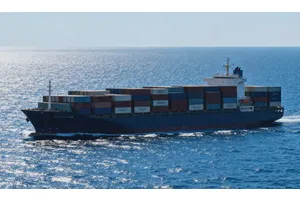
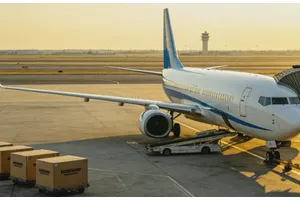
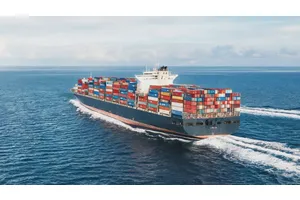
A container left Nansha on a COSCO vessel on a Friday in March and arrived at Kingston's terminal 26 days later, having crossed the Pacific and threaded the Panama Canal. Customs raised one query about the solar lights' classification, the broker answered it with a technical datasheet in two days, and the container was delivered to the customer's distribution center in Kingston on day 36 — cargo collected March 5, delivered April 10. That shipment is a useful benchmark, because shipping time from China to Jamaica is not one number. It is a stack of separate clocks: the ocean transit, the transshipment wait, the terminal queue at Kingston Freeport Terminal Limited (KFTL), the customs clearance, and the last-mile truck. Each clock can be managed — and each one that runs unmanaged adds days and dollars.
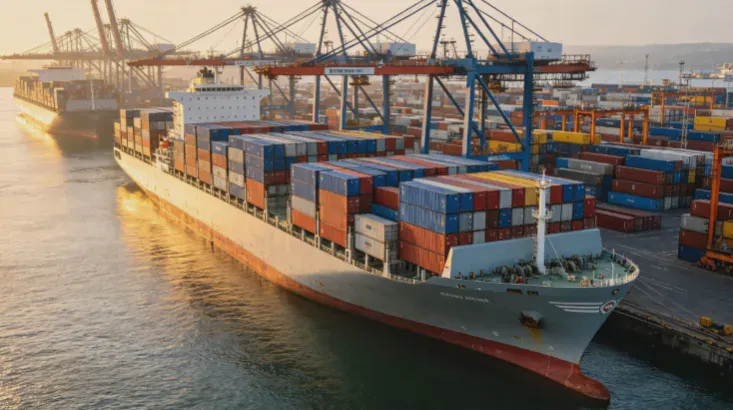
For a Jamaican importer, time is not an abstract metric; it is inventory cost. Every extra day between your supplier's factory in Shenzhen and your shelf in Kingston is capital sitting in a steel box, plus the risk of a stock-out at the worst moment. The good news: the lane's total time is compressible. Importers who understand the transshipment hubs, the KFTL congestion calendar, and the ASYCUDA filing discipline routinely land cargo 10–15 days faster than those who do not. This guide walks through every clock on the lane — with the 2026 numbers we see at DTFU's operations desk — and ends with the exact playbook we use to compress door-to-door time.
How Long Does Shipping from China to Jamaica Really Take?
The honest answer: 30–45 days door-to-door for sea freight, with LCL toward the top of that range and FCL toward the bottom. Air freight runs 7–10 days door-to-door. Here is the full picture:
| Mode | Port-to-port | Door-to-door | Best for |
|---|---|---|---|
| Sea FCL (20ft/40ft) | ~26–35 days | 30–45 days | Anything over ~15 CBM |
| Sea LCL | ~28–38 days | 35–50 days | Small shipments under 15 CBM |
| Air freight (to Norman Manley, KIN) | 3–5 days | 7–10 days | Urgent, high-value cargo |
| Express courier | 2–4 days | 3–5 days | Samples, documents, small parcels |
Why the range is so wide on sea freight: the journey is not a straight line. There is no dedicated direct service from China to Kingston, so every container stops at a transshipment hub — usually Colón (Panama), Caucedo (Dominican Republic), or Miami — and the wait at the hub is where schedules slip. A well-timed connection with one transshipment runs 30–35 days total; a missed connection, a congested hub, or a second transshipment pushes you past 40. Our sea shipping cost from China to Jamaica guide covers the cost side of the same lane, and our sea freight service page explains how FCL and LCL bookings work; this one is about the calendar.
The 36-day Nansha–Kingston shipment above is a realistic FCL benchmark: 26 days at sea, 2 days of customs query, and a few days of terminal and trucking time on each end. Plan your inventory around 35–45 days, and treat anything under 30 as a pleasant surprise rather than a promise.
Why There Is No Direct Ship from China to Jamaica
Jamaica sits on the far side of the Caribbean, off the main Asia–North America and Asia–Europe trunk routes. The mega-vessels that carry China's exports run trans-Pacific or trans-Suez corridors; Kingston is served by feeder and regional networks that connect to those corridors at hub ports. That is the structural reason there is no direct China–Kingston service — and why every quote you see includes a transshipment.
One nuance worth knowing: CMA CGM's PEX2 Asia–Caribbean loop does list Kingston as a port of call, with China ports (Shekou, Ningbo, Shanghai, Qingdao) on its rotation. But look at the full rotation — Vung Tau, Shekou, Hong Kong, Ningbo, Shanghai, Qingdao, Pusan, Manzanillo (Mexico), Balboa, Panama Canal, Manzanillo (Panama), Cartagena, Kingston, Caucedo — and the reality is clear: a service that strings 12+ port calls across Asia, Mexico, Panama, and Colombia before reaching Kingston takes as long to reach the island as a well-timed transshipment. In practice, both the trade and the forwarders treat Jamaica as a transshipment destination, and the hub choice becomes the single biggest lever on your total time.
Colón vs Caucedo vs Miami: Transshipment Routes Compared by Transit Time
Three hubs carry the overwhelming majority of China–Jamaica cargo. They differ in total time, reliability, and risk:
| Route | Typical total time to Kingston | How it works | Pros | Cons |
|---|---|---|---|---|
| China → Colón (Panama) → Kingston | 30–40 days | Mainline vessel to the Atlantic side of the Canal (Manzanillo International Terminal or Cristóbal), feeder to Kingston | Shortest feeder leg; high frequency; Panama Canal transit on the mainline leg | Hub congestion in peak season; timing depends on feeder schedule |
| China → Caucedo (DR) → Kingston | 32–42 days | Mainline to Caucedo's transshipment hub, feeder across the Caribbean | Modern hub (DP World); good connectivity | Slightly longer feeder leg; fewer weekly options |
| China → Miami → Kingston | 35–45 days | Mainline to the US East Coast, then southbound feeder via Miami | Very high frequency of options; good for cargo consolidated via the US | Longer total; US-side handling adds cost and time; hurricane exposure on the Florida leg |
The fastest pattern is usually China → Colón → Kingston: the Panama Canal crossing happens on the mainline leg, and the final feeder hop into Kingston is short. The Miami route is the most frequent but the longest — and in hurricane season it carries the most weather risk. Caucedo sits in between and is a strong choice when its schedule aligns with your mainline arrival.
Two scheduling truths from our desk: first, the transshipment wait is often 3–7 days at the hub, and it is the least visible line in any quote — ask your forwarder for the hub connection time in writing; second, a "fast" mainline sailing that arrives at the hub on a Friday can sit until Monday's feeder, while a slower mainline that arrives Tuesday catches Wednesday's feeder — total time is about schedule alignment, not just vessel speed. Our shipping from China to Jamaica overview page shows the lane-level service picture.
KFTL: The Kingston Terminal That Controls Your Delivery Date
Every container that reaches Jamaica by sea passes through one place: Kingston Freeport Terminal Limited (KFTL), the terminal that handles over 90% of the island's containerized cargo. KFTL was established in 2015 and is operated by Terminal Link, a joint venture between CMA CGM and China Merchants Port — the same group that runs many of the transshipment hubs on the Asia–Caribbean network. The terminal has been investing steadily in equipment — a fleet of Kalmar hybrid straddle carriers arrived in 2024 as part of a renewal program — which has kept handling capacity ahead of demand in normal months.
The catch is the calendar. KFTL's congestion window runs November–December, when Christmas-season import volumes peak, and a container that would normally discharge and move in 2–3 days can wait an extra 3–5 days for a berth and yard slot. The terminal's gate hours and truck turnaround also tighten in this window, which pushes delays downstream into delivery. Importers who remember the 2018 backlog — when KFTL had to extend opening hours to five days a week to clear a mountain of containers before Christmas — know that the November rush is the lane's recurring risk event. The practical rule: cargo for the Jamaican Christmas market should sail from China in August–September, not October–November.
There is one structural detail that shapes scheduling on this lane: CMA CGM sits on both sides of the equation. It operates KFTL through Terminal Link, and it runs the PEX2 Asia–Caribbean service that feeds the island. In practice that means CMA CGM-group services often enjoy aligned schedules into their own terminal — a real advantage when your booking can use them, and a reason to ask your forwarder which carrier's service your transshipment is booked on. A service whose hub and terminal are operated by the same group moves faster through both.
Hurricane Season and the Caribbean Weather Clock: June to November
The Atlantic hurricane season runs June through November, and it is a scheduling fact of life on this lane. Its effects on your transit time are indirect but real:
- Hub disruptions. Transshipment hubs in the region — Miami most exposed, Colón and Caucedo less so — can suspend operations for days when storms pass, stranding feeder connections.
- Schedule wobble. Carriers insert buffer and reroute in storm-active weeks, so port-to-port times stretch even when your specific voyage is unaffected.
- Cargo risk. Rough seas during the crossing increase the chance of cargo shift and damage — the lane's insurers price this risk, and all-risks cover is strongly recommended. Our guide to shipping container insurance cost for shipments from China explains what the coverage actually protects.
The management move is calendar discipline: build 2–3 weeks of buffer into Q3/Q4 inventory plans, avoid scheduling critical stock to arrive in September–October, and accept that a hurricane-week sailing may arrive late — then price that risk into your safety stock rather than discovering it at the warehouse door.
ASYCUDA World, the C82 Form, and How Long Jamaican Customs Really Takes
The customs clock is the most controllable part of the journey — and the most commonly mismanaged. Jamaica Customs Agency (JCA) runs its import declarations through ASYCUDA World, and clearance at the Port of Kingston typically takes 3–5 business days when everything is pre-filed correctly. The mechanics:
| Step | Time (pre-filed) | Time (if problems) |
|---|---|---|
| C82 declaration filed via broker in ASYCUDA World | Day 1 | Day 1 |
| Customs assessment & duty calculation (CET 0–20% + GCT 16.5% + CAF/SCF levies) | 1–2 days | 1–2 days |
| Document check / inspection trigger | — | +3–7 days |
| Payment & release | 1 day | 1 day |
The C82 form is the key document — your broker files it in ASYCUDA with the commercial invoice, packing list, bill of lading, and your Tax Compliance Certificate (TCC) and TRN (Tax Registration Number). Three things turn a 3-day clearance into a 3-week one, and we see all three repeatedly:
- A TCC that is not valid. Jamaica requires an up-to-date Tax Compliance Certificate; an expired one halts clearance until it is renewed.
- Documents that do not match. ASYCUDA cross-checks the declaration against the invoice and packing list — unit counts, weights, and descriptions must line up exactly. A supplier's packing list that says 100 boxes when the manifest says 101 triggers a hold every time.
- Vague descriptions. "Mixed goods" or "electronic items" invites inspection. "LED strip lights, model X200, 200 units" clears without a question. The China-side document discipline that feeds all of this is covered on our customs clearance page.
Under a door-to-door shipping arrangement, the forwarder's Kingston broker pre-files the C82 while the vessel is at sea, so the assessment is often complete the day the container discharges — the single biggest customs time-saver on the lane, and the discipline the DTFU desk applies to every Jamaica booking.
LCL vs FCL: The Time Gap Nobody Budgets For
The method choice changes the calendar more than most importers expect. An FCL container discharges at KFTL and, once cleared, is trucked to your warehouse — simple. An LCL shipment must first be deconsolidated at the Kingston container freight station: the container is unpacked, your cartons are located among the other shippers' goods, restacked, and released. That process adds 5–10 days to the total, on top of the base transit.
There is also a cost dimension to the time: Kingston's LCL stripping and terminal charges are notoriously high — in many cases they equal the ocean freight itself for small shipments. The combined effect — more days plus charges that rival the freight bill — is why we push importers above roughly 13–15 CBM toward FCL even when the headline LCL rate looks cheaper. Consolidating multiple suppliers into one container through a China warehouse converts several slow LCL shipments into one FCL that clears in days, not weeks. For the cost-side math, our sea shipping cost from China to Jamaica guide breaks down the stripping and terminal charges in detail.
How to Shorten Your China–Jamaica Door-to-Door Time by 10–15 Days
The compression playbook, in order of impact:
- Choose the transshipment hub deliberately. Colón is usually the fastest routing to Kingston; ask for the hub connection time in writing and compare it before booking.
- Book 2–3 weeks ahead of the target sailing. Space on the China–Caribbean services sells out in the peak; a last-minute booking often lands on a slower routing or a later sailing.
- Avoid the November–December KFTL window for critical stock. Christmas cargo should sail in August–September. A September sailing clears a quiet terminal; a November sailing meets the queue.
- Pre-file the C82 in ASYCUDA while the vessel is at sea. The assessment is often complete at discharge, cutting 3–5 days off the customs clock.
- Ship FCL, not LCL, above 15 CBM. Skipping the Kingston deconsolidation saves 5–10 days and the stripping charges that rival ocean freight.
- Sail off-peak. The pre-Christmas rush and pre-Chinese New Year windows (January/February) stretch schedules at both ends; a March–June sailing moves through a calmer network.
- Track the milestones, not just the vessel. The delays that matter happen at the hub and the terminal. A forwarder with 24/7 cargo tracking that flags the feeder connection and the discharge date early gives you days of planning advantage.
Add those together — a fast hub, pre-filed customs, an FCL, an off-peak sailing — and the same cargo that takes 45 days for a reactive importer arrives in 30–32.
A Real Timeline: The Nansha–Kingston Shipment That Took 36 Days
The real DDP shipment we ran for a Kingston solar-lighting distributor — 580 cartons, 24.6 CBM, one 20ft container — shows what a well-managed lane looks like day by day:
| Milestone | Date | Days elapsed |
|---|---|---|
| Cargo collected from supplier (Nanshan, Shenzhen) | March 5 | Day 1 |
| Loaded at Nansha port | March 6 | Day 2 |
| Export customs cleared (weight amendment re-filed same day) | March 7 | Day 3 |
| Vessel departure (Nansha, COSCO service) | March 10 | Day 6 |
| Vessel arrival at Kingston (26 days at sea incl. Panama Canal) | April 5 | Day 32 |
| Customs query raised (inverter classification) | April 7 | Day 34 |
| Customs clearance granted (classification upheld) | April 9 | Day 36 |
| Delivered to customer warehouse (Kingston) | April 10 | Day 37 |
Thirty-seven days from factory floor to warehouse door — 26 of them at sea, and every other day accounted for by a specific, manageable step. Two details made the difference: the weight discrepancy on the supplier's packing list was caught and amended in China before the vessel cut-off (a 13% error that would have become a customs hold at the other end), and the classification query was answered with a manufacturer's datasheet within two days. Both were document disciplines, not luck. That is the lane in miniature: the vessel does its job, and the schedule is won or lost on paperwork and terminal choices.
FAQs
1. How long does shipping from China to Jamaica take?
Sea freight runs 30–45 days door-to-door for FCL (LCL adds 5–10 days for deconsolidation); air freight runs 7–10 days; express couriers 3–5 days. There is no direct sea service — cargo transships via Colón, Caucedo, or Miami.
2. Why is there no direct ship from China to Jamaica?
Jamaica sits off the main Asia trunk routes; mega-vessels do not call Kingston directly, so cargo connects at regional transshipment hubs. CMA CGM's PEX2 loop lists Kingston but on a 12-port rotation that takes as long as transshipping.
3. Which transshipment route is fastest for Jamaica?
China → Colón (Panama) → Kingston is typically fastest (30–40 days total) because the Panama Canal crossing happens on the mainline leg and the feeder hop is short. Miami routes are most frequent but longest (35–45 days).
4. How long does customs clearance take at Kingston?
3–5 business days when the C82 is pre-filed in ASYCUDA World with a valid TCC/TRN and matching documents. Document mismatches or inspections add 3–7 days or more.
5. What documents do I need for fast Jamaican customs clearance?
C82 declaration (filed by your broker in ASYCUDA World), commercial invoice, packing list, bill of lading, and a valid Tax Compliance Certificate (TCC) with your TRN. Pre-file while the vessel is at sea.
6. What is the fastest way to ship a small parcel from China to Jamaica?
Express couriers (DHL, FedEx, UPS) deliver in 3–5 days door-to-door for documents, samples, and parcels under ~50 kg.
7. Can door-to-door shipping shorten the total time?
Yes — a door-to-door service coordinates the hub connection, pre-files customs, and books the last-mile truck, removing the gaps where unmanaged shipments wait. The real case above shows 37 days factory-to-warehouse with every step scheduled.
8. How much buffer should I plan for a Jamaica shipment?
Plan 35–45 days for sea freight and hold 2–3 weeks of safety stock if you are shipping into the Q3/Q4 window — the hurricane season and the November–December KFTL queue are the lane's two recurring delay events.
Ship to Jamaica on a Schedule You Can Plan Around
Shipping time from China to Jamaica is a stack of clocks — and every one of them is manageable. The hub connection, the KFTL calendar, the ASYCUDA filing, the FCL-vs-LCL choice: each is a decision, not a fate. Importers who make those decisions deliberately land cargo in 30–35 days; importers who leave them to chance wait 45 and pay for the difference twice — once in storage charges, once in stock-outs.
DTFU has been running the China–Jamaica lane since 2014, with the Colón and Caucedo hub connections managed in-house, a Kingston broker who pre-files the C82 while the vessel is at sea, and the same document discipline that turned the 36-day solar-lights shipment into a routine case rather than a lucky one. Send us your cargo details — commodity, volume, weight, and delivery address in Jamaica — and we will quote the routing with the hub connection and the door-to-door timeline in writing, not just a freight rate.