If you've spent any time searching for shipping cost from China to Fiji, you've probably noticed the same problem: wildly vague numbers. One site says $800. Another says $3,000. Neither tells you what's actually included — or what Fiji's notoriously strict biosecurity rules will cost you on arrival.
This guide cuts through the noise. We've been shipping cargo to the South Pacific for over a decade, and we'll walk you through real, transparent costs broken down by container size, Chinese origin port, shipping mode, and cargo type — including the destination fees most forwarders conveniently leave out of the quote.
Sea Freight from China to Fiji: Container Costs, LCL Rates & Port-Specific Pricing
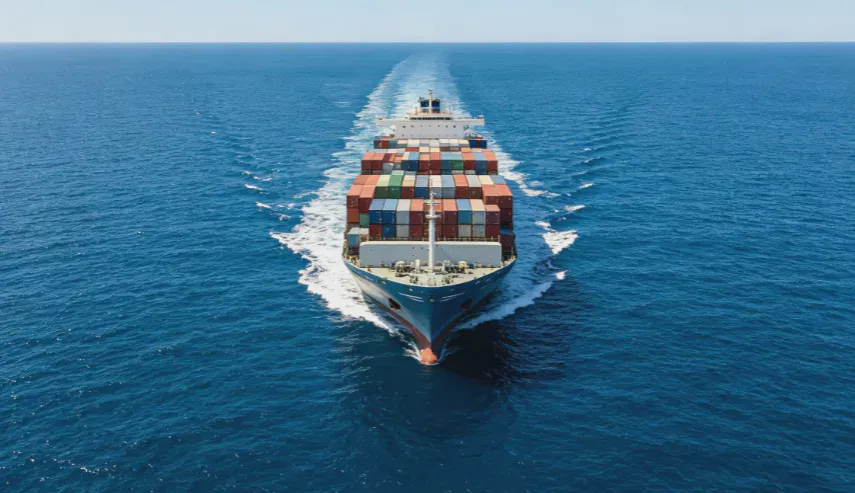
Sea freight is the backbone of China–Fiji trade, handling over 90% of commercial cargo between the two countries. But your sea freight rates from China to Fiji 2026 depend heavily on three things: which Chinese port you ship from, whether you book FCL or LCL, and when you ship.
FCL Container Rates by Origin Port
A Full Container Load (FCL) means you rent the entire container. If you're shipping more than 15 cubic meters (CBM), FCL is almost always the cheapest per-unit option. Here's what you can expect to pay port-to-port as of mid-2026:
| Origin Port (China) | Destination (Fiji) | 20ft Container (20GP) | 40ft Container (40GP) | 40ft High Cube (40HQ) |
|---|---|---|---|---|
| Shenzhen (Yantian/Shekou) | Suva | $1,800 – $2,800 | $3,000 – $4,200 | $3,200 – $4,500 |
| Guangzhou (Nansha) | Suva / Lautoka | $2,000 – $3,000 | $3,200 – $4,500 | $3,400 – $4,800 |
| Shanghai | Suva | $2,500 – $3,800 | $3,800 – $5,500 | $4,000 – $5,800 |
| Ningbo | Lautoka | $2,400 – $3,600 | $3,600 – $5,200 | $3,800 – $5,500 |
| Qingdao | Suva | $2,800 – $4,200 | $4,200 – $6,000 | $4,500 – $6,300 |
| Tianjin | Lautoka | $3,000 – $4,500 | $4,500 – $6,500 | $4,800 – $6,800 |
A few things to note about these numbers. First, shipping cost from Shenzhen to Fiji and shipping cost from Guangzhou to Fiji consistently come in lower than northern ports — that's simple geography and sailing frequency. South China ports sit closer to the Southeast Asian transshipment corridor, and Shenzhen alone sees 3–4 Fiji-bound sailings per month across COSCO, Maersk, MSC, and Swire Shipping. For businesses looking for a dedicated shipping service from China to Fiji that handles the entire logistics chain, working with a forwarder who has direct carrier contracts on this route makes a measurable difference in both cost and reliability. Shanghai and Ningbo rates run higher because fewer direct services head to the South Pacific from East China, meaning your container often transships through Singapore or Port Klang first.
Second, the jump from a 20ft to a 40ft container typically costs only 50–60% more while doubling your capacity. If you're anywhere near 20 CBM, the math favors the bigger box every time.
LCL Rates: Pay Per Cubic Meter
Less than Container Load (LCL) — also called consolidated shipping — is your best option for cargo under 15 CBM. You share container space with other importers and only pay for the volume you occupy. Here's the current LCL shipping cost from China to Fiji per CBM:
| Origin Port | 1–5 CBM (per CBM) | 5–15 CBM (per CBM) | Destination |
|---|---|---|---|
| Shenzhen / Guangzhou | $80 – $150 | $60 – $110 | Suva / Lautoka |
| Shanghai / Ningbo | $110 – $200 | $80 – $150 | Suva / Lautoka |
LCL is flexible — you can ship as little as 1 CBM — but it adds 3–7 days to your timeline for consolidation at the origin Container Freight Station (CFS) and deconsolidation at the Fiji end. Also worth knowing: LCL rates from Shenzhen are typically 25–35% cheaper than from Shanghai, because South China consolidators pool larger volumes bound for the Pacific Islands.
Real experience: We've seen too many first-time importers choose LCL to "save money" on a 12 CBM shipment, only to pay more than FCL after destination fees stacked up. Always run the math on total landed cost, not just the per-CBM rate.
If you're looking for the cheapest way to ship from China to Fiji, the answer depends on your volume: under 2 CBM, LCL from Shenzhen wins. Above 15 CBM, book a 20ft FCL. In between, get a freight forwarder to quote both options side by side.
Transshipment Routing: What Happens to Your Container
There are no daily direct sailings from China to Fiji — most services transship through one of four major hubs: Singapore, Port Klang (Malaysia), Auckland, or Sydney. Direct routings from Shenzhen or Guangzhou to Suva do exist on a biweekly basis, primarily on Swire Shipping and COSCO vessels, and these cut 5–8 days off total transit. Your forwarder should be able to tell you whether your booking uses a direct or transshipment service — this matters a lot during cyclone season.
Air Freight & Express Shipping: When Speed Matters
Air Freight Costs per KG
Air freight cost from China to Fiji per kg ranges from $4.00 to $10.00, with the final rate determined by chargeable weight — the greater of actual gross weight or volumetric weight (L × W × H in cm ÷ 6000). Your cargo arrives at Nadi International Airport (NAN), Fiji's primary air cargo gateway. There are no direct passenger flights from mainland China to Fiji; virtually all air cargo transits through Sydney, Auckland, or Hong Kong. For importers also serving the broader Oceania region, shipping from China to New Zealand serves as a natural consolidation hub before distributing to smaller Pacific Island markets.
For a typical 200 kg shipment of electronics from Guangzhou (CAN) to Nadi, expect to pay $6.50–$8.00 per kg with a 3–5 day airport-to-airport timeline. At 500 kg and above, rates drop to $4.50–$6.00 per kg as volume discounts kick in.
Express Courier: DHL, FedEx, UPS to Fiji
For samples, documents, or urgent B2C parcels under 30 kg, express couriers make more sense than air freight. Expect $12–$18 per kg with 4–7 day door-to-door delivery to Suva, Lautoka, or Nadi. The premium buys you integrated customs clearance and last-mile tracking — valuable for small businesses testing the Fiji market without setting up a full import operation.
The Break-Even Point: Air vs. Sea
There's a practical threshold we use with clients: if your cargo is under 300 kg and genuinely time-sensitive (think replacement machinery parts holding up a construction project in Suva), air freight is the right call. Over 2 CBM and not urgent? Sea freight — LCL or FCL — will save you 60–80% on freight cost. The often-overlooked factor is destination fees: air freight customs clearance and handling at Nadi is faster and cheaper than the multi-step process at Suva's port, which partially offsets the higher per-kg rate on smaller shipments.
Hidden Costs & Surcharges: What You Actually Pay to Ship to Fiji
This is where most online shipping cost guides fall apart. The base freight forwarding fees China to Fiji you see quoted — $1,800 for a 20ft, say — is just the starting line. Here's what stacks on top.
Destination Charges You Can't Avoid
| Fee Type | Typical Range (USD) | Notes |
|---|---|---|
| Terminal Handling Charges (THC) | $150 – $350 per container | Charged by Suva or Lautoka port operator; non-negotiable |
| Customs Brokerage | $200 – $500 | Your broker's fee for filing the import declaration with FRCS |
| Documentation Fees | $50 – $150 | Bill of Lading release, export declaration processing |
| Final-Mile Delivery | $200 – $800 | Varies hugely — Suva-to-Suva is cheap; Suva-to-Labasa (Vanua Levu) requires inter-island shipping |
| Demurrage | $50 – $150 per container/day | Kicks in after 5–7 free days at Suva/Lautoka; a single customs delay can cost $500+ |
| CFS Storage | $20 – $50 per CBM/day | Applies to LCL cargo waiting for clearance |
| ISPM-15 Fumigation | $300 – $500 | Only if your wood packaging wasn't treated in China (more on this below) |
A $2,200 sea freight quote can easily become $3,800 landed by the time you add THC, brokerage, documentation, and delivery. This is why experienced importers always ask for an all-in or door-to-door quote — and why our team at DTFU Logistics provides a line-by-line breakdown before you commit.
Carrier Surcharges That Fluctuate Monthly
Ocean carriers apply surcharges on top of the base rate, and these change frequently. On the China–Fiji route, the three that matter most:
- Bunker Adjustment Factor (BAF): Fuel cost passthrough. Swire Shipping's BAF for China→Pacific Islands was $655 per TEU in January 2025 — nearly a third of the base freight on some lanes.
- Peak Season Surcharge (PSS): Applied during high-demand periods. Maersk imposed a PSS of $1,000 per 20ft / $2,000 per 40ft on China→Fiji/New Zealand routes in December 2024.
- General Rate Increase (GRI): Periodic base-rate hikes. Hapag-Lloyd announced a $300/TEU GRI for Asia→Oceania (including Fiji) effective March 2025.
These surcharges aren't optional — they're baked into the carrier's tariff. A good freight forwarder will alert you to upcoming GRIs and help you lock in rates before they hit.
Port-to-Port vs. Door-to-Door: What's Included?
| Service Level | Includes | Excludes |
|---|---|---|
| Port-to-Port | Ocean freight only | Origin trucking, China export clearance, Fiji import clearance, duties/VAT, final delivery |
| Door-to-Port | Factory pickup, China export clearance, ocean freight | Fiji import clearance, duties/VAT, final delivery |
| Door-to-Door (DDP) | Everything — pickup, both clearances, ocean freight, duties, VAT, final delivery | Nothing (but confirm the quote) |
Door to door freight China to Fiji is the most popular option among our small business clients. You get one price, one point of contact, and no surprises at Suva wharf. Just make sure the DDP quote explicitly states it covers Fiji VAT (15%) and any BAF inspection fees — some forwarders exclude these.
Transit Times & Seasonal Planning: How Long Shipping Takes
Shipping time from China to Fiji sea freight varies more by origin port than most importers realize. The distance from Qingdao to Suva is nearly double that of Shenzhen to Suva, and every extra day at sea adds exposure to weather and port delays.
| Origin Port | Destination | Sea Transit (Port-to-Port) | Door-to-Door (Estimated) |
|---|---|---|---|
| Shenzhen | Suva | 18 – 24 days | 25 – 32 days |
| Guangzhou (Nansha) | Suva / Lautoka | 20 – 26 days | 27 – 34 days |
| Shanghai | Suva | 22 – 30 days | 29 – 38 days |
| Ningbo | Lautoka | 22 – 30 days | 29 – 38 days |
| Qingdao | Suva | 24 – 32 days | 31 – 40 days |
| Tianjin | Lautoka | 27 – 35 days | 34 – 43 days |
For air freight, port-to-airport (China to Nadi) takes 2–5 days. Door-to-door with customs clearance adds another 3–5 days, for a realistic total of 5–10 days. If someone quotes you "overnight air freight to Fiji," they're leaving out the transshipment through Australia or New Zealand — there are no nonstop cargo flights from mainland China to Nadi.
The Cyclone Season Factor (November–April)
If there's one piece of advice we give every new Fiji importer, it's this: plan around the South Pacific cyclone season. From November through April, tropical cyclones regularly disrupt vessel schedules across the region. We've seen Suva port suspend all cargo operations for 5 days straight during a single cyclone event, with backlog clearance taking another week.
During cyclone season, add a 7–10 day buffer to all sea freight timelines. Book 3–4 weeks ahead if your shipment overlaps with Chinese New Year (January/February) or Golden Week (early October) — these periods see capacity crunches on Asia–Oceania lanes as factories rush to ship before holiday shutdowns.
Fiji Customs Clearance: Import Duties, VAT & BAF Biosecurity
How Fiji Import Duty Is Calculated
The Fiji Revenue and Customs Service (FRCS) assesses import duty on the CIF value (Cost + Insurance + Freight) of your goods. Duty rates range from 0% to 32% depending on the HS Code classification:
| Product Category | Typical Duty Rate | Example Goods |
|---|---|---|
| Industrial machinery & parts | 0% – 5% | Generators, construction equipment, factory components |
| Raw materials | 5% – 10% | Steel, chemicals, timber, plastics |
| General consumer goods | 10% – 15% | Household items, tools, most electronics |
| Clothing & textiles | 15% – 32% | Garments, fabrics, footwear |
| Furniture | 15% – 32% | Wooden and upholstered furniture |
| Vehicles | 5% – 32% | Cars, trucks (varies by engine size and age) |
| Food products | 5% – 27% | Processed foods, beverages, fresh produce |
Fiji's VAT is 15% (increased from 9% in August 2023) and is calculated on the CIF value plus the import duty. Here's a real example:
You import $10,000 (CIF) of furniture from Guangzhou. FRCS classifies it at 15% duty. - Import duty: $10,000 × 15% = $1,500 - VAT: ($10,000 + $1,500) × 15% = $1,725 - Total tax: $3,225 (32.25% effective rate on CIF)
This is why DDP shipping China to Fiji is so popular — it wraps tax, duty, and freight into a single predictable number.
Documentation Checklist for Smooth Clearance
Fiji customs clearance takes 3–7 working days when your paperwork is complete. Missing or incorrect documents add 2+ weeks. Here's what you need:
- Commercial Invoice — in English, with accurate HS codes and full product descriptions
- Packing List — exact weights, dimensions, and package counts
- Bill of Lading (B/L) or Airway Bill (AWB) — issued by the carrier
- Certificate of Origin — Form A or general, issued in China
- Import Permit — required for restricted goods (food, plants, medicines, chemicals)
- Certificate of Conformity (COC) — required for regulated consumer products (electronics, toys, electrical appliances)
BAF Biosecurity: The Rule Every Importer Misses
The Biosecurity Authority of Fiji (BAF) enforces some of the strictest import controls in the South Pacific — and this is where we see the most costly mistakes.
ISPM-15 compliance is non-negotiable. Every piece of solid wood packaging — pallets, crates, dunnage, timber bracing — must be heat-treated or methyl bromide fumigated and stamped with the official ISPM-15 mark. If your container arrives at Suva with untreated wood, BAF will hold the cargo. Your choices at that point: pay for on-site fumigation ($300–$500), pay for re-export, or have the cargo destroyed. None are fast, and storage fees accumulate daily.
We learned this lesson with a client shipping construction materials to a resort project near Nadi. The supplier in Foshan used unstamped timber pallets to save ¥200. The container was held at Lautoka for 11 days, the fumigation cost $480, and the demurrage ran to $1,100. All over a missing stamp that would have cost ¥50 in China.
Used machinery and vehicles face mandatory BAF inspection. They must arrive absolutely clean — no soil, no plant matter, no seeds lodged in undercarriages. We recommend steam cleaning and photographing the equipment before loading. BAF officers will check.
Food and agricultural products require a biosecurity import permit obtained before shipment, plus a phytosanitary certificate from Chinese authorities. Without the permit number on your shipping documents, the container won't clear.
Practical tip: Before your container is sealed in China, take clear photos of every ISPM-15 stamp on your pallets. If BAF questions compliance at the Fiji end, you have instant proof. This one habit has saved our clients thousands.
DDP vs. FOB vs. CIF: Choosing the Right Incoterms for Fiji
The trade term you choose fundamentally changes who pays for what — and your cost exposure. Here's how each applies to China–Fiji shipments.
Incoterms 2020 Quick Reference
| Term | Seller (China) Pays For | Buyer (Fiji) Pays For | Best For |
|---|---|---|---|
| EXW (Ex Works) | Nothing beyond factory gate | Everything — trucking, both clearances, freight, insurance | Almost never recommended for Fiji importers |
| FOB (Free On Board) | Factory-to-vessel + China export clearance | Ocean freight, insurance, Fiji clearance, duties, delivery | Experienced importers with a Fiji customs broker |
| CIF (Cost, Insurance, Freight) | FOB items + ocean freight + minimum insurance | Fiji clearance, duties/VAT, final delivery | Importers who want freight handled but have local clearance capability |
| DDP (Delivered Duty Paid) | Everything — door-to-door, including Fiji duties and VAT | Nothing (except unpacking) | First-time importers, SMEs, and anyone who wants one predictable price |
When DDP Wins
DDP shipping cost from China to Fiji typically runs $180–$380 per CBM for sea freight or $6–$12 per kg for air freight — all-in. It's the default recommendation we make for first-time Fiji importers for a simple reason: you know your total cost before the container leaves China. No surprises at Suva wharf. No scrambling to find a customs broker. No miscalculating VAT. If you're still weighing the trade-offs between trade terms, our detailed comparison of DDP vs FOB shipping breaks down which option saves more time and reduces hassle for different importer profiles.
The trade-off is that DDP includes a risk premium for the forwarder — they're absorbing currency fluctuation risk on the Fiji dollar and potential customs reclassification. If you ship regularly and have an established Fiji-based customs broker, FOB or CIF gives you more control and marginally lower costs.
When FOB or CIF Makes More Sense
FOB shipping from China to Fiji puts you in the driver's seat for ocean freight selection and insurance. If you have a trusted customs broker in Suva — someone who knows your HS codes, your volume patterns, and the FRCS officers — FOB is usually the most cost-effective Incoterms for repeat shipments.
CIF is a middle ground: the supplier handles freight booking and basic insurance to the Fiji port, and you handle everything from the wharf onward. It's worth noting that CIF insurance is typically minimal — 110% of invoice value, limited coverage — so supplementing with your own marine cargo policy is wise.
Shipping Costs by Cargo Type: What You're Importing Changes Everything
Different products face different duty rates, packaging rules, and BAF scrutiny levels — and your shipping mode should match what you're moving.
| Cargo Type | Typical Duty Rate | Recommended Mode | Key Considerations |
|---|---|---|---|
| Building Materials | 5% – 15% | FCL (heavy, dense) | Timber needs ISPM-15; cement must stay bone-dry; steel rebar and pipes can be loaded loose in 20ft containers |
| Machinery & Equipment | 0% – 5% | FCL or Flat Rack | Used machinery MUST be steam-cleaned for BAF; self-propelled equipment ships RORO; oversized items may need break bulk |
| Vehicles | 5% – 32% | RORO or Container | Fiji restricts left-hand-drive vehicles and has age limits on used car imports; soil-free undercarriage is mandatory |
| Electronics | 0% – 15% | LCL or Air | COC required for regulated categories (toys, appliances, IT equipment); anti-static packaging and dessicant packs recommended for sea transit |
| Furniture | 15% – 32% | FCL (volume cargo) | Wood-framed pieces require ISPM-15; upholstered furniture needs moisture barrier — humidity in a 30-day sea container can ruin fabric |
| Clothing & Textiles | 15% – 32% | LCL or Air | Lightweight but bulky; LCL from Guangzhou is typically most cost-effective; use vacuum sealing to reduce CBM |
| Food Products | 5% – 27% | Reefer FCL or Air | BAF import permit + phytosanitary certificate required BEFORE shipping; labeling must meet Fiji food safety standards; shelf-life constraints favor air freight |
| Personal Effects | 0% – 5% (exemptions apply) | LCL or Shared 20ft | Detailed inventory with values required; returning Fiji residents may qualify for duty-free concessions; expect BAF inspection |
For shipping construction materials from China to Fiji specifically — one of the highest-volume import categories — we strongly recommend FCL over LCL. Building materials are dense, heavy, and prone to damage during consolidation/deconsolidation. A 20ft container loaded at the factory in Foshan or Nan'an and sealed until it reaches your site near Suva is the safest, cheapest-per-ton approach.
For shipping machinery from China to Fiji, pay attention to dimensions early. Many Chinese factories quote FOB without checking whether their equipment actually fits in a standard container. We've had a client's stone-cutting machine arrive at Yantian port only to discover it needed a flat rack — adding $1,200 and a week of rebooking. Measure twice, book once.
How to Choose a Reliable Freight Forwarder for the China to Fiji Route
Every freight forwarder will tell you they ship to Fiji. Very few do it regularly enough to know the nuances. In today's supply chain environment, a forwarder's role goes well beyond booking cargo — understanding the strategic function of freight forwarders helps you separate genuine logistics partners from transactional brokers.
What Actually Matters
-
Fiji-specific route volume. Ask: "How many Fiji-bound containers did you handle last month?" If they hesitate, they're probably consolidating your cargo onto a service they don't control. You want a forwarder who books Fiji sailings weekly, not one who treats the South Pacific as an afterthought.
-
FRCS and BAF knowledge. Can they tell you the duty rate for your specific HS code? Do they know the BAF inspector at Lautoka typically checks used machinery on Tuesdays and Thursdays? This local, on-the-ground knowledge is what prevents a 3-day clearance from becoming a 3-week nightmare.
-
A real Fiji agent — not a subcontractor chain. Your forwarder should have a direct relationship with a licensed customs broker in Suva. Not "our partner's partner has someone in Nadi." One point of contact, one line of accountability.
-
FIATA and IATA certifications. These aren't wallpaper. FIATA certification means the forwarder meets international standards for multimodal freight management. IATA certification is essential for any air freight — non-IATA forwarders can't issue their own Airway Bills.
-
Cargo insurance with clear terms. We cover this below, but the short version: if a forwarder can't tell you what their insurance actually covers and excludes, keep looking.
Frequently Asked Questions
How much does it cost to ship a 20ft container from China to Fiji?
Port-to-port, $1,800–$4,500 depending on origin. From Shenzhen or Guangzhou, budget $1,800–$3,000. From Shanghai or Ningbo, $2,500–$3,800. Door-to-door with DDP terms typically adds $1,500–$2,500 for customs clearance, duties, VAT, and final delivery.
How long does sea freight take from China to Fiji?
Port-to-port transit ranges from 18 days (Shenzhen→Suva, direct sailing) to 35 days (Tianjin→Lautoka, with transshipment). Door-to-door adds 7–10 days. During cyclone season (November–April), add a 7–10 day buffer.
What is the cheapest way to ship from China to Fiji?
It depends entirely on volume. Under 2 CBM: LCL sea freight from Shenzhen or Guangzhou. 2–15 CBM: compare LCL vs. 20ft FCL quotes side by side — the crossover point varies. Above 15 CBM: 20ft or 40ft FCL. Always calculate total landed cost, not just freight — a cheap ocean rate with expensive destination fees is no bargain.
What documents do I need to import from China to Fiji?
Commercial Invoice (English, with correct HS codes), Packing List (exact weights and dimensions), Bill of Lading or Airway Bill, and Certificate of Origin. Additional requirements for restricted goods include import permits, Certificate of Conformity (for regulated electronics/toys), and phytosanitary certificates (for plant/agricultural products).