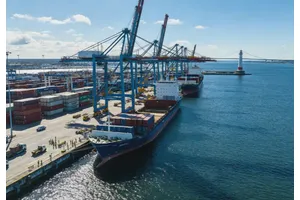
Shipping cost from China to Czech Republic is rarely the number you are first quoted. A Czech importer books a 40HQ out of Ningbo at $3,550 port-to-port, then receives a final invoice at more than double — because the ocean rate was never the cost. The Czech Republic is landlocked, sits inside the EU customs union and has no free trade agreement with China. Every sea shipment clears through a neighbouring gateway, runs 600–950 km inland, and only then attracts MFN duty and 21% import VAT on a value that already includes the freight.
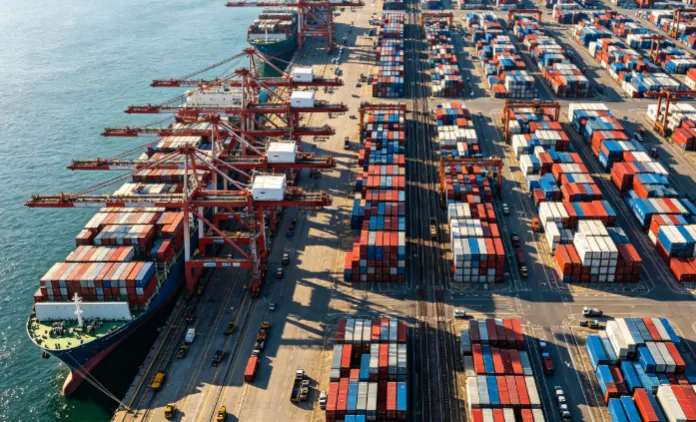
Below we price 2026 rates by mode, work three complete landed-cost examples, compare the gateway ports on total cost rather than sailing time, and show how duty, anti-dumping and CBAM exposure are calculated.
How Much Does It Cost to Ship from China to Czech Republic?
| Mode | Indicative rate | Typical transit |
|---|---|---|
| Sea Freight, FCL 20ft | $2,250–4,550 per container | 30–45 days |
| Sea Freight, FCL 40ft / 40HQ | $2,650–5,850 per container | 30–45 days |
| Sea Freight, LCL | $40–170 per CBM | FCL transit + 7–10 days |
| Rail Freight, FCL 40HQ | $5,000–12,000 per container | 15–25 days |
| Rail Freight, LCL | $120–220 per CBM | 18–28 days |
| Air Freight | $4–10 per kg, tiered | 6–9 days |
| Express courier | $6–12 per kg | 3–6 days |
| DDP sea | $150–300 per CBM | 35–50 days door-to-door |
| DDP rail | $180–450 per CBM | 22–30 days door-to-door |
Every figure above is port-to-port to the gateway. Origin charges, destination THC, inland haulage to Czechia, EU duty, anti-dumping duty and 21% import VAT are all additional — which is why published ranges for this lane disagree by a factor of four. Our Shipping from China to Czech Republic page states the scope behind each mode and gateway, so the comparison is never left implicit.
20ft, 40ft and 40HQ Container Cost from China to Czech Republic
| Chinese origin port | 20ft FCL | 40ft FCL / 40HQ |
|---|---|---|
| Shenzhen (Yantian) | ~$2,550 | ~$3,050 |
| Shanghai | ~$2,650 | ~$3,250 |
| Ningbo-Zhoushan | ~$2,750 | ~$3,550 |
| Qingdao | ~$2,750 | ~$3,650 |
| Tianjin / Xingang | ~$2,850 | ~$3,750 |
| Xiamen | ~$2,950 | ~$3,850 |
The 40HQ often prices within $50–150 of a 40GP, which is why almost nobody books a standard 40ft here.
LCL Shipping Cost per CBM — and Why the Range Is Four Times Wide
A $40 per CBM quote and a $170 per CBM quote can describe the same box; the difference is scope. A freight-only figure excludes CFS and consolidation at origin, deconsolidation at destination and delivery order fees.
Air Freight Cost per Kg: Weight Tiers and Chargeable Weight
| Chargeable weight | Indicative rate |
|---|---|
| Under 100 kg | $6.00–9.00 per kg |
| 100–500 kg | $5.00–7.50 per kg |
| 500 kg and above | $4.00–6.00 per kg |
Pudong–Prague runs $4.80–9.50/kg direct. Always ask which chargeable weight applies, not the scale weight.
Rail Freight Cost from China to Czech Republic per 40ft Container
Rail splits into two tiers usually quoted as one. The fixed-schedule Xi'an–Prague service, launched in November 2025, runs 16–18 days and prices at the top of the range; standard corridor services from Chengdu, Chongqing, Zhengzhou and Yiwu run 18–25 days at the bottom.
Total Landed Cost from China to Czech Republic: Every Line on the Invoice
| # | Cost line | Basis | Indicative 40HQ exposure |
|---|---|---|---|
| 1 | Origin charges | Pickup, export declaration, OTHC, VGM, CFS for LCL | $250–600 |
| 2 | Main freight | Ocean / rail / air plus BAF, PSS, GRI, LSS, ISPS | Varies by mode |
| 3 | Gateway destination charges | DTHC at Hamburg, Rotterdam, Koper or Gdańsk | $300–450 |
| 4 | Inland haulage | Gateway to Prague, Brno, Ostrava or Plzeň | $900–1,600 |
| 5 | Duty | EU MFN rate applied to the CIF value | By CN code |
| 6 | Anti-dumping duty | Where the product is in scope, on top of MFN | Up to 85% |
| 7 | Import VAT | 21% on customs value + duty + transport to destination | Largest single line |
| 8 | Brokerage and delivery | Declaration fee, telex release, delivery order, last mile | $250–450 |
Worked Example 1: One 40HQ, Shenzhen to Prague, Door-to-Door
| Line | Amount |
|---|---|
| FOB goods value, Shenzhen | $60,000 |
| Origin charges (pickup, export declaration, OTHC, VGM) | $420 |
| Ocean freight, Shenzhen to Hamburg, 40HQ | $3,050 |
| Hamburg DTHC | $380 |
| Inland haulage, Hamburg to Prague | $950 |
| Cargo Insurance | $240 |
| Customs value (duty basis, cleared in Czechia) | $64,240 |
| MFN duty at 1.7% (machinery component) | $1,092 |
| VAT base | $65,332 |
| Import VAT at 21% | $13,720 |
| Brokerage, declaration, final delivery in Prague | $310 |
| Total landed cost | $80,162 |
Ocean freight was 3.8% of that landed cost; the VAT line was 17%. Insurance is one of the few lines you can genuinely tune, and Shipping container insurance cost for shipments from China sets out what cover actually costs and what it excludes.
Worked Example 2: 5 CBM of LCL, Ningbo to Brno
Five CBM of textiles with a $12,000 FOB value. Freight at $85/CBM is $425, origin CFS $145, destination handling $180, the part-load inland leg to Brno $300 and insurance $90, giving a $12,515 customs value. MFN duty at 6.3% adds $788 and 21% VAT on the enlarged $13,603 base adds $2,857. With $130 brokerage, total charges reach $4,915 — roughly $983 per CBM on a shipment quoted at $85 per CBM.
Worked Example 3: 200 kg of Air Freight, Shanghai to Prague
Two pallets of 120 × 100 × 110 cm carry an actual 200 kg. Volumetric weight is 120 × 100 × 110 ÷ 6,000 = 220 kg per pallet, so the airline bills 440 kg chargeable. At the 100–500 kg tier that is $2,860, plus $75 insurance and $250 brokerage. Electronics carry a 0% MFN rate, so duty is nil, but 21% VAT on a $20,935 customs value still comes to $4,396. Total: $7,581.
Real-Life Scenario: A Brno importer of auto components spent a quarter comparing ocean rates and saved roughly $180 per 40HQ. In the same quarter, one misclassified CN code moved the duty rate on the same goods from 2.7% to 4.5%, costing about $1,100 per container. The freight negotiation produced a rounding error; the classification review took an afternoon.
How Does Cargo Reach the Czech Republic with No Seaport?
The Czech Republic has no seaports — every sea shipment enters the EU through a neighbouring country and moves inland from there. Pages describing "the ports of Prague and Brno" describe something that does not exist.
| Gateway | Country | Approx. distance to Prague | Inland transit |
|---|---|---|---|
| Hamburg | Germany | ~630 km | 2 days |
| Bremerhaven | Germany | ~750 km | 2–3 days |
| Gdańsk | Poland | ~700 km | 2 days |
| Koper | Slovenia | ~700 km | 2 days |
| Trieste | Italy | ~850 km | 2–3 days |
| Rotterdam | Netherlands | ~900 km | 3 days |
| Antwerp | Belgium | ~950 km | 3 days |
Gateway Total-Cost Comparison: Hamburg vs Rotterdam vs Koper vs Gdańsk
| Gateway | Ocean rate, 40HQ | Gateway THC | Inland haulage to Prague | Total gateway cost |
|---|---|---|---|---|
| Hamburg | $3,050 | $380 | $950 | $4,380 |
| Gdańsk | $3,180 | $340 | $1,050 | $4,570 |
| Rotterdam | $2,980 | $410 | $1,250 | $4,640 |
| Koper | $3,350 | $420 | $1,100 | $4,870 |
Rotterdam shows the trap most clearly: the cheapest ocean rate produces the second-most expensive landed gateway cost, because 270 km of extra inland running costs more than the $70 the ocean leg saved. Hamburg usually wins on total cost to Prague; Gdańsk is competitive for Moravia and Silesia, 350 km closer via the May 2026 Baltic Hub Gdańsk–Ostrava rail link. For the German corridor behind Hamburg and Bremerhaven, see Shipping From China to Germany; for the Baltic approach through Gdańsk, see Shipping from China to Poland.
Inland Haulage: Hamburg to Prague, Brno and Ostrava
| Destination | Distance | 40ft truck | LCL part-load | Transit |
|---|---|---|---|---|
| Prague | ~630 km | $900–1,200 | $45–70 per CBM | 2 days |
| Plzeň | ~700 km | $950–1,300 | $50–80 per CBM | 2 days |
| Brno | ~800 km | $1,100–1,500 | $55–85 per CBM | 2–3 days |
| Ostrava | ~900 km | $1,200–1,600 | $60–90 per CBM | 2–3 days |
Clearing at the Gateway Port vs Clearing in Czechia
Under EU customs valuation rules, transport costs are included in the customs value up to the declared place of destination. Declare at Hamburg and the value stops at the EU border; declare in Czechia and the $950 haulage joins the dutiable value. At 1.7% duty that is $16, but because VAT applies on the enlarged base the combined effect is roughly $220 per container.
The Air Route: Václav Havel Airport Prague (PRG)
PRG handled a record 96,481 tonnes of cargo and mail in 2025, up 48% year on year. Secondary gateways are Brno-Tuřany (BRQ), Ostrava (OSR) and Pardubice (PED).
Sea vs Rail vs Air Freight Cost from China to Czech Republic: Which Mode Is Cheapest?
| Mode | Indicative cost | Door-to-door | Relative cost | Best for | Main risk |
|---|---|---|---|---|---|
| Sea FCL | $2,650–5,850 per container | 35–50 days | Lowest per CBM | Heavy, low value density, planned inventory | Long cash cycle; diversion delays |
| Sea LCL | $40–170 per CBM | 42–57 days | Low at low volume | 1–12 CBM, smaller importers | Destination charges dominate |
| Rail FCL | $5,000–12,000 per 40HQ | 22–32 days | Mid | Time-sensitive, mid-value cargo | Allocation and border congestion |
| Air Freight | $4–10 per kg | 8–14 days | High | High value density, urgent stock | Chargeable weight; battery limits |
| Express | $6–12 per kg | 3–6 days | Highest | Samples and parcels under 100 kg | Cost per kg |
| DDP sea | $150–300 per CBM | 35–50 days | Bundled | Importers without customs infrastructure | Duty and VAT hidden inside the price |
Sea is almost always cheapest per CBM — but not always the cheapest landed cost. Priced against 40 days of tied-up working capital, rail's ten-day advantage can pay for its premium above roughly $400 per CBM. The reliability side of that trade-off is covered in Sea vs Rail Freight: Which Is Faster and More Reliable from China.
How Long Does Shipping from China to Czech Republic Take?
| Stage | Sea | Rail | Air |
|---|---|---|---|
| Booking and space allocation | 2–7 days | 3–10 days | 1–3 days |
| Pickup, export declaration, loading | 3–7 days | 3–7 days | 2–4 days |
| Main leg | 30–42 days | 15–25 days | 3–7 days |
| Gateway arrival, DTHC, release | 2–4 days | 2–4 days | 1–2 days |
| Inland haulage to Prague / Brno / Ostrava | 2–3 days | 1–2 days | 1–2 days |
| Import declaration, duty and VAT, delivery | 1–3 days | 1–3 days | 1–2 days |
| Door-to-door total | 40–55 days | 22–32 days | 8–14 days |
Shanghai to Prague is the benchmark at 40 days port-to-port; Yantian runs 35 and Qingdao 42.
FCL vs LCL: The Break-Even Is Not 15 CBM, It Is 22–28 CBM
Textbooks quote 15 CBM; add destination charges and the crossover moves. A 20ft FCL costs about $4,000 all-in for up to 28 CBM — $143 per CBM loaded tight — while LCL runs $145 per CBM plus $325 of fixed charges. If your volume sits near that line, the line-by-line breakdown in Sea Shipping cost from China to Czech Republic shows how the two totals are built.
Czech Republic Import Duty and 21% VAT on Goods from China
There is no preferential rate to chase on this lane. Chinese-origin goods pay the EU's MFN rate for their Combined Nomenclature (CN) heading, published in TARIC and assessed on the CIF value. Three levers remain: classification, valuation and specific reliefs.
How to Calculate Czech Import VAT (21%) Correctly
VAT = 21% × (customs value + duty + anti-dumping duty + transport to the declared place of destination)
Anti-dumping duty sits inside the VAT base — a punitive duty is taxed again — and so do freight and inland haulage, which is why clearing in Czechia raises the VAT bill as well as the duty bill. The 12% reduced rate covers a narrow list: foodstuffs, medicines and hotel accommodation. A VAT-registered importer recovers the tax on the next return, so the real burden is cash flow.
The End of the €150 De Minimis: €3 per Declaration Line from 1 July 2026
| Date | Change |
|---|---|
| 1 July 2021 | €22 VAT exemption abolished — VAT applies to all commercial imports |
| 1 July 2026 | €150 customs duty exemption abolished |
| 1 July 2026 to 2028 | Flat €3 duty per declaration line replaces duty calculation on low-value consignments |
| 2028 | Full CN-code duty assessment to apply to low-value consignments |
Note the unit: per declaration line, not per item. A ten-line e-commerce declaration pays €30, and a wrong CN code triggers post-clearance recovery plus penalties. Policy on Chinese-origin goods is still moving, as our analysis of France Floats 30% Tariff on Chinese Imports: What It Means for China–EU Trade and Global Logistics explains.
Anti-Dumping Duty and CBAM for Chinese Goods: The 2026 Compliance Costs
Anti-Dumping Duty Rates by Product (2026, in force)
| Product | Anti-dumping duty range |
|---|---|
| Steel fasteners (screws, bolts) | 26.5–85.0% |
| Steel tubes and pipes | 15.5–90.6% |
| E-bikes | up to 79.3% |
| Polyamide yarn | 60.0–67.6% |
| Aluminium foil | 6.4–30.0% (plus CBAM) |
| Steel cables | 30.7–60.4% |
| Ceramic tiles | 13.1–69.7% |
| Tyres | 14.6–61.8% |
| Solar panels and cells | 36.2–53.4% |
| Bicycles | up to 48.5% |
| Ceramic tableware and kitchenware | 13.1–18.3% (residual 36.1%) |
Three mechanics decide exposure: anti-dumping duty is charged on top of MFN duty, it is included in the 21% VAT base, and the rate depends on whether your exporter cooperated with the EU investigation. The ceramic tableware rates were reaffirmed in Implementing Regulation (EU) 2026/274 of 5 February 2026. We broke down the practical consequences for importers in EU Slaps 79% Duty on Chinese Ceramic Tableware: Impact on Trade & Logistics.
Our Industry Insights: The single most expensive mistake we see on this lane is a purchase order signed before the CN code was checked. Anti-dumping exposure is a sourcing decision, not a shipping decision — by the time a container reaches Hamburg, the only remaining options are pay it or abandon the cargo. We now ask every new client for the HS code before we quote freight, because on about one shipment in ten the duty changes which supplier is actually cheaper.
The EU Steel Safeguard and CBAM: Two 2026 Compliance Gates
From 1 July 2026 the annual duty-free steel quota was cut to 18.3 million tonnes, roughly 47% below the 2024 level, and over-quota shipments now face 50%, with new "melt and pour" origin disclosure alongside. The CBAM definitive phase began on 1 January 2026 under Regulation (EU) 2023/956, as amended by Regulation (EU) 2025/2083.
| Element | Requirement |
|---|---|
| Goods in scope | Iron and steel, cement, aluminium, fertilisers, electricity, hydrogen |
| De minimis | 50 tonnes per year per importer |
| Status | Authorised CBAM declarant — applications by 31 March 2026 preserved provisional importing rights |
| Reporting | Via the CBAM Registry; certificates purchased; first declaration due 30 September 2027 |
| Penalty | €300–500 per tonne CO₂e for importing without authorisation |
CBAM authorisation is therefore a pre-booking compliance step, not a post-clearance formality.
How to Import from China to Czech Republic Step by Step
Three registrations come before any booking. An EORI number is mandatory for any EU import, is free of charge and is valid across all 27 member states. ICS2, the EU's pre-arrival security regime, then requires an Entry Summary Declaration: a PLACI filing before loading and the full ENS before arrival — an unfiled ENS stops cargo at the gateway. The Czech authority is Celní správa České republiky (CS ČR), with UUMDS registration for customs and ICS2 access.
- Confirm the goods, the CN/TARIC code, the declared value and the volume in CBM and kilograms.
- Obtain your EORI number, then request quotes across modes and gateways — never a single mode.
- Book space, and arrange supplier pickup and export declaration in China.
- Move the main leg by sea, rail or air.
- Lodge the EU import declaration and pay duty and VAT, then take inland delivery to Prague, Brno, Ostrava or Plzeň.
Your documents set is the Bill of Lading (B/L) or Air Waybill (AWB), CMR or the CIM/SMGS rail note, commercial invoice, packing list, ISPM-15 stamp for wood packaging, Certificate of Origin, CE Declaration of Conformity for regulated goods and the VGM declaration for sea containers.
Incoterms 2020: Who Pays the Duty and the VAT?
| Incoterm | Freight paid by | Import clearance | Duty and VAT paid by |
|---|---|---|---|
| EXW | Buyer | Buyer | Buyer |
| FCA / FOB | Buyer | Buyer | Buyer |
| CFR / CIF | Seller | Buyer | Buyer |
| DAP | Seller | Buyer | Buyer |
| DPU | Seller | Buyer | Buyer |
| DDP | Seller | Seller | Seller |
Under FCA, FOB, CIF and DAP the buyer is the importer of record and owns the customs obligation; under DDP the seller or forwarder clears and pays, which hides duty and VAT inside the quoted price. The practical trade-off between the two extremes is compared in DDP vs FOB: Which Option Saves Time and Reduces Hassle.
Door-to-Door, DDP and Amazon FBA
Genuine Door-to-Door service on a landlocked lane means supplier pickup, export clearance, the main leg, gateway handling, inland haulage, import clearance, duty, 21% VAT and final delivery coordinated as one file. For what that file contains end to end, see Door to Door Shipping from China to Czech Republic. Sellers shipping Amazon FBA into Czech or wider EU fulfilment centres also need prep, labelling and FNSKU compliance at origin, plus EPR and packaging registration before the goods can be offered for sale. Budget for demurrage and detention after free time expires, terminal storage, ISPM-15 rejection for non-compliant wood packaging, and post-booking surcharges — PSS, GRI, BAF and LSS. Rates tighten before Chinese New Year, through Golden Week and during Q4 restocking.
FAQs
How much does it cost to ship a 20ft or 40ft container from China to the Czech Republic?
Indicatively $2,250–4,550 for a 20ft and $2,650–5,850 for a 40ft or 40HQ, port-to-port to the gateway. Inland haulage, duty and 21% VAT are additional.
What is the cheapest way to ship from China to the Czech Republic?
Sea Freight is cheapest per CBM and LCL wins below roughly 12–15 CBM, but the cheapest mode is not always the cheapest landed cost. Consolidation contracts and gateway choice usually decide the final figure — see The Strategic Role of Freight Forwarders in Modern Supply Chains.
How long does shipping from China to the Czech Republic take door to door?
Plan on 40–55 days by sea, 22–32 days by rail and 8–14 days by Air Freight.
Do I pay import duty on goods from China into Czechia? Yes. There is no EU–China free trade agreement, so Chinese-origin goods pay the standard MFN rate published in TARIC, assessed on the CIF value.
What is the difference between DDP and DAP, and what hidden fees should I expect?
Under DAP you are the importer of record and pay duty and VAT yourself; under DDP the seller clears and pays. Watch inland haulage, destination THC, anti-dumping duty and 21% VAT cash flow.