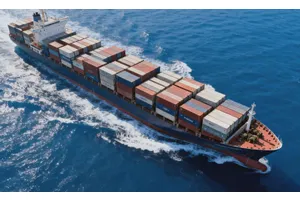
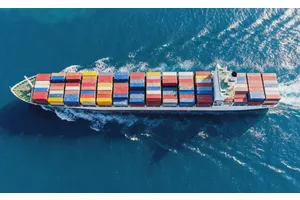
Shipping goods from China to a landlocked Central European country presents unique logistical challenges that coastal destinations simply don't face. The Czech Republic — with $22.74 billion in bilateral trade with China in 2025 — is one of Central Europe's most dynamic import markets, receiving over $40 billion in Chinese goods annually (including transshipments via EU ports). From electrical machinery and electronics (accounting for over 50% of imports) to industrial equipment, vehicles, and consumer goods, Czech businesses depend on reliable, cost-efficient sea freight to keep their supply chains running.
But here's the catch: the Czech Republic has no seaport. Every container must first arrive at a European gateway port — typically Hamburg, Koper, or Rotterdam — then travel hundreds of kilometers inland by rail or truck. This two-leg journey makes understanding the full sea shipping cost from China to Czech Republic far more complex than a simple port-to-port quote. In this comprehensive 2026 guide, we break down every cost component, compare FCL vs. LCL strategies, map out optimal routes, and share proven tactics to reduce your total landed cost. At DTFU Logistics, we've managed thousands of China–Czech Republic shipments, and we're sharing everything we've learned.
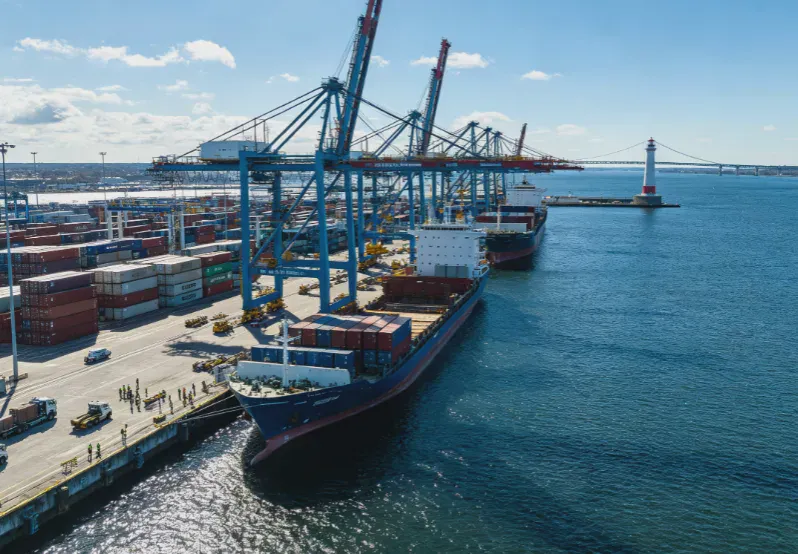
Factors Influencing Sea Shipping Cost from China to Czech Republic
Main Cost Components: Freight Charges, Surcharges, and Fees
When planning sea shipping from China to the Czech Republic, understanding the breakdown of costs is essential for accurate budgeting and effective supply chain management. The primary components include:
-
Ocean Freight: The base rate set by the carrier for transporting containers from the Chinese port of origin to the European gateway port (typically Hamburg, Bremerhaven, Rotterdam, or Koper). Rates fluctuate based on market demand, fuel prices, vessel capacity, and route popularity. As of early 2026, Asia–North Europe spot rates have softened to approximately $1,800–$2,500 per TEU, down significantly from the 2024 highs, driven by vessel oversupply and moderating demand.
-
Surcharges: Carriers apply various surcharges that can add 15–25% to the base freight:
- BAF (Bunker Adjustment Factor): Linked to fuel costs.
- CAF (Currency Adjustment Factor): Covers exchange rate fluctuations between USD, EUR, and CNY.
- PSS (Peak Season Surcharge): Imposed during high-demand periods (pre-Chinese New Year, Golden Week, Q3 holiday season).
- ISPS (International Ship and Port Facility Security) Fee.
- GRI (General Rate Increase): Periodic carrier-imposed rate hikes.
-
Port and Terminal Handling Charges (THC): Charged at both the Chinese origin port and the European gateway port for loading, unloading, and terminal operations.
-
Documentation Fees: Covering the preparation of the Bill of Lading, customs paperwork, and certificate processing.
-
Inland Delivery & On-Carriage: Truck or rail transport from the European gateway port to the final destination in the Czech Republic (e.g., Prague, Brno, Ostrava). This leg typically adds $600–$1,200 depending on distance and mode.
-
Cargo Insurance: Strongly recommended; typically 0.15–0.3% of the cargo's declared value.
-
Customs Clearance Fees: Broker fees for import clearance at the Czech border, plus any inspection or storage charges.
Table 1: Example Cost Breakdown (Shanghai to Prague, 2025–2026 Estimates)
| Cost Component | FCL 20' Container | LCL (per CBM) |
|---|---|---|
| Ocean Freight | $1,200 – $1,800 | $55 – $90 |
| Surcharges (BAF, CAF, PSS, ISPS) | $200 – $350 | $20 – $35 |
| Port Handling (China + EU) | $280 – $380 | $30 – $45 |
| Documentation | $50 – $100 | $10 – $20 |
| Inland Delivery (EU Gateway → CZ) | $600 – $1,200 | $60 – $120 |
| Insurance (optional) | $25 – $50 | $2 – $5 |
| Customs Clearance | $100 – $200 | $15 – $30 |
Note: Prices are indicative and subject to market fluctuations. Asia–Europe freight rates declined ~50% from 2024 to 2025 and have remained under pressure in 2026 due to fleet capacity growth outpacing demand. For a personalized quote, contact DTFU Logistics. For comparison with a neighboring market, see our analysis of shipping costs from China to Germany, which shares similar European gateway port dynamics.
Impact of Cargo Type, Volume, and Weight on Shipping Price
The nature of your cargo greatly influences the total shipping cost:
-
Cargo Type: Hazardous, temperature-sensitive, or oversized cargo may require specialized containers (reefer, open-top, flat-rack), special handling, or additional certifications — all incurring extra costs.
-
Volume and Weight:
- FCL (Full Container Load): Fixed rate per container (20FT, 40FT, 40HQ, 45HQ). The closer you fill a container to its capacity, the lower the cost per unit.
- LCL (Less than Container Load): Priced by the greater of gross weight (per 1,000 kg) or volumetric weight (per CBM). Small shipments benefit from LCL, but surcharges and handling fees add up quickly.
Key Tip: Consult with your freight forwarder to optimize packing and consolidation. As a rule of thumb, shipments above 15 CBM are typically more economical as FCL; below that, LCL usually makes more sense.
Seasonal Trends and Market Fluctuations Affecting Rates
Sea shipping rates between China and the Czech Republic are subject to both seasonal and market-driven changes:
-
Peak Seasons:
- Pre-Chinese New Year (January–February): Factories close, creating a rush in shipments beforehand that pushes up rates by 20–40%.
- Golden Week (early October): Similar demand surges.
- Q3–Q4 (August–November): European retailers stock up for the holiday season, increasing both rates and transit times.
-
Market Volatility:
- Red Sea / Suez Canal disruptions continue to force vessels around the Cape of Good Hope, absorbing an estimated 12–15% of effective Asia–Europe capacity and keeping rates above pre-crisis levels despite fleet oversupply.
- Vessel oversupply: Global container fleet capacity grew ~5% in 2025 and is projected to grow another ~5% in 2026, while WTO forecasts merchandise trade growth at just ~0.5% — putting sustained downward pressure on rates.
- EU regulatory changes: The EU's Carbon Trading System (ETS) extension to shipping and the new €3 flat customs duty on all Asian parcels (effective July 2026) are adding incremental costs to the supply chain.
For additional market context, our analysis of sea shipping costs from China to France covers EU-wide shipping trends in detail.
FCL vs LCL: Which Is Better for Your Shipment?
When arranging sea shipping from China to the Czech Republic, choosing between Full Container Load (FCL) and Less than Container Load (LCL) is one of the most consequential decisions you'll make. Each method offers distinct advantages depending on your shipment's size, urgency, and budget. Understanding the differences upfront prevents costly mistakes down the line.
Cost Breakdown: FCL vs LCL Shipping
| Shipping Mode | Typical Users | Cost Structure | Ideal Shipment Size | Transit Time | Cost Per Unit |
|---|---|---|---|---|---|
| FCL | Large-volume shippers | Flat rate per container | Over 15 CBM | Faster (28–35 days) | Lower (for large volumes) |
| LCL | Small/Medium shipments | Charged per CBM or per ton | Less than 15 CBM | Slightly longer (32–40 days) | Higher (per CBM basis) |
Key Points:
- FCL (Full Container Load) means your goods occupy an entire container. This is more economical for shipments above 15 CBM or when cargo integrity and speed are priorities. You avoid delays at consolidation and deconsolidation depots.
- LCL (Less than Container Load) allows you to share container space with other consignees, paying only for the volume your cargo occupies. While flexible for smaller loads, it involves higher per-unit costs and longer transit due to consolidation and deconsolidation processes.
How to Choose the Optimal Container Type for Your Goods
Selecting the right container type directly impacts shipping cost, cargo safety, and delivery timelines. Key factors include cargo volume, weight, value, and any special handling requirements.
| Container Size | Capacity (CBM) | Best For |
|---|---|---|
| 20FT | 28 | Heavy or dense cargo, up to 28 CBM |
| 40FT | 56 | Bulky, lightweight goods, up to 56 CBM |
| 40HQ | 68 | Larger volumes, up to 68 CBM — ideal for eCommerce |
| 45HQ | 78 | Maximum volume, oversized or high-volume goods |
Tips for Choosing:
- For fragile or high-value goods, FCL is generally safer, reducing the risk of damage, loss, or contamination from other cargo.
- If your total cargo is under 15 CBM, LCL is typically more cost-effective.
- Always factor in packing materials and palletization when calculating total volume — these can add 5–10% to your cargo's footprint.
- For shipments in the 12–18 CBM range, ask your forwarder to run the numbers on both FCL and LCL — the crossover point varies with market conditions.
Expert Insight: At DTFU Logistics, we provide comprehensive guidance on container selection and offer customized consolidation solutions for mid-sized shipments, helping you maximize savings while maintaining flexibility.
Step-by-Step Guide to Calculating Sea Shipping Costs
Understanding the full cost of sea shipping from China to the Czech Republic helps you manage your budget and avoid expensive surprises. Here's a structured approach.
For similar cost calculation methods applied to neighboring routes, see our guides on shipping from China to Austria and shipping costs from China to Germany.
Requesting and Comparing Freight Quotes
-
Gather Shipment Details: Prepare accurate information on cargo type, dimensions, weight, origin port (e.g., Shanghai, Ningbo, Shenzhen), and final destination in the Czech Republic (Prague, Brno, Ostrava, etc.).
-
Contact Multiple Freight Forwarders: Reach out to reputable providers like DTFU Logistics for tailored quotes. We recommend comparing at least 2–3 forwarders — but ensure you're comparing apples to apples on service scope.
-
Understand Quote Components: Typical quotes include:
- Freight charge (base ocean freight)
- Surcharges (BAF, CAF, GRI, PSS, ISPS)
- Origin and destination fees (THC, documentation, customs clearance)
- Inland delivery (truck/rail from gateway port to Czech destination)
- Optional services (insurance, warehousing, door-to-door)
| Key Information to Compare | Why It Matters |
|---|---|
| Total quoted price | Assess overall cost, including surcharges |
| Transit time | Impacts inventory planning |
| Included vs. excluded services | Prevents hidden charges |
| Carrier and forwarder reliability | Ensures timely, safe delivery |
Estimating Total Expenses: Freight, Delivery, Insurance, Customs Duties
A comprehensive shipping budget should account for all potential costs:
| Cost Element | Explanation |
|---|---|
| Ocean Freight | Main cost for transporting the container or consolidated goods by sea |
| Origin Charges | Handling, loading, documentation at the Chinese port |
| Destination Charges | Unloading, handling, documentation at the European gateway port |
| Inland Delivery | Rail or truck transport from gateway port (e.g., Hamburg, Koper) to final Czech destination |
| Cargo Insurance | Optional but recommended; typically 0.15–0.3% of declared cargo value |
| Customs Duties & VAT | Import duties (0–17% depending on HS code) plus 21% Czech VAT on CIF value + duty |
| Other Fees | Warehousing, storage, demurrage, detention, and inspection fees (if applicable) |
Example Calculation (Illustrative, 2026):
Shipping 10 CBM of general cargo from Shanghai to Prague via LCL:
- Ocean Freight (LCL): $65/CBM × 10 = $650
- Origin Charges: $130
- Destination Charges (Hamburg): $170
- Inland Delivery (Hamburg → Prague): $380
- Insurance (0.2% of $30,000 cargo value): $60
- Customs Duty (est. 4%): $1,200
- VAT (21% on CIF + duty): consult your tax advisor
Total Estimated Cost (excl. duties & VAT): ~$1,390
Note: Actual rates fluctuate based on market conditions, season, and cargo specifics. DTFU Logistics provides transparent, up-to-date quotations for every shipment.
Popular Shipping Routes and Transit Times
The Landlocked Challenge: Gateway Ports to the Czech Republic
Since the Czech Republic has no direct sea access, every ocean shipment must pass through a European gateway port before continuing inland. This two-leg structure is the defining feature of this trade lane — and understanding your gateway options is essential to optimizing both cost and transit time.
Sea freight shipments from China typically depart from these major export ports:
- Shanghai — busiest port in the world, most sailings to Northern Europe
- Shenzhen — best for South China manufacturing hubs (Pearl River Delta)
- Ningbo — strong connections to Central and Eastern China suppliers
- Qingdao — serves North China industrial regions
- Xiamen and Guangzhou — additional options for southern and southeastern origins
The most common European gateway ports for Czech-bound shipments are:
- Hamburg (Germany) — largest European rail hub for Central/Eastern Europe; 28–33 days sea transit from China
- Koper (Slovenia) — fastest sea route (24–28 days), excellent rail links to Brno and eastern Czech Republic
- Rotterdam (Netherlands) — Europe's largest port; extensive barge/rail connections
- Bremerhaven (Germany) — strong alternative to Hamburg for Northern Germany discharge
- Gdansk (Poland) — growing Baltic gateway, shorter inland distance to Ostrava region
Table 2: Typical Shipping Route Examples
| Origin Port (China) | Gateway Port (Europe) | Final Destination | Inland Mode | Typical Route Description |
|---|---|---|---|---|
| Shanghai | Hamburg (Germany) | Prague | Rail/Truck | Shanghai → Hamburg (sea) → Prague (land) |
| Shenzhen | Koper (Slovenia) | Brno | Rail/Truck | Shenzhen → Koper (sea) → Brno (land) |
| Ningbo | Rotterdam (Netherlands) | Ostrava | Rail/Truck | Ningbo → Rotterdam (sea) → Ostrava (land) |
| Qingdao | Gdansk (Poland) | Prague | Rail/Truck | Qingdao → Gdansk (sea) → Prague (land) |
Selecting the optimal route depends on transit time, total cost, port congestion, and customs efficiency. DTFU Logistics analyzes your origin city, cargo type, and destination to recommend the best gateway port. For those also shipping to neighboring countries, our shipping from China to Austria guide covers similar inland logistics considerations.
Transit Time Comparison: FCL vs LCL Services
Transit times vary based on routing, service type, and carrier schedules. FCL shipments are generally faster and more predictable, while LCL involves additional consolidation and deconsolidation steps.
Table 3: Average Transit Times (China to Czech Republic, Door-to-Door)
| Route | FCL (Full Container Load) | LCL (Less than Container Load) |
|---|---|---|
| Shanghai → Hamburg → Prague | 30–38 days | 35–43 days |
| Shenzhen → Koper → Brno | 28–35 days | 33–42 days |
| Ningbo → Rotterdam → Ostrava | 32–40 days | 37–47 days |
Notes:
- FCL avoids delays at consolidation and deconsolidation depots, making it the preferred choice for time-sensitive shipments.
- LCL transit includes an additional 3–7 days for cargo consolidation in China and deconsolidation at the European gateway.
- The Koper route typically saves 5–7 days of sea transit compared to Hamburg for shipments from Southern China.
- Customs clearance, port congestion, and seasonal peaks can all extend these estimates by 3–10 days.
For more transit time data in the region, our analysis of shipping time from China to Germany provides useful benchmarks, since the German and Czech routes share the same European gateway ports.
Customs Clearance and Import Regulations in the Czech Republic
Essential Shipping Documents and Compliance Requirements
When shipping goods from China to the Czech Republic by sea, proper documentation and compliance are critical for smooth customs clearance. The following documents are mandatory:
| Document Name | Description | Issued By |
|---|---|---|
| Bill of Lading (B/L) | Contract of carriage and proof of cargo receipt. Required for both FCL and LCL shipments. | Carrier or Freight Forwarder |
| Commercial Invoice | Transaction details including price, Incoterms, HS code, seller/buyer information. Used for customs valuation. | Shipper |
| Packing List | Cargo packaging details, dimensions, weight per package. Assists inspection and verification. | Shipper |
| Certificate of Origin | Proves the origin of goods; required for preferential duty rates under applicable trade agreements. | Chamber of Commerce |
| Import Declaration | Electronic declaration submitted to Celní správa ČR (Czech Customs Administration). Mandatory for all commercial imports. | Importer / Customs Broker |
| Insurance Certificate | Proof of cargo insurance coverage during transit. Strongly recommended. | Insurance Provider |
Compliance Requirements:
- All documentation must be accurate, consistent, and match the physical goods shipped. Discrepancies are the #1 cause of customs delays.
- The HS code must correctly describe the cargo for accurate duty assessment.
- Importers must be registered with the Czech customs authority and hold a valid EORI number (Economic Operators Registration and Identification).
- Special goods — food, chemicals, electronics, medical devices — may require additional permits or certificates (health certificates, CE marking, REACH compliance, etc.).
Tips for Smooth Customs Clearance and Avoiding Delays
- Ensure Accurate Documentation Double-check every document for consistency. Mismatches between invoices, packing lists, and HS codes are the single most common cause of clearance delays.
- Use a Reliable Freight Forwarder Partnering with an experienced company like DTFU Logistics gives you access to on-the-ground expertise in both Chinese export and Czech import procedures — dramatically reducing costly mistakes.
- Pre-clearance Preparation Submit digital copies of your documents to your customs broker before the vessel arrives. For urgent shipments, inquire about pre-arrival customs clearance to begin processing while the container is still at sea.
- Stay Updated on Regulations Customs regulations evolve constantly. As of mid-2026, a major EU change is the removal of the €150 duty-free de minimis threshold (effective July 1, 2026), replaced by a flat €3 customs duty on all parcels from Asia. Verify the latest requirements before each shipment.
- Tariff and Tax Awareness Understand applicable import duties (typically 0–17% depending on HS code), VAT (21% standard rate in the Czech Republic), and any anti-dumping duties for specific Chinese goods (e.g., bicycles, steel products, solar panels). Factor these into your landed cost calculations upfront.
- Prepare for Inspections Random or risk-based inspections are a reality. Proper labeling, transparent documentation, and compliant packaging significantly reduce inspection times.
- Utilize Cargo Tracking Modern freight forwarders offer real-time cargo tracking, giving you visibility into your shipment's location and enabling proactive issue resolution.
How to Reduce Sea Shipping Costs from China to Czech Republic
Negotiating with Freight Forwarders for Best Rates
Securing competitive shipping rates is essential for optimizing your supply chain. Here's how businesses can negotiate effectively:
- Request Multiple Quotes Gather quotes from several providers, including established companies like DTFU Logistics. Compare total landed cost — not just the headline freight rate — including surcharges, inland delivery, and customs brokerage.
- Leverage Long-Term Partnerships Committing to regular shipment volumes often unlocks volume-based discounts, priority space allocation during peak seasons, and better contract terms. A stable forwarder relationship is a strategic asset.
- Be Flexible with Shipping Schedules Off-peak sailings (avoiding pre-CNY, Golden Week, and Q3 holiday rush) often secure significantly lower rates due to reduced demand.
- Optimize for FCL When Practical Shipping full containers is generally more cost-effective per CBM than LCL. If your volume is borderline (12–18 CBM), consolidating multiple orders into one FCL shipment can yield substantial savings.
- Bundle Services Providers like DTFU Logistics offer integrated solutions (sea freight + inland delivery + customs clearance + cargo insurance) at more competitive rates than sourcing each service separately.
For a cross-regional cost comparison, see our overview of sea shipping from China to Austria.
Packing, Consolidation, and Other Cost-Saving Strategies
Reducing sea shipping costs goes beyond rate negotiation. Strategic planning in packing and cargo management yields substantial savings:
- Optimize Packaging Use space-efficient packaging that minimizes dead space inside containers. Efficient container utilization directly lowers your cost per unit shipped. Refer to the container capacity table in the FCL vs. LCL section above for planning guidance.
- Cargo Consolidation For smaller shipments, consolidate cargo with other consignments (LCL). Partner with forwarders like DTFU Logistics that operate regular consolidation services from major Chinese ports to European gateways serving the Czech Republic.
- Minimize Unnecessary Surcharges Avoid extra fees by packing within standard dimensions, clearly labeling any hazardous or special goods, and avoiding last-minute bookings that trigger premium charges.
- Select the Right Container Type Choose container types (standard, high cube, open-top, flat-rack) based on the nature and volume of your goods. An experienced forwarder can advise on the most cost-effective configuration.
- Plan Inland Delivery Holistically Door-to-door service — including last-mile road or rail freight within the Czech Republic — often provides bundled savings compared to arranging each transport leg independently.
Cost Snapshot: FCL vs. LCL (2025–2026 Reference)
| Route | Container Type | Mode | Typical Transit | Estimated Cost (USD, 2025–2026) |
|---|---|---|---|---|
| Shanghai → Prague via Hamburg | 20FT | FCL | 30–38 days | $2,200 – $2,800 |
| Shanghai → Prague via Hamburg | 40FT/40HQ | FCL | 30–38 days | $3,800 – $5,200 |
| Shenzhen → Prague via Hamburg | Shared | LCL | 35–43 days | $55 – $80 / CBM |
Rates are indicative and subject to market fluctuations. For an accurate quote, contact DTFU Logistics.
Choosing a Reliable Freight Forwarder for China–Czech Republic Sea Shipping
Selecting a trusted freight forwarder is critical to ensuring smooth, cost-effective, and timely delivery from China to the Czech Republic. With many providers in the market, understanding what distinguishes a reliable partner will save you from costly missteps.
For comparison with other regional logistics partners, see our guide on freight forwarders from China to Germany.
Key Criteria for Selecting a Freight Forwarder
| Evaluation Criteria | Why It Matters | DTFU Logistics Strengths |
|---|---|---|
| Experience & Track Record | Extensive operational history ensures problem-solving capability | 10+ years in global sea freight, deep China–EU expertise |
| Service Portfolio | Comprehensive solutions streamline logistics | Sea Freight, Air Freight, Road/Rail, Amazon FBA, Consolidation, OOG/Breakbulk, Door-to-Door, Insurance, Warehousing, Customs |
| Network & Partnerships | Direct relationships with carriers and in-country agents | Strong partnerships across Chinese ports and European hubs — Hamburg, Koper, Rotterdam, and Prague |
| Regulatory Compliance & Customs Expertise | Minimizes risk of delays and penalties | One-stop customs clearance; local compliance specialists for both China export and Czech import |
| Transparent Pricing | Avoids hidden fees; enables accurate budgeting | Detailed, upfront all-in quotations with full cost breakdown |
| Real-time Tracking & Communication | Keeps shippers informed; enables proactive planning | Online cargo tracking platform; multilingual customer support |
| Insurance & Risk Management | Protects cargo value during transit | Tailored cargo insurance options; dedicated claims support |
| Customer Reviews & References | Provides social proof and confidence | Positive client testimonials; strong repeat-business rate |
Red Flags to Avoid
- Unclear service scope or hidden charges buried in fine print
- Lack of necessary certifications or poor knowledge of Czech import regulations
- No local presence or agent partnerships in the destination country
- Limited communication or consistently delayed response times
- Inability to provide recent references for China–Czech Republic shipments
Why Choose DTFU Logistics?
DTFU Logistics — a FIATA and IATA dual-certified freight forwarder founded in 2014 — stands out as a professional, cost-effective, one-stop international logistics partner for global traders. Our dedicated team manages shipments end-to-end, including the complex multi-modal routing required for landlocked destinations like the Czech Republic. Whether shipping FCL, LCL, or specialized cargo from Shanghai, Shenzhen, Ningbo, or any major Chinese port, our solutions are built for reliability, transparency, and compliance.
Our company offers:
- Advanced cargo consolidation to maximize efficiency and reduce costs for LCL shippers.
- Door-to-door delivery options, including last-mile transport to any city within the Czech Republic.
- Expert customs clearance support at both origin (China export) and destination (Czech import).
- Cargo insurance solutions and proactive risk management consulting.
- Dedicated account managers providing real-time shipment updates and rapid problem resolution.
FAQs
1. What is the average sea shipping cost from China to Czech Republic?
Costs vary based on cargo size (FCL vs. LCL), weight, route, and seasonality. As of 2025–2026, typical ranges are:
- 20FT Container (28 CBM): $2,200 – $2,800 all-in
- 40FT Container (56 CBM): $3,800 – $5,200 all-in
- LCL (per CBM): $55 – $80 (including ocean freight + destination charges)
Rates fluctuate monthly. Contact DTFU Logistics for a real-time quotation.
2. How long does sea shipping take from China to the Czech Republic?
| Route | FCL (Door-to-Door) | LCL (Door-to-Door) |
|---|---|---|
| Shanghai → Hamburg → Prague | 30–38 days | 35–43 days |
| Ningbo → Koper → Prague | 28–35 days | 33–42 days |
| Shenzhen → Hamburg → Prague | 30–38 days | 35–43 days |
The Koper (Slovenia) route typically saves 5–7 days of sea transit compared to Northern European gateways. LCL consolidation adds 3–7 days for cargo handling. For deeper transit time comparisons, see our analysis of shipping time from China to Germany.
3. Can I ship personal effects or small parcels?
Yes. DTFU Logistics handles both commercial cargo and personal effects shipments, including LCL for small volumes, with full documentation support.
4. What documents are required for sea shipping to the Czech Republic?
- Bill of Lading
- Commercial Invoice
- Packing List
- Certificate of Origin (if required for preferential duty)
- Import Declaration (submitted to Czech Customs)
- EORI number (importer registration)
Our team guides you through every document to ensure smooth clearance.
5. How can I reduce my shipping costs?
- Consolidate cargo or use shared containers (LCL) for smaller shipments
- Plan shipments outside peak seasons (pre-CNY, Golden Week, Q3 holiday rush)
- Negotiate volume-based rates for recurring shipments
- Optimize packaging to maximize container space utilization
- Compare total landed cost — not just the freight rate — across multiple forwarders
For the most current rates, transit times, and regulatory requirements for your specific shipment, contact DTFU Logistics for a personalized consultation.