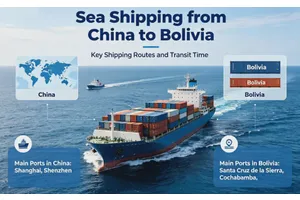
Shipping cost from China to Bolivia is the first number every importer asks for — and the number most quotes get wrong. Two forwarders can label the same route "China to Bolivia," one at $3,400 and one at $7,600. Neither is lying. They are quoting different legs of a journey that crosses three countries before the cargo reaches your warehouse.
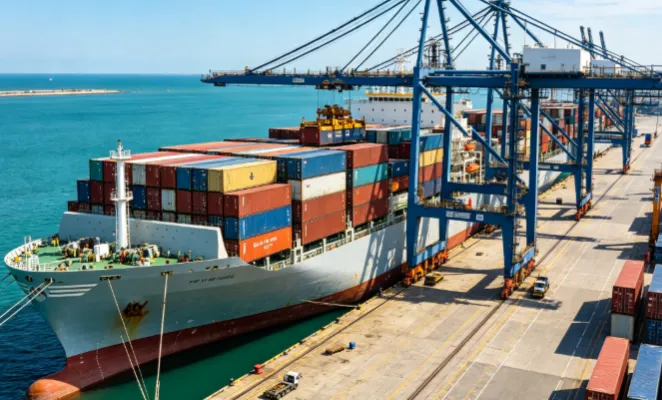
This guide breaks the 2026 lane into its real parts: the ocean bill, the Andean bill and the Bolivian tax bill. You get current FCL, LCL, air and DDP rates, four gateway corridors priced side by side, cost by destination city, and the transit paperwork — MIC/DTA, ASP-B, original freighted B/L — that releases cargo from Arica. Bolivia has no seaport, so almost every dollar you can still negotiate sits inland.
How Much Does It Cost to Ship from China to Bolivia in 2026?
| Shipping mode | 2026 cost range | What the number covers | Transit time | Best for |
|---|---|---|---|---|
| LCL sea freight | $120–$180 per CBM | Base ocean freight plus terminal charges at both ends | 40–55 days | Under ~13 CBM, trial orders |
| FCL 20ft (20GP) | $2,500–$3,800 | Port-to-port to the transit port, charges at both ends | 35–45 days | 15–28 CBM or heavy cargo |
| FCL 40ft (40GP / 40HQ) | $3,500–$4,900 | Same scope as 20ft | 35–45 days | 28–58 CBM, regular import programs |
| Air freight | $7.00–$10.00 per kg (over 100 kg) | Airport-to-airport on chargeable weight, LPB or VVI | 3–7 days | Urgent, high-value goods |
| Express courier | $12–$18 per kg | Door-to-door; Bolivian duty and IVA usually not included | 3–6 days | Samples, documents, e-commerce parcels |
| DDP door-to-door | Sea from ~$2.5 per kg, air from ~$8.5 per kg | Everything, including GA, IVA and delivery | 40–58 days by sea | First-time importers, e-commerce sellers |
Rates reflect September 2026, port-to-port to the transit port unless stated. Quote validity on this lane is typically two to three weeks.
The two freight bills: why a landlocked country costs more than the ocean rate
Bolivia is the only major South American market where the freight bill is split across two countries.
Freight Bill #1 is what forwarders quote you: ocean freight from China to a Pacific port in Chile or Peru. Freight Bill #2 begins where the first stops — transit-port THC, ASP-B handling, duty-free storage, border fees, Andean trucking and the Bolivian broker. On a 20ft box that second leg runs $1,900–$3,400, or 30–45% of total freight cost.
| Layer | What it covers | Typical 20GP range | Who charges it |
|---|---|---|---|
| Freight Bill #1 — China to the transit port | Base ocean freight, BAF/CAF/PSS, origin THC, export documentation | $2,500–$3,800 | Carrier and origin terminal |
| Freight Bill #2 — transit port to your door | Transit-port THC, ASP-B fees, border crossing, Andean trucking, almacén franco storage, Bolivian broker fee | $1,900–$3,400 | Chilean or Peruvian terminals, ASP-B, truckers, Bolivian broker |
| Bolivian taxes — on top of both | GA, IVA, verificación (1% of FOB), ICE | 20–35% of CIF | Aduana Nacional de Bolivia |
A port-to-port quote is not a delivered cost. Importers who treat it as one under-budget by 40–60% on their first shipment.
Our industry insight — why two quotes for the same route differ by 2x. In 2026, published 40ft rates on this lane ranged from $3,100 to $7,800, and LCL from $80 to $300 per CBM. Almost none of that spread is price competition. It is scope: one number stops at Arica, the other reaches a La Paz warehouse. Before you compare two quotes, force them onto one scope: Incoterm, named delivery point, which surcharges are inside, whether transit-port and Bolivian charges are separate, and how long the rate is valid.
Four things drive that gap — delivery point, surcharge package, corridor and tax treatment — and only one is negotiable. The base rate rarely is: Red Sea rerouting and the September–November peak can still move it 10–20% in a month, so price off a live SCFI or Drewry WCI reading, not a published table.
How long does shipping from China to Bolivia take? Schedule versus reality
Carrier transit ends at the transit port; delivery ends at your door. Published shipping time from China to Chile stops at the port, and that difference is the part every schedule hides.
| Route | Carrier transit | Realistic door to door |
|---|---|---|
| Shenzhen → La Paz via Arica | 35–42 days | 45–58 days |
| Shanghai / Ningbo → Santa Cruz via Iquique | 40–50 days | 52–65 days |
| Ningbo → Cochabamba via Matarani | 38–45 days | 50–62 days |
| Guangzhou → Santa Cruz (VVI) by air | 3–7 days | 7–12 days |
Add 3–5 days for transit-port clearance and ASP-B release, 1–3 days at the border and 2–5 days of inland trucking.
Chungará–Tambo Quemado, the main Arica–La Paz crossing, sits at 4,660 meters. Between June and August, snow can close it for 2–4 days at a time.
20ft and 40ft Container Shipping Cost from China to Bolivia (FCL)
For sea shipping from China to Bolivia, full container load is the default above 13–15 CBM or for dense cargo. It removes the consolidation handling that damages and delays LCL cargo, and spares you the double de-stuffing at the transit port.
| Origin port | Transit port | 20GP | 40GP / 40HQ | Ocean transit |
|---|---|---|---|---|
| Shenzhen / Yantian | Arica | $2,600–$3,500 | $3,600–$4,600 | 35–42 days |
| Shanghai / Ningbo | Arica | $2,500–$3,400 | $3,500–$4,500 | 38–45 days |
| Qingdao | Iquique | $2,700–$3,800 | $3,700–$4,900 | 40–48 days |
| Guangzhou / Nansha | Callao or Ilo | $3,100–$4,200 | $4,200–$5,600 | 40–50 days |
These are port-to-port Freight Bill #1 numbers ending at the transit port; transit-port THC, ASP-B handling, inland trucking, GA, IVA and the broker fee are excluded. A 20ft box quoting $2,800 from Yantian lands in La Paz at $7,000–$9,500 all-in.
Two FCL charges surprise importers here. The container guarantee deposit of $1,000–$2,000 per container covers equipment damage or detention and is refundable once the box returns clean. And the weight ceiling: a practical 21–22 tonnes per 20ft container because of mountain gradients and axle rules, so overweight cargo must be desconsolidated at the border — far costlier than shipping the excess as LCL.
The 40HQ is the workhorse for light consumer goods — about 76 CBM usable against 33 CBM in a 20GP. High cube shipping container cost from China runs 30–40% above that. Dense cargo (ceramics, hardware, machinery) belongs in a 20GP, where you hit the weight ceiling before you run out of space.
LCL Shipping Cost from China to Bolivia per CBM
LCL suits trial orders, mixed SKUs and anything under 13 CBM. The catch is handling: cargo is consolidated in China, de-stuffed at the transit port, then re-loaded for the border.
| Shipment volume | Rate per CBM | Typical all-in | Notes |
|---|---|---|---|
| 1–3 CBM | $180–$260 | $500–$900 | Minimum charges apply |
| 4–8 CBM | $140–$200 | $900–$2,000 | Most common e-commerce volume |
| 9–13 CBM | $120–$170 | $1,700–$3,200 | Approaching FCL break-even |
| 14–16 CBM | $110–$150 | $2,400–$3,800 | Compare against a 20GP |
Confirm in writing whether your per-CBM rate includes origin CFS and THC, documentation, transit-port THC, ASP-B handling and Bolivian almacén franco storage; LCL cargo routinely waits weeks there for consolidated clearance, and those days are billable.
The LCL-to-FCL break-even sits near 14–16 CBM; above it, a 20GP is cheaper per unit of volume and moves faster.
Air Freight Cost from China to Bolivia per kg (and the El Alto Altitude Math)
Air freight into Bolivia is priced per chargeable kilogram — the greater of actual or volumetric weight. Standard air conversion is 1 CBM = 167 kg (÷6,000); express couriers use ÷5,000, inflating billed weight on bulky parcels by around 20%.
| Shipment weight | Rate per kg | Transit | Best for |
|---|---|---|---|
| 45–99 kg | $9.50–$13.00 | 4–8 days | Samples, launch stock |
| 100–299 kg | $7.00–$10.00 | 3–7 days | Urgent retail replenishment |
| 300–499 kg | $6.00–$8.50 | 3–7 days | High-value electronics, spares |
| 500 kg + | $5.00–$7.50 | 3–7 days | Project cargo, launch campaigns |
Bolivian air freight carries a cost driver no other South American lane has: El Alto (LPB) sits at 4,061 meters. Thin air reduces lift, so carriers add a payload penalty of roughly 10–20% versus the same weight into Lima or Santiago — our air shipping from China to Chile guide shows the same rates without the altitude penalty. Santa Cruz (VVI, 373 m) carries no penalty and is often cheaper per kilo, but you then pay inland trucking to the highlands.
Express couriers quote $12–$18 per kg door-to-door but usually exclude Bolivian duty and IVA. Air costs 20–40 times more per tonne than sea: it buys speed, not savings.
The Four Gateway Corridors into Bolivia and What Each One Costs
Bolivia has no seaport, so cargo enters through a neighbour, mostly on shipping from China to Chile through Arica. Four corridors work today, and the one your forwarder picks changes both cost and risk.
| Corridor | Transit port | Border post | Added transit charges | Cost impact vs Arica |
|---|---|---|---|---|
| Chile — Arica | Arica | Chungará–Tambo Quemado (4,660 m) | Chilean THC, ASP-B, 440–450 km to La Paz | Baseline; ~60–70% of Bolivia's ocean cargo |
| Chile — Iquique | Iquique / ZOFRI | Colchane–Pisiga (3,700 m) | Free-zone handling, longer truck run to La Paz and Oruro | +5–12% |
| Peru — Callao / Ilo / Matarani | Callao, Ilo, Matarani | Desaguadero (3,812 m) | Peruvian THC, longer ocean leg, Peru–Bolivia transit bond | +10–20% |
| Brazil — Santos / Paranaguá | Santos, Paranaguá | Puerto Suárez / Corumbá | Brazilian THC, 2,000+ km road or barge to Santa Cruz | +15–30% westbound; competitive for eastern Bolivia |
Arica is the default — shortest inland leg, most sailings, deepest broker expertise — but a single point of dependency. Iquique trades a longer road leg for the ZOFRI free zone, where you can split, re-label or re-consolidate cargo duty-free before it enters Bolivia. Peru works when sailings or rates on shipping from China to Peru are better, at the cost of a third customs territory. Brazil rarely wins on price for La Paz, but sea shipping from China to Brazil can win for Santa Cruz on inland distance alone.
Risk follows the calendar: June–August snow closes Chungará and Colchane; December–March altiplano rains flood roads near Puerto Suárez; September–November peak surcharges hit Arica as Chilean fruit exports compete for terminal space.
Our industry insight — corridor choice is a service decision, not only a price decision. A routing that saves $300 but adds four days of border uncertainty costs more than $300 in stockouts if you sell online. Match the corridor to your inventory model: Arica for speed and La Paz, Iquique when you need ZOFRI flexibility, Brazil when you sell in Santa Cruz.
Bolivia Import Duty, IVA and Customs Clearance in 2026: What You Actually Pay
Freight gets your cargo to the border; Bolivian tax gets it released. Aduana Nacional de Bolivia (ANB) assesses five separate charges, and importers under-budget two of them.
| Charge | Base | Typical rate | Who it hits |
|---|---|---|---|
| GA (import duty) | CIF value | 5%, 10% or 20%; 0% for capital goods and several categories through 31 Dec 2026 | All imports |
| IVA (VAT) | CIF + GA | 13% nominal — effectively 14.94% of CIF | All imports |
| ICE (excise) | Per product schedule | Varies; alcohol, tobacco, vehicles, sugary drinks | Specific goods only |
| IT (transactions tax) | Transaction value | 3% | Both importer and customs broker |
| Verificación | FOB value | 1% | All imports |
The most misquoted figure on this lane is IVA. Bolivia's rate is 13%, but it is levied on CIF plus GA, not CIF alone — 14.3% of CIF on a 10% duty line (13% × 1.10), 15.6% on a 20% line, and roughly 14.94% across mixed cargo. Duty plus IVA on consumer goods lands between 20% and 35% of CIF. Insurance sits inside that CIF base, so shipping container insurance cost for shipments from China is a duty input as much as a risk decision.
Worked example — US$30,000 CIF at 10% GA: GA $3,000 · IVA ($30,000 + $3,000) × 13% = $4,290 · verificación 1% of FOB ≈ $280 · total Bolivian tax ≈ $7,570, before broker fees and storage.
Three clarifications that save money: IT is not IVA — the 3% transactions tax is a separate levy; preferential rates need a certificate of origin, and the often-cited US$3,000 is a documentary threshold, not an exemption; and 0% duty is temporary, running through 31 December 2026 (electronics under Decree 5518; soy zero-duty removed by Decree 5591). The Financial Transactions Tax was repealed in April 2026 by Law 1717.
Clearance is not self-service. A licensed despachante de aduanas must file your declaration with your NIT and Formulario Nº 170. Budget $250–$600 plus 1–3 days (Ley 1990, Ley 843, Ley 2492).
The transit document chain is where first-time importers lose days. Cargo crossing Chile or Peru moves under MIC/DTA, with CRT/CPIC, DPU-B, ASP-B waybills and the final DUI. Two hard rules: Bolivia requires an original, freight-prepaid bill of lading and does not accept a Seaway Bill, and B/L amendments close after 72 hours. Lodge the MIC/DTA with ASP-B 48 hours before vessel arrival or your cargo waits at anchorage.
Readiness checklist: NIT registered · original freighted B/L · invoice stating the Incoterm · packing list · certificate of origin if claiming preference · despachante appointed pre-arrival · funds ready for GA and IVA · a plan for the 365-day duty-free storage window, which bills from the day you clear.
Door to Door Shipping Cost from China to Bolivia (DDP) and Cost by Destination City
Door to door shipping from China to Bolivia is what most first-time importers want: one number, with freight, both bills, duty, IVA and broker fees inside the price.
| Destination city | Sea DDP per kg (1 CBM min.) | Air DDP per kg | Sea door-to-door | Air door-to-door |
|---|---|---|---|---|
| La Paz / El Alto | $2.50–$3.20 | $8.50–$11.00 | 45–58 days | 7–12 days |
| Santa Cruz | $2.40–$3.00 | $7.80–$10.00 | 48–62 days | 7–11 days |
| Cochabamba | $2.60–$3.30 | $8.20–$10.60 | 50–62 days | 8–12 days |
| Oruro | $2.80–$3.60 | $8.80–$11.50 | 52–64 days | 8–13 days |
| Sucre | $2.80–$3.60 | $8.80–$11.50 | 52–64 days | 8–13 days |
| Tarija | $2.90–$3.80 | $9.00–$12.00 | 55–68 days | 9–14 days |
Altitude, road condition and distance from the border drive the spread: La Paz and El Alto sit closest to Arica, the cheapest destinations despite being the highest, while Tarija and Sucre sit at the end of longer routes.
FOB leaves freight and Bolivian taxes with you — cheaper per shipment, more work. EXW puts everything from the factory door on you. DAP covers delivery to a named place but leaves duty and IVA to you. DDP carries the highest headline price and the lowest surprise factor — our DDP vs FOB comparison shows which one fits your volume. For Amazon FBA sellers, DDP plus a file covering NIT, Formulario Nº 170 and Amazon's appointment rules removes the two failure points that strand FBA shipments at the border.
Cheapest Way to Ship from China to Bolivia: 8 Cost Levers
There is no single cheapest mode — only the cheapest for your volume, density and deadline. Pull these eight levers in order.
| Lever | What to do | Typical saving |
|---|---|---|
| Consolidate to 14–16 CBM | Cross the LCL-to-20GP break-even | 15–25% per CBM |
| Fill the box | Ship 40HQ volume in a 40HQ, not two 20GPs | 20–30% |
| Ship port-to-port | Take FOB and appoint your own Bolivian broker | 8–15% |
| Choose the right corridor | Compare Arica against Iquique or Matarani per shipment | 5–20% |
| Time the booking | Avoid September–November peak surcharges | 5–15% |
| Reduce chargeable weight | Cut packaging on air shipments (÷6,000 rule) | 10–30% on air |
| Use free storage deliberately | Consolidate clearance inside the almacén franco window | 3–8% |
| Claim origin preference | Attach a valid certificate of origin where eligible | Duty-dependent |
Lever four is the one importers rarely test. Our door to door shipping from China to Peru guide breaks down the Matarani route end to end, so you can price it against Arica instead of assuming the default corridor wins.
Seven questions that find hidden cost in any quote: Is this Freight Bill #1 or a delivered price? Which surcharges are inside? Is transit-port THC included? Are ASP-B and broker fees separate? Does it include GA and IVA? How long is the rate valid? What is the demurrage free time at the transit port?
Our industry insight — a cheap quote is only cheap if the scope matches. When two China-to-Bolivia quotes differ by more than 30%, do not assume the higher one is overpriced. Put both on one page, line by line, and the cheapest price usually turns out to be the one that stops furthest from your warehouse.
FAQs
How much does it cost to ship a 20ft container from China to Bolivia?
$2,500–$3,800 port-to-port; $6,500–$9,500 delivered to La Paz with duty and IVA paid.
How much is LCL per CBM?
$120–$180 per CBM in 2026; minimum charges make shipments under 1 CBM expensive per unit.
How long does shipping take?
35–45 days of ocean transit, 45–58 days door to door via Arica. Air runs 3–7 days at altitude, 7–12 days door to door.
Which port handles most of Bolivia's imports?
Arica, Chile, handles roughly 60–70% of Bolivia's ocean cargo via Chungará–Tambo Quemado.
Getting a Quote You Can Actually Compare
Before you request rates, prepare five things: Incoterm, named delivery address, cargo volume and weight, HS code, and target delivery window. Then require every forwarder to answer the seven questions above in writing, and name the corridor they are booking.
This is where DTFU Logistics is built for this lane. Since 2014, from Shenzhen, we quote Freight Bill #1 and Freight Bill #2 as separate lines — never one blended number that hides the Andean leg. We are FIATA and IATA certified, hold direct carrier contracts on West Coast South America services, and arrange a licensed Bolivian despachante plus ASP-B pre-clearance before your vessel arrives. Carrier-contracted insurance covers the mountain segment, not just the $1,000–$2,000 container guarantee deposit, and 24/7 support tracks your box at sea, at the border and in La Paz. We never hide the second freight bill.