If you have spent more than ten minutes searching for how much to ship a car from China to Nigeria, you have probably seen numbers ranging anywhere from $900 to $4,500 — and that is before anyone mentions customs duties, certification fees, or the mystery charges that appear at the Lagos port. We get it. You want a real number, not a marketing range.
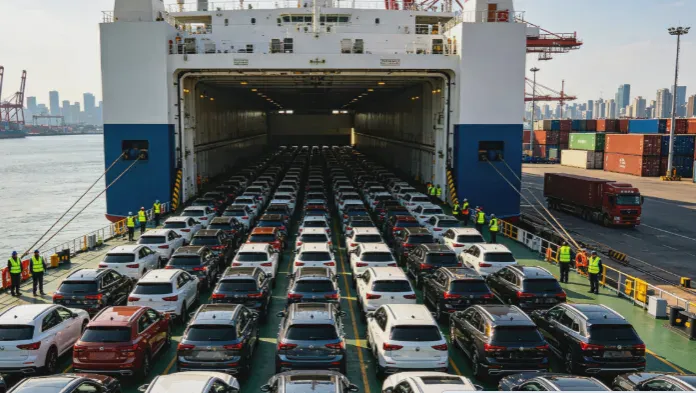
As a professional freight forwarder specializing in Shipping From China to Nigeria, DTFU Logistics has shipped thousands of vehicles from Chinese ports to Nigerian buyers since 2014. In this guide, we are going to show you exactly what we charge, how those numbers compare to the industry average, and — most importantly — where the extra costs hide so you can avoid them. By the time you finish reading, you will know your total landed cost down to the last Naira.
Car Shipping Costs from China to Nigeria at a Glance
Before we dive into the details, here is the number most people are looking for. The table below compares DTFU Logistics' actual July 2026 rates with what the broader freight market is quoting for a standard sedan (think Toyota Corolla or Honda Civic) shipped from a major Chinese port to Lagos.
| Shipping Method | DTFU Logistics Rate | Industry Average Rate | Your Savings |
|---|---|---|---|
| RoRo (Roll-on/Roll-off) | $1,100 – $1,600 | $1,300 – $1,900 | $200 – $400 |
| 20FT Container (1 vehicle) | $2,300 – $3,200 | $2,600 – $3,800 | $300 – $600 |
| 40FT Container (3-4 vehicles) | $3,800 – $5,200 | $4,200 – $6,200 | $400 – $1,000 |
| DDP Door-to-Door | Custom quote | Varies widely | Tailored package |
These are the ocean freight costs only — the money that moves your car across the water. The full landed cost (including Nigerian customs duties, taxes, and port charges) is typically 2x to 3x the freight number, and we break that down in Section 6.
The three biggest variables that shift your shipping price are vehicle size, which ports you use, and your shipping method. For a broader look at ocean freight rates across vehicle types, check our detailed Sea Shipping cost from China to Nigeria page. Let us look at each factor.
5 Key Factors That Determine Your Car Shipping Cost
1. Vehicle Type, Size & Weight
A compact sedan and a full-size SUV do not cost the same to ship. Carriers charge by volume (CBM) on RoRo vessels and by container type for containerized shipping. Here is how vehicle category impacts your rate:
| Vehicle Category | Examples | Rate Impact vs. Standard Sedan |
|---|---|---|
| Compact / Sedan | Toyota Corolla, Honda Civic | Baseline |
| Mid-size SUV | Toyota RAV4, Honda CR-V | +15% – 25% |
| Full-size SUV / 4×4 | Toyota Prado, Land Cruiser | +25% – 40% |
| Pickup Truck | Toyota Hilux, Ford Ranger | +30% – 50% |
| Luxury / High-Value | Mercedes-Benz, Lexus | Container recommended; higher insurance |
A standard 20FT container can fit one sedan comfortably — or two compact cars if arranged carefully. A 40FT container holds three to four sedans. Push beyond that and you risk door dings, scratched bumpers, and a cargo damage claim that costs more than the freight savings.
2. Origin Port & Destination Port Pair
Where your car leaves China matters more than most people realize. Shenzhen and Guangzhou — both in southern China's Pearl River Delta — consistently offer the lowest car freight from Shenzhen to Nigeria rates because they sit at the heart of China's automotive export ecosystem. Northern ports like Tianjin add 200-300 kilometers of inland trucking before the container even hits the water.
| Origin Port (China) | Destination Port (Nigeria) | DTFU RoRo Rate | Transit Time |
|---|---|---|---|
| Shenzhen (Shekou) | Lagos (Tin Can Island) | $1,100 – $1,500 | 35 – 45 days |
| Guangzhou (Nansha) | Lagos (Tin Can Island) | $1,150 – $1,550 | 35 – 45 days |
| Shanghai | Lagos (Apapa) | $1,200 – $1,600 | 35 – 45 days |
| Ningbo | Lagos (Apapa) | $1,200 – $1,600 | 35 – 45 days |
| Tianjin | Lagos (Tin Can Island) | $1,250 – $1,650 | 40 – 50 days |
| Qingdao | Onne | $1,300 – $1,700 | 40 – 50 days |
For most Nigerian importers, Lagos — either Apapa or Tin Can Island — is the obvious destination choice. Tin Can Island handles the majority of vehicle imports and has the most established clearing agent networks. Onne and Port Harcourt can work for buyers in the eastern states, but sailing schedules are less frequent and feeder vessel connections can add a week or more. For detailed transit time estimates by port, refer to our Shipping time from China to Nigeria page.
3. Shipping Season & Fuel Surcharges
Freight rates breathe. They rise during peak demand and settle during quiet months. The peak shipping window runs from September through December — driven by pre-Christmas inventory buildup — plus a spike right after Chinese New Year (typically February) when factories reopen and orders flood in.
During these peaks, expect to pay 10-25% more than the rates listed above. The off-peak sweet spots are February through April and early September through mid-October. Book during these windows and you will almost always lock in a lower rate.
On top of base freight, every carrier applies a Bunker Adjustment Factor (BAF) — a fuel surcharge that fluctuates with global oil prices. This typically adds 5-12% to your base ocean freight and is non-negotiable.
RoRo vs Container Shipping: Which One Costs Less?
This is the question every first-time importer asks, and the honest answer is: it depends on what you are shipping and how many. For container-specific rate breakdowns, see our 20ft and 40ft shipping from China to Nigeria guide.
| Comparison | RoRo (Roll-on/Roll-off) | 20FT Container | 40FT Container |
|---|---|---|---|
| DTFU rate (standard sedan) | $1,100 – $1,600 | $2,300 – $3,200 | $3,800 – $5,200 |
| Vehicles per shipment | Unlimited (bulk) | 1 (or 2 compact) | 3 – 4 sedans |
| Vehicle condition required | Must be drivable | Non-running OK | Non-running OK |
| Personal items inside car | Not allowed | Limited, must declare | Limited, must declare |
| Protection level | Moderate (open deck) | High (sealed container) | High (sealed container) |
| Transit time | 30 – 45 days | 35 – 45 days | 35 – 45 days |
When to choose RoRo — and save $500-$1,200
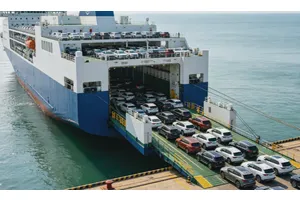
RoRo is the workhorse of global vehicle shipping, and for good reason. Your car is driven directly onto the vessel and secured on an enclosed deck alongside hundreds of other vehicles. It is fast to load, fast to unload, and costs significantly less per unit than container shipping.
Choose RoRo when: - The vehicle starts, drives, steers, and brakes normally. - You are shipping one standard sedan or SUV and budget is your priority. - You do not need to pack spare parts or personal belongings inside the car. - Your destination port (Apapa or Tin Can Island) handles RoRo cargo regularly — which they do.
The trade-off is protection. Your car sits on a vessel deck, not inside a steel box. Salt spray exposure over 35 days is real. We have seen minor surface rust on brake rotors and a few scratches from nearby vehicle movement. For a $6,000 Corolla, that is acceptable. For a $30,000 Lexus, we would not recommend it.
When to choose a container — and why it is worth the premium
Container shipping seals your vehicle inside a 20FT or 40FT steel container. Nobody touches it from the moment it is loaded in China until it is unsealed at Nigerian customs. That is the value proposition: zero handling risk, zero weather exposure, zero theft opportunity.
Choose a container when: - The vehicle is high-value (luxury, classic, or new). - The vehicle is non-operable — salvage, accident repair, mechanical failure. RoRo requires the car to drive on and off the vessel. - You are shipping an electric vehicle. Most RoRo carriers now restrict or refuse EVs due to lithium battery fire regulations. Container shipping with proper DG (Dangerous Goods) documentation is the standard for EVs. The battery must be at 20-50% state of charge and accompanied by a battery inspection report. - You are shipping multiple vehicles to the same buyer. Three sedans in a 40FT container bring your per-unit freight down to roughly $1,000-$1,300 — actually cheaper than individual RoRo.
Why DTFU Logistics Offers Rates 10-20% Below Industry Average
Let us address the obvious question: if the industry average for a RoRo shipment to Lagos is $1,300-$1,900, how can DTFU quote $1,100-$1,600? Are we cutting corners? No. Here is the math behind our pricing.
| Service | DTFU Logistics | Industry Average | You Keep |
|---|---|---|---|
| RoRo (standard sedan) | $1,100 – $1,600 | $1,300 – $1,900 | $200 – $400 |
| 20FT Container | $2,300 – $3,200 | $2,600 – $3,800 | $300 – $600 |
| 40FT Container | $3,800 – $5,200 | $4,200 – $6,200 | $400 – $1,000 |
Five reasons our rates are lower — without compromising service
1. We are based in Shenzhen — 15 kilometers from China's largest vehicle export port.
Shekou Port in Shenzhen is the busiest automotive export hub in southern China. Our warehouse sits 15 km from the terminal. When a car leaves our facility, it reaches the vessel in under an hour. Compe*****s operating from inland cities like Zhengzhou or Chengdu pay $150-$300 in domestic trucking just to reach the coast — and that cost lands on your invoice. We do not have that problem.
2. We sign direct annual contracts with carriers — no middleman markup.
DTFU Logistics holds direct service contracts with MSC, Maersk, COSCO, and CMA CGM — the four largest container shipping lines on the China-West Africa route. Most freight forwarders buy space through secondary agents, who add their own margin. By contracting directly, we eliminate the 5-8% intermediary markup and pass the savings to you.
3. The China-Africa route has been our core business for over a decade.
Since 2014, the China-to-Africa trade lane has been our bread and butter — not a side offering. We move thousands of vehicles on this route annually. That consistent volume gives us preferential rate negotiations with carriers that a generalist forwarder simply cannot match.
4. FIATA and IATA dual certification means fewer operational mistakes.
Mistakes cost money — a misdeclared HS code, an incomplete packing list, a vehicle that arrives without proper VehCAP paperwork. Those errors translate to demurrage fees at the Lagos port, which can run $50-$100 per day. Our FIATA & IATA certified operations team has standardized every step of the export documentation process, and that consistency reduces the costly surprises that other forwarders bake into their base rates.
5. You deal directly with a dedicated account manager — not a call center queue.
No layers of sales agents, no outsourced customer support. From your first inquiry to the moment your car clears Nigerian customs, you communicate with one assigned account manager who knows your shipment history. Flatter structure, lower overhead, better rates for you.
Complete Cost Breakdown: From Chinese Supplier to Your Driveway in Nigeria
This is the section that separates a real cost estimate from a marketing number. Below, we walk through every line item for a real-world example: a 2019 Toyota Corolla 1.8L purchased FOB Shenzhen for $6,000 and shipped via DTFU RoRo to Tin Can Island Port, Lagos.
Real Example: 2019 Toyota Corolla 1.8L — Full Landed Cost
| # | Cost Item | Amount (USD) | Amount (₦ Naira)* | Who Handles It |
|---|---|---|---|---|
| 1 | Vehicle purchase (FOB Shenzhen) | $6,000 | ₦8,400,000 | You / Your supplier |
| 2 | Ocean freight (DTFU RoRo) | $1,300 | ₦1,820,000 | DTFU Logistics |
| 3 | Marine insurance (0.8% of vehicle value) | $48 | ₦67,000 | DTFU arranges |
| 4 | VehCAP inspection + SONCAP certificate | $500 | ₦700,000 | Inspection agency (SGS/Cotecna/CCIC) |
| 5 | Form M + PAAR processing | $350 | ₦490,000 | Your Nigerian bank + Customs |
| 6 | Import duty (40% of CIF) | $2,939 | ₦4,115,000 | Nigeria Customs Service |
| 7 | VAT (5% of CIF + duty) | $404 | ₦566,000 | Nigeria Customs Service |
| 8 | NAC Levy (15% for used vehicles) | $1,102 | ₦1,543,000 | Nigeria Customs Service |
| 9 | Port clearing & handling (Lagos) | $600 | ₦840,000 | Your clearing agent |
| 10 | Inland transport (Lagos → your location) | $200 – $400 | ₦280,000 – ₦560,000 | Local haulage provider |
| Total Landed Cost | $13,443 – $13,643 | ₦18,820,000 – ₦19,100,000 |
* Naira conversions use an approximate rate of 1 USD = ₦1,400. Contact us for real-time Naira equivalents based on the current CBN rate.
A few things worth pointing out in this table:
The ocean freight — the number most people fixate on — is only $1,300 out of a $13,500 total. That is less than 10% of the landed cost. The Nigerian government takes roughly $4,445 in duties and taxes on a $6,000 car. This is why comparing pure shipping quotes without understanding the duty structure leads to budget shocks at the port.
The 2026 duty rate of 40% is actually a significant improvement — it was 70% as recently as 2023. The Nigerian government's April 2026 Fiscal Policy Reform reduced passenger vehicle import duties to stimulate the economy, and that has made importing from China considerably more attractive than it was two years ago. If you are considering shipping larger volumes, our dedicated pages on Cost of shipping 20ft container from china to Nigeria and Cost of shipping 40ft container from china to Nigeria provide granular rate breakdowns by container type.
Cost Estimates for Other Popular Vehicle Types
| Vehicle | FOB Price (Est.) | DTFU Freight | Customs + Taxes | Total Landed Cost (Est.) |
|---|---|---|---|---|
| Toyota Corolla 1.8L (2019) | $6,000 | $1,300 (RoRo) | ~$4,445 | ~$13,500 |
| Toyota RAV4 2.0L (2020) | $12,000 | $1,500 (RoRo) | ~$8,500 | ~$24,000 |
| Toyota Hilux 2.7L (2018) | $10,000 | $2,800 (20FT) | ~$7,200 | ~$22,000 |
| BYD Atto 3 EV (2023) | $18,000 | $2,500 (20FT) | ~$5,500* | ~$27,500 |
*Electric vehicles benefit from significant Nigerian tax exemptions — no NAC Levy, no VAT in many scenarios, and a lower effective import duty rate. This makes EVs one of the most cost-efficient vehicle categories to import from China into Nigeria in 2026.
Nigeria Import Regulations That Impact Your Budget (2026 Update)
You can have the cheapest freight quote on the market, but if your vehicle does not meet Nigeria's 2026 compliance requirements, it will sit at the port accumulating storage charges. Here are the non-negotiable rules.
Hard Compliance Requirements
- Vehicle age limit: 12 years. For 2026, your car must be a 2014 model or newer. Vehicles older than 12 years are outright banned from entry — no exceptions, no waivers.
- VehCAP certification (mandatory since April 2026). The Standards Organisation of Nigeria (SON) and the National Automotive Design and Development Council (NADDC) jointly launched the Vehicle Conformity Assessment Programme. Every imported used vehicle must pass a pre-shipment inspection by an accredited agency — SGS, Cotecna, APT, or CCIC — and obtain a VehCAP Certificate of Conformity before the ship departs China. No VehCAP, no Form M approval, no entry. Budget $150-$250 per vehicle for the inspection.
- Left-hand drive (LHD) only. Right-hand drive vehicles and steering conversions are prohibited.
- Euro 4 emissions standard or above. This aligns with the ECOWAS-wide harmonized standard, which also applies to neighboring markets like Ghana — see our Shipping From China To Ghana page for West African regional logistics coverage.
2026 Customs Duty Structure
| Duty / Tax | Rate | Applies To |
|---|---|---|
| Import Duty | 40% of CIF value | All passenger vehicles |
| VAT | 5% of (CIF + duty) | All passenger vehicles |
| NAC Levy | ~15% | Used vehicles |
| Green Tax Surcharge | Additional | Only vehicles with engine displacement >2,000cc |
The Green Tax Surcharge is often overlooked. If you are importing a 1.8L Corolla, you are exempt. If you are importing a 3.5L V6 SUV or a 4.0L Land Cruiser, that surcharge can add several hundred dollars to your customs bill.
Documentation Checklist & Associated Costs
| Required Document | Issuing Authority | Estimated Cost |
|---|---|---|
| VehCAP Certificate of Conformity | SGS / Cotecna / CCIC / APT | $150 – $250 per vehicle |
| Product Certificate (PC1) | Inspection agency | ~$1,000 (valid 1 year per model) |
| e-Form M | Nigerian commercial bank | $100 – $200 processing |
| PAAR (Pre-Arrival Assessment Report) | Nigeria Customs Service | Included in clearing fees |
| V-REG Certificate | National Vehicle Registry portal | ₦30,000 – ₦100,000 |
| Bill of Lading | Shipping line (via DTFU) | Included in freight |
| Export License | Chinese authorities | Arranged by exporter |
One tip from experience: submit your Form M application before the vessel leaves China. Once the ship is on the water, any documentation delay on the Nigerian side starts eating into the free storage period at the port. We have seen importers lose $300-$500 in demurrage simply because their Form M was filed a week late.
How to Save $500-$1,500 on Car Shipping from China to Nigeria
After handling thousands of China-to-Nigeria vehicle shipments, here are the strategies that consistently deliver real savings — not theoretical ones. For budget-conscious importers, we also have a dedicated guide on the Cheapest shipping from china to Nigeria.
1. Consolidate multiple vehicles in a 40FT container. If you are a dealer importing three or four cars at once, a 40FT container brings your per-unit ocean freight down to $1,000-$1,300. That is cheaper than RoRo for each individual vehicle. Even a private buyer can team up with another importer to split a container.
2. Book during the off-peak window. February through April and early September through mid-October consistently offer rates 15-25% below peak-season pricing. If your timeline is flexible, this is the single easiest way to save.
3. Ship from Shenzhen or Guangzhou, not Tianjin. Southern Chinese ports are closer to the Pearl River Delta manufacturing hub. Shipping from Shenzhen instead of Tianjin saves $100-$300 per vehicle in domestic trucking and typically offers faster sailing schedules to West Africa.
4. Choose RoRo for standard drivable sedans. On a single Corolla or Civic, RoRo saves you $500-$1,200 compared to a dedicated 20FT container. The vehicle type and value should drive this decision — not fear of the unknown.
5. Bundle freight, customs clearance, and delivery into one DDP package. When you piece together a shipping quote from one company, a customs broker from another, and a local hauler from a third, three profit margins stack on top of each other. A single door-to-door DDP service through DTFU eliminates the coordination tax and often ends up 10-15% cheaper overall. Learn more about our comprehensive Door to Door Shipping from China to Nigeria solution.
6. Book 3-4 weeks ahead. Last-minute bookings during peak season routinely carry a 20-30% premium. Forward planning is free.
FAQs
How long does it take to ship a car from China to Nigeria?
Transit time ranges from 25 to 45 days depending on the port pair. Shenzhen to Lagos typically takes 35-40 days. Tianjin to Lagos adds 5-7 days due to the longer sailing distance. Add 3-5 days on each end for port handling and customs clearance, and the total door-to-port timeline is usually 45-55 days.
Can I put personal items inside the car during shipping?
Not with RoRo — personal items inside the vehicle are strictly prohibited by international maritime regulations. With container shipping, a limited quantity of personal belongings may be allowed if declared on the packing list and approved by customs. This must be arranged before loading. Undeclared items found during Nigerian customs inspection will trigger a full container examination, delays, and possible fines.
What documents are required to clear a car at the Nigerian port?
The complete document package includes: Bill of Lading, Commercial Invoice, Packing List, VehCAP Certificate of Conformity, Form M, PAAR, V-REG Certificate, and the Chinese Export License. Your Nigerian clearing agent will handle the customs-facing side, but all documents must originate before the vessel departs China.
Can I ship an electric vehicle from China to Nigeria?
Yes — and it is becoming increasingly popular. EVs must be shipped via container (not RoRo) due to lithium battery safety regulations. The battery must be at 20-50% state of charge, accompanied by a battery test report. The upside: EVs benefit from reduced import duties and VAT exemptions under Nigeria's 2026 green mobility incentives, which can offset the higher container freight cost.
How much is the shipping cost in Naira?
At current rates (approximately ₦1,400 per USD), a RoRo shipment of a standard sedan costs roughly ₦1,540,000 to ₦2,240,000. The total landed cost for a $6,000 Corolla is approximately ₦18,800,000 to ₦19,100,000. Contact DTFU for a Naira-denominated quote at the prevailing CBN exchange rate.
Contact DTFU Logistics today for your free car shipping estimate.