Customer Background
The client is a spare parts distributor based in Cairo, Egypt, with a supply chain sourcing from multiple manufacturers across Guangdong and Zhejiang provinces. They had previously relied on consolidators for LCL shipments but were experiencing inconsistent transit times and frequent cargo mixing errors. As their order volume grew, they needed a dedicated container solution that could consolidate shipments from different suppliers under one controlled shipment.
Cargo Information
| Item | Detail |
|---|---|
| Commodity | Automotive spare parts – engine components, brake system parts, suspension parts, filters, and gaskets |
| Packaging | Mixed – cardboard cartons, wooden crates, and poly-wrapped metal parts |
| Total Volume | 58 CBM |
| Total Weight | 12,800 KGS |
| Container Type | 1 × 40HQ (High Cube) FCL |
| Origin | Nansha Port, Guangzhou, China |
| Destination | Alexandria Port, Egypt |
Why This Shipping Method
The client's previous LCL model meant their cargo was handled multiple times, increasing the risk of damage and delays at transshipment hubs. With a steady monthly volume of ~55–60 CBM, upgrading to a 1×40HQ FCL was the logical step.
Cost advantage was the deciding factor. Contrary to common belief, FCL per-unit cost on this route was notably lower than LCL for volumes above 50 CBM. More importantly, FCL gave the client control over the container — loading could be staggered across supplier deliveries over 3–4 days at the origin warehouse, eliminating the "all-or-nothing" pressure of LCL consolidation cut-offs. Direct loading from Nansha to Alexandria (no transshipment via Jebel Ali or Port Said) also shaved roughly 5–7 days off total transit compared to their previous LCL routing.
Shipping Process
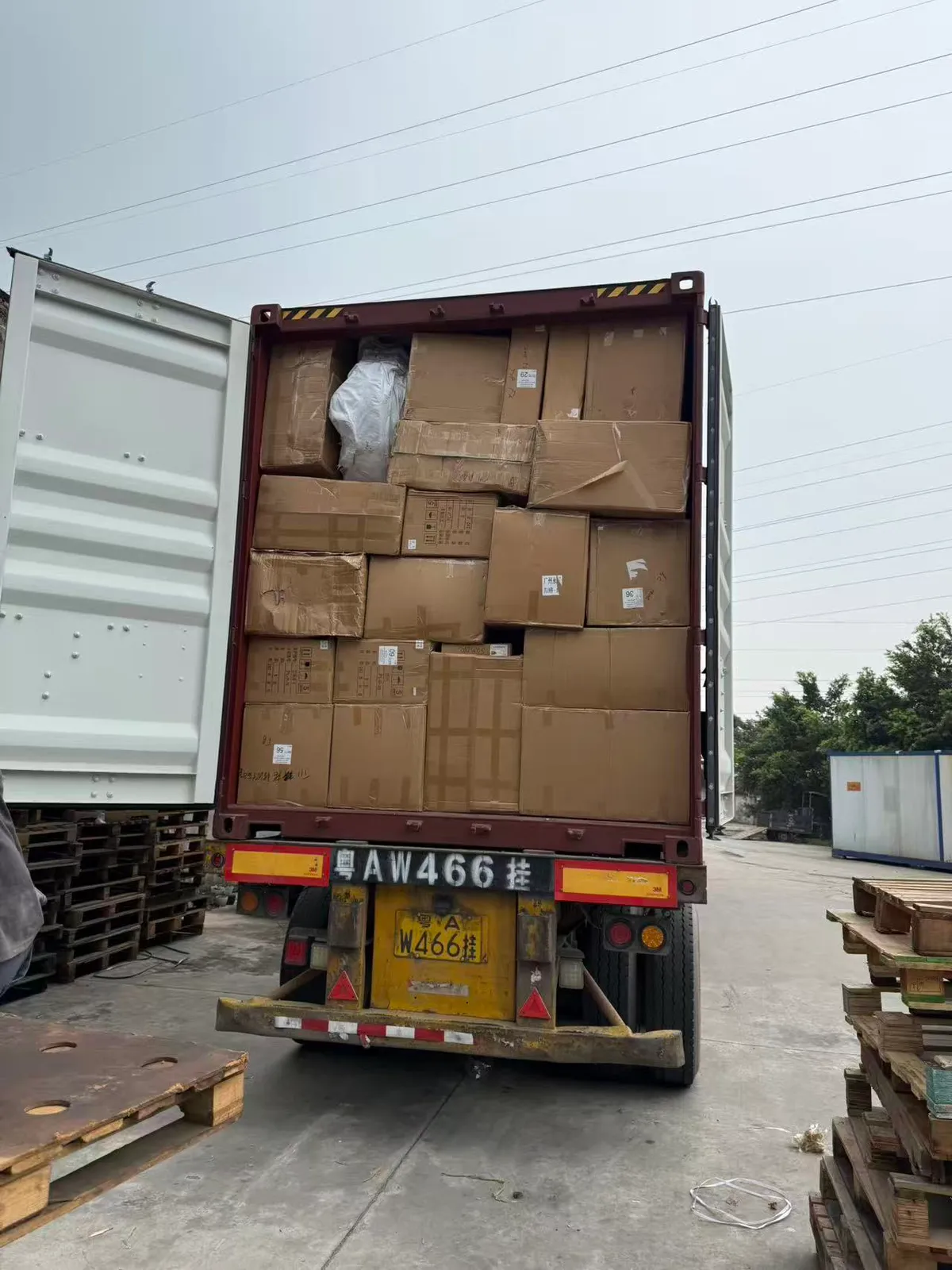
Fig 1: Cargo staged at the DTFU consolidation warehouse in Nansha prior to loading. Different supplier lots were sorted and inspected before being stowed into the 40HQ container.
The process unfolded across four stages:
1. Origin Consolidation (3 days) — Parts from 4 different suppliers arrived at our Nansha warehouse. Each lot was cross-checked against the packing list, and any sub-standard packaging (e.g., thin single-wall cartons for heavy metal parts) was reinforced before loading.
2. VGM & Customs Clearance in China (2 days) — Verified Gross Mass (VGM) was submitted. Export customs declaration was filed electronically. No inspection was flagged, so the container moved to the yard the same day.
3. Nafeza Pre-Registration (critical step) — Egypt's Nafeza single-window system requires all shipping documents to be pre-registered online before vessel arrival. The bill of lading, commercial invoice, packing list, and Certificate of Conformity (COI) were uploaded 5 days before the vessel's ETA to Alexandria. This step is non-negotiable — without Nafeza registration, cargo will not be cleared.
4. Ocean Transit & Arrival — The vessel sailed direct from Nansha and arrived at Alexandria Port after 22 days at sea.
Challenges Encountered
1. Certificate of Conformity (COI / GoEIC) Requirement
Egypt mandates that auto parts imports be accompanied by a Certificate of Conformity issued by an accredited body (e.g., Bureau Veritas, SGS, or Intertek). The client was aware of this but had not accounted for the lead time required for the inspection — the supplier's engine components needed laboratory testing for compliance with Egyptian standards (EOS). This added 12 days to the preparation timeline.
2. Alexandria Port Congestion
Alexandria Port is an ancient port with infrastructure that struggles to keep pace with modern container volumes. Despite a direct sailing, the vessel had to wait 3 days at anchor before berthing. Demurrage clocks start ticking immediately after free time expires.
3. Late Penalties at Destination
Egypt's customs regulations impose financial penalties if cargo is not cleared within a specific window after arrival. The free storage period at Alexandria Port is typically 4–5 days for FCL containers. Beyond that, storage charges escalate sharply.
4. Packaging Inconsistency
One supplier shipped suspension springs wrapped only in poly-weave fabric with no wooden crate. These are heavy, dense items and posed a risk of shifting during transit and damaging lighter cartons.
How We Solved Them
COI (GoEIC) Coordination We flagged the COI requirement during the booking stage. The client engaged an Intertek office in Guangzhou. DTFU's operations team arranged for the inspection samples to be picked up directly from the supplier's factory and couriered to the lab. This reduced the typical 3-week COI process to 12 days. The certificate was issued and registered in Nafeza before the vessel arrived, avoiding any clearance delay.
Alexandria Berthing Wait The 3-day anchor wait was anticipated. We negotiated 7 free days at destination with the shipping line during booking. This absorbed the berthing delay entirely — the container was devanned on day 6 after actual berthing, well within free time.
Packaging Fix The suspension springs were repacked into a custom wooden crate at our Nansha warehouse before loading. Cost: $85. A small investment that prevented a much larger damage claim.
Fig 2: The custom wooden crate built for the heavy suspension springs, ensuring safe stowage within the 40HQ container.
Final Timeline
| Stage | Duration |
|---|---|
| Origin consolidation & packaging reinforcement | 3 days |
| Export customs clearance | 1 day |
| COI (GoEIC) processing | 12 days (parallel with cargo prep) |
| Nafeza document pre-registration | Completed 5 days before vessel ETA |
| Ocean transit (Nansha → Alexandria) | 22 days |
| Anchor wait at Alexandria | 3 days |
| Berth to discharge | 1 day |
| Customs clearance & devanning | 2 days |
| Total door-to-door (from first supplier delivery to Cairo warehouse) | 36 days |
Final Cost
| Item | Cost (USD) |
|---|---|
| 1×40HQ freight (Nansha → Alexandria, all-in) | $2,650 |
| Origin trucking (4 supplier pickups to Nansha warehouse) | $480 |
| Warehouse consolidation & cargo inspection | $200 |
| Custom crate for suspension springs | $85 |
| COI inspection & certificate fee | $380 |
| Export customs clearance | $120 |
| Destination customs clearance & Nafeza handling | $350 |
| Terminal handling & container devanning at Alexandria | $220 |
| Trucking Alexandria Port → Cairo warehouse | $320 |
| Total | $4,805 |
Per CBM cost: ~$82.8 | Per KG cost: ~$0.38
The total cost was kept low by choosing direct Nansha–Alexandria routing, negotiating 7 free days at destination, and consolidating all supplier shipments into a single FCL container. The COI cost was unavoidable but was processed in parallel without causing delays.
Customer Review
"The main issue we used to have was parts arriving late or mixed up from different suppliers. With the FCL, everything arrived together and we could trace the container online. The COI process was something we didn't fully understand before — DTFU walked us through it and handled the Guangzhou inspection. The cost worked out to about the same as what we were paying for LCL, but we got better transit time and no cargo mixing."
— Ahmed S., Procurement Manager, Cairo
Lessons Learned
- COI is the gating item for Egypt auto parts. Start the process at least 3 weeks before the planned vessel ETD. Do not assume suppliers have it — in this case, they did not.
- Nafeza registration cannot be an afterthought. All documents must be uploaded before the vessel arrives. Filing them on the day of arrival triggers delays and potential penalties. Pre-register 5–7 days ahead.
- Packaging quality varies widely across Chinese suppliers. A single night's inspection at the origin warehouse — and a $85 crate — prevented what could have been a $2,000+ damage claim on heavy metal parts shifting into light cartons.
- Negotiate free time at destination as part of the freight rate. Alexandria Port is unpredictable. Had we accepted the standard 4 free days, the 3-day anchor wait alone would have consumed nearly the entire window, leaving no buffer for actual customs clearance.
- Direct routing (no transshipment) matters on this lane. Many carriers route Egypt cargo via Jebel Ali or Port Said with a relay. Direct Nansha–Alexandria reduced total transit by roughly a week and eliminated the risk of a missed connection.
Case study based on actual shipment handled by DTFU Logistics — FIATA & IATA certified, Shenzhen, China. All figures are genuine shipment data from Q2 2026.