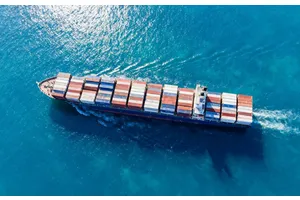
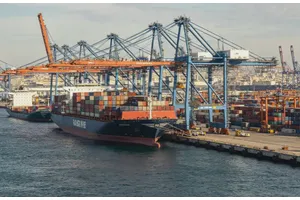
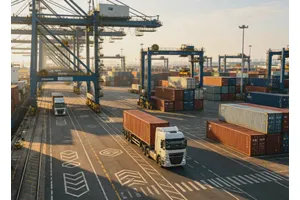
A freight forwarder from China to Turkey earns his fee in the last two weeks of the shipment, not the first. The ocean leg is routine — a 20ft container booked at $1,400–$1,900, sailing 22–35 days through the Suez Canal to Ambarli or Mersin. What separates a smooth arrival from a cargo that sits in a Turkish terminal burning $80–$150 a day in storage is everything that happens after the vessel sails: the TAREKS registration that must exist before your goods can be declared, the HS code review that decides whether you pay 8% or 38%, and the KDV calculation that compounds on top of both. Our shipping from China to Turkey service page covers the routes and gateways; this guide is about the partner you choose to run them.
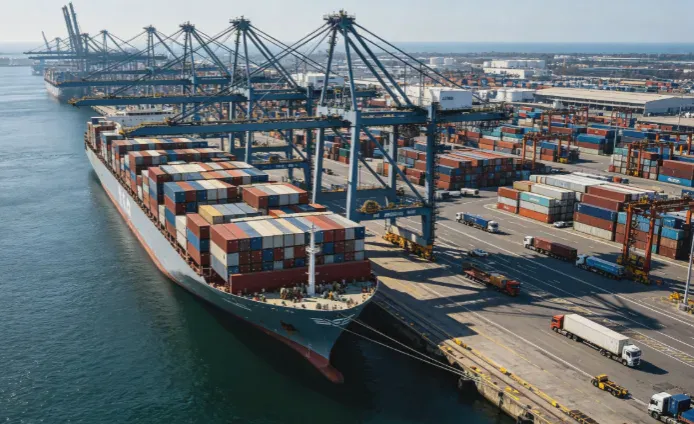
This guide is written from the operations side of that lane. DTFU Logistics has booked China–Turkey containers every week through 2026 — out of Shenzhen, Shanghai, and Ningbo — and cleared them through Istanbul's Ambarli port with licensed local brokers. Below is the checklist we use to vet a forwarder, the 2026 rate ranges we actually see, the customs math most blogs skip, and the payment terms Turkish importers will bring to the table.
What Does a Freight Forwarder from China to Turkey Actually Do?
A forwarder on this lane is two companies in one. On the China side, it arranges pickup from your supplier, consolidation, export declaration, and the vessel booking. On the Turkey side, it must run a network of licensed customs brokers (gümrük müşaviri) who file the BEYAN declaration, manage the TAREKS system, and settle duty and KDV with Turkish customs.
The division of labor matters more than the freight rate, because it determines who is accountable when clearance stalls:
| Job | Who Does It | Why It Matters on This Lane |
|---|---|---|
| Supplier pickup & consolidation (Shenzhen/Shanghai/Ningbo) | Forwarder's China team | One consolidation point for multi-factory orders cuts inland trucking 15–30% |
| Export declaration, vessel booking, B/L | Forwarder's China team | China export clearance typically 1–2 working days for licensed suppliers |
| TAREKS registration & conformity checks | Forwarder's Turkish broker | Mandatory for electronics, machinery, medical devices, cosmetics, textiles — no TAREKS reference, no release |
| HS code classification & duty check | Forwarder's Turkish broker | Turkey's tariff is granular; a wrong 8-digit code can double your duty or trigger anti-dumping |
| KDV and duty payment | Importer or forwarder (DDP) | KDV 20% compounds on CIF + duty + fees — the biggest landed-cost line |
| Port handling, deconsolidation, last mile | Forwarder's Turkey network | Ambarli to Istanbul city is 1–2 days; Ankara/Izmir add 2–4 |
Most first-time importers assume the forwarder's job ends at the vessel. On the China–Turkey lane, the forwarder who cannot run the Turkish side is only doing half the job — and the unpaid half is where the money disappears. That split is exactly why DTFU keeps licensed brokers on the ground in Istanbul rather than handing clearance to a random third party.
How to Choose a Freight Forwarder from China to Turkey: A 5-Point Capability Checklist
Rate sheets are easy to compare; capability is not. Before you compare prices, ask each candidate forwarder to confirm five specific capabilities. These are the five questions we would ask if we were hiring a forwarder for this lane ourselves:
| # | Capability | Why It Decides This Lane | Question to Ask |
|---|---|---|---|
| 1 | TAREKS handling | Risk-based trade control screens your product before customs will touch it | "Who files TAREKS, and what is your average processing time for electronics?" |
| 2 | Licensed Turkish broker in-house | A forwarder using a random third-party broker has no control over clearance speed | "Is your Istanbul broker licensed, and do you get red-channel support?" |
| 3 | HS pre-review before departure | A 30-minute pre-check by a Turkish broker prevents weeks of port storage | "Will your broker review my HS codes before the vessel sails?" |
| 4 | Anti-dumping screening | Chinese textiles, steel, ceramics, and glassware face 10–50%+ add-ons | "Is my product on Turkey's anti-dumping list, and is it covered in your quote?" |
| 5 | KDV-inclusive DDP quoting | A "DDP" quote that excludes KDV or anti-dumping shifts risk back to you | "Is KDV 20% and all duties written into the DDP price, no exceptions?" |
Operational insight: on this lane we consistently see the same failure pattern — a forwarder quotes a low freight-only price, the cargo arrives at Ambarli, and only then does the importer discover the TAREKS registration was never started. The container waits at the terminal while the application processes. A forwarder with a real Turkey desk starts TAREKS and the HS review the day the booking is confirmed, not the day the vessel arrives. Ask for the process in writing before you commit.
Freight Forwarder Cost from China to Turkey: 2026 Rate Ranges
Ocean rates on this lane have been stable through 2026 compared with the spike years, but they still swing with fuel (BAF), the Q4 peak-season surcharge (PSS), and Suez/Red Sea conditions. These are the ranges we quote on real bookings this year, and they match the numbers in our shipping cost from China to Turkey and how much to ship a container from China to Turkey guides:
| Shipping Method | 20ft FCL | 40ft FCL | LCL (per CBM) | Typical Transit |
|---|---|---|---|---|
| Sea freight (port-to-port) | $1,400–$1,900 | $2,600–$3,200 | $80–$150 | 22–35 days |
| Sea freight (door-to-door) | $2,100–$2,750 | $3,500–$4,400 | $72–$94 | 28–37 days |
| Air freight (>100 kg) | $4.00–$6.50/kg | — | — | 3–7 days |
| Express courier | $8.00–$15.00/kg | — | — | 3–5 days |
The port-to-port lines exclude destination THC, customs brokerage, duty, KDV, and storage — items that together can exceed the ocean freight itself. The door-to-door lines include freight plus clearance and delivery but may exclude duty and KDV unless you book DDP; always request a written itemization.
Two seasonal rules of thumb: rates climb 15–25% in the Q4 peak and before Chinese New Year, and the Q1–Q2 window is the cheapest time to book. If your cargo is above roughly 15 CBM, price a full container against LCL — the break-even on this lane is usually between 13 and 15 CBM.
How Long Does Sea Freight from China to Turkey Take?
Port-to-port transit depends mainly on the origin port and whether the vessel takes the Suez Canal directly. Our 2026 sailings look like this:
| Route | Port-to-Port | Door-to-Door |
|---|---|---|
| Shenzhen (Yantian) → Ambarli | 22–26 days | 28–35 days |
| Shanghai → Ambarli | 24–28 days | 30–37 days |
| Ningbo → Mersin | 24–30 days | 30–38 days |
| Qingdao → Izmir | 28–35 days | 32–40 days |
| Guangzhou → Gemlik | 24–30 days | 30–38 days |
Three things stretch that timeline in practice. First, the red-channel inspection adds 3–7 working days plus daily storage fees. Second, Ambarli berth congestion during the Q4 peak and around Ramadan can add anchorage waiting time. Third, LCL shipments need deconsolidation at the destination warehouse, which adds 3–5 days on top of the ocean leg. Air freight compresses the whole journey to 3–7 days door-to-door, and rail via the Middle Corridor runs 18–25 days — but rail costs 30–40% more than sea and is only worth it for mid-weight, time-sensitive cargo. For the mechanics of the ocean leg itself, start with our sea freight from China overview.
TAREKS Registration and Turkey Customs Clearance for Imports from China
TAREKS (Dış Ticarette Risk Esaslı Kontrol Sistemi) is Turkey's electronic risk-assessment system for imports, operated by the Ministry of Trade. It screens incoming shipments against product-safety requirements and importer compliance history before customs will accept the declaration. Products that typically require a TAREKS reference number include electronics and 3C goods, machinery, medical devices, cosmetics, and textiles — and the annex lists are updated periodically, so the requirement can appear on products that cleared fine a year ago. The full clearance workflow sits inside our customs clearance from China guide.
The application is filed by your Turkish customs broker or importer of record, and processing takes anywhere from a few days to several weeks depending on risk classification. Start it before the cargo leaves China. Every week the application sits at the ministry is a week your container sits at the terminal accruing storage.
Customs then routes your shipment through one of three channels:
| Channel | What Happens | Typical Timeline |
|---|---|---|
| Green (Yeşil Hat) | Automatic release, no document review | 0–1 days |
| Yellow (Sarı Hat) | Document review of invoice, packing list, certificates | 1–3 days |
| Red (Kırmızı Hat) | Physical inspection, possible lab testing | 3–7+ days + storage fees |
Two 2026 changes make preparation more important than ever. Since the start of 2026, Turkey eliminated the simplified clearance procedure for low-value e-commerce imports: every commercial import, regardless of declared value, now requires full formal clearance with a licensed broker and payment of all duty and KDV. And customs maintains a market price database to catch undervaluation — a low declared value triggers a red-channel inspection, back-payment, and penalties of roughly 3× the underpaid duty.
Operational insight: we tell every Turkey importer the same thing — invest 30 minutes in a pre-shipment HS review by a licensed Turkish broker. Shipments we manage with that review clear an average of 5–7 days faster than those relying on the supplier's classification, because the review catches both duty misclassification and anti-dumping exposure before the cargo is on the water. It is the cheapest delay insurance on this lane.
Turkey Import Duty and KDV: A Worked Landed-Cost Example
Most industrial goods from China attract customs duty of 0–20% depending on the HS code, plus Additional Customs Duties (ACD) on protected categories. Anti-dumping measures add another 10–50%+ on Chinese textiles, steel products, ceramics, and glassware — easily overlooked if the forwarder does not check. On top of all of that, KDV (Turkey's VAT) applies at 20% standard, calculated on the CIF value plus the duty plus other fees. The compounding is the part that surprises everyone.
Here is the math on a real-style 20ft DDP booking with $20,000 of cargo:
| Line Item | Amount | Notes |
|---|---|---|
| CIF value (cargo + freight + insurance) | $20,000 | Customs base |
| Import duty (8% on CIF) | $1,600 | HS-dependent, 0–20% typical |
| Anti-dumping duty | $0 | Only if your HS code is on the list |
| KDV (20% on CIF + duty) | $4,320 | 20% × ($20,000 + $1,600) |
| Total taxes | $5,920 | ~30% of CIF |
| Ocean freight (port-to-port) | ~$1,600–$1,900 | The part most quotes show |
| Destination THC, brokerage, storage, delivery | $600–$1,200 | Itemize before booking |
The freight rate is roughly a quarter of what you actually pay to land the goods. That is why a quote that stops at the ocean line is not a quote — it is an opening bid. A genuine DDP quote absorbs the duty, KDV, and anti-dumping risk into one written price, and the forwarder carries the customs risk, not you.
How Turkish Importers Pay for China Shipments: Letters of Credit, Open Account, and the No-Recourse Trap
Payment structure is where China–Turkey deals are won and lost, and it is almost never covered in shipping guides. Turkish importers commonly ask for 30–60 day open account terms from Chinese suppliers — and Chinese suppliers, burned by defaults, increasingly insist on a letter of credit. The forwarder sits in the middle of that document flow: the B/L, commercial invoice, packing list, and certificate of origin all move through the L/C.
| Payment Term | How It Works | Who Carries the Risk |
|---|---|---|
| L/C at sight | Bank pays against documents at arrival | Supplier protected; buyer funds tied up |
| L/C 30–90 days | Bank pays after grace period | Supplier waits; buyer gets float |
| No-recourse L/C | Bank pays a confirming bank without recourse to you | Confirming bank takes political/commercial risk |
| Open account 30–60 days | Goods shipped, payment later | Supplier carries full default risk |
The no-recourse (confirmed, without recourse) L/C matters specifically on this lane because Turkish lira volatility makes banks cautious. If your buyer's Turkish bank issues an L/C, a confirming bank outside Turkey — usually in Hong Kong or Singapore — can add its guarantee, and the confirming bank absorbs the payment risk. Expect the confirmation fee to run 1–3% of the L/C value. Your forwarder should be able to produce documents that match the L/C terms exactly; a discrepancy as small as a date format on the invoice can trigger a rejection.
Ambarli Port and the Istanbul Gateway: The Local Reality of China–Turkey Shipping
Ambarli, on Istanbul's European side, is the workhorse of this lane — the largest container terminal complex in Turkey and the default discharge port for China services. It is efficient when the schedule holds and brutal when it does not. Vessel bunching in the Q4 peak and around Ramadan creates anchorage queues, and the port's free-time window for containers is typically short — after it expires, demurrage and detention escalate daily, and storage compounds on top during red-channel holds. Shippers loading in the Pearl River Delta will find port-level detail in our Shenzhen to Turkey guide.
Two practical habits save money here. First, negotiate 7–14 days of combined demurrage/detention free time in the booking contract — most carriers will grant it, and it covers the red-channel scenario. Second, for cargo destined beyond Istanbul, compare Ambarli against Mersin (southern Turkey), Izmir Aliağa (Aegean), and Gemlik (Marmara) — discharging closer to the final city cuts both trucking cost and the risk of inland congestion on the Istanbul–Anatolia corridors.
Operational insight: if your cargo is heading to Ankara, Konya, or Gaziantep, we routinely discharge at Mersin instead of Ambarli. The ocean transit is a few days longer, but the truck leg is shorter, the port is less congested, and the total door-to-door time is often the same — at a lower total cost. Route selection is a forwarder's real value; the rate table is just the starting point.
Red Flags: What a Bad China–Turkey Freight Forwarder Looks Like
Every forwarder can quote a price. The red flags on this lane show up when you ask about the parts of the journey that cost money:
| Red Flag | Why It Is Dangerous | What to Ask Instead |
|---|---|---|
| "DDP" quote excludes KDV or anti-dumping | The unpredictable 20–50% layer comes back to you | "List every tax included in writing" |
| No TAREKS knowledge | Your electronics/machinery will not clear | "Walk me through your TAREKS process" |
| No licensed broker in Turkey | Clearance speed is out of their control | "Who files the BEYAN declaration?" |
| Refuses HS pre-review | Duty surprises arrive at the worst moment | "Will you review HS codes before sailing?" |
| No tracking visibility | You learn about problems after they cost money | "What does your 24/7 tracking show me?" |
| No consolidation hub | Multi-supplier orders pay 4× inland trucking | "Where do you consolidate in China?" |
Pair this with the capability checklist above and you have a complete vetting script. A forwarder who answers all five capability questions with specifics — named broker, named port, written inclusion list — is running the lane for real. One who answers with generalities is selling you a rate. If your freight matters enough to insure, budget 0.3–0.5% of the cargo value for all-risk cover — and if you are consolidating cargo for several Turkish buyers, our door-to-door shipping service keeps every leg under one contract.
FAQs
1. How much does a freight forwarder charge to ship from China to Turkey?
Ocean freight in 2026 runs $1,400–$1,900 for a 20ft container and $2,600–$3,200 for a 40ft, port-to-port; LCL is $80–150 per CBM. Air freight is $4.00–6.50/kg above 100 kg. Forwarder service fees and destination charges add $600–1,200 on top, before duty and KDV.
2. How long does sea freight from China to Turkey take?
Port-to-port transit is 22–35 days depending on the origin port and route. Door-to-door adds clearance and delivery time, for a total of 28–38 days. Air freight takes 3–7 days door-to-door.
7. What is the difference between DDP and FOB with a Turkey forwarder?
Under FOB, your responsibility ends at the Chinese port and you arrange Turkish clearance yourself. Under DDP, the forwarder delivers duty-paid to your door. For first-time Turkey importers, DDP with a written inclusion list removes the clearance learning curve entirely — see our DDP vs FOB comparison for the full trade-off.
If you are planning a shipment to Istanbul, Mersin, Izmir, or anywhere else in Turkey, send your cargo details — commodity, HS code if you have it, weight, volume, and destination city — and DTFU Logistics will come back with a line-item quote: ocean or air freight, origin charges, destination THC, duty and KDV exposure on your specific HS code, and door delivery. We run the TAREKS registration and the HS pre-review before your cargo leaves the warehouse, and we track every container through Ambarli clearance with 24/7 visibility. The quote is free, and it is the same format we use on the shipments we book for our own account.