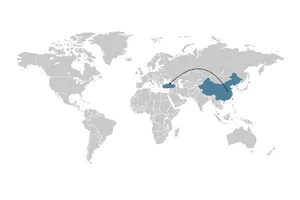
If you're sourcing goods from China and need to get them to Turkey, you've probably asked the same question every importer asks: "How much to ship a container from China to Turkey?" The short answer is that a 20ft container typically costs $1,400–$2,700 and a 40ft container runs $2,400–$4,200 for port-to-port sea freight in 2026 — but those numbers are just the starting point. Between origin charges, destination fees, surcharges, customs duties, and VAT, the all-in cost can be 30%–60% higher than the base ocean freight alone.
In this guide, we'll break down the complete cost picture piece by piece. You'll get real port-to-port rate tables for all major China→Turkey routes, a line-by-line explanation of every charge you'll encounter, and practical strategies to avoid overpaying. Whether you're shipping a single pallet or a full container load from Shanghai to Istanbul or Shenzhen to Mersin, this guide will help you budget accurately and book with confidence.
How Much Does a Container from China to Turkey Cost? (2026 Rate Guide)
The cost of shipping a container from China to Turkey depends primarily on three variables: your departure port in China, your arrival port in Turkey, and the container size you choose. Below are the current market rate ranges for FCL (Full Container Load) sea freight, based on data from multiple carriers and forwarders operating on this lane as of mid-2026.
Container Shipping Rates by Port Pair (FCL — Port to Port)
| China Port → Turkey Port | 20ft GP (USD) | 40ft GP (USD) | 40ft HQ (USD) |
|---|---|---|---|
| Shanghai → Istanbul (Ambarlı) | $1,450 – $2,200 | $2,450 – $3,500 | $2,600 – $3,700 |
| Shanghai → Izmir (Alsancak) | $1,500 – $2,300 | $2,500 – $3,600 | $2,650 – $3,800 |
| Shanghai → Mersin | $1,550 – $2,400 | $2,600 – $3,700 | $2,750 – $3,900 |
| Ningbo → Istanbul (Ambarlı) | $1,450 – $2,250 | $2,450 – $3,500 | $2,600 – $3,700 |
| Ningbo → Izmir (Alsancak) | $1,500 – $2,350 | $2,500 – $3,600 | $2,650 – $3,800 |
| Shenzhen → Istanbul (Ambarlı) | $1,500 – $2,350 | $2,550 – $3,600 | $2,700 – $3,800 |
| Shenzhen → Mersin | $1,550 – $2,450 | $2,600 – $3,750 | $2,750 – $3,950 |
| Guangzhou → Istanbul (Ambarlı) | $1,500 – $2,300 | $2,500 – $3,550 | $2,650 – $3,750 |
| Qingdao → Istanbul (Ambarlı) | $1,550 – $2,450 | $2,600 – $3,700 | $2,750 – $3,900 |
| Qingdao → Gemlik | $1,600 – $2,500 | $2,650 – $3,800 | $2,800 – $4,000 |
| Xiamen → Istanbul (Ambarlı) | $1,550 – $2,400 | $2,600 – $3,650 | $2,750 – $3,850 |
Rates are port-to-port ocean freight (FOB basis). Actual pricing varies with carrier selection, season, cargo weight/volume, and booking lead time. Contact DTFU Logistics for a live, all-in quotation tailored to your shipment.
LCL (Less than Container Load) Rates
If your cargo doesn't fill a full container, LCL (Less than Container Load) lets you ship by the cubic meter:
| Route | LCL Rate (per CBM) | Typical Transit |
|---|---|---|
| Shanghai → Istanbul | $45 – $75 / CBM | 28 – 38 days |
| Shenzhen → Istanbul | $50 – $80 / CBM | 27 – 36 days |
| Ningbo → Izmir | $50 – $80 / CBM | 29 – 39 days |
| Guangzhou → Mersin | $55 – $85 / CBM | 30 – 40 days |
LCL is cost-effective for shipments under approximately 15 CBM. Beyond that volume, FCL typically offers better per-unit economics — we'll cover this breakeven analysis in detail later in this guide.
Rate Context: Where 2026 Stands
Container rates on the China–Turkey lane have stabilized significantly compared to the extreme volatility of 2021–2022, when 20ft containers briefly exceeded $5,000. Current 2026 pricing reflects normalized capacity and steady demand — but seasonal spikes remain a factor, particularly ahead of Chinese New Year and during the Q3 holiday import rush into Turkey. For a broader look at freight pricing trends, see our detailed guide on Shipping Cost from China to Turkey, which covers air freight, rail, and DDP options alongside sea freight.
What's Inside Your Container Shipping Quote? A Line-by-Line Breakdown
A "$2,000 ocean freight" quote is never the full story. Understanding exactly what makes up your total shipping cost is essential to avoid budget surprises at the destination port. Here's every charge you'll encounter, organized from origin to delivery.
Origin Charges (China Side)
| Charge | Typical Cost (USD) | What It Covers |
|---|---|---|
| Ocean Freight (Base Rate) | $1,400 – $2,700 (20ft) | The carrier's charge for transporting the container from port to port |
| BAF (Bunker Adjustment Factor) | $200 – $500 / container | Fuel surcharge tied to global bunker fuel prices; fluctuates quarterly |
| THC-O (Terminal Handling Charge — Origin) | $80 – $150 / container | Loading the container onto the vessel at the Chinese port |
| Export Customs Clearance | $100 – $200 / shipment | Brokerage fee for completing China export declarations |
| Documentation Fee | $50 – $90 / shipment | Issuing the Bill of Lading (B/L) and processing shipping documents |
| Seal Fee | $10 – $30 / container | Container security seal |
| VGM (Verified Gross Mass) Submission | $10 – $20 / container | Mandatory SOLAS weight declaration |
| Inland Trucking (Factory → Port) | $150 – $600+ | Depends on distance from your supplier to the loading port |
Destination Charges (Turkey Side)
| Charge | Typical Cost (USD) | What It Covers |
|---|---|---|
| THC-D (Terminal Handling — Destination) | $100 – $350 / container | Unloading the container at the Turkish port |
| Delivery Order Fee | $50 – $120 / shipment | Releasing the cargo from the shipping line |
| Customs Brokerage Fee | $100 – $250 / shipment | Professional customs broker in Turkey to clear your goods |
| Demurrage (Port Storage) | $50 – $200 / day | Charged after the free storage period expires (typically 3–7 free days) |
| Detention (Container Usage) | $50 – $150 / day | Charged if the container is not returned to the depot on time |
| Inland Delivery (Port → Final Destination) | $200 – $700+ | Trucking to Istanbul, Ankara, Izmir, Konya, Gaziantep, or anywhere in Turkey |
How a $2,500 Quote Becomes $4,000+
Here's a realistic example — shipping a 20ft container from Ningbo to Istanbul:
| Cost Component | Amount (USD) |
|---|---|
| Ocean Freight (Base) | $1,800 |
| BAF | $300 |
| THC — Origin | $120 |
| Export Clearance + Documentation | $150 |
| Inland Trucking (Ningbo factory → port) | $250 |
| THC — Destination (Ambarlı) | $200 |
| Delivery Order | $80 |
| Customs Brokerage (Turkey side) | $180 |
| Inland Delivery (Istanbul → Ankara) | $400 |
| Cargo Insurance (0.3% of $25,000 cargo) | $75 |
| Total All-In Cost | $3,555 |
For a detailed breakdown of shipping container insurance cost for shipments from China, including coverage types and premium factors, see our dedicated insurance guide.
Key takeaway: Always request an all-in quote that itemizes every line above. A forwarder quoting only the base ocean freight without disclosing these additional charges is setting you up for a surprise bill at the destination.
20ft vs. 40ft Containers & FCL vs. LCL: How to Choose the Right Option
Choosing the wrong container size or shipping mode is one of the costliest mistakes importers make. Here's how to get it right.
Container Capacity at a Glance
| Specification | 20ft GP | 40ft GP | 40ft High Cube |
|---|---|---|---|
| Internal Dimensions (L×W×H) | 5.9 × 2.35 × 2.39 m | 12.03 × 2.35 × 2.39 m | 12.03 × 2.35 × 2.69 m |
| Volume Capacity | ~33 CBM | ~67 CBM | ~76 CBM |
| Max Payload | ~28,000 kg | ~26,500 kg | ~26,000 kg |
| Typical Door Openings | 2.34 × 2.28 m | 2.34 × 2.28 m | 2.34 × 2.58 m |
The 40ft container does not cost twice as much as a 20ft — the price premium is typically only 60%–70% more, while delivering roughly double the capacity. This means that if your cargo volume exceeds approximately 20 CBM, the 40ft almost always offers better per-unit economics.
FCL vs. LCL: The Breakeven Analysis
The most common question we hear is: "Should I ship FCL or LCL?" Here's the practical framework:
| Shipment Volume | Recommended Mode | Why |
|---|---|---|
| Under 8 CBM | LCL | FCL cost not justified; LCL is the clear winner |
| 8 – 15 CBM | LCL or FCL 20ft | The grey zone — depends on cargo value, urgency, and destination |
| 15 – 25 CBM | FCL 20ft | FCL becomes cheaper per CBM above ~15 CBM; faster transit and lower damage risk |
| 25 – 50 CBM | FCL 40ft | Sweet spot for 40ft pricing; lowest cost-per-unit |
| 50+ CBM | FCL 40ft (×2+) | Multiple containers; volume discounts often available |
Non-Cost Factors to Consider
Beyond pure cost, FCL offers important advantages that LCL cannot match:
- Transit time: FCL shipments are typically 5–10 days faster because they bypass consolidation and deconsolidation at both ends.
- Damage risk: LCL cargo is handled multiple times during consolidation; FCL cargo is loaded once and stays sealed until destination.
- Customs complexity: LCL shipments share a container with other importers' goods — if one consignee's cargo triggers a customs hold, the entire container is delayed.
Real scenario: A furniture importer bringing 18 CBM of home goods from Foshan to Istanbul. FCL 20ft (~$1,800 ocean freight) works out to roughly $55/CBM. LCL at $65/CBM = $1,170 — but with 7 extra transit days and higher handling risk. For a commercial shipment of this size, FCL is the clear recommendation.
Sea Freight Transit Times from China to Turkey: Port-by-Port Comparison
Transit time matters as much as cost when you're managing inventory and production schedules. Here are the typical sailing times by route:
| Route | Direct Sailing | With Transshipment | Frequency |
|---|---|---|---|
| Shanghai → Istanbul | 23 – 28 days | 30 – 35 days | Weekly (multiple carriers) |
| Shanghai → Izmir | 25 – 30 days | 32 – 38 days | Weekly |
| Shanghai → Mersin | 26 – 32 days | 33 – 40 days | Bi-weekly |
| Ningbo → Istanbul | 24 – 29 days | 31 – 36 days | Weekly |
| Shenzhen → Istanbul | 22 – 28 days | 30 – 35 days | Weekly |
| Shenzhen → Mersin | 25 – 31 days | 32 – 38 days | Bi-weekly |
| Guangzhou → Istanbul | 24 – 30 days | 31 – 37 days | Weekly |
| Qingdao → Istanbul | 26 – 32 days | 33 – 40 days | Weekly |
| Xiamen → Istanbul | 25 – 31 days | 32 – 38 days | Bi-weekly |
Shipping Lines Serving the China–Turkey Route
| Carrier | Service Name / Routing | Typical Transit (Shanghai → Istanbul) |
|---|---|---|
| Maersk | AE2 / AE5 Service (via Suez) | 23 – 26 days (direct) |
| MSC | Tiger / Dragon Service | 24 – 28 days |
| CMA CGM | Bosphorus Express (BEX) | 23 – 27 days |
| COSCO | AEM3 / FEM Service | 24 – 29 days |
| Hapag-Lloyd | MD1 / MD3 Service | 24 – 28 days |
| Evergreen | FEM / AEM Service | 25 – 30 days |
| Yang Ming | MED3 Service | 26 – 32 days |
Direct services are available weekly from Shanghai, Ningbo, and Shenzhen to Istanbul. Secondary Turkish ports like Mersin and Izmir are often served via transshipment through Port Said, Piraeus, or directly on certain carrier rotations.
Alternative Shipping Methods: Air Freight, Rail Freight & DDP Door-to-Door
Sea freight isn't your only option. Depending on your budget and timeline, these alternatives may be a better fit.
Shipping Mode Comparison
| Mode | Cost | Transit Time | Best For |
|---|---|---|---|
| Sea Freight (FCL) | $1,400 – $4,200 / container | 22–35 days | Bulk cargo, cost-sensitive shipments |
| Sea Freight (LCL) | $45 – $85 / CBM | 28–40 days | Small-volume shipments under 15 CBM |
| Air Freight | $4 – $8 / kg | 3–7 days | High-value, urgent, or perishable cargo |
| Rail Freight (Middle Corridor) | $4,800 – $11,000 / container | 13–25 days | Medium-urgency cargo; avoids Suez/Hormuz risks |
| DDP Door-to-Door | FCL + $500–$1,500 premium | 30–40 days | First-time importers; hassle-free, all-inclusive |
Rail Freight via the Middle Corridor
The Middle Corridor (also known as the Trans-Caspian International Transport Route, or TITR) runs from China through Kazakhstan, crosses the Caspian Sea to Azerbaijan, continues through Georgia, and enters Turkey. It delivers transit times roughly 50% faster than sea freight at about 60% less than air freight — making it an attractive middle ground when speed matters but air freight is cost-prohibitive.
Key considerations for rail: - Higher cost per container than sea freight (20ft: ~$4,800–$6,200; 40ft: ~$7,800–$11,000) - Not suitable for every cargo type — container weight limits apply, and the Caspian crossing can cause delays during bad weather - Growing corridor — infrastructure investment is increasing capacity and reducing transit variability
DDP (Delivered Duty Paid) — The Hassle-Free Option
Under DDP Incoterms, your freight forwarder handles everything: factory pickup in China, export clearance, ocean or rail freight, Turkish customs clearance, all import duties and VAT (KDV) , and final delivery to your door. You receive one all-inclusive price and pay nothing extra at the destination.
DDP is ideal if you: - Are a first-time importer unfamiliar with Turkish customs procedures - Don't have a Turkish tax ID or registered importer status - Want predictable, fixed landed costs with no surprises - Are shipping to Amazon FBA Turkey or running an e-commerce operation
The typical DDP premium over CIF sea freight is $500–$1,500 per container, which includes the customs brokerage, duty/VAT remittance, and last-mile delivery. For many importers, the time saved and risk eliminated far outweigh this additional cost.
Turkey Customs Clearance & Import Duties: A Practical Guide
Turkish customs procedures are structured and rule-based — but navigating them without preparation can lead to costly delays. Here's what you need to know.
Turkey Import Duty & Tax Structure
| Tax / Duty | Rate | Applied To |
|---|---|---|
| Customs Duty | 0% – 20% (avg. ~5%) | CIF value (Cost + Insurance + Freight) |
| VAT (KDV) | 18% standard; 1% or 8% for certain goods | CIF value + Customs Duty + other charges |
| Special Consumption Tax (SCT/ÖTV) | 0% – 200% | Specific products only (fuel, alcohol, vehicles, luxury items) |
Your HS code classification determines your customs duty rate — and misclassification is one of the most common and expensive mistakes importers make.
TAREKS: Turkey's Import Surveillance System
TAREKS (Risk-Based Trade Control System) is Turkey's digital import inspection platform. It applies to a wide range of products — including electronics, toys, machinery, construction materials, textiles, and medical devices — and requires pre-import conformity assessment.
Key points about TAREKS: - Your product may need to be registered in the TAREKS system before it arrives in Turkey - Inspection and approval can take anywhere from 2 days to 3+ weeks depending on the product category - Products subject to CE marking requirements (electronics, machinery, toys, PPE) must demonstrate compliance as part of TAREKS clearance - Gözetim (Surveillance Price): Turkish customs maintains reference price floors for many imported goods. If your declared CIF value is below the surveillance threshold, customs will revalue your goods upward — increasing both your duty and VAT liability
Required Documentation Checklist
| Document | Required For | Notes |
|---|---|---|
| Commercial Invoice | All shipments | Must include detailed HS codes, unit values, and total declared value |
| Packing List | All shipments | Itemized list with weights, dimensions, and carton counts |
| Bill of Lading (B/L) | All sea freight | Issued by the carrier; required for cargo release |
| Certificate of Origin | All commercial shipments | Issued by China's CCPIT; may qualify you for reduced duty rates |
| Form A / GSP Certificate | Developing country imports | Preferential tariff treatment (check if your HS code qualifies) |
| CE Declaration of Conformity | Regulated products | Electronics, machinery, toys, construction products, PPE |
| Import License | Restricted goods | Required for certain chemicals, agricultural products, and controlled items |
| Insurance Certificate | When insured | Recommended for all shipments; mandatory for CIF terms |
Landed Cost Calculation — Real Example
Here's a worked example for a $12,000 shipment of home textiles (HS 6302.21, 8% customs duty) from Ningbo to Istanbul in a 20ft container:
| Cost Item | Amount (USD) |
|---|---|
| Product Value (EXW Ningbo) | $12,000 |
| Inland Trucking + Export Clearance | $400 |
| Ocean Freight (20ft → Istanbul) | $1,800 |
| BAF + THC | $420 |
| Cargo Insurance (0.3%) | $36 |
| CIF Istanbul Value | $14,656 |
| Customs Duty (8% of CIF) | $1,172 |
| Subtotal (CIF + Duty) | $15,828 |
| VAT / KDV (18% of subtotal) | $2,849 |
| Destination THC + Brokerage + Delivery | $680 |
| Total Landed Cost | $19,357 |
Final landed cost: $19,357, or roughly 61% above the original product value. The single largest cost beyond the goods themselves is VAT at $2,849. This is why accurate landed-cost calculation is essential before committing to a purchase order.
Hidden Fees, Seasonal Rate Swings & 7 Smart Ways to Cut Shipping Costs
Hidden Fees That Catch First-Time Importers Off Guard
Even experienced shippers can get blindsided by these charges:
| Hidden Fee | Typical Impact | How to Avoid It |
|---|---|---|
| Demurrage / Detention | $50–$200/day after 3–7 free days | Arrange customs broker and trucker in advance; clear cargo within free time |
| TAREKS Inspection Delays | $50–$300+ per inspection + daily storage | Pre-register products in TAREKS before the shipment arrives |
| Currency Exchange Loss | 1%–5% on TRY-denominated charges | Pay Turkish-side fees in USD where possible; budget for exchange margin |
| Emergency Bunker Surcharge (EBS) | $50–$200/container | Ask your forwarder if BAF includes EBS protection or if it can be added separately |
| Re-labeling / Compliance | $200–$1,000+ | Ensure goods have Turkish-language labeling and packaging compliance before shipping |
| Container Cleaning Fee | $20–$80 | Return the container in the same condition you received it |
Seasonal Rate Fluctuation Calendar
Knowing when rates rise and fall can save you 20%–40% on freight costs:
| Period | Rate Trend | Why |
|---|---|---|
| Jan – Mid-Feb | ↑↑ Spike (20%–40%) | Pre-Chinese New Year rush; factories push last shipments before holiday shutdown |
| Late Feb – Apr | ↓ Lower | Post-CNY lull; factory output ramping back up |
| May – Jul | → Stable | Normal demand; good time to ship |
| Aug – Oct | ↑↑ Spike (15%–30%) | Q3 peak season; holiday inventory rush into Turkey and Europe |
| Nov – Early Dec | ↓ Lower | Post-peak window; carriers discount to fill capacity |
| Late Dec | ↑ Modest | Year-end push before holiday closures |
7 Proven Strategies to Reduce Your Container Shipping Costs
-
Book 4–6 weeks ahead during peak seasons. Last-minute bookings during pre-CNY or Q3 can cost 20%–50% more. Forward planning locks in rates and guarantees space.
-
Consolidate LCL shipments into FCL once volume reaches ~15 CBM. The per-unit savings are significant, and you'll also cut transit time by 5–10 days.
-
Compare rates across multiple China departure ports. Shanghai is often the cheapest for Turkey routes, but if your factory is in Guangdong, the inland trucking to Shanghai might outweigh the ocean freight savings compared to shipping from Shenzhen or Guangzhou.
-
Choose your Incoterms strategically. FOB gives you control over the ocean freight selection. CIF bundles freight + insurance but leaves destination charges to you. DDP eliminates all guesswork at a premium. Match the term to your experience level and customs capability in Turkey.
-
Build a 5%–10% buffer for surcharge fluctuations. BAF and CAF (Currency Adjustment Factor) change quarterly. Basing your budget solely on current spot rates is risky.
-
Work with a forwarder that holds direct carrier contracts. Forwarders without carrier agreements buy space through intermediaries, adding 15%–30% to your cost. Direct-contract forwarders like DTFU Logistics pass through negotiated rates with no middleman markup.
-
Optimize your cargo packing. Wasted container space is wasted money. Professional palletization and load planning can increase container utilization by 10%–20%. For high-volume importers, this alone can save thousands per year.
Why DTFU Logistics Is Your Best Partner for China to Turkey Container Shipping
With over 10 years of experience on the China–Turkey trade lane, DTFU Logistics helps importers navigate every step — from factory pickup to final delivery anywhere in Turkey. Beyond Turkey, we operate dedicated services across the Middle East and Mediterranean, including Shipping from China to Iran, Shipping from China to Iraq, and Shipping from China to Egypt — making us a single logistics partner for businesses distributing goods across the broader region.
FIATA & IATA Dual Certification. Unlike many forwarders, DTFU holds both FIATA (International Federation of Freight Forwarders Associations) and IATA (International Air Transport Association) accreditation — internationally recognized credentials that demonstrate financial stability, professional competence, and adherence to global logistics standards.
Multi-Port Nationwide Capability. DTFU operates from all major Chinese ports — Shanghai, Shenzhen, Ningbo, Qingdao, Guangzhou, and Xiamen — not just one. We recommend the optimal departure port based on your factory location, not based on where we happen to be.
Direct Carrier Contracts. Our negotiated agreements with Maersk, MSC, CMA CGM, COSCO, and Hapag-Lloyd mean competitive rates, guaranteed space allocation (even during peak season), and priority container availability.
Transparent All-In Pricing. The quote you receive is the price you pay. Every origin charge, ocean freight component, destination fee, and surcharge is itemized upfront — no hidden fees, no surprise invoices at the destination port.
End-to-End Service Options: - FOB Freight: Competitive ocean rates + export clearance from any Chinese port - CIF Freight: Ocean freight with cargo insurance to your chosen Turkish port - DDP Door-to-Door: Factory pickup → shipping → Turkish customs clearance → duties & VAT paid → last-mile delivery to your door
Real-time cargo tracking keeps you informed at every milestone. Your dedicated account manager provides one-on-one support — not a generic call center.
Contact DTFU Logistics today for a free, no-obligation container shipping quote. Most quotes are delivered within 24 hours.
FAQs
How much does it cost to ship a 20ft container from China to Turkey in 2026?
A 20ft container from China to Turkey typically costs $1,400–$2,700 for port-to-port ocean freight, depending on the specific port pair. With all origin charges, destination fees, and surcharges included, the all-in cost usually ranges from $2,800–$4,500 for a complete port-to-port service.
How much does it cost to ship a 40ft container from China to Turkey?
A 40ft container costs $2,400–$4,200 for port-to-port base ocean freight. The all-in cost — including BAF, THC at both ends, documentation, and inland trucking — typically ranges from $4,000–$6,500, depending on the origin and destination ports.
What is the cheapest way to ship a container from China to Turkey?
Sea freight is the cheapest option for container-sized shipments. For maximum savings: (1) ship during off-peak periods (March–April or November), (2) book 4–6 weeks ahead, (3) compare rates across multiple departure ports — Shanghai and Ningbo tend to offer the lowest rates to Istanbul. For smaller shipments under 15 CBM, LCL is often the most cost-effective choice. If you're also shipping to nearby Mediterranean markets, check our guides on How much to ship a Container from China to Egypt and How much to ship a Container from China to Algeria for regional rate comparisons.
How long does sea freight take from China to Turkey?
Sea freight transit from China to Turkey takes 22–35 days port-to-port, depending on the route. Shanghai to Istanbul with a direct service is typically 23–28 days. Routes to Mersin or Izmir with transshipment can take 30–40 days.
Which Chinese port is cheapest for shipping to Turkey?
Shanghai and Ningbo consistently offer the most competitive rates to Istanbul due to higher sailing frequency and carrier competition on these routes. However, if your factory is located in southern China (Guangdong or Fujian), the cost of inland trucking to Shanghai may outweigh any ocean freight savings compared to Shipping From ShenZhen to Turkey or shipping from Guangzhou. Our Shenzhen-based team provides dedicated support for importers sourcing from the Pearl River Delta region.
What documents do I need to import goods from China to Turkey?
Essential documents include: Commercial Invoice, Packing List, Bill of Lading (B/L) , and Certificate of Origin. Depending on your product type, you may also need a CE Declaration of Conformity, TAREKS registration, Form A (GSP Certificate), and/or an import license from Turkish authorities.
How much import duty and tax will I pay in Turkey for Chinese goods?
Import duty ranges from 0%–20% of the CIF value, with most industrial goods averaging around 5%. VAT (KDV) is charged at 18% on the CIF value plus duty. Certain goods also attract Special Consumption Tax (SCT/ÖTV). Always use the correct HS code to determine your exact rate — misclassification can lead to penalties.
Is rail freight from China to Turkey cheaper than sea freight?
No. Rail freight via the Middle Corridor costs roughly 3–4× more than sea freight — approximately $4,800–$6,200 per 20ft container vs. $1,400–$2,700 for sea. However, rail is about 50% faster (13–25 days vs. 22–35 days), making it a valuable middle-ground option when air freight is too expensive but sea freight is too slow.
What is DDP shipping from China to Turkey, and is it worth it?
DDP (Delivered Duty Paid) is an all-inclusive shipping service where your forwarder handles the entire logistics chain — from factory pickup in China through customs clearance, duty/VAT payment, and final delivery in Turkey — for one fixed price. It's well worth the $500–$1,500 premium over CIF if you're a first-time importer, lack a Turkish tax ID, or simply want predictable costs with zero customs hassle.
Should I choose FCL or LCL for my shipment from China to Turkey?
Choose FCL if your shipment exceeds ~15 CBM — the per-unit cost becomes cheaper, transit is faster, and damage risk is lower. Choose LCL for shipments under 8 CBM. Between 8–15 CBM, the decision depends on your cargo value, urgency, and destination complexity. An experienced freight forwarder can help you run the numbers for your specific situation.
How much does it cost to ship furniture from China to Turkey by container?
Furniture is typically volume-heavy rather than weight-heavy. A 40ft or 40ft High Cube container is the standard choice for furniture shipments. For a point of comparison, 20ft & 40ft Container Cost from China to Egypt follows a similar Mediterranean pricing pattern, though Turkey-specific rates benefit from more direct carrier services. Expect ocean freight of $2,500–$4,000 for a 40ft container from Shanghai or Shenzhen to Istanbul. Since furniture is bulky, maximizing container utilization through professional loading is critical to keeping per-unit shipping costs low.
How much does it cost to ship machinery or electronics from China to Turkey?
Machinery and electronics often involve additional considerations: heavier weight (which may limit how much you can load into a container), higher cargo value (making insurance strongly recommended), and potential TAREKS/CE compliance requirements. A 20ft container of machinery typically costs $1,800–$2,800 in ocean freight. Electronics may attract a higher customs duty rate (up to 20%), so verify your HS code classification before shipping. For high-value electronics shipments, air freight ($4–$8/kg) or DDP service often makes more sense when factoring in the cost of capital tied up during longer sea transit.