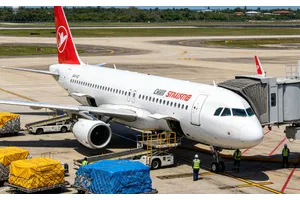
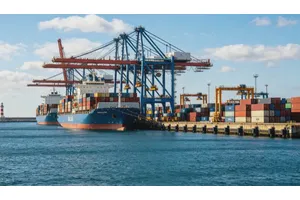
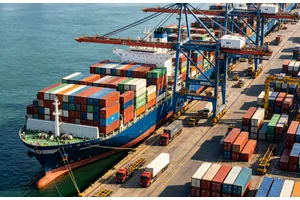
When it comes to door to door shipping from China to Jordan, the first thing every importer needs to understand is a geographic fact that shapes your entire supply chain: Jordan has exactly one commercial seaport — Aqaba, on the Red Sea — and one main international air gateway, Queen Alia International Airport (AMM), about 30 km south of Amman. There is no direct, no-nonsense shortcut. Sea cargo sails the Red Sea and Suez Canal into Aqaba, then trucks inland; air cargo lands at Amman and follows the same last-mile corridor. The difference between a shipment that clears in two days and one that sits in a bonded yard for two weeks almost always comes down to three things: whether your goods pass JSMO inspection, whether you have an Importer's Card (or a forwarder with a local Importer of Record), and whether you understood the 5–30% duty plus 16% GST stack before you locked in a quote.
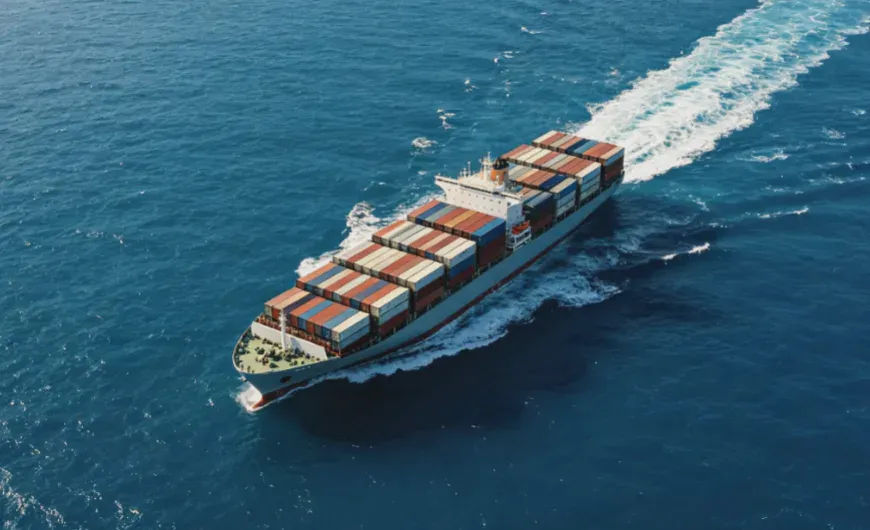
Most first-time importers trip over the same handful of surprises: a "cheap" sea quote that quietly omits fuel, war-risk, and peak-season surcharges; a product category that triggers mandatory JSMO testing with nobody telling you until it's parked; or an invoice where a 40HQ container of furniture lands at roughly $4,800 before duties and VAT — and you budgeted for half that. Add the reality that Jordan's weekend is Friday–Saturday, so a Thursday arrival can cost you three extra days of storage, and door-to-door shipping to Jordan can feel like a minefield. This guide walks through the real numbers, the end-to-end DDP process, and the pitfalls, so you can ship with your eyes open.
What Is Door to Door Shipping From China to Jordan?
Let's start with the distinction that shapes every downstream decision. Door-to-door shipping means a single provider handles the entire journey — pickup at your Chinese supplier, export clearance, international transport, Jordan import clearance, duty and tax payment, and final delivery to your warehouse or address. It is the opposite of port-to-port (or airport-to-port), where the provider only moves cargo to Aqaba or Amman and you clear customs and arrange the inland leg yourself.
The trade term that governs a door-to-door shipment is an Incoterm. For China-to-Jordan moves, the ones that matter are:
- DDP (Delivered Duty Paid): the forwarder handles everything — including import duties and GST — and delivers cleared goods to your door. One invoice, no surprises.
- DAP (Delivered at Place): the forwarder delivers to the destination but you pay import duties and taxes at the border. This is the modern successor to the old DDU term.
- CIF (Cost, Insurance & Freight): the seller covers freight and insurance to Aqaba, but you handle destination clearance, duties, and inland delivery.
- FOB (Free on Board) and EXW (Ex Works): you take over progressively earlier in the chain — FOB at the Chinese port, EXW at the factory gate. If you're weighing the two most common terms, our DDP vs FOB: Which Option Saves Time and Reduces Hassle guide breaks down when each makes sense.
Jordan's geography makes the door-to-door model unusually attractive. Because Aqaba is a single deep-water port operated by APM Terminals handling roughly one million TEU a year, and Amman sits about 330 km inland across a desert corridor, an importer who only books "to Aqaba" still has to solve clearance and a long trucking leg to Amman, Zarqa, or Irbid. Under DDP, your forwarder absorbs all of that — and, critically, the requirement that most commercial importers hold an Importer's Card issued by Jordan's Ministry of Industry, Trade and Supply. A DDP forwarder's local Importer of Record (IOR) partner carries that burden on your behalf, which is why DDP is the default recommendation for first-time importers and SMEs without a Jordanian entity.
The goods most commonly shipped door-to-door to Jordan reflect its import profile: household appliances, building materials, furniture, textiles and apparel, consumer electronics, automotive parts, and — growing fast — cross-border e-commerce parcels. For bulky and heavy categories, our Shipping Building Materials from China and Shipping Heavy Machinery from China guides cover packaging, customs, and cost.
How Long Does Door to Door Shipping Take From China to Jordan?
The door-to-door figure is the one that matters, and it's built from five distinct legs: supplier pickup and Chinese export clearance (1–2 days), ocean or air transit, Jordan import clearance and JSMO processing (2–4 days), and last-mile trucking from Aqaba or Amman (1–2 days).
| Service Type | Port/Airport-to-Port | Door-to-Door (incl. customs & delivery) |
|---|---|---|
| Sea Freight FCL | 22–36 days | 30–38 days |
| Sea Freight LCL | 28–38 days | 35–45 days |
| Air Freight | 3–7 days | 5–10 days |
| DDP Door-to-Door (sea) | — | 30–38 days |
| Express Courier (DHL/UPS/FedEx) | — | 3–6 days |
The transit hub and the sailing schedule are the biggest variables. Sea cargo to Aqaba is generally not a direct shuttle from every Chinese port — most vessels transship via Singapore, Jebel Ali, or Colombo before entering the Red Sea. A notable exception is CMA CGM's upgraded REX2 service, which since late 2025 offers a direct rotation of Qingdao–Shanghai–Ningbo–Shekou–Nansha through the Red Sea into Aqaba with weekly departures — a meaningful time saving for northern-China shippers.
Our Industry Insight: One Amman-based building-materials importer we work with was quoted a "cheap" routing from Qingdao that transshipped twice and consistently ran 40–45 days door-to-door. We moved them onto a direct weekly sailing and pre-filed the import declaration while the vessel was still crossing the Indian Ocean. The result: a dependable 33-day cadence instead of a nervous six-and-a-half-week wait — and far fewer demurrage charges at Aqaba because the cargo didn't linger over a Jordanian weekend.
Seasonality moves the needle too. July through October (and the weeks before Ramadan) bring peak-season demand and port congestion; the Red Sea security situation can add days and war-risk surcharges to any routing; and Jordan's Friday–Saturday weekend means a Thursday arrival often doesn't clear until Sunday. Expect 3–7 extra days during peak windows. Book three to four weeks ahead when you can. For the latest on the Red Sea situation, see our Red Sea Shipping Returns Under Tight Security update.
Door to Door Sea Freight From China to Jordan (FCL & LCL)
Sea freight is the workhorse for China-to-Jordan cargo, and it enters almost entirely through the Port of Aqaba. The choice between FCL (Full Container Load) and LCL (Less than Container Load) is your first decision, and it hinges on one number: roughly 15 CBM. Below that, LCL is more economical; above it, a dedicated container wins on per-unit cost.
| Container Type | Capacity | Max Payload | Best For |
|---|---|---|---|
| 20FT (20GP) | ~28 CBM | 21.7 metric tons | Dense cargo: tiles, steel, machinery |
| 40FT (40GP) | ~56 CBM | 26.5 metric tons | General cargo: furniture, garments |
| 40FT High Cube (40HQ) | ~68 CBM | 26.5 metric tons | Best per-CBM value; most popular |
| 45FT High Cube | ~78 CBM | 29.5 metric tons | Bulky, lightweight goods |
A 20FT loaded beyond 21.7 metric tons triggers an overweight surcharge of $150–$250, so heavy cargo like tiles or steel needs careful load planning. For a full per-container pricing breakdown, see our 20ft & 40ft Container Shipping Cost from China to Jordan guide. LCL is charged per CBM (or per 1,000 kg, whichever is greater) at roughly $60–$90/CBM, and a typical 5 CBM shipment lands around $350–$500 in base ocean freight before consolidation fees at both ends. The trade-off is time: LCL adds 5–10 days for consolidation and deconsolidation.
Which Chinese port should you ship from? The practical rule is simple: ship from the port closest to your supplier, because the $400–$600 you save on China-side trucking usually outweighs a few extra days at sea.
| Origin Port | Transit to Aqaba | Best For |
|---|---|---|
| Shenzhen (Yantian/Shekou) | 22–28 days | Guangdong / South China suppliers |
| Guangzhou (Nansha) | 22–28 days | Pearl River Delta manufacturers |
| Shanghai | 24–30 days | Central / East China suppliers |
| Ningbo | 24–30 days | Zhejiang / Jiangsu factories |
| Qingdao | 26–36 days | Northern China suppliers |
| Tianjin (Xingang) | 26–36 days | Beijing–Tianjin–Hebei region |
Major carriers on this lane — COSCO, MSC, Maersk, CMA CGM, Hapag-Lloyd, ONE, and Yang Ming — offer weekly sailings from Shanghai, Ningbo, and Shenzhen, and bi-weekly from Qingdao and Tianjin.
Door to Door Air Freight From China to Jordan
When sea freight is too slow, air freight lands at Queen Alia International Airport (AMM) in Amman — but it bills by a rule most first-time shippers get wrong.
Chargeable weight is the single most important concept in air freight pricing. Airlines bill on the higher of actual gross weight and volumetric weight:
Chargeable Weight = MAX(Actual Gross Weight, Volumetric Weight)
Volumetric Weight (kg) = (Length × Width × Height in cm) ÷ 6000
Here's the real-world math. You ship a carton measuring 120 cm × 80 cm × 100 cm that weighs 80 kg on the scale:
Volumetric Weight = (120 × 80 × 100) ÷ 6000 = 160 kg
Chargeable Weight = MAX(80 kg, 160 kg) = 160 kg
You pay for 160 kg — double the actual weight — because that's the aircraft space your box consumes. This is why packaging strategy is pricing strategy on the air lane.
| Weight Tier | Typical Rate/kg (to AMM) | Notes |
|---|---|---|
| 45–99 kg | $6.00–$9.00 | Minimum chargeable band |
| 100–299 kg | $5.00–$7.00 | First meaningful rate break |
| 300–499 kg | $4.00–$6.00 | Sweet spot for SMEs |
| 500 kg+ | $3.50–$5.00 | Best rate; consolidation worthwhile |
Standard air freight from Shanghai Pudong (PVG), Guangzhou Baiyun (CAN), Shenzhen Bao'an (SZX), Beijing Capital (PEK), or Hong Kong (HKG) to Amman runs $3.50–$6.00/kg, while express courier (DHL/UPS/FedEx) runs $5.00–$8.00/kg and is only economical below about 100 kg. Air freight makes sense when cargo value exceeds roughly $50/kg, when you're restocking seasonal or trend-driven merchandise, or when a production line can't wait. Special cargo — lithium batteries, liquids, hazardous materials — requires MSDS documentation and may be restricted on passenger aircraft. For a complete look at the air lane, see our Air Shipping from China to Jordan guide.
Door to Door Shipping Cost From China to Jordan
Here's where the real money moves — and where quotes most often mislead. A genuine door-to-door quote is not a single "per CBM" number; it's a stack of line items. Understanding that stack is how you spot the $2,500 "all-in" quote that becomes $4,800 at invoice time.
| Cost Component | Typical Amount | Notes |
|---|---|---|
| Ocean Freight (40HQ → Aqaba) | ~$2,650–$3,100 | Base freight; varies by port & season |
| BAF (Fuel Surcharge) | $180–$350 | Currently elevated by Red Sea rerouting |
| Origin THC + Port Charges | ~$275–$315 | Terminal handling at Chinese port |
| Destination THC (Aqaba) | ~$310 | Terminal handling at Aqaba |
| Export & Import Clearance | ~$165 | Declaration + brokerage both ends |
| Documentation & Security | ~$100 | B/L, port security, admin |
| Marine Cargo Insurance | ~$100 | ~0.3% of cargo value |
| Aqaba → Amman Trucking | ~$600–$800 | ~330 km inland corridor |
| Total DDP (excl. duties & VAT) | ~$4,800 | 40HQ furniture, Shenzhen → Amman |
Our Industry Insight: A textile importer we serve was quoted a "clean" $2,900 sea rate on a 40HQ — only to discover the BAF, war-risk, and peak-season surcharges pushed the real all-in to over $4,600 once the invoice landed. We always recommend a line-by-line quote, not a headline number, and we flag surcharges upfront. A forwarder who won't itemize is one who plans to surprise you later.
The surcharges that quietly inflate a Jordan shipment are worth memorizing:
| Surcharge | Typical Range | When It Applies |
|---|---|---|
| BAF (Fuel) | $180–$350 / 40HQ | Every shipment |
| PSS (Peak Season) | $150–$400 / container | July–October & pre-Ramadan |
| War Risk Surcharge | $0–$120 / container | Red Sea security conditions |
| Aqaba Demurrage | $30–$80 / day | After free days (FCL 7, LCL 5) |
| JSMO Inspection | $80–$250 | Regulated product categories |
| Ramadan Trucking Surge | $900–$1,200 | Final week of Ramadan (vs. normal $600–$800) |
| Friday Arrival Penalty | ~$90–$240 | Thursday arrivals clearing after the weekend |
| 20FT Overweight | $150–$250 | Cargo over 21.7 metric tons |
Four tactics consistently cut the landed cost: ship from the port nearest your supplier; book 3–4 weeks ahead in peak season to dodge PSS; cross the 15 CBM threshold to switch from LCL to FCL; and optimize packaging — trimming 10 cm off pallet height across 20 pallets can save 2+ CBM of chargeable volume. For current ocean freight benchmarks, see our Sea Shipping cost from China to Jordan guide.
Jordan Customs Clearance, Duties & Taxes for Door to Door Imports
Jordanian clearance is the stage where most door-to-door shipments either sail through or stall — and it's governed by three institutions you should know by name:
- Jordan Customs Department — collects tariffs and runs the electronic Jordan Single Window.
- JSMO (Jordan Standards and Metrology Organization) — enforces product standards and runs mandatory inspections; it is the most common source of clearance delays.
- Ministry of Industry, Trade and Supply — issues import licenses for restricted goods and the Importer's Card.
The Importer's Card is the piece compe*****s gloss over. Any business importing commercially into Jordan is normally expected to hold an Importer's Card, which takes 1–4 weeks to obtain. Shipments valued over 1,000 JOD (roughly $1,400) must also be cleared by a licensed customs broker — self-clearance is only permitted below that threshold. Under DDP, your forwarder's local IOR partner already holds these credentials, so you never touch the paperwork. If you insist on clearing yourself without a card, you can deposit a refundable 5% customs bond — a real option, but one that ties up capital.
JSMO inspection is best treated as a workflow, not a checklist. Seven categories face mandatory scrutiny: electronics and appliances, toys and children's products, food-contact materials, cosmetics, construction materials, textiles and footwear, and automotive parts. For first-time importers or new HS codes, expect an inspection fee of $80–$250 and — more importantly — a conformity requirement that should be satisfied before the container leaves China, not discovered at the border. Complete specifications, test reports, and accurate HS codes filed upfront prevent most holds.
Taxes stack on top of each other, which is the part that surprises importers:
- Customs Duty: 5–30% depending on the HS code — raw materials at the low end, textiles/apparel and luxury goods at the high end.
- GST (VAT): 16%, calculated on CIF value + customs duty — a cascading structure that means your effective rate is higher than "duty % + 16%".
A worked example: cargo value $10,000 + freight $800 + insurance $100 = CIF $10,900. Duty at 10% = $1,090. GST at 16% on ($10,900 + $1,090) = $1,918.40. Total import charges = $3,008.40.
Two programs can lower the bill. The Greater Arab Free Trade Area (GAFTA) grants reduced or zero duty to goods originating in member states — but note that Chinese-origin goods do not qualify, a misconception that causes importers to under-budget. The Aqaba Special Economic Zone (ASEZA) offers reduced duties and streamlined procedures for cargo destined within the Aqaba zone. A correctly issued Certificate of Origin (typically CCPIT-certified) is what unlocks any preferential rate you are entitled to.
Documentation Checklist
| Document | Required? | Notes |
|---|---|---|
| Commercial Invoice | ✅ Always | May require chamber of commerce attestation or legalization |
| Packing List | ✅ Always | Must match the invoice exactly |
| Bill of Lading / Airway Bill | ✅ Always | Issued by carrier or forwarder |
| Certificate of Origin | ✅ Often | Typically CCPIT-certified; key to GAFTA claims |
| HS Code Classification | ✅ Always | Determines duty rate; accuracy is critical |
| JSMO Conformity Certificate | ⚠️ Category | Regulated product categories |
| Import License | ⚠️ Category | Restricted goods, via Ministry of Industry |
| Insurance Certificate | Recommended | Required under CIF/CIP terms |
Our Industry Insight: The two most common causes of Jordanian holds are a mismatched invoice (values, quantities, or HS codes that don't agree across documents) and a regulated product that arrives without a JSMO conformity certificate. We've seen both add one to two weeks and hundreds of dollars in storage to an otherwise routine shipment. Get your HS codes classified and your JSMO documentation sorted before the cargo departs — it's the cheapest insurance you'll ever buy.
How to Choose a Freight Forwarder for China to Jordan Door to Door Shipping
A good forwarder is the difference between a shipment that clears in two days and one that lingers for two weeks. For the China-to-Jordan lane specifically, look for:
1. Jordan route experience. The Aqaba-only geography, the JSMO regime, and the Importer's Card requirement are lane-specific. A forwarder moving this corridor weekly already knows them.
2. A real local presence. Confirm the forwarder has an in-country customs partner or IOR in Jordan — not a subcontracted third party who picks up the phone only when something goes wrong.
3. Transparent, itemized pricing. Insist on a line-by-line quote that surfaces BAF, war-risk, PSS, demurrage, and JSMO fees upfront.
4. Proactive documentation. HNS/HS classification, JSMO conformity, and a correct Certificate of Origin prevent 90% of delays — confirm these are prepared before departure, not reactively.
5. Real-time tracking. A forwarder with a 24/7 tracking platform keeps you updated at every milestone — picked up, departed, transshipped, arrived Aqaba, cleared, out for delivery — without you chasing status.
Beyond booking space, the right partner optimizes your entire logistics workflow — explore The Strategic Role of Freight Forwarders in Modern Supply Chains.
At DTFU Logistics, our FIATA and IATA dual certification, direct contracts with carriers on the China–Middle East corridor, and dedicated account managers mean you get negotiated rates, secured capacity during peak season and Red Sea disruptions, and one point of contact for the entire door-to-door journey. Since 2014, we've helped importers, distributors, and e-commerce sellers ship from China to Jordan — from Shanghai, Shenzhen, Ningbo, Guangzhou, Qingdao, and Tianjin — with predictable costs and timelines. For a complete service overview, visit our Shipping from China to Jordan page.
What to prepare for a quote: ship-from and ship-to addresses, the HS code and a clear description of each product, the weight and dimensions of each piece, the cargo value, your preferred Incoterm (DDP vs. DAP), and the destination city (Amman, Zarqa, Irbid, or Aqaba). With those details, a forwarder can return an accurate all-in quote in hours.
Common Mistakes & Cost-Saving Tips for Shipping From China to Jordan
A few errors recur so often they're worth calling out directly:
- Misclassifying the HS code — the single most common cause of a Jordanian customs hold, and a fast route to back-duty plus penalties.
- Inconsistent documents — invoice values, packing-list quantities, and HS codes must all agree, or customs flags the file.
- Ignoring JSMO until arrival — regulated goods need conformity handled before departure, not discovered at Aqaba.
- Under-budgeting the tax stack — remember GST cascades on CIF plus duty, and Chinese goods don't get GAFTA relief.
- Forgetting the weekend — a Thursday arrival can sit through Friday–Saturday and cost three extra days of storage.
E-commerce and Amazon sellers have a distinct set of considerations. Cross-border e-commerce into Jordan is growing, and DDP door-to-door lets you land goods at a customer's door with duties and GST already settled — a real conversion advantage in a market where COD and small-parcel expectations are high. Consolidating small orders into a single air-freight pallet or an LCL sea shipment cuts per-unit shipping cost dramatically versus express courier. Importers who also distribute across the Gulf can apply the same DDP model region-wide — see our Shipping from China to Saudi Arabia and Door to door shipping from China to UAE guides.
The Red Sea reality deserves honesty. Since 2024's security disruptions, transit times and war-risk surcharges have been less predictable than the market's old norms. A forwarder with direct carrier contracts can lock space and stabilize schedules in ways a spot-buying broker cannot — one reason to favor a partner who owns the relationship, not one who re-books every shipment on the spot market.
Frequently Asked Questions
How long does door to door shipping from China to Jordan take?
Sea freight DDP runs about 30–38 days door-to-door (FCL 22–36 days at sea plus clearance and inland trucking), while LCL adds 5–10 days. Air freight lands in 3–7 days airport-to-airport, or 5–10 days door-to-door with customs. Express courier is fastest at 3–6 days.
How much does door to door shipping from China to Jordan cost?
LCL runs about $60–$90/CBM, a 20FT container $1,600–$2,100, and a 40HQ $2,650–$3,100 in base ocean freight. A complete DDP 40HQ from Shenzhen to Amman typically lands around $4,800 excluding duties and GST. Air freight runs $3.50–$6.00/kg.
Which port and airport does Jordan use for imports?
Virtually all sea cargo enters through Aqaba Port on the Red Sea, then trucks inland to Amman, Zarqa, and Irbid. Air cargo lands at Queen Alia International Airport (AMM), about 30 km south of Amman.
What is DDP door-to-door shipping to Jordan?
DDP (Delivered Duty Paid) means your forwarder handles supplier pickup, export clearance, sea or air transport, Jordan import clearance, JSMO compliance, duty and GST payment, and final delivery — one invoice, no surprises at the door.
How much duty and tax will I pay importing to Jordan?
Jordan charges customs duty of 5–30% (by HS code) plus GST (VAT) of 16% on the CIF value plus duty. Chinese-origin goods do not qualify for GAFTA preferential rates, though the Aqaba Special Economic Zone offers reductions for cargo destined within Aqaba.
Do I need an Importer's Card to receive goods in Jordan?
Yes, commercial imports normally require an Importer's Card (1–4 weeks to obtain) and a licensed customs broker for shipments over 1,000 JOD (~$1,400). Under DDP, your forwarder's local Importer of Record handles this on your behalf, or you can deposit a refundable 5% customs bond.
Can I ship electronics, furniture, or building materials door-to-door to Jordan?
Yes, these are among the most common door-to-door imports. However, electronics, furniture textiles, and construction materials fall under JSMO inspection categories, so conformity documentation must be prepared before the cargo leaves China to avoid clearance delays.
Conclusion
Door-to-door shipping from China to Jordan is a well-worn but detail-heavy lane — and getting it right means mastering a few fundamentals. Understand that Aqaba is your only sea gateway and Amman your only air gateway, and that everything else is inland trucking. Know the numbers: 30–38 days door-to-door by sea, $60–$90/CBM for LCL, a 40HQ DDP landing around $4,800 before duties, and a tax stack of 5–30% duty plus 16% GST. Decide early whether DDP or DAP fits your business, and budget for the surcharges — BAF, war risk, and the Jordanian weekend — that headline quotes quietly omit.
The cheapest quote is rarely the cheapest shipment once JSMO inspections, demurrage, and customs holds are factored in. Partner with a forwarder who is transparent on pricing, precise on documentation, and genuinely experienced on the China-to-Jordan corridor.
DTFU Logistics — a FIATA and IATA dual-certified forwarder based in China since 2014 — specializes in door-to-door shipping from China to Jordan, with nationwide multi-port pickup, direct carrier contracts, 24/7 tracking, and a dedicated account manager for every shipment. Contact us for a transparent, all-in DDP quote and let us handle your next China-to-Jordan shipment from supplier pickup to final delivery.