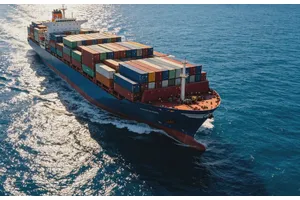
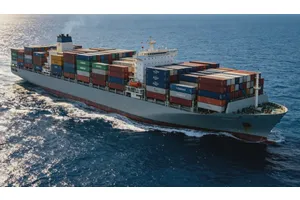
Every week we get the same email from an Israeli importer, usually after their first FOB shipment has gone sideways: "You quoted me door-to-door — so why am I looking at a $900 customs bill and a port storage charge?" The answer is almost always the same. What they booked was door-to-door delivery, not DDP. The cargo moved to their door, but the taxes and clearance were never in the price.
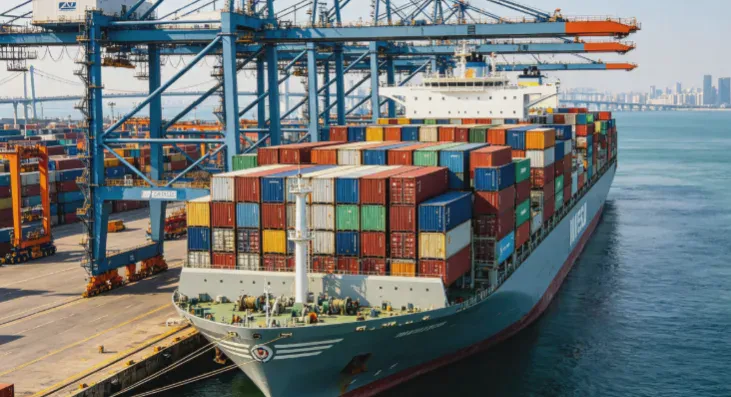
DDP (Delivered Duty Paid) shipping from China to Israel is the Incoterm that fixes that problem — one price, all costs inside, customs handled, taxes paid, cargo delivered. It is also, on this specific lane, more complicated than any generic blog post admits, because Israel adds three layers most countries don't: a VAT system that taxes you on top of your own duty, a weekly Shabbat shutdown that makes the demurrage clock run while nothing moves, and security inspections that can add days to any container. This guide breaks down what a real DDP quote to Israel contains, what it costs in 2026, and exactly where the traps hide — based on the numbers we quote at DTFU Logistics on China–Israel DDP bookings this year. For the lane context behind the service modes, our shipping from China to Israel guide is the place to start.
What Does DDP Shipping from China to Israel Actually Include?
DDP means the seller (or, in practice, the freight forwarder acting for them) delivers the goods to the agreed destination with all costs paid: origin pickup and export, ocean or air freight, insurance, destination port charges, import customs clearance, customs duty, VAT, and final delivery to the address on the bill of lading. The buyer receives one invoice and does not touch customs at all.
On paper that is simple. In practice, "all costs" has a boundary that varies by forwarder, and the boundary is where the horror stories come from. A genuine DDP quote for Israel includes:
| Cost Layer | Included in Real DDP? | Typical Range (2026) |
|---|---|---|
| Factory pickup + origin trucking (China) | Yes | $250–$450 |
| China export customs clearance | Yes | $100–$200 |
| Origin port charges (THC, documentation, security) | Yes | $200–$350 |
| Ocean freight (port-to-port) | Yes | 20ft $1,500–$2,500 / 40HQ $2,200–$3,800 |
| Cargo insurance | Yes (verify!) | 0.3–0.5% of declared value |
| Israel destination port charges (THC, docs) | Yes | $300–$550 |
| Israel customs brokerage (Meches filing) | Yes | $150–$250 |
| Import duty (per HS code) | Yes | 0–12% typical, on CIF |
| Israeli VAT | Yes | 17% (18% from 2026) on CIF + duty |
| Inland delivery (port → warehouse) | Yes | $250–$500 |
| Demurrage/detention beyond free time | Usually no | $50–$150/day after 3–5 free days |
| Security inspection handling (X-ray/unpack) | Sometimes extra | $100–$300 when selected |
Two rows deserve a circle around them. Demurrage: most DDP quotes include a reasonable buffer, but the buyer usually carries the risk of port storage caused by their own documentation delays — and on the Israel lane, Shabbat closures eat free time (more below). Security inspection: when Israeli authorities select a container for X-ray or physical examination, the extra handling can be charged separately. A forwarder that has run this lane for years prices both into the quote or states them in writing — either is fine, as long as it is in writing. Insurance at 0.3–0.5% of declared value is standard on DDP files; our cargo insurance guide explains what the coverage actually includes on the China–Israel route.
How Much Does DDP Shipping from China to Israel Cost?
So what does the all-in number actually look like? Using the midpoints of the ranges above, here is a realistic 2026 DDP quote for a 20ft container of consumer goods (say, furniture) from Shenzhen to a warehouse in Tel Aviv, with a CIF value of $18,000:
| Line Item | Amount (USD) |
|---|---|
| Factory pickup + export trucking (China) | $350 |
| China export customs clearance | $150 |
| Origin THC, documentation, security fees | $280 |
| Ocean freight, 20ft (port-to-port) | $1,900 |
| Cargo insurance (0.4% of $18,000) | $72 |
| Israel destination THC and port fees | $420 |
| Israel customs brokerage | $200 |
| Import duty (6% on CIF $18,000 + freight + insurance) | ~$1,190 |
| Israeli VAT (17% on CIF + duty) | ~$3,680 |
| Inland delivery to Tel Aviv warehouse | $380 |
| DDP total | ~$8,600 |
Compare that with the buyer's perception of "shipping costs $1,900" — the ocean rate alone — and you see why the DDP premium exists. Our own June 2026 container cost analysis found that a full DDP door-to-door package typically runs 15–25% above a self-managed CIF program, and that premium buys exactly three things: no broker hunting, no demurrage surprises, and a fixed landed cost you can put in a P&L and forget. For a first-time Israeli importer, that trade is almost always worth it.
Israel Import Duty and VAT Under DDP
Israel taxes imports in two layers, and both are calculated in ways that surprise people who are used to simple percentage shopping.
Duty (Meches). Israel applies its tariff on the CIF value (goods + insurance + freight), at rates set by the 8-digit HS code. For China-origin goods, the rates are the standard (MFN) rates — there is no China–Israel free trade agreement in force, so unlike goods from the US or the EU, Chinese products get no preferential tariff. Typical 2026 rates for common China-to-Israel categories:
| Product Category | Typical Duty Rate |
|---|---|
| Furniture (wooden) | 0–6% |
| Electronics & electrical appliances | 0–12% |
| Machinery & equipment | 0–8% |
| Textiles & apparel | 6–12% |
| Footwear | 8–12% |
| Toys & games | 0–12% |
| Auto parts | 0–6% |
| Solar panels | 0% (most cases) |
| Building materials | 0–8% |
VAT. Israel's import VAT is 17% — raised to 18% in 2026, which is the rate used in current quotes. (The worked examples below use the 17% base rate so they stay comparable with earlier guides on this site; every 2026 quote is calculated at 18%.) The critical detail: VAT is charged on the CIF value plus the customs duty, so you pay tax on your own tax. The math for the $18,000 furniture shipment above (CIF ~$19,600 with freight and insurance):
- Duty: $19,600 × 6% = $1,176
- VAT base: $19,600 + $1,176 = $20,776
- VAT: $20,776 × 17% = $3,532
- Total tax: $4,708 — about 24% of CIF
Under DDP, your forwarder pays this to Israel Customs (Meches) as part of the all-in price and reclaims nothing — which is exactly why the VAT line dominates the difference between DDP and port-to-port quotes. If you are a VAT-registered Israeli company, you could reclaim that VAT yourself on a DAP shipment — which brings us to the Incoterm decision. Either way, the filing runs through a licensed broker using the customs clearance channel — a step that never disappears from the DDP price, it just moves inside it.
DDP vs DDPU vs FOB vs CIF from China to Israel
| Incoterm | What's Included | What You Still Pay | Best For |
|---|---|---|---|
| EXW | Factory gate only | Everything else | Buyers with logistics teams in both countries |
| FOB | Origin trucking + export clearance + port | Ocean, insurance, all Israel costs | Buyers with their own Israeli broker |
| CIF | FOB + ocean freight + insurance | Israel port charges, clearance, duty, VAT, delivery | Buyers who want the seller to handle the main leg |
| DDP | Everything, duties and VAT paid | Nothing | First-timers, budget certainty, no local entity |
| DDPU | DDP + unloading at destination | Nothing | Buyers who can't receive a container themselves |
The nuance most guides miss is Israel-specific: VAT reclaimability changes the math. A registered Israeli importer can reclaim import VAT through their periodic filings. Under DDP, the forwarder pays the VAT and the buyer loses that reclaim — the VAT is simply baked into the all-in price. Under DAP (Delivered at Place — same service scope as DDP, but the buyer pays their own taxes), the importer pays the VAT directly to Meches and reclaims it normally. For a registered Israeli company importing regularly, DAP with a good broker is often cheaper in real terms than DDP, despite looking identical. For a first-time buyer, a foreign e-commerce seller, or anyone without Israeli tax registration, DDP remains the right call — the VAT reclaim is not available to them anyway. That one distinction is why we always ask about your Israeli tax status before quoting DDP vs DAP, and why any forwarder who pushes DDP without asking is selling convenience, not value. Our DDP vs FOB guide goes deeper on the trade-off.
How Long Does DDP Shipping from China to Israel Take?
The DDP clock starts at the Chinese factory and stops at your Israeli warehouse. Realistic 2026 timings:
| Leg | Direct Routing | Transshipment Routing |
|---|---|---|
| Factory pickup + consolidation (China) | 2–4 days | 2–4 days |
| Export clearance + vessel loading | 2–5 days | 2–5 days |
| Ocean transit (China → Ashdod/Haifa) | 22–28 days | 30–45 days |
| Discharge + customs clearance (incl. security checks) | 3–7 days | 3–7 days |
| Inland delivery | 1–2 days | 1–2 days |
| DDP door-to-door total | ~30–45 days | ~38–58 days |
Air DDP collapses this to 7–14 days door-to-door (3–7 days in the air plus pickup and delivery), at a price roughly 5–10× the ocean rate per kilo — the mode detail is in our air freight guide. The two numbers that move the total the most are the sailing choice (direct vs transshipment) and the clearance window — and both are shaped by the two Israel-specific factors in the next sections.
Why Shabbat and Jewish Holidays Change the Price of DDP Israel Shipments
Israel runs on a work week most logistics software does not understand. From Friday afternoon until Saturday evening — Shabbat — the ports, customs and trucking companies stop. Every week. On top of that, the major Jewish holidays (Passover in April, Sukkot in late September/early October, plus Rosh Hashanah) shut the system for days at a time.
The trap is the demurrage clock. Your container arrives at Ashdod on a Thursday; free time is ticking; the port does not work Friday afternoon through Saturday night; if the holiday week follows, you can lose three or four of your five free days to closures that are nobody's fault. The storage meter, however, does not observe Shabbat.
For a DDP quote this matters twice. First, timing: a forwarder who knows the lane schedules arrivals to land on a Sunday or Monday, not on a Thursday before a holiday — and flags the holiday calendar when your production slips. Second, pricing: an honest DDP quote either builds a demurrage buffer into the price or states the buyer's exposure in writing, because a container landing into Sukkot can burn $150–$600 in storage before customs even opens. We consistently advise clients to hold the DDP rate for the sailing week and use the holiday calendar to pick the arrival window — it is the cheapest "discount" on the lane.
Israel Security Inspections: The 3–5 Day Risk Hidden Inside DDP Quotes
Israel runs some of the strictest maritime security protocols in the world, and every container entering Ashdod or Haifa carries a non-trivial chance of being selected for screening. If your container is picked — X-ray scanning, physical examination, or both — add 3 to 5 days to the clearance timeline, plus handling fees for unpacking and repacking the container.
This is not punishment and it is not avoidable; it is a routine lottery with a heavy tail. In our own real shipment files, a 40HQ of engine parts from Nansha to Haifa was pulled for X-ray and lost three days to it, and a separate shipment faced a documentary review over the country of origin of one component that added another three working days. Both cleared — but both ate into the buyer's "guaranteed" arrival date.
A DDP provider who has actually run the lane prices this risk in three ways: they build a 3–5 day buffer into the quoted delivery window instead of promising the sailing-arrival date; they keep the documentation clean enough (correct HS codes, consistent invoice values) to minimize the chance of a documentary hold; and they tell you when your container gets pulled, within hours, with a revised ETA. If a quote promises a hard arrival date with no inspection caveat, treat that as a red flag, not a strength.
Ashdod vs Haifa for DDP Deliveries: Which Port Should Your All-in Price Use
Both Israeli ports handle China cargo, and the choice affects both price and speed of your DDP delivery.
Ashdod is the larger commercial port and sits closest to the economic center — Gush Dan, Tel Aviv, Jerusalem, and the southern cities. Most China-origin consumer cargo lands here. Its downside, in our experience, is operational: Ashdod is more prone to labor actions and congestion, which shows up as slower discharge and tighter storage windows exactly when you can least afford it.
Haifa, in the north, serves the Haifa Bay area and northern Israel (and is the home port of ZIM, with direct Asia–Israel loops). It tends to operate more efficiently with fewer delays, making it the strategic alternative during Ashdod peak seasons — at the cost of a longer truck leg to Tel Aviv and points south.
| Factor | Ashdod | Haifa |
|---|---|---|
| Location | Central, near Tel Aviv/Jerusalem | North, Haifa Bay |
| Congestion/strikes | More common | Generally smoother |
| Direct Asia services | Yes | Yes (ZIM home port) |
| Truck to Tel Aviv | ~40 min | ~1.5 h |
| Best for | Consumer cargo, Gush Dan delivery | Northern distribution, peak-season fallback |
For DDP, the practical rule is simple: let the forwarder choose the port by congestion and sailing schedule, not by geography alone. The all-in price should reflect whichever port actually delivers faster that month — a good DDP quote on this lane names the port.
What Cargo Types Actually Make Sense for DDP Shipping to Israel
DDP is a service mode, not a cargo type — but some shipments benefit far more than others.
Best fits for DDP: First-time imports of any size; LCL shipments of 2–15 CBM where the per-consignment customs work is proportionally expensive and the buyer has no local broker; high-value goods where a clearance mistake is expensive (electronics, machinery); and any shipment where the buyer cannot afford surprises — retail stock with a fixed launch date, for example. The LCL case is the strongest: at $80–$150 per CBM for the ocean leg, the all-in price stays small while the forwarder absorbs all the customs friction.
Think twice: bulk commodities and raw materials, where the per-unit customs cost is low and the DDP premium is pure margin; goods requiring SII certification (electronics, toys, appliances, building materials, food-contact items — the certification itself takes 2–8 weeks and costs $300–$2,000, and it must be started before production); and DG cargo like lithium batteries, which need MSDS, UN38.3 reports and DG carriers — possible under DDP, but ask explicitly whether the quote includes DG handling, because many "all-in" prices quietly exclude it.
A real example from our lane files: an Israeli auto-parts wholesaler shipped a consolidated 40HQ of engine parts (timing kits, filters, EGR valves — four different HS chapters) from Nansha to Haifa. The line items ran to $7,040 all-in: $680 origin trucking across five Guangdong suppliers, $450 consolidation and inspection, $180 export clearance, $3,400 ocean freight, $520 in surcharges, $450 destination THC, $350 Israeli brokerage, $200 documentary-review handling, $520 de-vanning and drayage to Tel Aviv, and $290 insurance. It cleared in 43 days door-to-door despite the X-ray and the origin query — a file we at DTFU point to whenever a client asks what a genuinely itemized all-in price looks like on this lane. That is what "we handle it" actually means: every line visible, no mystery charges.
How to Read a DDP Quote from China to Israel: 7 Red Flags
Not all DDP is created equal. Seven warning signs, learned the hard way on this lane:
- One line, no breakdown. A quote that says "$8,500 DDP all-in" without a line-item table is a gamble — you cannot verify what "all" means.
- No mention of demurrage. If the quote is silent on storage after free time, the risk is being transferred to you.
- No SII question. A forwarder that never asks what you're shipping doesn't know about certification, which means your container can sit at the port for weeks.
- No holiday awareness. A quote that ignores the Shabbat/holiday calendar for your arrival window will surprise you in April or October.
- A hard arrival date. Any "guaranteed" date that doesn't mention security inspection is fiction.
- VAT at the wrong rate. Some 2025-era quotes still show 17% VAT — the current rate is 18%; check the math line.
- No tax-status question. As explained above, DDP vs DAP depends on whether you can reclaim VAT. A quote that skips this question is quoting you blind.
FAQs
What does DDP stand for and what does it include to Israel?
Delivered Duty Paid — the forwarder pays all costs including Israeli customs duty and VAT, and delivers to your address. Origin pickup, ocean/air freight, insurance, port charges, clearance, taxes and final delivery are all inside one price.
How much does DDP shipping from China to Israel cost?
For a 20ft container of consumer goods, expect roughly $7,500–$10,000 all-in (ocean base $1,500–$2,500 plus taxes and fees). LCL DDP runs higher per CBM but smaller in total; air DDP runs $5–$8.50 per kg plus pickup and delivery. Port-to-port base rates by mode are in our sea shipping cost guide.
How long does DDP shipping from China to Israel take?
Direct sea DDP: 30–45 days door-to-door. Transshipment: 38–58 days. Air DDP: 7–14 days. Add 3–5 days if the container is selected for security inspection.
Can lithium batteries be shipped DDP to Israel?
Yes, as DG cargo with MSDS and UN38.3 documentation via approved carriers — but confirm the DDP quote explicitly includes DG handling, since some all-in prices exclude it.
Is DDP shipping from China to Israel worth the extra cost?
For first-time importers, e-commerce sellers without Israeli tax registration, and any shipment where a customs surprise would hurt more than the premium — yes. For established importers with brokers and VAT registration, compare DDP against DAP before deciding.
Get a real DDP quote for your Israel shipment. Tell us the commodity, volume and target delivery window, and we'll send back a line-item DDP (or DAP, if your tax status makes it cheaper) quotation with the current 18% VAT math, the Shabbat-aware arrival plan and the security-inspection buffer included — the way we quote every China–Israel booking this year. Contact DTFU Logistics and we'll have it to you within one business day.