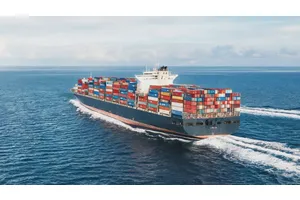
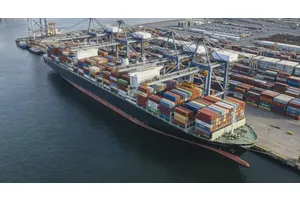
The container costs $2,500. The taxes on it cost more than the container. That is the sentence that should frame every budget conversation about the cost of shipping a container from China to Brazil — because Brazil is the one lane on earth where the freight bill is routinely the smaller half of the landed cost. On a $15,000 CIF shipment of consumer goods, ocean freight might run $2,400 and the import tax stack — II, IPI, PIS/COFINS, ICMS — can add $9,000+. Add the AFRMM shipping levy, the despachante fee, terminal charges, and the Serra do Mar trucking leg, and the "container cost" nobody quotes you is the one that decides whether the deal makes money.
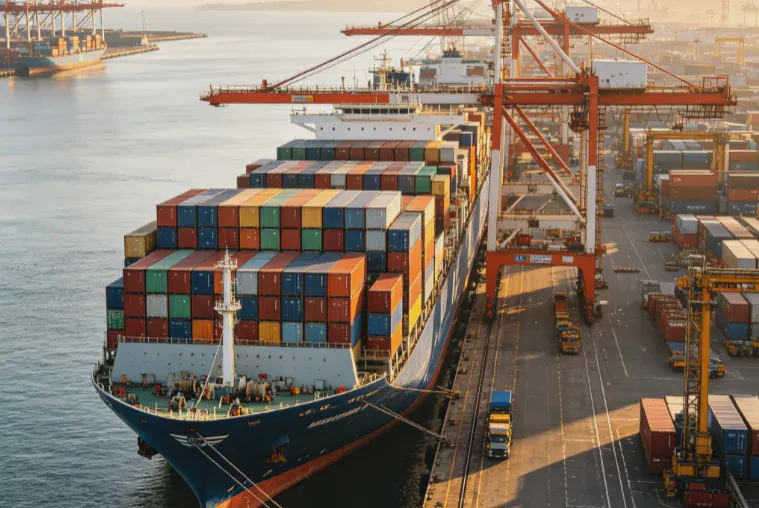
This guide gives you the real 2026 FCL numbers — 20ft, 40ft, and 40HQ price ranges from China to Brazil's four main gateway ports — then walks through the tax stack line by line with a complete worked example, the RADAR/Siscomex compliance costs, the post-2024 de minimis reality, DDP vs self-clearance math, and a full landed-cost breakdown for a real 20ft shipment. Every figure below is consistent with our shipping from China to Brazil lane data; this guide exists to answer the one question importers actually ask — what will this container really cost?
How Much Does It Cost to Ship a Container from China to Brazil in 2026?
The direct answer: $1,800–$3,500 for a 20ft and $2,500–$4,800 for a 40ft/40HQ, port-to-port from Chinese main ports to Santos in 2026. Those ranges are the freight-only baseline; everything Brazilian — destination THC, armazenagem (storage), brokerage, and the tax stack — lands on top, and the tax stack is the big one. Here is the price picture by equipment:
| Container | Capacity | Port-to-port rate (USD) | Notes |
|---|---|---|---|
| 20ft | ~28 CBM / 18–22 t | $1,800–$3,500 | Dense cargo: machinery, tiles, auto parts |
| 40ft | ~58 CBM / 26–28 t | $2,500–$4,800 | Most common: furniture, appliances, consumer goods |
| 40HQ | ~68 CBM / 26–28 t | ~$150–$400 over 40ft | Light, voluminous cargo |
| LCL | per CBM | $80–$150 | Under ~15 CBM; CFS charges add $200–$500 |
Three rules shape every Brazil container decision:
- Above roughly 30 CBM, the 40ft wins on cost per CBM. A 40ft at $2,500–$4,800 carries double the 20ft's volume for barely more than half again the price.
- The freight rate is the wrong number to compare. On a typical consumer-goods container, the tax stack runs 60–100% of the CIF value — so a forwarder's "saving" of $200 on ocean freight is noise next to the $9,000 tax line both quotes will share. Compare landed cost or compare nothing. The lane's full service picture — FCL and LCL — is on our sea shipping from China to Brazil guide.
- The peak adds 15–25%. Q3–Q4 (Brazil's own agribusiness export surge plus the pre-year-end import rush) pushes rates up and stretches berth waits; the cheapest window is Q2. Details in Section 7.
Santos vs Navegantes vs Paranaguá vs Itajaí: Brazil Port Costs and Transit Compared
Your Brazilian gateway choice changes both price and clearance speed. The four ports that matter for China imports:
| Port | Transit from China (direct/typical) | Rate vs Santos | Clearance reputation | Best for |
|---|---|---|---|---|
| Santos (SP) | 32–36 days | Baseline | ~30% of Brazil's container traffic; Q3–Q4 congestion, red-channel risk | São Paulo state — the biggest consumer market |
| Navegantes (SC) | 35–40 days | Comparable | Fastest clearance in the South; growing import share | Santa Catarina importers; avoiding the Santos queue |
| Paranaguá (PR) | 34–38 days | Comparable | Agribusiness gateway; seasonal weather delays | Paraná state; agribusiness cargo |
| Itajaí (SC) | 35–40 days | Comparable | Efficient, smaller terminal | Niche and regional cargo near Itajaí |
Santos handles roughly 30% of Brazil's containerized traffic and is the default for São Paulo-bound cargo — but it is also the port where the Q3–Q4 agribusiness surge fills terminal capacity, vessels wait for berths, and dwell times stretch. When your cargo is not São Paulo-bound, Navegantes in particular has built a reputation for efficient import processing that avoids the Santos queue entirely; DTFU routinely routes Santa Catarina cargo there for exactly that reason.
One market reality shapes port choice more than geography: Brazil's e-commerce boom. Post-2024, with the $50 de minimis gone, a growing share of what used to move as parcels now moves as consolidated containers through the southern ports — which has made clearance speed a measurable cost factor. A container that clears green at Navegantes in 2–3 days versus red at Santos in 20+ days is a difference measured in thousands of dollars of armazenagem, not days. When the price gap between ports is small — and on this lane it usually is — choose the port whose clearance behavior matches your documentation quality and your timeline.
The port choice also changes your inland picture. From Santos, the Serra do Mar escarpment highway up to São Paulo city requires specialized carriers — add 1–2 days and a trucking premium over flat-terrain hauls. From Navegantes or Paranaguá, inland trucking runs on flatter routes but covers more distance to the big consumer centers. The full transit matrix by Chinese origin port is in our shipping time from China to Brazil guide; the cost-relevant version: 32–36 days direct to Santos, 34–38 to Paranaguá, 35–40 to Navegantes/Itajaí, and 39–50 via transshipment (Singapore or Algeciras) — the 7–14 extra days of transshipment are rarely worth the small saving.
The Brazilian Tax Stack: II, IPI, PIS/COFINS, ICMS and AFRMM on Your Container
Brazil's import taxation is cumulative — each tax is calculated on a base that includes the previous ones — which is why the total so often doubles the CIF value. The stack on a $20,000 CIF shipment at typical rates:
| Tax | Rate (typical) | Calculated on | Amount |
|---|---|---|---|
| II (import duty) | 18% | CIF value | $3,600 |
| IPI (industrialized products) | 8% | CIF + II | $1,888 |
| PIS/COFINS (federal contributions) | ~10.68% | CIF + II + IPI | $2,722 |
| ICMS (state VAT, São Paulo) | 18% | Base including all of the above (in-base math) | ~$6,192 |
| Total taxes | ~$14,402 |
That is 72% of CIF — and the total lands at roughly 1.72× the CIF value, consistent with the "Custo Brasil" reality that total tax burden runs 60–100%+ of CIF for most consumer goods. Three details make or break this math:
- The ICMS line confuses everyone. The rate applies to a base that already includes the ICMS itself, so the effective burden is roughly rate ÷ (1 − rate) of the pre-ICMS base — 18% becomes about 22% in practice. This is standard state-tax logic in Brazil; budget for it.
- AFRMM is a freight tax, not a cargo tax. The Additional Freight Charge for Renewal of the Merchant Marine (AFRMM) adds roughly 8% to your ocean freight bill — a line item that appears nowhere in foreign rate guides and surprises every first-time importer. It is charged on the freight, not the cargo value.
- The NCM code sets everything. Brazil's 8-digit NCM classification (an extension of the HS code) determines the II rate, the IPI band, and whether an import license is required. A supplier's export-side HS code frequently does not match the Brazilian NCM — and a misclassified container can add 15 points of II and trigger an LI requirement nobody knew existed. The pre-departure NCM review by a licensed despachante is not paperwork theater; it is the difference between a 20% and a 35% duty line. The China-side classification groundwork is covered on our customs clearance page.
RADAR, Siscomex and the Import License: Compliance Costs You Must Budget
Brazil's import system is not improvised at the port. The importer of record must be registered in Siscomex with a CNPJ and an active RADAR license — the tracking status that gates every import declaration. The tiers:
| RADAR tier | Import limit (per 6 months) | Lead time to arrange |
|---|---|---|
| Express | up to $50,000 | 1–3 weeks for new importers |
| Limited | up to $150,000 | 1–3 weeks |
| Unlimited | no cap | 1–3 weeks |
Beyond registration, regulated goods need an import license (LI — Licença de Importação) filed through Siscomex and approved before the vessel departs China — electronics and telecom equipment, medical devices, chemicals, and anything under health or safety control. Add agency authorizations: ANVISA for health and cosmetics products, INMETRO for electronics and safety-certified goods, at 2–8 weeks lead time. The compliance cost stack:
| Item | Typical cost/lead time |
|---|---|
| RADAR registration (via broker) | $300–$800, 1–3 weeks |
| LI import license (regulated goods) | $200–$500 per license, 5–20 business days |
| ANVISA / INMETRO certification | $500–$2,000+, 2–8 weeks |
| Despachante aduaneiro fee per container | $200–$500 |
| NCM classification review | $50–$150, 1–2 days |
If your company has no CNPJ and no RADAR, you cannot self-clear — period. The compliant structures are DAP (delivered with your licensed broker settling taxes under your registration) or a full brokerage arrangement. This is the single most common compliance shock we see on the lane: cargo arriving at Santos with no RADAR behind it, sitting on demurrage while registration processes.
Operational insight: the LI timing trap is the one that hurts most. Importers assume the import license can be filed when the vessel arrives — but the LI must be approved before the vessel departs China, and approval takes 5–20 business days. A container booked and stuffed without checking the LI requirement has already committed to a sailing date that the license will miss. On the Brazil shipments DTFU handles, the compliance checklist runs before the container is stuffed, not after it is at sea — the container can always wait a week at the factory; it cannot wait a week at Santos without billing you for it.
The End of the $50 De Minimis: What 2026 Importers Actually Pay
For years, parcels under $50 entered Brazil duty-free. That exemption ended in 2024, and its removal reshaped the cost picture for every import channel:
- Parcels and express shipments are now taxed at entry: the Remessa Conforme program enforces II and ICMS on inbound parcels at the point of entry, so the landed cost of courier and e-commerce imports is materially higher than the freight quote suggests. Budget the taxes when pricing air or express options.
- Containers were never exempt — but the change matters to container importers anyway, because it pushed a wave of e-commerce volume into formal channels, tightening capacity and sustaining the Q3–Q4 rate peaks.
The practical takeaway for 2026: there is no "small shipment loophole" left on the Brazil lane. Whether your cargo moves as a parcel or a container, taxes are charged at entry — which makes the worked tax math in Section 3 the single most valuable number in any Brazil budget.
DDP vs Self-Clearance: Comparing Your Total Container Cost to Brazil
True DDP is legally murky for most commercial cargo into Brazil, because the importer of record must declare the taxes under its own CNPJ and pay Receita Federal from a Brazilian bank account. The compliant structure on this lane is DAP (Delivered at Place): the forwarder handles pickup, ocean freight, and delivery to your door, while your licensed despachante settles II, IPI, PIS/COFINS, and ICMS under your registration. The cost comparison:
| Cost & responsibility | DAP (forwarder + your broker) | Self-clearance (full control) |
|---|---|---|
| Ocean freight & origin charges | Forwarder | Forwarder |
| Brazilian taxes (II/IPI/PIS-COFINS/ICMS) | You (via despachante) | You |
| Despachante fee | $200–$500/container | $200–$500/container |
| RADAR/LI compliance | Broker-assisted | Your own team |
| Delivery to door | Forwarder | Forwarder |
| Total landed cost | Same tax base either way; difference is your time and the broker's margin | Best for 10+ containers/year with ICMS credit control |
Self-clearance only pays when you import frequently enough to amortize the compliance overhead and want the ICMS credit flowing through your own books. For one to five containers a year — the typical Brazil importer — the DAP structure with the forwarder coordinating the despachante is cheaper in total and removes the risk of a clearance mistake costing $2,000+ in storage. Our DDP vs FOB guide explains the Incoterm trade-offs in detail.
When Container Rates to Brazil Move: Seasonality and the Q3–Q4 Peak
| Window | What happens | Rate impact |
|---|---|---|
| Q1 (post-CNY) | Capacity loosens after the holiday rush | Baseline |
| Q2 (April–June) | Quietest window on the lane | Cheapest — book here if you can |
| Q3–Q4 (July–December) | Brazil agribusiness export surge + pre-year-end import rush fill Santos | +15–25%, longer berth waits |
| Pre-CNY (Jan–Feb) | Factories rush shipments before shutdown | Peak surcharges; tight space |
Two operational rules from our Brazil desk: book space 2–3 weeks ahead in the peak — weekly services sell out, and a rollover quietly adds 7–14 days — and negotiate 21–30 days of combined free time in the booking contract. Carriers grant it on Brazil lanes, and it is the difference between a $0 clearance delay and a $2,000–$4,000 demurrage bill when a red-channel inspection runs 20+ days. The parameterized channel system (green = auto-release, yellow = document review, red = physical inspection) means flawless documentation is not just compliance — it is a cost lever. First-time importers should expect at least a yellow channel on early shipments and plan stock accordingly.
A Real 20ft Container Cost Breakdown to São Paulo, Line by Line
Here is the full landed-cost picture for a 20ft container of consumer goods, CIF $15,000, routed to a São Paulo warehouse in 2026:
| Cost item | Amount (USD) |
|---|---|
| Ocean freight (China → Santos, 20ft) | $2,400 |
| Bunker Adjustment Factor (BAF) | $350 |
| Origin charges (THC, export clearance, docs) | $200 |
| Destination THC / port handling (Santos) | $280 |
| Despachante aduaneiro (brokerage) | $250 |
| II import duty (16%) | $2,400 |
| IPI (6%) | $1,044 |
| PIS/COFINS (~10.68%) | $1,969 |
| ICMS (18%, São Paulo, in-base math) | ~$4,048 |
| Serra do Mar trucking (Santos → São Paulo) | $450 |
| Cargo insurance (0.3% of value) | $45 |
| Total landed cost | ~$13,436 |
The taxes — $9,461 of the $13,436 — are 63% of the CIF value and more than triple the ocean freight. Two cargo-care notes that belong in any Brazil budget: the 30+ day crossing crosses the equator twice, producing heavy container condensation ("container rain") that damages cartons — the standard countermeasure is ISPM-15 compliant pallets, heavy-duty export cartons, and 6–8 desiccant bags hung inside a 40ft before sealing (we include desiccant discipline in every Brazil container DTFU packs); and the armazenagem clock starts the moment the container discharges, whether or not customs has released it — which is why the free-time negotiation in Section 7 matters. For warehouse-side planning at the Brazilian end, see our warehouse services page, and for the insurance math on the lane, our guide to shipping container insurance cost for shipments from China.
FAQs
1. How much does it cost to ship a 20ft container from China to Brazil?
$1,800–$3,500 port-to-port to Santos in 2026. Add destination THC, brokerage, and the tax stack (II, IPI, PIS/COFINS, ICMS) for the landed cost — often 60–100% of the cargo value on top.
2. How much does a 40ft container cost from China to Brazil?
$2,500–$4,800 port-to-port; a 40HQ adds roughly $150–$400. Above ~30 CBM the 40ft delivers the lowest cost per CBM on the lane.
3. What taxes do I pay on a container from China to Brazil?
II import duty (10–35% by NCM), IPI (0–15%), PIS/COFINS (~9.25–11.75%), and state ICMS (17–25%). They compound cumulatively — a typical consumer shipment totals 60–100%+ of CIF. AFRMM adds ~8% to the ocean freight itself.
4. Which Brazilian port is cheapest for my container?
Santos is the baseline (and the congested default); Navegantes clears fastest; Paranaguá suits Paraná cargo; Itajaí suits regional niche cargo. The tax base is identical at every port — the difference is clearance speed, inland trucking, and congestion risk.
5. When is the cheapest time to ship a container to Brazil?
Q2 (April–June): rates run 15–25% below the Q3–Q4 peak, and Santos berth waits are shortest.
6. What is LCL shipping cost from China to Brazil?
$80–150 per CBM plus Brazilian CFS charges of roughly $200–500 per shipment. LCL runs 35–55 days and adds 5–10 days over FCL.
7. What documents do I need to clear a container in Brazil?
CNPJ + active RADAR, Bill of Lading with the CNPJ stated, commercial invoice and packing list (exact match), NCM classification, LI for regulated goods, and agency approvals (ANVISA/INMETRO) where applicable.
8. How long does door-to-door container shipping from China to Brazil take?
Door-to-door FCL typically lands at 45–65 days: 3–5 days pickup/consolidation and export clearance in China, 32–36 days ocean direct to Santos, 1–3 days berth wait and discharge, 2–5 days Siscomex clearance on the green channel, then 1–2 days inland trucking. LCL adds 5–10 days for consolidation and deconsolidation.
The cost of shipping a container from China to Brazil is a stack of line items — ocean, AFRMM, BAF, THC, brokerage, five tax lines, trucking — and the only quote worth signing is the one that shows every line. DTFU has been moving containers into Santos, Navegantes, and Paranaguá since 2014: we run the NCM review before the container is stuffed, coordinate with licensed despachantes on the DAP structure, negotiate extended free time with the carriers, and pack against container rain as standard practice. Send us your cargo details — commodity, volume, weight, and the Brazilian delivery address — and we will quote your container all-in, itemized, with the full tax math modeled on the quote.