Customer Background
The customer is a Florida-based bedding e-commerce seller operating a direct-to-consumer retail site for memory foam pillows and sleep accessories. Their order book is split between a handful of memory foam pillow SKUs and a smaller set of fiber-filled products, sold nationwide to U.S. consumers.
Prior to this shipment, the company had sourced the same pillow lines from U.S. domestic wholesalers who imported on their behalf. Rising wholesale prices and thinning margins on the pillow category prompted them to test direct importing from China for the first time. They had no in-house import logistics capability — no U.S. customs experience, no knowledge of the Importer Security Filing (ISF) requirement, and no relationship with a licensed broker. The engagement with DTFU Logistics came through a referral, with the requirement that the first direct container demonstrate a clear landed-cost saving against their existing domestic wholesale channel while arriving in time for a planned restock date.
Cargo Information
| Item | Detail |
|---|---|
| Commodity | Memory foam pillows, vacuum-compressed bales |
| Mode | Ocean freight FCL |
| Origin | Ningbo, China |
| Destination | Miami, FL, United States |
| Incoterm | FOB Ningbo |
| Container | 1×40HQ |
| Gross weight | 5,200 kg |
| Volume | 56 CBM (after compression) |
| Pallets | 20 |
The shipment consisted of memory foam pillows vacuum-compressed into bales at the origin consolidation point. The cargo was extreme low-density: 5,200 kg gross against a 40HQ payload limit of roughly 26 t left a very large weight margin, and the controlling constraint was cube, not weight.
Vacuum compression reduced the total volume by approximately 45% compared with uncompressed bales. At 56 CBM the load occupied roughly 82% of a 40HQ's usable volume of about 68 CBM. Uncompressed bales would have measured in the region of 102 CBM — beyond a single 40HQ's capacity — which made compression the determining factor in keeping this a one-container move.

Why This Shipping Method
Ocean freight FCL in a single 40HQ was selected over the alternatives after comparing cost and transit time.
LCL consolidation was rejected. At 56 CBM the cargo was well beyond the range where LCL is cost-effective, and the light bulky bales would have been handled, re-sorted, and reloaded at both the origin warehouse and the destination depot — two additional touch points that add damage and delay risk for a first direct import.
Air freight was rejected on cost grounds. Memory foam is billed by chargeable weight, and for a cargo this bulky the volumetric weight would have been far above the 5,200 kg gross, producing a prohibitive rate for a low per-unit-value product. There was also no urgency: the customer was working to a planned restock window, not an emergency deadline.
For the routing, three all-water and land-bridge options were weighed against the cargo's Miami destination:
- Suez all-water via the Red Sea was discounted. In the 2026 operating environment, the Red Sea disruptions have pushed most Suez services to reroute around the Cape of Good Hope, which adds roughly a week of transit and carries bunker-related surcharges. Schedule reliability on that lane was not dependable in the booking window.
- West Coast plus rail IPI was reviewed and set aside. Florida has no practical double-stack rail IPI network on the scale of the Chicago/Memphis corridors; a West Coast discharge would still require a long-haul drayage or transload to reach Miami, erasing most of the time gain while adding a handling point.
- Panama Canal all-water service to PortMiami was selected. It offered a scheduled 30-day ocean transit with no transshipment, direct discharge at the destination port, and better schedule stability in 2026 than the Red Sea-affected alternatives.
The customer accepted the 30-day transit because the arrival date still met their planned restock window, and the all-water routing minimized the number of parties touching the soft bales en route.
Shipping Process
Step 1 — Vacuum compression and container loading (Ningbo)
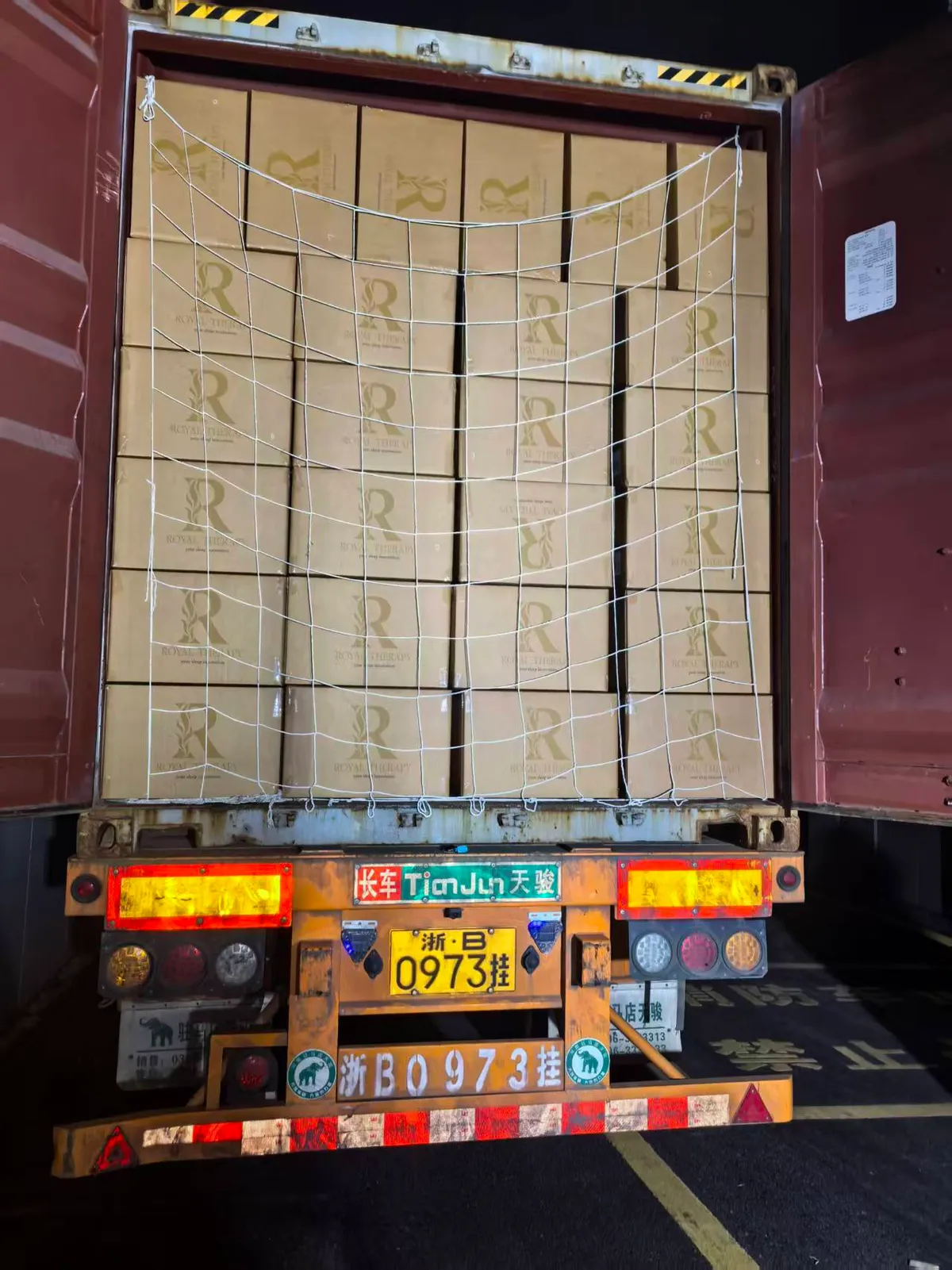
The pillows were compressed at the Ningbo consolidation point, where each batch was sealed under vacuum into bales to reduce its volume before the container was packed. Compression and loading ran on the same day, so the bales did not have time to re-expand before being secured. The bales were palletized onto 20 pallets, shrink-wrapped, and held in place with netting and strapping so the soft, low-density loads could not shift during the ocean leg. An empty 40HQ was packed to a full, stable profile and sealed with a high-security bolt seal.
Step 2 — Export customs clearance and vessel departure (Ningbo)
The commercial invoice, packing list, and export declaration were filed through the China Customs single window. The declared unit values were cross-checked against the packing list so the invoice, export declaration, and downstream U.S. filings remained consistent. The declaration cleared the same day, and the container was loaded onto the scheduled all-water service at Ningbo's Beilun terminal for departure.
Step 3 — Ocean freight (Ningbo → Miami via the Panama Canal)
The container transited the all-water East Coast service via the Panama Canal. The ocean crossing to PortMiami took 30 days, with no transshipment between origin and destination.
Step 4 — U.S. customs clearance and delivery (Miami)
On arrival, the ISF data filed before lading was matched to the entry, and the container cleared U.S. customs with the licensed broker's entry filing. After terminal handling at PortMiami, the container was drayed to the customer's warehouse in the Miami area and unloaded. All bales were received intact; the seal number matched the bill of lading. The compressed pillows returned to full size within roughly two days of the bales being opened.
Challenges Encountered
1. Volumetric charge and compression engineering
Memory foam pillows are light and bulky, so the shipment cued out long before it weighed out. Loaded as-is, the uncompressed bales would have measured in the region of 102 CBM — more than a single 40HQ can hold. The entire economics of the move depended on holding the compression rate at roughly 45%, and on keeping the soft bales from re-expanding or shifting once inside the container. A bale that lost its vacuum seal before lading would reclaim its air volume on board and eat into the cube budget.
2. East Coast all-water transit length versus cost
The 30-day all-water transit was materially longer than a West Coast routing plus rail would have implied for many U.S. destinations. The routing decision had to reconcile the transit time against cost and reliability, and the trade-offs shifted because of the 2026 Red Sea situation, which had pushed the Suez lane into Cape of Good Hope rerouting and made its schedule less dependable.
3. Bedding HTS classification and Section 301 duty
Memory foam pillows fall under HTS 9404 (mattress supports and bedding). The line is subject to Section 301 List 3 tariffs on goods of Chinese origin, and as a first-time U.S. importer the customer had no prior exposure to the ISF "10+2" filing requirement, which must be submitted with the HTS line no later than 24 hours before the cargo is laden at the foreign port.
How We Solved Them
For the volumetric charge and compression engineering:
The compression process was managed at the consolidation point so the target reduction was achieved before loading. The bales were loaded onto 20 pallets the same day they were compressed, shrink-wrapped, and secured with netting and strapping to hold their compressed shape. The container was packed to a full, stable profile at 56 CBM, and each pallet was sequenced so no air gap could grow into a shift point during the ocean leg.
For the transit length versus cost trade-off:
The routing was compared on the basis of schedule dependability as well as transit time and freight cost. The Panama Canal all-water service was booked because it delivered the required arrival date at a lower all-in cost than the Red Sea-affected Suez lane and avoided the extra handling a West Coast land-bridge routing would have introduced for a Florida destination.
For the HTS and Section 301 exposure:
The tariff line was confirmed as HTS 9404 before booking, and the Section 301 List 3 rate was factored into the landed-cost model given to the customer, so the comparison against domestic wholesale pricing reflected the duty-inclusive figure rather than a freight-only estimate. The same HTS was used consistently on the export declaration, the commercial invoice, the ISF, and the U.S. entry. The ISF was filed by DTFU's licensed U.S. customs broker 24 hours before the vessel lading cut-off, using the stuffing location data captured at the consolidation point.
Final Timeline
| Milestone | Timing |
|---|---|
| Vacuum compression and baling (Ningbo consolidation point) | Day 1 |
| Container loading, 20 pallets, bolt seal applied | Day 1 |
| Export customs clearance (Ningbo) | Day 2 |
| Vessel departure Ningbo (Beilun) | Day 2 |
| Ocean transit via the Panama Canal | Day 2 – Day 32 |
| Vessel arrival PortMiami | Day 32 |
| U.S. customs clearance and ISF finalization | Day 33 |
| Terminal handling, drayage, and warehouse unloading (Miami) | Day 33 |
Total door-to-door transit time: 33 days
Final Cost
| Item | Cost (USD) |
|---|---|
| Ocean freight (1×40HQ, Ningbo → Miami) | $3,850 |
| Origin THC, port charges, documentation | $420 |
| ISF filing | $45 |
| U.S. customs clearance | $170 |
| Miami terminal handling | $230 |
| Drayage (Miami port → warehouse) | $260 |
| Total door-to-door | $4,975 |
Note: figures reflect the spot rates for this shipment (July 2026) and vary with season, fuel surcharge, and carrier capacity. The compressed volume of 56 CBM was the basis for the freight decision — holding the bales within a single 40HQ is what kept the per-container cost at this level rather than spilling the cargo into a second container or LCL. Section 301 List 3 duty on the HTS 9404 line is collected separately at entry and was quoted to the customer as part of the landed-cost model.
Customer Review
"The 5,200 kg order moved as one 40HQ and cleared in Miami on day 33 as scheduled. Vacuum compression held the volume down enough that a single container carried the full order, and that is what made the landed cost come in below buying from U.S. domestic wholesalers. The bales arrived intact and the pillows returned to full size within about two days of being opened."
— The customer's operations manager, Miami, Florida
Lessons Learned
- Vacuum compression is where the freight saving lives for light bulky foam. Compression cut the volume by roughly 45%, turning cargo that would have exceeded a single 40HQ into a one-container move at 56 CBM. For cargo that cubes out before it weighs out, compression rate control is directly equivalent to a freight discount.
- Compression is only as good as the load security that follows. A soft, low-density bale will re-expand if the vacuum is compromised, and it will shift unless restrained. Shrink-wrapping, netting, and strapping on 20 pallets, loaded to a full container profile, are what preserve the compression through a 30-day ocean leg.
- East Coast routing decisions are regime-dependent. The Panama Canal all-water service held its schedule and cost advantage for Miami in 2026, whereas the same lane had favored Suez in earlier years before the Red Sea disruptions rerouted that traffic around the Cape. The route choice should be re-tested against current disruption status, not carried over from a previous shipment.
- The bedding tariff line has to be settled before booking, not at entry. HTS 9404 under Section 301 List 3 affects landed cost materially. Using one consistent HTS across the export declaration, ISF, and U.S. entry removed the tariff-revision risk and let a first-time importer see the true duty-inclusive cost before committing.