The vessel arrives at Luanda on schedule. The cargo sits at the terminal for three weeks. This is not a horror story from 2015 — it is the pattern we still see on the Angola lane whenever the pre-shipment paperwork was not finished in China. Because the thing that makes shipping time from China to Angola unpredictable is rarely the ship. It is the CNCA certificate that was never validated before loading, the DU import license that was filed late, the invoice weight that does not match the packing list by four decimal places, and the customs queue that follows. Angola's problem is not that it is expensive to reach — a 20ft container runs $2,000–$3,000, comparable to many easier lanes. Angola's problem is that it is slow, and the slowness is almost always paperwork-driven.
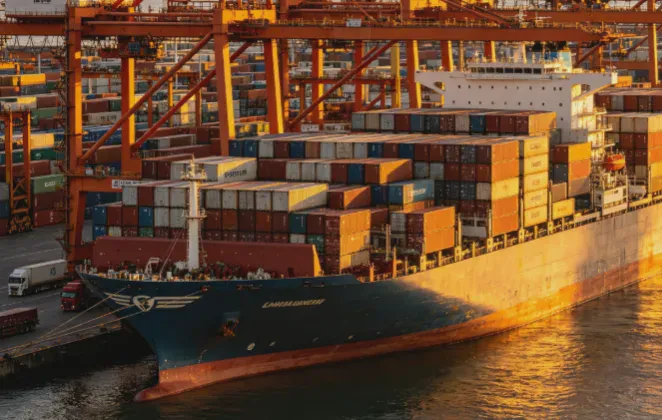
That is good news, because paperwork is controllable. This guide breaks the lane's total time into its component clocks — ocean transit by routing, the Port of Luanda's modernization timeline, the CNCA and DU deadlines, the 7–15 day customs clearance reality, the inland legs beyond Luanda — and then shows how to compress the whole chain by two to three weeks. Every figure here matches our shipping from China to Angola lane data and the transit tables in our sea shipping cost from China to Angola guide; what this guide adds is the time math.
How Long Does Shipping from China to Angola Take in 2026?
The direct answer: 32–48 days port-to-port by sea depending on your Chinese origin and Angolan destination port, 3–7 days by air, and a realistic 45–65 days door-to-door for sea freight once discharge, clearance, and inland delivery are added. The mode table:
| Mode | Port-to-port | Door-to-door | Notes |
|---|---|---|---|
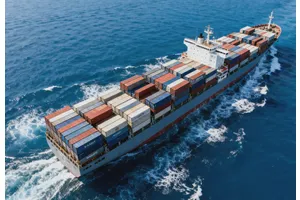
| Sea FCL/LCL (Guangzhou/Shenzhen → Luanda) | 32–38 days | 45–60 days | Most common routing; direct-ish sailings from South China |
| Sea FCL (Shanghai/Ningbo → Luanda) | 35–40 days | 48–62 days | More capacity, slightly longer transit |
| Sea FCL (Qingdao/Tianjin → Lobito) | 40–45 days | 52–65 days | Lobito corridor serves inland/DRC cargo |
| Sea FCL (Shanghai → Namibe) | 42–48 days | 55–68 days | Southern Angola |
| Air freight (PVG/CAN/SZX → Luanda) | 3–7 days | 7–10 days | Via Addis Ababa, Dubai, or Doha hubs |
The gap between port-to-port and door-to-door — typically 10–20 days — is where Angola's reputation for slowness comes from: 2–5 days for discharge and terminal handling, 7–15 days for customs clearance, and 1–3 days for delivery inside Luanda (longer inland). Each of those clocks is covered in its own section below, because each one has its own fix.
Port of Luanda: Congestion History and What the DP World-to-AD Ports Era Changed
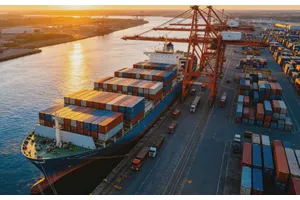
The Port of Luanda handles more than 70% of Angola's imports — by some measures over 76% of the country's container and general cargo — and its performance has set the ceiling on the lane's speed for decades. The congestion history is real: before the terminal reforms, vessels routinely waited weeks for berths, and importers budgeted "weeks of port congestion" as a fact of life. Two structural changes have rewritten that story, and they matter for anyone planning a 2026–2027 shipment:
| Milestone | Date | What changed |
|---|---|---|
| DP World takes over the multipurpose terminal | 2022 | Professional terminal operations begin at Porto de Luanda |
| AD Ports Group signs 20-year concession (extendable +10) | April 2024 | US$251M committed 2024–2026 (up to $379M); 81% JV with Unicargas/Multiparques |
| Noatum Ports Luanda Terminal groundbreaking | September 2025 | 18-month construction program launched; $250M initial investment |
| Terminal completion target | Q1 2027 | Capacity to rise from 25,000 to 350,000 TEU; Super Post-Panamax vessels up to 14,000 TEU; 3 new STS cranes + 8 hybrid RTGs |
What this means for your shipping time in practice: the terminal is in the middle of a multi-year modernization, and container volumes are projected to grow about 3.3% a year. Throughput capacity today is still the binding constraint — which is exactly why the pre-arrival paperwork discipline (CNCA, DU, matching documents) matters more on this lane than almost any other: a terminal that is still scaling up has zero slack for cargo that arrives documentation-incomplete. The modernization is real and measurable — berth waits have shortened versus the pre-2022 era — but the queue simply moves from the berth to customs when the paperwork is late. Our door-to-door shipping service coordinates the whole chain so the container arrives at a terminal that is ready for it.
Direct vs Transshipment: China–Luanda Routing Options Compared by Time
Most China–Angola sea cargo moves on services that call Luanda after South or East African ports, or on transshipment through hubs. Your routing choice is a direct trade of time against schedule flexibility:
| Routing | Typical total time | How it works |
|---|---|---|
| Shenzhen / Guangzhou → Luanda (direct-ish) | 32–38 days | South China services calling Luanda directly; the fastest China–Angola option |
| Shanghai / Ningbo → Luanda | 35–40 days | Main volume route; more capacity and frequency |
| Qingdao / Tianjin → Lobito | 40–45 days | Northern China origin; Lobito serves the inland corridor |
| Shanghai → Namibe | 42–48 days | Southern Angola; longest ocean leg |
| Transshipment via Tanger Med (e.g., CMA CGM EURAF 5) | 38–48 days | Asia mainline to the Mediterranean hub, then the West Africa service (Tanger Med–Nouakchott–Kribi–Libreville–Pointe Noire–Luanda, repositioned July 2026) |
The direct South China services are the time-optimal choice for Luanda-bound cargo — 32–38 days — which is why forwarders route Angola freight out of Shenzhen and Guangzhou when the supplier base allows it. The Tanger Med transshipment option adds roughly a week but opens up more sailing-frequency combinations and is the fallback when direct space is tight in the peak. If your cargo is bound for the interior — Benguela province or onward to the DRC — consider Lobito: the port feeds the Benguela railway corridor, and landing there can cut the inland leg by days versus trucking from Luanda. For the cost side of these routings, our sea shipping cost from China to Angola guide has the rate matrix.
The CNCA Certificate: The Pre-Shipment Document That Can Add Weeks
If there is one document that separates Angola from every other lane, it is the CNCA certificate — issued under the ARCCLA system of the National Shippers' Council of Angola. Every commercial sea shipment to Angola requires a validated CNCA before the cargo is loaded in China. It is an electronic tracking note that confirms the shipment's legitimacy, and without it the cargo is blocked by the AGT (General Tax Administration) on arrival — with fines and weeks of delay on top.
The timing rule that catches outsiders: the CNCA must be validated before loading, not filed when the vessel is at sea. The practical sequence we run at DTFU on every Angola booking:
- Initiate the CNCA application 2+ weeks before the vessel departure — it is not instant, and the validation involves the shipping line's confirmation of the booking.
- Ensure the CNCA data matches the bill of lading exactly — container number, weights, and commodity description must align across the two documents; a mismatch nullifies the validation.
- Never let the vessel sail without the validated CNCA number on the documentation set — this is the single most expensive mistake on the lane, and it is entirely preventable. We have taken over Angola accounts mid-disaster where exactly this failure had parked cargo at Luanda for weeks; the fix was procedural, not magical.
Because the certificate is issued and validated in the Angola–China framework, a forwarder with direct experience — not a generalist who books the lane occasionally — is the difference between a routine shipment and a blocked one. The China-side export process that runs alongside it is covered on our customs clearance page.
Angolan Customs Clearance: ASYCUDA, the DU and the 7–15 Day Reality
Customs clearance in Angola typically takes 7–15 days for a well-prepared shipment — and considerably longer for one that is not. The machinery:
| Step | What happens | Typical time |
|---|---|---|
| DU (Documento Único) issued | Import license obtained through the Ministry of Commerce (MINCO) ASYCUDA portal before the cargo ships | 1–2 weeks before production completes |
| Arrival & manifest | AGT processes the arrival declaration in ASYCUDA | 1–2 days |
| Assessment | Duty (2–50% by HS code) + VAT (14%) calculated on CIF | 1–3 days |
| Inspection channel | Green = document check; red = physical inspection | Green 2–4 days; red 1–3 weeks |
| Payment & release | Duties paid via the local broker; release order issued | 1–2 days |
The DU (Documento Único) is Angola's mandatory import license and it must be obtained before the vessel leaves China — the standard advice is to start it at least two weeks before your supplier's production completes, because it dictates the authorized import value, currency allocation, and tax brackets. On the shipments the DTFU desk handles, the DU application goes in the moment the booking is confirmed, not when the cargo is at sea — the license is the one document that cannot be rushed at the end. Three clearance realities worth internalizing:
- Weight and value consistency is enforced to the decimal. Angolan customs is famously strict about mismatches between the commercial invoice and packing list; even minor differences trigger a red-channel inspection that can hold cargo for weeks. We tell every Angola client the same thing: check the weight data at the factory, not at the port.
- The despachante does the work, but the data is yours. Clearance runs through a licensed local broker (despachante), but the broker can only file what the documents say. Document quality in China decides clearance speed in Luanda.
- VAT is 14% and duty runs 2–50% by HS code — the tax math is in our shipping cost from China to Angola guide; for planning purposes, budget roughly a third of CIF in duties and taxes and let the classification review refine it.
Luanda to Benguela and Huambo: Inland Delivery Time After the Port
The final clock on the lane is the inland leg, and it ranges from hours to a week depending on the destination:
| Destination | Time from Luanda port | Mode |
|---|---|---|
| Luanda metro / Viana / Cacuaco | Same day – 1 day | Local truck |
| Benguela / Lobito corridor | 1–3 days | Truck, or railway via the Lobito corridor |
| Huambo | 3–7 days | Truck (long inland haul, seasonal road conditions) |
| DRC border (via Lobito corridor) | 3–5 days | Railway/truck intermodal |
Two realities shape inland planning: Luanda's own traffic means same-day delivery applies only within the metro area, and interior destinations are trucking-distance problems with their own seasonal quirks — the rainy season (roughly November to April) slows interior roads measurably. If your cargo's final destination is in the interior, the Lobito gateway is often the time-smart choice despite the longer ocean leg, because it puts the cargo closer to Benguela, Huambo, and the DRC corridor from day one.
Air Freight from China to Angola
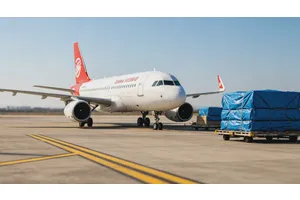
When the sea timeline is unacceptable, air freight from China to Luanda runs 3–7 days at roughly $4.80–$8.00/kg depending on weight band and routing. Cargo arrives at Quatro de Fevereiro International Airport (LAD) or the new Dr. António Agostinho Neto International Airport (NBJ), which has been progressively taking over cargo traffic. The workhorse routings: Ethiopian Airlines via Addis Ababa, TAAG on semi-direct services, and Emirates SkyCargo or Qatar Airways Cargo via the Gulf hubs.
| Route | Typical time |
|---|---|
| Guangzhou (CAN) → Luanda (LAD/NBJ) | 5–7 days |
| Shanghai (PVG) → Luanda (LAD/NBJ) | 4–7 days |
| Shenzhen (SZX) → Luanda (LAD/NBJ) | 5–8 days |
| Hong Kong (HKG) → Luanda (LAD/NBJ) | 4–6 days |
The decision framework we give clients: if the cargo's value per kilo justifies the air premium and the stock-out cost exceeds the freight difference, fly it — spare parts for production lines, urgent electronics, time-critical documents. Two cautions: the DU is still required for air cargo, so the license must be in place before the flight departs; and air cargo arriving at Luanda still faces the same AGT scrutiny — the famous weight-mismatch red-channel holds happen at the airport too. Our air shipping from China to Angola page covers the carrier and pricing detail.
How to Calculate Your Real Door-to-Door Time to Angola
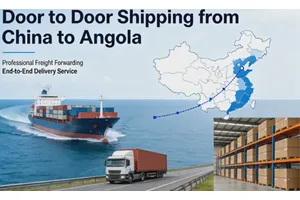
Here is the worked timeline for a typical 20ft FCL from Shenzhen to a Luanda warehouse, built from the numbers above:
| Leg | Duration |
|---|---|
| Factory pickup, consolidation & export clearance (China) | 3–5 days |
| Ocean transit (Shenzhen → Luanda) | 32–36 days |
| Berth wait & discharge at Luanda | 2–5 days |
| Customs clearance (DU pre-approved, green channel) | 7–15 days |
| Inland delivery (Luanda metro) | 1–2 days |
| Total door-to-door | ~45–60 days |
The honest planning number: treat 55 days as the midpoint, 65 as the worst case, and 45 as the good outcome — and know which levers pull which way. Every day of the 7–15 day clearance window is driven by document readiness, not by the port. If the DU is approved, the CNCA validated, and the weights match, clearance lands at the bottom of that range; if any of the three is missing, it lands at the top — or beyond. For cargo that cannot wait, the air alternative collapses the whole chain to 7–10 days. Our tracking view follows the shipment from the Chinese factory through the Luanda terminal so the clearance work is scheduled against the real arrival date, not a guess.
What Slows Angola Shipments Down — and How to Cut 2–3 Weeks
The compression playbook, in order of impact:
- Validate the CNCA before the container is stuffed. This single step eliminates the most common cause of AGT blockage. Start it two weeks before departure; never let the vessel sail without it.
- Get the DU approved before production finishes. The license dictates the value declaration and tax brackets; a late DU delays everything downstream.
- Match the weights and values to the decimal. Check the supplier's packing list against the invoice at the factory. Angolan customs red-channels mismatches without mercy — and a red hold costs weeks.
- Choose the direct South China routing. Shenzhen/Guangzhou → Luanda at 32–38 days beats every transshipment option when your suppliers are in Guangdong.
- Consider Lobito for interior destinations. The Benguela corridor puts inland cargo days closer to its final stop than trucking from Luanda.
- Avoid the year-end crush. Angola's import volumes concentrate late in the year as clients restock for the following season; a September–October sailing meets a calmer terminal and customs queue than a December one.
- Pre-arrange the despachante and pre-file in ASYCUDA. The broker should be engaged before the vessel arrives, with the ASYCUDA declaration staged against the arrival date.
- Insure the cargo. The lane's multiple handlings and the interior road network justify all-risks cover — see our guide to shipping container insurance cost for shipments from China for the coverage math.
Apply all eight and the same cargo that takes 60 days for a reactive importer arrives in 40–45. The vessel speed is fixed; the paperwork speed is not.
FAQs
1. How long does shipping from China to Angola take?
Port-to-port sea freight runs 32–48 days depending on origin and destination port; door-to-door sea freight lands at 45–65 days including discharge, clearance (7–15 days), and inland delivery. Air freight runs 3–7 days, about 7–10 door-to-door.
2. How long does a container take from China to Luanda?
32–38 days from Shenzhen/Guangzhou, 35–40 days from Shanghai/Ningbo. Add 2–5 days for discharge, 7–15 days for customs, and 1–2 days for Luanda delivery.
3. How long does customs clearance take in Angola?
Typically 7–15 days for a well-prepared shipment: DU approved, CNCA validated, documents matching. Red-channel inspections run 1–3 weeks. Document quality in China decides the outcome.
4. Is there a direct ship from China to Angola?
South China services call Luanda on schedules of 32–38 days from Shenzhen/Guangzhou. Transshipment via Tanger Med (e.g., CMA CGM's EURAF 5 West Africa service) adds about a week but offers more frequency combinations.
5. How long does it take to deliver inland from Luanda?
Luanda metro: same day to 1 day. Benguela/Lobito corridor: 1–3 days. Huambo: 3–7 days by truck (slower in the November–April rainy season). The Lobito gateway shortens interior legs.
6. How much is air freight from China to Angola, and how fast?
Roughly $4.80–$8.00/kg with 3–7 days transit via Addis Ababa, Dubai, or Doha (Ethiopian, TAAG, Emirates SkyCargo, Qatar Airways Cargo). The DU is still required for air cargo.
7. What is the fastest way to ship from China to Angola?
Air freight: 3–7 days port-to-port. By sea, the fastest routing is a direct South China sailing to Luanda at 32–38 days, with the CNCA and DU finished before loading so clearance starts at arrival.
8. How much buffer should I plan for an Angola shipment?
Treat 55 days as the midpoint for sea freight, 65 as the worst case, and 45 as the good outcome — then hold 2–3 weeks of safety stock if the cargo is time-critical, or switch to air if it is not.
Ship to Angola on a Timeline You Can Commit To
Shipping time from China to Angola is a paperwork problem disguised as a distance problem. The ocean leg is dependable — 32–48 days by routing — and the Port of Luanda is measurably more professional than it was a decade ago. What decides whether your cargo arrives in 45 days or 65 is the CNCA validation, the DU timing, and the weight data on your documents: three things that are fully within your control, and fully within the remit of a forwarder who runs this lane properly.
DTFU has been clearing cargo through the Port of Luanda since 2014 — thousands of TEUs through the terminal's DP World and now AD Ports era. We validate the CNCA before your container is stuffed, coordinate the DU through the MINCO ASYCUDA portal on the right timeline, and check the supplier's weights before the vessel departs, not after it arrives. Send us your cargo details — commodity, volume, weight, and the Angolan delivery address — and we will quote the routing and the door-to-door timeline in writing, with every deadline on the table.